
Radian
-
Posts
2586 -
Joined
-
Last visited
-
Days Won
15
Everything posted by Radian
-
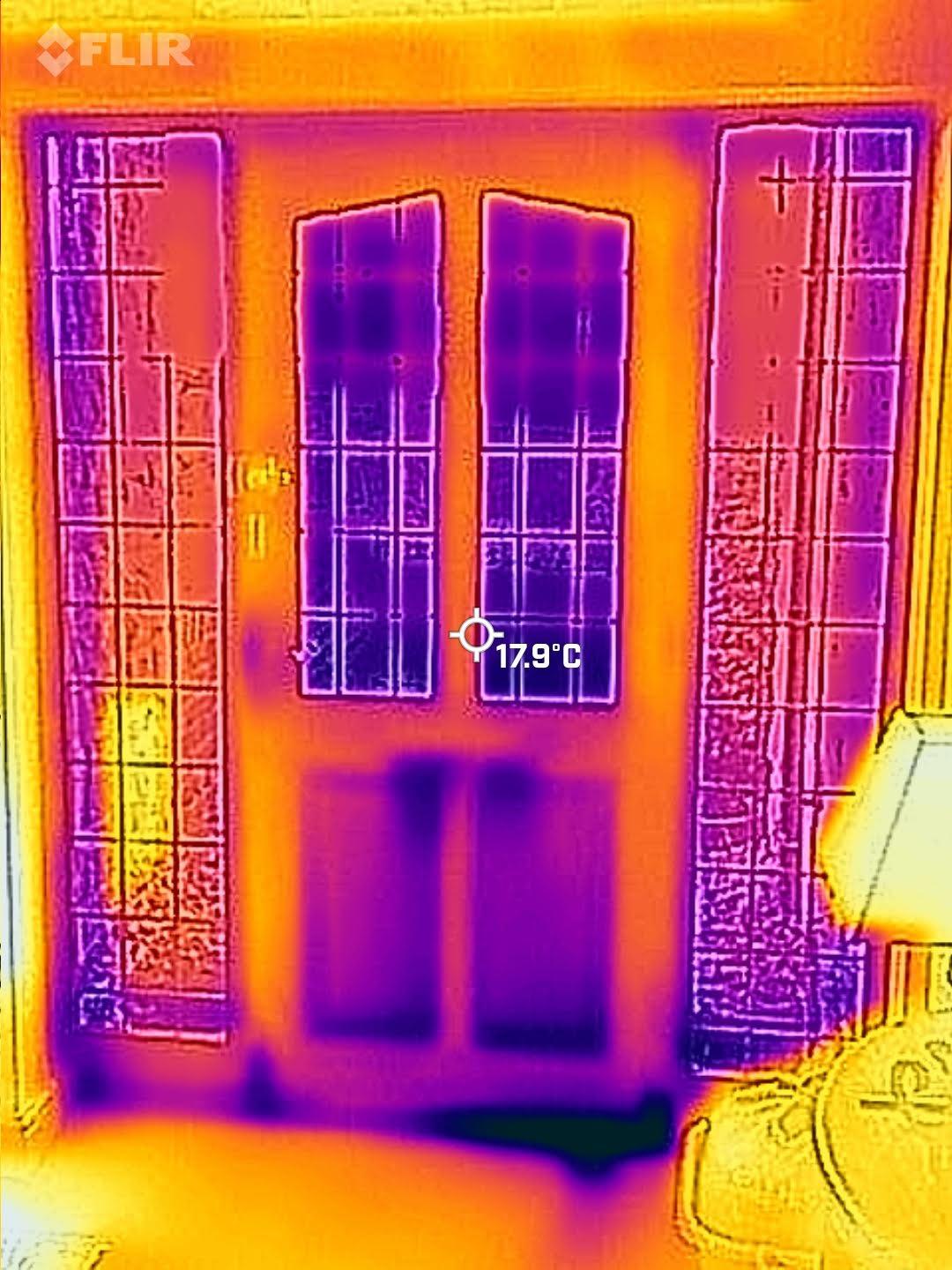
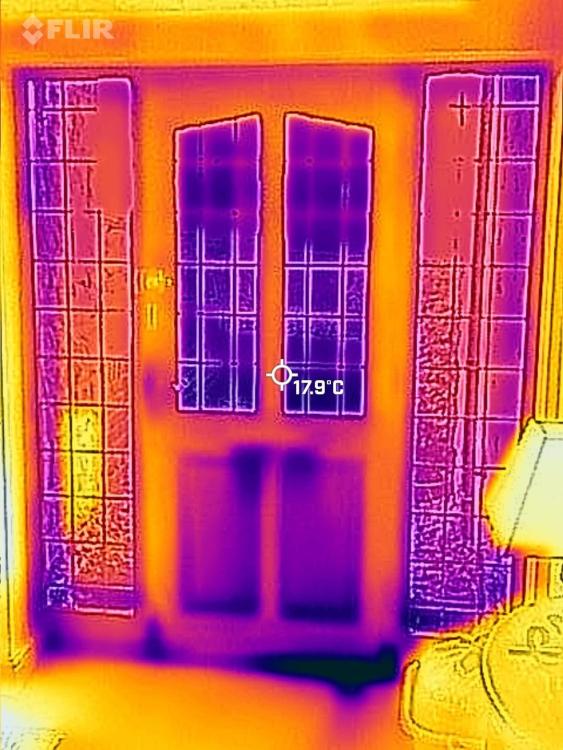
How do timber doors perform thermally compared to UPVC or composite? I imaged our timber front door back in early February while trying to remedy drafts and was surprised at how well the thicker parts were performing: Only the thinner infill panels and letterbox were letting it down badly - and especially the gaps at the bottom. These are areas that I could do with improving. It was 19oC indoors and -2oC outdoors.
-
 That's nothing. Our 300L Liebherr fridge uses 0.26kWh per day. 😁 couldn't resist
 -
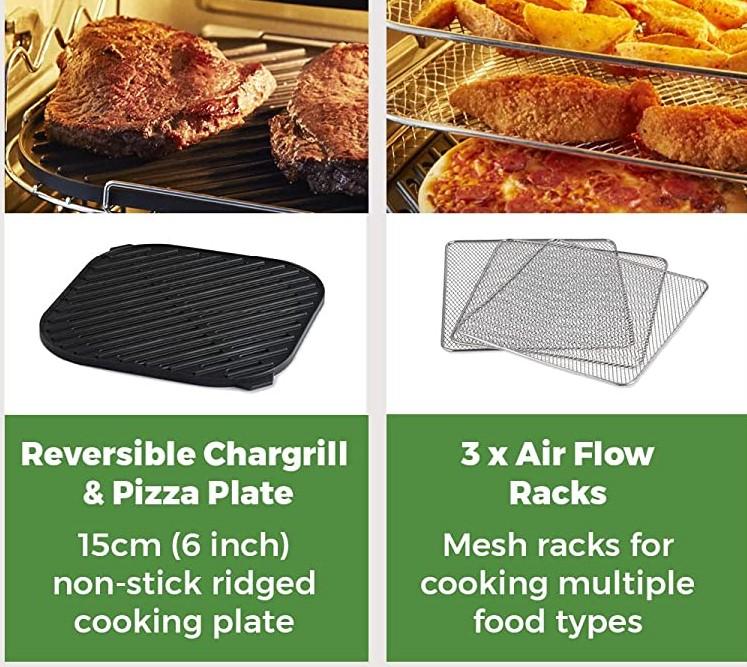
if it's the Xpress Pro 5-In-1 or Xpress Pro Combo 10-in-1 then yours has a capacity of 11L according to the Tower website. That's one of the bigger capacity ovens I seen. But looking at these promo photos, I still don't think it'd take three portions of fish and chips. A 15cm pizza? That's funny. What I can't find is the size of the wire trays? If they're in the region of 150mm square then it's not going to cook for three people. And as I said, it's one of the larger appliances of this type.
-
Yes, we've discounted any top-loaders for this same reason. I don't really like round ones either, takes up the same effective footprint on your worktop but gives less volume for food.
-
Perhaps someone who's got bonded EPS can answer a question about how much air movement I can expect from bead filled cavities? As there's an open structure in the spaces between beads obviously it's not entirely draft proof but would it have any effect on the drafts we get behind the dot & dab plasterboard? I'm thinking the howling gale we get around switches and sockets is due to the empty cavities which reach up to the ventilated roof space and have poor airtightness (complete lack of) around first floor joists and ground floor block and beam.
-
When I read about foams that aren't airtight, am I right in thinking that it's solely due to the rigidity of the foam once cured i.e. any movement between filled surfaces will reveal a crack through which air will move? All the foams I've used appear to be "closed cell" so could hold a pressure differential. Just asking because reading this thread reminded me of my thoughts on the matter.
-
That's helpful thanks. You said you've got a Ninja Foodi MAX 9-in-1 Multi-Cooker which has a 7.5L capacity. I started looking at twin drawer ovens with 9L capacity.
-
Local Electricity Bill... or fight to improve SEG
Radian replied to Benguela's topic in Photovoltaics (PV)
The practicalities are not insurmountable, just find neighbour(s) on the same phase (inject a 120kHz signal e.g. X10 to confirm) then haul some SWA cable over the fence and slap a din rail meter on it at each end. A Grid tied inverter will then run as many houses sharing the same phase as though they were one. 😁 -
I don't know, but either my tolerance of it has diminished or whatever 'tricks' they use to get the most out of it have been ramped-up. At home I get the same problems with rapeseed oil. Confusingly, grapeseed oil is a different matter. I get on fine with that.
-
I don't get on well with the oils they often use in commercial deep fat fryers. I could quickly pass any blindfold test of this.
-
We've been using our combi microwave/fan oven/grill, whenever possible, in preference to our Rangemaster oven since April and it's very clear that it uses less energy. I suspect that the difference in the mass of steel being brought up to cooking temperature makes the biggest contribution. As a baseline, cooking times are similar but the power input is around 2/3. But then using a combination of microwave to get things started, and grill to finish them off, can reduce cooking time even further. Having said that, we're also swallowing the current waves of hype surrounding air-fryers. It's too tight a squeeze to get three portions of battered fish and chips in the microwave and while I doubt there's a big enough air-fryer out there that could do this, I'd be very interested if there was.
-
That's good advice about keeping an open path from eaves to eaves if there are no ridge vents (as is likely in a loft conversion). I'm contemplating a warm roof conversion for a small loft space that adjoins an internal full-height stairway. The stairway is in the middle of the house and is open all the way to the ridge, splitting the house in two. This creates two separate lofts either side and neither currently have insulation on the internal gable walls. The larger loft will have this wall insulated but the smaller loft has a cut roof construction and is completely floored out for storage. Rather than just insulate the back of this internal wall, it'd be not much extra effort to insulate under the rafters and make the space more 'indoorsy'. But the ridge has a steel beam and cross venting this will be a problem.
-
New series of Grand Designs 31st August 2022
Radian replied to Thorfun's topic in Property TV Programmes
Me too. Is it bad that I was nit-picking his construction efforts? It had a great many curved features and very few of them would please me. There's a mathematical technique pioneered by engineer Pierre Bézier that creates smooth, continuous curves and once you've based your expectations on them not any old curve will do. -
Local Electricity Bill... or fight to improve SEG
Radian replied to Benguela's topic in Photovoltaics (PV)
We must both have been scribbling away and posted almost at the same time! My guestimate aligns quite well with yours, so given the additional installs since 2020 (they've been at an all time high since the spring of this year) I'm confident that there's a good million sources of gratis units winging their way through peoples meters. And being charged for at retail, not wholesale prices. -
Local Electricity Bill... or fight to improve SEG
Radian replied to Benguela's topic in Photovoltaics (PV)
No numbers and it would be chicken feed compared to overall supply but I feel we should be able to make objective statements about the import/export ratio of 8:1 At a very rough guestimate of 1 million rooftops generating 2750kWh/a of which roughly one third is sent into the grid (i.e. 1mWh/a) could equate to 1,000,000 units of electricity redistributed to consumers and charged for at a profit of 26p/unit or £260,000,000 - a tidy profit for letting the infrastructure that already had to be in place carry a little less generation from source - by courtesy of the domestic Solar PV system purchasers. -
Local Electricity Bill... or fight to improve SEG
Radian replied to Benguela's topic in Photovoltaics (PV)
@SteamyTea thinks energy is still good value for money. This is debatable but what is less subjective is the profiteering around the SEG. The vast profits being made by the generators through other means hardly needs to be bolstered by such asymmetric pricing. -
Filling in around base of vertical structural steel beam
Radian replied to Chanmenie's topic in General Construction Issues
The problem is that steel becomes more ductile at elevated temperatures so it doesn't have to melt to be unable to take it's loading. -
You certainly can't block it off. How else would the mice get in? 🤣 Does look very open at the eaves. Have you ventured nearer and looked at how the ventilation opening is formed? If done since the 90's I'd expect a plastic tray with grille opening just above the fascia. These stop the larger loft invaders if installed correctly but not the tiny ones with wings.
-
Only just realised that this wall is uninsulated
Radian replied to Radian's topic in Heat Insulation
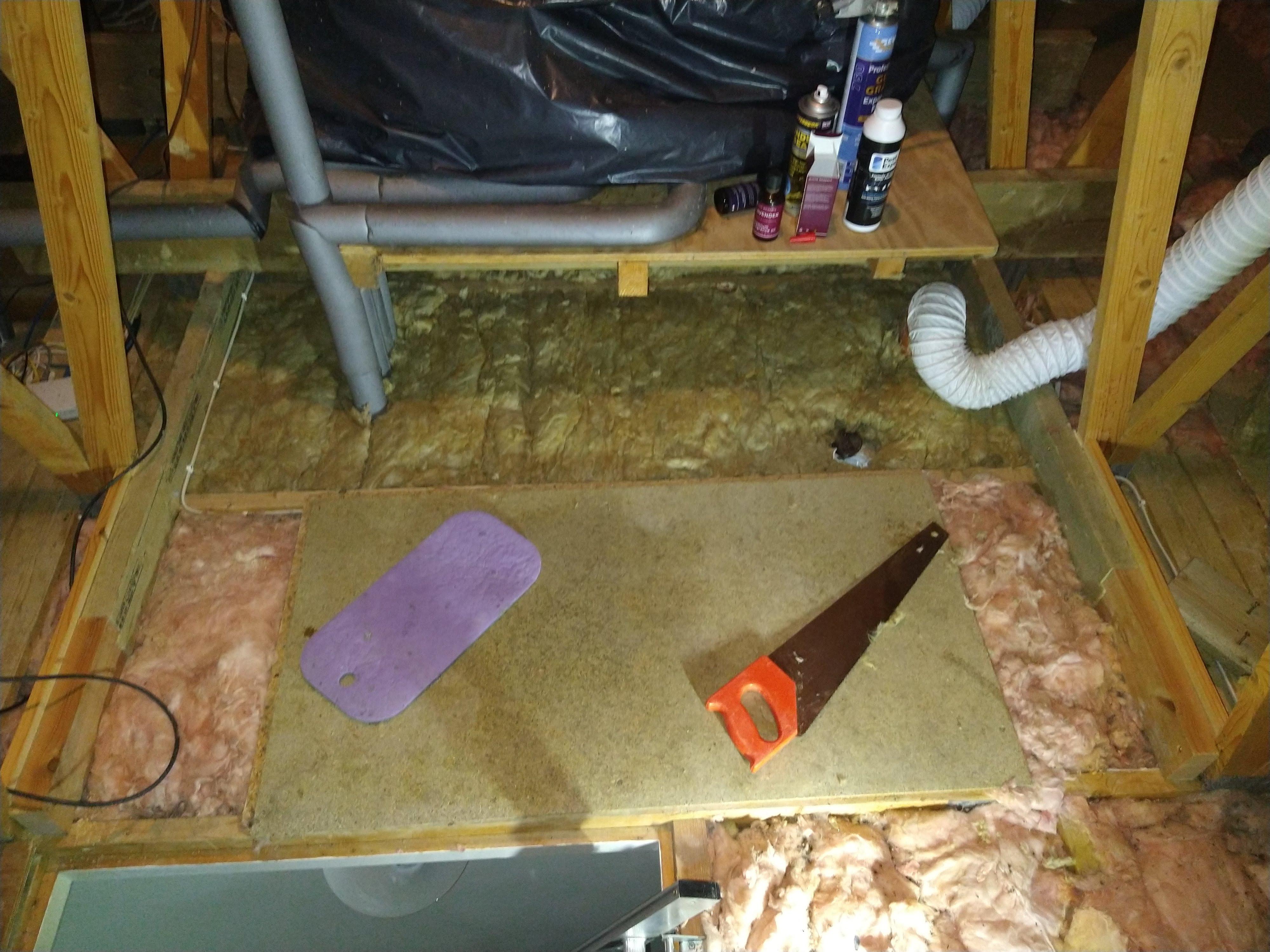
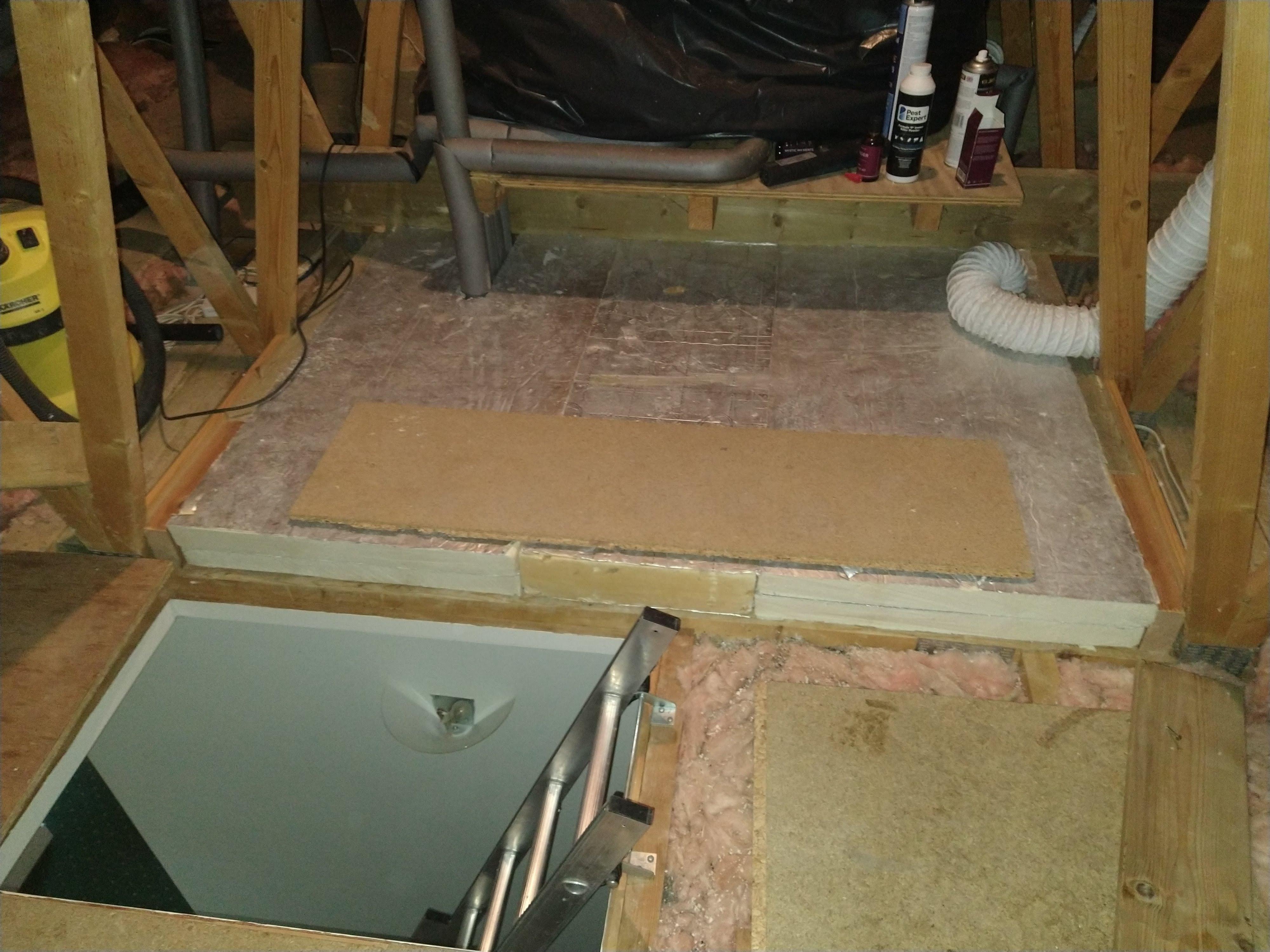
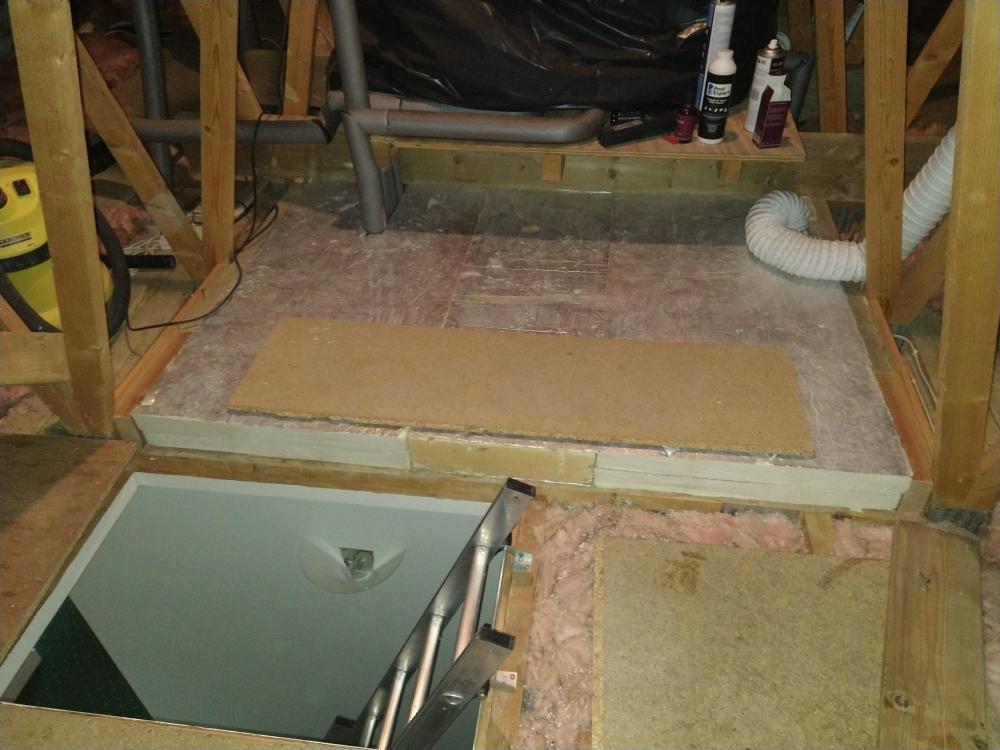
First step is to make a decent access and work area (something I've been meaning to do for a while). The idea is to make a deck that sits between the water storage tanks and loft hatch. To keep the insulation up to scratch I'm framing up 100mm of PUR bits and pieces I have. To begin with this means extending the 100mm joists that carry the tank platform towards the hatch opening: Now the PUR can fit snugly above the minimal glass fibre and mineral wool layer in between the trusses. A good use for some 50mm and 100mm offcuts rescued from a skip: Next job is to trim the end with another length of 20mm x 120 wood and infill on top with flooring chipboard. Maybe tomorrow.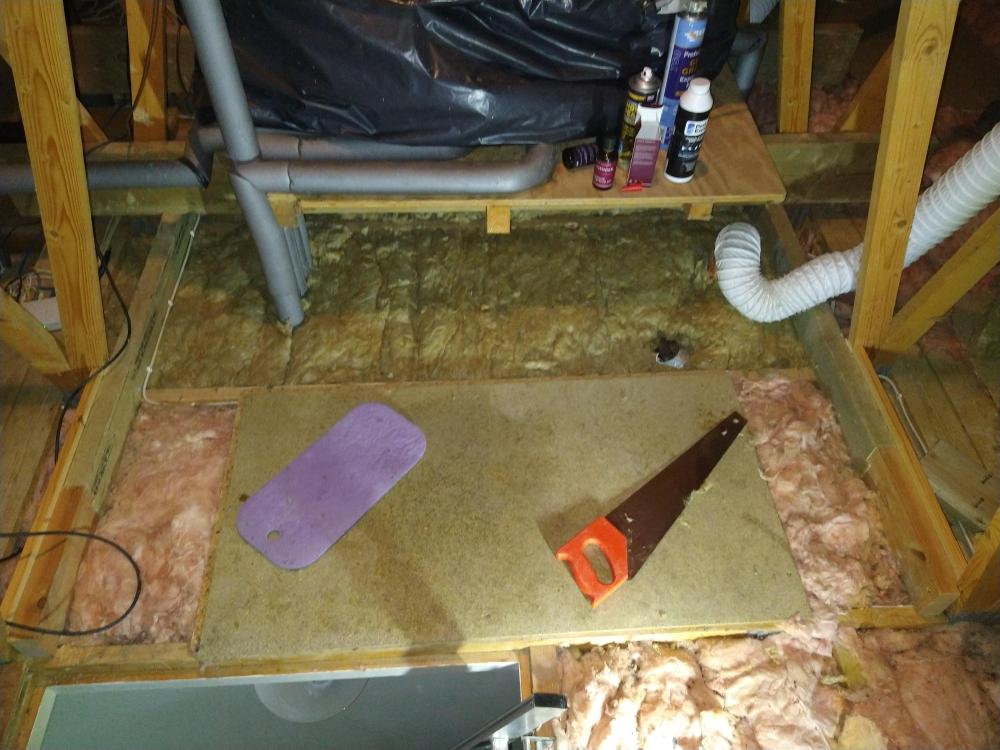
-
I'm jealous. Very neat!
-
Much better than a godawful angle grinder cut. Nice tool!
-
Remind me how much PV/orientation you have if you don't mind...
-
There seem to be too many regulatory hurdles to overcome to allow type-approved inverters that can have built-in wireless sensing like this.
-
Only just realised that this wall is uninsulated
Radian replied to Radian's topic in Heat Insulation
I know how that would end 🤣 I'd be standing there not daring to let go. I think I'll be going with @PeterW suggestion of using some EWI fixings with adhesive. They look ideal for a belt and braces approach. Still undecided about 100mm or 50mm though. The rest of the walls are due to get a 50mm EPS bead fill when the contractor finally shows up with a long enough nozzle, so the U-value using 50mm rigid PUR will be roughly the same (0.24W/(m²K) for both external and internal attic wall). Unfortunately we're not going to be able to improve on this figure but it's far better than the unfilled cavity that we've been living with which is more like 0.5W/(m²K) -
Only just realised that this wall is uninsulated
Radian replied to Radian's topic in Heat Insulation
Never seem to find such things in stock in the local sheds. Then when I look online it's a big box of them for big £££!