
Radian
-
Posts
2586 -
Joined
-
Last visited
-
Days Won
15
Everything posted by Radian
-
Browsing a few datasheets for different types, Water Permeability seems to range from 10 (woven) to 75 (non-woven) l/m2 /s If those units really do mean l/m2 per second then they're all probably just as goo d as each other when sat on a thick clay bed which itself is pretty impermeable. That could be handy in a shallow bed! Really? 😆 Well thanks all. I'm going to go with a woven fabric due to the clay surface it's going on top of. Probably don't even need it as the area has been stripped of topsoil and turf/weeds but cheap enough to do anyway.
-
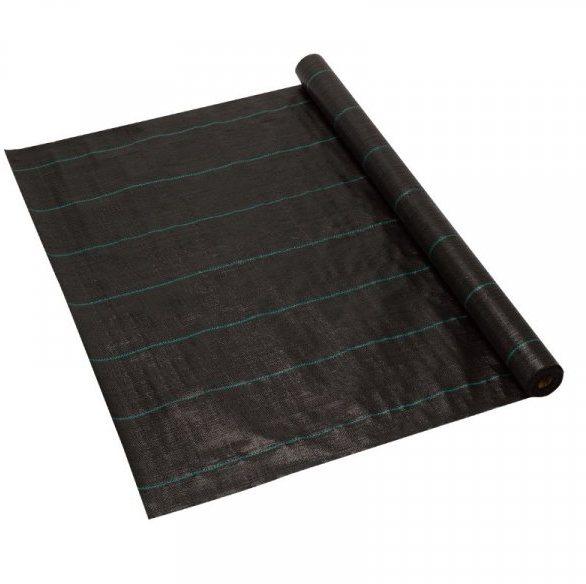
Looking at the landscaping fabrics that Screwfix stock, they all seem to say something like "Allows water and nutrients to penetrate soil." yet they appear to show a woven product like this: Now I thought "woven" types were impermeable to water and only the ones with tiny perforations (like Tyvek or teabags!) were . What am I missing?
-
Hey, just out of curiosity, do any heat pump controllers have programmable schedules for different hot water temperatures? I've replaced the dumb electro-mechanical cylinder stat with digital sensors and Raspberry Pi for a bit more control over our gas central heating. Because HW usage in our house follows a fairly predictable pattern, I drop the setpoint in the evening to establish a night-setback temperature rather than have it completely unresponsive. I also have a weekly sterilization program which I know many heat pumps do implement.
-
As I've pointed out before, doors are inherently splash-proof so the requirement is different to masonry. I.e. non-existent. The real issue is how well the door and casing can resist wind-driven rain. Sliding doors are excellent in this regard as they run in a recessed, drained, channel.
-
I honestly think you've got that the wrong way round. Anyone over 50 with an ounce of DIY mentality and a heart that still beats was probably cutting their teeth in the decades that saw a massive boom in accessible tech like 8-bit home computers. The available tech then was approachable to non-specialists and hence a softer introduction to the arcane complexities of today's systems. It seems to me that my cohort (in their 60's) are the ones most likely to embrace the latest coolness (and its quirks). On the other hand, anyone starting out fresh today can be forgiven for bouncing off the current complexities and regarding it all as black magic. In our household it's the youngest family member who regularly rolls his eyes at the tech when it falls over or fails us for the want of a simple wall switch. He's right of course... so put in standard wiring. Then fit something nerdy in the standard modular format that will likely be available in years to come as a drop-in replacement (when each new iteration comes around).
-
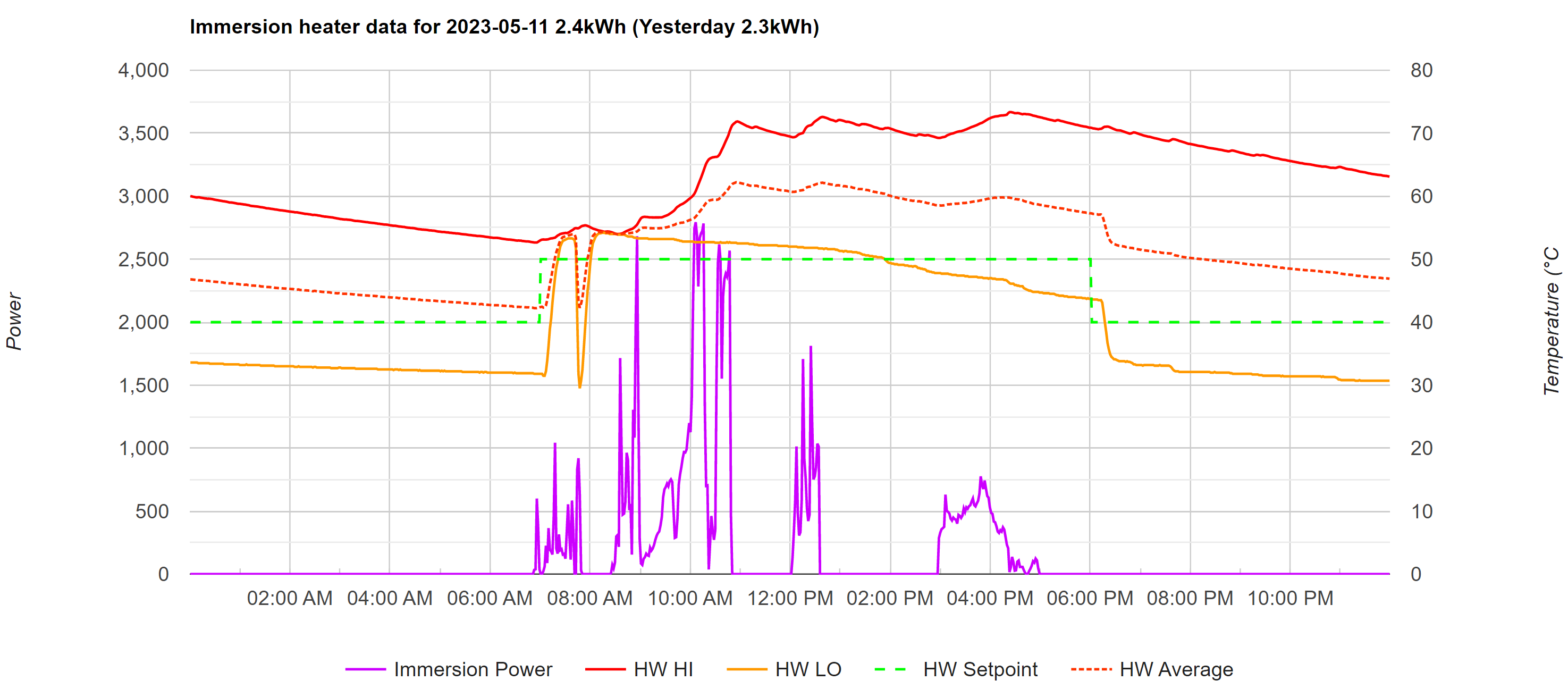
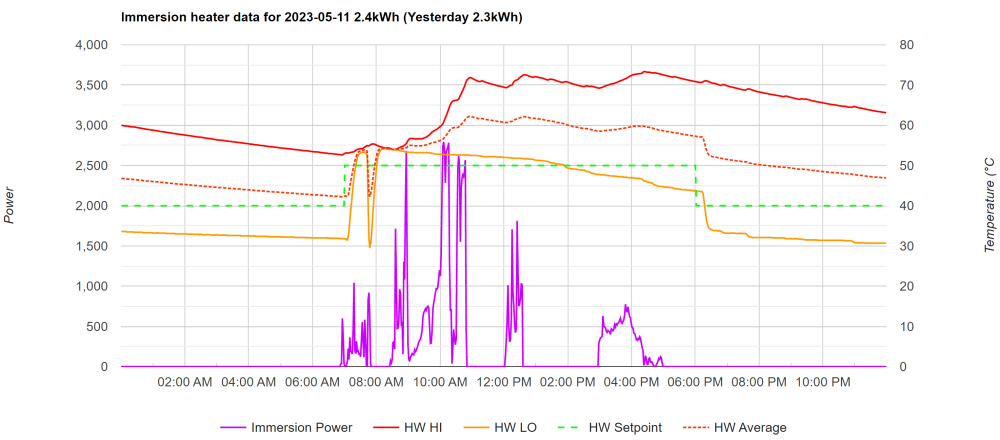
I wish, but sadly no. The immersion element is exactly half the height of the cylinder which is 1200mm and by the evening of a good sunny day it can be 70+ degrees (HW HI): The lower sensor (HW LO) has "no idea" about this and continues to cool off albeit more slowly as per Newton's law of cooling. Coincidentally, I just saw this and thought of @SteamyTea😃

-
Do you log the data to get a time-series plot? I find the goings-on inside my cylinder are a proper mystery although I only record temperatures at the very top and mid-way of the indirect coil. The top half has an immersion fed by excess PV and the coil in the bottom half is fed by a gas boiler. On days with no PV the bottom can be almost 5oC hotter than the top and stay that way overnight which surprised me greatly. I thought after several hours the hotter, less dense, water would find its way to the top but it doesn't.
-
So what 'foundation' do the timbers sit on?
-

Cement mixer hire or buy?
Radian replied to CalvinHobbes's topic in General Self Build & DIY Discussion
Buying a new 136L Belle minimix is pricey though. I can vouch for the almost identical looking £284 136L mixer from Screwfix. Only the power switch has failed since I got it 4 years ago, but these seem to go quite regularly anyway. The switch on my previous mixer went as well as the one on the Belle minimix that my builder brought round when building our extensions. Easily fixed by a common replacement switch available on Amazon. -
It's somehow morphed from the original value read back from a DS18B20, put in a JSON object, sent over MQTT then turned back into a FP value.😝
-
Might be a bit less than straightforward. I suspect that it also has a SB3 Magnetic clutch/brake The rating label shows SB3 and G100 which I think refers to Gear Motor. Can't seem to google up any wiring diagrams.
-
Isn't it funny. I remember noticing that immediately and thought "gotta round that down" then promptly left it like that. I really ought to get into the habit of making a to-do list but I've been resisting my entire life. I think I once thought it'd be better for the grey matter to remember stuff rather than write it down, then persisted in that belief way beyond the time when it might have been appropriate.
-
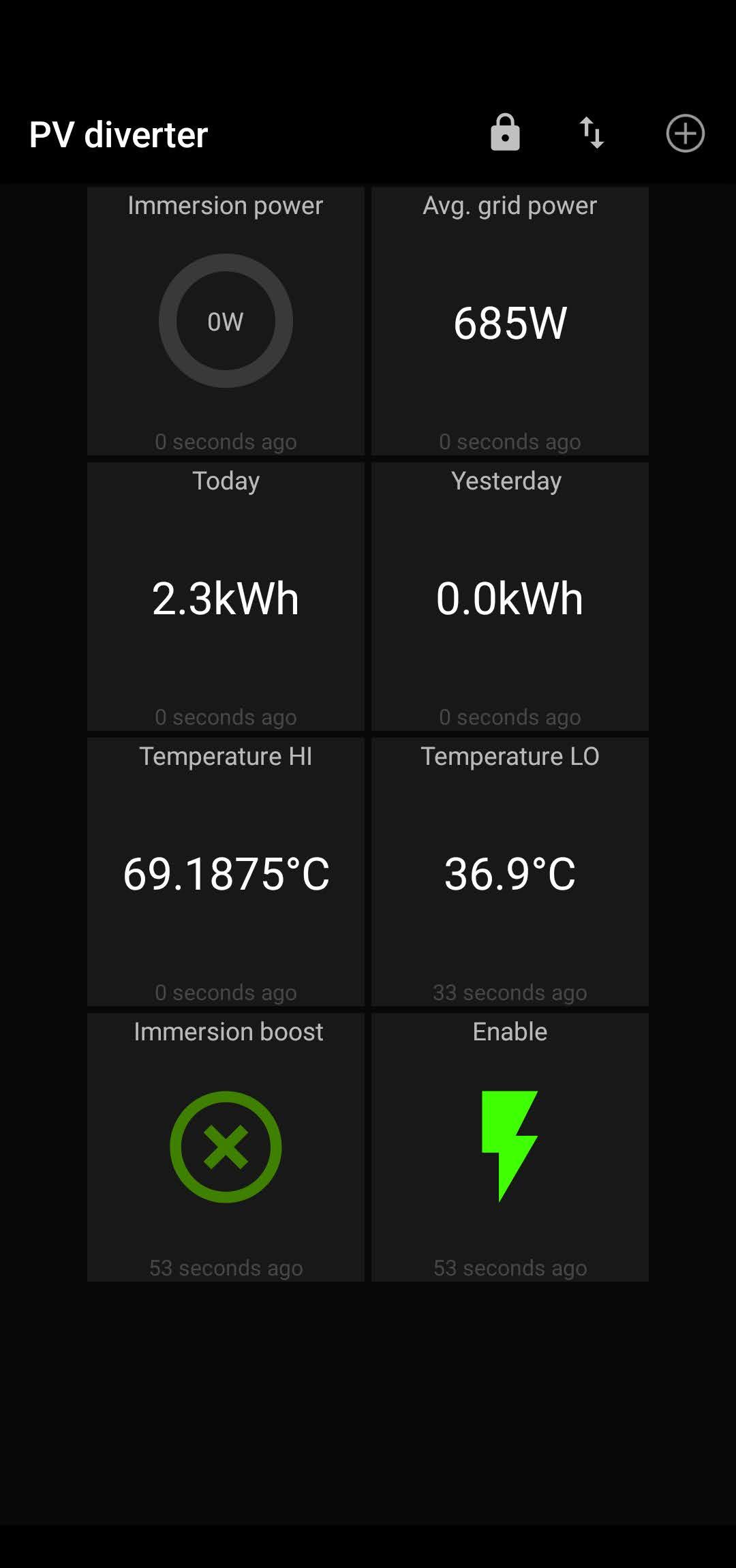
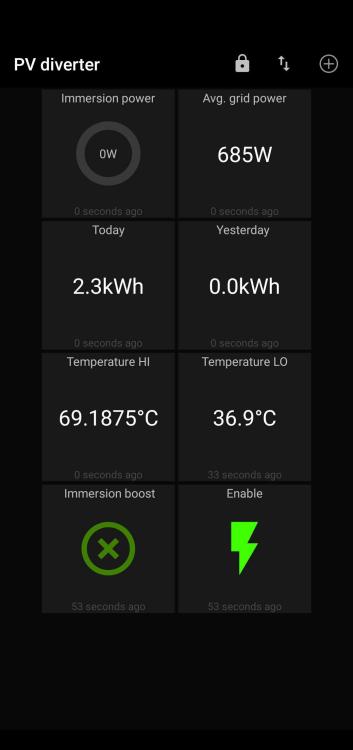
Now we've had some decent Solar and have been diverting useful amounts of energy, I made a control panel for my phone using the MQTT messages sent by the diverter: Can anyone think of any extra info I could show?
-
Solic 200 like Blackpool Lights - Help Needed
Radian replied to canalsiderenovation's topic in Air Source Heat Pumps (ASHP)
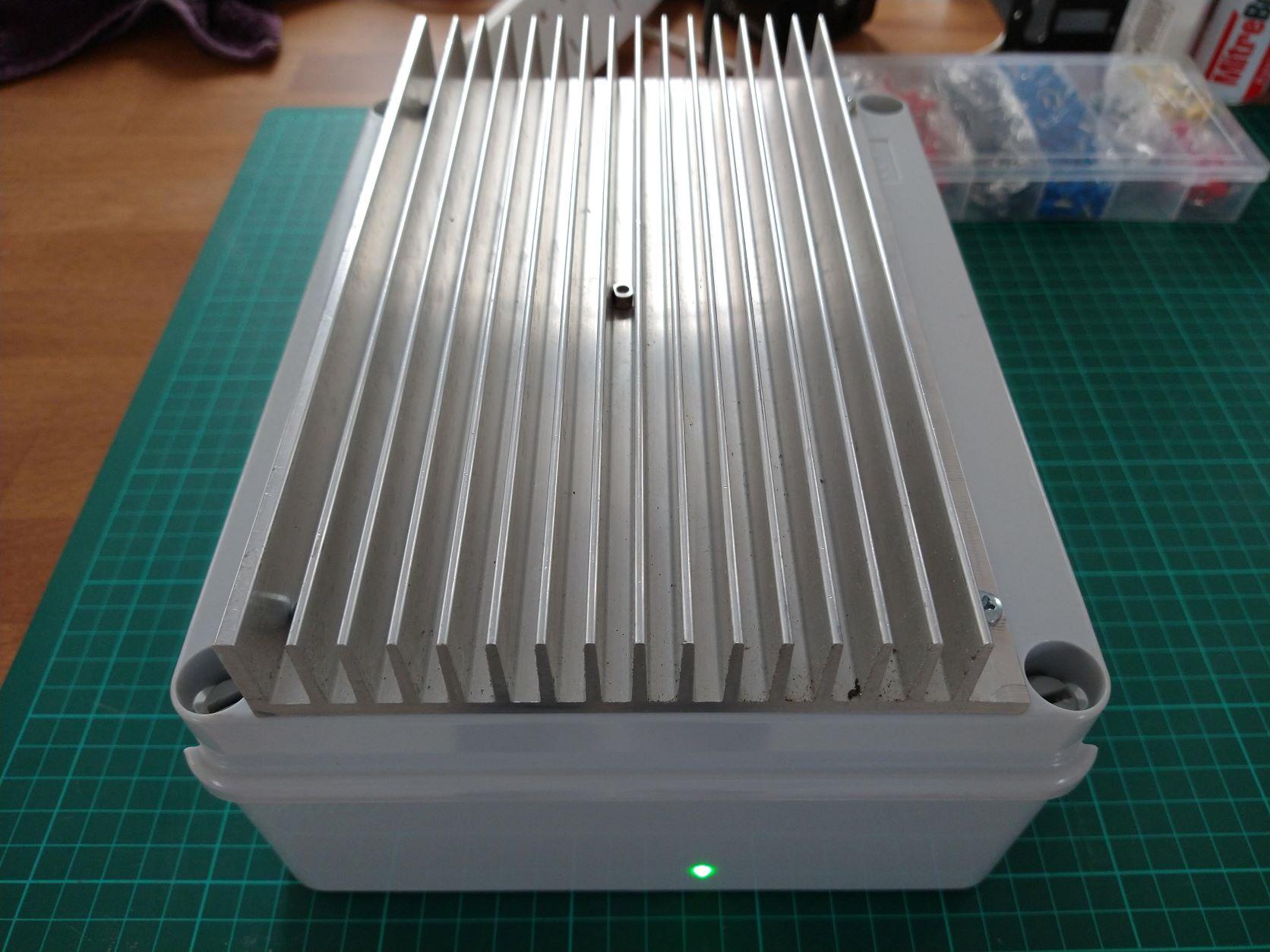
😉 Wot? Like this... (People laughed at how big a heatsink I used but it basically just runs at ambient - which is hot enough already in an airing cupboard)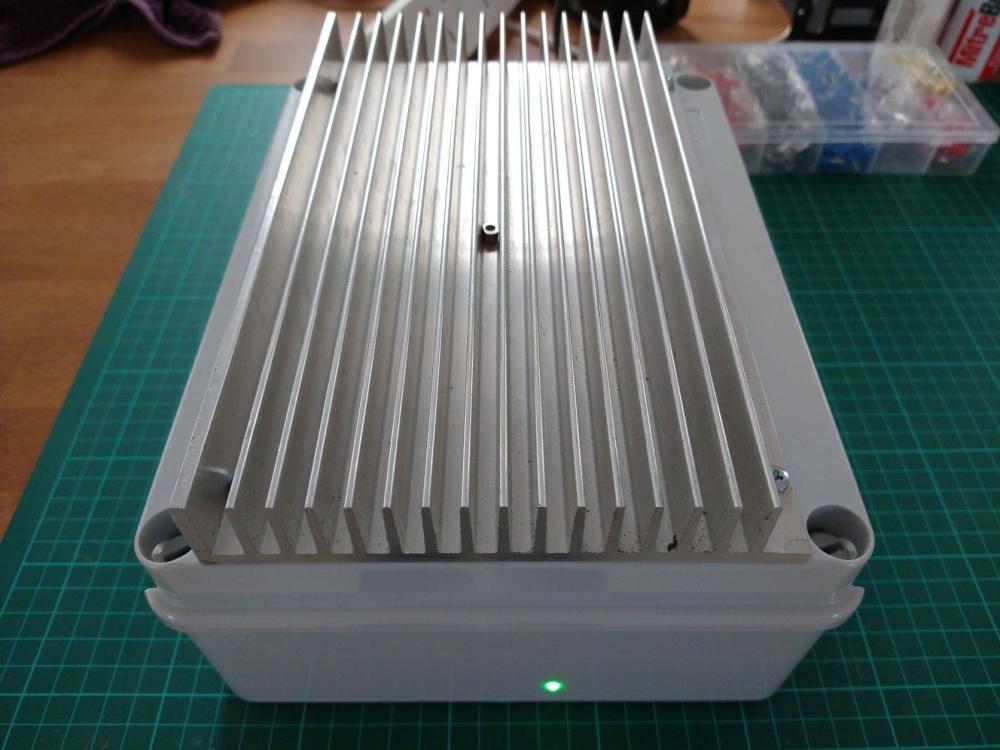
-
The advantage is in its longevity. There are lead roofs, still keeping the rain out, that were installed before GRP and EPDM was invented!
-
That's a fun read! What's the significance of "Suppression of recommendations" - I doubt that if there's a reason to suppress a recommendation, it gets you extra points. Otherwise what does it accomplish?
-
Certainly is. Has one big disadvantage though as many a church has found out...

-
Heat battery for just underfloor heating?
Radian replied to Tilbert's topic in Energy Efficient & Sustainable Design Concepts
There's no real typical value. Only for a given type of floor buildup. Thick concrete slabs tend to be run at lower temperatures for longer. These are well suited to ASHP. My own UFH is in a thin screed and fired by a gas boiler. I run it hotter for less time and expect a faster response from it. -
Heat battery for just underfloor heating?
Radian replied to Tilbert's topic in Energy Efficient & Sustainable Design Concepts
Not necessarily, but it's a good starting point. Why go to so much trouble in one area only to undo the good work in another. 72 was your sq.m floor area (and by inference roof area). 30 was the temperature differential assuming flow temperature of 30oC in the UFH pipes and a soil temperature of 5oC. Just an approximation but a fairly reasonable one that demonstrates what @SteamyTea was pointing out about the differential being so much greater when you're insulating hot pipes: As SteamyTea posted earlier, this formula calculates the heat loss (power) across a given area of insulator for a given temperature at each side. You need a separate calculation for each element and a way to stack up the various layers of building materials to arrive at a combined heat loss. Here's a handy online tool that you can use for free to do this. -
Heat battery for just underfloor heating?
Radian replied to Tilbert's topic in Energy Efficient & Sustainable Design Concepts
Say the 100mm insulation has a U-value of 0.2 W/m2, then with the UFH flow at 35oC and the ground beneath at 5oC, then the loss in Watts will be 0.2 * 72 * 30 = 432W. Nearly 0.5kWh constantly leaking away to the Earth. Do the same for the roof with 150mm of insulation when 5oC outside and 20oC inside: 0.133 * 72 * 15 = 144W. To get anywhere near the same low loss through the floor you'd need a minimum of 250mm giving U-value of 0.08 * 72 * 30 = 173W. -
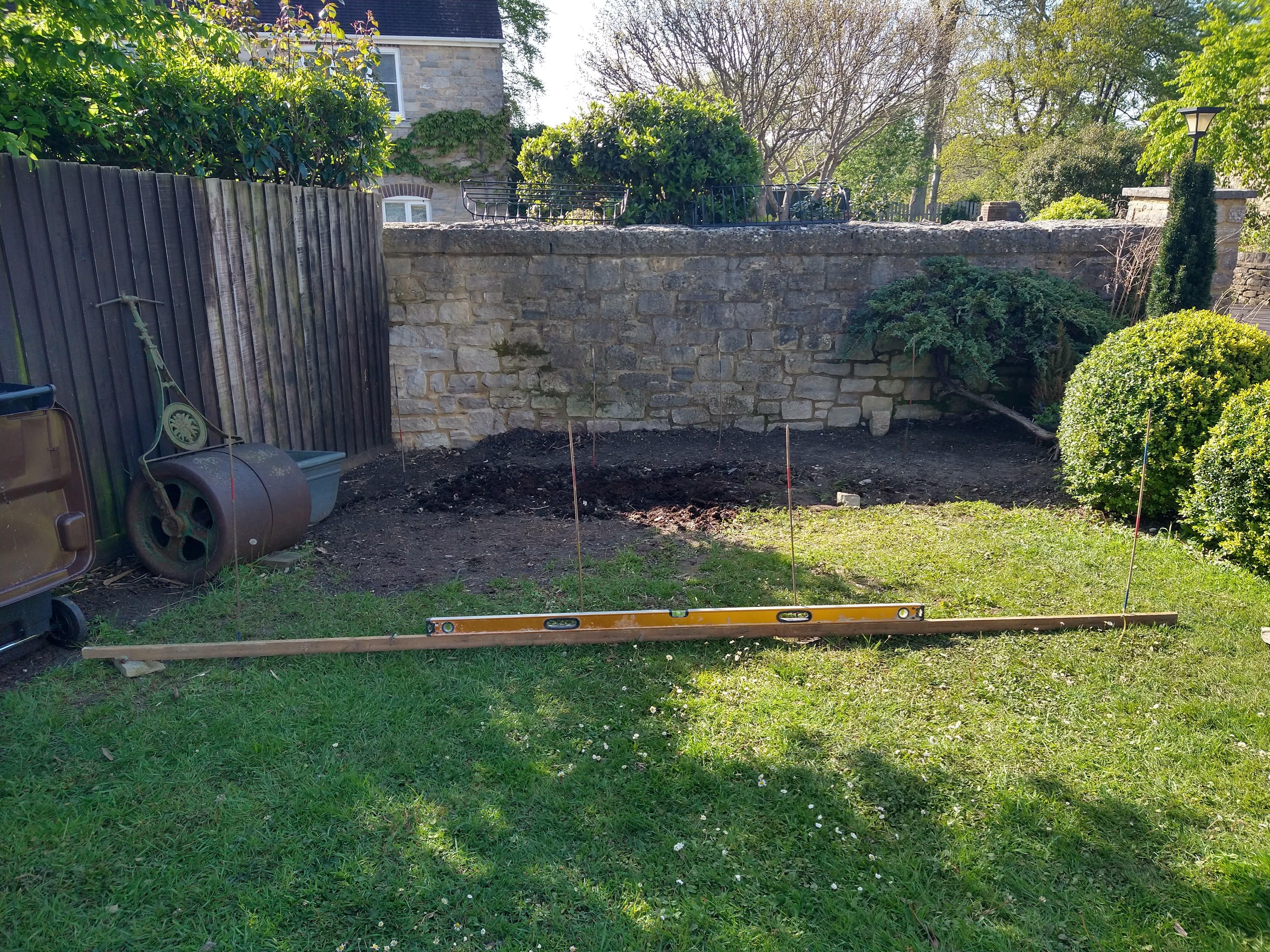
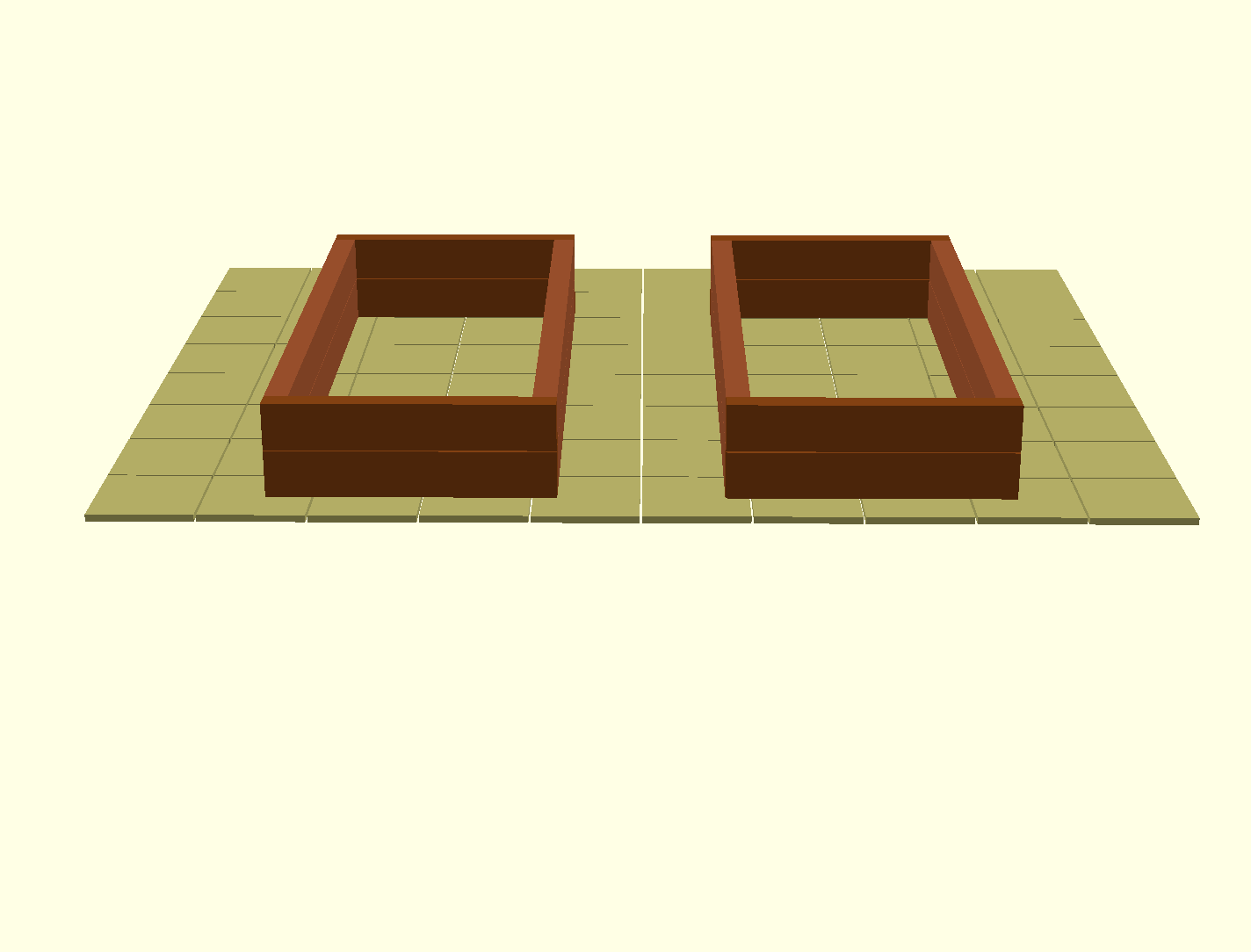
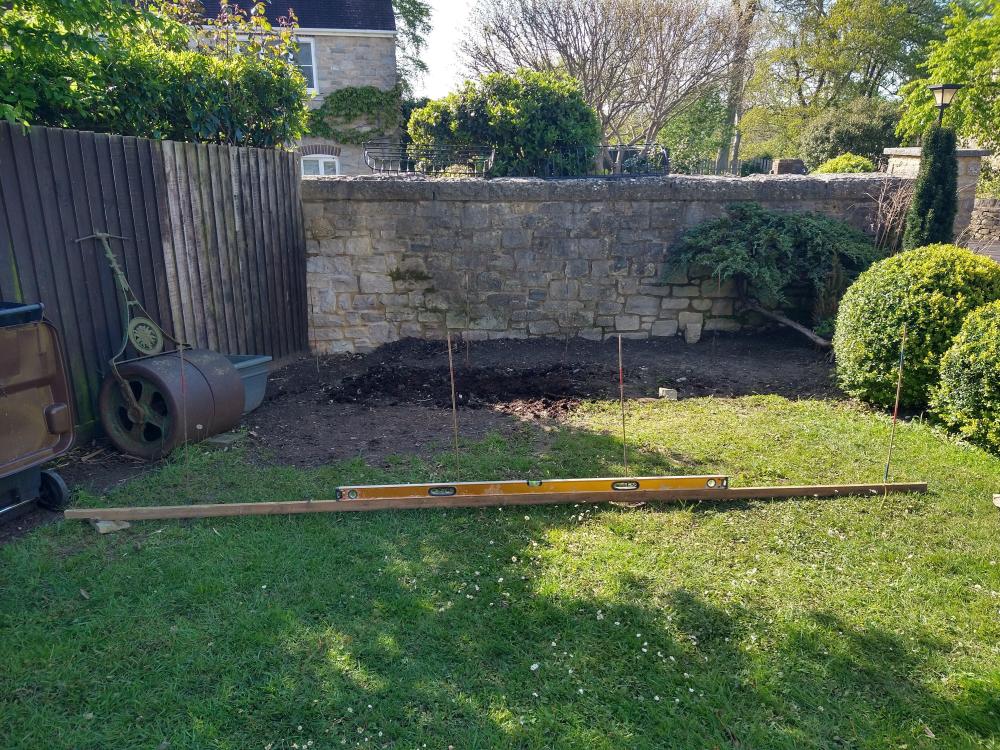
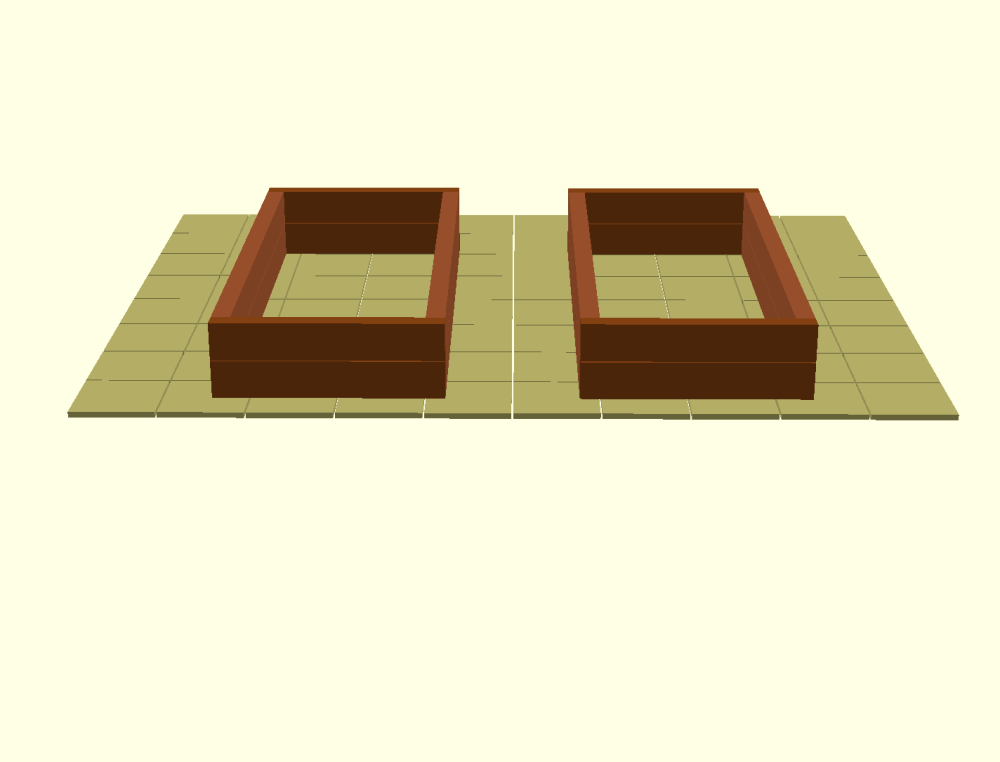
Fooled me there 😄 I'm having a bit of a head scratch about what to do next. Here's the site with 8 sticks marking the corner positions of the beds: I was going to spread gravel around the beds but I have around 100 x 450mm concrete slabs lifted from our old patio and stacked behind the garage. They could be laid as a flat area and the sleepers placed on top (with the slabs removed from under the beds): But I don't really want to make it the full-on patio build that I'd normally do (excavate 200mm, whaked-in 150mm MOT type 1, 20mm mortar bed, 30mm slab etc.). I'm wondering if loose-laying on a screeded bed of sharp sand might be sufficient? Drainage would be a bit better overall such that I might get away with laying it without a fall (it would seem wrong to have a fall on the beds anyway). I still need to dig down to undisturbed soil (clay probably) and the whole area slopes down towards the wall and into the corner where the fence meets the stone wall and I can't really build-up with excavated soil in the corner as it will settle in time. That'd mean having a 250mm deep sandpit in places 🙄
-
It looks like you bedded the sleepers down onto concrete pads where they connect - did you just dig a pit for the concrete at those points and level-fill to get an even base?
-
200Wh batteries, 500W microwave, two jacket potatoes and that's it.
-
Insulating between rafters and joists in barn conversion bathroom
Radian replied to vagrantly3893's topic in Heat Insulation
That could be the case, but I think having a breathable membrane makes this optional. The membrane should be laid with a droop and as such ventilates the space at each overlap (the droop is primarily to prevent water being trapped on the battens). -
Insulating between rafters and joists in barn conversion bathroom
Radian replied to vagrantly3893's topic in Heat Insulation
It's a breathable membrane so vapor will be breathed in/out along with the air from the outside (uncontrolled) and the inside (controlled but practically impossible to control 100%). The insulation wool is also full of air pockets so the vapor will hang around in there. If it hangs around when the outside temperature drops, it will condense on the timber. The air gap is there to make sure the air doesn't hang around.