
Radian
-
Posts
2586 -
Joined
-
Last visited
-
Days Won
15
Everything posted by Radian
-
I bet that looked like a lot when it was delivered! Curious to see the nozzle you ended up using.
-
 COP might be somewhere around 2 point something so 150kWh of heat, supplying HW as well doesn't sound implausible. Have you got a heat loss calculation for the house? If it was mine I'd have been pleased with that performance (admittedly a bigger house).
 -
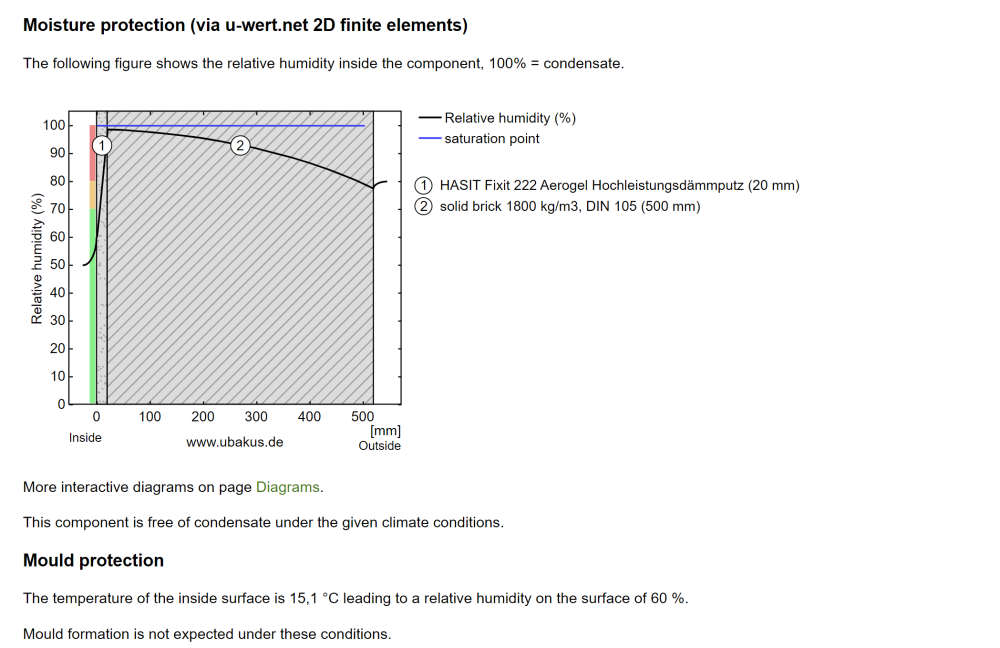
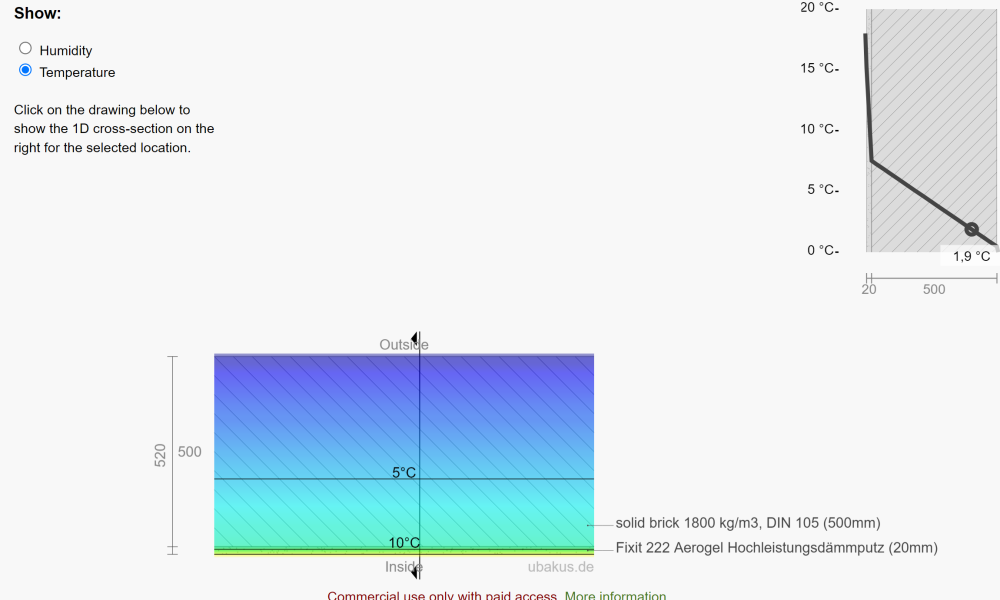
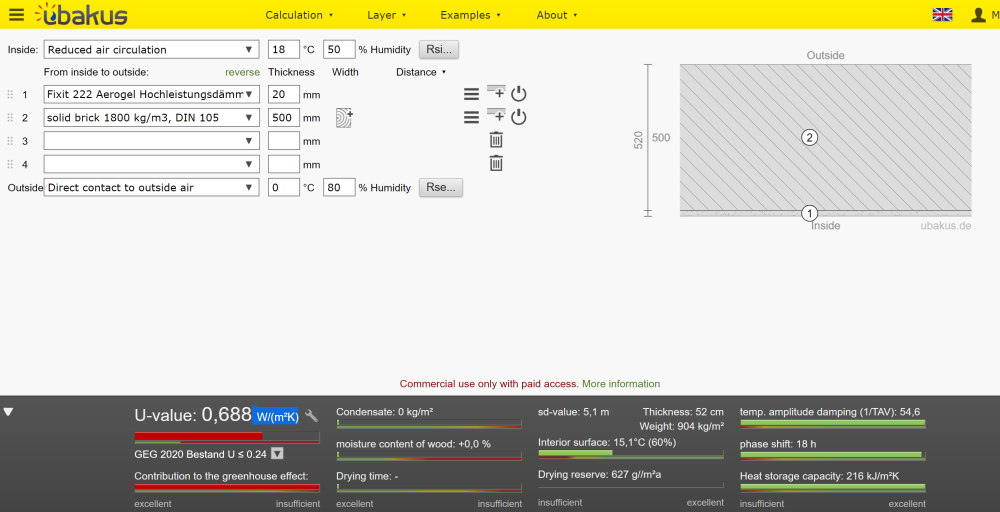
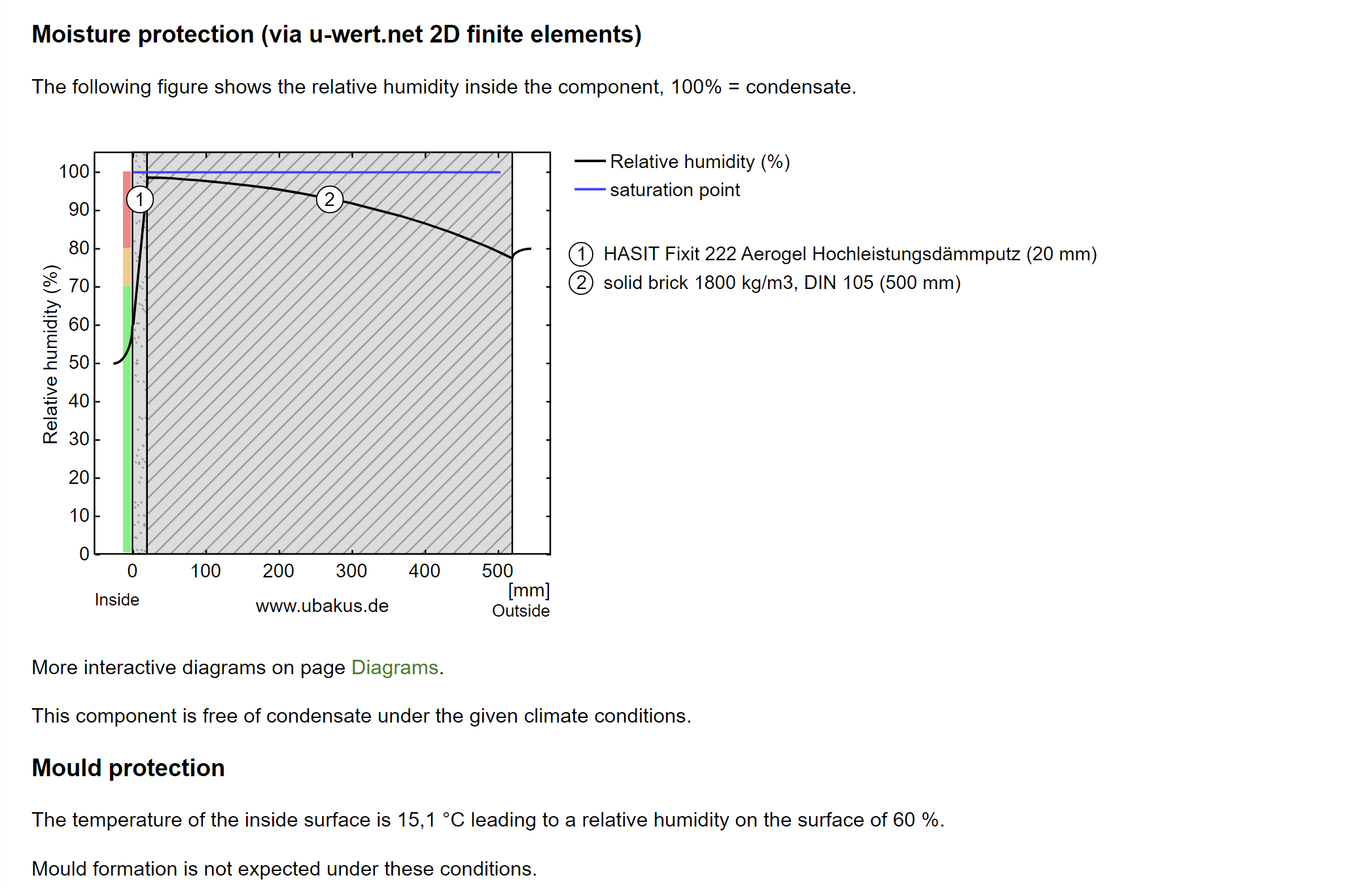
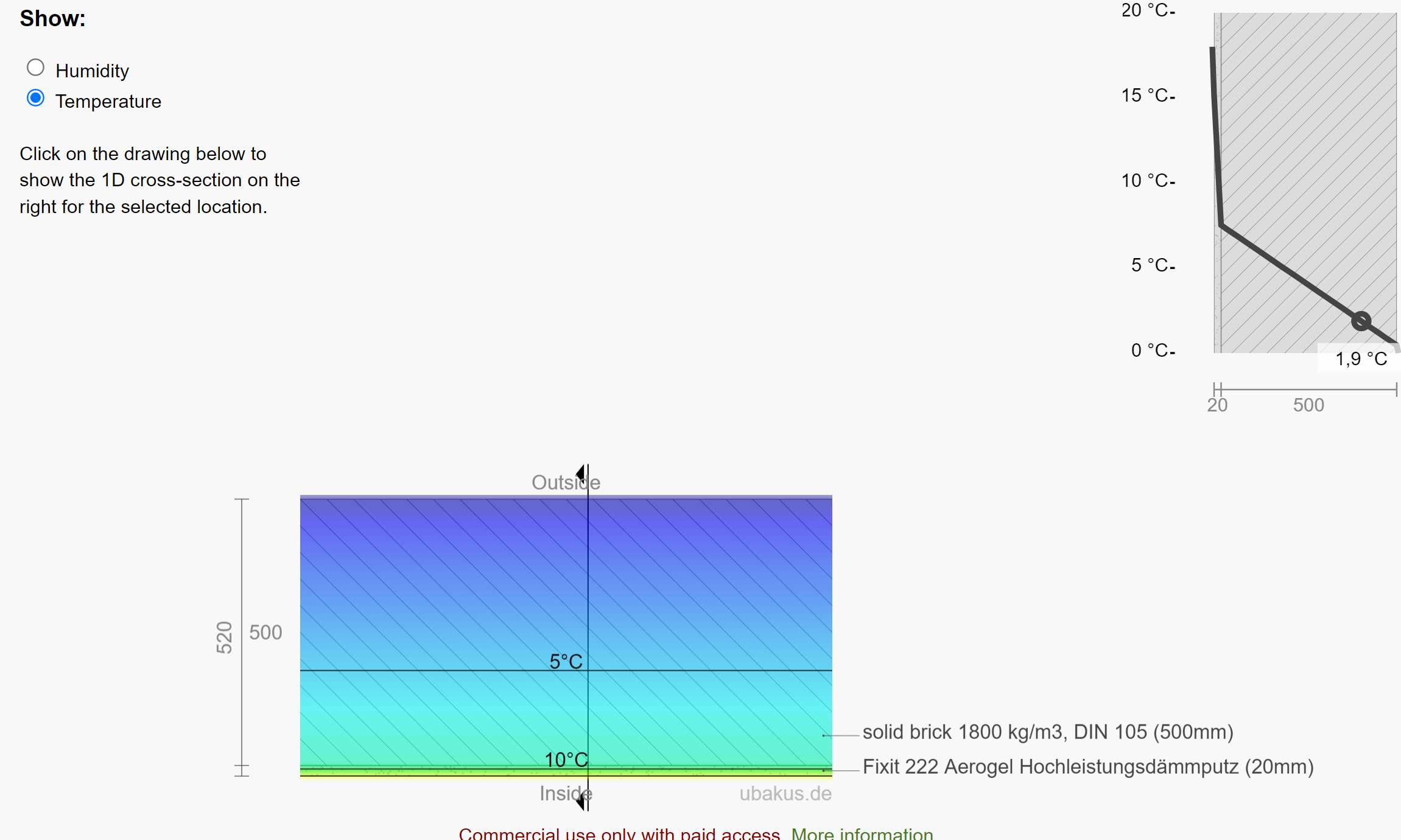
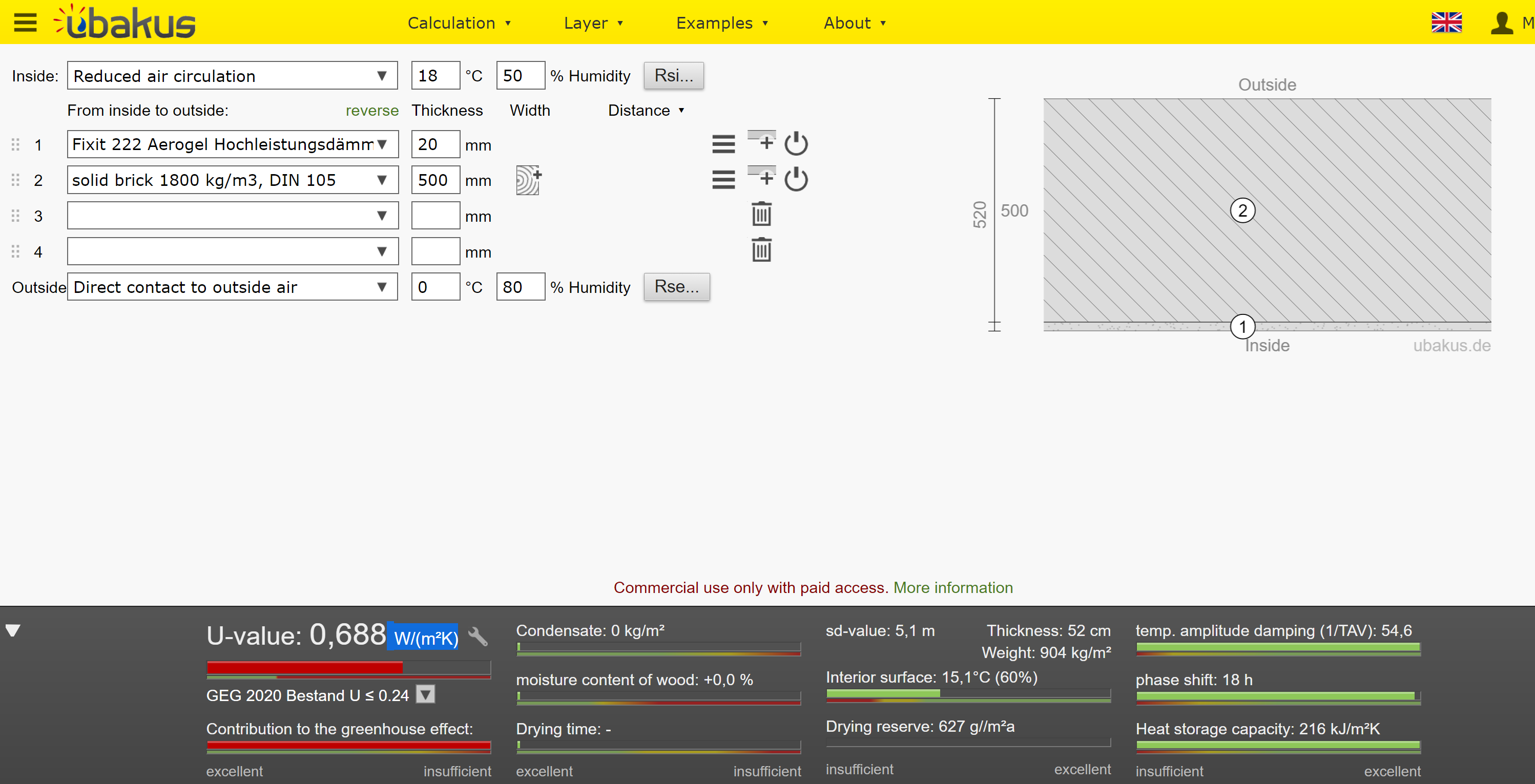
You definitely need to understand the materials involve in the construction of the external wall. By insulating the surface on the inside, you move the dewpoint out into the wall. Whether or not this is an issue for the wall needs to be understood. The problem is you may do too good a job of insulating the inside. If you downgrade the insulation by swapping the plaster for thin sheets of composite XPS (Ubakus suggests WLG 035) then the dewpoint remains below saturation point throughout the structure and still prevents condensation on the inside. To see this suggestion, disable the plaster layer and look at the Moisture report with 20oC/50% in, -5oC/80% out: Mould protection The temperature of the inside surface is 13,1 °C leading to a relative humidity on the surface of 78 %.Some kinds of mould start to grow at relative air humidities of 70% or more, mould cannot be excluded!. Under the given circumstances, mold formation can be avoided by the following measures: Reduction of the relative humidity of the room air to 45% Increasing the surface temperature to 14,7°C by (additional) thermal insulation. This would require about 10 mm insulation (WLG 035).
-
Any electronic component experts? SMD identification.
Radian replied to ProDave's topic in Boffin's Corner
Possibly the root cause of SMPS failure if they were in that area. I wouldn't risk losing battery power - although makes you wonder if this is another one of those 'deliberately fails out of warranty' scams. The high cost of a replacement board is suspicious enough. -
Any electronic component experts? SMD identification.
Radian replied to ProDave's topic in Boffin's Corner
My guess would be +5V and +12V for relay drivers. But what's that daughter board with the PCB edge connectors and shiny bracket on top for? -
Dating probably just to maintain published hazard data: DUNLOP CF-03 FLEXIBLE FAST SET ADHESIVE GREY Hazard statements H315 Causes skin irritation. H317 May cause an allergic skin reaction. H318 Causes serious eye damage. H335 May cause respiratory irritation.
-
-
-
You can have a play with Fixit 222 on ubakus
-
Any electronic component experts? SMD identification.
Radian replied to ProDave's topic in Boffin's Corner
So at least it's nothing fancy like an inverter power drive. Although you'd think it was something exotic from the exorbitant replacement cost. Can you identify what voltage rails are used? The 50V caps probably filter the 24VAC after rectification giving 33V. The inductors don't look like SMPS buck components. Possibly line filters for the AC in. Looks like there may be a solitary SM inductor hiding behind one though. I'd expect a SMPS regulator IC around there somehwere. You probably have as much chance as me in getting this going again but I think I'd try identifying the supply rails in use and do two things with that info: Cut the track for each voltage as close to it's origin as possible Use current limited bench psu's to provide those voltages to the rest of the PCB (and slowly bring up the current to see if sensible) If all seems OK, try and repair the on-board PSU To do the repair probably means identifying and replacing all the blown parts in that area - which would be aided by tracing out the schematic which will probably look similar to any app notes for the SMPS IC if you can identify it. Then just power it up with the rest of the PCB still disconnected - and use current limiting on the input. This could be from a DC bench supply as the 24VAC probably gets rectified almost immediately. Of course it might not be that simple if its a multilayer PCB with internal power planes. Still, it looks like a pretty basic 2-sided board to me. -
Any electronic component experts? SMD identification.
Radian replied to ProDave's topic in Boffin's Corner
What's the voltage rating on the two big capacaitors? -
I'm always wary of stuff at cut prices though. I seem to recall someone posting around here that they bought a jumbo pack of Ilbruck foam off ebay and most of the cans were duds. What really pisses me off is that you can get caught out like that just as easily paying full price. That's why I feel obliged to buy from the regular "full price" merchants.
-
Any electronic component experts? SMD identification.
Radian replied to ProDave's topic in Boffin's Corner
I've used these on just about every product I can think of. Quite often used as a clamp to keep a signal input voltage within the supply rails. In this configuration pin 1 is connected to 0V, pin 2 to +V supply and pin 3 is the signal being clamped between the rails. Having aid that there would usually be a current limiting resistor in series with pin 3 to avoid blowing the diode! Of course if you shove enough voltage up it you'll still blow it up (and the resistor). -
Mmmmm... secret source
-
Any electronic component experts? SMD identification.
Radian replied to ProDave's topic in Boffin's Corner
Without looking it up, think it's a dual silicon diode. BAV99 That's how sad I am. -
Oh yes, very Interesting
-
The corners always fare worse as the air tends to be more stationary there but I can't help noticing an obvious cold patch at the junction between skirting and floor on the RHS Is there a gap you can fill there:

-
You just have to create a cloud based heating control system and undercut the competition. Then you'll get all the data you could dream of.
-
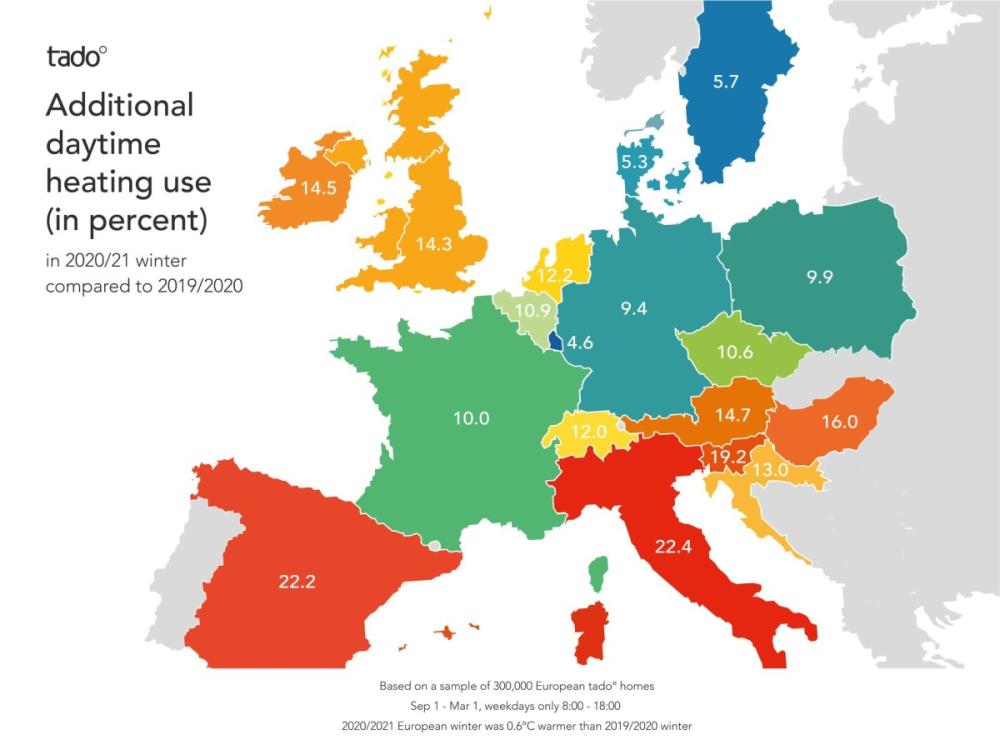
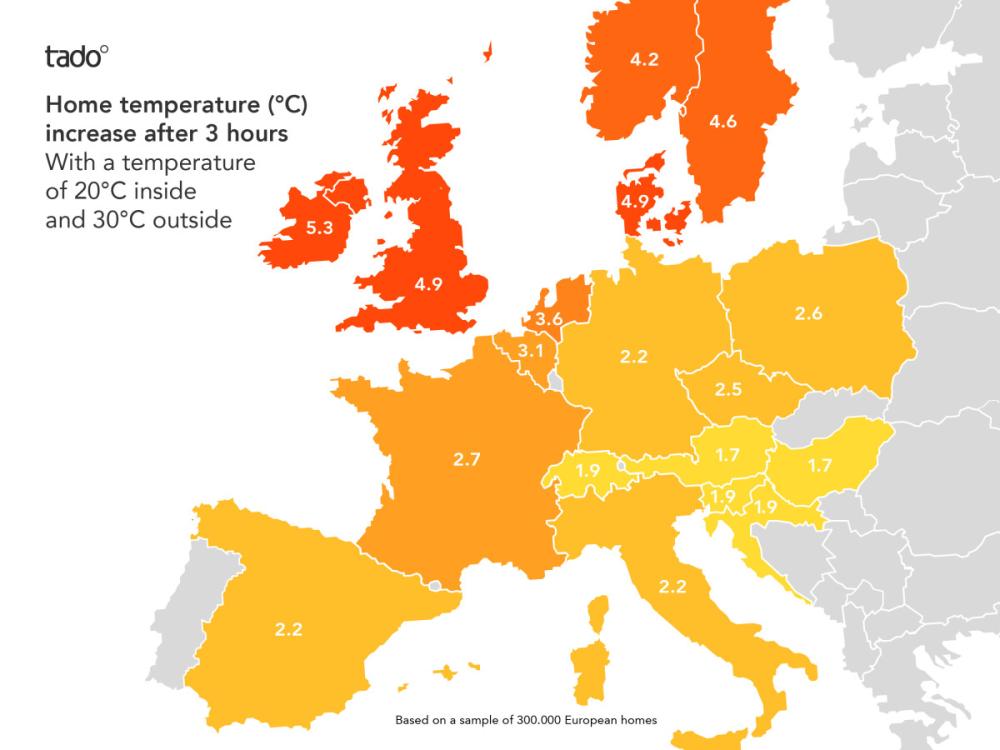
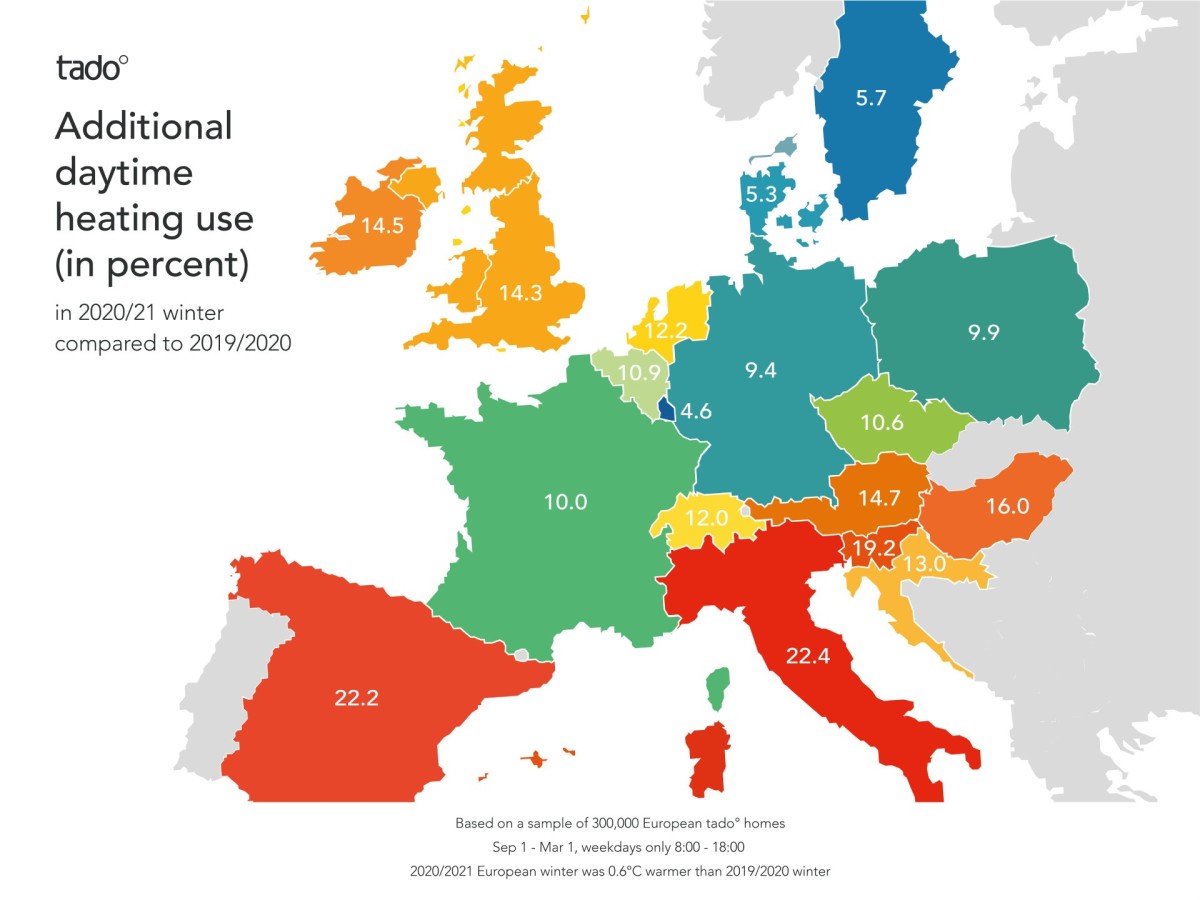
They must be extrapolating the data to get a 20oC delta from Spain anyway. I'm not sure I'd say they base their surveys on rubbish data though. After all, they do have exceptionally good data coming from inside people's homes along with their geolocation data. It's something they've been exploiting for other purposes as well: COVID-19 has caused a 14% increase in home daytime heating London, 20.03.2021 - A new study from tado° has found that UK homes had their daytime heating on 14% more this winter in comparison to the previous winter. Despite financial and environmental savings made with less driving, home energy bills have gone up as heating use has increased. UK homes heat up much faster than European neighbours on hot summer days The study, conducted in over 60,000 UK homes in the summer of 2021, found that a UK home with an indoor temperature of 20°C and an outside temperature of 30°C in sunny weather gains on average 5°C after three hours. Compared with some Western European neighbours such as Germany and Italy, UK homes are gaining heat more than twice as fast.
-
Tado published an article a couple of years ago showing that UK homes lose heat significantly faster than European neighbours, even when factoring in outside temperature: My thanks go out to all owners of Tado smart heating controls that made this embarrassing data available. Good on ya!
.thumb.jpeg.9e796440fcfe4725a888437ef67634de.jpeg)
-
My lazy brain initially told me this might be a very simple way to get an overall U-Value for the house. But then I asked myself how the measured loss in air temperature would relate to the conduction losses through the building fabric and got completely lost. It would be nice to have an average W/(m²K) as a sanity check for the spreadsheet heat loss calcs I've done although they agree quite well with the actual amount of energy I'm having to put in to maintain an indoor/outdoor delta.
-
The way @Jason213 described them was that they were left dangling in the soffits! Apparently there were unused roof vents so he connected them to those. Then he temporarily used the loft mounted inline fan to evacuate the loft - I hope the bathroom ducts are now back to be vented out through the roof!
-
ASHP / Underfloor heating issue
Radian replied to Benpointer's topic in Air Source Heat Pumps (ASHP)
Too true Jack. It's looking bad but I guess we've got a selection effect going on here. I've only seen one member posting up about how well his ASHP is doing but that doesn't mean he's the only one with a correctly installed system. -
It sounds reasonable enough in theory, but in practice you're interrupting the natural ventilation that cold lofts rely on. Wrapping things that are open to vapour on one side can end up making big problems with condensation. You're only thinking of using rigid insulation to improve the insulation levels at the outer horizontal edges but is this really where the problem lies? I put up the diagram showing the issue I have at the eaves. How does your insulation regime ensure a continuous envelope that wraps the inner leaf? I.e. how does your vertical cavity wall insulation (you do have that right?) transfer to your horizontal loft roll? Mine has a 300mm break!
-
Update on Timeshifting to Minimise Heating Costs.
Radian commented on TerryE's blog entry in The House at the Bottom of the Garden
Luckily wind has been notably absent coinciding with this cold snap.




.jpeg.0b83e32d6141bb129a38f2dd59e1ba6e.jpeg)