
Radian
-
Posts
2586 -
Joined
-
Last visited
-
Days Won
15
Everything posted by Radian
-
Wow, really? I guess the regularity of once a day gets the job done. Sounds like I should go against the advice that keeps popping up in my news feed - that says not to water lawns - at least for a while. The advice seems to be to conserve water on the basis that grass will naturally recover once the rains come again. Last year the old lawn was like a doormat all summer then bounced back. But the roots will have been well established unlike the new stuff. A proper mulching cut seems to be recommended to recycle the nutrients rather than cart the clippings away but I've never had a mower that will do this. The grass needs to be chopped into very short pieces.
-
Finally laid some turf above my retaining walls around new extensions back in February. It got off to a great start up until mid May, since when, we've had very little rain. Only a couple of mm since then. Haven't cut the grass much so still quite long but starting to show signs of yellowing. I get that it's not wise in general to water lawns but what about new(ish) turf?

-
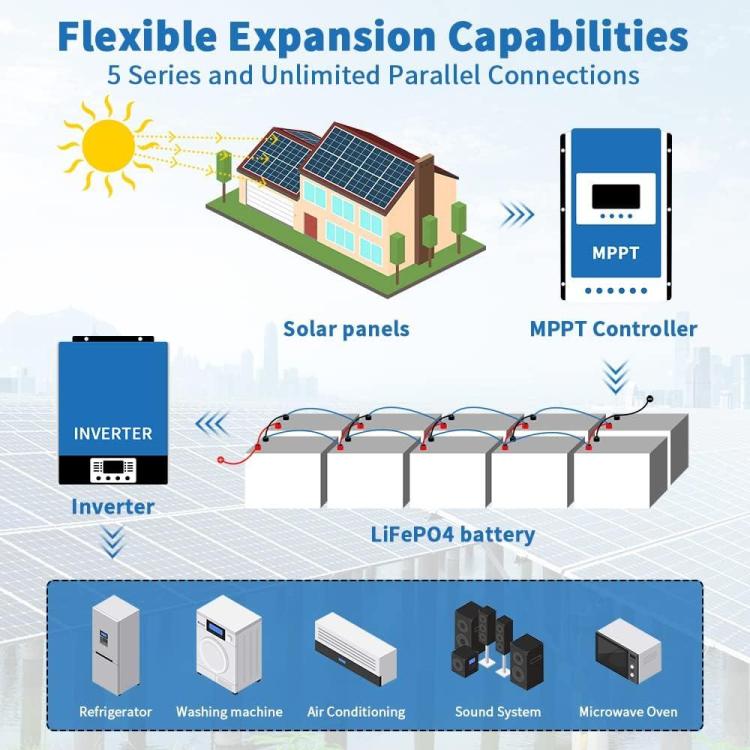
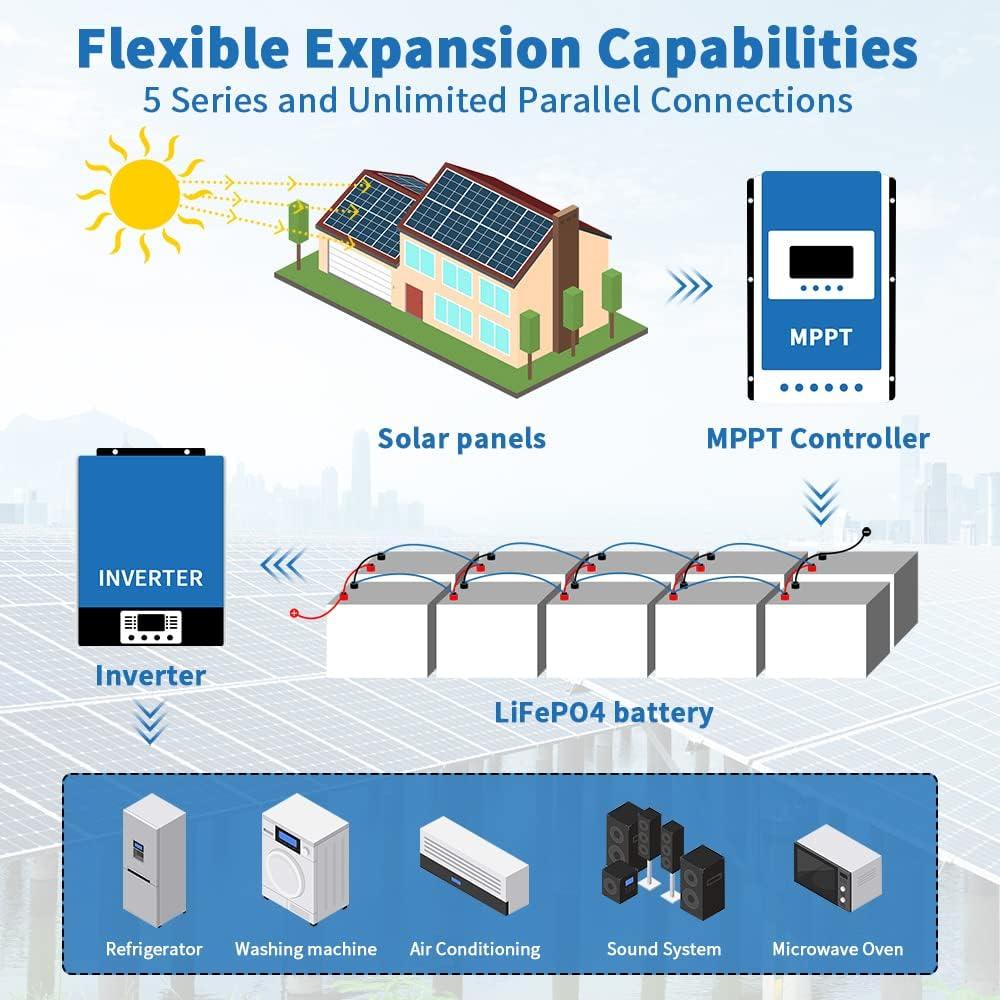
Well, here's a shot at it for you to contemplate, inspired by a 24V 100Ah LifePo4 Battery that can be daisy-chained (allegedly) to up to five batteries in series over on Amazon The chemistry puts each cell at 3.65V max, with 8 cells per '24V' pack. That's 29.2V at maximum SOC. a total of 146V which should start-up most inverters and keep it going at above 120V until depleted. Here, they even show a pretty picture of it: Now that's as close as I've come to a plan for a DC system - but the MPPT controller that would regulate the charge for this particular setup isn't the kind of off-the-shelf item I see out there in the market. If it was, it would have to play nice with the MPPT of the inverter and do its power-sharing without pulling the PV output down to its level In my case a big old Buck Regulator to transform the approx. 250VDC from my PV down to 146V @ 10A which is reasonably do-able. Alternatively, an AC coupled charger on the other side of the inverter would give more flexibility at a small reduction in efficiency. Either way a couple of Silicon Carbide Diodes could arbitrate the input to the inverter with a relay to manage when the battery is used. So not something you could throw together entirely with off-the-shelf assemblies but the end result would be very handy: A 12kWh battery system for only £3,250 plus a few 10's of quid for transistors etc.
-
Unfortunately I don't think "we're there" yet. Browsing the market for raw LPF batteries it's striking how the pricing is on a continual downward slope - especially in the recycled EV sector. As tempting as it is to hack some of these bits together to make a DC coupled system on the cheap, I think it's still too costly even at half the price of commercial kit.
-
'Correct voltages' being probably something in the region of 120VDC to get the inverter to start up - which requires multiple series of typical battery packs. Then an external charge balancer for those. I doubt this could be cobbled together easily.
-

Immersion diverter - can these confuse the app "usage" data?
Radian replied to MrTWales's topic in Photovoltaics (PV)
From the cool energy manual @JohnMo posted. Implies that it does have some idea of current drawn by both immersion circuits. Good luck getting an actual 70oC into the HW! -
Final (hopefully) bit of tape and membrane done today
Radian replied to Thorfun's topic in Ventilation
I guess you also need to make sure all the waste traps are full of water. -
Have you considered steel piling? It could allow you to go nearly all the way into the bank. Then dig out and maybe build a garden room!
-
Solic 200 mod - scheduled boost for off peak hot water
Radian replied to RichardL's topic in Photovoltaics (PV)
Having personally gone to great lengths to build a diverter basically for free, I'm still undecided about the economics of using it. If it required an outlay of several hundred quid it would definitely not be cost effective given that (in theory) you can be paid 15p/kWh for the export instead. -
Should I return this immersion heater?
Radian replied to Radian's topic in Electrics - Kitchen & Bathroom
Funny thing that... the stainless steel cylinder rules out any copper sheathed immersion. So that rules out most of the market in alternative brands. Many other manufacturers do indeed offer nickel-chromium alloy (Incoloy) elements but the thermostat pockets are still copper. This is because their designs are focused on their ability to maintain a stable structure during prolonged exposure to high temperatures - not Galvanic corrosion. Direct SS/copper interface mediated by hard water = corrosion. So titanium gets around this but seems to be an engineering challenge too far for the humble domestic immersion heater manufacturer. I'm trying an all-incoloy immersion now but guess who the only mftr. is for these 🙄 -
Should I return this immersion heater?
Radian replied to Radian's topic in Electrics - Kitchen & Bathroom
The pattern repeats. This is the second Titanium one I got. Lasted a few weeks then took out the RCD for an obvious reason: Surprisingly the element still has continuity. I would love to know why it failed..thumb.jpg.7218f433ca2fb1dc23f5e54b583ac21c.jpg)
-
To signal the firing of my immersion control TRIAC I use ESP now which sends packets over 2.4gHz with extremely low latency. Low enough to be sent every mains cycle.
-
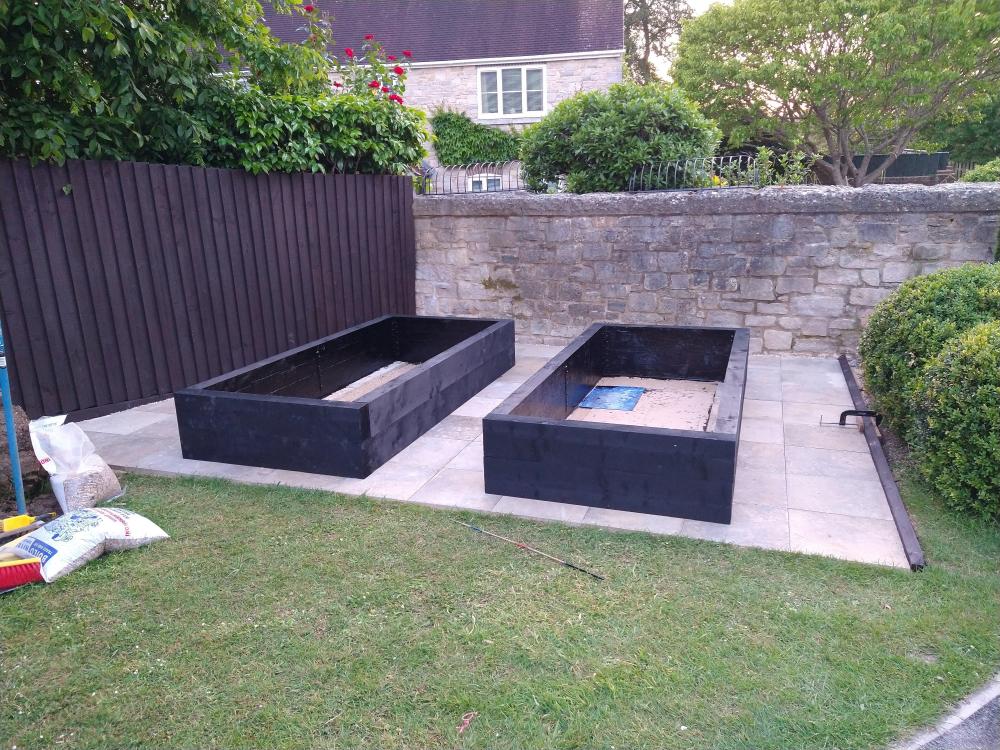
Almost there now.
-
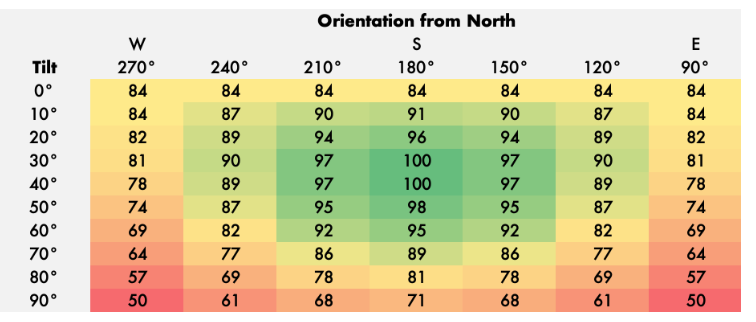
Perfect according to https://blog.spiritenergy.co.uk/contractor/best-angle-solar-panels-uk
-
And for the obvious need to be able to isolate the tap in the winter! The hacker in me would want to make use of the normally closed solenoid valves from a washing machine and have Alexa turn on the water on a schedule.
-
That may be wicking water up and across the cavity. Do you know what insulating material was used? As others have said the gravel strip has to be dug out and replaced such that it cannot allow water to build up in that location. If the cavity insulation is indeed the type that can get soaked it may take a long time to dry out. To assist with the drying out and to make sure there's nothing else bridging the cavity, you could carefully remove the return brick on the corner (bottom right brick in this photo) which will expose the end of the cavity leading to the air brick.
-
So that would soak the external brick leaf but how is it tracking across to the internal? It may be a cavity full of mortar snots or other rubble from when the house was built, it may be something else bridging the cavity. Has the cavity been filled with insulation? Or do you see evidence of any ants in the vicinity. Ants have a penchant for gathering soil and transporting it to a void in which they construct a nest. Some species even favor a damp soil.
-
That's why I suggested creating a deliberate thermal break for the frame to sit on. Most frames will have a break that requires the frame to be located such that the inner section is stat back on an insulated part of the structure. In this case that might not be possible but it only needs some thin insulation material to create a thermal break for the frame resting entirely on the cill. A rebate might also be cut in the concrete cill to better accomodate this.
-
If you wish to retain the cill, how about making a window seat but instead of using it to store the usual clutter, fill the void with EPS beads. The top edge of the cill will need to be lapped with rigid insulation to break it from the window frame and inside face.
-
How to assemble cement mixer drum please?
Radian replied to akash's topic in Bricklaying, Blockwork & Mortar
Strange, here's a still from another YT...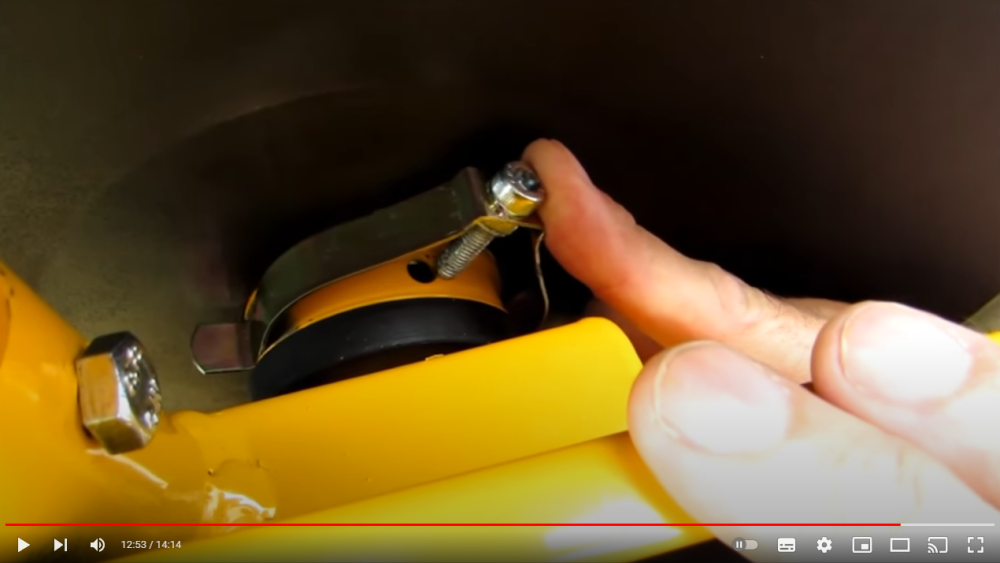
-
I have a pet theory that a good few self builders (if not most of us) are tipping the scales at this end of the spectrum 😉
-
Hmm, I just order a dozen 2.4m x 0.2m x 0.1m treated softwood 'sleepers' at £30 ea. Felt like biting the bullet on this order because they used to be near half that price last time I bought some a few years ago. If timber prices really are about to drop it will be just my luck.
-
Will be optimally matched when it's output is somewhere between 30 and 40 Volts (check the datasheet). A 12V charge controller/battery/inverter will not be a good match so you won't see anything like the full 360W. Do you need a battery and to be off-grid? Some cheapy grid tied inverters are suitable for connection to 40V inputs so will provide the best power - but you'd need to have 240VAC already in the shed. If you want it off-grid, a better choice would be to get a 24V charge controller and inverter and use a couple of 12V batteries in series.
-
Sorry, I missed that! It's really odd isn't it... Implies some kind of filter? "LINEARdrive" sounds like it might be something in addition to PWM but there's not much you can do to get a lossless volt-drop like that without maybe cycling the on time - sort of 'modulating the modulation' The clue would be how much time it spends at each different step and if there's a pattern to it which will be hard to see without a bigger storage capacity.
-
That's a sampling artifact of the scope as you increase the timebase. I'm so used to it on my DSO that I automatically discount it. Notice that it also shows to a lesser extent on the Meanwell trace at 125kSa/s


.jpg.e53b9561026be189b1d2bb171a8a5a39.jpg)