


BadgerBodger
-
Posts
209 -
Joined
-
Last visited
-
Days Won
1
Everything posted by BadgerBodger
-
Resistance training mixed with cardio likely. What ever doesn’t exhaust you too much for a hard days work ahead of you 😂
-
Don’t think it’s much easier if you’re younger!!! I’m not yet 40 and I’m still feeling the pain!! If it’s not your day job any task can really put a strain on you as it uses different muscle groups. I’m pretty fit, one of those swim, bike, run guys, but last week, steel fixing, laying drainage, shoveling hardcore, general carting, power tools and hammering roof nails really (expletive deleted)ed me up. Only just got over it today, ready to start the cycle again!!! I do have a “desk job” though…
-
Up north we call it hoggin AKA limestone dust AKA self binding gravel. it still wants some geotextile and sub base down though…
-
Work to a Perlin roof without notifying us
BadgerBodger replied to Andy62's topic in Roofing, Tiling & Slating
All new slate for that size. I’d say the price was about right if not good values. if you had a full reroof it should have had BR app anyway? nothing that can’t be resolved with either, retrospective regularisation or an indemnity policy… -
Work to a Perlin roof without notifying us
BadgerBodger replied to Andy62's topic in Roofing, Tiling & Slating
As @Nickfromwales is saying. It looks like they’ve just reinforced the existing structure. some of this might be been due to a need due to rot, or the builders opinion that what was there was inadequate or even just for ease and safety of battening. the original rafter spacing appear irregular, you don’t often see them not meeting at the spar ends which would possibly explain the reinforced ridge which he would then probably have nailed into. then the original rag gets are also not parallel and/or straight. This can present an issue for counter battening (if done) and lathing. it just takes a bit more time really but if the spacing is excessive walking the lathe afterward may in his view have been unsafe (too much deflection. seeing the type of roof timbers originally used this looks like a really old house? It’s quite typical to see a hodge podge of solutions up there are everyone has their own take. unless you have a defect now because of it, I likely wouldn’t be worried. surprising he didn’t mention it though. -
Ingress of Water into Inspection Chambers
BadgerBodger replied to Arrenite's topic in Waste & Sewerage
Typically minimum 200mm concrete, wet cast with jacket. Or mass fill the hole. Well pokered. I suppose on a smaller ring you could use something like peckafil or even heavy duty correx. Should be effective enough. If it were a concrete ring with torching that were leaking this would reduce it to damp patches in most scenarios. -
@Kelvin can you use it WITH hue? My vision was to essentially install the sonoff relay so the bulb was „always on” bit disregard is own „smart” functionality . I think this was the problem @Benpointer was trying to resolve too?
-
Is the Sonoff mini something that works? I haven’t got one yet but it looks like the route I will take.
-
Paslode 360Xi Framing Nailer Vs Paslode IM350+
BadgerBodger replied to flanagaj's topic in Tools & Equipment
Can confirm 360 xi seems to do the job. 63mm ringshanks go with ease. yet to try 90mm -
2nd for Lewis. Allthough I got the 3t industrial double. 8.8m working height. it’s solid, even at height if erected correctly. For me, same as Nick, this was an investment for ongoing maintenance etc. So bought new.
-
Interesting. Yes I had forgotten about this metric. I’ll ask my SE. It is around 90m2 (6x10) 100-125 thick (varies for to existing substrate and is easier to resolve with additional concrete) and is loaded with perimeter stud walls to FF and internal furniture including kitchen etc. XPS is even more expensive though no? At which point I might as well use PIR and build levels with stone?
-
Hey, I’m looking to use EPS insulation (around 300mm) below by ground bearing slab within the existing structure. Having used the a Treanor Pujol insulated block and beam system I noticed that the “blocks” were EPS 70 but the overlay was EPS 100. It got me thinking, should I be using EPS 70 or 100 below by slab? There is a not insignificant cost difference (the lower density being cheaper) and my only reference point in having used EPS under a slab was a crew yard which was EPS 200 and when I used it as a void former/filler under a disabled access ramp which was EPS 100. For reference the insulation will be laid onto “blinding” (old block paving) or compacted sand in two layers with the. DPM sandwiched between the layers to allow me to tack the UFH pipe work to the upper layer before mesh and pour. Badger
-
Aluminium Gutters / Soffits - Who to use?
BadgerBodger replied to boxrick's topic in Roofing, Tiling & Slating
Quality was fine barring one section of gutter which was a different gauge but marked as the same (maybe old/new stock). Sent off to almumasc for takeoff and did my own based on install guide. We came out roughly the same. I dropped a few things, added others. colour is black.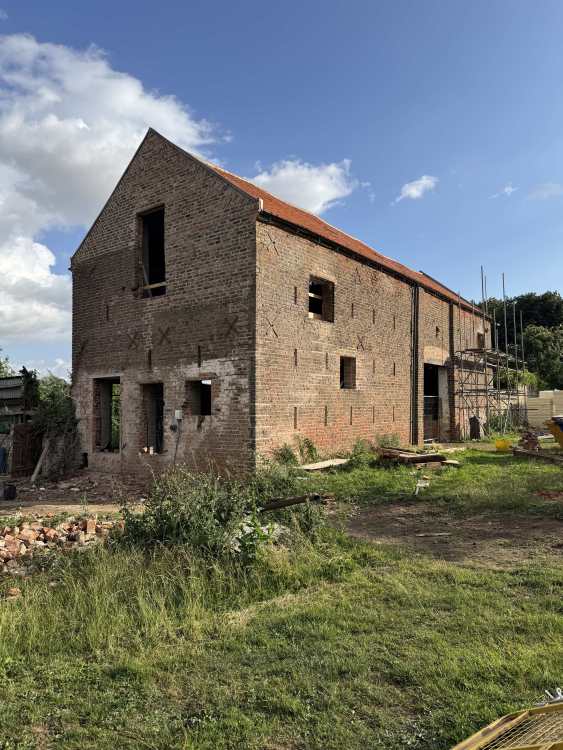
-
Aluminium Gutters / Soffits - Who to use?
BadgerBodger replied to boxrick's topic in Roofing, Tiling & Slating
These are the best I have to hand. The Dow pipes weren’t installed as I’d just struck the scaffold. Laid to a nominal fall (1:100) Don’t mind the wonky roof. We straightened it up as much as we could but it runs out by 150+ mm. The photo was just after a heavy summer downpour which is why the gutter was full.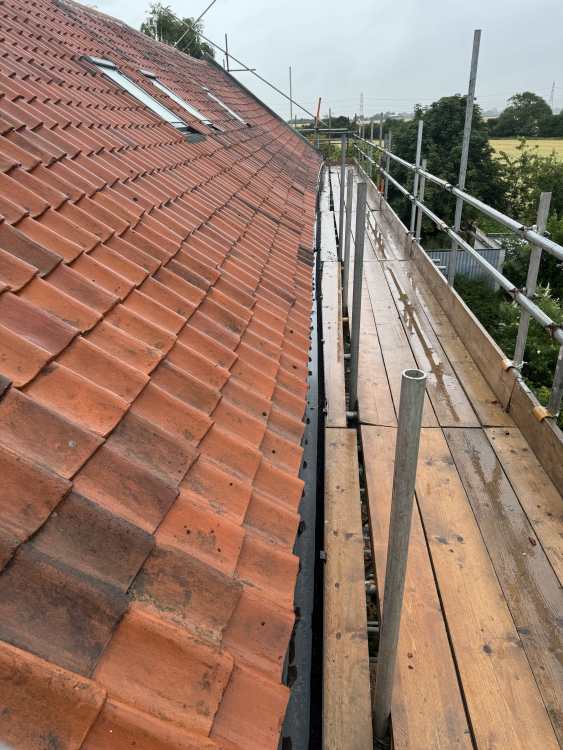
-
Encapsulation is an acceptable strategy so long as there is an adequate record maintained of its location, encapsulation, asbestos type etc. This record would then need disclosing to any future buyers etc. Read up on it, and make your own discussion. This came up a couple of months ago and the general consensus was that work falling outside NNLW was pretty affordable and discharging the ongoing risk/responsibility was worth the squeeze. Just one note, if the asbestos tiles were bonded with bitumen there is a good chance that if tested, that bitumen would test positive for chrysotile too. It was also bound within the bitumen around that time too.
-
Power floated slab. Now rethinking micro-cement
BadgerBodger replied to flanagaj's topic in General Flooring
Depends on the size of the crack and potentially, what its cause is. When did it crack? During curing? After? What it when it was loaded. When did you load it after pouring? What was loaded? What were the weather conditions when you poured… yadayadayada the list goes on but each cause may require a different action for “satisfactory” rectification. Different structures actually have different permissible crack widths, it’s expected to some extent and designing out cracking can result in some hefty tonnages of steel (structure dependent). The problem is, in my experience, most repairs for cracks are fairly destructive involving injection, raking out and in some cases simply recasting. If they really are minor, you already have a decorative finish and it’s not a water retaining structure, I’d leave it. . -
Aluminium Gutters / Soffits - Who to use?
BadgerBodger replied to boxrick's topic in Roofing, Tiling & Slating
I just got alumasc heritage 125 wide (not deep) about 60m gutter and 30m downpipe -6200 plus and other bits a d bobs which cost about-30 Through local BM better rate than online. -
Pre-cast concrete staircase
BadgerBodger replied to flanagaj's topic in General Self Build & DIY Discussion
Precast stairs are not a good option for much other than a straight flight or a stair core. they are HEAVY ( think a flight of 12 steps was 1.4t on my last job and if had flights with half landings weighing up to 3t before) and unless within a dedicated structure (like a precast stair core) they require a lot of engineeering consideration. they certainly ain’t gonna give the impression of anything floating. cast in situ however… but both would need a lot of engineering. -
Power floated slab. Now rethinking micro-cement
BadgerBodger replied to flanagaj's topic in General Flooring
Fosroc for the dry shake I’ll dig into the spec for the actual product and I usually see the Adocure products for the curing agent/sealer. I know the dry shake we had last time was on special order from France. So maybe not that one! -
Power floated slab. Now rethinking micro-cement
BadgerBodger replied to flanagaj's topic in General Flooring
So I’ve overseen a reasonable amount of power floated floor finishes and @-rick- has it figured. We use dry shake and a curing agent/sealer. We don’t protect the floors after and build entire power plants atop. There is some damage but not a huge amount considering we drive 120t cranes and 185ft cherry picker on it for 18 months. If I were doing it in my house (which i likely wouldn’t because of my partners taste but also it’s an f*ing hard surface with no texture underfoot) I’d do as above and use some proplex 3mm. OSB at a stretch. But it is repairable and there are a plethora of products to do so. Commercial concrete floor layers are definately your best bet. Probably think weekends. -
Paslode 360Xi Framing Nailer Vs Paslode IM350+
BadgerBodger replied to flanagaj's topic in Tools & Equipment
I’ll report back next weekend when I’ve used it for lathing the roof. I figured I needed to use 90mm ring shanks for internal caressing to power won over anything else. -
Paslode 360Xi Framing Nailer Vs Paslode IM350+
BadgerBodger replied to flanagaj's topic in Tools & Equipment
Funny question. I was weighing this up last night and ended up buying the 360xi so far as I could tell, there really wasn’t much in it. I think the 360xi has the premium gubbins (power, operational capacity at lower temps) and ties you to a lesser choice of 3rd party fuel cells but the 350 is (marginally) more expensive with a choice of cheaper aftermarket fixings. that was my fast take because I lost patience and didn’t want to waste any more time deliberating. -
If you got a spec from a landscape architect it could be as much as 200mm topsoils and a minimum 300mm suitable subsoil. I’ve had success with 100mm topsoil on poor quality subsoil. Bear in mind topsoils comes in variable qualities too. Typical commercial topsoil tends to be sandy loam which is blended but you also have low fertility topsoils which are more suited for wildflower meadow seed mixes - this however I’ve had good success with growing on just about anything even straight onto subsoil.
-
Fill your roof with in-roof PV panels instead of pantiles?
BadgerBodger replied to Alan Ambrose's topic in Photovoltaics (PV)
I‘m just starting to look at installing PV and my installer is proposing the attached in roof „tray“ which seems to address quite a few of the issues being discussed here re fire but also ventilation and weatherproofing. What are people’s thoughts? SUNFIXINGS In Roof Datasheet V032021_ENG.pdf -
My general experience with building control is that they are as “hands off” as they need to be/feel they can be. If you don’t give them confidence they (rightly) weigh in on things. Maybe I’ve been lucky but I think if you are using and engineer and an architect with detail drawings they have a tendency to be a bit more relaxed. I’ve gone private because I was warned by one of my designers that the local LBA was struggling and engagement was not necessarily prompt or forthcoming.


