


Jilly
-
Posts
1719 -
Joined
-
Last visited
Everything posted by Jilly
-
Wow, what a journey, well done!
-
How about: To approach the discussion with the builder, armed with a note pad and a pot of hippy tea, ask ' what are my options for the trench?' ' Can you draw it so I understand how it will work and what the pros and cons are?'
-
Sorry to hear you've had such stress, but now all is nearly well underway, am I right in thinking you want to make the differences look aesthetically pleasing? I would be with you on being happy with egg and chips if I liked that as much a steak, and understand why you don't want to have more confrontation with the builder. Hang on in there and keep your stress levels as low as possible. It's easier to think. Can you draw it so we can visualise it better, please? Can you do a sketch and then upload a photo of it? and the photo of the bit you are not keen on? I have trouble visualising from the written word, but I can understand drawings better? Can you make a feature of whatever it is? Or just clad the area?
-
Wow, well done for keeping going!
-
Hawthorn trees have a surprisingly high water demand, so would second the root barrier idea.
-
Have you had a Structural Engineener's report yet for your conversion? I'm struggling with eyewatering costs to stabilise the foundations to modern standards, of my stable conversion.
-
If you are looking at kit houses, I think they would come with building regs drawings etc
-
Hello and welcome. You'll find everyone very helpful.
-
A few thoughts: Buy the land with some kind of loan for the value of the land as it stands. I'm not sure if this is possible, but you might be able to get finance on the land to buy it for the price it has been valued at (ie before any building works). Take a lodger in your main house to pay for it. Depending how finances are, try to pay for planning and other permissions/investigations etc etc out of your wages/income. When all is in place, remortgage your £150K house to finance the build and hope to get to a place where the house is habitable and then move in and DIY the last bits to avoid over mortgaging yourself. Or rein in your plans and build a small house with plans to extend when you have recovered financially. If you are certain of your sums, and Brexit does not affect house prices, you may be able to get another mortgage part way through the build, but unless you have a high income, or have a guarantor, you may struggle to borrow more. Alternatively, get a let to buy mortgage on your £150K house, and rent it out, so this pays the mortgage and live on site in a static. I am in no way qualified to give financial advice, but I am cautious!
-

Got broken in to last night ....
Jilly replied to ToughButterCup's topic in General Self Build & DIY Discussion
How awful. Sorry to hear about this. -
Hi, the consensus seems to be that we should try to get planning for our stable conversion to be demolished and replaced rather than conversion. I know we will have trouble as we are in a conservation area and they have told me local policy is to reuse. They told me to make a case (as some of you have done) for demolition because of the carbon footprint etc. I'm slightly emotionally attached to the building, but I'll have to get over it as it's noting special. is there a standard calculation I can use? Or can anyone help me set out the argument.
-
Architects are artists, and you seem to be people who are more concerned with how things (and sound) than how things look, so you may have to break out of your comfort zone and look at a lot of exteriors of houses to understand your likes and dislikes, and also their previous work. Chose one whose work you like and you should be ok.
-
I agree with the others, it's fine to have a place where you can collect your thoughts, but this is far too detailed for the architect. I can see you've had fun, thinking about what you love and hate. Much of it can just be filed away for when you get to that stage of the build. Try to think more conceptually about the look and layout of the building and let the detailed ergonomics of design lead your choice of finish later, when you know how much the fabric of the building is going to cost and the practicalities and limitations of the site. My instinct is that you may be heading over budget, so consider where you might compromise. The plot might dictate the layout possibilities. Did you see the thread on Sageglass to negate the need for shading?
-
The answer to life: efficient storage.
Jilly replied to ToughButterCup's topic in General Construction Issues
I bought lots of plastic storage boxes with lids a few years ago from one of the big supermarkets, thinking it would a be a one off purchase for archiving, but at least half of them have cracked and got holes in from being moved around (not especially roughly!), so now I'm left with planet guilt. I'd go for ammo boxes if I were you. -
Any idea how I find out this? It might be pertinent to my project.
-
-
Yes, that's depth...hence my despair. Just calculated the cubic volume for the demolition in conservation-area-without-planning permission and we are over the specified minimum. People watch you in Conservation Areas. I guess I could start on a Building Notice and then just live here forever and never finish it...
-
Hi thanks, I've just read the following on the Homebuilding and Renovating site, which implies we could demolish without Planning because the building is small. I'll need to explore this fully. Conservation Area Consent: The substantial demolition of an unlisted building within a Conservation Area will require planning permission from the local authority, with the exception of buildings of less than 115m3, or walls or fences 1m high next to a highway, or 2m high elsewhere. Underpinning specified, was between 1.9m (closest to the trees) and 1.6m on the opposite side, so much more difficult to do. Demolition is likely to cost £8-10k I think.
-
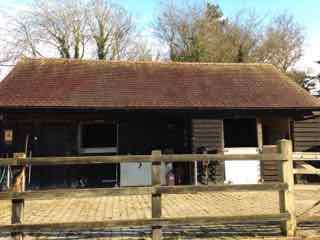
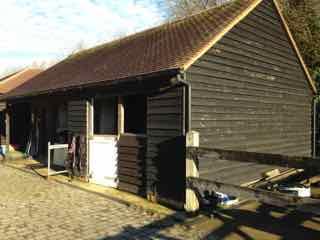
I'm still trying to find a cost effective solution to my foundation problems: Background: Job: Conversion of a block built, featherboard clad, stable (58.56 m2) plus wooden lean to extension (39.04 m2) to create a 2 bedroom dwelling. The stable is constructed from trussed rafters on 140mm thick blockwork walls buttressed by return walls on a slab foundation Current Foundations: 600mm concrete foundations with no reinforcement plus 150mm slab on hardcore bed plus light mesh at the bottom. There is no cracking on the concrete floor. Soil analysis: Report available: clay and tree roots on the East side and South East corner. Adjacent trees have been removed. Mild cracking on South and East walls (It must first be stated that the extent of cracking, if assessed in accordance with BRE Digest No.251 "Assessment of damage in low- rise buildings", is termed as slight, very slight, or negligible. These terms refer to the probable significance of the cracks in respect of structural stability or serviceability, rather than to their effect on the general appearance or saleability of the property. The BRE Digest No.251 also suggests that it is difficult to draw conclusions regarding the causes of movements where the overall crack width is less than 5 mm.) I understand there could be movement between the existing building and the extension. Micropiling and a new raft is about £20K, not sure what will happen to the old slab but expect a few £K more Underpinning is likely to be substantially more. Are there any other options? The building is 40 years old and pretty solid (even the Building Control Officer remarked on this). I've looked at injected resin, but this seems to be for remedial subsidence . I buy into the ethos of make do and mend (so maybe I should be on a different forum!) and I'm failing to see why this needs to be done (having lived in a Victorian house with shallow foundations and floorboards over soil near trees) The depth of the raft thickening is not sufficient to meet NHBC requirements for building near trees chapter 4.2. Do I need another structural engineer opinion? Is there no way round it for a conversion? The hippy in me is perfectly happy to live in a structure which has housed 1.5tonnes of moving equine for many years.
-
Have you seen www.wreckoftheweek.co.uk ?
-
TIDAL RISE +FALL GENERATION
Jilly replied to scottishjohn's topic in General Alternative Energy Issues
No idea of the references, but the idea has been designed an calculated. The Uk has enough tidal power to be self sufficient in energy... and yet we are still building more nuclear power stations... -
Hello, welcome! There's a huge breadth of experience on here already an I think you just expanded it in a new direction.
-
I'm a Rookie too and in the same situation as you, thinking I could learn the requirements. You need calculations from a structural engineer for the foundations at least, and he will want CAD drawings, and also, it's much safer to get SAP calculations done (by a specialist) at the design phase, because once it's built you will be up a creak with out a paddle if there are discrepancies. The more you know, the more you realise you don't know...
-
Insulation for a garden room / studio/ shed (with photos)
Jilly replied to mj62mj62's topic in Heat Insulation
What company did you buy the shed from, please? -
In Wales there is the One Planet Development policy, where you can self build without planning permission if you can meet certain ( strict) criteria, such as being self sufficient, carbon neutral and producing an income from the land. Most of the (few) people who are doing it are very green and alternative, which may or may not be what you had in mind.
