


-rick-
-
Posts
1367 -
Joined
-
Last visited
-
Days Won
6
Everything posted by -rick-
-
I've not had the chance to build yet but my planning was always to do the holes early as the walls went up. Likely with preplaced pvc tubes with some form of sealant ring concreted in using formwork (blockwork wall). Why? Seen that suggested as a much better way to get long lasting airtightness vs trying to seal up holes later. PVC making a nice route through insulation and easy to seal to pipework/cables (and easy to pull the pipework/cables out and replace). Obviously need everything preplanned and relies on careful placement (hidden by cladding/other). Likely overkill. If people preplan routes through slabs then you can do the same through walls but I'm probably overthinking it. Even if you don't premake the holes, for airtightness reasons I think it's a good idea to really plan out penetrations ahead of time. I've seen too many on youtube start with great airtightness intentions and then end up drilling holes all over the show (lights, antennas, CCTV, etc, etc). Yes the airtightness can be addressed but if you can plan ahead and minimise penetrations then it's less work. All that said, all my thoughts are based on a DIY heavy approach. If paying contractors, this method likely gets very difficult.
-
A little story from my past. Back when the war in Iraq started after what seemed like obviously overhyped (putting it politely) weapons of mass destruction evidence I sought out alternative news sources for progress of the war having lost trust in what we were being told by the mainstream media. I came across a blog 'Colonel Cassad' who was supposedly a Russian military analyst of some form. For some time his reports seemed to fairly well match what was reported in the news except that from his reports the losses on our side were much higher than reported. At some point it became obvious that the blog was propaganda rather than truth and that was the end of me reading it. However, I feel grateful I found it when I did as that experience has served me well as inoculation against similar tactics repeated (by both Russians and other motivated players) in other areas. Once you've gone down a rabbit hole and come out the other side it's fairly easy to spot. Which brings me to the Daily Skeptic. Which uses all the same techniques as Colonel Cassad. Take elements of truth, use incomplete quotes to reinforce your angle, mix them in with some motivated reasoning and deliberate bias. Avoid stating counterpoints unless you deliberately want to diminish them (using the same tactics) and focus on areas where there is a willing audience who is ready to take in what you say because it agrees with their priors. It's an incredibly successful tactic that works over and over. Indeed, it's Toby Young's most successful career move (founder of the Daily Skeptic). He earns many times the salary of any climate scientist you ever see quoted in the news.
-
Oh bollocks. I had my eye on them as the preferred option if I ever find a plot.
-
Is nuclear power really green?
-rick- replied to saveasteading's topic in Environmental Building Politics
Subs are hard because they are very very tight on space. AFAIK the sub reactors aren't actually that much bigger than a container. That's why they need to use highly enriched uranium to get them small enough. But they are very much part of the structure of the boat (especially the shielding). On a big container ship you have a lot more space. IIRC the idea is you could design a ship so that the traditional smoke stack area through to the bilge is a fairly open area to allow a big module to be craned in and out. Much bigger than a container and obviously needs to be done at special facilities (but you wouldn't work on nuclear stuff outside a specialist facility anyway) but very doable. Craning in 100-200 tons is very feasible if you plan for it in advance. -
Call OSO and ask? I'd guess you are probably be ok as it makes more sense to me to put the VIP on the inside and PUR outer. But it's just a guess. Edit: But if the manual says no penetrations then making the plumber replace makes most sense. If you want to show flexibility then check with OSO and see what they say. If they are willing to warrant based on the screw being no longer than x then ok. No good to move forward with a void warranty.
-
Where does the lower pipe (below the floor of the cabinet) go? Any joins in it? Just wondering if the smell is travelling a bit and leading you off track? Smell could migrate into the cupboard and accumulate through those cut outs while the mhvr clears the rest of the room.
-
Is nuclear power really green?
-rick- replied to saveasteading's topic in Environmental Building Politics
Way way bigger than a container. But then so are the engines these ships use now. -
Bottom line is it comes down to money depending on the situation. But worth considering (again dependent on specific circumstances) if overpanelling may lead to longer run time/more energy generated in winter. ie. in low light, the panels acting together produce enough to overcome the inefficiencies/minimum input of a single mppt where as two separate strings on separate mppts never get above the threshold. I think this is much more likely in older installs with newer tech it not being a concern but worth bearing in mind.
-
But if you're neighbour is f-gas certified then you could potentially do the leg work of mounting units, drilling holes, etc, and just leave the pipework ready to be connected by your neighbour. There are other types of AC unit that don't need f-gas certification at all that might be worth looking at. One is just requires two largish holes in the wall and another type use r290 gas though there are some safety concerns there so would lean against in most situations except things like garden building (Other threads on here, have a search)
-
Is nuclear power really green?
-rick- replied to saveasteading's topic in Environmental Building Politics
No expert, just relaying what I've seen online but I think there have been two schools of thought with this. Some of the new SMR designs are really low power using fairly conventional fuels. Maybe still a bit big for big ships but not far off, a revised design is feasible. Big ships are a hell of a lot bigger than nuclear subs. The other strand I've seen is talk about allowing more highly enriched designs on container traffic. ie, 20%, not 5% IIRC. Still way below what is used on nuclear subs and not close to weapons grade. Both cases the thought is that is such that it is a crane on module to the ship and any maintenance is done offship by first craning the module off to a maintenance facility (likely swapping the module with another so the ship can continue service without delay). The engineers on ship are just focused on monitoring it and shutting it down if a problem develops, not actively working on it. But either way I think given the issues you mention I doubt the west produces this technology. It'll get too tied up in red tape. But I can see China pushing ahead with it (or maybe Korea). Both big shipbuilders, both make a lot of money from green technologies and agree with the scientific consensus on climate change, both with significant civilian nuclear experience. Russia has been running nuclear icebreakers for decades (though I think they are more military form reactors). -
Took me a while earlier:
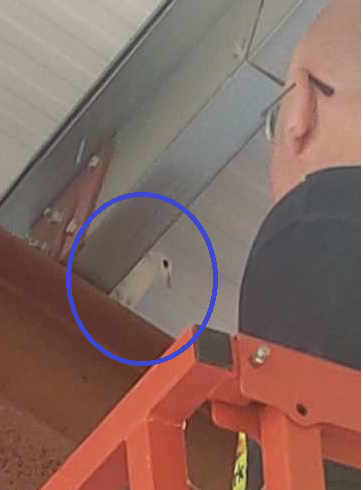
-
Plaster-in valves
-rick- replied to jayc89's topic in Mechanical Ventilation with Heat Recovery (MVHR)
Ah. Not sure what a plumber has to do with that. In my mums cold bathroom with relatively weak shower she specifically asked for the fan to be moved further away from the shower head because she thought it promoted cold. Couldn't tell you if it made any difference (used it before and after) but I could see an argument for wanting more steam to hand around (for a short while) in a room like that. (Of course consequences are condensation everywhere but that's another matter). -
Someone mentioned the need for fuel in case of war earlier. It's been said already, but it's an awful lot easier to bomb refineries and oil pipelines than it is to bomb solar panels and windfarms. And as an importer of fuel it's also a lot easier to blockade/disrupt shipping than it is to stop the sun/wind. See Russia
-
Is nuclear power really green?
-rick- replied to saveasteading's topic in Environmental Building Politics
Solar is 1000W/m2. Work out how many m2 of the planet there is and calculate the total amount of energy (obv not all planet is exposed to sun at same times). I'm sure an AI will help do this. Then calulate the amount of energy we put out. It's a very very tiny fraction of total energy. Haha here comes the jetsons! No, not gonna be in cars any time soon (or trucks). Batteries are perfectly fine for those. Ships, and only very big ships, there are are really two options to power them that don't burn vast quantities of fuel. 1. Sail 2. Nuclear Some ships are trying out sail and modern systems are aimed at reducing fuel burn not eliminating it. A useful contribution but not game changing. Ships have a schedule to keep so can't be waiting around for the right wind conditions. Nuclear on those ships is not crazy. They already have largeish crews with dedicated specialist engineers on board. The type of nuclear talked about for those ships is the 60-100MW range, so tiny comparitively. Likely to be an inherently safe design that is packaged as a module and craned on/off for maintenance, etc. -
Is nuclear power really green?
-rick- replied to saveasteading's topic in Environmental Building Politics
Firstly, I think we are talking about renewable in the sense of 'planet earth has limited supplies'. Once we go off planet the resources available are vast (but the technology required to access them are also a long way off). If we are just worried about planet earth then the available resources for nuclear is more than enough to keep us going for a very long time without worrying about depletion. If nuclear was cheap and we had well developed end-of-life plans I don't see much issue with it given current safety standards. But it's not cheap and we don't have well developed end of life plans so I'm not a huge fan based on that. Having said that, if the safety aspect can be dealt with putting small nuclear on very big ships would eliminate a lot of emissions and potentially lower costs for everyone. Using nuclear generation produces heat and some have questioned whether that heat output is a negative given global warming. My understanding is that the amount of energy used/heat produced by human activity is absolutely tiny compared to the amount of heat/energy output into planet earth from the sun and it's therefore not remotely a concern. Maybe a concern in local areas (heating seawater locally, producing fog in local valleys, etc). But these are the same as any other steam using power source (gas, coal, wood, etc). -
If both pipes are close to each other and there's been ground movement it would make sense for both to be damaged. Hopefully this narrows down the search area to only those where the two pipes are close to each other?
-
Plaster-in valves
-rick- replied to jayc89's topic in Mechanical Ventilation with Heat Recovery (MVHR)
Not important but I have absolutely no idea what you are getting at here. 🙃 -
Check this asap. Expensive problem if left. If meter is spinning, turn off at meter and see if leak stops. (If you are not on meter isolate at external stop-cock anyway to check flow) If meter not spinning, then likely coming from another house. Report as leak to water provider and let them trace it?
-
How about invest your money (and mental effort) in buying a wireless charger/battery like this*: https://www.amazon.co.uk/Anker-Magnetic-Wireless-Portable-Skin-Friendly/dp/B0DCNKDS5B?sr=8-4&th=1 Plan to charge overnight, if you forget you can get this out of a drawer and stick your phone on top. No wires. Then when it's done plug the powerbank into recharge somewhere out of the way ready for next time. Job done move on to next one. * Anker is a fairly good brand but I have no personal recommendation, this was just the first search engine result
-
There are two ratings on an MPPT for current. One is the maximum current it can usefully convert, the other is the max short circuit current. As long as your arrays in parallel stay below the max short circuit current then the effect of having more generation capacity on one MPPT than it can handle just limits the maximum energy you can generate. On an East/West (or North/South) array it's very unlikely both sides will be operating near maximum at the same time and for the few hours per year they do its not necessarily worth the cost of another MPPT. Solar panels are so cheap compared to everything else that it's often worth maxing them out to increase generation outside peak/during winter at the expense of not being able to use all generated energy in peak summer.
-
Well this thread drifted. I'm just catching up after being away and nobody appears to have mentioned that each 3600W oven likely requires 16A protection in the CU not 32A. Check the manual. Normally the CU protection is there for just the cable, but for wired in appliances I think it also needs to be sized to protect the appliance. (TBC I'm not an electrician so check this with someone who is).
-
Plaster-in valves
-rick- replied to jayc89's topic in Mechanical Ventilation with Heat Recovery (MVHR)
I vaguely remember seeing something about less potential cold drafts when showering if the fan is not directly above. -
indeed. I try not to assume but when I do it often comes back to bite me. im not the best person to ask but i believe yes. But if you’ve got a plumber who will always install cheapest available option then you may want to put some effort into specifying better quality valves (or expect leaks at some point).
-
What did you specify/agree to for this installation? Has he put isolators at the other end? That would be what I’d imagine an uncreative plumber not used to installing manifolds would do. (afaik isolators somewhere are a requirement, exact location isn’t) I don’t see the logic in doing it that way. You want a way to isolate leaks. Best place to do that is at the branch point of the circuit (*). Gonna be a pain in future if you want to change things as is. So I would put my foot down in your position and have them fitted at the manifold. * whether you want a second isolator at the end of the pipe is a question. If they are already there I don’t think I’d bother removing them. My experience with isolators is that they have leaked more than I’ve needed to use them as isolators, so I think I’d be inclined not to duplicate. Though from reading here it sounds like the leak issues are common with cheapo/screwfix type isolators. Higher quality ones are good.
-
and this is not just making a joke. It’s likely that the training corpus for the llms has the best responses in relation to professionals who don’t tend to use that language. By swearing at it you likely trigger different statistical paths within the training that have less optimal outcomes.

