


kxi
-
Posts
140 -
Joined
-
Last visited
-
Days Won
1
Everything posted by kxi
-
At the stage where we need window detailing, so to decide on outwards or inwards opening. Pros and cons of inwards opening seem to be: Pros Can have external shutters/blinds - may be a good hedge if solar gain ends up being more of a problem than anticipated Can have external insect mesh - seems unnecessary in SE England, but maybe more so in future? Easier to clean Allegedly less likely to slam in the wind Can more easily wrap insulation around outside of frame Greater range of high-performance windows Allegedly more likely to be airtight (products being equal) Cons Theoretically worse in wet climates since wind tries to push the window open when stormy, and the crucial external seal between frame & glass is a continually flexing & accessible one, i.e. more liable to wear out or get damaged Harder to have internal blinds and shutters, but not impossible as you just don't put them in the reveal Can't put stuff on window cill if you want to open them, but can use the tilt and turn for ventilation anyway Impinges on internal space if fully open Can't as easily sit on windowsill with the window fully open (maybe you shouldn't) But how valid is point 1 of the cons? Seems lots of people here have inwards opening, has anyone ever experienced issues with the weather? Or anticipate a shorter lifespan due to seal damage? Replacing the seal should in theory be possible, but likely as not in 20 years time the specific carefully designed strip won't be available?
-
We had quotes from Leroc and Bison on 300m2 of 150mm hollowcore, max 6m spans. Roughly £50/m2 and £57/m2, supply and fix, including passive fall arrest. Price does not include structural topping (to be supplied by others).
-

Passive Haus on a budget?
kxi replied to bobberjob's topic in Energy Efficient & Sustainable Design Concepts
@TerryE Isn't the conversion of a barn to dwelling likely to be at least in part 5%, as per VAT notice 708? (I hope it is) https://www.gov.uk/government/publications/vat-notice-708-buildings-and-construction/vat-notice-708-buildings-and-construction Summarised: https://www.charltonbaker.co.uk/news-blog/detail/reduced-rate-of-vat-and-barn-conversions Also, if the barn conversion is under Class Q Permitted development (which I assume it is unless you go for full planning) then one would need to make a 'prior approval' application to the council. Whether one then needs to also get a certificate of lawful development in addition is debatable. Our council never suggested this was necessary and our planning consultant didn't think it necessary either, however a planning lawyer did later suggest there was in theory a case for one, though AFAIK not one that has ever actually applied to any class Q conversion in reality (but don't take my word for it). I would be surprised if anyone getting Class Q barn conversions also got an LDC, but it would be interesting to hear from others using Class Q. -
Passive Haus on a budget?
kxi replied to bobberjob's topic in Energy Efficient & Sustainable Design Concepts
Hello, could you provide more details about your existing barn and the nature of the conversion? Esp. are you allowed to extend the envelope or not. This will help with more specific advice. The main reason for asking is steel frame may require a slightly different solution to most of those discussed on the forum. -
It was IanR who had the conversion with the insulation layer inside the existing steel frame: https://forum.buildhub.org.uk/topic/1111-touchwood-homes-experiences/?tab=comments#comment-14294 Our conversion has no existing steel, so I've not thought through the pros and cons of insulating entirely inside vs external / straddling, but I would suppose it's conceptually simpler to build everything inside, but you then lose some floor space and head height to accommodate thick insulation (I'm sure plenty of other pros and cons each way). Also, if your steel is say 180mm deep, then the purlins 130mm, the windows will be deeply inset if the insulation layer is fully inside. This could be seen as a design feature though. Some of our windows will probably end up being inset over 500mm!
-
I assume maximising the internal space is a concern, so @Tosh 's straddling ICF route neatly gets half of your insulation layer outside of the steel, with probably enough room left to fit some cladding support within your 4-5 inches currently used by the purlins - thus no footprint extension so staying within your Class Q. I don't know what you had in mind for the party walls, but I would guess block is the easiest and thinnest way to meet the desired standard for noise, vibration & fire? Using the ICF for that as well would seem to add unnecessary width. For the roof, do you have the same 4-5 inches of purlins on top of the frame? It would be nice to get the insulation layer above the steel (in contrast to the current plan), especially if it can be continuous with an outer face of the wall's ICF. For that to be feasible you'd probably need something like the quadcore foam used in Kingspan's Benchmark panels, or the full insulated roof panels like the KS1000. I don't know if your planning requires you to retain/replicate the exact corrugations of the existing roof? @Tosh how are you planning to do the roof in your conversion? It may be relevant that our LPA were surprisingly relaxed about Non Material Amendments to the original Permitted Development design, once we got over the small hurdle that they insisted no changes were supported under the legislation. They are, but it's not well-known it seems. But I suspect you'd rather just avoid going back to them for any reason.
-
Hello, congratulations on the planning. Quick initial questions. Is the current plan to have the insulation layer (e.g. sips panels) on the inside of the existing steel frame? The plan implies so and I assuming planning will not allow the footprint extension of an insulation layer outside of the existing frame? There is another barn conversion on the forum where I believe the existing steel frame was outside the envelope (apologies can't find it right now as on phone). Have you got any 'cladding space' to have at least some of the insulation layer external to the steel? The plans say timber cladding, but I assume the metal cladding you describe above was a later planning condition? My initial thought was the panels don't necessarily need to be structural and one could use something like the probably cheaper steel faced kingspan insulated panels. But it may be that the idea is to support the new first floor on the sips? Is the existing steel not ok to support a first floor (I assume not). Building an internal facing wall (+ service zone?) Might be easier against sips than steel faced panels. But perhaps worth looking in to.
-
@Jilly Hello, if it's a stable conversion did you get this under full planning permission or under permitted development e.g. conversion from agricultural to residential? Dealing with an NMA is different if done under PD (and I can explain more if so).
-
I was concerned about the long-term durability of standard steel rebar, so looked into alternatives a bit. My layperson's summary below. However, I'm now just going to use standard steel in our own Reinforced Concrete parts. While steel corrosion seems a major problem for structures like bridges, dams, etc, my SE has assured me any RC with standard rebar kept protected from; the elements, unusual chemicals, and cyclical loading should be fine for over 150 years. I.e. ours will be fine, and I'd guess anything inside ICF also fine. As below, all the alternatives have some disadvantages. But if you are building something with exposed RC and care about it lasting more than 50 years, the lifecycle costs seem to suggest everything is more cost-effective than using standard steel. Some evidence of standard steel / iron reinforcement durability: The first RC house ever built 1852 is still standing https://en.wikipedia.org/wiki/François_Coignet The first one in the US 1876 is apparently fine https://en.wikipedia.org/wiki/William_E._Ward_House The first RC skyscraper 1903 is also apparently fine https://en.wikipedia.org/wiki/Ingalls_Building Alternatives: (Some comparison here https://www.usbr.gov/research/projects/download_product.cfm?id=2493 ) Stainless steel A fairly straightforward replacement for normal rebar (though apparently, you need to use a bit more to get the stiffness) and used for many years. Main issue is the cost, which might be 3 or more times the cost of normal rebar. I didn't check the specific price. Glass Fibre Reinforced Polymer GFRP Proposed as a corrosion-free alternative to steel and much lighter, with higher tensile strength. Has been well studied and increasingly in use in some structures worldwide, and has building codes that govern its safe use. Unfortunately, it's not without problems: Fire - while the glass withstands very high temperature, it's in resin that softens at over 150 C. For this reason, the Institution of Structural Engineers do not recommend it for situations in which fire is a concern. Unknown long term behaviour in concrete - glass doesn't like alkali i.e. concrete, or moisture, and as per one of the suppliers' own descriptions "At this time, there is no consensus as to what would be an accurate service life prediction model for the use of GFRP bars". http://www.aslanfrp.com/media/aslan100.pdf Creep - This same supplier also notes that GFRP has creep rupture with sustained high utilization. Though these are AFAIK accounted for in the building codes that apply to GFRP. My SE also noted its long term creep is not good. Elasticity - much more elastic than steel and so requires more reinforcement or more concrete depth to compensate. Perhaps of note Owens Corning recently bought the manufacturer of Aslan GFRP, so presumably they think it has long term potential. Carbon Fibre Reinforced Polymer CFRP Really good, really expensive, doesn't like fire. Basalt Fibre Reinforced Polymer BFRP A new contender that has only been in use for a few years, and the subject of much current research especially in China. Similar properties to GFRP (light, high tensile strength) but may address some of the issues with GFRP and appears to be able to be produced more cheaply e.g. in the US you can get rolls at $6.60 a metre, and Gatorbar claim cost parity with standard steel. https://www.neuvokascorp.com/sites/all/themes/theme923/pdf/GatorBar_data_20160907_HIGH.pdf BUT it shares GFRP's disadvantages in that The resin doesn't like fire Still elastic The major drawback is that it's so new, people seem nervous about doing anything structural with it: There's almost no example of it being used in house construction other than floors & shallow foundations Gatorbar currently limit use to slab on grade and low walls/foundations (confirmed this with them) UK suppliers of Galen's Rockbar (Magmatech) said it hadn't been used structurally and any structural use of it would have to be approved by an SE Various BFRP references: http://www.thestructuralengineer.info/onlinelibrary/pdfs/SustainabilityMasterBuilder_Sep10.pdf https://www.ripublication.com/ijaer18/ijaerv13n8_37.pdf https://livrepository.liverpool.ac.uk/16333/4/SalhLuna_Feb2014_16333.pdf http://www.carnationconstruction.com/Materials/01-Materials-Rebar.html https://www.sciencedirect.com/science/article/pii/S187661021730022X https://www.monolithic.org/link-to/basalt-fiber-rebar https://smarter-building-systems.com/smarter-building-basalt-faqs/ https://www.researchgate.net/publication/315642749_Investigation_of_Structural_Members_with_Basalt_Rebar_Reinforcement_as_an_Effective_Alternative_of_Standard_Steel_Rebar https://pure.qub.ac.uk/portal/files/154263432/180620_polymers_10_00678_paper_accepted_in_J_of_Polymer.pdf BFRP durability: https://www.sciencedirect.com/science/article/pii/S0264127518308724 https://www.researchgate.net/publication/319943787_A_refined_prediction_method_for_the_long-term_performance_of_BFRP_bars_serviced_in_field_environments https://ascelibrary.org/doi/pdf/10.1061/(ASCE)CC.1943-5614.0000497 Some BFRP suppliers: https://www.neuvokascorp.com/sites/all/themes/theme923/pdf/GatorBar_data_20160907_HIGH.pdf http://magmatech.co.uk/products/rockbar/ http://orlimex.co.uk/composites/ https://www.monolithicmarketplace.com/collections/basalt-rebar-products/products/rebar-12mm-diameter http://galencomposite.com/products/composite-reinforcement-rockbar/
-
@Simon Brooke Ok, good luck.
-
@Russell griffiths I suspect it's a question of the market you are catering for. The Shard used 140,000 of them, presumably because in the context of a project like that, being able to say the blocks were carbon neutral was worth more to them than an extra £140k (or whatever it was). http://www.lignacite.co.uk/project-library/the-shard-2.html The blocks also seem to have a slightly better acoustic reduction than standard medium weight, but perhaps not a big factor in most cases.
-
@Simon Brooke Have you had an airtightness test yet to see how the taped kingspan panels perform?
-
Does anyone have experience with / opinions on the Lignacite block from Lignacite? http://www.lignacite.co.uk/concrete-and-facing-masonry-blocks/concrete-blocks/medium-dense/lignacite.html Data sheet http://lignacite.co.uk/component/edocman/?task=document.viewdoc&id=128&Itemid= Medium weight concrete block with 48% recycled aggregate including recycled wood, allowing them to claim the block's carbon footprint is -2kg per tonne. Used extensively at The Shard and London Olympic stadium (among other places).

-
@Snowbeetle excellent, thanks very much.
- 15 replies
-
- 1
-

-
- barn conversion
- breathable
- (and 1 more)
-
@Snowbeetle How did you find installing the geocell? Any tips / things you would do differently if doing again?
-
Cement is 3 times more polluting than aviation fuel
kxi replied to NSS's topic in Environmental Building Politics
From an initial look appears superior to stainless - thanks very much. -
Cement is 3 times more polluting than aviation fuel
kxi replied to NSS's topic in Environmental Building Politics
I believe part of the problem is many concrete structures will likely not last anywhere near as long, mainly due to corrosion of the steel reinforcement - which the romans didn't use. See https://theconversation.com/the-problem-with-reinforced-concrete-56078 Thinking about our own build (rather than bridges, skyscrapers, etc) our SE says if kept dry and protected, any reinforced concrete should last 'a long time' so it shouldn't be an issue. However, given we're aspiring to a design life of more than 150 years I'm keen to explore options to reduce the risk, given re-inforced concrete will form crucial parts of the structure. Replacement of any steel rebar with stainless steel looks like a realistic alternative, with really a fairly small cost considering it might (?) double the life of the structural element, though TBH I've not investigated yet. Basalt another option. Roman concrete also superior to modern due to their use of volcanic ash https://www.engineering.com/DesignerEdge/DesignerEdgeArticles/ArticleID/15190/The-Secret-Ingredient-in-Ancient-Roman-Concrete-is-Seawater.aspx Concrete block is another matter and there's a variety of possibly more sustainable options such as types made by http://www.lignacite.co.uk/ but I've not looked into that fully either. -
Back on Ecosteel, from the illustrations the steelwork appears to completely bridge the SIPs, which slot into the beam. I'd have thought this almost completely cancels out the insulation and also a condensation risk. The steels look like they are then covered internally with something like OSB, which would not do well with any condensation. Odd why they don't wrap the frame externally as is standard for sandwich panels. Insulated panels external to a frame (perhaps steel) I think still deserves a look, but this particular design seems a bit suspect to me.
-
@Ferdinand yes that marked part is part of the plot, as well as another garden area to the east, also a decent curtilage around the whole building to allow for maintenance. Various covenants in place with the farm for access, services, etc. The woodland 'just out of shot' to the left of that model picture is under a long-term woodland management grant, and the whole area is green belt, so in the event of everything changing hands in years to come, the new owners shouldn't have to worry about their north view being onto an abattoir. Class Q has been a bit tricky, but on a firmer footing with the recent updates about structure. Martin Goodall's blog has been essential. The planners are (now) happy with the design, and I think we've got a good relationship with the planning dept. Further amendments to include stainless steel cladding might be a step too far though. If it's ever of interest to anyone, the GPDO does explicitly allow making design amendments to a previous class Q agricultural conversion PD, though councils may not initially know this is possible.
-
@Simon Brooke Thanks very much. Looks fantastic. To clarify - you just taped the joins? (I.e. pro clima tape, not the additional membrane). Isocab have similar quadcore panels (they are part of kingspan I think) and say that when joints are ‘finished’ they give <0.04 m3/hm2 at 50pa http://www.ecohomepanel.com/brochure_en/18/ which suggests it's doable. If you are putting a ceiling up under them, I suppose you could add some mineral wool in between the rafters/purlins if the noise was bothersome. What have you done/plan to do for the wall build-up, as I assume insulation will be internal? I couldn't see any quad core sheets available. They do do the karrier wall panels, but that seems an expensive approach inside a wall.
-
@Ferdinand Regarding the opposite walls, there's definitely some thinking to do here, but I'd mentally put it in a 'once we are finished' box. One idea was to add climbing plants, though the snag is they would be very shaded. This might be partly mitigated by cladding the house south face with stainless steel to reflect light from our south face onto the opposing side. This might not be effective or desirable though. Also the shed walls are made of white & blue asbestos fibre-cement, so I would not want anyone having to interact with them (e.g. for plant pruning), as any contact with the surface could in theory release fibres. The continuing presence of so many of these ageing, potentially lethal panels is something to be reviewed, but it would be a major undertaking to replace them. "Grand Designs last week had one of those that worked spectacularly well by being aligned carefully with the internal spaces of the room." Aha thanks, I'll take a look. It means the north rooms get light from two aspects, which is nice. How to operate the blinds/curtains over the bedroom ones is a slight snag but i'm sure can be solved. "Is there any scope for inside/outside living (eg Franch Doors) on the more attractive North side? I do not see that in the model, or perhaps I missed it." On the west end there is a first floor terrace within the original walls (see 3rd model image) with large doors/windows into the main living area. This terrace looks out over the future garden & trees to the north, then the farmyard & other buildings to the west and south. These last are perhaps not everyone's idea of a good view, but it does get the sun & sunset and various birds like wheeling around the yard at certain times of the day. A north terrace would certainly get a better view, but is currently a no-go from a planning POV as it extends the existing footprint. It would also be shaded all the time as it's north facing (but that might be fine). A deck at the east end also would have a nice view and get the morning sun, but again not allowed under current planning regulations.
-
@Simon Brooke. This is one of the arrangements we are considering, so very keen to hear how you got on. 1. Are you just using the panel seals for airtightness, or did you add something else e.g. taping/sealing the joints? How has that worked out? 2. Did you add any additional vapour control below, or just rely on the panels? 3. How is the acoustic? Have you got anything else underneath it before the internal? (One of our options is to have it exposed bare). 4. Did you look at the 147mm kingzip insulated panels as an alternative? Only 0.15 u value, so I assume you went with the KS1000 for U value reasons. Annoyingly they don't do the kingzip in quadcore, though the website doesn't mention quadcore for the ks1000 either.
-
@vivienz One of the designs that we didn't go for, and turns out wouldn't have been allowed by planners anyway as involved a bulk increase, was a thin full-length clerestory for summer-shaded south light, which I think would have looked great (if you could fly).

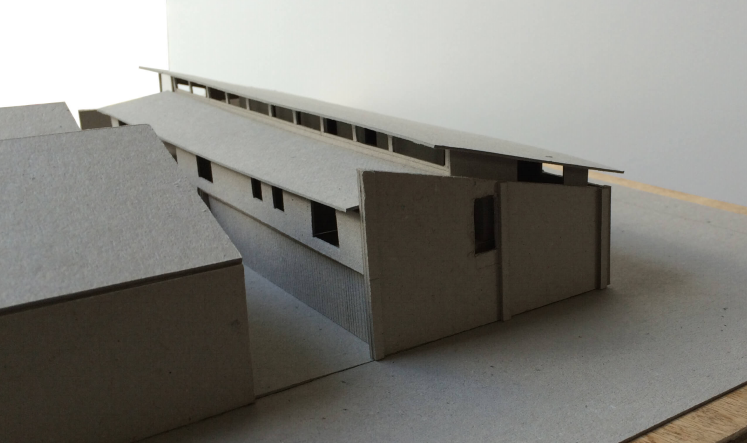
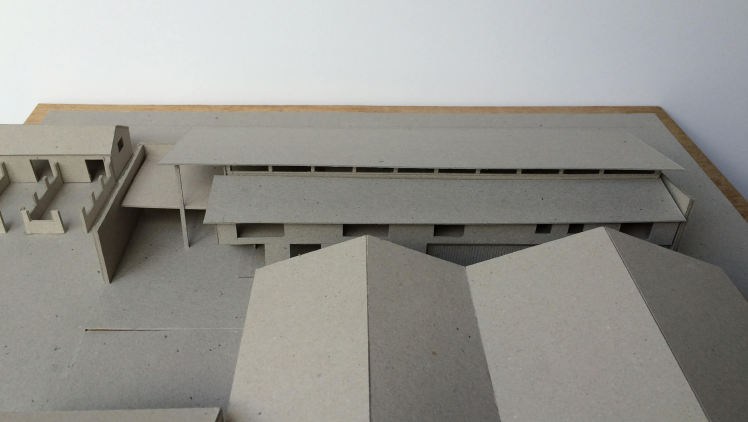
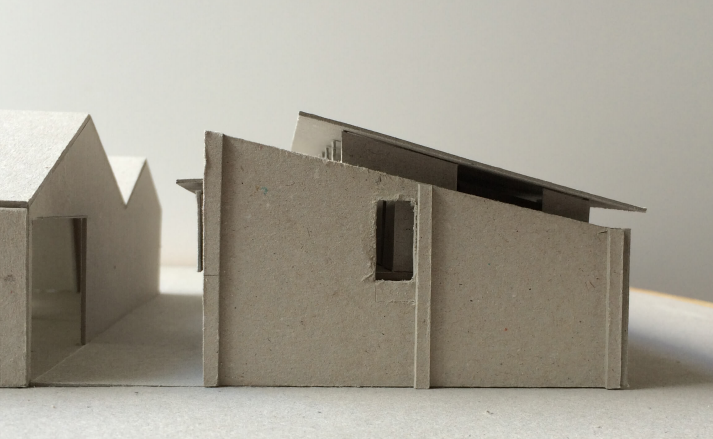
-
@ProDave The barns to the south are unfortunate, but this barn has by far the best view (to the north) and all the other barns are too small to be used on their own so would require stringing together in an impractical way. Since it's green belt, extensions are limited by planning (we did try). The barns to the south probably had a design life of 50 years and are 55 years old, so it's likely the house will live to see a change to the south. The way we've looked at it is that most houses don't have views on all 4 sides, and 3/4 isn't bad. + @recoveringacademic I see you are both admiring our series 3 sculpture. I have access to a conservator who can advise how we can preserve this for future generations. Having a ground floor that can fit the newer models (+ necessary fire-proofing to the ceiling) is one of the big factors in the build method choice.
-
@newhome @JSHarris I'm now curious as to what I might find inside our own models. There are a couple of aspects of the design that I think it would be handy to model life-size, in particular, a sloping roof height issue. Perhaps using some sheets, drawing pins and a wooden frame.
