Beelbeebub
-
Posts
1224 -
Joined
-
Last visited
-
Days Won
6
Everything posted by Beelbeebub
-
Mini Store - Heat Geek / Newark Cylinders for ASHP
Beelbeebub replied to Nick Laslett's topic in Air Source Heat Pumps (ASHP)
For better or worse, the combi is the yardstick. I don't think people really need actually infinite hot water. They just want to not have to think about it. They also want the space a big cylinder takes up for other things. Right now the relatively big cylinder specified by manufacturers and installers is a bit of a barrier. Both in cost and size. The HG system is a good attempt at making the installation a bit lower friction. As long as the hot water delivery is good enough - ie the times where the customer has a tepid shower or has to wait 20mins for the cylinder to recharge are very few, then it's a great idea. A 9kw instantaneous water heater (variable power controlled to just top up the temp if too low) afterwards would extend the hot water delivery time and not fall foul of g3 regs. -
Mini Store - Heat Geek / Newark Cylinders for ASHP
Beelbeebub replied to Nick Laslett's topic in Air Source Heat Pumps (ASHP)
But it's DHW cycle is limited. For true combi performance we need to produce hot water for an infinite time. If you don't defrost you HP the capacity and efficency drop (which is why we do defrost them). That will eventually mean the amount of hot water you can instantaneously heat will fall and your bath or shower will become tepid.. You already get this if you have to many hot water draws on a combi. If someone is showering and someone else fills the bath, the flow rate and temp fall. What people really want for a "just like a combi" heat pump is an installation that takes up similar internal room to a gas boiler. As HG identified the issue is more the storage of hot water. Current approach is a large UV cylinder. This is OK if replacing a large UV cylinder but when you are swapping a vented cylinder you get the g3 issues and when you are swapping a combi you get the G3 and space issues. A combi or at most,. Kitchen unit or kitchen cupboard hot water storage and delivery system that could operate efficiently on a HP (ie no high temp bricks or phase change) woiod be very useful. -
Mini Store - Heat Geek / Newark Cylinders for ASHP
Beelbeebub replied to Nick Laslett's topic in Air Source Heat Pumps (ASHP)
I think Heatpumps are inherently incapable of continuous DHW production in a gas boiler fashion. The 2 points are the power demand of instantaneous DHW production - typically 20kw and more - vs the typical maximum heating load means you end up massively oversizing for what is a small% of the use time. Unlike gas boilers, the peak power output of a HP is proportional to the size of the unit. A 40lw gas boiler isn't much bigger than a 12kw one. The mass of metal, plastic etc aren't much bigger. So whilst a gas boiler can be oversized easily and cheaply, you pay a much higher upfront cost for a bigger HP. The second point is that there are times of year when a HP will need to defrost. This means the HP cannot guarentee to always supply hot water. With heating, the 10 minute pause to defrost is unimportant. With instantaneous DHW production it is a deal breaker. Thats not to say that we cannot have a sensible amount of hat water availble with a quick recovery time that gives an identical experience to a combi 99% of the time. -
Quote for ashp - didnt expect that much!
Beelbeebub replied to TheMitchells's topic in Air Source Heat Pumps (ASHP)
Reverso fan coils seem reasonably well built - the cost is fairly high though. One thing to note is they have obviously been designed for their home market (Italy?). The mounting system is not like the UK rad hangers. You have to mount directly to the wall, which makes for almost zero adjustment for getting them level. You have to be dead on with your drill holes. Also the pipe entry on the bottom isn't quite right for the standard UK pipe clips. The pipes have to kink a bit awkwardly to get round the frame. Noise wise, the standard setting is audible, but not loud. You can change some dip switches to lower the speed and at the bottom end (200rpm) it is near inaudible. Your output is lower (obviously) but still many hundreds of watts. Might be over 1kw I'd have to check. -
Quote for ashp - didnt expect that much!
Beelbeebub replied to TheMitchells's topic in Air Source Heat Pumps (ASHP)
The other option is fancoil rads. I've been trying out a reverso fancoil. Not been able to fully test it as it was installed in the spring and it hasn't been that cold, but (when set to minimum) very quiet and seems to punt out quite a bit of warm air at 40C flow temp. Had to do some fiddling to get it to work with my system - it is replacing the failed UFH in a room, but so far so good. -
L9 Error - Flow rate - Ecodan 8.5kW ASHP
Beelbeebub replied to athlonoc's topic in Air Source Heat Pumps (ASHP)
Holy crap! That was the problem!? Red faces with the installer it think! Still glad it's sorted. -
L9 Error - Flow rate - Ecodan 8.5kW ASHP
Beelbeebub replied to athlonoc's topic in Air Source Heat Pumps (ASHP)
The isolator valves are shut off? -
DHW is heating some radiatosrs
Beelbeebub replied to graham1's topic in Air Source Heat Pumps (ASHP)
Need more facts, but if the valve, either diverter or 2 port, is letting by just a tiny bit, then the first few rads in the loop would get a bit warm. The OP states they are getting to maybe 30C during DHW cycle, but the flow temp would typically be higher, which points to a little flow sleeping past. Possibly because the valve is damaged of maybe a little bit of crud from the power flush is stuck on the seat. -
DHW is heating some radiatosrs
Beelbeebub replied to graham1's topic in Air Source Heat Pumps (ASHP)
Or the power flush has damaged the little ball in the valve (if you have that system) and it's letting a bit by. But the culprit is likely in the valve(s) as JohnMo says -
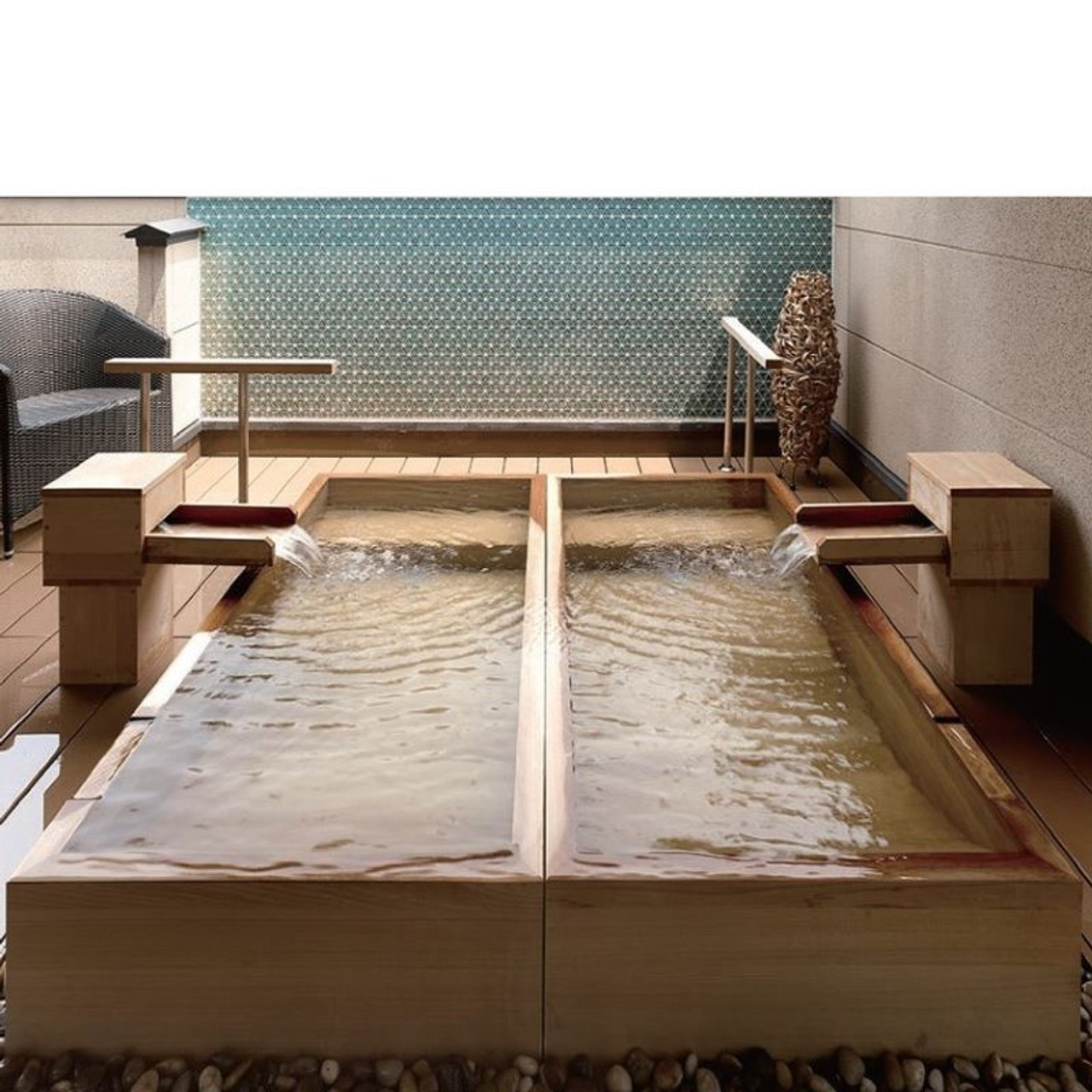
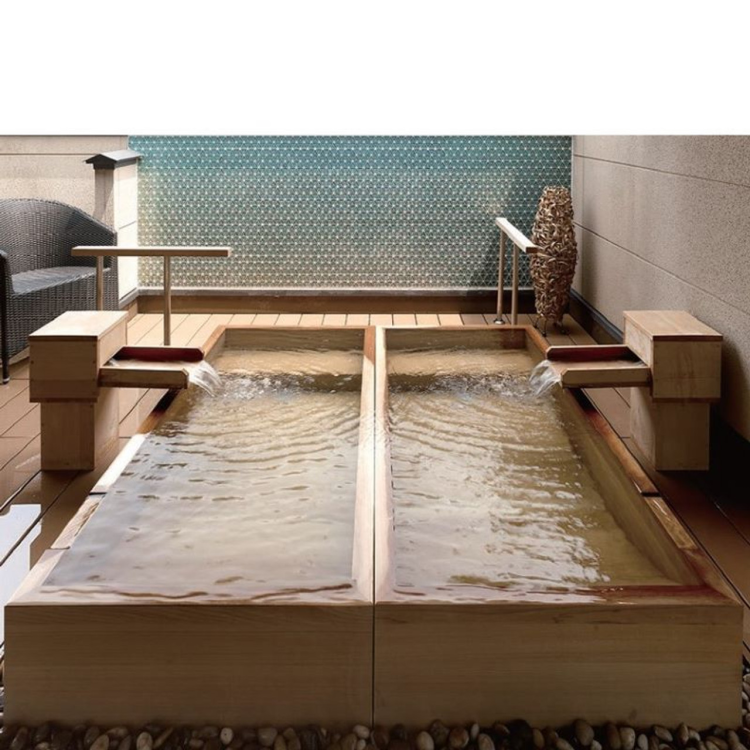
I have to say, the wooden baths I've seen seem to be a little thicker sided, though how much is necessary and how much is looks I don't know
-
Very cool! Is the bath overflowing continuously (ie constant water input) or is it just that it is designed to be tolerant of overflowing? I know wood baths shouldn't dry out or they start leaking so will you be keeping it full all the time?
-
As your storage volume goes up, the required input power of your heating device trends to whatever the daily power requirement is. Eg a 1000l tank might only need a 2kw heater as it can produce 48kwh a day. The smaller the tank the closer your input power needs to be to the maximum instantaneous power requirement. A combi boiler might need to be 28kw to produce a decent flow. Unless the OP planned to use more than 300l in a sitting, then pretty much any HP should do.
-
How big is this bath?
-
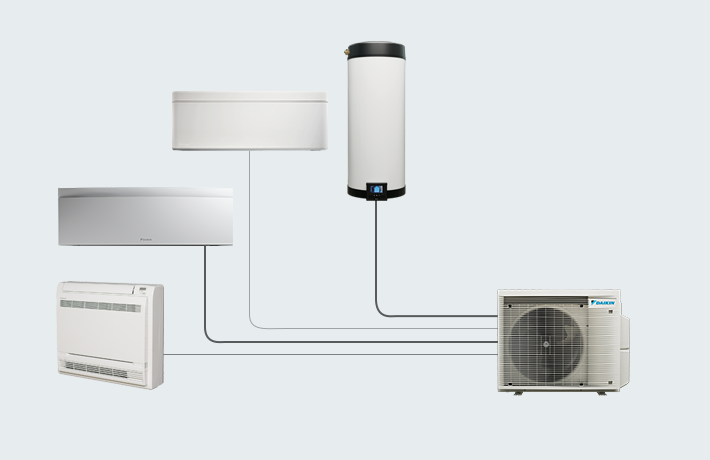
Here it is Daikin multi+ 120l tanks so might need 2!
-
I'm sure I saw some manufacturer makes an invented cylinder heated by a refrigerant loop that you hook up as one of the head units to a mumtisplit. The cylinder has the necessary electronics in to interface with the outdoor unit. So get a 2 or 3 head 5kw multi split and have one head as the cylinder and the other 2 as heating or cooking as required. Probably cost less than the a2w setup.
-
Powrmaric r290 A2A monoblocs
Beelbeebub replied to Beelbeebub's topic in Air Source Heat Pumps (ASHP)
Sorry I can't help, I haven't got around to trying one yet. Mulling over this or just biting the bullet and going for a full HP job. -
Mini Store - Heat Geek / Newark Cylinders for ASHP
Beelbeebub replied to Nick Laslett's topic in Air Source Heat Pumps (ASHP)
The other option, which we've discussed here before, would be a small HG cylinder this no G3 with a 9kw instantaneous heater after it. Ideally the 9kw unit would be modulating so you can bring whatever the HP delivers (say 3kw on a cold night) plus another 9kw. As it's an instantaneous heater no G3 either. And the instantaneous heater is only needed occasionally so most of the time you get the high cop of a HP. -
Mini Store - Heat Geek / Newark Cylinders for ASHP
Beelbeebub replied to Nick Laslett's topic in Air Source Heat Pumps (ASHP)
Yeah, the inclusion of an immersion heater would come with a small chance of overheating (but very small now the units all have built in non resetting cutouts as well as the usual thermostat and presumably the actual control relay as well). But if there was no immersion in the system then zero chance of overheat. -
Mini Store - Heat Geek / Newark Cylinders for ASHP
Beelbeebub replied to Nick Laslett's topic in Air Source Heat Pumps (ASHP)
For what it's worth, my large TS seems to (generally) cool equally from top to bottom ie I lose 5C from top and bottom as I draw off water. Of I only stored water at 45C I wouldn't get much out *However*, the coil area of the store isn't huge as it was designed for a 65-75C store temp and IIRC it's distributed towards the top of the volume. I can imagine, if you had a very big coil, running from top to bottom, you might get closer to a bottom up draw off. You would still have the issue that, as you got towards the end of the store capacity, your effective coil area would fall and you wouldn't be able to access the last bit of restored energy. I agree with the assesment that this is more of a work around the UVC regs than anything else. Which does beg the question, why couldn't we just have the regs amended. As has been pointed out before, a UVC hooked up solely to a HP, especially without an electrical booster, has zero chance of overheating. If the regs just carved out an exception for that circumstance then we could fit small "under counter" UVCs that would potentially perform a little bit better. Edit & slightly off topic - in the same way if the regulations on grants for A2A were changed to allow them to collect grants as long as they were firmware locked off from cooling below (say) 30C it would massively help uptake -
Mini Store - Heat Geek / Newark Cylinders for ASHP
Beelbeebub replied to Nick Laslett's topic in Air Source Heat Pumps (ASHP)
If the regs allow an immersion heater in the buffer/store without bringing the whole weight of G3 into things that would be fantastic. Another 3kw on top of the HP would probably make it near indefinite for showers and taps. My thermal store set up is similar albeit with a very big tank for solar and solid inouts. The gas boiler is maybe 15kw (might be 12, not sure) and that acts more or less as a combi for showers. The trick is having enough stored capacity to provide hot water whilst the system is "ramping up". I've found it I make the storage volume too small (I have a home brewed virtual thermostat on the tank that allow me to set how much volume to store) there is a dip in shower temp before the boiler manages to catch up and hit steady state. If I get the volume right then it effectively works as a combi -
Mini Store - Heat Geek / Newark Cylinders for ASHP
Beelbeebub replied to Nick Laslett's topic in Air Source Heat Pumps (ASHP)
Just had a look, it appears as @JamesPa says to be a small thermal store with a big DHW coil. I'm guessing they are relying on the "it's a HP so can't boil" approach to avoid the G3 regs. The big issue I can see, is that it relies on the HP filling the store as you draw down to extend the volume of water you can draw before running cold. This might be drastically curtailed when you start hitting defrost conditions. -
Split units are basically a "normal" air to air unit outside (including the compressor) and then inside, instead of an air to air room unit, an air to water room unit with a conventional central hearing pump, plate heater exchanger, some valve and other gubbins. I believe Panasonic are confusing things with "hyro split" which is a mono block outside unit and an inside unit with some pumps etc in. The main characteristic of split systems is the fluid that goes through the wall is refrigerant not water. As such you need an F-gas installer. I don't believe there are any R290 systems as r290 is a bit of a grey area in Europe and america so the big players are holding back For what it's worth, most of the effort in the UK seems to be towards monoblock as they don't require fgas certs to install. I know other countries are going down the split route as f-gas trained installers are. More common due to higher air con usage.
-
Why not swap out the 15mm pipes? As a thought, switching to 22mm speed fit would get you a boost in flow/reduction in velocity with) potentially) easier installation. Yes 22mm plastic isn't as big a bore as 22mm copper but it is still bigger than 15mm copper.
-
Max flow velocity in 15mm pipe?
Beelbeebub replied to sharpener's topic in Boilers & Hot Water Tanks
I found massive turbulence corrosion in a 15mm cold water copper pipe running around 8lpm albeit after about 9 years 24/7 and just downstream of a restrictor that would have generated significant turbulence. The pipe was paper thin and full of pin holes for about 40mm downstream of the restriction. -
Vaillant 7kw % efficiency rating for BREL Part L
Beelbeebub replied to Post and beam's topic in Air Source Heat Pumps (ASHP)
I think the instantaneous Cop figures are pretty solid (not that many manufacturers provide these). The issue comes that the outside temp and inside temp demanded are continuously varying so rather than getting one point on the graph, you wander around it sometimes getting good cop and sometimes not. The Scop tries to capture this, but is (like the car mpg) only ever an approximation based on idealised standard conditions. Part of the problem in the UK is that our elec/gas unit price ratio is around 3.5 to 1. In order to achive price parity your installation needs to be fairly well done. Typical industry practice (sloppy heat calculation, buffers, zones etc) does not reliably hit this performance - hence tales of disappointment. If the ratio were (say) 2.75 to 1 then many more installs would better that and we would have far fewer "my heatpump costs more to run" stories for the daily mail and telegraph to print. If we had a ratio closer to 2 to 1 then people woukd be falling over themselves for Heatpumps as even a fairly sloppy install coukd save you money and a good one woukd save significant sums.