sharpener
-
Posts
1492 -
Joined
-
Last visited
-
Days Won
1
Everything posted by sharpener
-
And most places you wish it was actually hot, most the time it's just cold. If the expectation is that it will be cold then the correct form of words is "Danger, hot water might be hot."
-
Even if you don't have mixer taps TMV still only required for vulnerable people e.g. in retirement homes. One more thing to go wrong. We managed perfectly well without them for decades. Now the fashion in public places is to put up notices saying Danger, hot water may be hot. FGS!
-
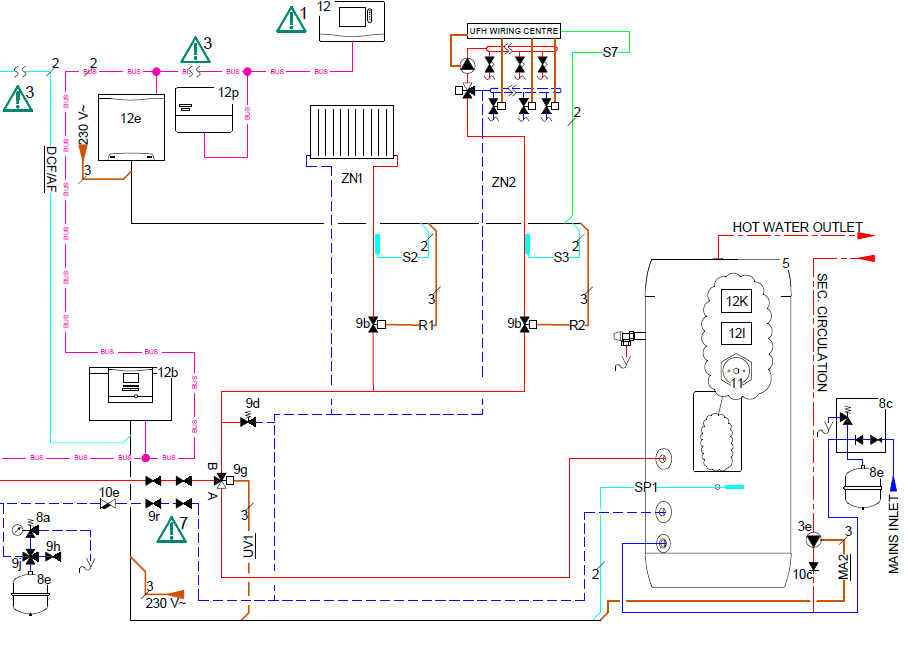
The usual Vaillant configuration for DHW shows a diverter valve (9g below) which is energised for the DHW position. There are also separate two-port valves 9b for the heating circuits: But I already have a two-port valve for the HW coil in an S-plan setup so I am wondering if I can keep this instead. It would seem to depend on whether the controller de-energises the heating valves (9b) when there is a demand for HW, it seems likely but can anyone confirm this? TIA
-
Am also planning a Thermal Store - though not as big as the OP's 500 to 1000 litres. It will be charged during the night at cheap rate so the CoP will not matter too much, and initially used to heat bedroom rads during the evening. I expect some experimentation before I find out how much effective heat storage there is. If it is more than adequate to warm up the bedrooms either I will extend it to serve the living room rads during the early evening or dial the temp back using weather comp to get a better CoP. For @adrian82 I would think the requirement for night-time heat is so large that it would be worth using a high storage temp and then blending it down with either a standard UFH mechanical thermostatic valve or an ?Esbe electronic mixing valve, some HPs can control them directly. Don't think a heat exchanger will help, there is no need to keep the circuits separate and it will introduce a temp drop across it. 1kWh is 861 litre degrees. So 25kWh (thermal) is 21,500 litre-degrees and a 1000 litre tank charged up to 51.5 deg will be able to give up all the heat into a UFH circuit running at 30deg. What is not clear is if the quoted 25kW (h) is electrical energy in or thermal energy out. If its electrical input then you will need 3x as much storage assuming a CoP of 3 which would be a massive great tank. But still very much cheaper than batteries.
-
Vaillant 7kw % efficiency rating for BREL Part L
sharpener replied to Post and beam's topic in Air Source Heat Pumps (ASHP)
Pre-dates widespread use of R290 refrigerant so I would have thought badly out of date now. A bit like Council Tax bands. -
Vaillant 7kw % efficiency rating for BREL Part L
sharpener replied to Post and beam's topic in Air Source Heat Pumps (ASHP)
Here you go: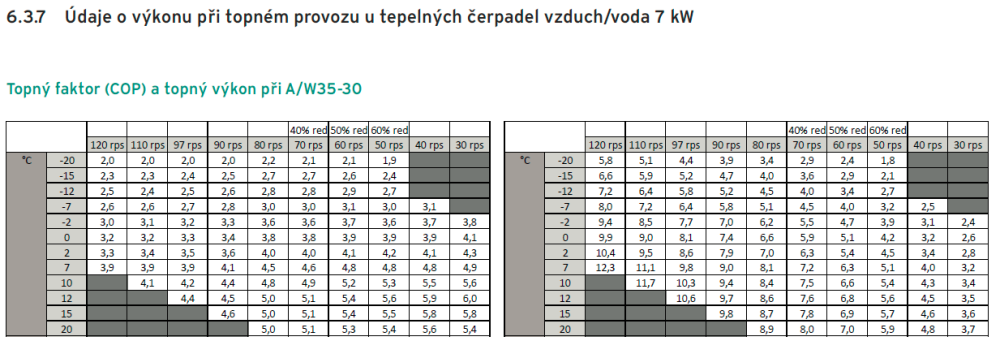
-
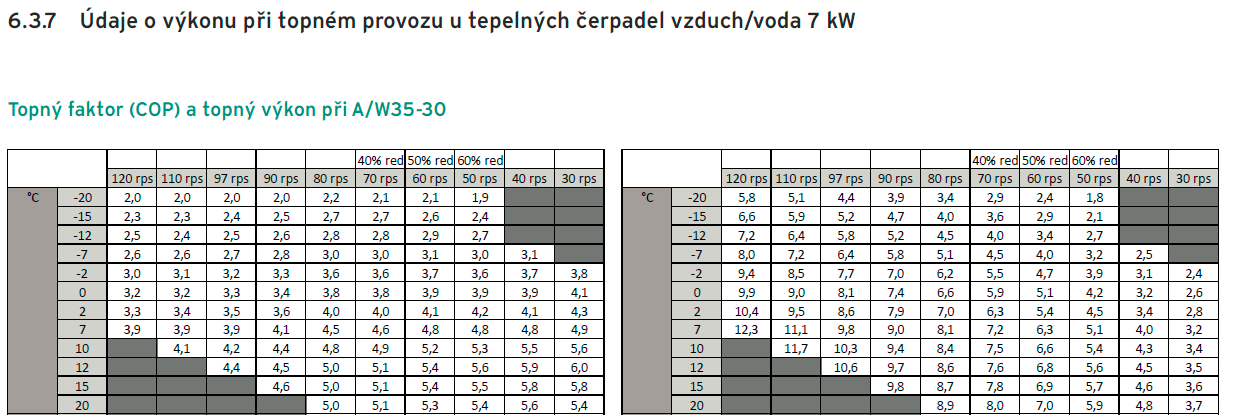
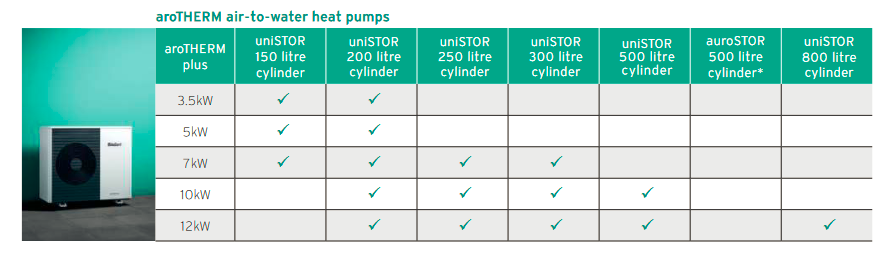
As noted upthread the Gledhill range is available branded as Ideal, identical but cheaper. Gledhill will only deal with the trade, not end users. Newark Cylinders are another established brand that were OTOH helpful and quick to respond when I asked them to quote, and will customise for multiple immersions and many other features. But unless the price is an over-riding issue it might be better to go with the Vaillant Unistor as originally suggested by the plumber in yr OP, then he cannot possibly complain later, and operation with the Arotherm Plus range is guaranteed (you will see that the 200l is compatible with their 10 and 12 kW HPs as well). Their 7kW HP is a well regarded quiet unit with an exceptionally wide turn-down ratio, and at -2 OAT will actually put out 8kW with W = 55C (and 9.4 kW with W = 35!) Alternatively you might get quotes from Octopus (Daikin or the new Cosy) or Good Energy (MIdea, cheap and cheerful), both are offering systems for small uncomplicated properties.
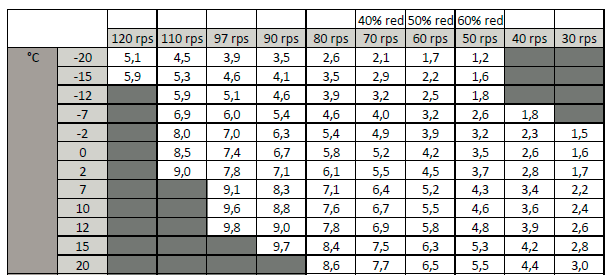
-
A 210 l tank full will take about 9 kWh to heat. That's 1.5 hrs with a 6kW HP. No amount of coil area is going to reduce it below that. So it is probably not the rate limiting step unless you have say a 10 - 12kW unit and are desperate to get the recovery time as low as possible. But a 12 kW one will generate HW continuously at over 5 litres/min which is rather better than an electric shower. So timing it for when you are actually using the HW might mean it does not deplete the stored water at all.
-
If you can, it would be better to decide what HP you are going to have as they (or their installers) can be picky about what cylinders they will work with. Installers will also want to make sure you have a big enough tank, one popular formula is (no. of bedrooms + 1) x 45 litres, and may argue that even if you need less HW than that now a subsequent purchaser might want more. You do not say what size HP you are planning (for the purposes of calculation 1 kW provides 861 litre-degrees of water heating per hour, so about 4 deg/hr for a 200 l tank). Vaillant have in the past said that they need a 3 sq m coil for any of their HPs, but their own compatibilty chart does not actually require it. In reality it will almost certainly be OK. After a lot of work (see my and @JamesPa's postings dating back months) I finally secured Vaillant's agreement that my existing OSO 210 l tank can be used with their 12kW HP, even though it has an assumed 0.75 sq m coil, provided I fit a bronze secondary circulation pump to increase the heat transfer. The recovery time is in any case not very important if you heat the bulk of the water overnight at cheap rate, while the heating is on setback anyway. OTOH if you have a high demand in the early evening for 4 ppl showering before going out (another recent thread), or for childrens' bathtime, then you might need a re-heat after lunch, when the air temp will be higher and so the CoP a fraction better. And Octopus Cosy is cheap again.
-
Yet another instance where avoiding callbacks and so reducing the cost for the installer takes precedence over optimising system efficiency and so reducing running cost for the customer.
-
Since Good Energy quoted for fitting a Midea HP I have out of interest read the manual you posted. What is so different about them that makes this necessary? I know Grant are also keen on LLHs but their installation methods are a bit odd in other respects too. What rationale have Freedom provided for their insistence on LLH or PHX, and which way has it gone over time? Yes a PHX will keep gunge from old radiators out of the HP but a LLH won't even do that. And unlike a buffer or volumiser neither will provide any extra stored energy for defrosting.
-
Terrible echo on this board don't you think?
-
AIUI @M0rtimer had an end-of-life oil boiler which was scrapped, there is provision to add a boiler if req but none in place ATM. LLH also allows mixing leading to increase in entropy and loss of efficiency hence poorer CoP. I thought @HughFyou said the PHX was ?only for warranty reasons when installed with a boiler. The unnecessary extra ?5deg temp drop will especially be a problem when trying to heat the HW given the high demand of 4 ppl going out for the evening. 270 sq m of UFH would I have thought be enough to provide defrost energy with a totally straightforward schematic, 100% of flow to heating or DHW. No buffer, no LLH, no PHX, no secondary pumps. Get rid of all that and you won't need any provision for a backup boiler because the HP will run so much better!
-
Yes, if a bit glacial. They also want their plumber to visit to agree the pipework layout, that is more essential as we need to decide on the port arragement for the custom thermal store from Newark Cylinders, but it will have to be a different day.
-
Yes, a heat exchanger will introduce a temp drop between primary and secondary side you do not want. Also do you have a buffer tank, they are another cause of inefficiency. If you are making changes fit a dedicated meter for the HP so you can disentangle its consumption from the rest of the house, farm, units and whatnot. Then you will be able to see properly the effect of any improvements.
-
Installer still going on about it with a reference to Martin Lewis/Money Expert, and he sent link to OFGEM enquiry line 0330 053 2006. So I rang this, rather to my surprise answered quickly and helpfully, apparently no truth in it. Installer has now applied for BUS voucher, I got automated response from OFGEM with link to consent forms, all completed and acknowledged by email same day, quite impressive. Their Tech Director now wants a further (?5th) site visit, by his electrician, to consider whether to fit an extra consumer unit with Henley blocks. Am less impressed by this, have already explained it has to be fed via my battery/inverter system and there are 3 spare ways in the existing CU to do this.
-
Perhaps as a result of some misconnection the tank is losing heat to the central heating circuit(s)? Maybe that's what @JohnMo was implying.
-
ASHP with RHI - Restrictions on Other Heat Sources?
sharpener replied to Barnacles's topic in Air Source Heat Pumps (ASHP)
A bit too much by the look of it! -
Sounds like a classic case of a control system "hunting". If there is a pump in the indoor unit and one in the outdoor unit as well then it may be there are two separate flow control systems fighting each other. If you are reducing the flow rate by <10% then theoretically the delta T will have to rise by 10% to restore the heat transfer rate. I don't think 0.5 deg will make much of a dent in the efficiency. If it shuts the thing up I think I would go with it as a solution.
-
Yes the absorption/desorption of moisture can be useful. What have you got against sheep's wool? Our bedroom had penetrating damp in the west-facing gable end wall. After taking advice inc our surveyor who specialises in traditional buildings we now have the following construction: Original 600mm stone wall 50mm batts of sheeps wool between horizontal 50mm battens at 450mm centres Plastic retaining mesh 50mm ventilated space formed by vertical battens, with louvre vents from the room at bottom and exhausted to MVHR plant at top Foil backed plasterboard and skim coat Sheep's wool batts came from Bradford's depot at Evercreech Junction (former station on S & D). We have had no more problems with the damp. OH can occasionally detect smell of sheep's wool but I can't.
-
Improving an "ok at best" ASHP installation
sharpener replied to pstunt's topic in Air Source Heat Pumps (ASHP)
If that is over a 24 hr period it is less than 3kW continuous equivalent. Supposing you were getting a CoP of 3 it represents 9kW heat loss inc DHW. That is around 50% of the HP rating. For 360 sq m it is also 25W/sq m which if you are getting OK room temps at -5 OAT sounds as though you have not got anything much to worrry about. Keep on fine tuning as you are already doing. Someone recently posted a link to the Chofu manual (sorry can't find it) which has a lot more stuff on the Grant Aerona HP which is the same thing re-branded and dumbed down. -
Radiators not reaching flow temperature
sharpener replied to Helene's topic in Air Source Heat Pumps (ASHP)
No but the temp/pressure relief valve is clearly visible in the vid at 0'20" and there is something teed into the outlet just after it so maybe combined with heating system pressure relief (though I can't see that tbh). Full marks to @SimonD for figuring out the pipe runs. -
Their consumption is about 4kW 24/7. That's more than predicted for my leaky old barn conversion. With a new build I would expect maybe 20 - 40 W/sq m heat loss so 4 - 8 kW for a 193 sq m property, say 6kW or better with MVHR. So with a CoP of 3 in this weather the consumption should be more like 2 kW continuous even allowing a bit for HW for two people. My money is on the auxiliary heating being stuck on for some reason.
-
Difficult to see even if all their heating is by the auxiliary electric heater (if any) not the heatpump itself how they could have used 4.3 MWh in six weeks. Has the meter been miswired so it is registering the demand for the whole retirement home complex???
-
58 deg phase change is pretty consistent with the requirement elsethread that the Vaillant supply 70C flow. As you point out the CoP won't be brilliant. Maybe with only 1.5 people it won't matter on E7. If you can accept a longer charging time then maybe 65 would be better? Problem seems to be in the control of it. The Vaillant won't care if its DHW sensor doesn't get a proper reading, if it sees "cold" it will just keep trying for as long as the DHW is programmed for (IIRC the default is 45 mins followed by 45 mins lockout). The more important thing is the call for heat and it appears the eDual controller can provide that as a contact closure which the Vaillant HP will accept. Is your installer happy with this now @oranjeboom? Even if it can't, I don't see any problem with the physics of the thing running entirely open loop, once the material has transitioned to liquid at 58C it will rise slowly to 70C and after that it will not absorb any more heat. So the HP will shut itself down once unable to maintain 5K dT.