


Crofter
-
Posts
3484 -
Joined
-
Last visited
-
Days Won
11
Everything posted by Crofter
-
It always was the case that it could be assembled however you like, but the finished product had to be theoretically moveable in one or two sections. Now they seem to have tightened that so that it's single piece only. They've also specifically detailed how it must attach to its base, if it's not on wheels. I don't think it would be feasible for me to add more than a token lean-to under these new rules. Which is a shame, because I quite fancy adding about a 50% extension and moving in there myself. I think my only hope would be to go for a retrospective building warrant and give up on the whole portable building thing. Fortunately I think the build would meet building regs, with the exception of the access not being completely wheelchair compatible, but that could be changed.
-
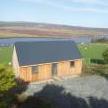
A few years back I built a small house in compliance with Highland Council's 'Portable Buildings' definition, which exempted it from building control. At the time, you were allowed to build in up to two sections. I see that this is no longer the case. Might be useful to know if you were thinking of going with this route. Policy is here: https://www.highland.gov.uk/downloads/file/1346/bst_018_caravans_and_mobile_homes My own question is this: at the time that I gained planning and completed the build, I could have added another section. I wonder if I can still do this, or if the change in policy will prevent that? I would still be within the same total size, but adding on to the existing structure is not really feasible without making it a second 'module' that has to be moved separately.
-
I think what I'm looking for is a mower that supports multiple guide wires? Trying to figure out what sort of price these start at. Husqvarna have a very nice 'choose your mower' feature but it's pointing me at the £2k+ segment... which is a bit out of budget...
-
Ok here's question, which will reveal my ignorance of how these things work. I understand that for the non GPS type, you lay a boundary wire around the perimeter of the area to be mowed. What about if you have a narrow strip that the mower has to go down? Is there a limit to how close together two boundary wires can be? Asking because I don't just have one simple bit of lawn, I have a whole lot of different areas at different levels. I could have the mower trundle along the verge beside the driveway to get from one bit to another, but I need to know what the minimum width is.
-
Is there another way of doing this? I don't mind having to manually tell it to go and mow, if that's something I could do over WiFi. I'd quite like something I can drive like a big toy car but I don't think that exists 😂. My problem isn't lack of time to do the job, it's the fact that I'm thousands of miles away...
-
Thanks, that's quite encouraging. The cheapest ones appear to use some sort of optical 'grass recognition' and have to be physically stopped from falling down banks. I see Toolstation do a self docking/charging one for just over £400. How do they cope with wet weather? Do they sense that the grass is wet and go and hide until it's ready to be cut?
-
We spend a good chunk of time away from our place and the cost of employing a gardener to keep the grass down really does add up. I've had a quick glance online at robo mowers and they seem to start at under £400, which is much cheaper than I expected. I'm sure you get what you pay for, of course. For it to be viable, I'd need something that that drive back to its recharging station autonomously. The space underneath the house would be absolutely perfect for this, there's even a power socket under there. The lawn isn't as flat as I'd like which might be a challenge. I am gradually levelling out the worst of the bumps though. Anybody on here using one of these beasties? Is it reasonable to expect it to operate with minimal human intervention?
-
Bit of a personal thing, I quite like it. Part of the character of that age of building. If you don't want/need a pristine finish, it would be pretty easy to make access hatches in the panelling- just use an oscillating multi tool to cut through the T+G. You'd need to have a few screws to hold the panel in place afterwards- use nice slotted head brass ones with cup washers underneath. I don't think stripping the paint is a good idea. You could spend ages sanding it back, but you'll never get right in to the grooves. And as you say varnished wood can be very dark.
-
Scottish government declares national housing emergency
Crofter replied to Guest28's topic in Housing Politics
Do they? Surely we want more owner occupiers? There will always be a small need for temporary rental accommodation- e.g. if you've moved to a new area and need somewhere to live while you build or buy-but I don't see how it's a good thing for it to be normal to spend years and years in a rented house, paying off somebody else's mortgage. -
AFAIK you only need someone with an f-gas cert to hook up the refrigerant lines. And you'll likely need a sparky to run a new circuit from the CU, unless you can run it as a spur off an existing circuit. I could be wrong about that. I'm hoping to go as DIY as possible with my A2A install, running the ducting etc myself.
-
What to do with Excess/Cheap Power?
Crofter replied to puntloos's topic in General Alternative Energy Issues
Probably not. I doubt anything involving hydrogen does either. -
What to do with Excess/Cheap Power?
Crofter replied to puntloos's topic in General Alternative Energy Issues
To answer my own question, a quick Google suggests that pumped storage or compressed air offer around twice the round trip efficiency of hydrogen. And with much simpler technology. Obviously pumped storage is location dependent. I can feel a Heath Robinson project coming on... I've got land 50m above my house... -
What to do with Excess/Cheap Power?
Crofter replied to puntloos's topic in General Alternative Energy Issues
How does the round trip efficiency of H2 compare to pumped storage? -
Using a battery to provide direct electric heating sounds a bit nuts. Running your heat pump with it makes a bit more sense.
-
My MVHR draws 50w. Would be one of the first things I would want to get running in the event of a power cut in cold weather.
-
What's frustrating is that the Scottish Government don't seem to have been able to get across the message that the ban applies to primary heading methods. Some people aren't even aware that it only applies to new builds. I think it would be perfectly sensible to allow a small WBS to be fitted to rural new builds in areas where power cuts can be common and prolonged, and there was nothing in the original proposal that suggested this wouldn't be possible under the provision of 'emergency heating'.
-
Where does your vapour barrier go in this design? Do you need 140mm for structural reasons? Surely it would make more sense to use 120mm frame and then create the service void using battens on top. That gives you somewhere to put the vapour barrier. With the 140mm frame you'd be drilling holes right at the edge of the studs anyway to run cables so that would affect the strength. Ideally you want a continuous insulation layer to prevent thermal bridging. This can be either inside or outside the frame. I chose inside because to me it makes me sense from a condensation risk perspective, where the continuous insulation was PIR and the frame was filled with rock wool. Just FYI we did this too, used 25mm battens and 50mm counter battens, then board on board cladding with 20mm planks, so the total thickness of the cladding and battens is 115mm. I considered using 25mm for the counter battens but at 600mm centres there was too much flex and bounce, and I didn't fancy trying to nail on to them.
-
A bit out of the box thinking, could you use insulated box profile? You'd save the wall thickness conventionally taken up by battens and cladding.
-
SIPs will need some sort of machinery to erect, the panels are big and heavy. Stick build can be done with just manual labour- I did my place that way, two or three people can lift an entire gable end wall.
-
I did everything myself except for the major groundworks, where I hired a digger+driver, and plastering, which I consider a black art! I laboured alongside the sparky, and got a plumber to do the UVC, because I was told that I legally had to. None of it is rocket science. In a self build, you will take much longer than a professional, because you want it done right. Basic timber frame work is easy if you are half way competent with a tape measure and a nail gun. Second fix is a lot more fiddly as all your work is on show. I tried to get someone in for that but ended up having to do it all myself. That's one of the reasons I went with painted MDF skirting etc, so I could fill and paint any mistakes I made. I designed out complications early on- e.g. no joins in the kitchen worktop, just a few fairly large windows. I decided to go open plan and ended up only having to hang two internal doors.
-
A few years back I had a pile of very low grade rock left over from some landscaping work, and used it to build a dry stone wall in the garden. It's crumbling quite badly and I think one section might fail soon. I've tried rebuilding it in the past, using mortar to shore it up, which worked fine but was very tedious. I think the current section might be beyond that! It's only a low wall, built from two 'skins' of stacked stones with a rubble infill. I'm thinking I could just 'inject' some sort of sealant/adhesive in lieu of mortar, in to the gaps between the stones. Not sure what kind of gloop would be best though. Has to be a neutral colour and weather resistant. And fairly cheap...
-
Thinnest wall type with best U Value
Crofter replied to Pappa's topic in General Construction Issues
Cheap, warm, thin. Pick two. -
I don't think CT1 would work very well. It's got quite good bond strength when used over large areas, but it won't soak in and expand in to every little nook and cranny like PU glue will. I'm not up to date with prices but I've never considered CT1 to be particularly cheap either...
-
Thinnest wall type with best U Value
Crofter replied to Pappa's topic in General Construction Issues
I think it's hard to beat SIPs for performance- the wall is almost all insulation, with no cold bridging. -
One thing I really like about a full skim is that it's pretty easy to repair, e.g. if you need to move a socket and fill the old hole. Getting a seamless join between the filler and the plaster is dead easy, whereas on bare plasterboard the paper/filler join almost always remains visible.
