


Crofter
-
Posts
3484 -
Joined
-
Last visited
-
Days Won
11
Everything posted by Crofter
-
Talk me out of this idea or not (buying a property for holiday rental)
Crofter replied to ProDave's topic in Housing Politics
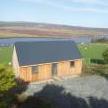
Our new build letting property (see my profile pic) is across the road from our own house. For the first couple of years we managed it ourselves, although we still needed to find a cleaner because changeovers are during the day and we were both working full time. A couple of years ago we moved on to our boat and began renting out our own house too, with a property manager in place to run everything. I'm not sure how long this arrangement will be in place. It's working, but as I said we rely too much on friends, neighbours, and family, to run little errands and generally help out. We're extremely grateful to them all. I doubt you'd be able to replicate that sort of network if you stuck a pin in the map and bought a property somewhere to which you had no previous connection. Even the property manager themselves was found through a relative of a workmate. One thing that hasn't been mentioned in this thread yet is the rules on your own use of a short term let. To qualify as a Furnished Holiday Let it must be available for rent 210d of the year and actually rented out for 105d. No single stay should be over 30d. If your intention is to stay in it yourself for a good chunk of the year then you'll probably fall foul of this, unless you are just using it over the winter when it's empty anyway. -
Just for context, the house is a 90m² bungalow in NW Scotland, with storage heaters, no mains gas. Currently occupied mostly in the summer, from about April to the end of October. I don't have a break down of the DHW vs space heating consumption. I'm strongly inclined to go A2A for space heating, and thinking about PV+diverter for DHW. But that would be a small DIY project, no export payments (unless Octopus extends their trial...).
-
Talk me out of this idea or not (buying a property for holiday rental)
Crofter replied to ProDave's topic in Housing Politics
Holiday letting works for us, but it's not quite the passive income that you'd hope for. We have to lean on family and friends to help out, far more than we'd like. Of course it helps having lived and worked in the area for ten years first. I still have misgivings about it due to the dire housing situation in rural areas. No wonder nobody can get cleaners or gardeners. It's simply not possible for a couple living off seasonal hospitality wages to buy a house in most of the more desirable parts of the world. I console myself by thinking that one of our properties wouldn't exist if it wasn't built specifically for holiday letting, and the other one is still our primary residence whilst we are long term travelling. So we're not denying a family a place to live, and it's temporary anyway. What really winds me up is the houses that are left empty for 50 weeks of the year. At least a self catering property is putting people in the restaurants etc. I'm sure the average tourist spends more per head than a local. But empty properties kill communities. We've not found the new licensing scheme to be too much trouble, but it varies depending on your local authority. I gather in Edinburgh the costs are very high. Councils were instructed to set reasonable fees but some of them are taking the mick. I don't think it's as arduous as getting set up for long term lets, and frankly it was a bit ridiculous that there was no regulation whatsoever of the short term sector. -
Are these any good? I've only recently become aware of them. E.g. https://www.heatershop.co.uk/dimplex-edl200uk?fbclid=IwAR0zOyc200ZN0QG_0MYF4e8JZesi9--DAKdylEWCmsUKxY2p5NMOhEGOsTQ @Nickfromwales ?
-
Unfortunately, not really. I can dig out the meter readings and see what the split is between DHW+heating, and everything else.
-
I'm leaning towards a ducted system rather than multi split. Probably without any room-by-room adjustment after the initial installation. So hopefully control will be pretty simple.
-
If I go ahead with an A2A+UVC system, perhaps with PV+diverter, any thoughts on: a) flat rate vs E7? b) any special tariffs that might be better? c) trying to run the A2A overnight rather than on low 24/7?
-
So if I'm understanding correctly, you set up four different schedule options, and use the app to move from one to the other? And if you're offline, it'll just continue with whatever schedule it's on?
-
What you're saying is pretty much how the smaller property operates. It doesn't have or need a heating system, and the background heat from the UVC is enough to keep the place warm enough to avoid frost or damp problems. On the house in question, we have the cavities filled, loft insulation up to 270mm, doors and windows replaced with a mixture of 2+3G. Underfloor partially insulated and I will add to this as my first step when I get back. We have quite a long season- basically full from early April to late October, which takes you well in to the colder months, but we get out of season bookings too. We have some people coming in next week, for example. And of course usually booked over Christmas and New Year. With no remote monitoring or control, and a busy property manager who hasn't historically been great at little things like adjusting the heating, I'm very keen to be able to keep an eye and make changes remotely.
-
I don't really need an interim solution I get back to the house in May and will be living in the house myself over the summer. By the time I leave in November I want to have everything set up with all the improvements. Hopefully OVO Energy will not shut down the THTC tariff before I get back. I'd be hoping that it would up to them to think up a solution for the fact that they can't just get rid of my tariff and leave me with a functioning heating system.
-
So if you don't have internet, your heating won't come on 🤔😬? Or will it revert to whatever it was last programmed to do? I do have internet most of the time, but it's not guaranteed.
-
I did start looking in to a wet system but it's obviously going to be a much bigger job than A2A, especially UFH. We have suspended pine floorboards so I think I'd need those aluminium plates. Big job. I've got about six months to do all if this, whilst working full time, and doing a bunch of other projects. So I'm a bit cautious about how much I can realistically achieve.
-
Because I've not set foot near the property for two years and I'm traveling indefinitely, thousands of miles away. Last time I was home, I found every heater turned up full, despite having instructed the property manager to dial it right back once they last guests of the season had left. I don't really mind people setting it to whatever they want while they are there, it's the unoccupied winter months that concern me. If had remote control of everything, I could be watching the weather back home and adjusting the heating as necessary, to prevent frost damage. The current 'system' has almost no control at all. On the Total Control tariff (a misnomer if I ever heard one) the electricity company decides when the heaters come on. One of the three storage heaters has a basic thermostat control, just a dial on top. And that's it. When we lived in the house we usually turned off the two smaller heaters at the wall, and the single large one we kept turned down as far as we could tolerate. Whilst making a lot of use of our woodburner. With the impending phaseout of THTC, I am forced to do something- there is no way that the current hardware in the house can operate correctly under a different tariff (even if I just switched to E7, I'd have to install timers for each heater). So it seems the right time to upgrade to a modern system that would hopefully cut running costs and allow better control.
-
I may have to Google that. Key thing is that the people in the house need to have idiot proof hardwired controls too.
-
I'm kind of waiting to see what happens with Octopus and the non-MCS export deal they were doing. But yes that could make a lot of sense. Still doesn't solve the remote monitor/control question. I'm pretty much sold on installing A2A but not sure if the numbers really stack up if I lose the off peak DHW rate.
-
It doesn't matter whether you tell people, they still need to think ahead by 24hrs which they won't do. And they're not paying for the electricity so they don't really care anyway. I've made some improvements on fabric, and will continue to do so.
-
Ah come on, somebody must have an opinion on this... 😁
-
Not my first thread on this project but I figured I would start again from scratch. I have a 93m² bungalow, 1970s double block with suspended floor. NW Scotland, fairly cold and exposed, no mains gas. No severe frosts. Currently on the Total Control tariff, which gives 24/7 access to cheaper electricity for heating and DHW, and a higher rate for everything else. This tariff is not especially good value (the rates last time I checked were 24/37p). This tariff is set to be phased out soon anyway. Currently I have storage heaters and a direct UVC. The house is primarily used in the summer only, as a holiday let. We do get occasional out of season visits. We're going to spend next summer in the house ourselves, which gives me a chance to do something about the heating. I don't think storage heaters are a good fit for a house that lies empty for weeks at a time, and is often empty during the day even when guests are staying. We have no way of controlling the heating remotely, and most people don't understand storage heaters so it's pretty common to find everything turned right up. I'm swaying towards a ducted A2A system with a WiFi controller option, so that we can keep an eye on things and adjust the heating while the house is empty. But I'm assuming that will work best with a flat rate tariff, not E7? Which leads to a problem with the DHW. I don't have numbers, and usage is variable, but clearly DHW is a big part of the energy use, and it would be a shame to no longer get an off peak rate for that. I'm certainly interested in fitting PV plus a diverter to help heat up the tank, but that's going to be quite intermittent and of almost no help over the winter, not that there is much usage then. Anyway, I'd really appreciate some feedback on this rough plan. It's going to be a lot of work and, with no grant available on A2A, a fair chunk of money too. As always with my projects, I plan to do as much of the work as possible myself. Tl;dr: what space heating + DHW system would you suggest for a house used for short term lets, mostly over summer. Needs to have both an idiot proof user control, and ideally a remote option.
-
My builder was great 😁 Jokes aside, I was pretty lucky with the few contractors I needed. The plasterer was brilliant. He had come up to the island for a job which was then cancelled, and was staying in his campervan while looking for work. Took one look at the site and said he'd get it done in five days. It actually took six, but he didn't charge any extra. Top bloke. One of my favourite quotes is that the difference between an amateur and a professional is that an amateur does the best job they can, and a professional does the worst job they can get away with. Definitely applies to building (and many other walks of life).
-
It's pretty straightforward to look up the effect of burying a cable in insulation. You may have go up a size to stay within safe limits. I chose not to insulate the service void. Mine was only 25mm deep so it would have had a negligible benefit, and would have completed any future wiring runs.
-
Ah ok so there's a second membrane to protect the sarking. I did a corrugated steel roof but only used one membrane. I wonder why standing seam is different.
-
Is there anything on top of the sarking? Just the battens and then the standing seam sheets? I know this isn't very helpful but it seems a strange way to build a roof. I hope that whatever you're using for sarking is ok with a bit of moisture.
-
The issue is that Octopus have been talking about paying for export without needing MCS accreditation.
-
On cost, is in-roof cheaper than tiles+PV? It's presumably lighter than tiles+PV?
-
Our roof comprises attic trusses, planked sarking, felt, and some sort of thin fibrous tile. We were told that they're not asbestos, which is good, but they're certainly pretty old now and I wonder how much longer they will last. Our plans for the house include adding PV and converting the loft. It will probably make sense to re-roof at that point, with a breather membrane and full fill insulation to maximise head room inside. If replacing the roof covering entirely, and wanting to add PV, does it make economic sense to go for in roof? Or is there another option? The only roof I've ever done before was corrugated steel, which I really like and would use again, but I'm not sure what the neighbours/planners would make of that.
