Sparrowhawk
-
Posts
607 -
Joined
-
Last visited
Everything posted by Sparrowhawk
-

Airtightness approach for suspended floor PIR insulation?
Sparrowhawk replied to Sparrowhawk's topic in Heat Insulation
I agree. Whether I notify BC or not I'm trying to get it to meet the required U-value of 0.25W/(m2K) and got myself in a right tangle with Ubakus I will try and recalculate with other insulation materials, but I haven't understood properly the perimeter/area ratio stuff used in England for floors. Like perimeter of whole suspended floor, or just the current room? -
Airtightness approach for suspended floor PIR insulation?
Sparrowhawk replied to Sparrowhawk's topic in Heat Insulation
I'd love to, but unfortunately the joists are 100mm deep and then the void below is 100-130mm, less than building regs now require. I'm loathe to dig it deeper because the foundations are super shallow, but more because we're living here and I've got too many other things to do I hate digging -
Airtightness approach for suspended floor PIR insulation?
Sparrowhawk replied to Sparrowhawk's topic in Heat Insulation
That would be idea 2 I think, with VCL being the proper term which I didn't know for "airtight non-breathable membrane" (something that keeps water vapour in the house and stops it from getting into the void)? I've edited my original post to clear this up. Interesting, is that to be belt and braces? So 2 stops water vapour and air moving down and around the PIR, while 3 stops air and water vapour coming up from the void? Any brand alternatives you can suggest? I'm unclear if a cheaper VCL is just thick polythene in this case or it's something more fancy and reinforced. -
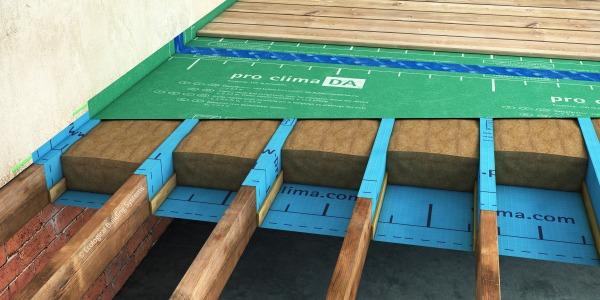
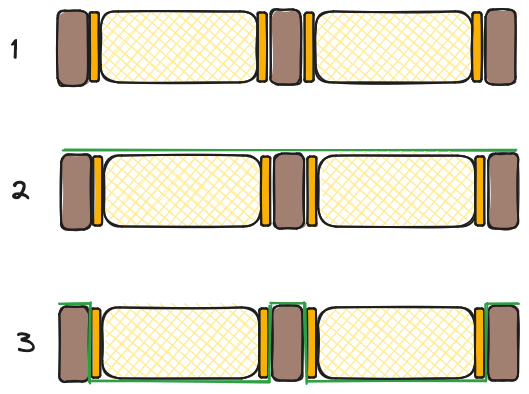
Because the joists and space below are shallow, I'm limited to 100mm of insulation so going to have to use 100mm PIR between our ground floor joists to get the best U value I can. Previously I'd planned to use the Ecological Building Systems approach of loose insulation and 2 membranes: I've come up with 3 ideas for PIR insulation, from least to most work: Install boards using Gapotape (or home made equivalent as that stuff is seriously expensive. I'm experimenting with expansion joint foam and aluminium tape) and tape joints between boards with Tescon Vana. Don't tape between boards and joists. As above, but then put an airtight non-breathable membrane VCL over it all. Any poor fitting boards can still let cold air come up to floor level Put the airtight membrane VCL below the PIR boards and over each joist. No cold air can make it to floor level Which approach has the least drawbacks?
-
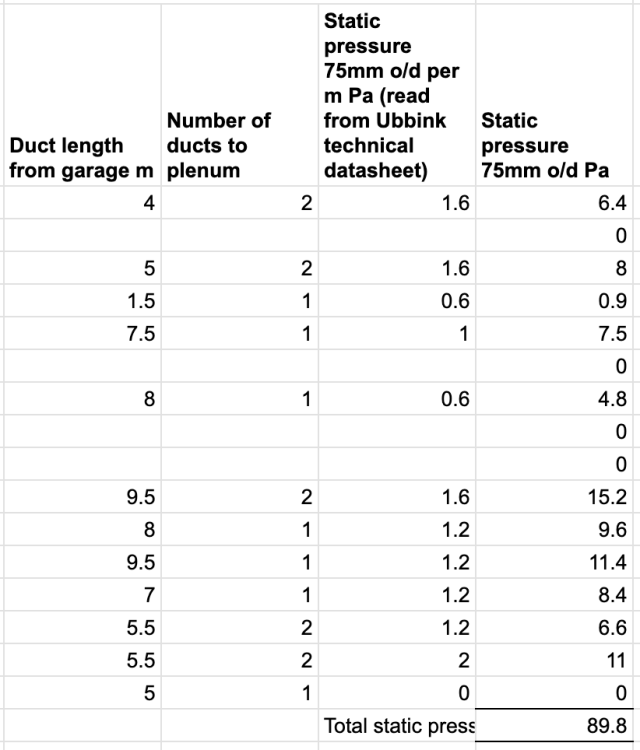
Am I correct in thinking that when you do a radial ducting system it's the max pressure drop of any of the ducts that matters, not the sum of all the pressure drops? A simple calculation on duct length and flow (assuming straight ducts) gives: The total static pressure is getting close to what a well designed system should have as its max, before adding plenums, bends and more, so I'm assuming I've done something wrong.
-
Anyone built themselves an outdoor sauna
Sparrowhawk replied to Adsibob's topic in Garages & Workshops
Not wishing to derail this thread of sauna-porn (those Polhus ones, phwoar) but how do you find using an IR sauna? It sounds more practical, and hopefully easier on the wallet too. -
Welcome @Mash! You are sensible doing it all at once (and I assume moving out while the work's ongoing?). We're doing a smaller renovation of an extended 1920s house while living and working in it, which has slowed progress a lot.
-
Steico Flex / Pavaflex for sound insulation?
Sparrowhawk replied to Sparrowhawk's topic in Sound Insulation
I shoved a layer of plasterboard offcuts between the rafters. Today's assessment is it's made the sound problem worse not better 😂 I haven't added any fluffy stuff yet as waiting for heating engineer to do his stuff, as I don't want to risk it getting wet as he moves the cylinder. -
Welcome Graham. I hope you'll share your build here as it goes. There's a lot of skepticism about straw bales on this forum; me I'd build a straw house if I could for the carbon footprint, but mostly as I like the aesthetic they end up with. Fingers crossed that the warrant doesn't take as long as planning did.
-
"P = Length of the exposed perimeter (m)." Clarifying that the exposed perimiter isn't 36m (the length) but we involve the thickness too? I hadn't taken that into account before, which would explain some odd numbers I was getting 🤡
-
It is, the options on the Kingspan calculator are very limited (only this material, only 450mm joist centres) so it's going to come out better than the other. But - I was hoping to verify on 2 calculators that 100mm PIR plus flooring would at least get me to 0.25?
-
Air tightness/insulation bungalow retrofit
Sparrowhawk replied to oliviaaa999's topic in Heat Insulation
You're so lucky with that joist depth. My entire joist + void depth is around 200mm. -
It is German, and I can't see what they're using for permiter/area, if anything. Kingspan by contrast required those two values before calculating the results. They only have an option for "floor", not ground floor. I can choose the space at the bottom to have air or earth in it, but AFAICT restricting what's at the bottom to those two settings is the main change vs modelling as a "wall" or "roof".
-
No they're not. I lifted some 1920s floor downstairs to see how much space is available, and I have a 100mm floor joist with 100mm-130mm void under it. Right now I'm trying to see if I can even meet ADL for existing floors (0.25m–2 K–1) if I put some insulation in, given the void is shallower than it's meant to be.
-
Air tightness/insulation bungalow retrofit
Sparrowhawk replied to oliviaaa999's topic in Heat Insulation
@IGP that looks excellent! And thanks for sharing your experience, as I've been eyeing up their method too. How deep are your joists and the void underneath, and what U-value have you aimed for? -
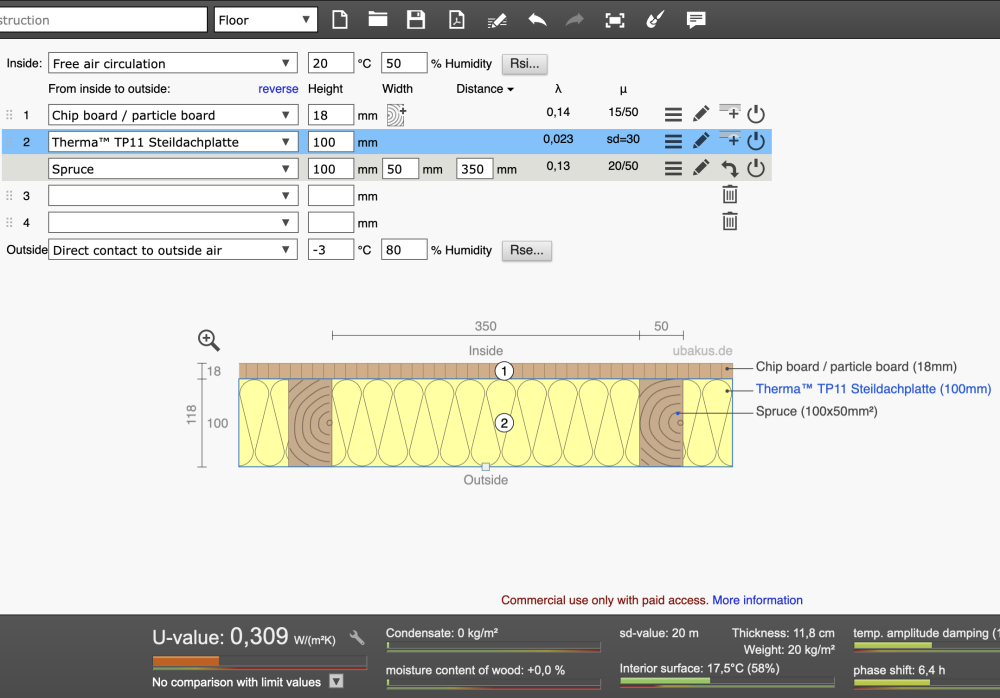
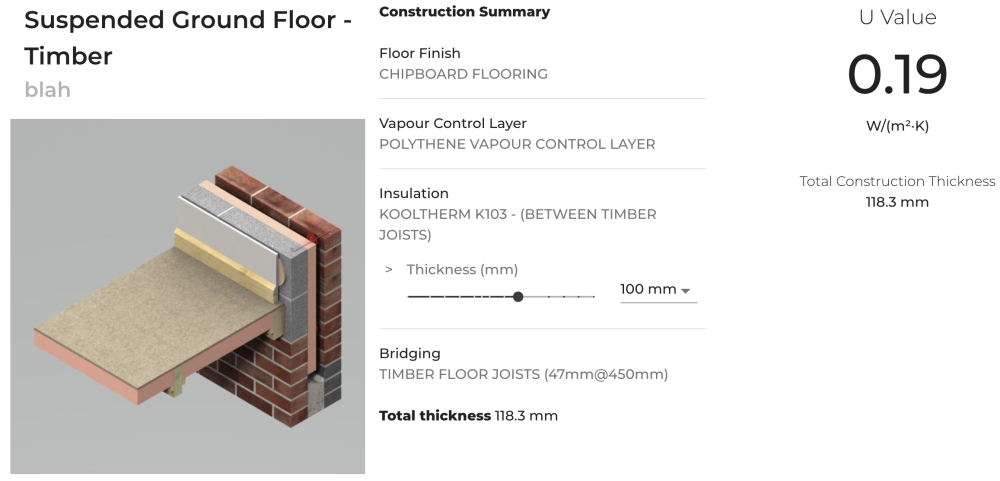
This is doing my head in. I've done a suspended floor build up accurately in Ubakus and get a U-value of over 0.3W m–2 K–1 which seemed high; then did the same in Kingspan's calculator and got 0.19W m–2 K–1 . Is there some obvious error I've made? Trying to work out if I can comply with Part L for upgrading existing floors...
-
Steico Flex / Pavaflex for sound insulation?
Sparrowhawk replied to Sparrowhawk's topic in Sound Insulation
I'll be able to do qualitative testing, but havent' got anything to meaure sound levels with (unless an iPhone will do a good enough job, hmmm) -
Steico Flex / Pavaflex for sound insulation?
Sparrowhawk replied to Sparrowhawk's topic in Sound Insulation
Thanks for that. I have got plasterboard sheets ready to go to the tip. This looks like a cheaper way to dispose of them. So, from top down: Chipboard floor (for now) 50mm of fluffy stuff like Rockwool Sound Insulation Slab (35kg/m2) 1-2 layers of platerboard offcuts between rafters, as tight fitting as I can (or sand along the edges if I'm feeling obsessive) Current 12.5mm plasterboard ceiling Air paths are sealed through the ceiling, but not the chipboard floor as I keep lifting it for stuff. It's funny you mention sand, I came across Quietex which is crushed limestone to pour into ceiling voids to improve acoustic performance. I thought it weird but as it's mass it makes sense. I have enough headroom in my office that resilience bars are a good shout. Ditto for putting rubber above the joists to cushion impact onto the chipboard. I didn't know any of that, so many thanks. This site's an education every time! -
I need to block the sound of me talking and my laugh going from my ground floor office to the room above. My plan is to add another layer of plasterboard to my ceiling, stick some dense material between the floors, and then mastic gaps between chipboard sheets before relaying the floor covering. At the moment 100mm batts of 036 Steico Flex (60kg/m2) is working out cheaper per m2 than Rockwool RWA45 (45kg/m2) or RW3 (60kg/m2) which is unavailable except by the pallet load. Knauf's Rocksilk products are likewise hard to find. Has anyone experience of using this for acoustic insulation?
-
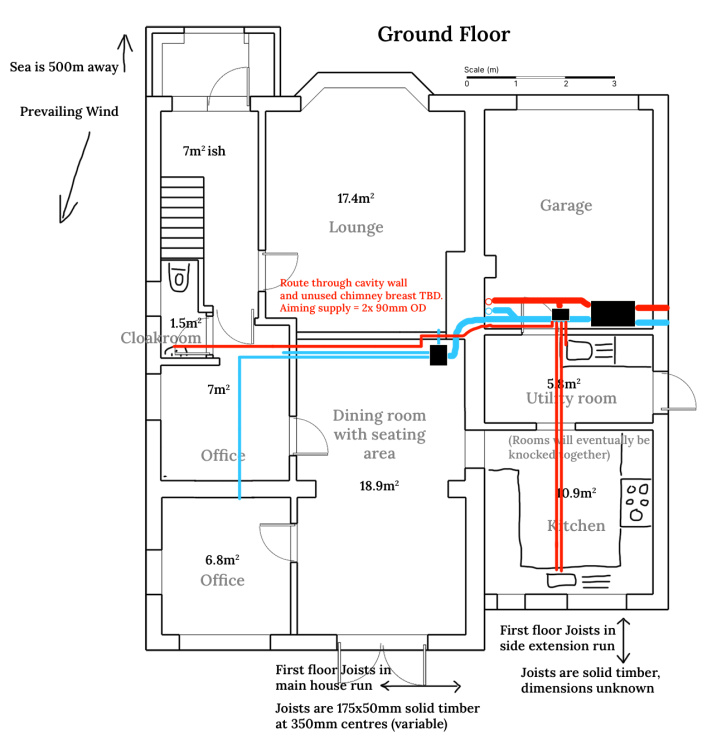
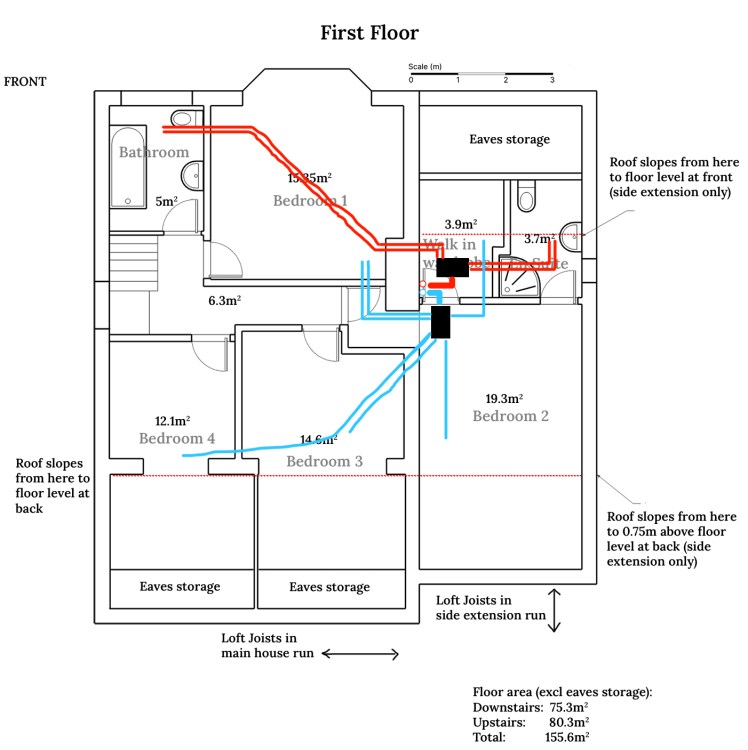
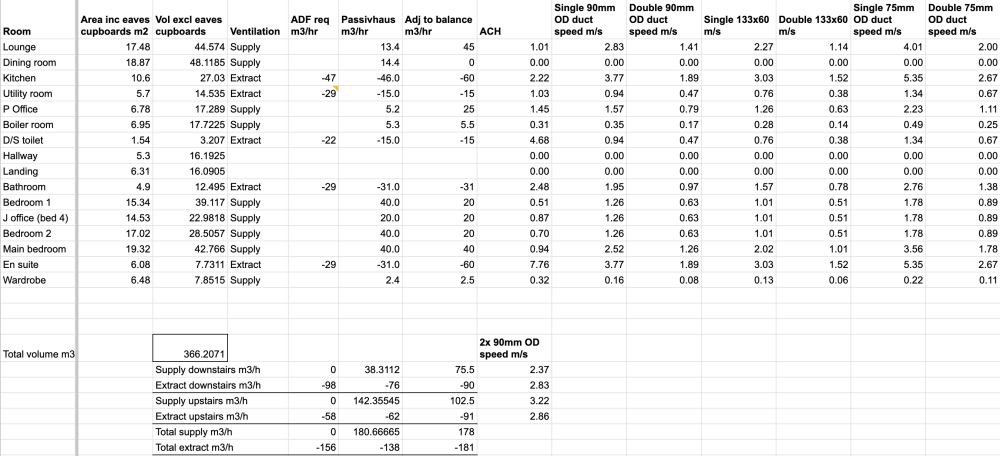
I've updated my spreadsheet, and it looks like 90mm single/double runs will cover all, while double 75mm would break the 2.5m/s rule for the kitchen and en suite extracts. To connect downstairs to upstairs I think something larger than 2x90mm is going to be needed, given those speeds for the full supply and extract volume.
-
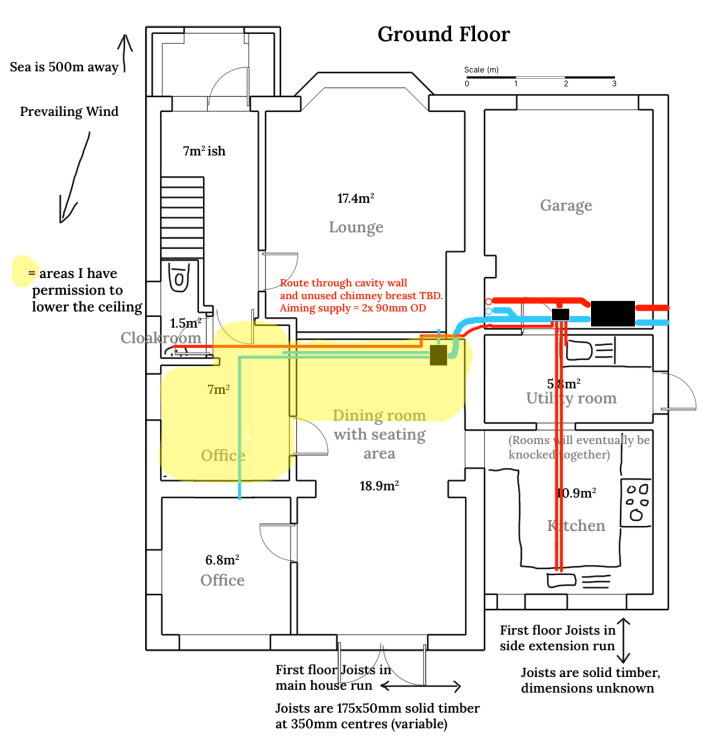
That's my bad, downstairs I've got permission to lower ceilings as the ceilings are higher to begin with / the rooms don't have sloping ceilings cutting into their height. I do need to find out if in the 30cm side of chimney breast I can drill 2x 9cm holes for the ducting (as drawn above) without weakening it. If not then I need a big rethink for how to get from the garage to the dining room.
-
Thanks John, that was what I was hoping. The transfer fan is something I can't add though as due to the nature of our work clients need privacy, and I think that fan would break soundproofing. A separate supply to the 6.8m2 office is the best alternative? Oh good, I thought I had to balance each floor. Great to see what a coanda nozzle looks like, that will blend in nicely with what's planned for that lounge wall.
-
I've gone over this a lot, and there's 4 reasons I've headed to MVHR The location. We're in an exposed coastal location and when the wind hits, it wind-washes the house by finding a path between any openings. I want to avoid trickle vents on new windows and remove existing extractor fans. AFAICT dMEV/dMVHR cannot prevent this wind washing, because the openings are on different aspects of the building. With MVHR, with the intake and exhaust on the same aspect the pressure should equalise Avoiding adding trickle vents to the new windows Air filtration. We have bad hay fever which meds don't fully combat, and the idea of keeping pollen out of the house for much of the year sounds wonderful. High internal humidity. We've had a dehumidifier running 24/7 this winter which has made a big difference. While many systems help (the standard solution around here is PIV) I figured a flow through the house is going to be important, not just room by room and we need ventilation no matter if it's windy or calm outside. This is complicated as external humidity is often high (both RH and absolute). But, autumn-spring, should be lower than indoors As an aside on 1) our kitchen extractor fan stops extracting in bad weather if the wind's from the south west. Better than it was 4 years ago The home made blower door has done great work, and sealing first floor joist penetrations this winter has made one room airtight and a big difference in the others. When it's not windy outside, the rooms I've worked most on get stuffy and need a window opening. This year we're replacing all external doors and double glazing which - after extractor fans - are the leakiest part of the house. I'm lifting the suspended floors this summer and adding airtightness and insulation. EPS cavity fill is coming, and the chimney was removed this winter and will be draft free once we remove the fireplace and seal it up. All of which is to say I don't have a figure, but I have an ongoing programme to make it better.
-
So I don't derail @Omnibuswoman's thread any further I've posted the plans and TMI in a new thread:
-
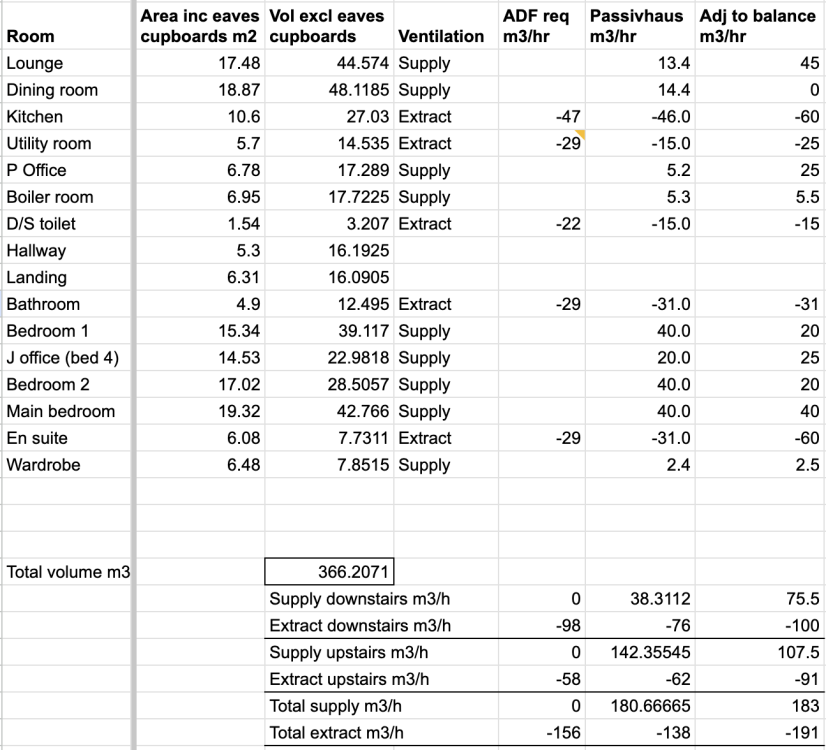
After my last ask, we've negotiated with the neighbours to redirect their boiler flue so we can put the MVHR in the most logical place: the garage. I've also compromised by putting upstairs ducting in the cold loft. This has simplified things: A few notes (or skip to the calculations below) Upstairs I've compromised by putting ducts in the cold loft outside the thermal envelope, as my wife is 100% against any boxing in The loft is well ventilated at all eaves (anywhere there is a fat wall on the plan) Positioning supply away from doors makes the pipes run close to vented eaves, so more exposed to cold air in winter. Best compromise is to keep pipes warmer and put near doors? Between floors I've gone for separate distribution boxes on each floor, to minimise number of penetrations into cold loft (airtightness). This is open to negotiation. The chimney breast has wood frame round it supporting floor joists, so cannot drill straight through in ceiling void - has to be within the downstairs room Downstairs Got permission to lower part of the ceiling in the dining room & hall to hide ducting Need to sort route to downstairs cloakroom - an annoying run to the other side of the house Have to get the ducts through an external wall + chimney breast into main house No duct to dining room - assuming the flow through from the office & lounge will be enough ventilation MVHR Compromised by putting outside thermal envelope in unheated garage Will build insulated "plant room" around it with 100mm PIR to protect from temperature fluctuations Fire safety requirements? Can mitigate with 2x plasterboard boxing in the MVHR and ducts? Calculations There's 2 of us in the house but as it's 4 bed I'm calculating based on 4-5 people. I started with the rule of thumb for 0.3ACH by @Iceverge which gave me great hope - I didn't need massive supply/extract between floors or through solid walls! Then I looked at Part F and the Passivhaus recommendations (which seem v sensible, thanks @JohnMo) and came to a halt. Here's my rooms, displayed based on @jayc89's spreadsheet. The final column is me trying to get supply and extract volumes to match. Editable spreadsheet attached. Questions Downstairs has v little supply, despite people being down there 15 hours/day. Bedrooms having more seems wrong? The utility room and kitchen are effectively a single room (no door between them). Worth reducing utility room extract so the kitchen clears more easily? I am stuck with how to treat duct length for pressure drop figures - do I calculate it from the MVHR to each plenum, or do MVHR to first splitter / splitter to distribution box / distribution box to plenum? Correctly sizing the ducts between ground floor and loft distribution box, and to the Dining room distribution box, is going to be crucial. Does 2x 90mm OD for each of these seem right? How do I best make the loft penetrations airtight? Sealing multiple circular ducts to the ceiling so there are no leaks looks a challenge MVHR calculations for BuildHub.xlsx