


Sparrowhawk
-
Posts
607 -
Joined
-
Last visited
Everything posted by Sparrowhawk
-
Strip it off and post photos on here before making a final decision on what to do. What insulation to use is going to depend on a lot of factors, like if there's a cavity, wall construction, any signs of damp etc. That's where vapour permeable insulation like @Redbeard's wood fibre insulation, vs @IGP's vapour impermeable insulation with a vapour control layer (VCL) is an important choice.
-

I have a very driven, enthusiastic husband! Help!
Sparrowhawk replied to DieselDobermann's topic in Brick & Block
Structurally problematic cracking, or cosmetic cracking? I've got a structural engineer coming this Thursday to inspect 3 timber lintels in our 1920s house so I'll know more after that, but they don't always need replacing. As to the window, fit it himself. If he spends 30 minutes reading this forum he'll know more about good window fitting than your average window fitter. Do you mean 1 in the inner leaf and one in the outer leaf? -
Hi @Stevieb12345 and welcome to the forum. You could drill holes in the panelling, fill with expanding foam and hope for the best - I have seen people do this. But given the risks that brings, what you've said about drafts and noise, what I can make out of the standard of window fitting, plus what I've found stripping back my 1920s wooden window surrounds, I agree with Redbeard. You're going to be surprised - and shocked - by what you find behind there. Yes it's a bigger job and disruptive to your living room but it will be worth it once done for improved comfort. A bonus is it'll let you strip the paint from the wood - including the layers of lead paint - somewhere that's not in your living room. Or send them away for stripping. Or (and this is my preference, which I'm doing here) replace with new 'clean' wood. Which also lets you adjust the dimensions to add a thicker layer of insulation behind it.
-
More foundation fun - straw bale garden room on clay
Sparrowhawk replied to Nick Thomas's topic in Foundations
It's hard to find ladders with flat rungs now. Wrong shoes + square rungs = muscle pain. Best wishes for a speedy recovery. -
I've got a few places (up to 1m deep) where I can't lift the floor to fit acoustic insulation as stud walls and plant are already in place. The stuff I bought (Knauf Acoustic Roll) is too fluffy to be able to shove horizontally - it bends, tears and refuses to cooperate. What's going to be best to insert here? Rockwool Sound Insulation Slab or similar?
-
Yep. Smelly stuff, have the window open while painting.
-
I don't mind paying for the advice. I got a builder round (I don't have a "friendly" one) and he was happy to quote for new lintels and cavity drip trays, and got defensive when I asked if helical bars could be used to repair the brick arch over the front door. So I'd quite like a view from someone who doesn't have a financial motive in the work. Photos from the opening up I've done so far: Landing (has cracked external sill) I will have to strip off more plaster to see if the lintel has deflection, or only the original wooden window surround. Directly below it - original sash window under the stairs (gets damp in the cavity here - assuming due to cracked sill above?) I'll take photos of the front door arch tomorrow when I've taken the porch ceiling down.
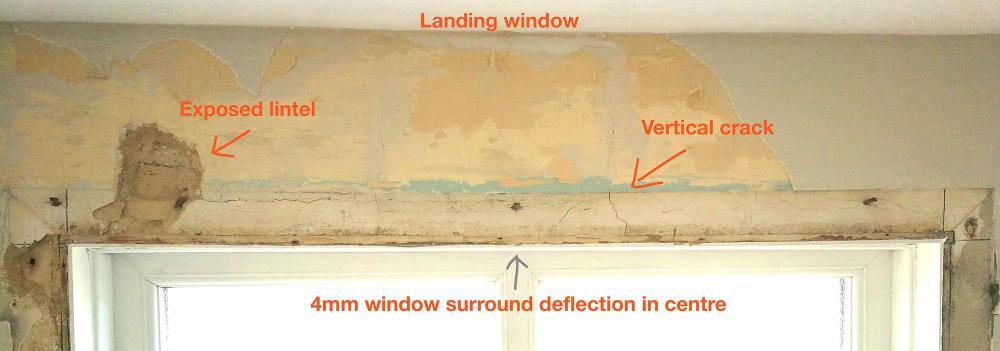
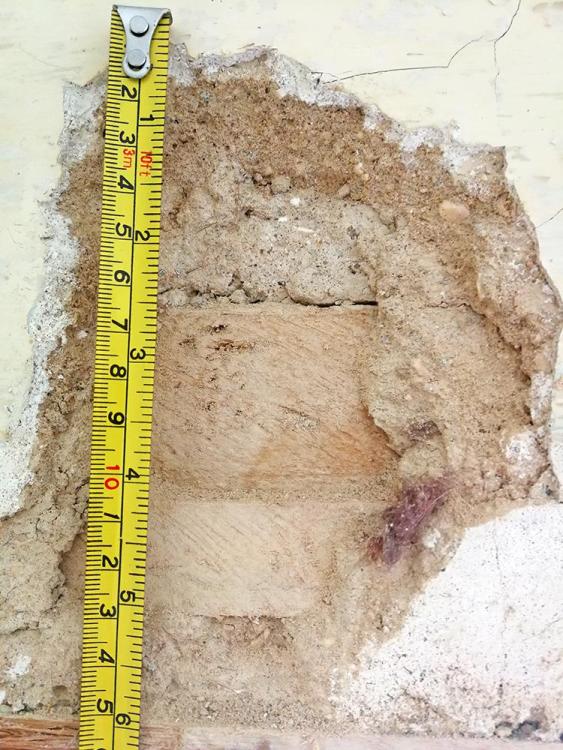
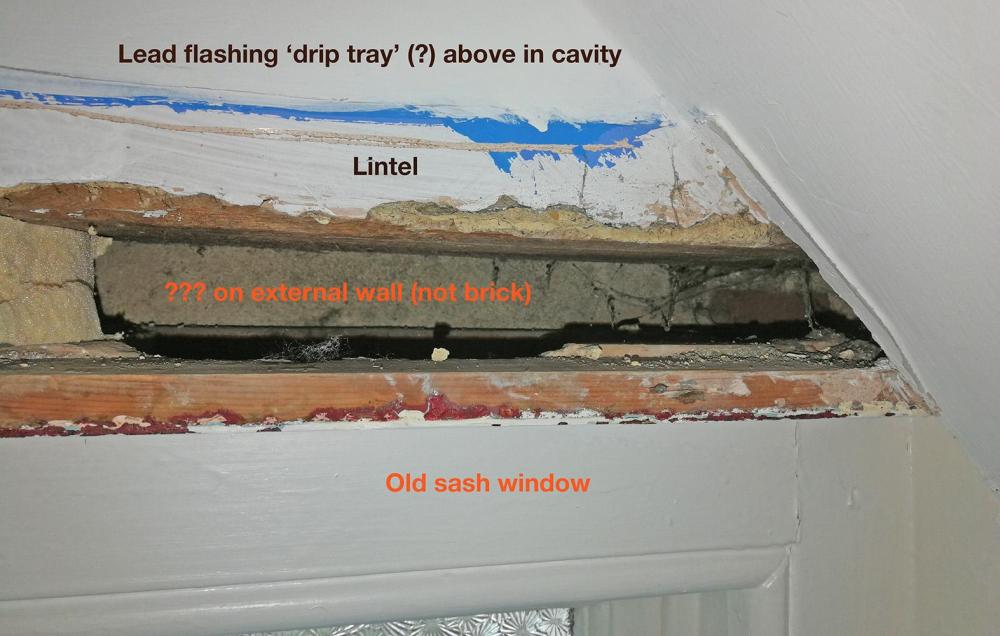
-
We've got some 1920s timber lintels, and before replacing windows and doors I figured we should get them checked to see if any need replacing. One window frame is bowed at the top and there's cracks above another couple. We also have a bay window that I suspect is structurally unsound. Who should I ask to do this? A builder? (RICS) surveyor? Structural engineer?
-
We have just had our system replaced, switching from a vented to unvented cylinder (UVC). I was skeptical (and still am tbh) but everyone we got to quote wanted to do it, so we did. Our taps and showers were powerful enough before, but the showers were those electric pumped ones that suck water through from the hot water tank. The biggest difference with the UVC is how quiet a shower now is without that pump and the racket it caused in the pipes. That silence alone is almost worth the extra £1k an UVC setup cost us. I can't add anything about tank size as we replaced the gas boiler with another gas boiler and went for a smaller tank (180l) and a priority hot water setup and it isn't bath season yet, but the tank reheats quickly so I've no concerns. For winter baths I can always raise the tank temperature. One thing I'd do differently if doing it again is tank choice. I left it to the heating engineer and he provided a 'B' rated tank, and the heat loss is higher than I was hoping for. I'll fit extra insulation around it but would have been easier to have a more efficient tank to start with.
-
Engineered Wood flooring - Expansion Query
Sparrowhawk replied to Sarah29's topic in Wood & Laminate Flooring
Getting to pipes underneath and replacing it would be my top reasons. Perhaps different if you have solid floors rather than suspended, as easy access for emergencies should be less needed. -
Engineered Wood flooring - Expansion Query
Sparrowhawk replied to Sarah29's topic in Wood & Laminate Flooring
If you can float the floor then do it rather than glue it down, for the sake of whoever has to lift it next. I've lifted a 3x2m engineered wood floor that was nailed every 10cm and the 40cm nearest each wall glued down. Absolute nightmare, and I've another 5x3m room to do that's the same. -
Any Architects on here?
Sparrowhawk replied to Mulberry View's topic in General Self Build & DIY Discussion
Not an architect and slightly facetious, but: Your main entrance is on the other side of the house This runoff is in a corner next to a patio A climber or large potted plant will hide a short gutter from the patio As a bonus, without a parapet your grandchild gets a better view from the window It's not what you planned for, but it sounds like the easiest compromise at this stage. Plus it's easy to maintain.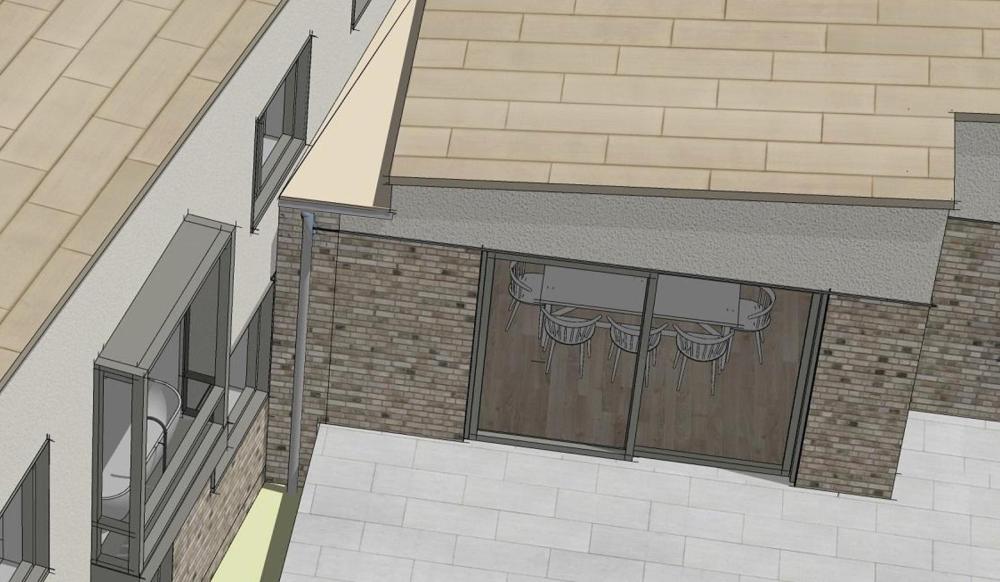
-
Breaking out concrete with minimum mess?
Sparrowhawk replied to Sparrowhawk's topic in General Construction Issues
Thanks all, I'm going to try a sledge hammer first and then hire a kango if that doesn't work. -
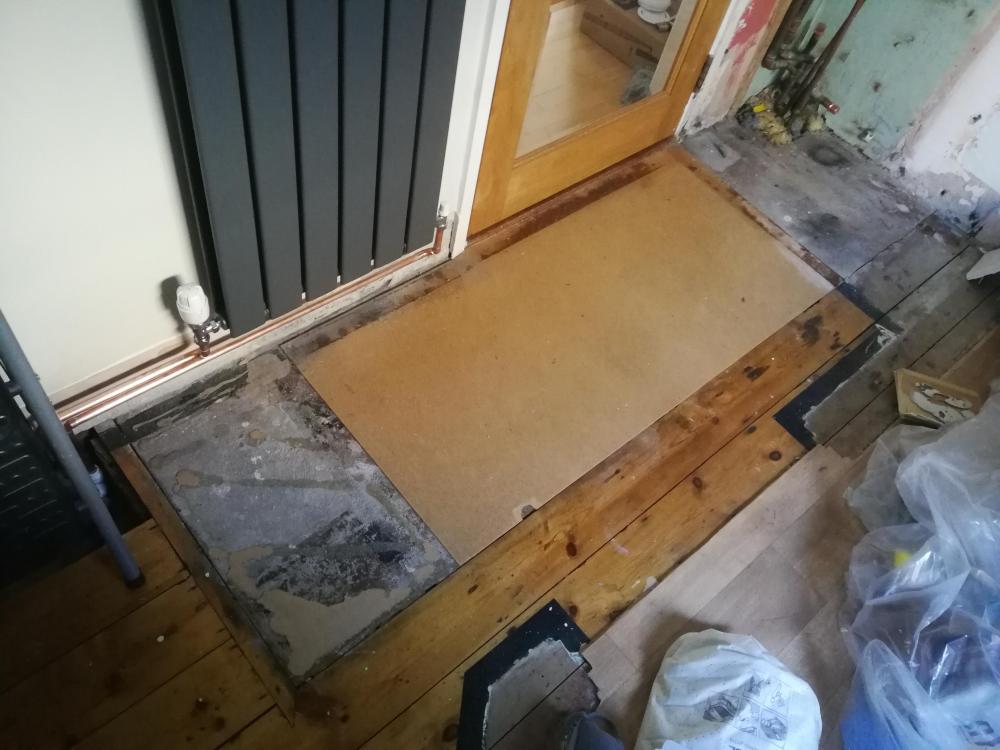
We lifted some hideous vinyl to get a radiator plumbed in, to find a varnished wood floor (nice!) and a slab of concrete exactly where the pipes needed to go. We think the concrete was where the cooker stood in the 1920s kitchen. The slab is about an inch thick and seems to rest on hardcore. The rest of the floor is suspended timber. It would be nice to have the whole floor as wood and to insulate the entire floor. As we're living here, how could we break it out making the minimum mess, particularly keeping dust down? An inch seems thick to break up by hand, but I can see a kango turning the hallway and rooms grey. And is there anything to watch out for in the makeup of slabs like this e.g. asbestos?
-
Welcome @Steves, it sounds a good crossover. You'll get lots ofhelp on here about the building side, while many new builds would *cough* benefit from a bit of advice on landscaping 😁 Me, I'm renovating and neglecting the garden at present. What's the current answer to ivy/wild strawberries/creeping buttercups that's not glyphosate?
-
MBC Timber Frame Open Day and Factory Tour 13th July 2024
Sparrowhawk replied to garrymartin's topic in Timber Frame
As it wasn't on the form, or the "News & Events" page, the location of the open day is Quedgeley Court, Shepherd Rd, Gloucester, GL2 5EL. -
Interesting I've got some walls like that too which look to be distemper onto lime plaster. @nod can distemper be plastered over?
-
Barn Paint. Anybody know anything about it?
Sparrowhawk replied to saveasteading's topic in Decorating
Tangential but I learned recently that the Scandinavian red coating is called Falun / Falu and comes in red or black. It seems to last well - I've seen a wooden clad house in Scotland painted 5 years ago with Falun and it looked like it had been painted this year. The owner was going to give it another coat this year to top up the protection. Shame it doesn't come in more colours. -
If you've got a principal contractor appointed and they have to meet the certification standards to get fully paid, it gives a well defined target to measure performance against. There's enough stories around of people who requested a "Passive house" (no certification) and didn't get the airtightness or thermal performance they were expecting. And I've seen the build cost difference put nearer 5%. For self-builders I think closeish works fine, because we're motivated to keep up quality and do the best we can.
-
Hi Sarah and welcome to the forum, great to see someone else here from Hampshire! We're renovating but if we had the option to knock down and rebuild I'd have jumped at it. Any reasons not to seek PH certification? It means that the trades you get are held to working to a standard because their work will be measured, rather than "Yeah it's closeish and that's good enough".
-
If you decide to keep the panelling and make access cuts as needed, check if there's lead paint under the layers of paint before you begin. It's not a massive problem, but you will need to take sensible H&S precautions when dealing with it https://www.hse.gov.uk/pubns/cis79.pdf
-
Fabric and ventilation heat loss calculator
Sparrowhawk replied to Jeremy Harris's topic in Heat Insulation
No. Airtightness is how much can come in/out without your control. Air changes per hour is the rate you expect to change the air in your house at (via MVHR or other means). Try 0.3 as a starting point (see Approved Document F or the Passivhaus guides for why) -
What route would you pick instead?
-
MVHR design
Sparrowhawk replied to galleon87's topic in Mechanical Ventilation with Heat Recovery (MVHR)
I'll message you directly with a list and indicative costs. -
MVHR design
Sparrowhawk replied to galleon87's topic in Mechanical Ventilation with Heat Recovery (MVHR)
Hi @galleon87 I say it's worth doing, even if your airtightness isn't as good as it could be. It means you can get rid of the bathroom/kitchen extract vents (a big source of air leakage which is excluded from the airtightness test figures), gives you enough ventilation on still days and - most importantly for some - filtered air. Plus you get the chance to improve airtightness in the future (new doors, windows etc) but running ducting in a finished house is seriously hard (I'm doing it now in a 1920s detatched house). If you can work out routes, fit the ducts now, it'll only be a few hundred pounds of plastic tube and you can decide later. If you haven't considered some airtightness measures yet, like a VCL over the insulation between joists and taped to the walls, or over upstairs ceilings, you're at the right stage to improve the airtightness of your renovation. I'd recommend reading pages 4-8 of https://www.passivhaustrust.org.uk/UserFiles/File/research papers/MVHR/2020.04.27-The Case for MVHR-v7 new cover.pdf and also https://www.passivhaustrust.org.uk/UserFiles/File/Technical Papers/Thermal bypass risks v1.0 222909.pdf for ways insulation can lose effectiveness that you might not have yet considered.





