Iceverge
-
Posts
4381 -
Joined
-
Last visited
-
Days Won
31
Everything posted by Iceverge
-

Spray insulation for timber framed new build?
Iceverge replied to davejura's topic in Heat Insulation
I’ve pondered this over and over and wondered why we don’t do it at this side of the atlantic. I can’t imagine that the physics change at 30deg west, although they would claim everything is bigger there! As long as you’re not trapping moisture in the wall and you’re controlling bulk water outside and humidity inside i doubt there’d ever be a problem. -
Spray insulation for timber framed new build?
Iceverge replied to davejura's topic in Heat Insulation
Yup, I just picked something in that list that had a thermal conductivity of 0.035W/mK. For me SAP is a useful guide but unfortunately can mean little to the comfort of a house once built. I’d work on getting good enough U values and excellent detailing. -
Spray insulation for timber framed new build?
Iceverge replied to davejura's topic in Heat Insulation
alternatively put your continuous layer of PIR on the outside like the americans do. it leaves you a nice large stud to run wires and pipes and cuts thermal bridging at all the openings and studs.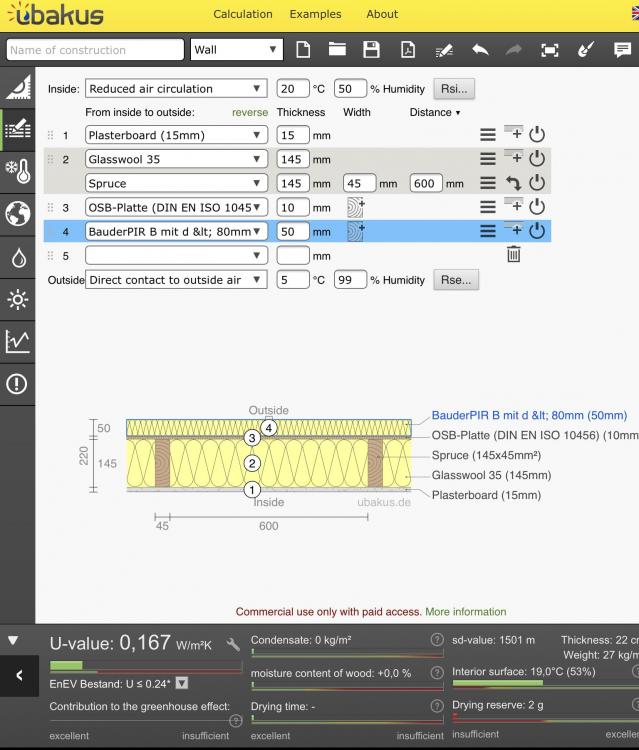
-
Spray insulation for timber framed new build?
Iceverge replied to davejura's topic in Heat Insulation
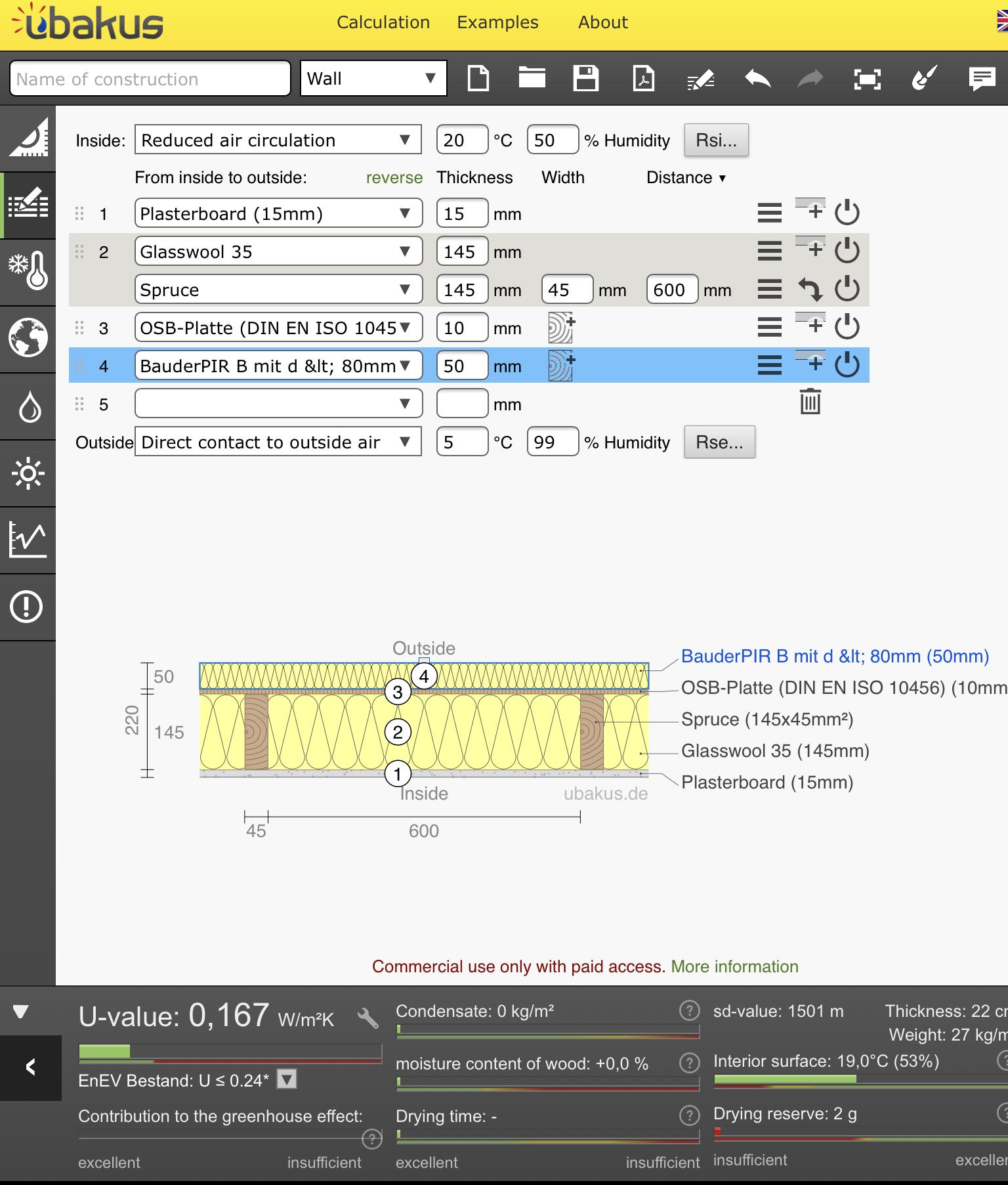
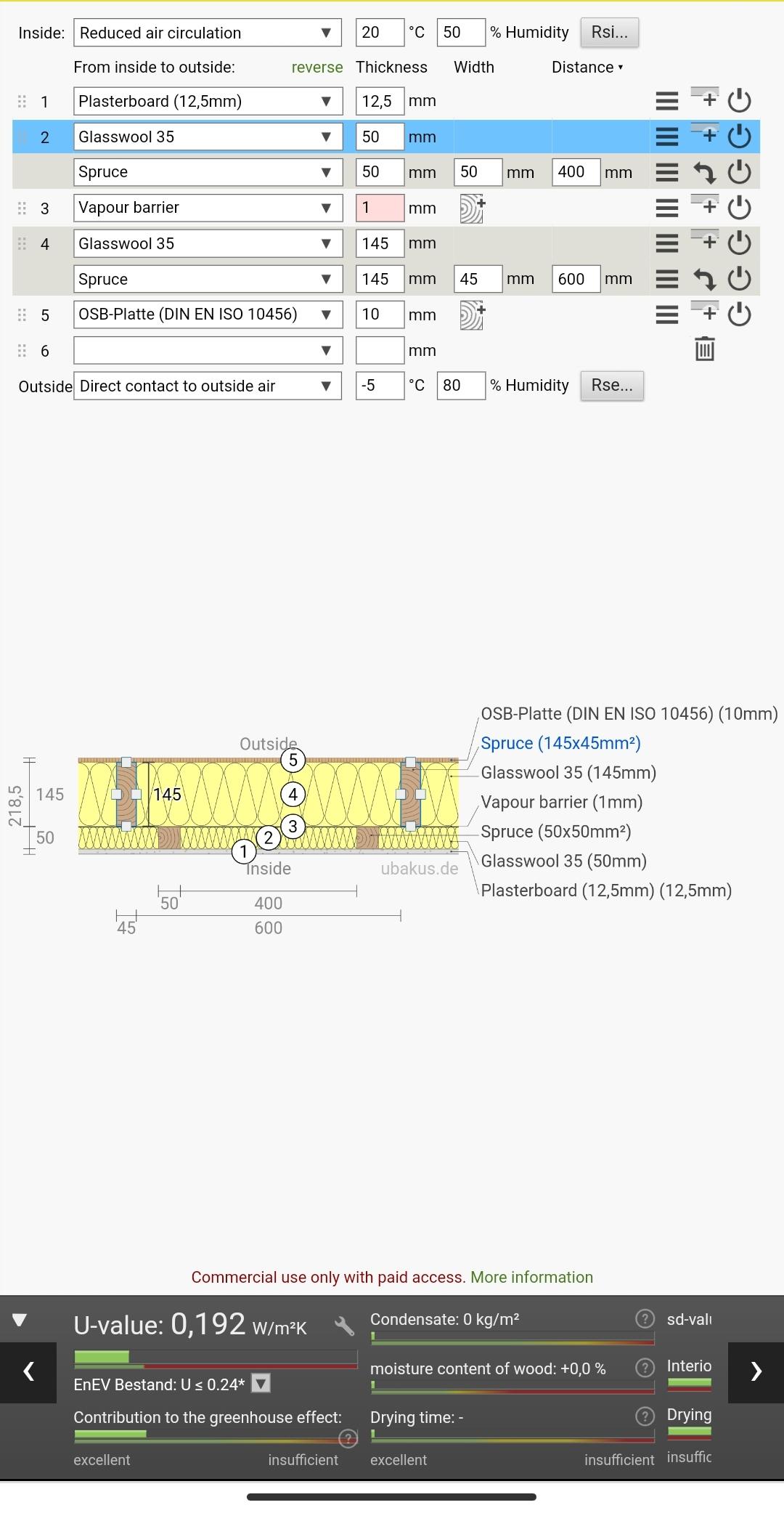
Have a price up of the below buildup. If you're DIYing it I can't see a cheaper way. Remember increasing your insulation much beyond building regs isn't worth much unless you're taking care of thermal bridging and airtightness.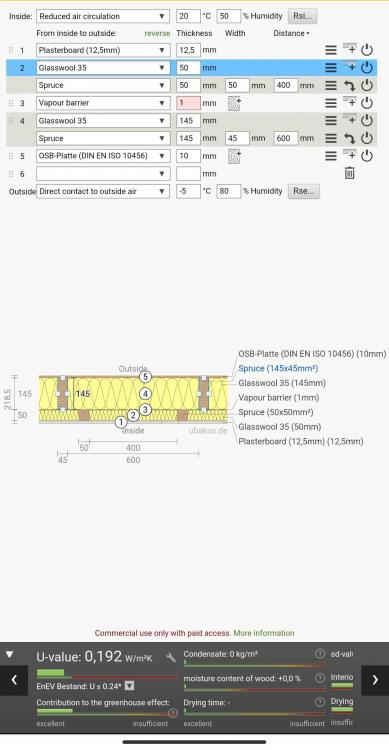
-
ICF Opening Spans Achievable
Iceverge replied to Brian Ireland's topic in Insulated Concrete Formwork (ICF)
Hi Brain, Welcome! It sounds like a job for a steel RSJ. Jonathan. -
Hello, from two Lake District Passive House wannabees
Iceverge replied to LakeDistrictEugene's topic in Introduce Yourself
It's definitely a risk. At some stage you have one has to accept that it's impossible to oversee the quality of everything and you have to trust the label on the can. Leaving the checking process until the cake is cooked is too late. For instance you could specify an intermediate airtightness check when remedial work is easily achievable. If you tied these various targets to stage payments you should avoid making any unfixable mistakes. I had 3 areas of concern about our build. 1. Airtightness 2. Thermal bridging 3. Continuity of insulation. For instance I did the airtightness myself. Our '"tony tray" got destroyed by the wind and concrete precast floor installers. I was able to remedy this with some sand cement parging and lots of airtight paint. We then airtested (0.3 ach50) before continuing the build. It the gap between on paper and on site that needs to be closed really I think rather that chasing ever stricter building standards. PH certification is one way to go a step in this direction. -
Hello, from two Lake District Passive House wannabees
Iceverge replied to LakeDistrictEugene's topic in Introduce Yourself
I guess you were in the fortunate position to have the knowledge and time to oversee most of the works of your house? Like you, we choose to accept a little overheating at the design stage with a wait and see approach considering overhangs can be extended later. Also we would likely fail the primary energy ph requirement as we use direct electric heating. I considered these deviations from the standard and was willing to accept them as I understood the consequences and possible remedies if needed. Likewise we had a blowerdoor test. Mainly for my own curiosity and peace of mind. I'm sure as a diligent self builder your house performs well but if a house in an estate agents window claimed passive house without the certification I wouldn't pay any extra for it. However if it was a certified passivhaus by a reputable certifier I would. As the ability to personally oversee the details of a build is only afforded to a minority can you see any better independent quality control process? -
Spray insulation for timber framed new build?
Iceverge replied to davejura's topic in Heat Insulation
Frametherm 35 or similar is about the best bang for your buck with insulation. If I was to DIY a timber frame I'd look at a 225mm frame with a 50mm service cavity filled with blown cellulose and then mineral wool respectively. I would swap out the cellulose for mineral wool if cost was really an issue and your own labour is "free". There after reduce the thickness of the outer stud . Cutting and fitting PIR in timberframe is a PITA and given the shrinkage of timber and PIR overtime its like to be loose after a few years. -
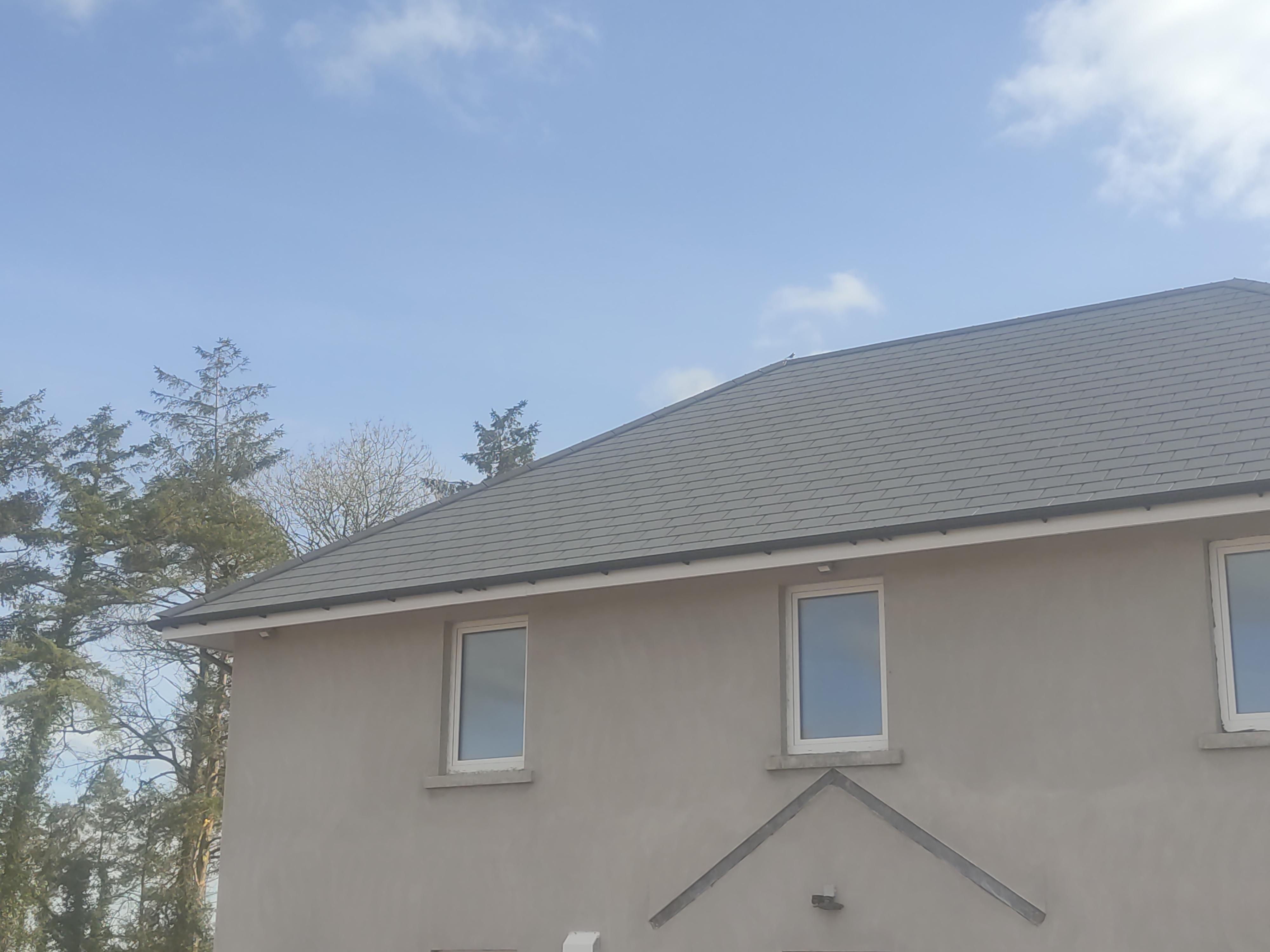
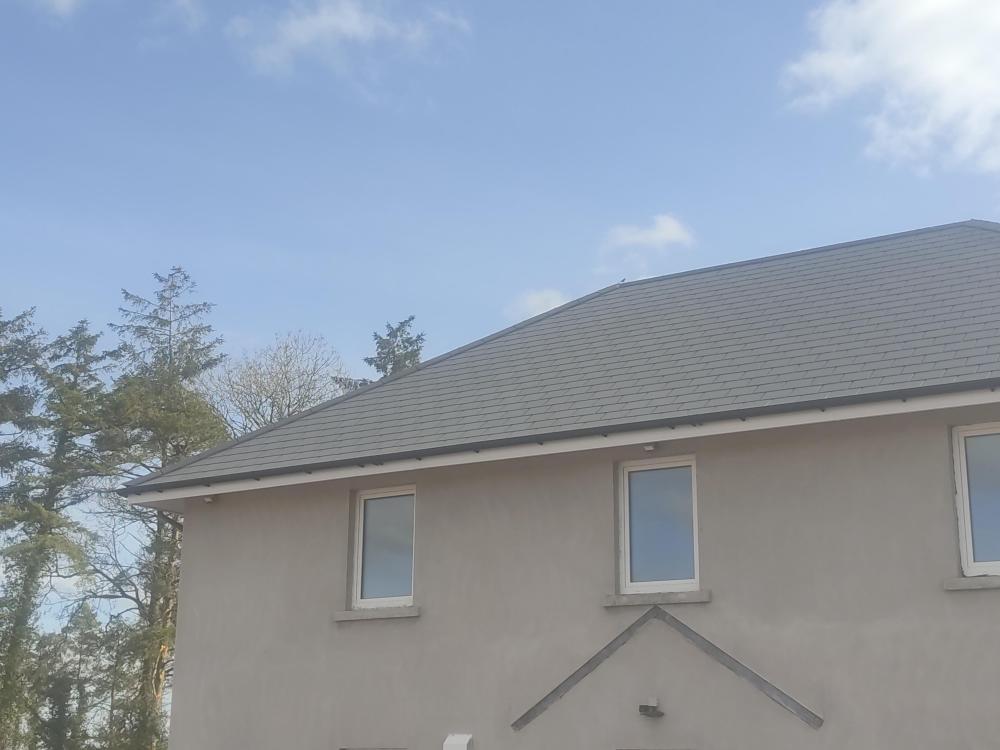
A bugbear of mine. We had 98mm rafter truss tails. Over and over I stressed to keep the fascia slim. Despite all this the. Roofers and fascia guys went from my 150mm drawings of fascia to 170 to 195 and eventually 225 is what we ended up with. "its the way we always do it m8" Banging my head against a brick wall. Keep them as slim as possible is my take for the most elegant look. You can cut an angle from the rafter tails to help too.
-
Do some quick sums on batteries and solar PV if you can. It soon becomes apparent that it's cheaper not to use electricity through efficiency than to generate more and store it. A tank of hot water makes a cheap battery also.
-
Do you have any idea of the total cost of a standing seam total construction for comparison? Panels are available with build in roof-lights as per the site below, to avoid the lack of sun afforded to those poor pigs. I have no affiliation or experience of this company but they were good enough to put their prices online. They can be had for about £45 per m2 for a u value of 0.14 which is very cheap. Not to mention the speed and ease of fitting as they are a commercial/agricultural product. If you can live with the aesthetic I'd be tempted. https://www.steelroofsheets.co.uk/categories/insulated-cladding/ Without putting myself into the same camp as the knuckle dragging misogynist who was so dismissive to you on that site visit solar PV doesn't have to go on the roof, indeed it might not be ideal given your low roof pitch. Have you seen @ProDaves beautiful solar chalet for a cool example. Also reading backwards you have had approval for building an external wall as cavity wall. I know you dismissed this initially due to the cost of blockwork but before you commit to the EWI route please price up the render systems for it as they are expensive and not completely robust. I dismissed EWI on our new build due to this and opted for wide cavity walls with sand cement render as it has a great track record locally. (70 years + on my parents house with no problems next door)
-
Am I right in thinking that the area to the right of the elevation is completely cantilevered? Do you own the plot?
-
@LSBhaving had time to read your blog I've seen that you've already had the internal structure suggested. I assume you're completely committed to the external wall insulation at this stage? On another note have you decided on a roofing finish? Might I suggest using insulated cladding like this. https://www.kingspan.com/irl/en-ie/product-groups/insulated-panel-systems/insulated-roof-panels/sinusoidal-roof-panel-ks1000-srw It would make a super thin roof profile and can be used in pitches as low as 4 degrees. If you had exposed purlins you could end up with a nice high ceiling.
-
I think @MikeGrahamT21 is onto a good idea here. IF your structure is only single story have you considered erecting a timber frame internally and treating the existing wall as cladding?
-
Solar thermal is parallel universe stuff at this stage. I really like the idea of it but I'm not sure I'd bother installing it if I got the equipment for free. If you want solar hot water install PV and an immersion. Solar thermal has high heat losses from the panel to the tank, requires servicing, is less reliable and arguably more expensive at this stage. On top of that for most of the year it won't get the water hot enough or will get it too hot. There's a reason nobody uses back boiler gas fires. The cheapness reliability and ready availability of 90%+ efficiency gas boilers. There's a simple answer to your issues here. Install UFH and a cylinder capable of using an ASHP. Plan to run it on cheap electricity via Willis heaters and immersions initially with an option for ASHP later. Dedicate all your energy thinking about heating into making the house as low energy as possible. Do all your tinkering in the shed at some later date.
-
What condition is the building in as we speak? Do you know the current wall build up? How did you arrive at 70mm kooltherm? It's an expensive insulation. The only justification I could see for it is if you were really limited by existing overhangs. My preference would be to use 2*100mm layers of Graphite EPS, with all joints staggered. It'll cost roughly the same per m2 and reduce heat loss by 40% albeit with thicker walls. Bin the cladding and use render everywhere.
-
Am I right in thinking your wall build up will be 1.Existing wall 2. Kooltherm K5 dot dab and screwed. 3. Basecoat of render with reinforcing mesh about 4. Top coat of coloured render or 1. Existing wall 2. Kooltherm k5 dot dab and screwed 3. Breather membrane. 4. Treated battens fixed through the kooltherm into the wall. 5. Cedar cladding. Cold bridging shouldn't be a problem if the boards are fitted tightly to each other. Mesh and render won't do much to improve this. You may be able to omit the plastic fixings under the cedar cladding as your battens will have the same effect. Have you thought about how you will join your membrane under the cedar to the render. This should be continuous as it is your weatherproof layer. You've lost me a bit here I'm afraid. Is it a contractor you expect to carry out the work or DIY?
-
Hello, from two Lake District Passive House wannabees
Iceverge replied to LakeDistrictEugene's topic in Introduce Yourself
Out of interest has anyone here had their house certified? Was it a worthwhile exercise? It would appeal to me as the little I know about it suggests that certified passivhaus performs as they were designed. I have spoken to plenty of self builders who have built "passive houses." Double glazing open fires and lots of overheating. I'd be skeptical of anyone who claimed the badge without the proof to back it up. -
Knock it and rebuild I'd say.
- 10 replies
-
- 2
-

-

-
- insulation
- solid walls
- (and 1 more)
-
Yes. Mesh is there to reinforce the render. The only benefit otherwise I can think of is pest/insect proofing the the insulation. What is the insulation material? Do you have a detail for the cladding installation? You shouldn't have any bridging of done correctly.
-
Breathability not too much of an issue with EWI as the wall will be warm. As long as it can dry to the inside and you're not planning on having an extra humid house EPS will be fine.
- 10 replies
-
- 1
-

-
- insulation
- solid walls
- (and 1 more)
-
Hello, from two Lake District Passive House wannabees
Iceverge replied to LakeDistrictEugene's topic in Introduce Yourself
I can see the benefit of certification if you can't supervise the work yourself. With a diligent and trusted overseer you're likely to be employing someone who knows the importance of thermal bridging an airtightness. A knowledge of which is lacking from the majority of those involved in building. -
Time of year for EWI and K Rend
Iceverge replied to canalsiderenovation's topic in Plastering & Rendering
You can insulate over the frames for improved performance. Use sill extenders for greater depth and take the insulation right down to the foundations if you can. EPS gives the best bang for your buck with external insulation. -
Welcome welcome. Don't worry about not being a tradesman or having an experienced builder to hand. A diligent DIYer can do a good job of most things with time and research. Do you have any photos to share with us or a plan of how you hope to use your house in the future? Jonathan
-
A mask or preferably a respirator for cutting masonry is a good idea I'd say.