Iceverge
-
Posts
4387 -
Joined
-
Last visited
-
Days Won
31
Everything posted by Iceverge
-

Best floor build up for acoustics when laying lino
Iceverge replied to markharro's topic in Floor Structures
22mm chipboard probably the cheapest build up under the lino and will add some mass. Plenty of acoustic sealant to stop any airpaths. A bit of fluffy stuff between joists to prevent reverb. 50mm plus. Resilient bars underneath if you're concerned about impact noise but not really an issue with socks and lino in a bedroom I think . Double plasterboard is an option but with the extra mass of the chipboard I think it'll be fine. -
If you get the green light to raise the roof you can stick 100mm PIR above it, a taped OSB deck 75mm mineral wool between the rafters and you're golden.
-
You want to avoid moving the tiles upwards I'm guessing too much. In any case I'd prefer to have the ventilation up there and full fill the rafters. How about this. Tiles Tile battens Counter battens Breather membrane Osb 75mm mineral wool between rafters 75mm counter batten at say 800cc with mineral wool. Airtighess membrane 75mm service cavity with mineral wool. Plasterboard and skim. Should work out to about 0.2W/m2K Lots of common material so little waste.
-
I miss my digger..... ...and it's only 200m away in the shed....... ....maybe I should go out and say goodnight to it.....
-
I did something similar to what @Redbeard mentioned above. Dug 4 holes, used car tyres as formwork for concrete pads, set some 225mm corrugated pipe in the tyres and cut them level Inserted 24mm (I think) threaded bar in the centre of the pipes and filled the pipes and tyres with concrete. Used this for a base for my office.Worked fine. Wouldn't do it again, too bouncy (and I like bouncy floors!) . Next time DIY passive raft from EPS I think or else strip foundations with a double layer of OSB floated on the insulation.
-
Using self levelling compound on a rough floor with a slope.
Iceverge replied to Frazer G's topic in Floor Structures
You could fill the holes with some tile compound first. Self levelling is mis named I think. More like localised self smoothing compound. 10mm over 2m won’t make much difference and don’t expect it to come out level unless you use 20mm+. It’s a 1:200 slope. Get it as flat and clean as you can first. Then get all your compound mixed up thoroughly. Mop the floor with water so it’s all soaking wet and get the SLC down in one go. Spiked roller or even a trowel may be useful to get it spread out evenly. -
Roof insulation / air gap design
Iceverge replied to Pappa's topic in Lofts, Dormers & Loft Conversions
How're you planning on fixing the plasterboard? -
Roof insulation / air gap design
Iceverge replied to Pappa's topic in Lofts, Dormers & Loft Conversions
You could sub in k118 kooltherm plasterboard and probably shave another few mm if you were really in the mood for setting fire to money.
-
Roof insulation / air gap design
Iceverge replied to Pappa's topic in Lofts, Dormers & Loft Conversions
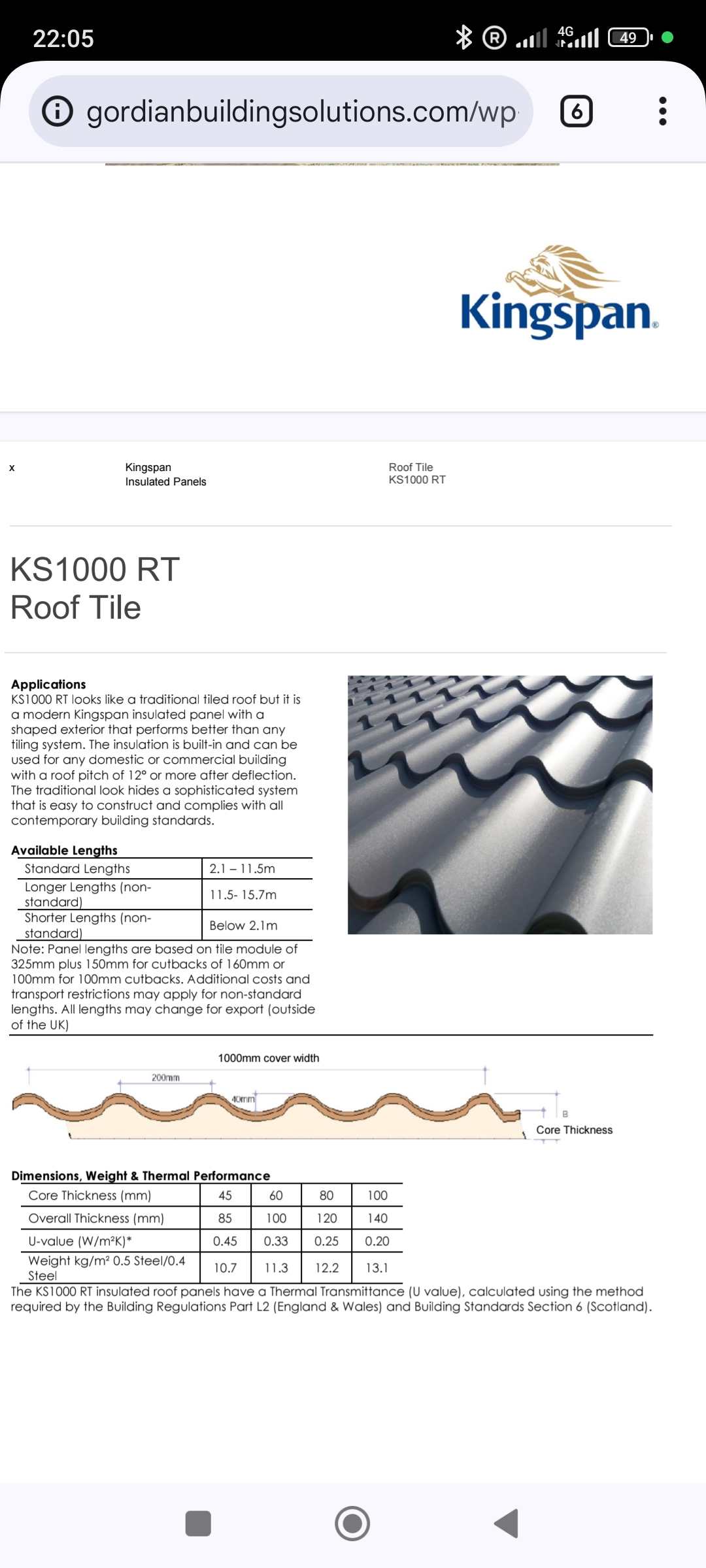
PIR between timbers. I'm not a fan. I'd you really must go for the thinnest option nothing comes close to insulated metal panels. You can get them in tile effect. https://www.insulatedpanelstore.co.uk/rt45mm 80mm and a 50mm insulated plasterboard and you'd have your U value of 0.16w/m2K done and dusted in less than 145mm all in. -
Chatgpt if you ask it the right questions will get something very close. Then get your SE to give it a few tweaks and the stamp of approval.
-
Have you considered building a garden room for WFH? Airtight with a dMVHR unit and good insulation and you'd be amazed at how comfortable it would be. I suspect so amazed you might do the sensible thing to the current house and put it out of its misery.
-
Sounds like a JCB renovation is needed. Failing that.... patch up the boiler. We can sometimes wish old things out of existence but they may decades left of annoying us left in them. Tackle the fabric of the building before going anywhere near a heat pump or solar. In this order. 1. Bulk water, fix the gutters, point stonework and render, mend broken roof slates, and importantly make sure the local water table cannot get anywhere near floor level. This may involve digging and some French drains. 2. Install some mechanical ventilation. A couple of dMev fans like the greenwood cv2gip would be ace. 3. Airtightness, stop all drafts. It can be achievable with persistence. 4. Insulation, it needs to be continuous and sufficient. Only then should you go anywhere near your heating system.

-
It was the cost I was thinking of. Caulk is pretty inert as you say. I assumed they charged on a time and materials basis and concrete blocks are pretty porus a d would need lots of sealing if not wet plastered first.
-
In a similar vein to heating from the slab up, would cooling from the top down work in a passive class house. A single A2A on a top floor landing for instance ?
-
Here's one of a few technical videos about denby dale. Well worth the view. I would alter the foundation, thresholds and window detail slightly but it's a great starting point.
-
Are you not worried about using excessive amounts of the aero barrier caulk? Keep us posted.
-
@tonyshouse http://tonyshouse.readinguk.org/ Good blog here from tony. Don't know if he's still active or not. Similarly from Green building store there's a series of videos about denby dale passivhaus, great details for a cavity wall house.
-
EPS beads here. They're fine although I am slightly suspicious of the claimed k value of 0.033. I think 0.035-0.037 world be closer in reality. Over all would recommend.
-
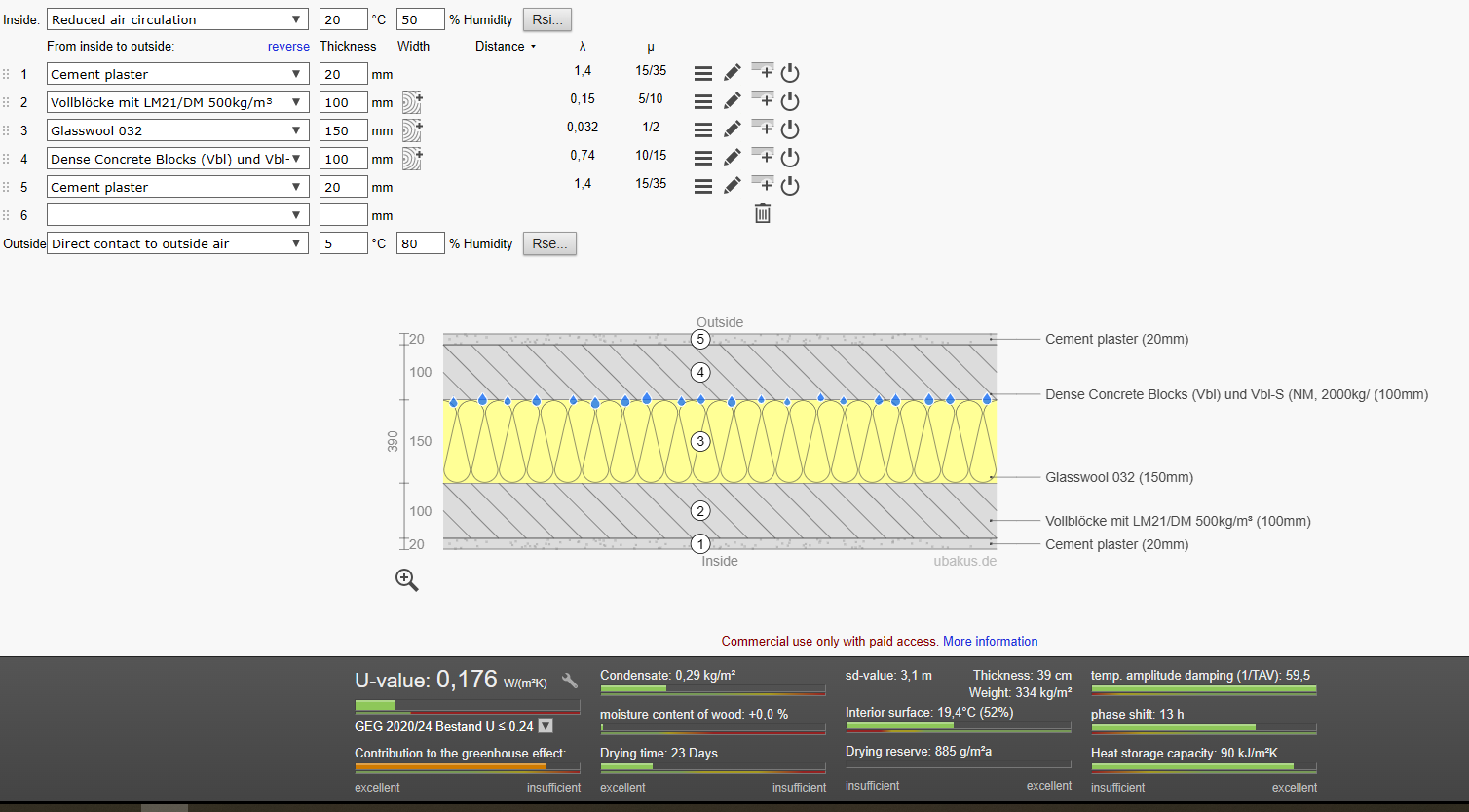
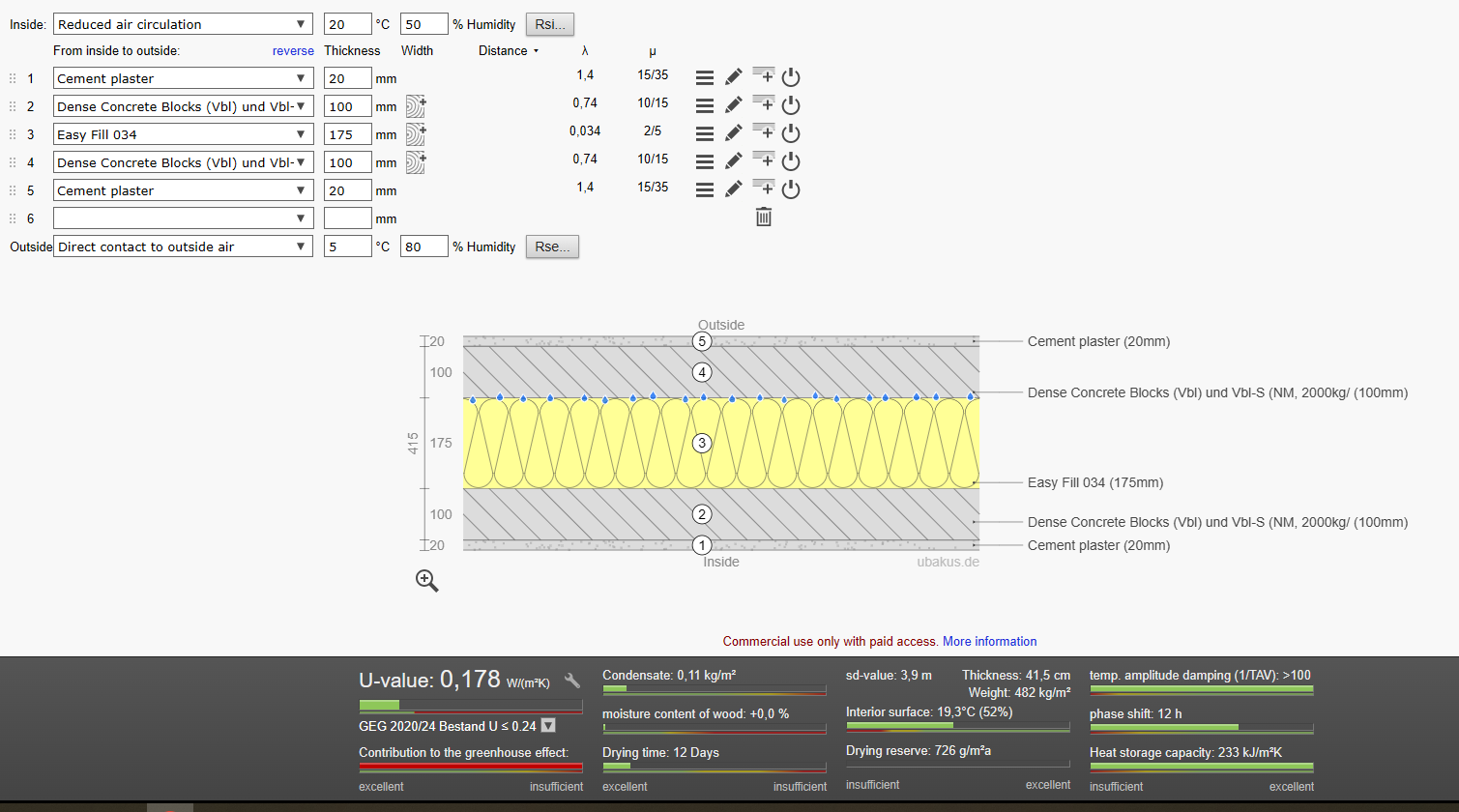
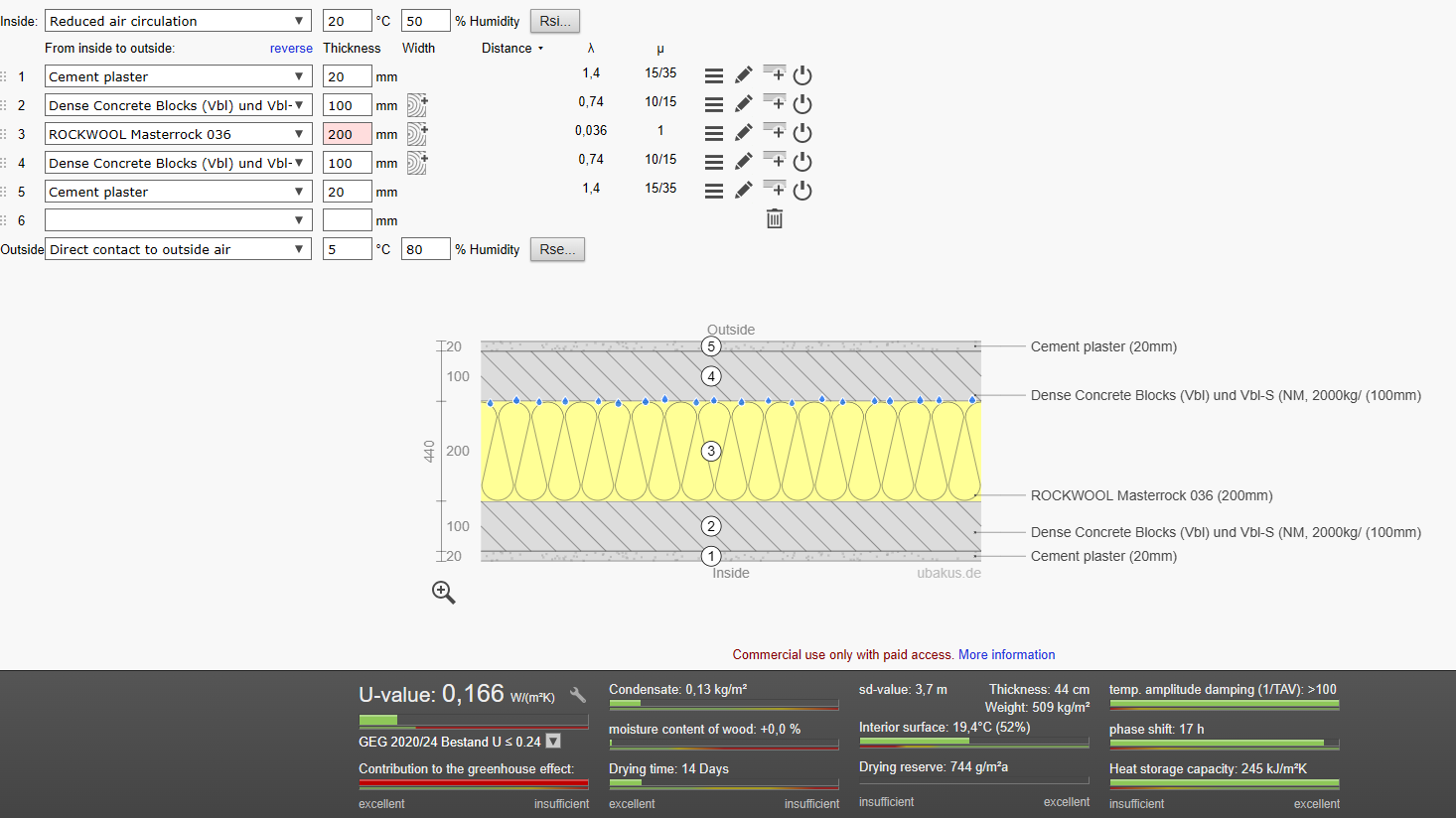
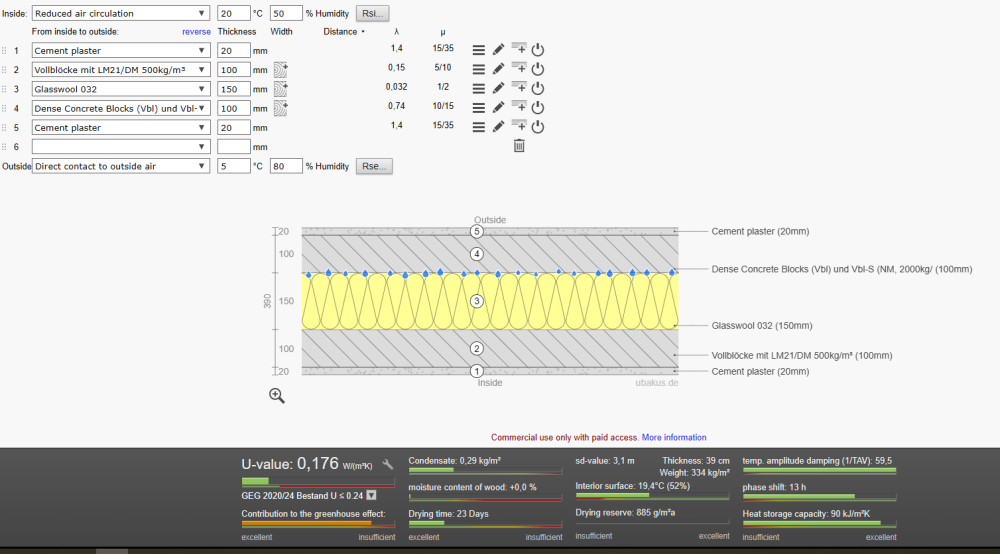
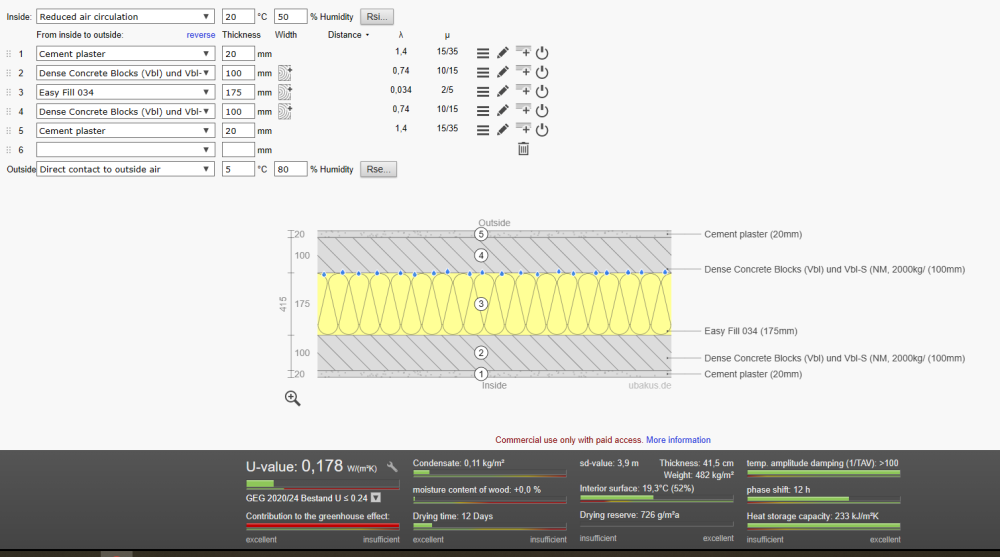
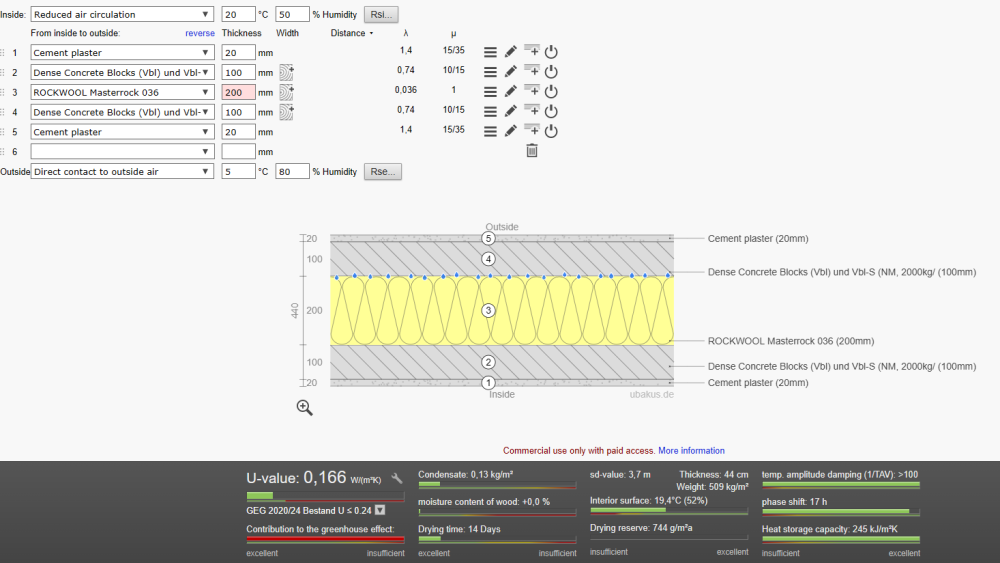
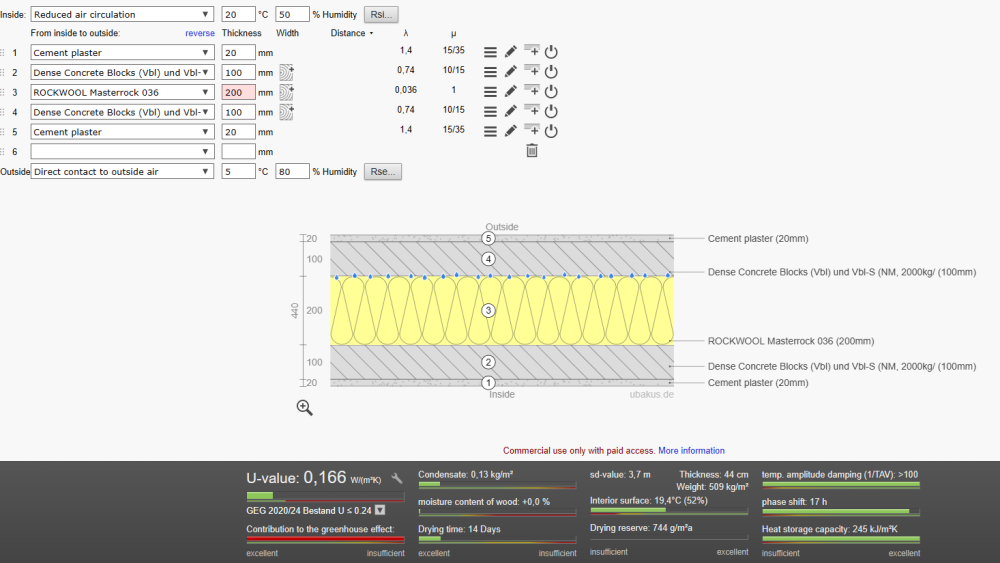
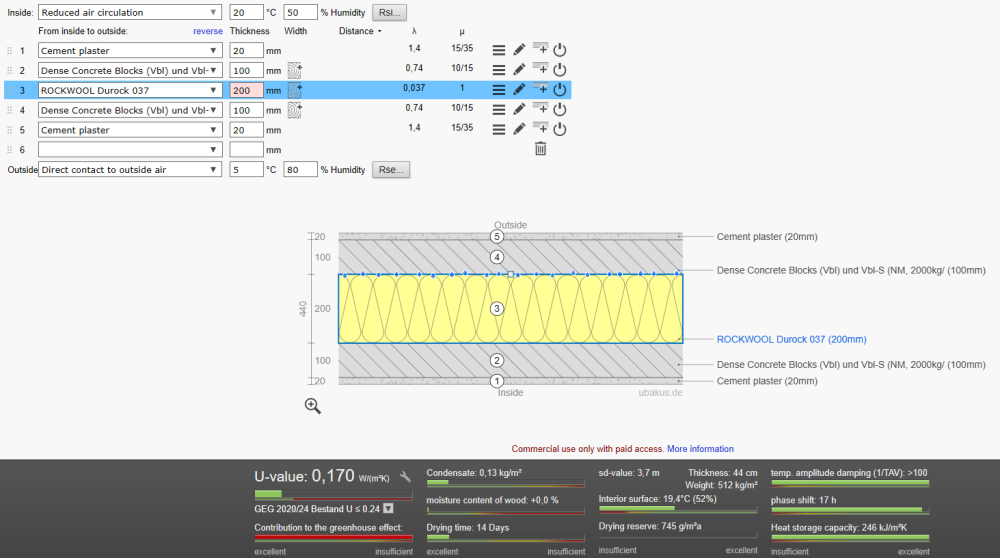
There's an option with the lightweight blocks on the inner leaf. I'm not sure of prices in the UK but in ireland they're three times the price about, €20 more per m2. If you were to use the below 200mm config you could easily drop from batts of 0.032W/m2K to 0.037 which are much much cheaper. Knauf cavity 032 Batts at 150mm are £22.58/m2 and 036 batts at 200mm are £16.38 . About £6/m2 less. https://www.insulationshop.co/150mm_knauf_dritherm_32_ultimate_cavity_slab.html?srsltid=AfmBOooJlH4JJCo9Jukz208_v9VOXP0dZLtipM00uCQZqYL56HiU5rk3 https://www.insulationshop.co/100mm_dritherm_cavity_slab_37_standard_knauf.html Add in a slight difference for longer stainless steel cavity ties and you're still £20 per m2 better off going for the wider cavity. That could be easily £5k for a house.
-
Have you done the calculations on it? I suggest you do to get a feeling of how little a difference thermolites make. I wouldn't use them. To cracky and brittle and expensive. There's airtightness and then there's airtightness. Ok might be the best you can do with dot and dab if you're careful but wet plaster is the way forward if you want a really tight house. We got well below passive requirements on ours.
-
All understood, Perhaps I'll rephrase my question. Do you keep your house at the same temperature 24/7 ? When we rented a cottage we never used the heating unless we were in situ as it lost heat very quickly, almost to the point of being as cold as outside. The heating came on perhaps from 7-8am and then from 6pm until bedtime when we got home from work and maybe once or twice in the night time. Of course it's wasn't the most comfortable but it was the most economical use of oil for us.
-
Is your house kept at the same temperature constantly or do you intermittently heat it?
-
Why are these an issue? I would have thought they would reduce cycling in times of low demand? (A2A in our house not A2W so a bit ignorant of some of it).
-
Best pipe insulation and where do I need it?
Iceverge replied to MikeSharp01's topic in General Plumbing
The physics doesn't work out for insulating pipes in a radial or trunk and branch setup. The insulation doesn't stop the transfer of heat, merely slows it. There is simply too little water in the pipes, too much surface area and too little depth of insulation to meaningfully retain any hot water in the pipes between uses in a house. In other words it will cool to room temperature whether you insulate it or not between average tap usage intervals. Your time is far better spent on minimising the volume of water in your dead leg by short runs and thin pipes etc. There is a difference where the pipe is always hot like a HRC ( a symptom of bad house design in my opinion) which should be massively insulated or pipes coming from an UVC. These continuously loose heat as it is internally replenished. Another thing to consider is heat loss through convection. Any pipes rising vertically from a permanent source of heat will be prone to this. It may be desirable in the case of a preheated hot water manifold ( I did this ) but usually it's not ( I accidentally did this for my control block for the UVC). -
Most of us are wise enough to accept there is nuance in the specific install case for each heat pump. Some nuance that is missed is different usage and heating patterns of different houses. If you require your house (no matter it's energy loss) to be at a fairly constant warmth then ASHP are a good option, comparable to fossil fuel. Retired folk or WFH for example. However for the house that is only heated briefly in the AM and PM for 9-5 workers domestic heat pumps don't have enough power to cope with this in old houses where as boilers do. For similar performance with an intermittent heating strategy you'd need replace this: With something like this: