Iceverge
-
Posts
4487 -
Joined
-
Last visited
-
Days Won
32
Everything posted by Iceverge
-
The shape of the house can make a big difference. If you have just BRegs minimum insulation and the design is, for example a series of interconnected cottages with lots and lots of external wall area, your figures might be correct. Given the scale of your energy bills I echo those above and advise you to get some advice from someone with experience in low energy buildings. It's likely their input would pay back in under a year. Someone with passivhaus credentials would probably be a good place to start. Alternatively if you post your plans on here (deidentified of course) there's plenty of knowledgeable heads who would be able to contribute further. In any case, fossil fuels costs will remain high now apparently due to speculative investment deserting the sector (so YouTube tells me?!!!) and the electricity energy mix will become less linked as the grid decarbonises theoretically swinging the price in favour of elec long term. We'll see.........
-

Rain water coming in between window and window cil
Iceverge replied to mfmcdonagh's topic in Windows & Glazing
If you open the window can and look to see can water drain out to these holes following the red lines if it makes it past the rubber seal of the window. There should be a slot there to allow drainage on the inside that you can see with the window open. You can test it with a jug of water.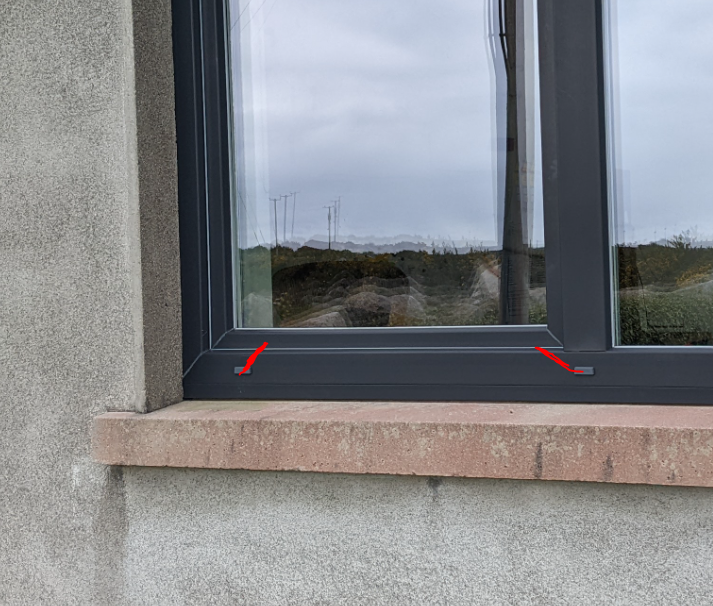
-
2nd self build in Cornwall 14 years apart.
Iceverge replied to Surfiejim's topic in Introduce Yourself
Welcome. Any plans to share? -
Low room output radiant (not convective) wood burning stove
Iceverge replied to davidc's topic in Stoves, Fires & Fireplaces
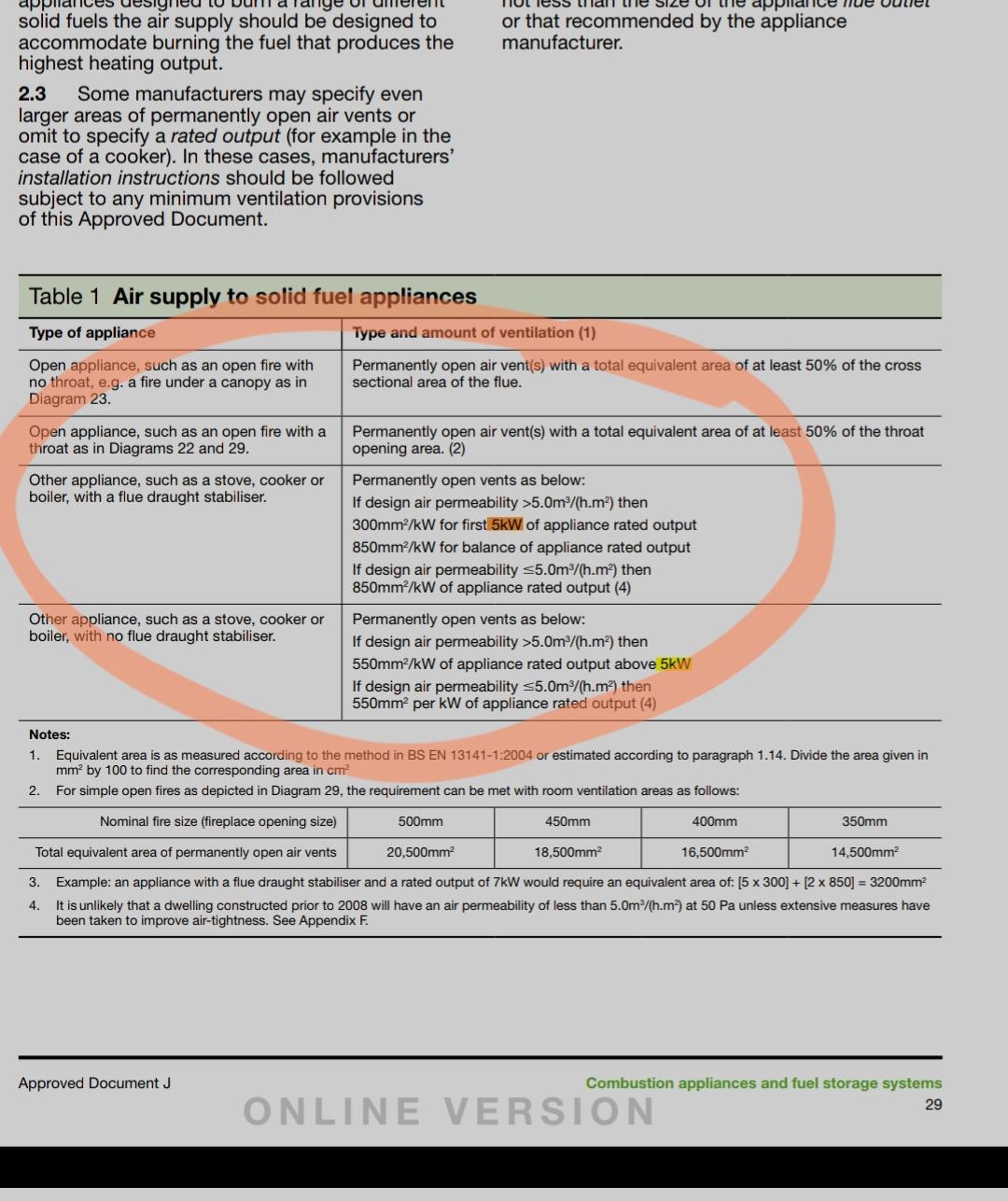
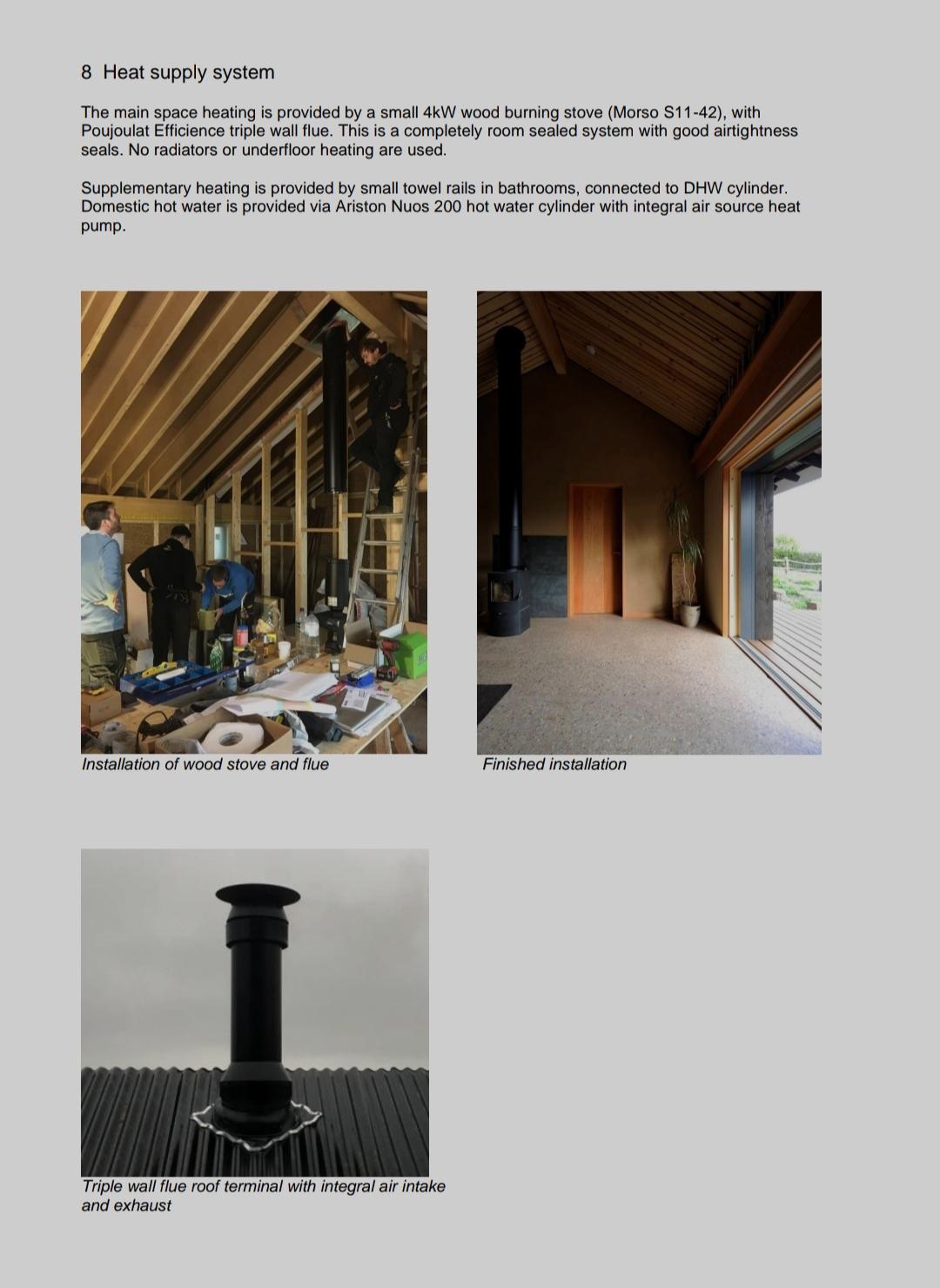
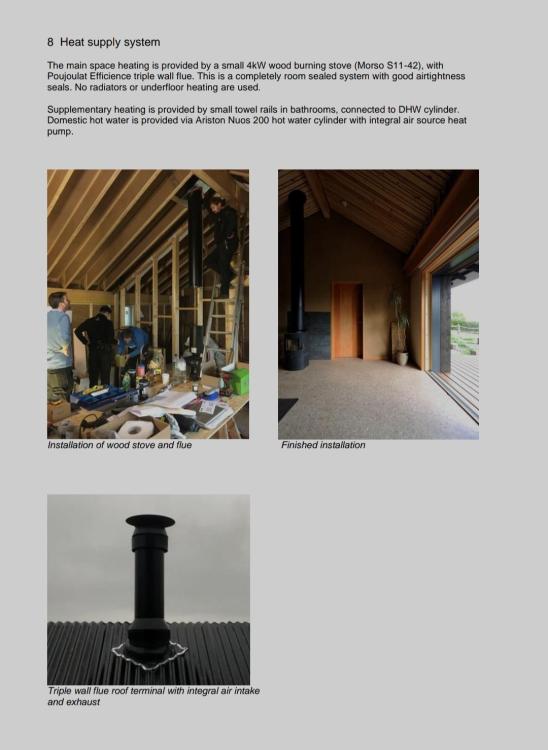
Here is a link to a German retailer that with a bit of Google translate help you can filter by Dibt compliant stoves. https://www.kamdi24.de/kaminoefen-bis-5-kw/FILTER_VERBRENNUNGSLUFT:FILTER_VERBRENNUNGSLUFT_RUU_DIBT However I came to the conclusion an external air supply wasn't as important or useful as it first appears, although it is required by Bregs. Bregs require 550mm2/kW of permanent ventilation for stoves. At 0.31ACH our airtightness result still left 5000mm2 of equivalent leakage in the envelope. In theory enough for a 9kW stove. I'm pretty sure you'd have a tough time arguing that with building control but practically with a balanced MVHR system I can't see a small stove ever struggling for air. If the MVHR is highly biased towards extract you risk pulling fumes out of the stove. Not ideal. I have seen 2 examples of passivhaus with stoves that have good airtightness results. 0.59ACH with a boiler stove. https://mollyglass2012.tumblr.com/page/9 An extract from "Old Holloway" passivhaus. (one of my faves) 0.39ACH. Interesting both use poujoulet flues of different flavours. Maybe no more than coincidence.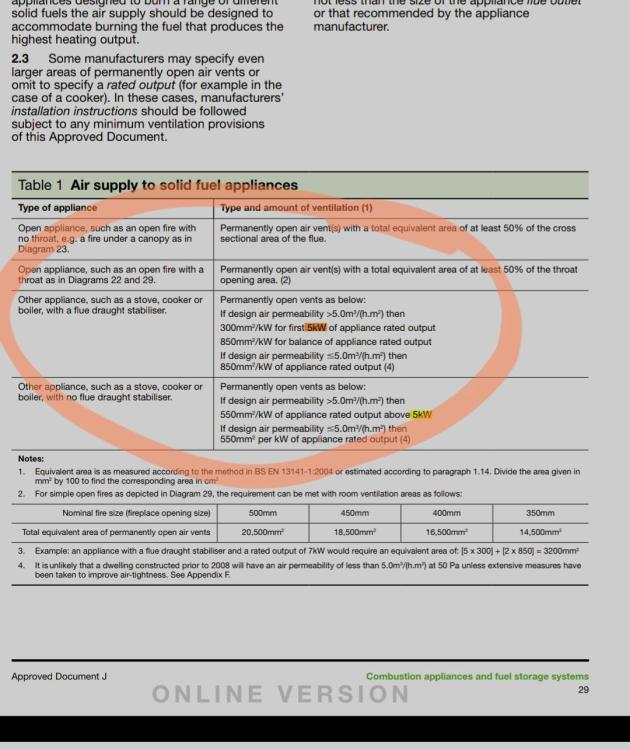
-
Keystone lintels how much !! Alternatives?
Iceverge replied to Ronan 1's topic in RSJs, Lintels & Steelwork
This is what they did on ours. I wasn't a fan but was too late to request them change it to precast concrete lintels, I'm not sure if that's an option at your span. -
PIV is an option also ( positive input ventilation ) but seems to have opportunistically doubled in price in the last few years. I installed one of these in my parents house last year as it was very damp. It just sits in the attic above the upstairs landing extracting from there to an outside vent. No ducts to any wetrooms. I did this on the impression that if the internal doors are opened occasionally then the humidity will equalise. It seems to be proving right. It has helped to get rid of lots of the mould although they seem to think the house is colder with it running. Hard to say objectively. I did need to install a DIY silencer as it was noisy without one. I can't see where the price increase goes over something like this is however.


-
Early stage thinking - new build
Iceverge replied to DevonKim's topic in Air Source Heat Pumps (ASHP)
I think I just heard an arrow fly past my ear !!? Yup, I was dead set on a range cooker too but logic (and cost) beat me down. We ended up with big rooms and not much built in storage. We had a hot press with the water cylinder upstairs ( a hangover from an earlier design with a boiler stove) and there was no need for it. A walk in wardrobe would have been better use of the same space. -
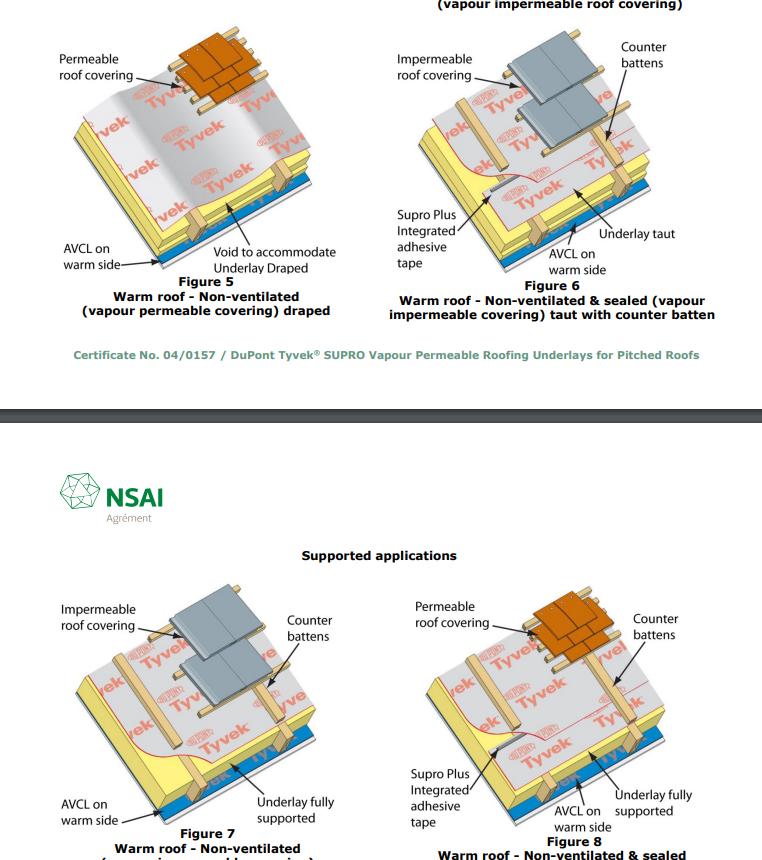
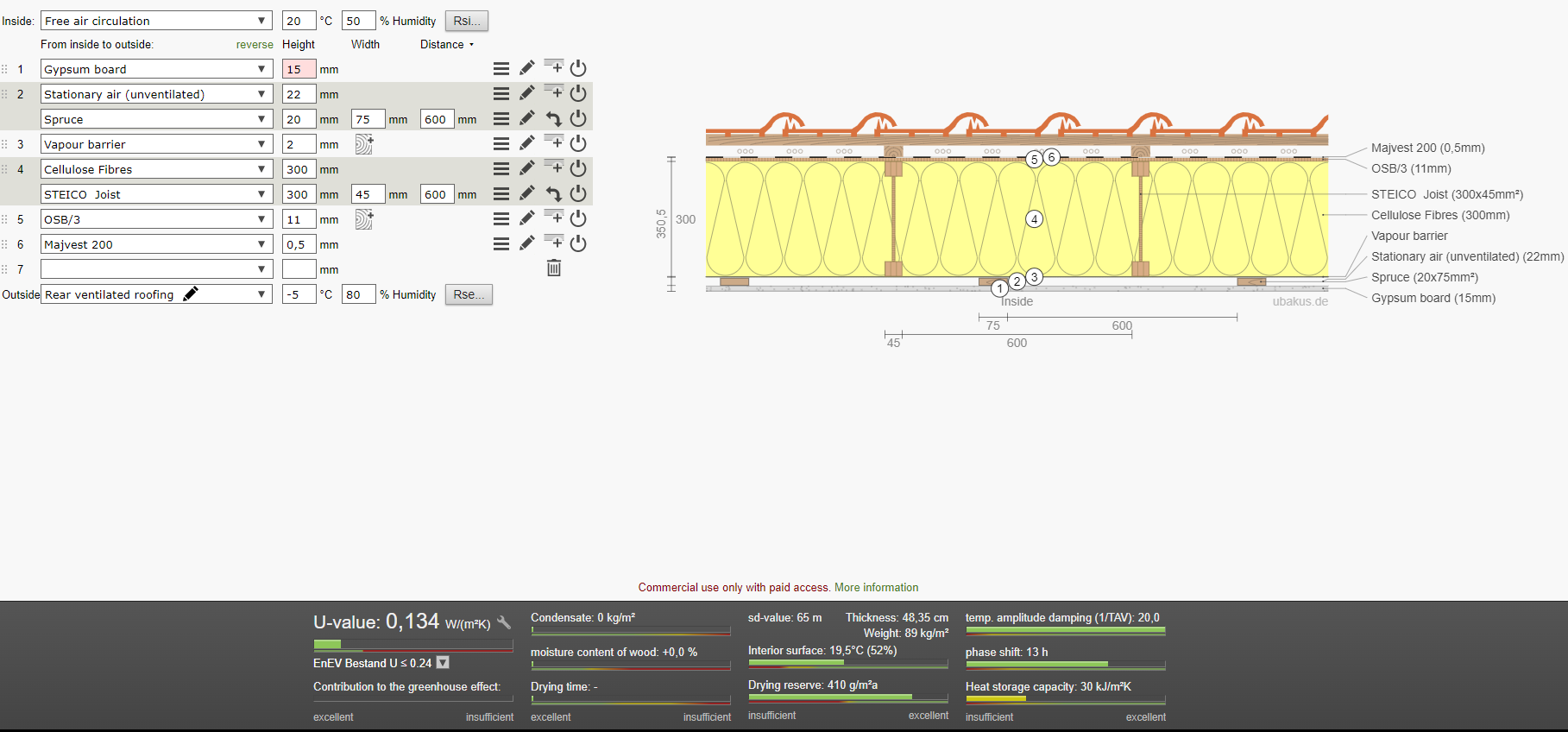
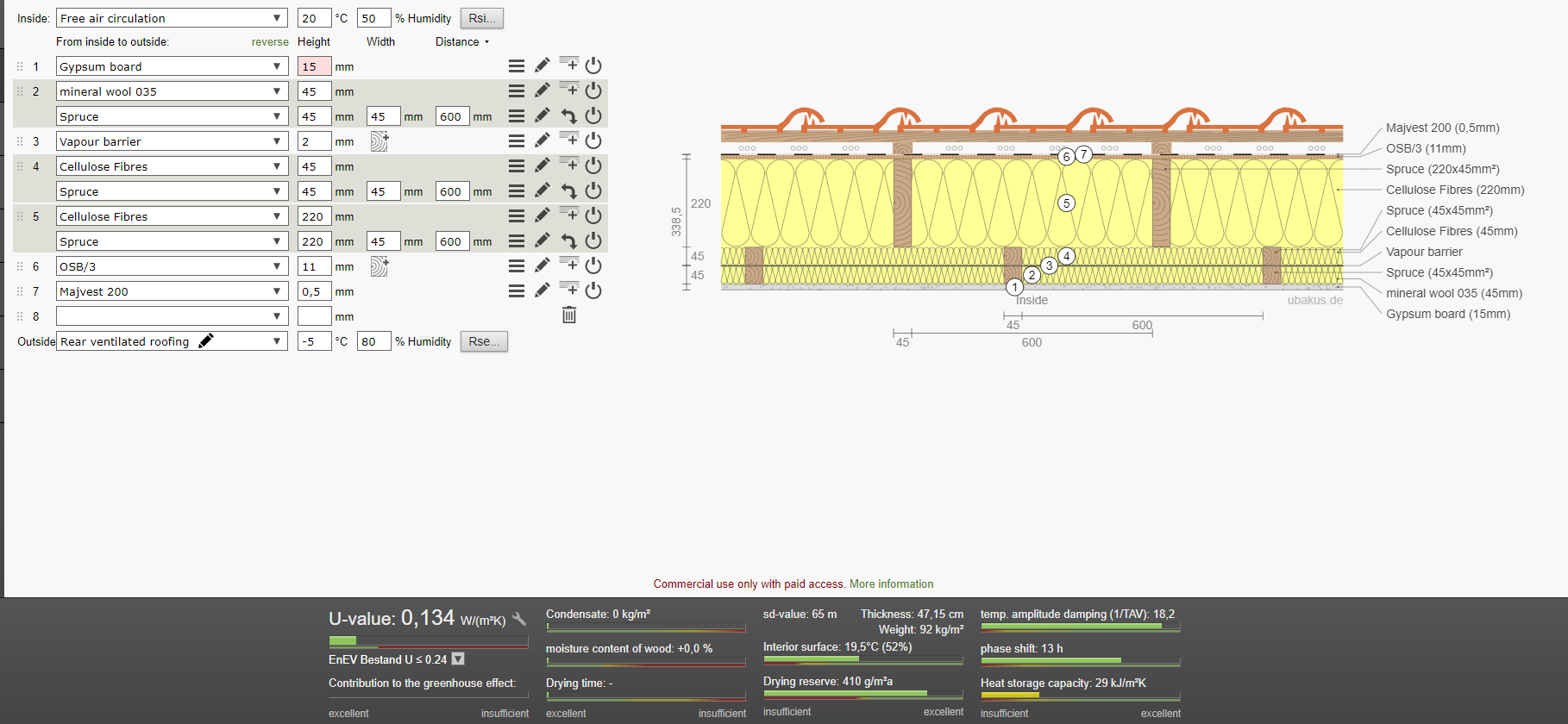
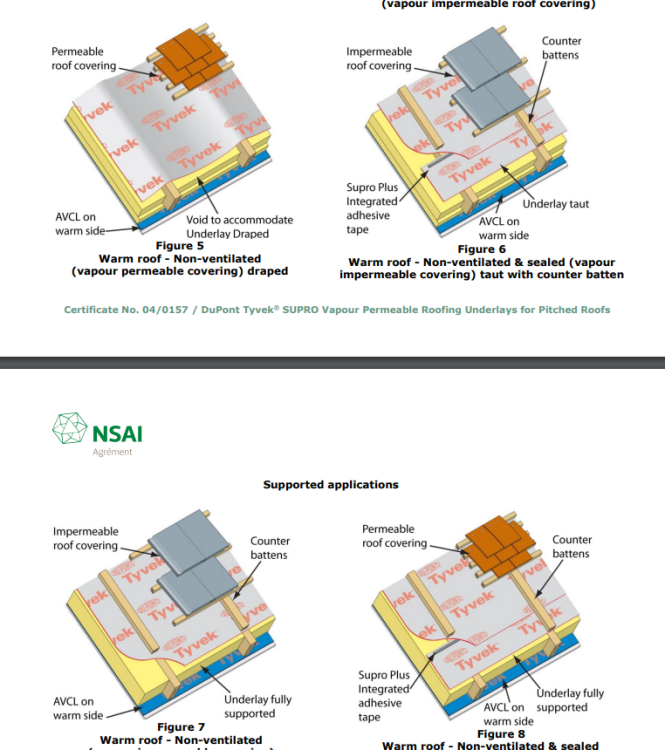
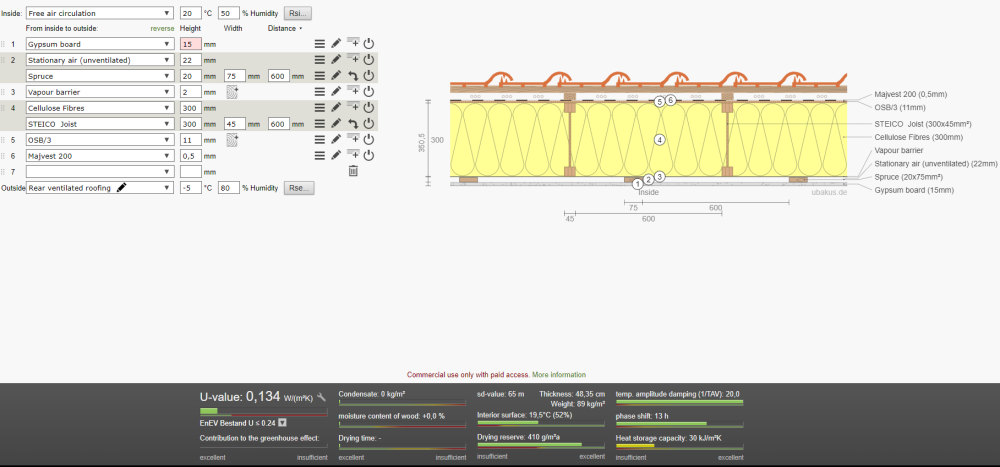
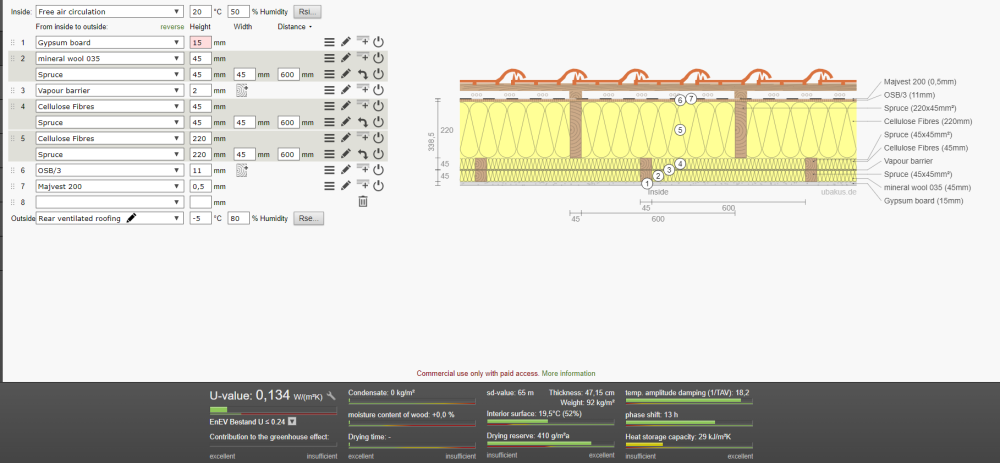
I can understand your builders concern but their thinking is based on old housing standards with no internal vapour control layer and impermeable membranes like bitumen felt. The moisture from the house would pass through the ceiling (almost entirely through air gaps not diffusion) and condense on the back of the felt. The way to resolve this was to allow the wind to blow behind the felt but this brings it's own problems. The wind also blows through the insulation making it perform poorly, think woolly jumper on a very windy day. With a plastic anorak and the zips open. Sweaty and cold. A better solution is a proper sealed vapour control layer internally (also airtight layer) and a sealed breathable windtight layer outboard like tyvek supro or protect vp400 or similar. Think a woolly jumper with a Gore-Tex anorak over the top on a windy day. Warm and dry. Here's a screenshot from the Tyvek Supro agrément cert. Note figures 6-8 have the insulation touching the membrane. You need to incude a counter batten to avoid any moisture pooling behind the tile battens however. That's not to onerous. If sticking with I joists this would be a nice buildup. I'd be tempted to move the OSB racking to the outside and replace with a airtight membrane/vapour control membrane inside. It'd be easier to lay the OSB outside and would provide more protection against any critters that fancied making their home in your roof! Alternatively as I joists are more expensive than plain timber this would be cheaper for materials (but dearer for labour) Stick build a 9x2 roof with OSB outboard. Counter batten inside initially with 2x2, (I can't show battens at 90deg on the calculator). This would give extra insulation depth and thermally break the rafter cold bridge. Then a vapour membrane creating a 45mm insulated service cavity with battens laid over the top of the initial counterbatten. This would pinch the membrane between the two battens making it more robust. I've used cellulose throughout as it's a fantastic product, guarantees a full fill and really boosts airtightness and decrement delay (phase shift) and hand fitting mineral wool is not pleasant.
-
Early stage thinking - new build
Iceverge replied to DevonKim's topic in Air Source Heat Pumps (ASHP)
I can't see that small unit being a problem. I was thinking you might be planning on putting one of these in your kitchen. Worse case it only gets used infrequently but I do enjoy occasionally shutting our sitting room door and getting it up to 25 deg+ with our convection rad. Another square box here with much the same thinking. No regrets with the shape of the shell but maybe we should have altered the layout a little inside. -
It's a nice system but more expensive than straightforward OSB outboard and membrane inside. That's what I'd do unless I was feeling "spendy!"
-
Lawn Repair after Construction?
Iceverge replied to mike2016's topic in Landscaping, Decking & Patios
The ground could be well compacted where they were driving, especially if working in the wet. This will lead to poor drainage and bad plant growth as grass roots can't penetrate the soil. Fixing only the top layer only won't do much to help without breaking up the compactions below. Typically this is done on farmland by deeper ploughing or sub-soiling where a tractor pulls a vertical blade through the soil to loosen it up. I don't know what a landscaper would recommend but this is exactly what I did. Plough, harrow to make a fine seedbed, broadcast grass seed, rake to cover the seeds, roll to ensure a firm seedbed. If you're feeling lazy just let lots of dandelions other deep rooting plants break up the compaction over time. -
Low room output radiant (not convective) wood burning stove
Iceverge replied to davidc's topic in Stoves, Fires & Fireplaces
I spent ages looking at this, in a similar situation re free wood. Didn't bother in the end. Too complex, expensive and oversized. Just used a direct cylinder with an immersion and plug in rad. The Olsberg tolima Aqua II or Spartherm A4 H2O are both Dibt rated as far as I can remember. You may need to be on mains water to avail of the ability to connect to an UVC for the quenching function in the event of overfiring however. An alternative is a gravity fed open vented thermal store but these are expensive and need to be very large or kept at very high temps to get lots of hot water. @Thedreamer has a nice solution. Would it suit you? My guess is 4kw ish of PV diverting to a 300l direct cylinder would be good and cheap with a <5kW dry stove in a large room downstairs for space heating and an electric rad for backup. -
What U value do you need? In any case I would not ventilate below the membrane. Use battens and counter battens to and ventilate above the membrane with all joints taped. Windtighness is important, especially with batt insulation. With batts between the I joists you may have issue with the corners compressing in the flanges. I'm not sure how significant this is but green building store changed the ijoist/batt detail on Golcar passivhaus to fill the webs flush with PIR. You'll need an airtight layer somewhere too.
-
Yikes! Where were the unexpected extras?
-
I've used my Lidl Parkside €30 laser plenty. I found it more accurate than our builders DeWalt equivalent. However you're restricted to working inside or at dusk/dawn outside. That is unless you're willing to look into the laser beam itself.......
-
Rain water coming in between window and window cil
Iceverge replied to mfmcdonagh's topic in Windows & Glazing
Can we have a wider view of the window please inside and outside. It looks like the water is on top of the membrane/tape. Which makes me think the water isn't coming in from under the window From the limited photos it looks like a tilt and turn window. Have the fitters drilled weep holes on the outside of the frame? -
Are solar panels worth it with my roof and sloping direction?
Iceverge replied to MrTWales's topic in Photovoltaics (PV)
If you can shift your usage to midday is almost certainly not worth getting a battery. Our total electricity usage is about 18kWh/day excluding space heating. If you want to get a battery you may as well buy a second hand EV. £3500 buys you a new 5kWh battery. £4500 buys a 24kWh battery with a high miler Nissan Leaf attached. Even if you only use it on local trips it will reduce your energy usage dramatically. My pretty efficient Skoda 1.6d does equivalent 60kWh/100km. An electric runabout would do about 15kWh/100km. -
Early stage thinking - new build
Iceverge replied to DevonKim's topic in Air Source Heat Pumps (ASHP)
Welcome welcome. Reading this and looking at your requirements my mind instantly turned to cooling not heating. If you require 16deg in the attic you'll need air conditioning! . Your design sound eminently sensible. Minimal outside wall makes a house better to heat and cheaper to build. Given your location passivhaus will be easily achievable with a good builder or a package build like MBC timberframe. Q1. Easily in a new house with good insulation. Plan on 300mm EPS in the floor. 300mm EPS/cellulose/mineral wool in the walls 3-400mm cellulose in the roof. Q2. Yes avoid gas. It is bad for internal air pollution and health. We cook on induction. Cooking is better than gas having lived with both. Cleaning the hob is simple. The only annoying bit is the touch controls are a pain at times. ASHP can generate plenty hot water. Size you tank as large as possible though 300l minimum. Bigger is better. This will allow you to store your water at 50deg meaning better ASHP efficiency. Q3. I don't know much about them but they're AGA style electric cookers AFAIK. The smallest one in the range does 1.5kW which on its own is lightly to exceed your house heating load for most of the year. Assuming it will take an age to heat up like cast iron cookers of yore you'll lightly not be able to get inside the kitchen with the heat by the time it's ready for use. I could be wrong and it might be ok in a large open plan room, but caution is required. Q4. If you share some sketches there's plenty of knowledge here, most of us have learned through getting it wrong! Q5. Pass. Other thoughts. Build a compact, airtight shape with due regard for overheating. ( Appropriate glazing, shading , blinds, ventilation, high decrement delay roof and wall buildups) Use an ASHP for UFH on the ground floor. Get one that can cool the slab too. Put a multi split A2A unit ( air-conditioning) upstairs on the 2nd and 3rd floor for cooling and maybe winter heating (you really won't need it) Best of look and looking forward to following your progress. -
Are solar panels worth it with my roof and sloping direction?
Iceverge replied to MrTWales's topic in Photovoltaics (PV)
Welcome to the forum.I am hoping to get some PV too at some stage and am learning also. In the depth of winter generation will be small. In the middle of summer the sun is higher so orientation is less critical. It's the shoulder months that having a good orientation and lack of shading helps out hugely. Most panels are 350-450w and take up an area 1m*2m. So your house roof looks limited on the SE facing pitch to maybe 6 panels?? Hard to tell. This would be 2-2.5 kW so a useful contribution. Theres a website PVGIS.eu https://re.jrc.ec.europa.eu/pvg_tools/en/ You can play with this to see you annual generation. I reckon it would be about 2000 kWh and peak at roughly 9kWh per day. Our DHW demand is 10kWh/day so assuming you have similar usage and choose to install a diverter to an immersion you could use all your spare PV on heating water. A battery would be unnecessary. If you look at midsummer solar and creat an account you can draw your roof and it'll auto generate a package. -
What's your heat source? What are your airtightness levels and insulation like? You can use rails to clip UFH pipes to.
-
Ours is as close as makes no difference 3650kWh/year for 2 small kids and 2 adults or 10kWh/day. We heat a 300l UVC on cheap overnight electricity of 0.12c/kWh. (it was less than 10c) . Next year will cost us about €450. A DHW only heat pump would reduce this to about €180 or 3kW of solar PV with a diverter would leave us with only about €95 to top up with mains electricity. (This is the plan at some stage) Our total heating for the year was 3200ish kWh. If we had put UFH pipes and a willis heater like TerryE did we could have used night rate and the slab as a storage heater. As is we use a plug in rad, half the heating is on more expensive day rate, total cost about €480 for next year but the capital investment was zero. I would consider a split A2A unit for heating. ASHP performance but no pipes. https://www.orionairsales.co.uk/daikin-air-conditioning-rxm25r-ftxm25r-wall-mounted-25kw9000btu-inverter-heat-pump-r32-a-wi-fi-15085-p.asp If you did want zero moving parts and a very robust system a stove and a direct cylinder with 2kw+ of PV and a diverter would be fine too. You would need to have the PV on a south facing roof/array to get any useful generation in the shoulder months mind you. Have you considered the clogging of the PIV intake? The intake of our MVHR gets much grubbier than than the extract. I would be cautious of natural (hole in the wall) ventilation. It tends to be very drafty in windy weather and under ventilate the rest of the time with the associated buildup of pathogens, VOC's, mould, etc. It's the equivalent of having a hole in the roof for drinking water. Am I correct in assuming your current lodging doesn't have a mechanical ventilation system of some sort?
-
Unless your house demands very rapid heat response because of high heat losses via poor insulation and airtightness I suspect the insulation won't achieve anything. For clarity we're talking about a floor above a heated room? If so just use the money and put more insulation elsewhere.
-
We could really do with some proper controlled studies on this using real life builders and projects. The academic studies don't tend to allow for various levels of workmanship, waste, cost, time and availability of materials.
-
@WelshMatt welcome welcome I like small houses. Good luck with your project. On Woodburners....... We're surrounded by trees here ( farm and woodland) . I spent 4 hours hanging onto the back of my Husqvarna yesterday. Not for firewood but just to clear fallen trees. I could probably spend 4 hours a day for the rest of my life doing the same. However we choose not to install a woodburner in our new house. (186m2 passive class) I really wanted one for ages too. The main reasons were. 1. Air quality inside. ( lots of particulates from any solid fuel appliance) 2. Labour, cleaning , dusting lighting. 3. All or nothing approach to heating, either 5kw or zero or a very sooty fire. Unsuitable even in our previous badly insulated cold cottage as the living room would reach 25deg+ very quickly even on a cold day. 4. They lead to poor airtightness. I'm yet to see one reaching passive house airtightness without very expensive continental spec stoves. 5. With a very low heat demand the sums for the install cost alone didn't make sense vs a very cheap ( free ) electric rad. A nice stove and flue was costing about €5000 installed. Our heating bill was about €350 last year. Assuming you pay yourself any pittance to process firewood etc there's no saving in a low energy house. 6. The risk of burning the house down. However if you're cool with all those things and maybe can put in a stove DIY ( can be done for £1000) you might like it. If it's in a central room it'll heat the whole house. We have no central heating as so long as the plug in rad is in any downstairs room and some doors are open the whole house is comfortable. @Thedreamer has a nice setup with an ESHP and a stove. The ESHP extracts internal air to heat the DHW so your ventilation air isn't really wasted. I would consider it. https://www.aircon.panasonic.eu/LV_lv/happening/new-panasonic-aquarea-dhw/ is an example. On the layout I would think about moving one bedroom to the west to minimise the internal corridor. If aiming for low embodied energy and low energy use in practice I would use a timber structure with plant based insulation like, cellulose, woodfiber or hemp, rather than oil based insulants. Good luck!
-
https://assets.publishing.service.gov.uk/government/uploads/system/uploads/attachment_data/file/1019707/iwi-guidance.pdf Worth a read. Using a non breathable material on as internal wall insulation (IWI) like PIR comes with risks, especially on heritage structures. Interstitial condensation, thermal bypass and structural decay are some. It's been discussed at length on here already. Search IWI for more reading. I'm of the camp that would prefer a breathable ( vapour open ) internal wall insulation like --woodfiber and lime plaster or --rockwool batts and a humidity variable membrane like proclima intello plus. Others are happy with PIR etc but this relies on a perfect vapour membrane internal to the insulation which is almost impossible to achieve with a retrofit.