Iceverge
-
Posts
4487 -
Joined
-
Last visited
-
Days Won
32
Everything posted by Iceverge
-
Run a straight edge across it, chip off any significantly high lumps and fill in any significant dips with tile adhesive. A thick underlay will absorb any remaining bumps.
-

Converting wooden workshop to office
Iceverge replied to Adthrawn's topic in Garage & Cellar Conversions
It depends on the spec of that particular tape. I just picked a tape at random from google that was a specific A/T tape. You need something that will last the lifetime of the building. There's a significant difference between off the shelf duct tape and dedicated airtight tape for example although to the eye they appear the same to begin with. Foil tape is probably fine provided the substrate is dry. Split tape is much easier on the windows however. -
Converting wooden workshop to office
Iceverge replied to Adthrawn's topic in Garage & Cellar Conversions
I can't see why not, I'd just use some 22*75 strapping but be careful not to over tighten the screws pulling them out of the metal skin. Yup, air void is fine. -
Converting wooden workshop to office
Iceverge replied to Adthrawn's topic in Garage & Cellar Conversions
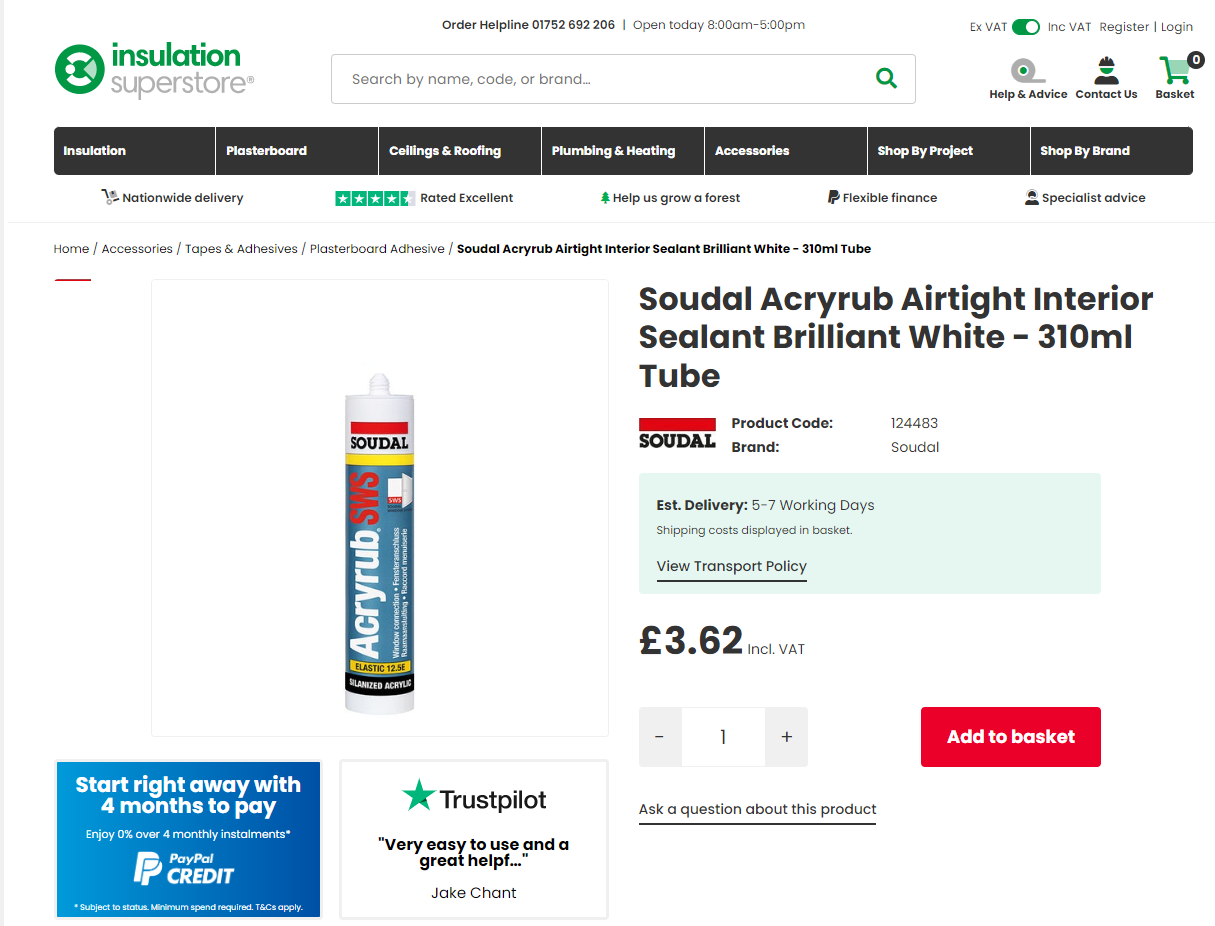
As that might be a time off I'd treat the windows as if they were staying put for the time being, Tape into place and do your best to make sure they seal properly. This might be lots of work for limited benefit. The existing opening looks to be about 1800mm wide. I would put in a pair of French doors at half the price of bifolds into the existing opening. Bifolds are notoriously drafty unless you get very good ones. I wouldn't sweat too much about the threshold. Door suppliers do PVC spacers that would raise your door to floor level. So long as it is proper airtight tape I wouldn't be too fussy. Something like this would work fine. https://passivehousesystems.co.uk/product/phs-argo-joint-tape/ Split tape is better for the windows. https://passivehousesystems.co.uk/product/phs-85-15-split-release-tape/ I don't think ventilation will be needed, probably enough as is between he cladding boards, if they were going to rot they'd be well on their way at this stage. I've been thinking about this, I would tape the joints between the panels and tape the panels to the plywood to complete your airtight box. It's up to you how pretty you want it to look but you could batten a 22mm service cavity underneath and put a layer of plasterboard at the expense of some ceiling height. If you don't want to bother with this and are happy with a conduit running to the light fixtures I'd tape the edges of the roof to the walls and use a white airtight sealant to seal the gaps between the panels. This would be fine.
-
Just change the spec then to what you what.
-
Has the roof been built?
-
Converting wooden workshop to office
Iceverge replied to Adthrawn's topic in Garage & Cellar Conversions
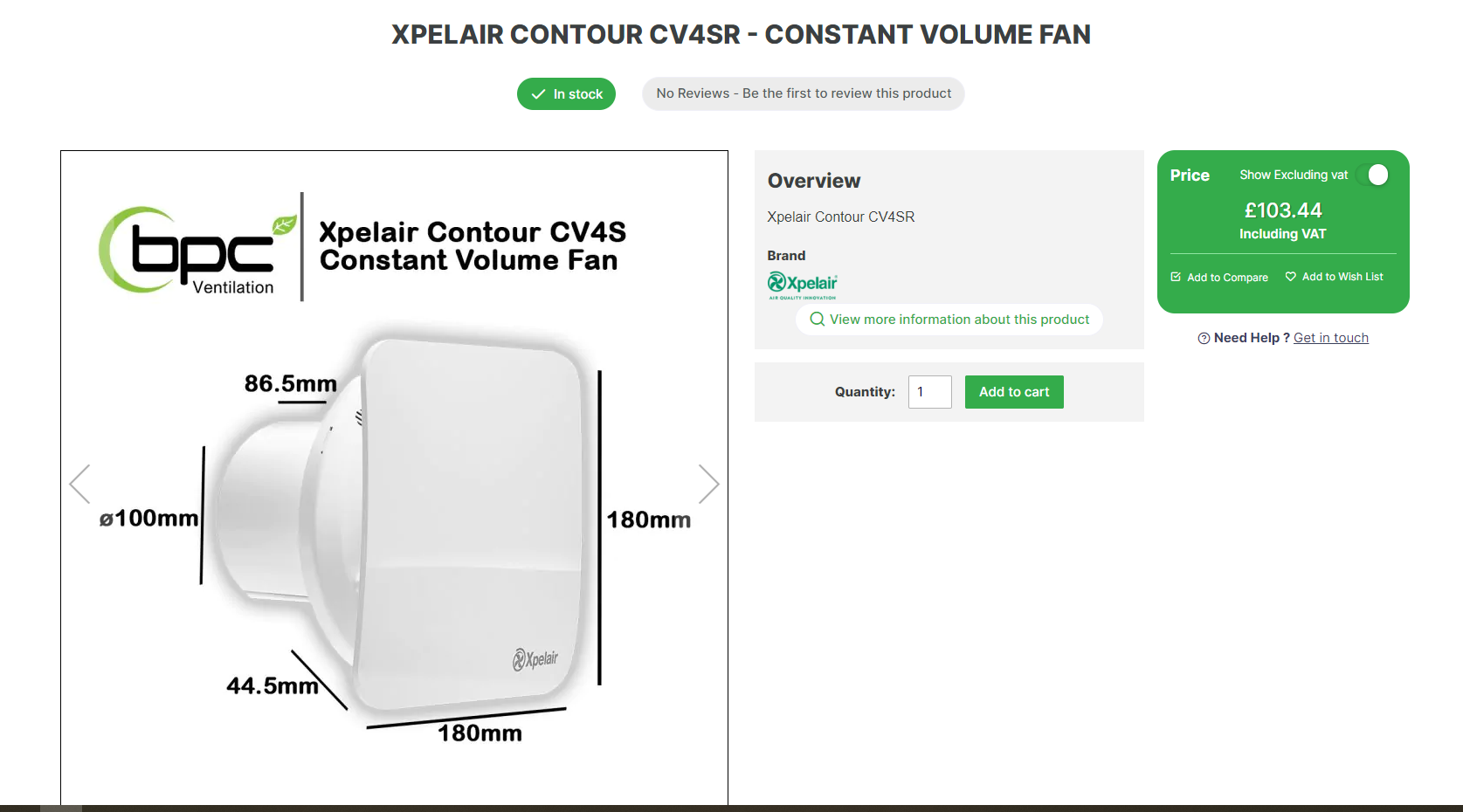
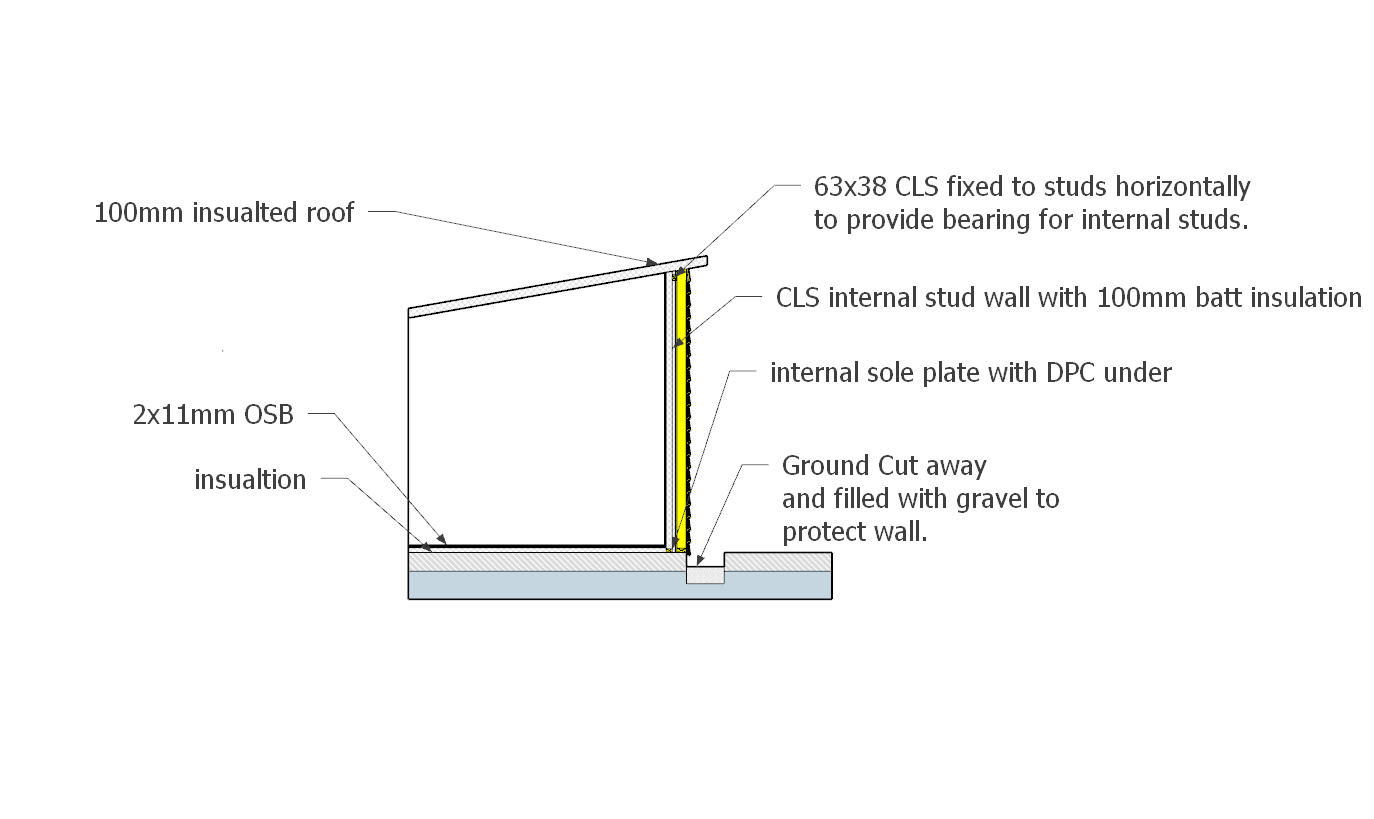
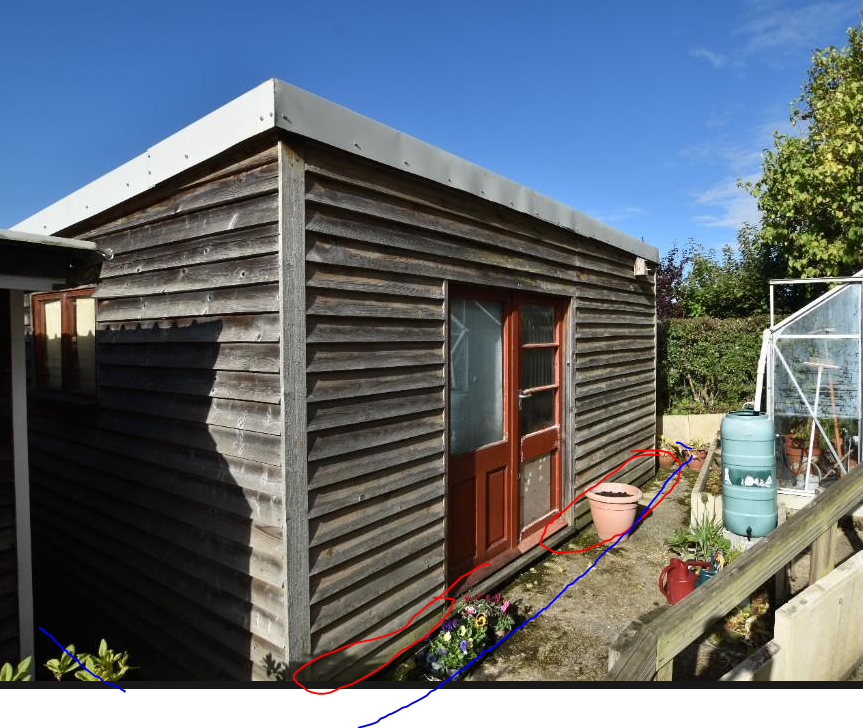
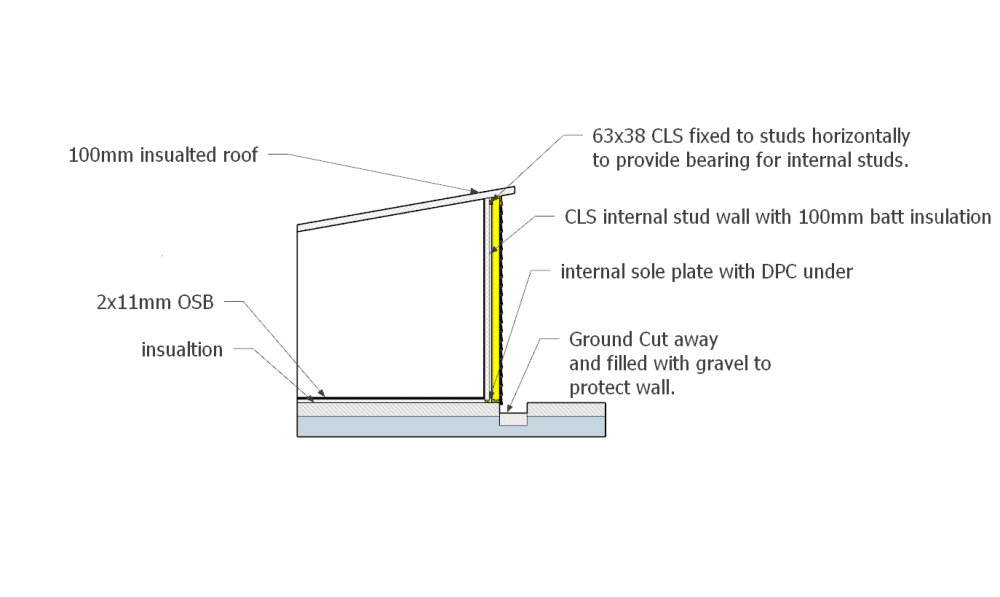
Most of the cladding looks to be in good order, as does the roof. Leave well enough alone I say. What are you planning on doing with the windows/doors? One area that might merit some thought would be the bottom run of cladding. It looks like it is suffering from some splashback from rainwater ( red looped areas) . Normally cladding wouldn't start 150-200mm above the ground to prevent this. A simple solution might be to cut the concrete along the blue line maybe up to 300-400mm back from the wall, with one of these. You could break it by hand but it wouldn't be as neat. Then dig out 300mm deep and backfill with 100-150mm of gravel. This should be enough to ensure the timber stays dry. What is your plan for the electrics? If the internal ply hasn't rotted with the poly/paint sandwich by now it's not going to. Get some airtightness tape and tape all the joints in the plywood and tape the doors and windows to the ply. Tape the ply to the roof and floor making a perfectly airtight box. This is more important than insulation in creating a stable internal environment. Very easy to DIY, just takes care. For the walls I'd use 63mm CLS set back from the wall by 38mm @600 c/c. Any smaller timber will be too bendy to get a nice wall finish. You can use a 38*63mm CLS timber on its side screwed through the ply tot he studs at the top ( and bottom if required) to create this setback . This will create a 100mm ish (63mm+38mm) space to fill with 600mm rockwool batts or similar. Also the gap behind the studs will give you a nice thermal break and leave a gap for the electric cables etc. Then cover with 15mm plasterboard. If you glue the two layers or OSB together with all joints well staggered and stick down the Amtico too it'll work fine. I'm not an expert but I can't see any issues. You'll need to get your floor insulation dead flat first however. If the floor of your shed is undulating use a straight edge and some sand/cement mix or tile adhesive to fill any low spots. Put down your insulation and the OSB on top. make sure to leave a few mm for the OSB to expand at the edge. For ventilation I'd use something like this and a trickle vent in the opposite wall . OR if you want to splash out something like this, For heating I think in a small space, the heat of the printers and humans will make even a cheap air2air heat pump unnecessary. A simple plug in rad will be fine. Sorry for the scattered post. Hope it makes sense.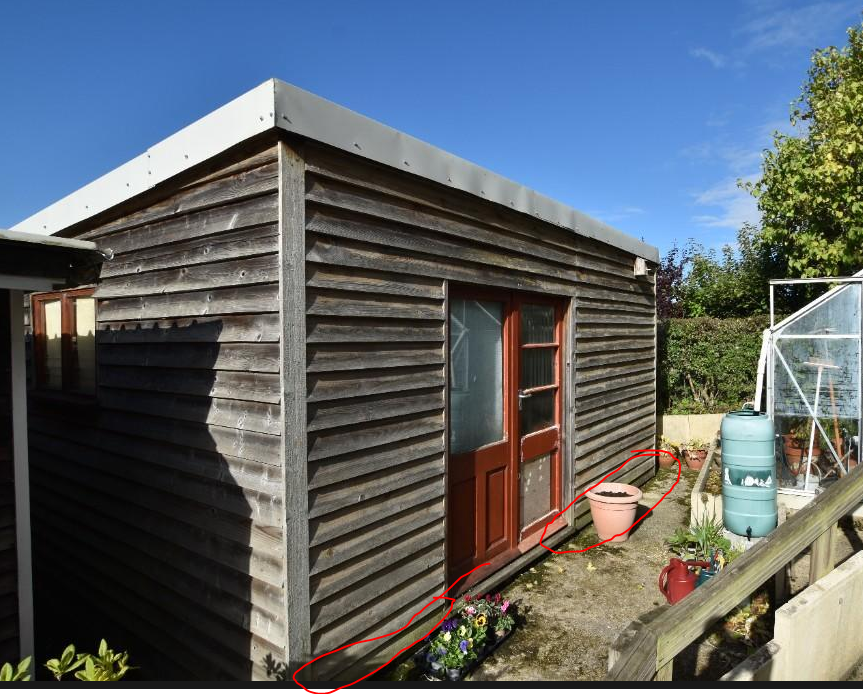



-
Converting wooden workshop to office
Iceverge replied to Adthrawn's topic in Garage & Cellar Conversions
How much can you spare? 160mm was just a suggestion. More is better but any is better than none. You could remove one or two external cladding boards and have a look to see the inside. If its ok I'd leave well enough alone. If there's significantly moisture ingress you'll need to solve that long before think I about insulation. Maybe you could post a few pics of the wall as it is, internally and externally. Plenty of sets of knowing eyes here. Make sure to capture the floor wall junction and the roof/wall junction both internally and externally. -
Converting wooden workshop to office
Iceverge replied to Adthrawn's topic in Garage & Cellar Conversions
Can you cancel the materials?! PIR is expensive and not suitable for anything other than floor insulation in my opinion. -
I didn't bother insulating but the only bit that ever gets any condensation is the 25mm MDPE to the monoblock and the brass monoblock itself. Usually only then when you've run a bath or shower and it has taken 100-200l of water through it. The condensation never seems to get large enough to cause drips however and as the house humidity is low so it all drys quickly. Come to think of it the Hep2O pipes or fittings never seem to gather any condensation at all. Don't know why, maybe they're inherently better insulated.
-
Converting wooden workshop to office
Iceverge replied to Adthrawn's topic in Garage & Cellar Conversions
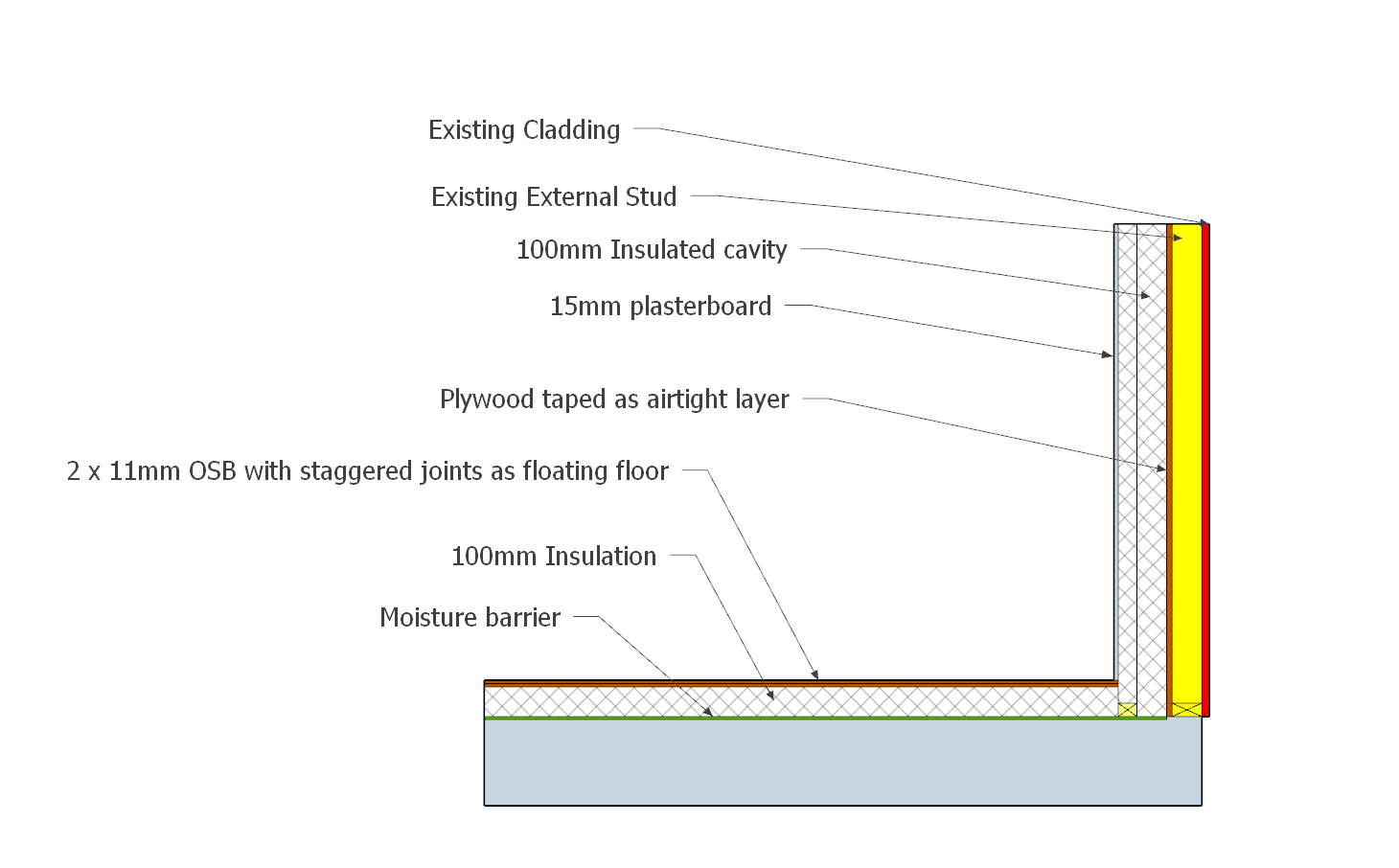
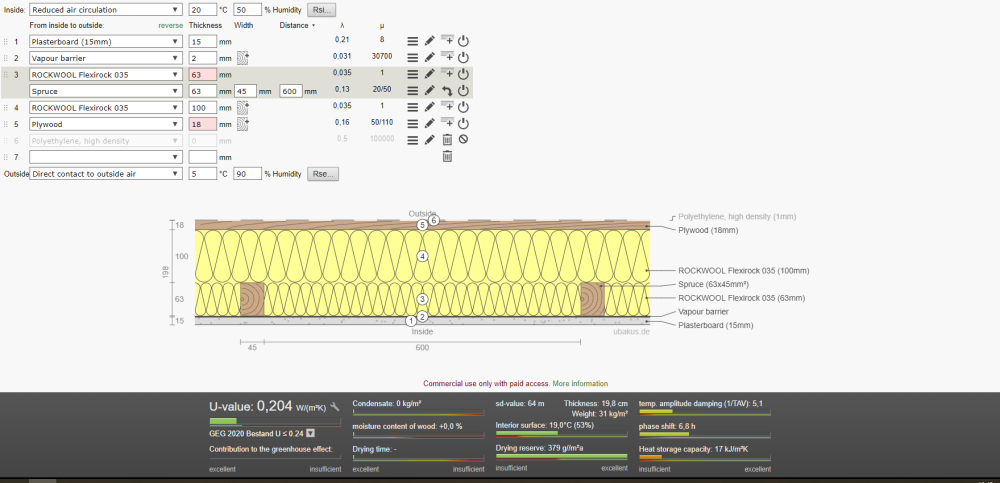
Following the example of the States I don't think there's anything wrong with an air barrier external to the insulation provided the wall can dry to the inside and you do a top job on airtightness. In fact I think @IanR has an external airtightness layer, albeit with a breathable board outside. If the existing structure is ok I would avoid dismantling it, especially with kids and limited time. Building has a habit of taking 3 times longer than you expect. I would install the final windows and doors in the structure as is. Make your own blower door fan and make the external plywood totally sealed with tape at all the joints and to the floor. This isn't hard and is ideally suited to the DIY'er. Given it's your own project you're lightly to get a top result too. Then build a stand alone stud wall (63mm CLS minimum) stood off the ply internally by say 100mm. (can be increased/decreased) This will create a handy void for all your services. Fill this with mineral wool/ rockwool insulation and the gap between the studs. Finally plasterboard internally. You may need vapour retarder plasterboard/ foil backed to keep the vapour in check. To really add polish use blown cellulose in the void. Pretty cheap and very easy to do in bits as it's all internal. Equally importantly, given your busy life at any point in the progress you can close the door and walk away as all the work is internal. As for the floor, Insulation board (as much as you can fit) and then a floating floor or 2 layers of staggered OSB. If you have the head height you could use a pumped screed with UFH.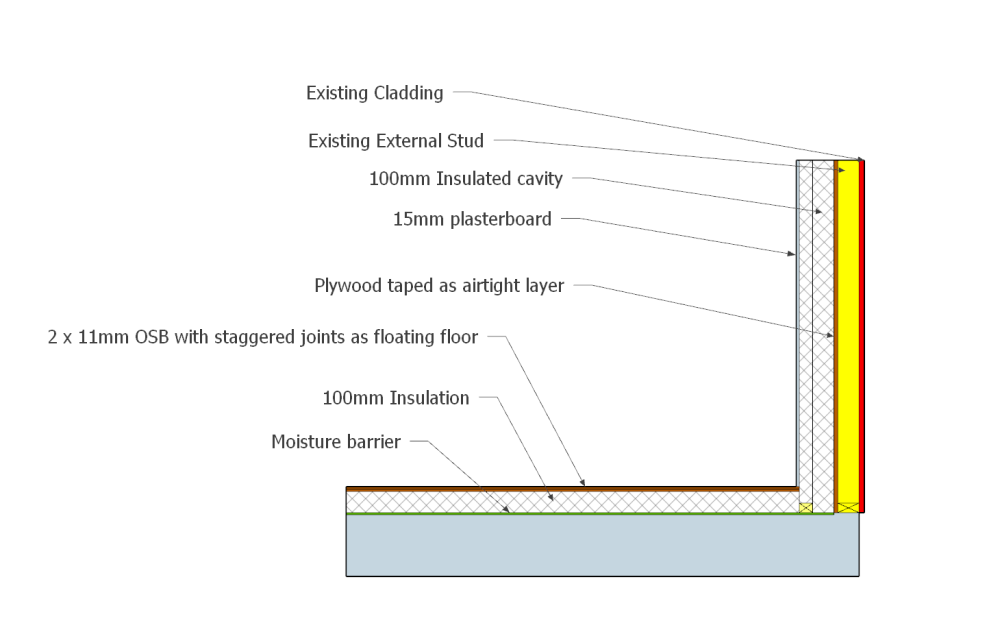
-
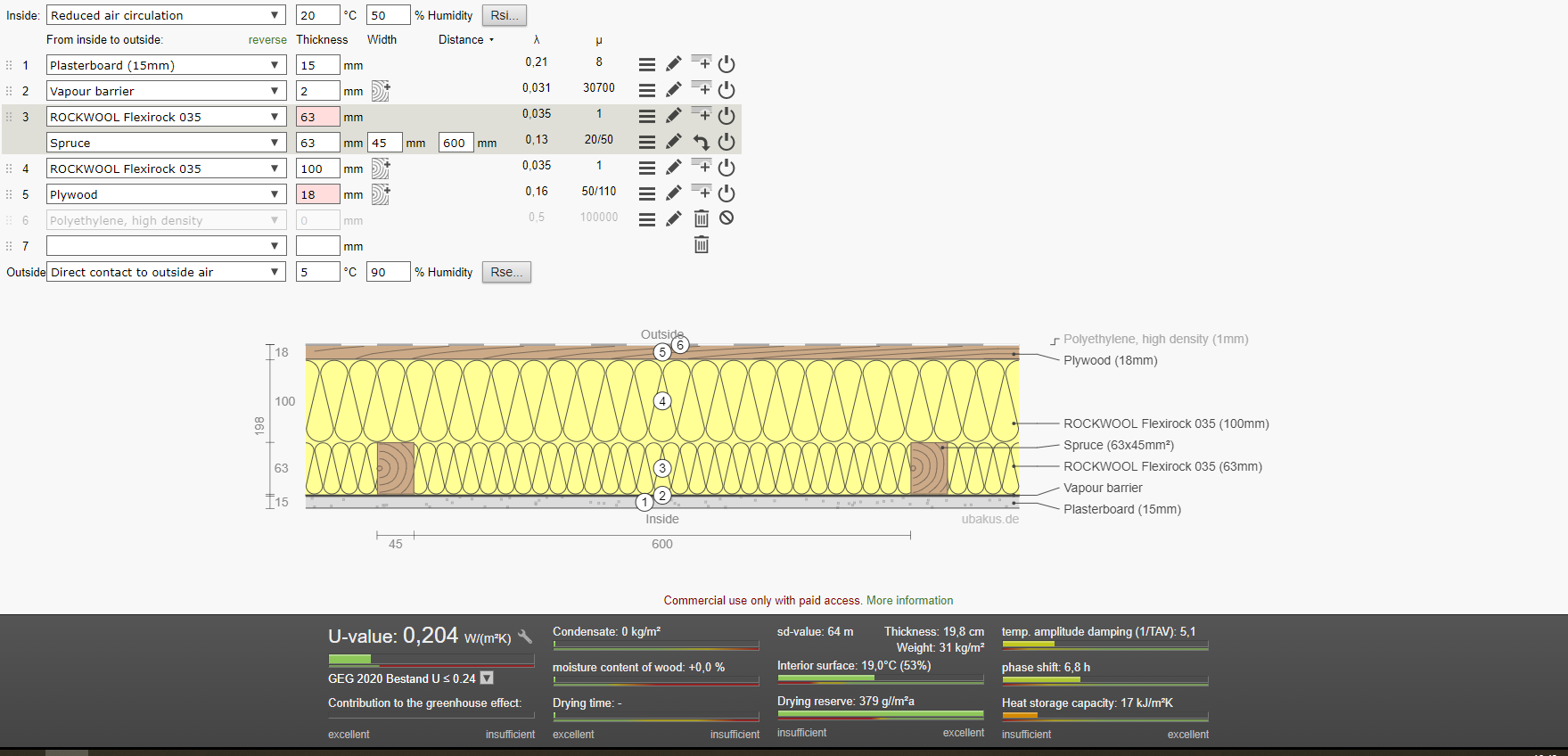
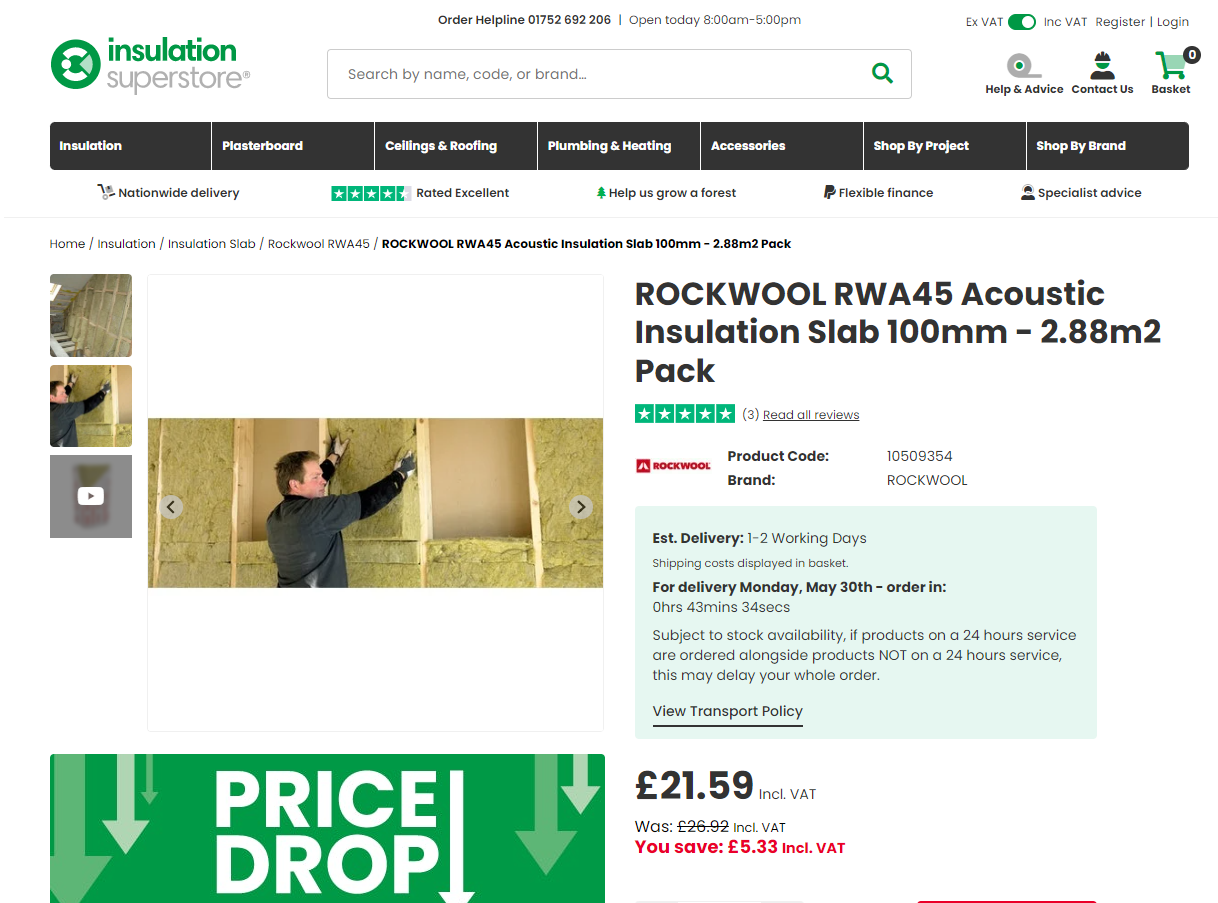
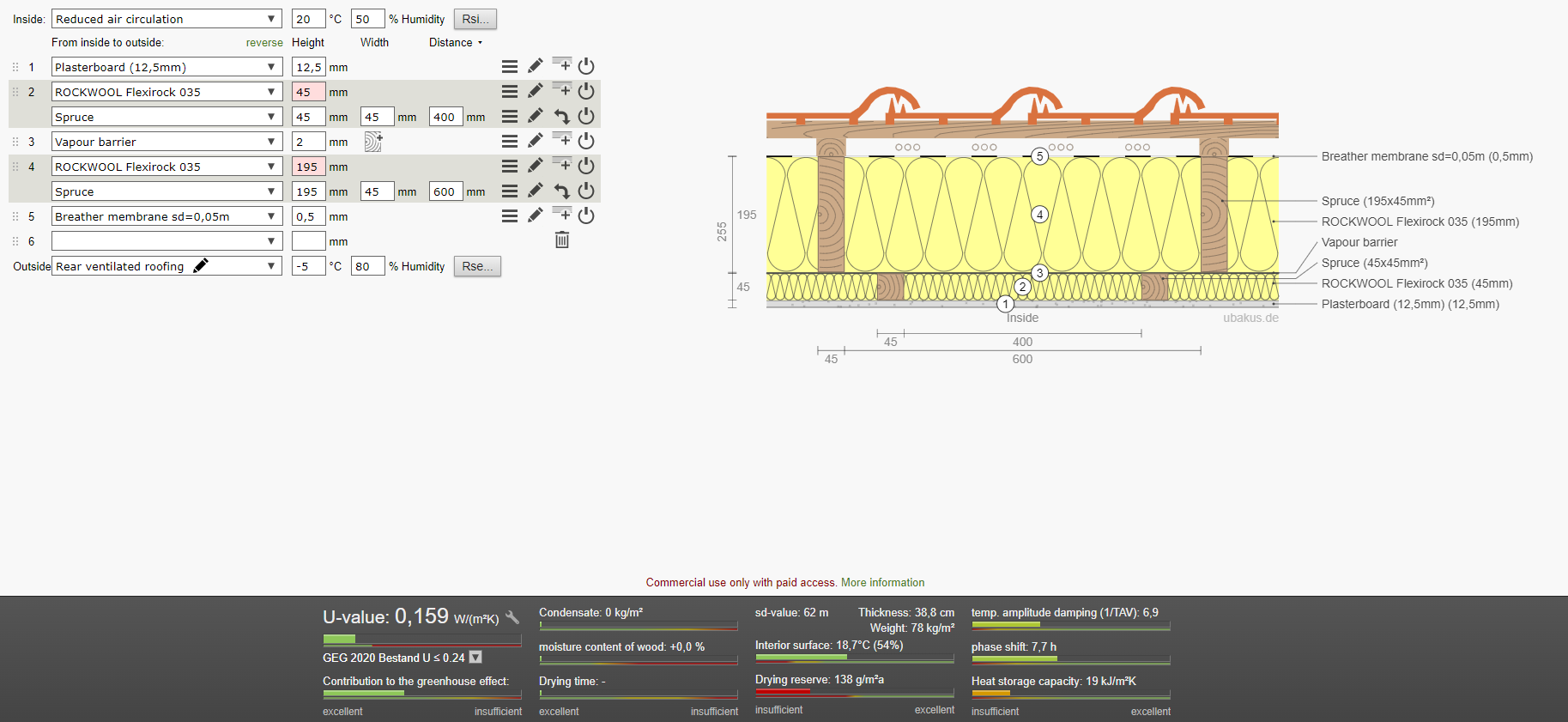
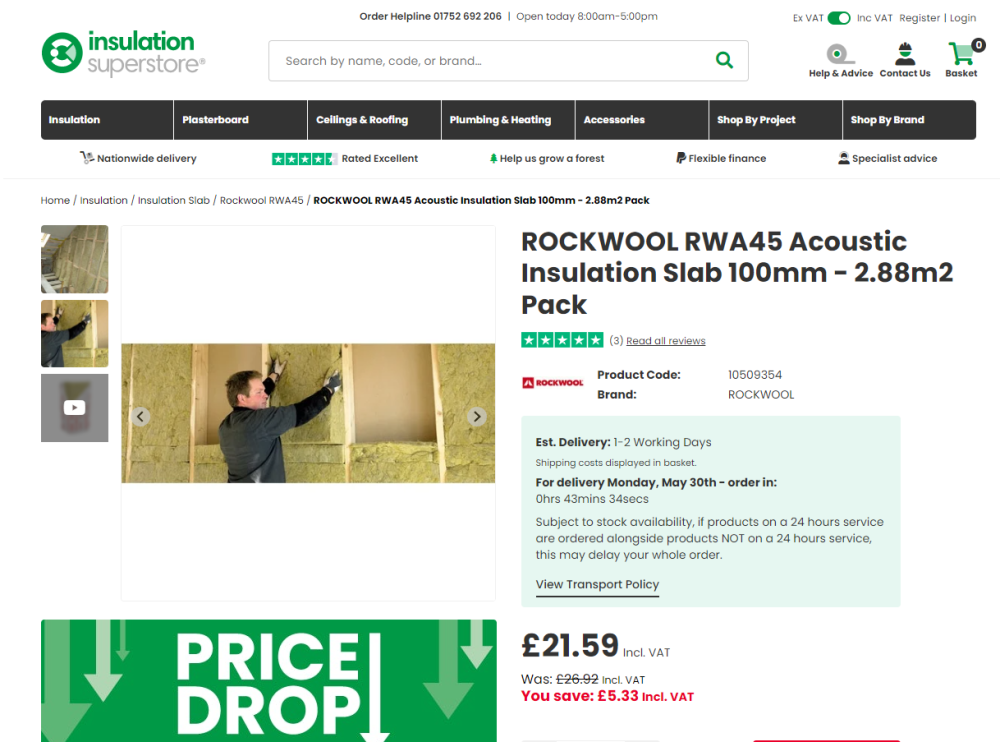
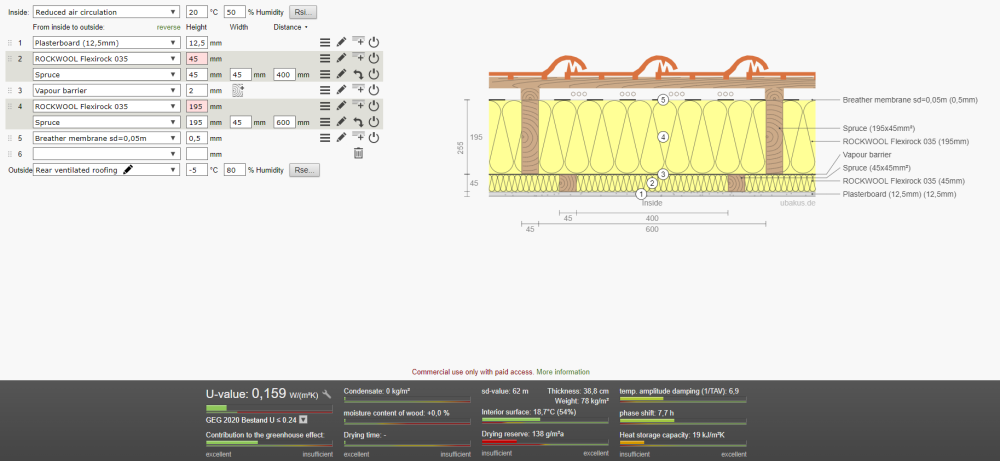
Unless you need racking on both sides I don't think it's necessary. Your SE will know. As far as I know propassive and Medite are both structural racking boards and this type of build up is normally required with timber I joist or double stud walls that require racking on both sides. I don't think it'll be needed on a roof. Again, that's SE territory. For the cost you won't beat glass wool normally but this appears to be a good price for Rockwool (15/m2 inc VAT) which is nicer to work with, better for heat and sound protection. '' The build-up is 12.5mm plasterboard, 45mm battened service cavity with 50mm Rockwool. Vapour Barrier, 195mm rafters full fill with 2x100mm layers of rockwool. Breather membrane taped at all joints. ( it needs to be a suitable breather membrane for this, Tyvek Supro , Siga Majcoat, etc) Batten Counter batten. That will buy you a very cheap and very good roof. Is suspect one of the reasons your builder/carpenter like the idea of ACTIS is that is very easy to handle for them. Easy to cut and light to fit. Fitting insulation by hand is really a pain. Nobody likes it, however rockwool probably one of the best ones. Imagine the glee on their faces if you tell them about blown cellulose! For a 200mm rafter it's €27+VAT installed in Ireland about £22/m2. Again, I would consider 15mm plasterboard ( sound protection, service cavity battens at 600mm cc) Blown cellulose in a 220mm rafter. External OSB racking (durability, strength, sound, rodent protection. Here is a more official drawing from a company that makes nice houses near Dublin. If it helps you to convince anyone.
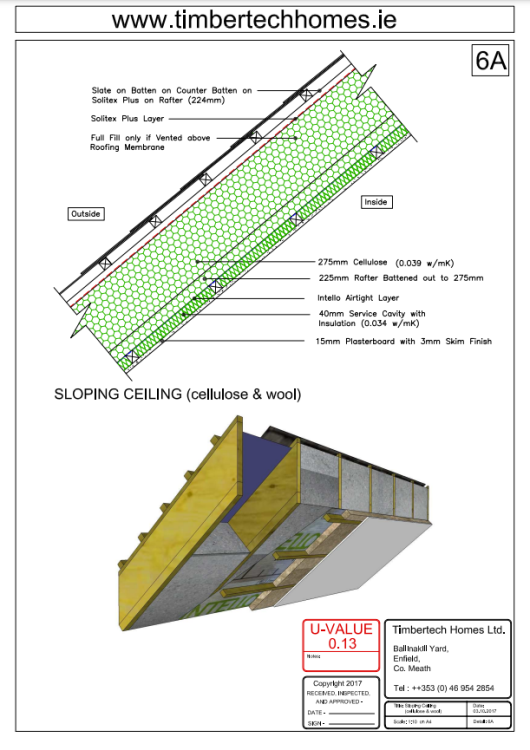
-
Having tried to insulate my way out of a problem with oversized pipes causing huge dead legs I can confirm that insulating radially run pipes is a complete waste of time. There's so little volume of water in 10/15mm pipes it very very quickly resorts to room temp insulation or not. The incoming mains cold is the only place worth thinking about IMO. Also go to town on all connections to and near the cylinder.
-
UFH - is it actually a good idea or not
Iceverge replied to Lord Greyabbey's topic in Underfloor Heating
It sounds more like a ventilation issue. -
Welcome welcome. Plans and pics are always received well!
-
At least half of the intermittent isolators I've seen are turned off because of the racket they cause. Even if they function as designed, they leave your indoor air quality ( CO2, VOC's, humidity etc) completely to chance the rest of the time. So called "natural ventilation" is similar to hole in the roof for fresh water supply. https://passivehouseplus.ie/magazine/insight/natural-ventilation-does-it-work
-
I'd move to 300mm EPS floor installation. Also @Thorfun used a similar buildup to you recently in the walls. Maybe their comment is worth considering before you commit. https://forum.buildhub.org.uk/topic/27181-tf-house-about-to-start-and-last-minute-pondering-insulation/?do=findComment&comment=412180
-
Is ASHP Going to Work for us - terraced retrofit?
Iceverge replied to Richini's topic in Air Source Heat Pumps (ASHP)
If you have the space I'd prefer EPS. For reduced labour use long staples into the EPS for the UFH and fiber impregnated concrete instead of mesh. However your SE will advise if it's needed. -
Have you disregarded the above?
-
Stainless steel wall tiles. Off the shelf in most BMs here. Seperate precast concrete lintels or steel beams depending on span. Catnics are relatively unusual. Typically a 1050mm foundation. 42" bucket or a 3ft with a bit of extra wiggling.
-
The beads and batts are the best for rain AFAIK. Beads are pretty much standard fit here in Ireland for new builds. Mostly 200mm cavities. I've not heard any horror stories.
-
If they're ajar there's a risk of the airflow just bypassing the main body of the room. From my research/experience, to achieve good air quality you need continuous mechanical ventilation. DMEV achieves this by design. In our previous cottage we used to leave the kitchen extractor running all day when we were out. It made a significant difference to the dampness in the entire house so long as internal doors were left open. Similarly I installed continuous mechanical ventilation in a my parents landing. Again, though is only sucking out from a central area, the whole house is fresher/dryer. I did have to make a separate silencer though as it was audible in the nighttime and when folk can hear it they turn it off.
-
What are you planning on using?
-
Just had a quick play with the numbers. On a 185m2 house walls to move walls from 0.26 to 0.18 would be another 12m3 of EPS beads. About £100/m3 installed. Your energy consumption would drop from 3421 to 2306kWh/year. With gas at 8p/kWh and a 90% efficient boiler the difference is conveniently about £100 per year. Granted @coconutsaregood you plan to die in ten years so the 12 year payback is a little unfair in your case.
-
Is this a sensible quote for a flat roof?
Iceverge replied to MrTWales's topic in Photovoltaics (PV)
You could consider a pretty henhouse/bicycle chalet like @ProDave