Iceverge
-
Posts
4387 -
Joined
-
Last visited
-
Days Won
31
Everything posted by Iceverge
-

Using multifoil under steico insulated roof
Iceverge replied to lookseehear's topic in Heat Insulation
What units are your using for this new parameter?
-
Using multifoil under steico insulated roof
Iceverge replied to lookseehear's topic in Heat Insulation
Multifoil=Snakeoil. Decrement delay is somewhat important but if you achieve any sort of reasonable U value it very quickly pales into insignificance beside things like unwanted sunlight through the windows. PIR between rafters cannot be done correctly at a competitive price. Gapotape and Robin Clevett "insulation joinery" maybe but it's be cheaper to build your house from gold bars. Foams shrink differentially to timbers too. It's a recipe for loose insulation. The single thing that will make the biggest difference here is Airtightness and you haven't mentioned how you're going to deal with this. What stage is construction at the moment? Any plans and pics would help for further suggestions. -
Normal House emulsion should do if it sticks. Might need to prime it first but I've found it's pretty good, sticks to glass and uPVC pretty ok anyway.
-
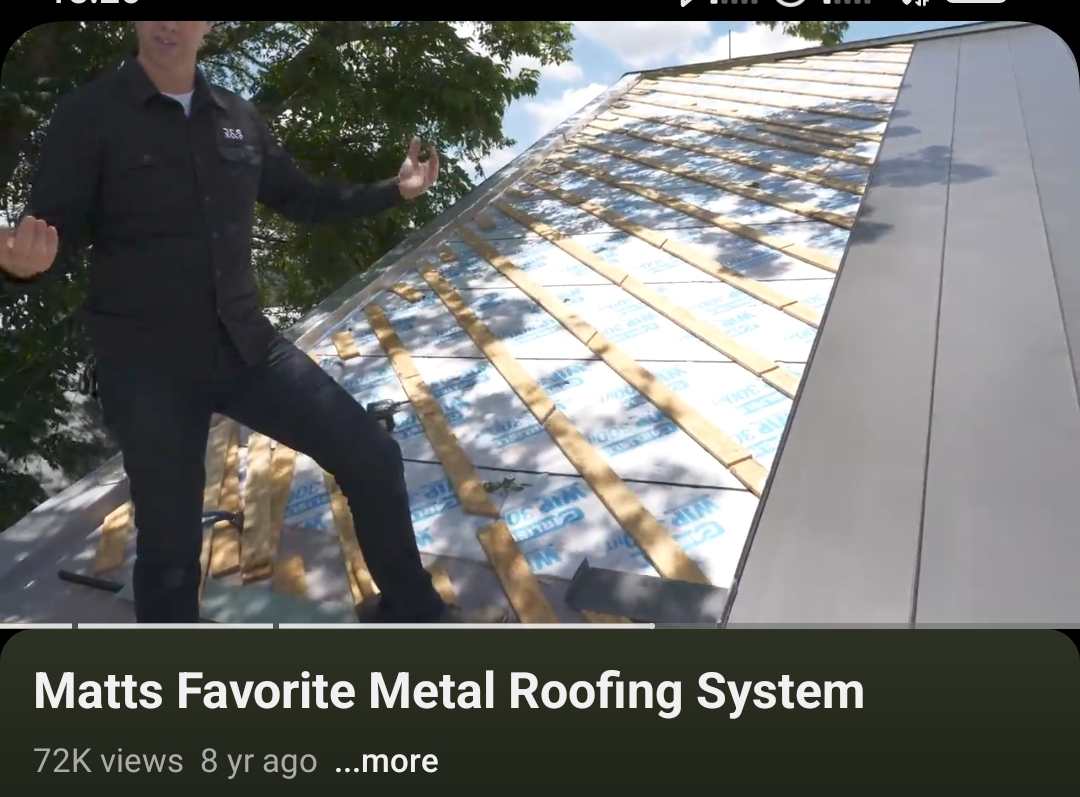
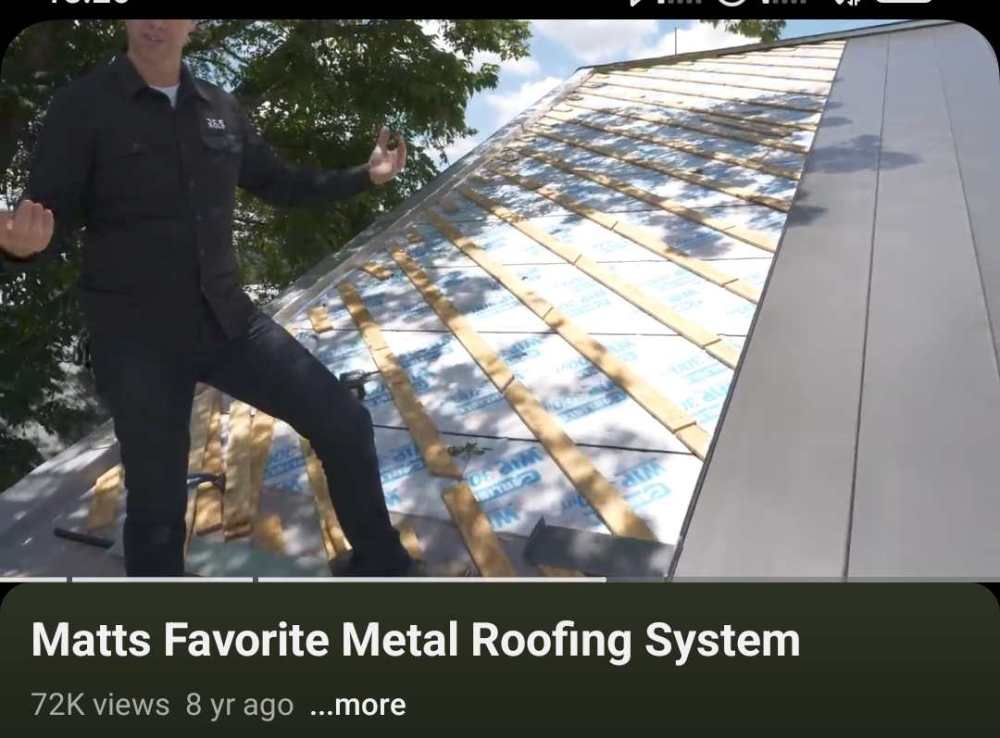
I would consider omitting the top layer of OSB entirely. It's doing nothing really. I would just diligently tape the joints in the ply too and forget about the vapour membrane. You could spec the trusses with a wider top chord from the Factory to avoid the need for the additional batten. In any case I would use 2x layers of 100mm PIR, joints staggered foamed and taped. Don't fret about thermally broken fasteners. They'll be almost zero performance difference to a metal one as the cross sectional area is so small over 200mm. The counter battens and batten is good for tiles but for metal cladding you could save some work and just put a 45deg (allowing for drainage) 70*20mm batten instead. The recess in the corrugation making up the rest of the ventilation. ( I personally think the corrugations alone are enough.....) Have you a need for overhangs and eaves? Do you have a detail for these?
-
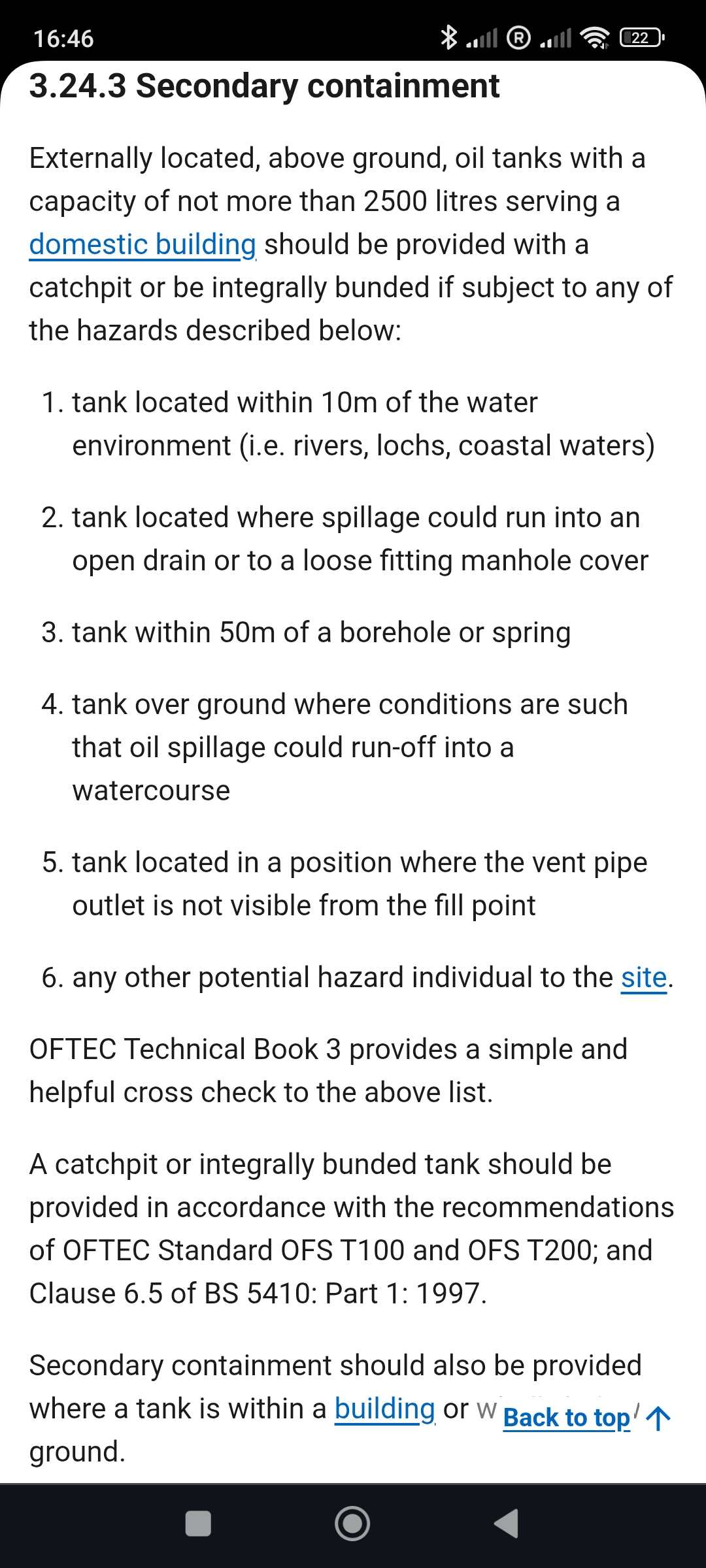
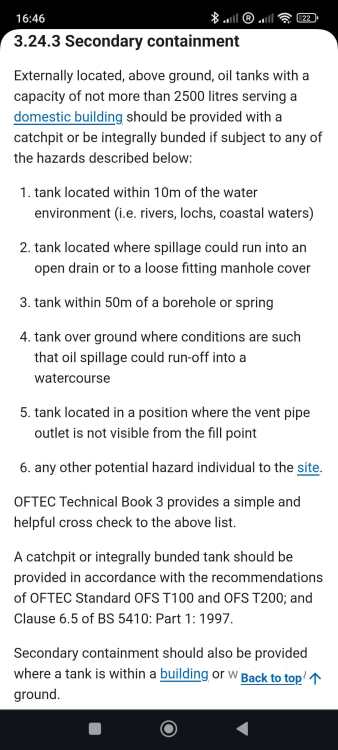
The whole thing is worded very much like " you really should pay us to do it properly" while stopping short of mandating it. I can't see anything to stop you making a reasoned assessment of the criteria and self installing. I also don't think a good quality single skin plastic tank is much more risky than a double skinned one provided steps are taken to prevent it from external damage. Even an appropriate paint should keep the UV away.
-
I think single skin is ok if you're more than 10m from a watercourses or 50m from a bore hole. Paving slabs or concrete seem to be suggested though. https://www.oftec.org/consumers/off-gas-grid-guides/home-guide-to-domestic-liquid-fuel-storage-up-to-3500-litres
-
How stuck are these windows? Stuck on both houses? How about your ultimate neighbours to the very south, can you make more of the south facing glazing here? Maybe a deidentified aerial pic would help. I under stand the desire to keep everything standard but as you will actually be living in one house I would consider making that one as nice as I could by maximising the use of the sun. I would certainly include a walk in shower on the ground floor and a room that could be a bedroom too. The walls appear a little skinny. I would get them to at least 360mm to stand a chance at getting good insulation with a timber frame. 400mm if masonry. work on 130mm internal walls as a minimum rather than 100mm. For me 4 x W/C is an overkill for the size of house. I would do 1 x ensuite, 1 x family bath and 1 x ground floor showerroom. An option might be to move these to the north side of the house and use frosted glass and/ro roof lights to avoid the overlooking issue. Perhaps a pic of the street scape too if you have one might help.
-
Is this for selling onwards or for occupation? Where's north please?
-
Alterative option to 150mm celotex + 50mm celotex?
Iceverge replied to flanagaj's topic in Heat Insulation
Yes so long as you make sure to very diligently cover all the ducting with mineral wool and tape all penetrations of the airtightness layer -
Can you not lower the wall plate?
-
Alterative option to 150mm celotex + 50mm celotex?
Iceverge replied to flanagaj's topic in Heat Insulation
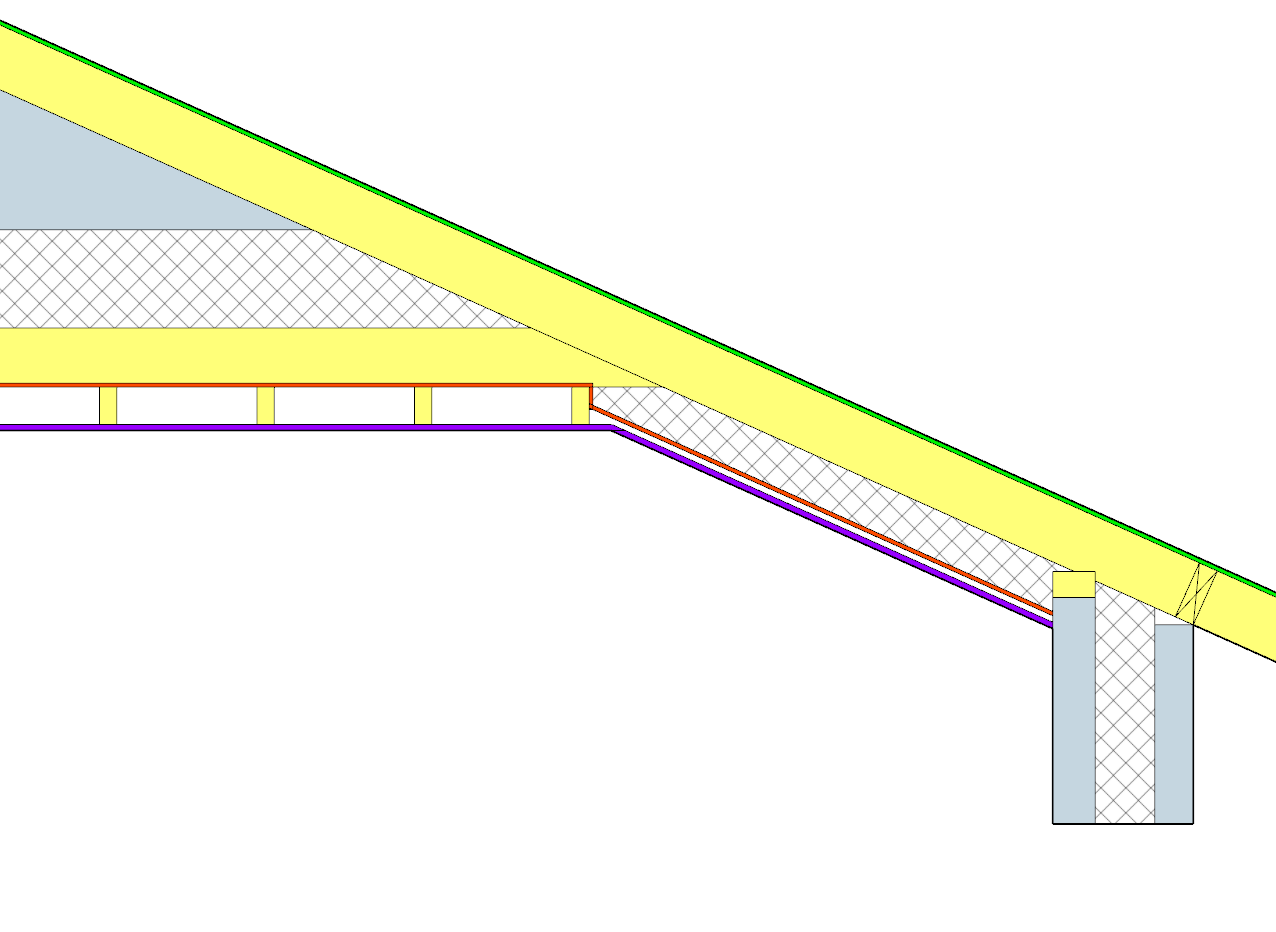
Raise the tie for the rafters, add 125mm PIR on the underside of the sloped sections, Full fill the rafters with mineral wool/cellulose and pur 400mm above the flat section. OSB above the rafters and batten and counter batten above for ventilation. Add a 100mm service cavity below the rafter tie for MVHR. Forget about any storage in the roof. It's simply much too small. Even with your original design it's only 1000mm high at the apex.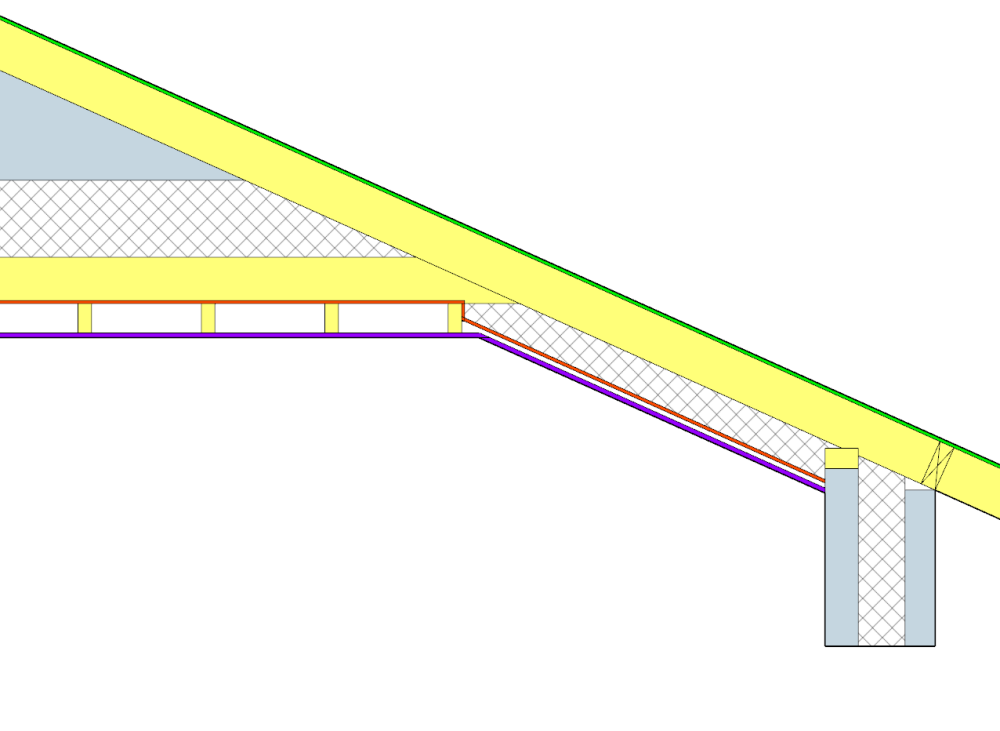
-
Out of interest @JohnMo, given that you were aiming for a higher level of performance would you do the kit again or make something up yourself?
-
It'll be fine if it doesn't tear. I had some Protect VP400 exposed for about a year on my garage wall.
-
The feel of how high a ceiling has to do with the ratio of the floor area to the ceiling height. Our 2.4m high utility (2.6mx3.3m) feels much taller than our 2.7m bedroom (5mx4.5m) so I wouldn't worry in your case. Nothing to stop you installing slim profile surface mounted downlighters. A wire with some acoustic sealant poking through the plasterboard is much less of a fire/noise risk than one punched through. Someone did a mass Vs cost chart ages ago. Standard plasterboard came out on top for noise. I'd be really careful about noise transfer on this one. Washing machines make themselves known.
-
Alterative option to 150mm celotex + 50mm celotex?
Iceverge replied to flanagaj's topic in Heat Insulation
Give me a cross section please of the house. I think I have an economical solution in mind. -
Alterative option to 150mm celotex + 50mm celotex?
Iceverge replied to flanagaj's topic in Heat Insulation
If you do want a warm attic I would move the airtighess layer to above the rafters as a taped sheet of OSB that wrapped around the rafter ends and through the wall plate to the inner wall. Have you a plan view or your roof and a bigger cross section? -
Alterative option to 150mm celotex + 50mm celotex?
Iceverge replied to flanagaj's topic in Heat Insulation
A 25 deg roof will be near impossible to insulate correctly to the eaves and airtighess will be a mare too. As @ADLIan says you could do a cold attic. You could still store stuff there. I would put an airtighess membrane and then a 20*70mm battened service cavity below the joists before a double layer of plasterboard. The MVHR could penetrate the membrane but you'd need to be diligent with taping the penetrations. Mineral wool or preferably cellulose over the top. -
What's in the room above? For noise reasons ( washer dryer boiler) I would consider double boarding it and getting rid of the downlighters.
-
Architect and builders... where to start?
Iceverge replied to Jack757's topic in New House & Self Build Design
Congratulations. It's an exciting stage to be at. I wouldn't dismiss a good relationship between a builder and architect. There's a good chance one will design something buildable and the other will be able to execute it properly. All the problems I see from builder and designer being completely disjointed. Do you have a good idea of what you want yourself? Any styles you like or would be acceptable in the area. Asking a few for prelim design isn't unreasonable but you should have a look at their portfolio first and interview previous clients. -
I use the Meteoblue app. You can step ten weather radar forward and get an idea if you'll get a bath.
-
Funnily enough like @G and J says I was thinking about someone who had retired. 3 day week of chippy work, plenty of tea, time to do it properly. I'd keep at that until they carted me out in a box.
-
Congrats. Any after pics....?!
-
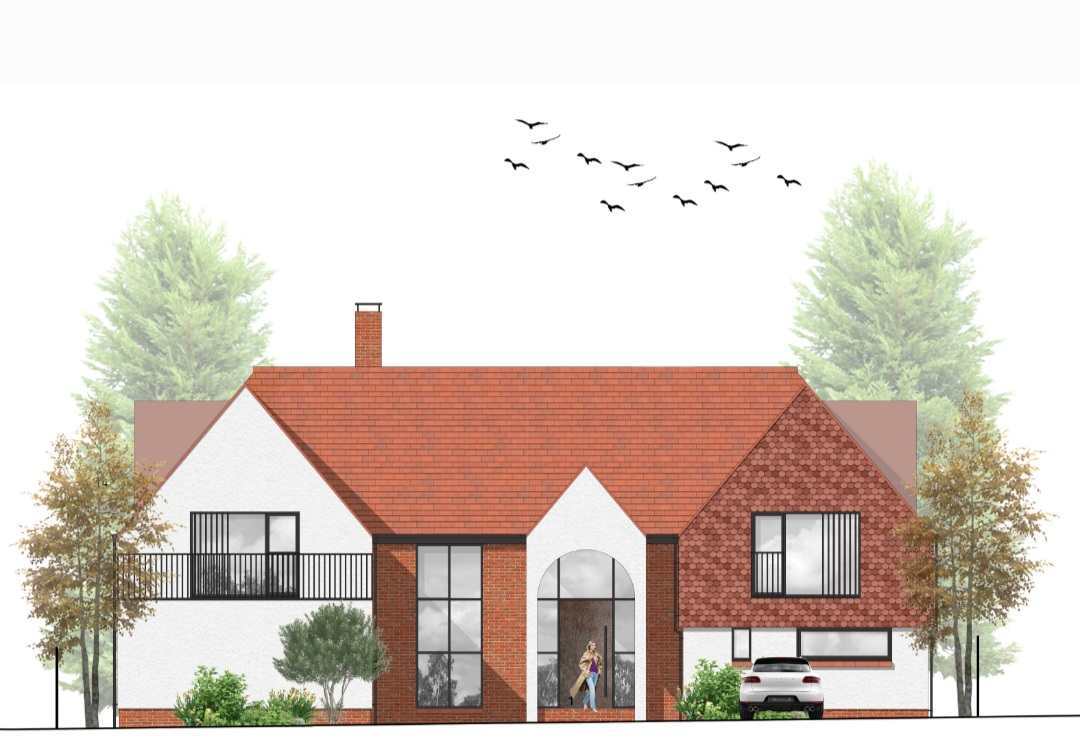
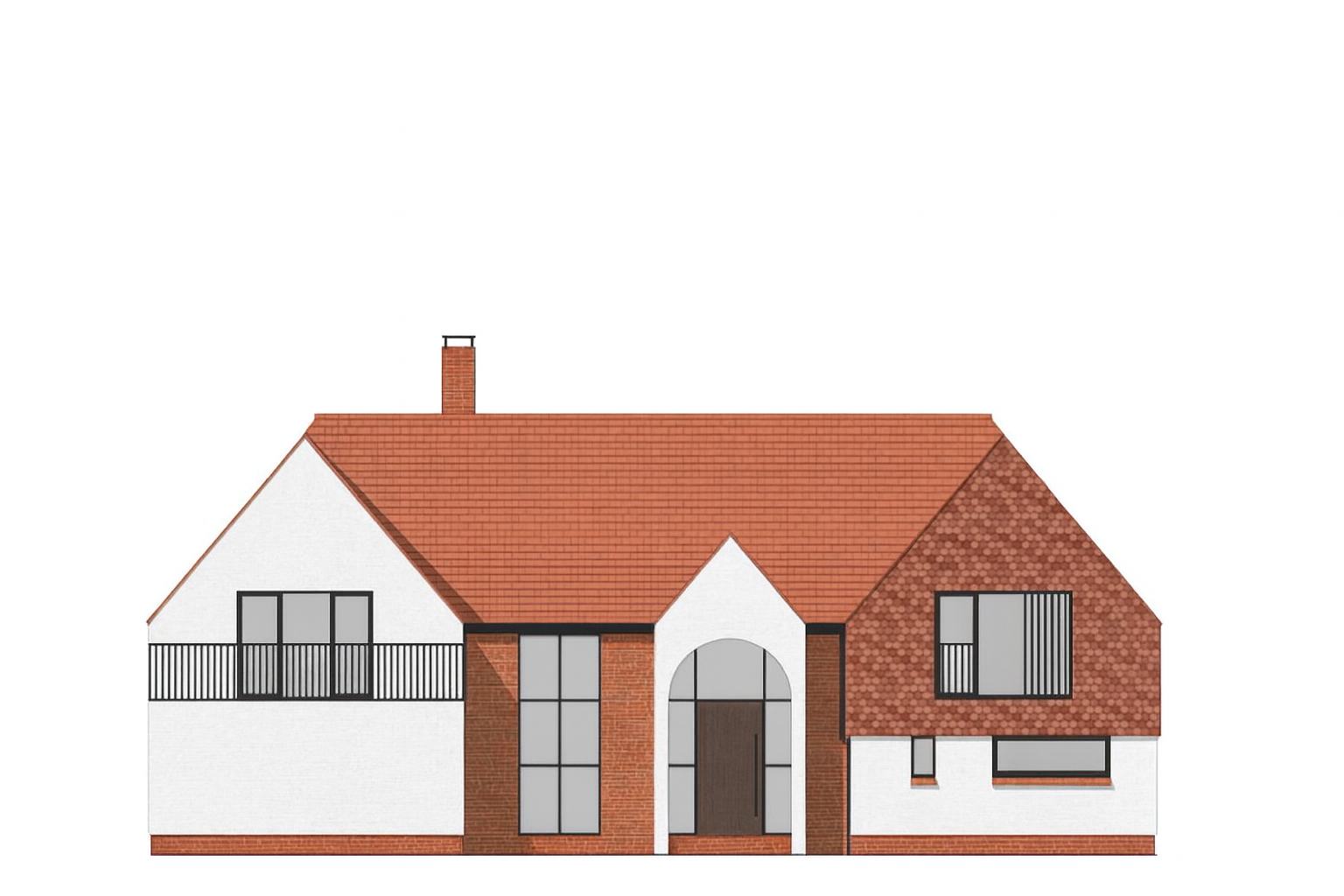
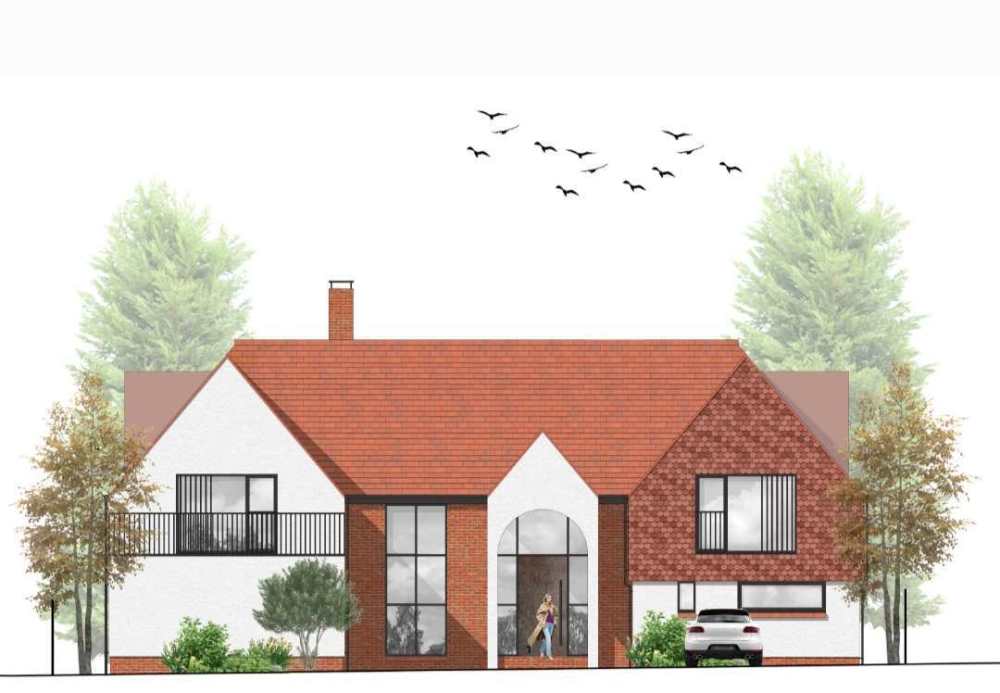
Again, I would encourage you to bulldoze the original building. If you think it's making your life awkward in the design process just wait until you start building. This is my favourite version, although I always like to see what it would look like without the jewellery of plants, cars birds etc. For that we have chatgpt. With a view to an arts and crafts house I would consider altering a few small bits. I would "thicken" the roof profile, incorporating some overhang for the gables (better for rain protecting and avoids water staining of the wall too) The balcony railings on the left hand side I would change to a low brickwork wall, perhaps with some decorative patterns built in. The entrance doorway and glass I would simplify somewhat. The large glass window around the door is very office like. Some features like brick buttresses might be cool.
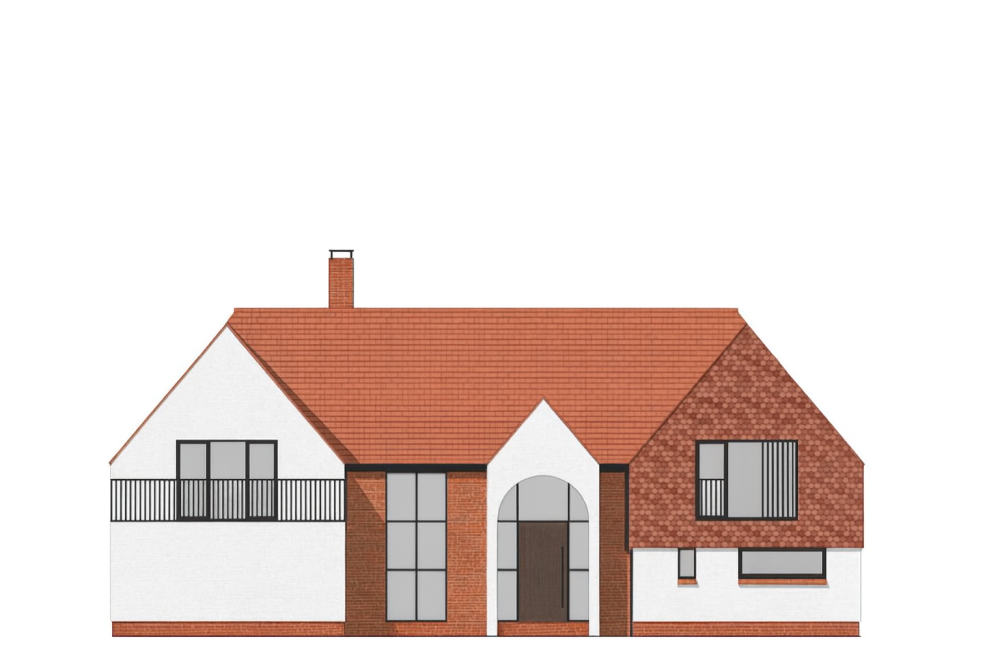
-
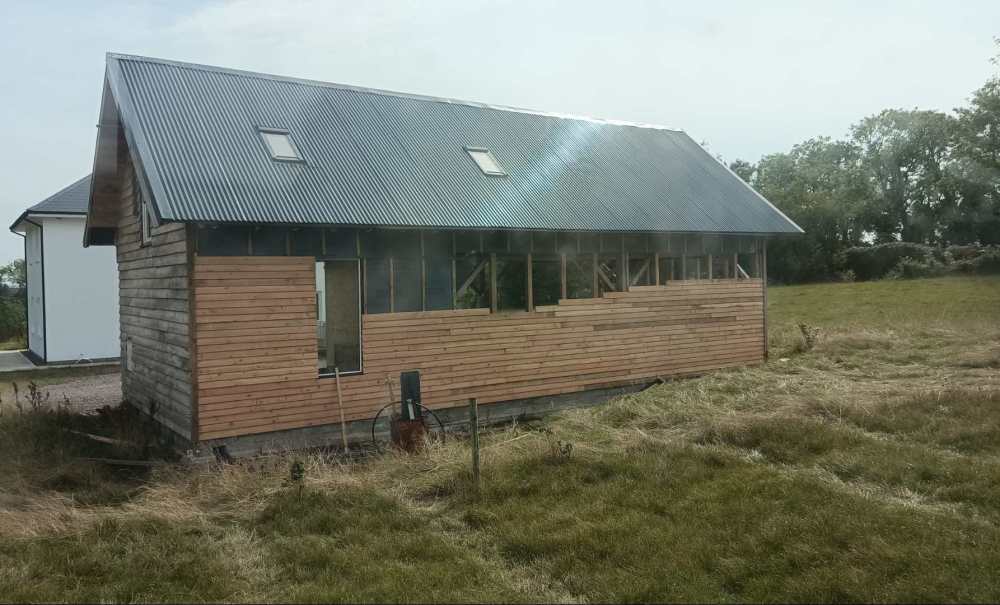
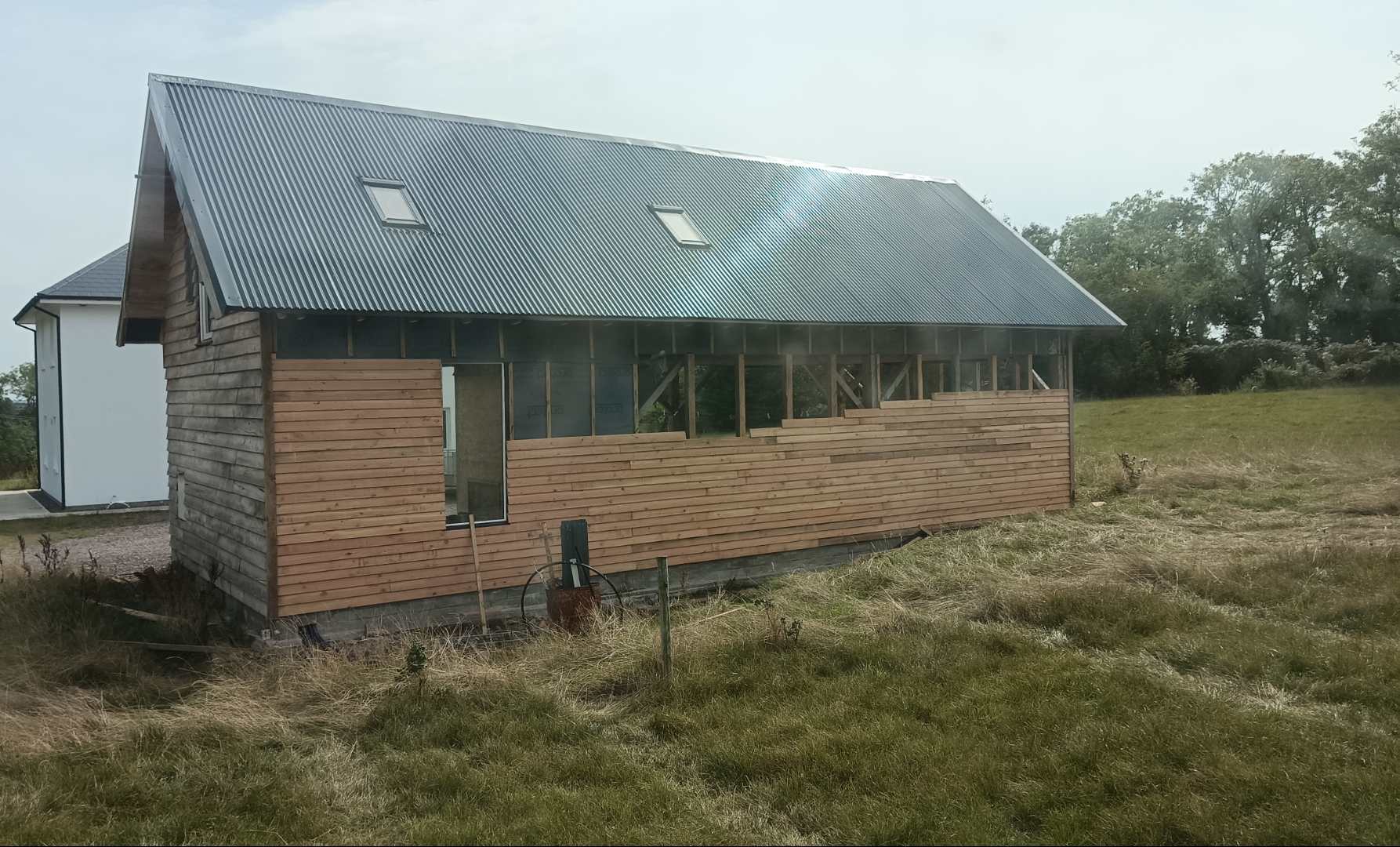
For reference I battened and counter battens the corrugated sheeting for ventilation. It happily made the roof lights more or less flush. I taped and staples the membrane appropriately over the flashing. Laid battles as required for the sheeting and cut it as square as I could to the edge. Seemed to work ok.
-
That's the back of my garage roof. I used the " just start sheeting and see what happens approach" as it was rarely going to be seen. I cut the corrugated sheet where it landed and moved on. I used the standard keylite flashing supplied. With some planning it should be possible to get the sheets to have equal gaps on both sides but for a shed I don't think anyone has ever noticed