Nick Thomas
-
Posts
383 -
Joined
-
Last visited
Everything posted by Nick Thomas
-
 In my ~10-year-old new build box scraping by on contemporaneous building regs, I lose about 0.5°C/hr in the daytime when it's cold outside (say, deltaT=15°C). No idea how valid the comparison is though 😅
 -
I've got 3.6kWp panels and a 3.2kWh battery alongside a 6kWp (heat out - so around 2kWp electricity in) ASHP. I keep the battery 50% full at all times in case of a power cut, so it's effectively a 1.6kWh battery. During a winter's day, there's more than enough solar for me to run the heat pump *and* charge the battery to full, as long as it's sunny. I seem to be topping out at generating ~10kWh and exporting 2kWh of that (so if I was happy to run the battery down, I'd rarely be exporting anything). If the heat pump chooses to run at full just after twilight, it takes the battery from full to 50% in about an hour. I could save it for overnight use instead if I wanted to by prohibiting discharge until midnight - the settings are flexible enough for that. I get 15p/kWh for exported energy, and import at 33p, so a grid round-trip for energy that could otherwise have gone to the battery is ~50% efficient. The battery does much better than that, but there's the capital costs to take into account. If your heat pump will use a lot more power than your solar panels, it probably makes a lot less sense ^^.
-
UFH - insulation vs buffer size trade-off
Nick Thomas replied to Nick Thomas's topic in Underfloor Heating
FWIW, while saving money on heating costs is *a* motivator, the biggest motivator is getting rid of the carpets, which I hate with a passion. That gets blocked by the UFH as I really don't want to be putting down a hard floor, just to take it up again later if/when it's UFH time ^^. -
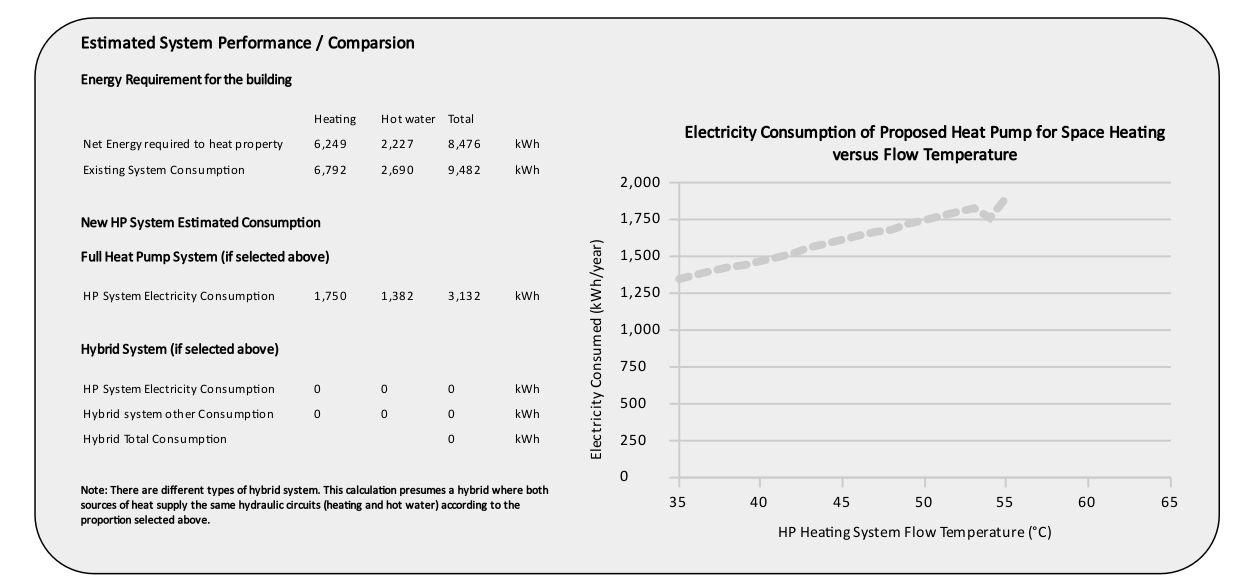
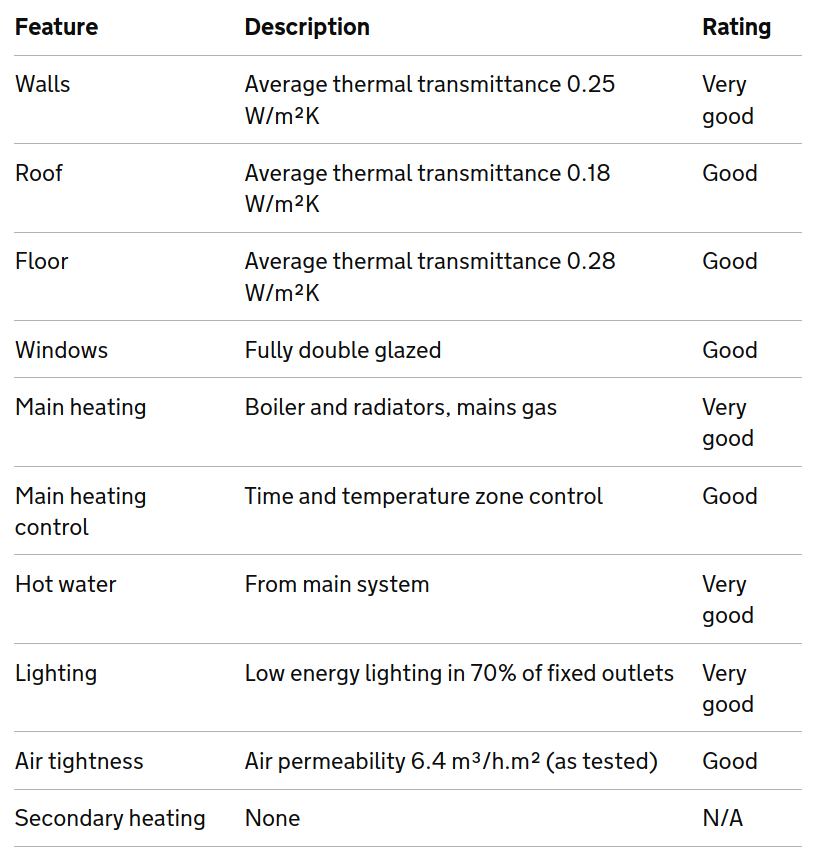
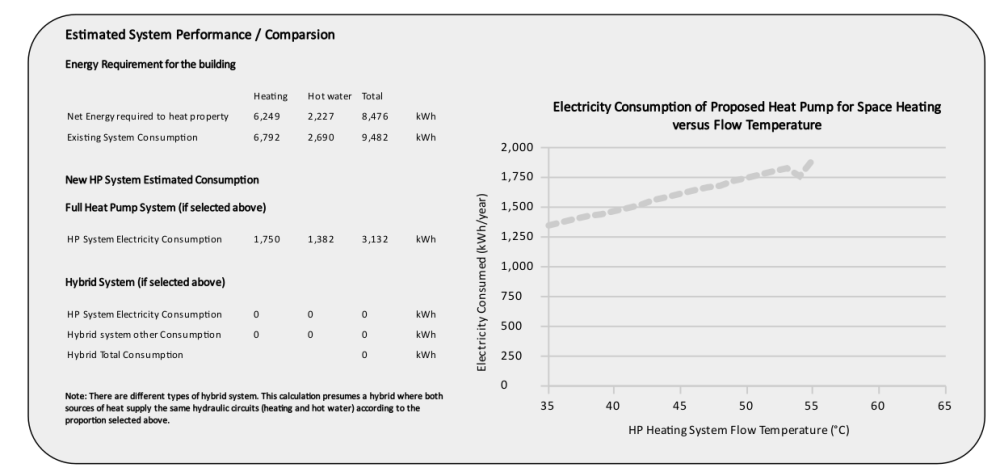
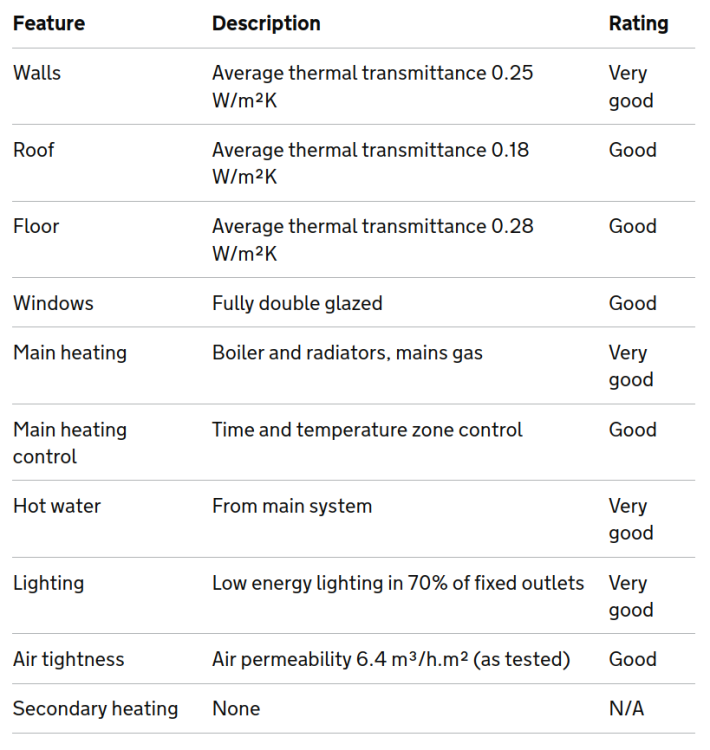
Just trying to get a head-start on planning the UFH here. Heat loss survey done at the time of heat pump insulation puts the annual space heating demand at 6250kWh, and suggests a flow temperature of 30°C would save a good 500kWh of electricity/yr compared to 55°C, so if I can get it in relatively cheaply, it seems like it'd be a win: (Weather compensation is on and the radiators never feel like they're at 55°C; I don't have a good idea of what temperature it's actually running at, so saving 500kWh/yr is probably the best case scenario). It's a relatively-new-build, with a solid concrete floor downstairs. The original EPC gives the floor a U value of 0.28W/M²K, so presumably 75mm PIR or so underneath the concrete - feels insufficient? Although on par with the walls 🤷♂️. Digging it all out is unappealing, especially after reading threads here from people who've done it! So I've been poking at low-profile insulation like https://www.kevothermal.co.uk/products-solutions/kevothermal-flooring-insulation/ . My issue is that if I put that down, it stops the existing concrete slab from acting as a heat store for the UFH, right? It'd just be using the new screed that goes on top of the insulation as a store, which is a completely different dimension of unappealing ^^. Given a trade-off of (relatively) poor insulation with a large thermal store, or good insulation with a small thermal store, I'm not quite there with working out which one is better. Presumably it's all about required flow temperature - the larger store would let the HP run colder, which would reduce heating loss and increase CoP, to be offset against the losses made from the slab - but I'm not sure how to go about plugging that into a formula. Or does one of those terms dominate to the extent that it's not worth a calculation? Thoughts? Keeping the depth of the new floor down is fairly important - the existing carpets are, I dunno, 12mm or so, but as a new build box the ceilings already feel a bit oppressive. I came across these cool customers: https://www.jk-gb.com/jk-in-ground-ufh.php - which seems like it'd keep depth down to the absolute minimum, but is obviously incompatible with extra insulation. Anyone done anything like this? I'm also wondering about screeding options that could be treated as the final finished floor, rather than needing to pop tiles or LVT on top of that, which would save space for insulation if needed. E.g. http://www.thermotech-screed.co.uk/products.html talks about "Decor Screed", which is just the regular screed with colour added, then polished to a finish. Would that work with any screed? Decent, or naff?
-
Difference in price between https://homeenergygroup.co.uk/lux-hybrid-battery-storage-greenlinx/#enquire and https://homeenergygroup.co.uk/lux-ac-battery-storage-greenlinx/#enquire is quoted as £280 FWIW
-
@Alshamal you can always ask ^^. if they promised you it would do the PV as well, and you have that written down anywhere, you can argue the goods aren't as described / fit for purpose. If you paid on credit card and they persist in silence, you could reclaim the money on that basis, which would at least give them a reason to contact you. I don't know about this specific model of inverter, but they generally cost £500-1500. The thing the company will be trying to avoid is the cost of doing the installation a second, rather than anything to do with the hardware itself. Before doing anything else, though, worth checking the model number on the inverter for yourself and making sure it is a 3600 ACS rather than a 3600 Hybrid. Who did you use, OOI? https://homeenergygroup.co.uk/ did mine (I got the PV first, battery second); they rocked up with an ACS to install, but I refused it and asked them to come back with a hybrid, which they did manage on the same day. They sent me a handover pack, which was nice of them.
-
Cheaply covering a large area
Nick Thomas replied to Nick Thomas's topic in Landscaping, Decking & Patios
It made a great nature reserve for five years. Foxes lived in it. Last year, a neighbour complained to the council, the council issued an enforcement notice. I don't want my sister back in that situation in a couple of years, and definitely don't want to be bailing her out on a regular basis over it. If it helps, the next garden over is also overgrown, so the foxes still have somewhere to live. Presumably the complaining neighbours aren't able to see that one ^^. It does mean that re-encroachment is likely, though. Lawn is where we were five years ago, there's nothing of it left now ^^. I have to be pragmatic and accept that any kind of regular maintenance simply won't happen, especially not grass cutting. Stone chippings might not be zero-maintenance, but they're a lot closer to it than a shiny new lawn would be. -
Cheaply covering a large area
Nick Thomas replied to Nick Thomas's topic in Landscaping, Decking & Patios
Oh my. Apparently sand and gravel can be (wet) pumped... but I guess that's designed for a whole other scale of project. -
Cheaply covering a large area
Nick Thomas replied to Nick Thomas's topic in Landscaping, Decking & Patios
2.5M, or thereabouts. We've not had a discussion about removing the hedge. That could be interesting, but not sure it's worth it to save ~1K on this specific thing. It'd need to be replaced with an antisocial fence if it did go down. -
Cheaply covering a large area
Nick Thomas replied to Nick Thomas's topic in Landscaping, Decking & Patios
Starting to become convinced this is the issue with pricing. It would be amazing to be able to get a loose load in, but I just don't think it'll work on the site. There's no access to the back at all, and I don't think I could dump into the front garden either. Layout is roughly: Not to scale, obvs. As far as I can see, the only option is to pop it onto the concrete surface in front of the garage (you can park 1½ cars on it, for an idea of scale). A pile of loose anything would spill everywhere and apply pressure to the rickety wall shared with the left-side neighbour, which makes me nervous. I can't see a big truck being able to come in at an angle to dump it onto the garden bit :/, not least because there's a good drop down to the green, but it's also narrow and awkward even if it were level.. However it comes, I'm resigned to barrowing the 15 tonnes required for the back garden through the garage. It'll just be me, so probably a multi-day effort. That means whatever I buy will be sat wherever it gets put for a while as I nibble away at it. Definitely not :D. Would work for some, I guess.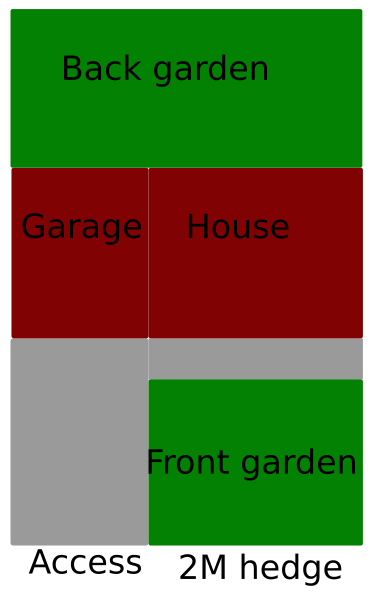
-
Cheaply covering a large area
Nick Thomas replied to Nick Thomas's topic in Landscaping, Decking & Patios
Thanks for the reply, some good ideas there. The back garden is broken up a couple of zones already via a concrete path, and there's a few trees hanging around, so it wasn't going to be a single expanse of slate, at least. Definitely more I could do there, though. If I could find anything for £30/tonne I'd be using it 😅 - best I've found so far is £60/tonne for 20mm limestone chippings, which I disregarded as I assume they'll dissolve over time. She'll probably be in the house, and uninterested in the garden, for the next 50 years or something. Maybe the quarry will come back with some good pricing; I only asked about the slate, if they do my size of order, I could ask about the other gravel times. I'm not big on weedkiller, but I suppose it hardly matters if it's going to be covered for half a century or something 🤷♂️ -
The 3600ACS doesn't have a DC in for the solar panels: https://luxpowertek.com/lxp-acs-3600 - so presumably when you say "using the existing inverter", what is meant is "a second inverter will be added for the solar panels". Definitely worth querying them if it's unclear. Price isn't bad, but you can't do G98 if you have two inverters with the combined max output exceeding 3.6kW. You also won't be able to charge the batteries from solar in the event of an outage. It'll be about the same price (maybe a tiny bit more expensive if the second inverter they intend to add is a cheapo unit) to *replace* the 3600ACS with a 3600 hybrid: https://luxpowertek.com/lxp-hybrid-3-6k . This can have both your new PV and your existing batteries connected to it, so you still come in under G98 and can charge the batteries from the solar when the grid is down. You can also sell the existing 3600ACS inverter for a bit of pocket money or keep it as a backup / future project.
-
My sister isn't big on gardening, but has a respectable front garden (~30M²) and huge back garden (~150M²), both of which had been left to their own devices for about 5 years... until she got an enforcement notice from the council last year. I got someone to come and clear both last autumn to get them off her back, but left alone, I suspect it'll just go back to the same state in a year or two - they just cut down to ground level, so there are loads of bramble roots in there. The whole site is infested with mare's tail as well. So, I'm trying to come up with a more permanent solution. The current plan is to put down weed-suppressant membrane and then cover that with blue slate chippings (she likes how they look when wet). I gather I'll need 3 bulk bags (850-1000kg sort of size) for the front, and... uh, 15, for the back. Best price I've been able to find online for this stuff is ~£100/bag, which makes the back garden uneconomic, but I could still do the front. I've emailed a local-ish quarry (~50 miles) asking them for prices, but I worry it won't be *that* much lower, or that they won't be able to deliver, or that they won't be interested in an order of this size. Don't think I'd be able to accept 18 tonnes of loose chippings at the site, anyway, but... worth a try. Before placing the order, I wanted to check if there's anything I'm missing - it seems like a dead simple job, just get the membrane down onto cleared ground, pin it, then cover with the chippings. It'd suck if I had to move them again later to rectify something though 😬. Should be neutral w/rt drainage, right? The house is surrounded by 1M or more of concrete, so the ground being covered isn't adjacent to it. There's also a decent step down to the ground from the concrete, maybe 100mm or so. * Does £100/bulk bag seem reasonable? Anyone got a source for significantly less that'd deliver to the Leeds/York sort of area? Chances of a quarry offering it at 50/bag? * Is it worth doing multiple layers of the membrane? Any other steps I'm missing? * 20mm or 40mm chippings? Or is that just an aesthetic choice? Would the smaller ones cover a bit more area for the same money? * Is 50mm depth going to be enough? Minimum I can reasonably get away with would be great 😅. I assume it's not hard to top up later if I'm a bit under? * Alternative ideas for covering the back garden? The looks don't matter much, it just needs to be cheap. (I was pondering linoleum with car tyres on at one point, but looks matter enough to keep *that* from being a goer).
-
Eyyyyyyyyyyyyyyyyyyyyyyyyyyyyyyyyyyyyyyyyyyyyyyyyyyy
-
Self build affordability in a higher interest rate world.
Nick Thomas replied to gavztheouch's topic in Costing & Estimating
I read today that this is already happening: https://www.theguardian.com/business/2023/jan/11/barratt-hiring-freeze-uk-housing-market-slows-down I'm not going to cry too hard for them, though - they had 1bn in profit last year. -
My previous house is an 80s timber frame in Scotland. Someone with no sense at all had installed blown CWI; this wasn't evident in any of the documentation or from regular surveys, so we were all a bit surprised when we started taking down walls. Dunno how feasible it is to rule that out before buying - it's all kinds of risk, and AIUI mortgage companies won't lend on a TF that's got CWI in it. The previous owners had installed underfloor (the TF is "suspended" - up on stilts - so there was a big crawlspace below it) and internal PIR insulation, pretty much as detailed above. This seemed fine, but the roof (open to the rafters) was uninsulated and lost heat at an exciting rate. Worth checking what yours is, if it's got a roof space you're probably in a much better position!
-
I had to get some new posts into soft ground to fix the allotment fence today. Picked up a https://www.toolstation.com/post-driver/p96574 to get it done, although I wasn't going down that far. It's a bit specialised, but helps a great deal if you're doing this kind of thing by yourself.
-
Most battery or hybrid inverters will come with an EPS output that lets you tap the batteries from a separate circuit. Easy enough to attach a consumer unit to it and move the lights, at least, onto it. I currently have a simple double socket in the loft that'll work in the event of a power cut - it cost £20 extra at install time. More complex options per https://www.deegesolar.co.uk/eps_for_solar/ You definitely don't need tesla stuff to get it done.
-
https://static.rippleenergy.com/assets/KirkHill/Ripple-Coop2-rules.pdf So you need 75% of members present (not shares) at a general meeting to change the model, and 90% to carpetbag it. Pretty tall order.
-
I have a friend who's invested in this one. I looked at it, but decided not to. The financial benefit wasn't amazing - solar in my own house seemed like a better bet - and being tied to a very short list of retail energy companies gave me the willies. The share offer document is handy, though: https://static.rippleenergy.com/assets/KirkHill/KirkHillShareOffer-2.pdf > The co-op intends to own up to 70% of the wind farm (with the co-investors owning the remainder), hence its contribution to the capital costs will be £22,791k, and its target raise with arrangement fees is £24,705k So the number of co-owners being lower than (capacity / average household power demand) is not particularly worrying. Bunch of other things that can happen in that conversion to introduce some error as well - one might expect co-owners to use more power than an average household, for instance. > Your supplier will pay the co-op for the electricity generated at the wind farm’s operating cost. At about 2p/kWh this cost is lower than the wholesale market price for electricity which is projected to be about 6.3p/kWh¹¹ on average for the life of the wind farm. In March 2021, wholesale electricity costs were 5.3p/kWh, for comparison. If wholesale costs *did* go below 2p for an extended period, the co-op would presumably just go bust, as it would if all the turbines spontaneously caught fire. Investments carry risk; I'd put the first under "nice problem to have", personally ^^. As for withdrawing the shares, you drawdown 5% each year (as part of the discount, not as a separate payment) to reflect depreciation. p27 onwards goes into a lot of detail; the tl;dr is that you'd probably be dependent on some other member buying them to get your money back. I like co-ops in general, but the octopus fan club approach, to me, feels like a better way to get a slice of wind power.
-
Ahh, going via the company name - Equium - finds one.
-
Hmm, I did search for thermo-acoustic before posting but didn't find anything
-
Via a friend: https://www.pv-magazine.com/2023/01/02/residential-thermo-acoustic-heat-pump-produces-water-up-to-80-c/ Interesting concept, although I hope they can make it work with something other than helium. At ten bar, it *sounds* a bit scary, although I imagine it's actually less hazardous than an unvented cylinder.
-
Solis invertor with MET_Comm-FAIL and RS485 fail
Nick Thomas replied to jen and mark's topic in Photovoltaics (PV)
The Emlite will be the generation meter. Used to be important for FITs. They have no real purpose now, but installers still fit them. https://www.test-meter.co.uk/emlite-eca2-single-rate-meter . https://ginlongsolis.freshdesk.com/support/solutions/articles/36000308050-met-comm-fail-and-rs485-fail-troubleshooting seems to be relevant to your issue - it references an Acrel meter, which I *imagine* would be for export (note how they mention CT clamps). There's a procedure for telling the inverter that the meter isn't connected; that would stop it from showing the error. https://www.acrelenergy.com/products/agf-ae-d-pv-solar-inverter-energy-meter/ -
I've had to replace a couple this month. One thing I've noticed in the past is that knocking an LED bulb seems to make it much more likely to fail, although with a delayed response. YMMV. At least the prices have come down. I hate CFLs so switched to LEDs early; I have memories of paying £20/bulb or so.