Nick Thomas
-
Posts
383 -
Joined
-
Last visited
Everything posted by Nick Thomas
-

Octopus Cosy - new tariff for ASHP owners
Nick Thomas replied to George's topic in Air Source Heat Pumps (ASHP)
@Tim Pearson3.6kW, it was a bright sunny day. Today I harvested ~3kWh, by contrast; I think the lowest I can register is 0.1kWh, and I've seen that on occasion. -
Kiln dried Firewood - how much do you pay?
Nick Thomas replied to Adsibob's topic in Stoves, Fires & Fireplaces
The same company was selling them at £4.75/net (each net is ~8kg) last time I ordered from them in Oct 2020. I was going to link you to https://www.firewoodcentre.co.uk/kiln-dried-logs/64-nets-kiln-dried-logs/ which is where I used to buy from in bulk but, well, you'll see when you click it. The free delivery to Shetland was appreciated, though. Not much wood there locally. I expect you'll find cheaper than £7.50/net if you look around locally. -
Octopus Cosy - new tariff for ASHP owners
Nick Thomas replied to George's topic in Air Source Heat Pumps (ASHP)
Hmm. I'm trying to like this tariff, but I'm not sure I can. My PV generation overlaps the 1-4pm period; that's already sufficient to run the heat pump and charge the battery, so it'd only really be useful on cloudy days. Even today, winter solstice, I got a cool 7kWh out of the panels. The 4am-7am period ends before my setback does, and I'd be reluctant to move it earlier. If the house is too warm, I struggle to sleep. I could charge the battery in this one, but I don't see it compensating for the 4-8pm period. Judging from the messaging octopus has done around heat pumps on their other schemes, they imagine that you're happy to heat the house to be hotter than usual before an interdicted period, and leave the pump off during it as the house cools back down to what would usually be your thermostat temperature. I'm sure that works for some, but I really don't like an overly warm house, day or night. During the day, the thermostat is 20°C and during a saving session I let it cool down below that. I can always pop on another layer, after all. -
If you've got a generator, you can twin it with a small battery and get uninterrupted supply that way. That's how datacentres generally work - a huge bank of batteries good for a few minutes, and a massive diesel genny out back that needs to fire up in the interim. The victron inverters can take a genny as one of several inputs and do the necessary. It's a pain to keep the fuel around though, and if you don't have a big battery you can't fill it from solar, of course.
-
Home grown Douglas Fir exterior cladding
Nick Thomas replied to davidc's topic in General Construction Issues
Would https://www.chainsawbars.co.uk/product/granberg-alaskan-2461cm-mk-iv-chainsaw-mill-for-logs-up-to-22-56cm/ (lots of different sizes available) be an option for you? You can just walk up to the tree and turn it into a set of boards where it lies. Only seen it being done on the telly, but it looked fun. -
Weird that they've got 10x400W panels down as being 4.4kWp. Probably worth querying - or is that some magic effect of the optimisers? Price-wise, it's pretty comparable to mine, taking my lack of optimisers, a cheapo inverter (wouldn't recommend) and a Solic S200 instead of a Genuine iBoost™©® (~£200 instead of ~£600). If you can export at 15p/kWh, a PV diverter isn't worth it, but you can't on Octopus Go, so might be worth getting one. You could ask them if they'd do the Solic instead to save an easy £400 - or get it done separately after. If both the inverter and the iBoost are using CT clamps to decide whether to draw power (into the batteries and immersion heater, respectively) then I've read (but not seen - I've turned off the Solic now that export prices are 15p/kWh) that they can end up fighting over the same amount of power, leading to import happening as both pull the (say) 1kW available. Might be worth asking them about that specifically, or doing more research than I did on it. I wasn't offered, and didn't think to ask about, bird proofing 🤔. I suppose an air rifle would be a bad idea. I shared https://www.deegesolar.co.uk/eps_for_solar/ in another thread today RE: EPS - I was initially really excited about automatic whole-house backup, but decided the cost and effort wasn't worth it in the end. Mileage may vary, of course.
-
Currently I just have a double socket attached to the EPS... in the loft 😬 . Next time I'm making changes, the plan is to replace it with a consumer unit and at least get the lights shifted over. Probably a dedicated socket on each floor too, so we don't have to let all the warm air out through the loft hatch. Taking a bit of a breather at the moment though 😅
-
Sounds like the "level 3 manual whole-house backup" in https://www.deegesolar.co.uk/eps_for_solar/ (I found this link very useful when trying to understand my own options). Another possibility when you have two inverters is to make the PV inverter's output a dedicated input to the battery inverter. Then, you only have the battery inverter's capacity to worry about for G98/G99 purposes. They need to be compatible with each other, though - there's a standard involving frequency shifting that the battery inverter can use to tell the PV inverter to reduce its output,and that's quite important. I didn't keep notes but I do remember concluding that a https://www.victronenergy.com/inverters-chargers/multiplus-ii combined with a Solax X1 Boost G3 would work. Expensive, though. A single inverter with both batteries and panels DC-side is so much better for me.
-
Yes - high hazard, low risk. Just not, uh, zero risk.
-
At £6000/MWh, the prices they're paying us for the saving sessions actually seem sensible. Lots of battery storage going on at the moment - I'm aware of two being built out in my general area. There's also https://www.theguardian.com/environment/2022/dec/18/sse-begins-work-on-hydrogen-storage-cavern-on-yorkshire-coast coming along, which is probably best described as a very large, quite inefficient battery. Would remove a good chunk of the coast if it decided to explode, but it's all being eroded away by the sea anyway.
-
How slippery is your exterior surface?
Nick Thomas replied to Ferdinand's topic in Landscaping, Decking & Patios
I have two types of paver out in the back garden - some kind of rose-tinted, irregular sandstone-y stuff where the patio door is, and cheapest-possible concrete pavers along the rest of the house. You'd think the sandstone-y pavers would be better, but they allow water to pool much more, and that freezes into almost-invisible sheets of ice. The cheapo ones are much gripper by comparison. I pop https://www.yaktrax.co.uk/ on at the first hint of ice in the streets, so away from the house I barely even notice the grippiness of different surfaces. The only thing I have trouble on is metal - they bite very satisfyingly into everything else. -
Discuss ? gas/air powered heatpump
Nick Thomas replied to scottishjohn's topic in Air Source Heat Pumps (ASHP)
Bit of thread necromancy, but I was researching these a bit today. Strictly hypothetically, something like https://www.remeha.co.uk/products/heat-pumps/gas-absorption-heat-pump#product3 could be interesting as a district heating solution for a small group of houses, or a block of flats. With a SCoP of 4.28, you're looking at ~2.3p/kWh of heat output if you fire it from natural gas at current prices. Worth noting that in principle you could fire one of these from anything, not just natgas - fuel oil, wood, solar thermal, they're all options. It's very loud and emits NOx in operation, but still, interesting. They could also be useful for heating municipal swimming pools, etc? Anyone aware of existing deployments? -
Yup, after this one change, the house got up to a nice 19.5°C long before the setback to 18°C came along. As far as I can tell, the heat pump is being told to achieve a temperature of 40°C by the stock grant controller, and then the external thermostat turns it on and off when it reaches 18 or 20. Might try fiddling there next - it seems like that would mess up weather compensation also.
-
No specific question, just sharing information really ^^. I don't have much to compare the Grant with, but it's making hot water cheaply. I'm not really keen on the skunkworks stuff to get extra data / functionality out of it. Given another go-around, I'd probably do a load more research and get one with such bells and whistles as first-class features. At the last house we had an A2A heat pump that did both heating and cooling, and it was pretty good at both. Trying to use this to pump cold water around the house seems pretty inferior by comparison.
-
Bit of a consistent pattern with my Grant Aerona3 6kW, installed with a thermostat in the downstairs hallway (radiators, volumiser, not the ideal setup - maybe switching to UFH next year) - the house would be below the requested temperature, and the heat pump would be running below capacity, but never get the house quite up to the expected temperature (20C during the day; 18C at night). In general we were comfortable anyway, but with the cold snap it's been more of a pain these past few days. Today, after 4 hours of the house sitting at ~18.5C, I decided to go poking around upstairs. Think I've cracked it. The grant controller had been screwed to the front of the hot water cylinder, in a poky airing cupboard, and was registering an inside temperature of 29°C. Fortunately it had lots of spare cable, so I've moved it to the upstairs landing where it's now registering a cool 22°C indoors, 1.5°C outdoors. The downstairs thermostat has almost immediately moved from ~18.5 to ~19, presumably because the heat pump now has more accurate information for weather compensation (CH is off for 2 hours now while the pump switches to DHW, I'll be interested to see how quickly it climbs to 20°C once that's done). My working theory is that the weather compensation algorithm is now far more accurate, so it can do a better job of heating the house. Will be interesting to see the knock-on effects on energy consumption. Professional installers, eh 😬.
-
Hey, I've recently done the whole ASHP, panels, batteries thing ^^. 1) Payback of ~6 years on the batteries for you isn't bad - at current electricity prices, my panels have a payback of 7 years, for instance. Calculation looks fine, but worth keeping in mind that power costs will change over time - how upset would you be if off-peak tariffs disappeared completely, for instance? 2) The "p" means "peak". It's actually "peak at standard operating conditions", IIRC - not an absolute number. Other than that, I have no experience with microinverters. Regular string inverters allow you to install more panels than the inverter capacity (e.g. 6kWp of panels on a 3.6kW inverter), but I don't know if microinverters permit that. 3) Regular inverters are rated for external installation as long as certain conditions are met. Mine (LuxPower 3600 Hybrid) is IP65 but contraindicates direct sunshine and snow, and it needs to be installed either vertically, or with a slight backwards tilt - so on the wall, not on a flat or pitched roof. They're also bloody heavy. Out-of-date manual: http://www.pvpro.co.uk/wp-content/uploads/2018/07/Lux-Power-Hybrid-Manual.pdf . It generates a good deal of heat, and also contraindicate being installed in enclosed spaces - I suspect a cupboard would count as that. Mine's in the loft, but I've not heard it make any noise while I'm up there; it's passive cooling. I don't think the batteries like to be installed externally, they stop working below a certain temperature. I think mine is just IP20? 4) An inverter for the panels and an inverter for the batteries is not unusual when you install the batteries *after* the panels; the batteries tend to be called "AC-coupled" in this configuration and you can get inverters that have no capacity for solar panels at all (e.g. LuxPower 3600 ACS). However, it's a bit of a pain with G98/G99 (you have to sum the export capability of the two inverters together), there are (minor) transmission/conversion losses, and it doesn't work as well in the event of a power cut (which you're not worried about). 5) Inverters vary massively in how automatable they are. Generally they punt all their data to a random cloud service and allow control from there, local tends to be a bit of an afterthought. I'm currently using https://github.com/celsworth/lxp-bridge on mine, it's still pretty skunkworks. No experience with loxone specifically. 6) Not a clue
-
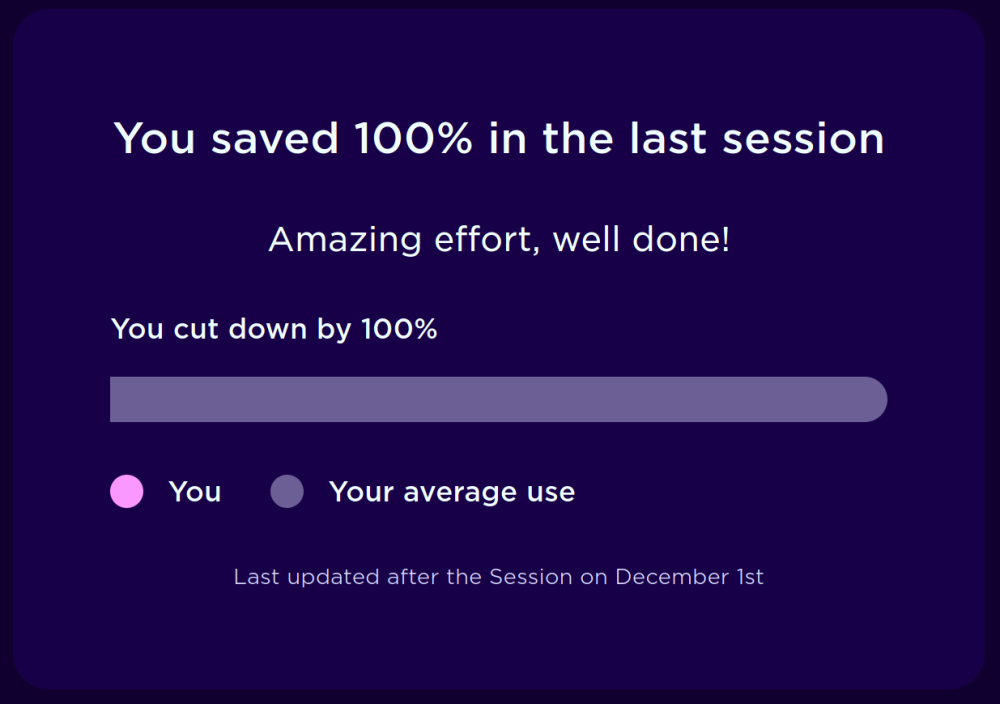
Perverse incentives. All good fun. I found out about this saving session from the news several hours before Octopus got around to letting us know. Did alright last time - the battery definitely makes it less noticeable, although I'm still turning off the heat pump for the duration. That might be worse over two hours, I've not put any effort into airtightness yet!
-
Oh no! Anyway...
-
What an odd thing. Plenty of retail sellers for the boards; none for the beads. I did find a seller on alibaba who will send *unexpanded* graphite EPS beads a ton at a time (most have a minimum order of 10 or 17 tons). $1,530.00/ton. The process for getting them to expand seems to simply be "apply heat"... popcorn maker, perhaps?
-
681*500W is 340KW. It's a big-ish absolute number, but against 477MW of installed capacity in the 4-10kW range, it is, actually, insignificant - it's literally a rounding error. Against the 3.1GW of installed capacity in the <4kW range, it's even smaller. Means-testing it wouldn't make a great deal of difference, because the people going for G99s are mostly rich anyway, despite their protestations - maybe you go from missing out on 340kW of installed capacity to missing out on 339kW. The size of the effect is just too small for it to make any noticeable difference.
-
> and an equivalent for household wealth if needed Guess you missed that bit ;). Note that I didn't make any distinction between deserved or undeserved riches here; it's all the same for the purposes of this conversation. The important thing is that you agree the £300 is neither here nor there. As for the rest, I too have an ASHP, have removed the mains gas from the house, and have added PV; rather than the EV, we've got a battery and a single petrol Mazda3 bought from new in 2013 (we don't do enough mileage for an EV to be worthwhile). You and I are both in a position only the rich get to be in - using capex to reduce opex. Now, my family, as a not-so-random point of comparison, are not rich. Their energy bills are absolutely crippling them, but they dosn't have the capital to be able to do what you and I are doing. They can't even get as far as insulation, never mind all this other fancy stuff. Recognising our own position vs. this is, I feel, quite important.
-
I did a fair bit of handwaving above, and I never like doing that, so I went to find some numbers. https://www.gov.uk/government/statistics/solar-photovoltaics-deployment is handy. In Oct 2022, the UK had 3,111MW of installations in the 0-4kW range; and 477MW in the 4-10kW range. Being lazy and assuming that the former is G98 while the latter is G99, and that all installations are the midpoint size (so 2kW and 7kW respectively), that's 1,555,500 and 68,143 installations, respectively. So, 4% of installations in the 0-10kW would require a G99. What's the deterrent effect of a £300 fee? Hard to be sure, but if we were really kind to the premise and said it stopped 50% of potential G99-requiring installs from going ahead, that's another 68,143 "deterred" installs - which also comes to ~4% of total installs in this range. If we said the deterrent effect was 1%, which still feels generous to me, then we're well under 0.1% of total installs deterred. Whatever the number, I expect it's more likely that those deterred would install a G98-compliant system instead than do nothing. This kind of happened to me, although in my case the deterrent was the time it would take to get a G99, rather than the cost of it - I really wanted the panels in ASAP, so I accepted the lower capacity. So, yeah, imma stick with "neither here nor there for adoption".
-
Sure, there will be a certain number of individuals, which will be insignificant when expressed as a proportion of total installs, actual or potential.
-
Sure, there's always an argument for that, and I'd certainly be for it. In the meantime, though, this £300 is neither here nor there for adoption.
-
If it's not paid for by those requesting it, it is instead paid for by spreading the costs among everyone serviced by a particular DNO. Which option is fairer for a low-volume procedure whose benefits accrue to the richest in society?