Jeremy Harris
-
Posts
26430 -
Joined
-
Last visited
-
Days Won
360
Everything posted by Jeremy Harris
-
I thought the idea of removing the lid and building a courtyard style house inside was brilliant, but I'm not sure how they got through SAP without (AFAICS) any insulation behind the concrete walls. It may be that they excavated around the earth bund, fitted external insulation and then covered it over again, though, as there were some pretty big gaps that weren't filmed, it seemed. It may be that the building was so large that the fabric heat loss was relatively small, with ventilation loss dominating, but there didn't seem to be MVHR either. They were working to a relatively old set of building regs though, due to the length of time that the build took, so the requirements would have been a fair bit more relaxed. I'm not sure if it was classed as a new build or a conversion, either; I'm not sure (without checking) if a conversion has to meet the same requirements as a new build (I've a feeling it may not).
-
There's a calculator on the government website that can be used to work out RHI: https://renewable-heat-calculator.service.gov.uk/Default.aspx and using your figures gives a payment of £370/year for an ASHP at the current rates (not sure if the rates have changed recently though). In our case the ASHP doesn't provide DHW and our heating requirement is a lot lower than your figure, hence the reason that the RHI was only £84 per year when I did the calculations.
-
I've a feeling that we've discussed these before, as I've still got a photo of that green one here. I remember looking at them, back when I was thinking of making a shower waste heat recovery unit (not hard to make, but the WRAS regulations on separation of foul water from potable water introduce some challenges).
-
 I submitted loads of invoices that weren't specifically marked as being VAT invoices, and loads that had neither my name or address on (till receipts, for example) In our case HMRC accepted all of them, even some of the till receipts that were a bit faded. Took me around 3 or 4 days to sort out all the receipts, put them in order, check them and enter the details on the HMRC form, so not a quick task, by any stretch.
 -
I believe so, but our only source of DHW now is either E7 electricity or excess PV generation, so any RHI assessment shouldn't include the hot water usage anyway. This was the case when we had the quote for the ASHP from the MCS supplier, as at that time we were planning on using the big thermal store for hot water, heated via an immersion heater.
-
Just had a look and the Recoup unit recovers 67% of the waste heat (seems pretty good, I'd have thought 50% would have been doing well). Assuming a 100 litre shower (ten minutes at 10 litres/minute, which seems pretty typical) at 38°C and an incoming cold water temperature of 8°C, then the energy needed to uplift 100 litres of water by 30°C is about 12.561 MJ, or 3.489 kWh. If all of the 67% of heat recovered is utilised by the shower, then it would reduce the energy needed for a shower from 3.489 kWh to about 1.151 kWh. In reality there will be a bit of additional loss initially, as the shower and waste pipe warms up, so I'd guess that maybe 1.5 kWh might be a bit more realistic. That's not bad, though, as if using an ASHP with a COP of 2.5 to provide hot water (probably about right for hot water production) then the electricity saved would be about 0.8 kWh per shower, so, allowing for holidays and assuming two people showering separately, the saving would be around 550 kWh/year. At a unit price of around 15p that's an annual saving of about £82, which isn't bad. I can't find the price for these things, but would guess that they probably repay the investment within about 5 to 8 years, which seems reasonable for something that will probably last for decades. Repayment would be quicker for a household that uses the shower more frequently.
-
I agree. Looking at the quote I had for the ASHP installation, it gives a total energy usage (for calculating RHI) that is nearly three times our actual heating energy usage. I can see how they can get away with this, as they don't actually have to sign to say that the ASHP is providing hot water (ours doesn't); the RHI assumes that all the hot water energy usage is coming from the ASHP. This means that anyone with PV that's heating their hot water with the excess, or anyone with solar thermal, will be being over-paid RHI by a fair bit. I reckon that somewhere between 2/3rds and 3/4s of our hot water comes from excess PV generation, for example. In our case the MCS installer knew this, as they were the people that installed our PV system.
-
I'm not sure they can do this, as the RHI is calculated using the data that the MCS installer provides, taken from an EPC, of the annual energy usage for hot water and heating. This is an estimate, as there's no easy way to check, however I believe that some types of appliance have to be fitted with an energy meter, to record the sensible heat delivered, and RHI is calculated from the readings given by that. I'm not sure when energy metering is used, though, as heat energy meters are expensive things to install. I have a suspicion that heat energy metering may only be used for larger commercial installations.
-
The split system makes sense if the waste water heat recovery is also dealing with warm water from a bath, as well as a shower, perhaps. That way the cold water replenishing a tank could be preheated, as well as the cold mix feeding the shower mixer being preheated for immediate use.
-
AFAICS, you will get the payment based on what the MCS installer has put on the form for your heating and hot water annual usage. If this comes from an RdSAP (which seems probable, if my experience is typical) then I would guess that the government just accept the figures without question and pay up. The only way that I think anyone could get caught out would be if there was another EPC produced and someone spotted that the numbers didn't tally between the two. In all probability that's not likely, as if our MCS supplier was prepared to ignore a week-old full SAP EPC, that had just been lodged on the database, and submit the RdSAP EPC they had prepared, that was wildly different, then I have to assume that they believed that the risk of getting caught out was low.
-
Our VAT reclaim was a bit over £10k on a build cost (excluding land) of about £180k.
-
Is that running the pre-heated water back to the cold side of the shower thermostatic mixer, then? That makes sense, as it as would probably be the most direct path for re-use of the heat.
-
That's interesting, as it implies that your heating/DHW requirement is pretty high, which seems at odds with the EPC. Our EPC is 107, and floor area 130m², yet the RHI payments would have only been £84/year, way lower than yours. These are the RHI figures that I calculated using the official method, and the only way I could have got the payments to be higher would have been to fiddle around with the heating and hot water requirement, to inflate it a bit. Interestingly I did have a quote from an MCS installer to fit a ASHP, the same company that supplied and fitted our PV system. Their quote suggested that we would get about £300/year in RHI payments. I haven't the faintest idea how they came up with that figure, as they had our EPC, as they needed it to register the PV installation for the FiT, so they should have been using exactly the same input data for the RHI calculation as I used. Edited to add: Just tracked down the reason for my calculation of RHI being at odds with that from the MCS accredited supplier. In essence, they seem to have used exaggerated data. They have ignored our actual EPC and produced an RdSAP EPC, that over-estimates our heating requirement by about 1,000 kWh/year and includes a hot water requirement of about 2,600 kWh/year, when the ASHP would not be providing our hot water, so this figure should not have been used in the RHI calculator at all. I'm not at all sure of the legality of doing an RdSAP when they have a current full SAP EPC (in this case done just the week before). I can see their reasoning for doing this, it inflates the RHI payment and makes the deal look a lot more attractive. If we could have legitimately received £300 a year for 7 years I would probably have just gone down the MCS installer route. It seems that I could have accepted their offer, and the £300/year RHI payment, if I hadn't already checked for myself and found that the data they were using was in error. Knowing that they had used duff data I couldn't in all honesty have effectively fiddled the system like this. I wonder how widespread the practice of using RdSAP is, and whether MCS approved suppliers take care to make sure that the data they are using for the RHI claim is accurate?
-
It would also work with a thermal store, hot water cylinder, or an instant heater, like a combi or multipoint, as it just reduces the amount of heat needed to reach DHW temperature.
-
Yes, that'll work fine, as the recovered heat will pre-heat the input water and so reduce the amount of energy that the Sunamp has to deliver.
-
In the same place it would go for any installation, in the cold feed that flows to the DHW system, so it reduces the energy needed to heat the water used by the shower.
-
Doesn't matter if it's a mains water supply or private supply, it still makes no sense at all, and is a potentially very serious health risk. As mentioned earlier, the filter will create a more serious health risk than not having one, as the filter media will just act as a haven for bacterial growth, kept warm and fed with nutrients from the recirculating water. The idea of spraying atomised, bacteria-laden water, within a habitable space seems madness. People have died from Legionaire's contracted from tiny droplets spread on the wind downwind from outdoor cooling towers, let alone potentially more heavily contaminated droplets sprayed directly over people. A simple, well-proven, off-the-shelf, heat recovery system would provide the same benefit, for less cost and complexity, with no added health risk.
-
I went through the process for our house. If we had opted to have our ASHP supplied and installed by an MCS accredited company (a requirement for getting RHI) then the premium we would have paid for this would have been about £1,500 (over just buying the same ASHP and getting it installed by a non-MCS accredited company). The additional cost for an MCS installation over the DIY installation we ended up with would have been well over £2,000. RHI payments for our 130m², well-insulated house worked out at a bit over £80 per year for 7 years, so under £600 in total. Had we opted to claim RHI it would have cost us around £1,000 more than not doing so, using just a normal installer, or it would have cost us somewhere between £1500 and £2000 more over the option I chose of a DIY installation. You need to do the sums carefully, and really should make sure that whoever is doing the RHI calculations is being honest about the energy use, as I have a suspicion that some suppliers are encouraging people to use their (MCS accredited, and over-priced, IMHO) services by inflating the apparent energy savings. For a low energy house I doubt that it makes sense to try and claim RHI, as you can almost always get a better deal by just buying a well-known brand of heat pump and having it installed by a reputable non-MCS accredited installer.
-
That's a good point, as I made the mistake of buying five spare UV tubes for our unit from Aliexpress. They were the right type and size, and about 1/3rd of the price of the ones sold by the UK supplier of our unit. Out of the five, three were completely dud, in that they refuse to strike, even if preheated a bit to help them along, one did strike after about three goes, and seemed to work OK and one failed prematurely after about three months. Luckily our UV unit has an alarm on it so we know when a lamp has failed, but it seems quite likely that some of the cheapo Chinese units may not have this, so someone could be unaware that their unit isn't working. As an aside, if anyone is looking to buy a UV disinfection unit it's a very good idea to look around and see if the tubes it takes are a common type that are readily available from several different sources. I made the mistake of buying a unit that takes a very odd size tube, that is only sold by one UK supplier, who charge an arm and leg for spares. When my current stock of spare tubes runs out I'm going to replace the entire disinfection unit for one that takes a more common size of tube, as it will pay for itself within a couple of years just in replacement tube costs.
-
Network cabinet: ideas?
Jeremy Harris replied to ToughButterCup's topic in Networks, AV, Security & Automation
I thought about putting a patch panel in, then decided against it, as it seemed to be a lot of additional leads and connectors that would, in all probability, rarely, if ever, be changed around. What I have done is grouped things so that I have enough wired Ethernet connections where I need them, so the area in one of the eaves spaces where all the external Ethernet cables come in has an 8 port switch, that has a single cable (with PoE to power the switch) back to my study. In my study I have a few Ethernet sockets that are wired out to other locations, like the TV points, my wife's study, the services room etc, as well as one that is just a cable from one side of the study to the other. I have a router that connects to this batch of ports, with PoE injection to a few of them, to power the fibre modem, the switch in the eaves space and another PoE 8 port switch switch on the wall behind my desk that's easy to get at. That switch has short leads to PCs, the printer, a couple of Raspberry Pis etc, with a few spare ports. Most of these connections are pretty permanent, the only ones that get played with are those on the 8 port switch by my desk. I couldn't think of a way of neatly running everything from a single network cabinet, especially as the chances are that anything I put in there I'd need to fiddle about with. I can fiddle about with stuff that's plugged into the switch by my desk without interfering with the connections to the set top boxes, my wife's PC, external stuff, etc. My only regret is that I didn't run an Ethernet cable underground to the garage/workshop, as I've had to faff about with a directional antenna and additional AP to be able to get a decent wifi connection down there. The house seems to screen out RF remarkably well for something made of timber; it seems that cellulose insulation is rather better than block or brick at RF screening, not sure why. -
Just in case anyone thinks that this system is OK because of the UV disinfection unit, it's worth noting a couple of things. UV disinfection only works under a specific set of conditions. The UV tube has to have been on for a while to reach its specified output - when first turned on they tend not to emit anything like full power. They also have a life that is limited by the number of start cycles - they do not like being switched on and off regularly, and replacement tubes (which are needed annually anyway if just left on all the time) tend to be about £30 to £40 each. For UV treatment to work, the water has to be very clear, as bacteria and spores tend to stick to particulates and so avoid being exposed to UV as the water passes through the unit. The water also has to be very clear in order to pass enough UV to provide a fatal dose to the bacteria and spores in the time taken for the water to flow through the unit. Activated carbon filters are very prone to becoming a breeding ground for bacteria. Anyone that has taken apart a carbon pond filter will have seen first hand just how much slime builds up in them. Water from a shower is warm, so will promote bacterial growth within the carbon filter at a faster rate, and, because there is a very high probability of the water being too murky for UV sterilisation to work well, bacteria will be washed out of the carbon filter into the shower water. To make this system even partially safe it needs an effective way of disinfecting the water that sits in part of the unit, which means heating it to over about 65°C for long enough to kill off the bugs. The energy involved in doing that may well be greater than any energy saving, taking into account the running cost of the carbon filtration, pump, UV disinfection system etc. As previously mentioned by @jack, the best solution by far is to just fit an approved waste water heat recovery unit. The capital investment will probably be lower, and the running cost may well be lower, too, as the waste heat recovery units are virtually maintenance free.
-
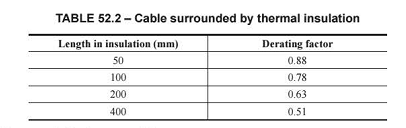
I'm not privy to the machinations within the IET that came up with these figures, I'm afraid! If the conditions in Table 52.2 aren't met then the earlier paragraphs apply, so the derating factor is 0.5, or the factors in Appendix 4 apply. Appendix 4 is several pages long, and includes calculations that should be used for different circumstances. It's a bit too long for me to copy and paste to a post here, I'm afraid. The general way the regs work is that they give a "quick and dirty" tabulated option that doesn't need calculations, plus a detailed option that requires a few sums in order to derive a valid answer. Most of the time electricians try and stick within the simplified tabulated guidance, as it makes life simple, but it is equally valid to calculate factors using the methods given in Appendix 4.
-
Neighbour has objected to our plans
Jeremy Harris replied to Robert Clark's topic in Planning Permission
The key thing here is that the County, or Unitary Authority, Councillor has no authority, as an individual, over the planning officer, but does have the authority to call in an application, and that call in over rides any other criteria that may normally require an application to be called in to committee. Around here there is a threshold number of (valid) objections that automatically gets an application called in, even if no one with the authority to do so has actually called it in (I think the threshold is 8 applications, off the top of my head). The bottom line is that if someone wishes objections to an application to have more impact, then they need to ensure they either exceed the threshold for calling in the application, directly influence their local authority councillor and persuade them to call it in, or try to get their PC to get the LA councillor to call it in. As a PC, we recently took the latter course of action We had received several objections directly to us (mainly emails and phone calls), plus we reviewed the application in the normal way and had serious reservations about some aspects of it, so we requested that our LA councillor call it in, which she has done. Our actions had no effect, mind, as highways had already objected and there were more than the threshold number of valid objections anyway, so it would have gone to the planning committee without us doing anything. Might have been better if we'd assumed that this would happen, TBH, as we're now persona non grata as far as the applicant is concerned... -
I think they mean "greater than", with less thermally conductive insulation needing specific calculation of the derating factor based on cable temperature and cable insulation material. I've always tried to avoid putting cables in insulation if at all possible, not just for derating reasons but also because it's a PITA to work on later if cables are embedded in the stuff.
-
May be that some companies are just importing products from countries with different regulations? The regs here haven't changed significantly for years with respect to cables in insulation. This is from the current regs (BS7671:2018):