Jeremy Harris
-
Posts
26430 -
Joined
-
Last visited
-
Days Won
360
Everything posted by Jeremy Harris
-
The idea, I think, is to tank it and use it as a wine cellar, as in the photo. I can't see any obvious reason why setting some rings in the deep end of the old pool, tanking the outside of them, with a basement membrane underneath and running up the outside to above DPM level, shouldn't work just fine. There will be a bit of heat loss via the hatch, but that could be mitigated with a better insulated access hatch design.
- 23 replies
-
- 1
-

-
- structural
- foundations
- (and 1 more)
-
For me, I was well into experimenting with my own microcontroller-based control system when a birthday passed and I suddenly started thinking about long term maintainability. It was great fun designing, programming and tweaking the control system, and I'm certain I could have got a controlled-temperature slab system to work very well in the end. However, my wife keeps asking me how to look after things like the water system and the MVHR, as well as everyday stuff like turning the heating/cooling system on and off, changing the temperature, etc, and I realised that if something happened to me there would be a system controlling the house that no one would have a hope in hell of being able to understand or repair. That's what really made me shift away to a control system that any heating engineer can understand, after a few minutes of reading the instructions and wiring diagrams I've drawn up. All the parts are now off-the-shelf standard items, and there are spares for pretty much everything as well. Age is a bit of a bugger, too. I recently went back and looked at a (well-commented) bit of code I wrote a couple of years ago, and struggled to get my head around what I'd done. I got there in the end, but it took more effort to understand than it would have done ten years ago.
-
There are some videos on Big Clives's Youtube channel, and some on John Ward's channel (but he does drone on a bit) that illustrate some of the dodgy cable, non-existent earthing etc that's around. In terms of test gear ideally you need an insulation tester and a continuity tester. A normal installation test should check the insulation resistance, with the caution that for that to pick up a problem with the fitting any metal parts that can be touched without removing a cover need to be really connected to the PE connection (assuming there is one on the fitting). A simple multimeter test for continuity is a good start, though, just check that any exposed metal parts are actually connected to the PE. Checking the quality of the cable used is really down to knowing what to look for in a decent cable. Here are a couple of videos that illustrate really crappy Chinese cable that may give some clues:
-
There is a factory option for some Carrier ASHPs to have external heaters, I believe. Not sure whether they can be fitted after installation, or to the models we have, though. Not sure whether it's more efficient overall to use an external heater for defrost or to put the heat pump into reverse, I suspect it may be slightly more economical to use direct electric heating inside the unit, due to the faster warm up, perhaps. As ours doesn't defrost now I've not looked at it closely enough to be able to say one way or the other.
-
One option (costly, though!) would be to switch to something like epoxy laminating resin instead of polyester, as the cure of that isn't seriously affected by moisture, only really temperature. I'm not sure if there are approved epoxy roof systems though, my experience has been just with making boat and aircraft composite stuff. One downside with epoxy resins is that they are susceptible to UV degradation, so the roof would still need a topcoat of UV resistant resin. Another possibility may be to look at vinylester resins. They are a sort of half way house between polyester and epoxy, in that they aren't as badly affected by moisture as polyester, but not quite as forgiving as epoxy. Again, I'm not sure whether there are any approved vinylester resins for roofing systems, but unlike epoxy, vinylesters are pretty UV resistant, much the same as polyester I believe. One other key difference between polyester/vinylester and epoxy is that epoxy will bond very much more securely to the substrate, even if it's slightly damp. Epoxy will also bond much better to itself once it has cured, as long as the surface of a cured layer is roughed up a bit. Polyester and vinylester resins don't bond that well to anything other than a really dry substrate and only bond really well over a cured layup when the cured layer hasn't fully cured, so there can be a chemical bond. Another advantage polyester and vinylester have is that the cure time can be controlled by the amount of catalyst used, so if the weather is a bit cool adding more catalyst will usually get around the problem (as long as the temperature doesn't drop below about 7 or 8 deg C). Epoxy resins have a fixed ratio of the two components, which has to be accurately measured, and cure time depends on temperature, which makes them a bit less forgiving to use. It may well be possible to use an epoxy primer to seal the substrate, though. It's not something I've tried, but a company with lots of experience of roofing and GRP, like CFS, may well be able to give you some good advice. I've been using them for resin and composites for well over 30 years now, and always found them very helpful.
-
 I think you may have missed the key point, which is all about decrement delay. Worth reading up on, IMHO, as it was new to me a few years ago, before we started planning this build, and was a bit of an eye opener. Our upstairs rooms are vaulted and follow the roof pitch. The underside of the insulation-filled rafters is battened with 50 x 50s to create a service void and then plaster boarded and skimmed. FWIW, our whole house structure construction time, from bare foundations to weatherproof, with membrane and battens on the roof, took four and half days. We have a roof that was made on site from I beam rafters hanging from a laminated timber ridge beam. There were three guys working on it for those 4 1/2 days. Very useful being able to get to the stage where the rain was kept out so quickly, as it allowed a quicker start on on the internal stuff, out of the rain. All the insulation was blown in over two days, with two guys, one filling the hopper with bales of insulation, the other drilling the holes in the inner VCL lining board and pressure filling the wall and roof cavities, using a remote control to operate the pump.
 -
If it's anything like our house, then the answer is very little changes. Worst case for us was in the summer, where we had 34 deg C outside during the day and around 16 deg C overnight on clear nights. The temperature inside the house barely changed by more than 1/2 deg, due to the high decrement delay structure slowing the rate of transfer of heat in/out of the building and the overall long thermal time constant of the interior.
-
The key here is decrement delay, not the thermal conductivity of the insulation on its own. Insulation materials with a short decrement delay WILL allow heat through more quickly than insulation materials with the same U value but a longer decrement delay, that's an inescapable fact and it makes a significant difference in how the inside of a well-insulated and airtight building behaves. Focussing solely on the U value and airtightness of a well-insulated building will not ensure that the interior is comfortable, or doesn't suffer from fairly rapid changes in temperature with changes in external conditions. Low decrement delay insulation with a low U value, like PIR, works very well when there is also a layer of material in the build up that acts to increase the overall decrement delay. For example, a timber frame lined with PIR plus a masonry wall as a rain screen may well perform reasonably well, because although the PIR has a short decrement delay on its own, so will let heat through fairly quickly, the relatively high specific heat capacity of the masonry skin acts to slow down the time taken for heat to travel through the whole structure. With a roof that also forms the ceiling of a habitable room, it's more challenging, as to increase the decrement delay of the whole structure there needs to be the combination of a low U value and a high specific heat capacity in the build up in order to increase the decrement delay. Once heat gets in to a well-insulated and airtight house it isn't at all easy to cool it down, which is something many people are now starting to discover, and not just members of this forum - there were articles in the media earlier this year quoting cases with houses that were only built to current building regs having this problem. You have said you want to build a well-insulated and airtight house, with a low heating requirement. Several of us here have done just that. All we are trying to do is pass on what we've learned from experience. Having lived just up the road from you over in the Rhins, I know your local climate very well indeed, and know that it's generally mild and wet. Our well-insulated timber framed house in Portpatrick, built facing West on the old railway line, used to get a bit warm in summer, but that was nowhere near as well insulated as our current house. I'm absolutely certain that if we transplanted our current house to the site of our old house there it would overheat in Spring and Autumn, as where we are now is significantly colder during those seasons than there.
-
Worth looking at the decrement delay for SIPs if using them for a habitable roof space, as it's pretty damned short. With only slates or tiles on the outside face I doubt that it would have more than an hour or so decrement delay, so the in-roof rooms might get warm pretty quickly in summer weather. We have a room-in roof build, and I opted for 400mm of blown cellulose in between the very deep I beam rafters, primarily to get the decrement delay up to as long a time as was reasonably practical. Seems to work, even though one face of our roof faces more or less South.
-
Here's a selection of Far Eastern all in one heat pump water heaters: https://www.alibaba.com/showroom/all+in+one+heat+pump+water+heater.html?fsb=y&IndexArea=product_en&CatId=&SearchText=all+in+one+heat+pump+water+heater&isGalleryList=G The Ecocent was certainly a Chinese import, even though they tried at first to pretend it wasn't. When I spoke with ESP about it a few years ago at the Swindon centre they said that they were importing the units and modifying them for the UK market, which seemed to be true, based on what I saw.
-
I'm really sorry to hear this, but sadly I can't say that I'm surprised. The slightest bit of moisture seriously degrades the cure of polyester resin, and it's probably been gradually breaking down under the gelcoat and becomy more and more porous, most probably has been letting water through gradually ever since it was laid. The problem then is that this result in more trapped water within the laminate which then tends to accelerate the rate of degradation.
-
That's about the only use case where they make sense, really, especially for the majority of these units, that are based on units that are very commonly used in the Far East, and aren't optimised for use in a UK climate. The exception to this are the carefully designed combined exhaust air heat pump and MVHR units, that utilise the heat coming from the MVHR exhaust without increasing the air flow rate. Always worth having a look on Chinese manufacturers sites, like Alibaba, and playing spot the Chinese import being sold with a different name here in the UK, as there are literally hundreds of these units on sale there.
-
Wrong way around, I'm afraid. The heat capacity of concrete is only 880 J/kg.K, water is 4,182 J/kg.K
-
Sounds like it, as that's a much faster defrost period than mine. I haven't timed it accurately, as I have it set now so that it never defrosts, but when I was playing around trying to correct the daft factory settings I think it took around ten minutes for every defrost cycle to complete, but then our ASHP doesn't have a resistance heater and relies on drawing heat back out of the house to melt the ice.
-
Because defrost works by operating the 4 way reversing valve, which then puts the heat pump into reverse, which then pumps heat out of the house (which you've already paid for) to warm up the heat exchanger and melt the ice. Every 10 minutes spent defrosting effectively negates 10 minutes heating, so the effect is 20 minutes of the heat pump consuming electricity for near-zero heat input to the house. In other words, a defrost cycle just throws energy away for no gain, so anything you can do to prevent it gives a really worthwhile saving in energy use.
-
Happens under much the same conditions!
-
I reckon you've found much the same as I did when experimenting with our ASHP, that defrost cycling really does start to hit the efficiency damned hard. Very low air temperatures aren't usually a problem, I found, as the air will be pretty dry by the time the temperature has dropped to around -6 deg C. The worst case was if the ASHP was running at a fairly high output as the air temperature dropped towards zero, following damp weather.
-
I think I've mentioned before that a friend of mine converted an old chapel (which by coincidence was one where my great grandfather had been the minister around 1890) and he built a well-insulated concrete block room right in the centre, that he filled with granite rocks. He picked the rocks up, one by one, from the nearest beach and transported them in the back of his 2CV. He acquired a few old storage heaters and added the "bricks" from them, rewiring all the old storage heater elements so they would run on the lower DC voltage output from his home-made wind turbine (which was made from a modified lorry dynamo, I think). Each room had an insulated door over a vent that lead into the stone thermal store, and opening any of these doors turned on a fan that drew air in from the entrance hall and slightly pressurised the thermal store room. Air flowed around the lumps of hot granite and out via the opened vents to the rooms that needed heat. It seemed to work pretty well, given that the chapel wasn't particularly well insulated (but was down in West Cornwall, where the climate is very like Dumfries and Galloway).
-
*Other colours are available (around here roofing battens are almost always a fetching shade of pink now, I know not why, they always used to be green).
-
IIRC, evacuated tubes have an efficiency of around 60% to 70% (might be wrong, been a while since I've looked at the specs in detail). The output can then be derived from the insolation, in much the same way as for PV. The difference is mainly that the output of a solar thermal system reduces as the temperature of the storage system increases, whereas the output of a PV system remains the same irrespective of the temperature of any storage system. One effect of this is that PV will deliver energy earlier and later in the day than solar thermal. Makes no difference if all you're storing is heat. In my case the Sunamp charges up from the PV and stores that heat pretty efficiently, so that heat can be drawn off as needed hours, or even days, later. Once the Sunamp is recharged, then the PV generation just reduces our electricity bill, and for a fair part of the year there's enough excess to keep my car charged up too, which saves even more money. Batteries have a fair way to go before they make sense as affordable energy storage at a domestic scale though. The cheapest systems currently available will never pay for themselves in terms of reduced bills from using grid electricity; they will almost certainly reach the end of their useful life several years before the investment has been recovered. There may be other reasons for fitting such a storage system though. We suffer from fairly regular power cuts, and the option of having 3 kW of emergency power available (which comes as standard on one of the more affordable systems) is appealing. The question is really how much we're prepared to pay for the convenience of being able to keep the lights and TV working.
-
The main issue is the cost, IMHO. You pay a lot more per kWp output for solar thermal than you would for PV, and solar thermal stops delivering any benefit at all after a couple of hours of heating the hot water storage system. PV is both cheaper and saves you money on your electricity bill, as well as giving you hot water. PV will also start to heat hot water when the energy input is low and the storage system is quite warm, but not hot, when a solar thermal system won't start to deliver heat until the collectors are hotter than the storage system. There's also zero maintenance for PV, whereas solar thermal needs a circulating pump, special antifreeze/inhibitor (that has to be changed every few years), etc. Worth looking at the useful information that @Ed Davies has put together, comparing the cost vs benefit for the two options: https://edavies.me.uk/2012/11/pv-dhw/ (bear in mind that PV cost has reduced a fair bit since Ed wrote that, whereas solar thermal costs have either increased or remained much the same as they were, as it's become less popular, probably because of the fairly large cost difference per kW when compared to PV.
-
Yes, I have a small buffer tank (70 litres) that's heated to 40 deg C by the ASHP (which means the ASHP runs efficiently) and then I use a plate heat exchanger and flow switched pump to pre-heat the incoming cold water to around 35 deg C to 40 deg C before running it through the Sunamp heat exchanger, which boosts it to around 55 deg C, using heat stored from excess PV generation.
-
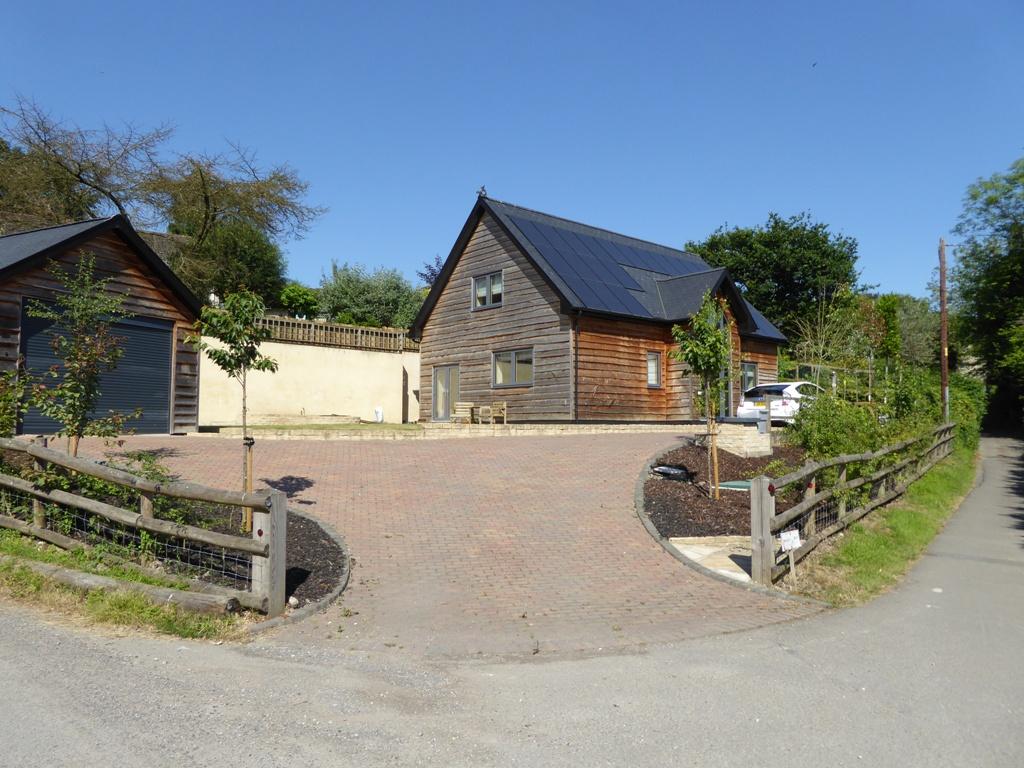
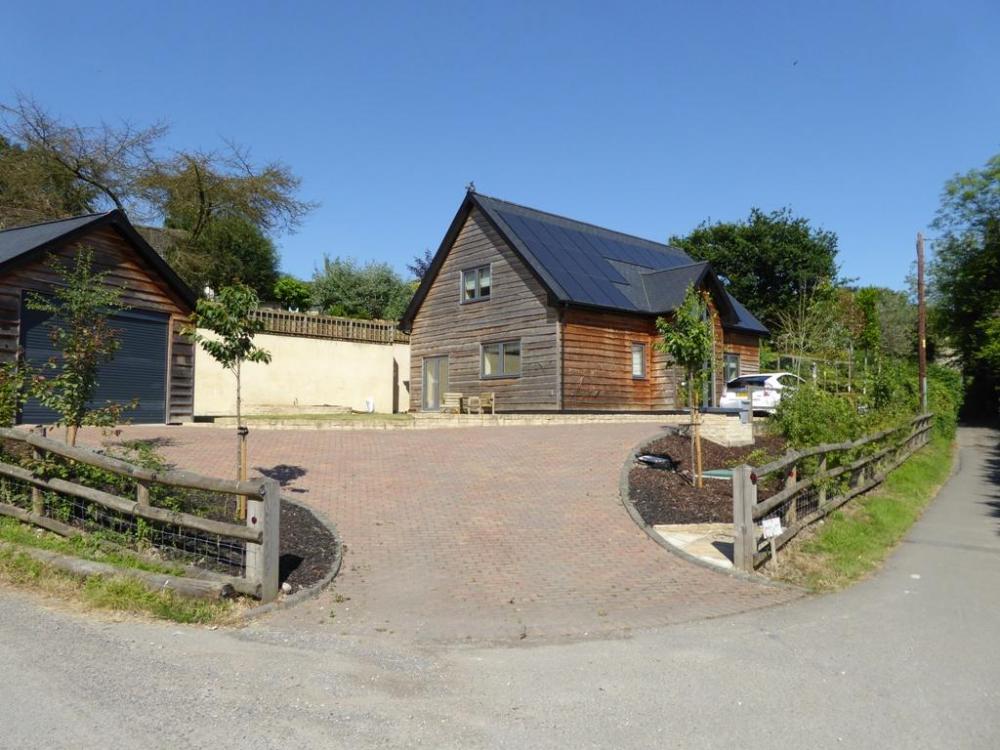
I added 50mm PIR, plus loads of expanding foam, around our old thermal store, and the thermal store was supplied with double insulation, by special order. As delivered the heat loss was well over 3 kWh/24 hours. After adding the insulation I got it down to a bit over 2 kWh/24 hours. The Sunamp loses about 0.7 kWh/24 hours, so is massively better. There are thermal images around here somewhere from the time I was having this problem. We saved around £2k in roofing cost by not having slates under the in-roof PV, so that effectively made the PV panels around £2k cheaper than if we'd fitted them on the roof instead. The cost difference between in-roof and on-roof PV is small, and in-roof looks a great deal better IMHO: Do the sums and see what the cost of a PV install is versus the cost of a solar thermal install. @Ed Davies has done a fair bit of work on this in the past. PV panels have reduced in cost a great deal, whereas solar thermal costs haven't come down at all.
-
A few points worth noting: Opening windows in hot weather makes the house warmer - better to keep them closed during the day and let the high decrement delay of the structure limit the increase in internal temperature. Solar thermal is significantly more expensive than PV, especially if the PV is built in to the roof, so saves slate and roofing cost. It's better to fit PV, even with no FIT, as it's cheaper, and you can use the electricity not just for heating water, but also running other stuff, too. Hot water storage can present problems; we found that our services room got to over 40 deg C when we had a double insulated thermal store in there and heat leaked from there to the adjacent bedroom, getting that room to over 30 deg C. In the end I swapped the thermal store for a Sunamp, with around 1/4 to 1/3 the heat loss, which made a massive difference in the warmer parts of the year. RHI won't make any sense for a low energy house, as the payments will be tiny. In our case the payments for our ASHP installation would have been only £84 a year for 7 years, which was far less than the additional cost of having a certified ASHP install.
-
Welcome, I know the area well, as we lived in Portpatrick for around 5 years. I've also built a couple of aircraft and designed a two seater kit a few years ago.