
Jeremy Harris
-
Posts
26430 -
Joined
-
Last visited
-
Days Won
360
Everything posted by Jeremy Harris
-

The tale of the sale of our old house
Jeremy Harris replied to Jeremy Harris's topic in General Self Build & DIY Discussion
You're spot on, Ian, I feel as if a massive weight has been lifted off my back. -
I can't recall our planners being bothered about sewerage disposal at all. As it happened we couldn't connect to what we thought was the obvious main sewer nearby, as the water company just said "no". Instead they wanted us to pay them over £14k for a connection to another manhole 80m up the lane, which would also have meant fitting a pumping station at a cost of an additional couple of thousand pounds. In the end we got permission from the Environment Agency to discharge the treated effluent from a package treatment plant into the stream alongside our plot, so the sewerage costs only came to around £3k all in. I have learned to never assume anything though. We have a water pipe running down the lane in front of our house, but the water company wouldn't allow a connection to that, either, but instead wanted us to pay them over £23k to run new water pipe around 120m up the lane. We ended up getting a borehole drilled in the garden and installing a pump and water treatment equipment, as that was less than half the cost of getting mains water.
-
The tale of the sale of our old house
Jeremy Harris replied to Jeremy Harris's topic in General Self Build & DIY Discussion
Thanks, @ProDave, I agree, I doubt it's that good a rental prospect. We did look at renting it out, and were told (around three years ago) that it would probably rent out unfurnished at between £700 and £800 per month. However, it seems that our buyers are looking to rent it out furnished, as they wanted all our old furniture, microwave etc. that we were just going to throw out. My limited experience of being a landlord and renting property out was not a happy one, and it's not something I'd ever do again. I found the hassle just too great for the return, but perhaps things look better now, with low interest rates giving a much lower return on any cash investment (and our buyer has paid cash). -
The tale of the sale of our old house
Jeremy Harris replied to Jeremy Harris's topic in General Self Build & DIY Discussion
Finally completed today, although not without a predictable bit of difficulty. For some reason completion was delayed, and our solicitor didn't confirm the funds transfer until 13:20. I did manage to speak to the buyer yesterday (at long last) and was told that their solicitor has had the entire completion monies for over two weeks now. Quite why completion was delayed today I don't know. I managed to arrange to hand the keys over, but our buyer didn't seem to be in any rush for them. So, we are finally shot of the old house, after a pretty stressful sale process. I can't be arsed to do a post mortem on why things took so long, other than to say that it wasn't anything related to Purple Bricks in any way, and didn't seem to be caused by our solicitors, although I can't be 100% sure that they were always being completely truthful with us about the reasons for some of the delays. It seems our buyer is entering the "buy to let" market, and intends letting the house. I only found this out today, and it explains why they were so obsessed with having a gas safety certificate, electrical installation condition report and then making a fuss over really trivial stuff, like a 1986 built house not complying with 2017 wiring regulations. From what I've seen, I think they are in for a rough time, as the electrician they used to repeat the EICR (two were done within the space of a fortnight) charged well over £300 for a 4 hour EICR job, and has quoted over £700 to replace the 6 way fuse board and meter tails (around £80 for parts plus maybe 4 hours labour - I costed it up as I was thinking of getting it done just to keep the buyer on side). Anyway, it's all over now, all we have to do is wait for the money to be transferred to our account. No idea how long that will take, but I can guess that our solicitor will try and hold on to it as long as possible. -
Funny thing, but my Fibron surveyors tape has a 100mm offset start point on the Imperial measurement side. No idea why, but if you just use the grippy hook thing on the end of the tape, when working single handedly, then Imperial measurements will be out by 100mm, as the zero starts 100mm in from the end. Not a problem when working in metric, but I bet it's the sort of odd quirk that's caught a few people out. I've had the tape for many years, but never understood what the zero offset on one side is about.
-
What do people have their thermostats set at?
Jeremy Harris replied to Pete's topic in Underfloor Heating
Ours is set at 20.5 deg C, and that seems fine. In practice the house sits between 20 deg C and about 21 deg C most of the time. -
Remote switching
Jeremy Harris replied to Jeremy Harris's topic in Networks, AV, Security & Automation
Thanks for all the suggestions. I'm going to do some further digging around into the EasySwitch unit. It may be that it uses a protocol that's also used by other systems, with a bit of luck. It looks like the best option in that it just fits in the back box and works from the existing switch, I just need to get a suitable receiver. If push comes to shove I could splash out on the EasySwitch single channel receiver and just put it in line with the cable to the light. -
Remote switching
Jeremy Harris replied to Jeremy Harris's topic in Networks, AV, Security & Automation
Damn, just when I thought I might have found an off-the-shelf solution... -
Showers also use a heck of a lot of water, often more than a bath. One problem is that a shower that flows less than about 9 or 10 litres per minute seems a bit feeble for many, although there are plenty of people that happily live with electric showers that struggle to deliver 4 litres per minute, so I expect it depends what you're used to. I'm not at all fussed about water conservation, as we draw water out from the aquifer under our house and discharge treated waste water to the brook alongside, so our environmental impact is tiny when compared to anyone using mains water and drainage. As @PeterW rightly says, mains water is far too cheap. If we want to change behaviour then it needs to be made more expensive.
-
Remote switching
Jeremy Harris replied to Jeremy Harris's topic in Networks, AV, Security & Automation
Thanks, by chance I've just stumbled on this on the TLC website: https://www.tlc-direct.co.uk/Products/LMEST1.html Fits inside a back box and can remotely switch things, although TLC don't seem to stock the plug in receivers. The only slight snag is how much room there may be inside the back box, as it's wired loop in switch so there are a handful of wagos in there. Might be able to swap the wagos for crimps to save a bit of room, though. -
Remote switching
Jeremy Harris replied to Jeremy Harris's topic in Networks, AV, Security & Automation
Unfortunately not, as the lamp is fitted in a hole bored inside a block (probably a single large crystal) of rock salt. Also, as it's in the living room, the chances are there may well not be enough motion to keep a motion-sensing light on. The last office I worked in had motion sensing light switches, designed to save energy by turning unused lights off. When working late without may people around you had to remember to wave your arms in the air every five minutes or so, or else you'd be plunged into darkness... -
Remote switching
Jeremy Harris replied to Jeremy Harris's topic in Networks, AV, Security & Automation
Nice idea, @Declan52, but unfortunately the light I need to switch takes a slim E14 COB type LED. Exactly! Some sort of switch that just detects when another circuit is powered, or a light comes on, and remotely turns another light on (and off) is all I need. I'm coming around to the conclusion that I'm going to have to make a custom unit to do this, that will just plug in to a spare 2 A outlet and transmit Byron/Home Easy on and off codes as it's powered on or off. Not too hard to do, just that I'd hoped there may be something off the shelf that would do this. I have some spare Home Easy switches and receivers, so can take a switch apart and mimic the contacts with a tiny relay, easily enough, I think. -
For 22 years I had to endure a biennial session in a hypobaric chamber, learning to recognise the insidious effects of hypoxia. It got better as time went on, as for initial aircrew training and the first couple of refresher sessions they used to still do an explosive decompression to 25,000ft. That's not at all nice. Someone decided that doing routine explosive decompressions was too risky (it was about the time that the MoD finally decided to follow the H&S@W Act) and so from then on we only did gentle climbs (on oxygen) to 25,000ft, then one by one took our masks off and either did repetitive arithmetic, or towards the end, played video games (good for spotting the loss of colour perception as your blood oxygen concentration drops). Some of us doing high altitude stuff had to do a short (5 minutes, IIRC) session at 32,000ft, pressure breathing (OK if you can tolerate the bubbles that come out of your nasolacrimal ducts - I found them really distracting). The interesting thing was the wide variation between individuals to the effects of hypoxia. For me, the loss of peripheral vision was the first thing I noticed, followed pretty quickly by colour perception going. Others had more extreme effects. I remember one chap doing a chamber run for the first time who just went berserk about 30 seconds or so after coming off oxygen. It took two or three of us to hold him down whilst the doc put his mask on and gave him 100%. Afterwards the chap had no recall of his behaviour, but it had been recorded for later analysis. He got chopped as being medically unfit to fly because of his extreme response.
-
Remote switching
Jeremy Harris replied to Jeremy Harris's topic in Networks, AV, Security & Automation
Yes, I've looked at them, but it would still mean hacking another hole in the wall. Currently we have a double gang switch by the door from the hall into the living room, with one gang switching the feed to three uplighters. At the other end of the living room, by the door that leads to my wife's study, there is a single gang switch that is the other half of the two way switching for the uplighters. The other half of the double gang switch only feeds the 2 A outlets. The feed for those comes from the switch (the house is all wired loop in switch throughout), so getting access to the cable that feeds both the 2 A outlets and the uplighters is reasonably easy, as the feeds are in the deep double gang back box, all hooked up with wagos. I can get around the lack of constant power by two methods. There's a spare 13 A outlet on the ring final next to one of the unused 2 A outlets, so I could power a transmitter from that and then sense power on the 2 A outlet. If going for a custom solution then I could store enough energy to send an "off" transmission using a modest reservoir capacitor. I've room to hide a remote transmitter box, as the unused 2 A outlet is behind a sofa. That would work, but I have a problem in general with the lack of privacy that's inherent in everything like this. Google and Amazon both have a pretty grim track record when it comes to invasion of personal privacy, something I have a personal issue with (and yes, I may well be overly-obsessed about personal privacy!). Thanks for the thought, I shall go looking around to see if there's anything related that may do the job. One problem I've had is in finding the most relevant search terms - there are so many remote switching systems that it's really hard to refine results down to just what I want, without missing something obvious that may do the job. As a final thought, I have looked at making a simple light-operated switch, or adapting an off-the-shelf one. The light I want to switch on is sat on top of a bookshelf (not relevant, but it's a big lump of rocksalt from a Polish salt mine, with an LED light fitted inside it). I think I might be able to adapt a rate-of-change-of-light switch (perhaps a modified PIR sensor one) with a discreet tube over the sensor, aimed at one of the other incidental lights. With luck I may be able to get that to reliably sense when one of the other lights goes on or off and use that as the switching method. Might not quite be off-the-shelf, but could be pretty close to it. -
I think it's just that we're conditioned to houses where warmth is associated with muggy air and "fresh" breezes are called that because we are conditioned to thinking of them that way. As a consequence, we subconsciously associate a cool air flow as being "fresh" and a warm air flow as not being fresh. It is something that can be unlearned, though. Even my wife (who loves keeping windows open) has commented on the bedroom not feeling muggy in the morning, something that was very noticeable in our old house, even with a small fanlight window left open all the time. The other thing she's noticed is that the house is relatively dust-free. One of the benefits of having a pollen filter on the incoming fresh air supply.
-
IVT Ecolane ASHP - any owners out there?
Jeremy Harris replied to readiescards's topic in Air Source Heat Pumps (ASHP)
Thanks, you're right, it's a passive house, so barely needs any heating. The thermostat is set to 20.5 deg C, which seems comfortable enough. -
Remote switching
Jeremy Harris replied to Jeremy Harris's topic in Networks, AV, Security & Automation
The switches are all white MK Logic, but swapping to a Quinetic switch wouldn't be that easy, because one gang of the current two gang switch is two-way, with a single gang switch at the other door into the room. This turns on the uplighters in the room. I've sketched out a few combinations of using Quinetic switches, but all would need a hole hacking in the wall to bury a receiver in to switch the uplighters and retain the two way switching. The existing switch back boxes are screwed to 2 x 4 noggins in the wall, and project slightly into the plasterboard, so not easy to just remove the boxes and try to tuck a receiver in behind, I'd need to cut a hole in the wall right next to the switch, which I'd rather not do unless there's no other way. Might work, but needs an additional switch, and ideally I'd like to just be able to use the existing power supplied to an unused 2 A outlet on the other side of the room as the trigger to turn on something like the plug-in remote switch that @PeterW linked to. Not sure, I'll have a look around and see if they do. One option is to just buy a remote switched socket and handheld remote control (not a Quinetic one, as I'd need to hack it) and then make up a small plug-in box with a pulsed relay to simulate the remote push button. It would need a power supply with a big reservoir capacitor, so that it could sense the mains going off on the outlet and have enough stored energy to trigger the remote to "off", but it should be doable. Years ago I decoded the Byron/Home Easy 32 bit protocol and got a small microcontroller reliably switching Home Easy receivers, and I still have a few of those around, so I could knock up something to do the job. It seems odd that there isn't an off-the-shelf unit that works as a wireless extender from one outlet to another, though. -
Remote switching
Jeremy Harris replied to Jeremy Harris's topic in Networks, AV, Security & Automation
Sorry, my error, they are 2 A outlets, not 3 A, these ones, switched by wall light switches, that control incidental lights: What I'm after is a transmitter that can detect power at one of these outlets and turn on a switch/receiver that's plugged in to a standard 13 A outlet. My error was in not realising that we'd want an incidental light on the other side of the room from where I'd fitted the 2 A outlets. At present there is a 2 gang light switch in the room, one gang two way switches (with another single light switch the other side of the room) three wall uplighters, the other gang switches the 2 A outlets. The idea was to be able to switch all the incidental lighting on and off from the wall, without having to go around switching them on or off individually. However, we've found that we quite like having a small light on in one corner, opposite the wall with the 2 A outlets on, but which has a 13 A double gang outlet. If push comes to shove I can make something up that will do the job, but I'd rather have an off-the-shelf solution if there is one.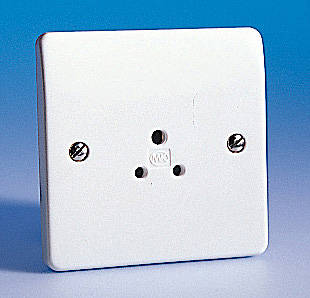
-
I have quite a few of those slim panel LEDs and they are fine. The problem seemed to be with LED lamps that were made to fit into standard halogen light fittings in the main.
-
My web search fu is failing me, so I'm asking the collective hive mind here in the hope that someone may know of an off the shelf solution. We have a few light only switched 3 A sockets, and when planning their locations I made a cock up, and have found that we'd really like another switched outlet for a light on the other side of the room. We have a 13 A outlet where we'd like the remote switched light. So, what what we are looking for is a remote switch, that's triggered by power being applied to an outlet, that capable of switching another outlet that's maybe 4m away. The idea is that by flicking one side of a 2 gang switch, we can turn on all the incidental lights in the room. Changing the switch, or the wiring, isn't really an option, so ideally I'm looking for something, that when mains is applied, will switch on an outlet that's plugged in to a 3 A outlet. Not fussed if it uses wireless or power line signalling. I could make something to do this easily enough, but would rather buy a standard solution if I can.
-
IVT Ecolane ASHP - any owners out there?
Jeremy Harris replied to readiescards's topic in Air Source Heat Pumps (ASHP)
Ours is currently running, on average, for around 1 hour per day over the past four days, but the range is quite wide. It ran for around 3 hours on Wednesday, then didn't run at all on Thursday, came on again for about two hours on Friday, and ran for about an hour today. Total energy consumption by the heat pump over that period has been around 5 kWh, so around 1.25 kWh/day. Outside air temperatures have varied from well below freezing on Wednesday night, to a maximum of around 9 deg C today. Wednesday wasn't typical though, as we had the front door open for two or three hours (moving stuff) and it happened to be a very cold day (and much colder night). -
I had endless hassle over water usage, with a PITA "old school" building inspector, who not only made me fit restrictors everywhere, but also insisted that I provide evidence (in the form of photographs) that I had done so. I complied with all his requests, filled in the calculator, printed everything out to prove that every outlet, WC etc complied with the regs (despite us having a borehole private supply, so not needing to comply with water regs anyway) and had them all lined up on the kitchen work surface for the final completion inspection. The head of building control turned out to do this, and wasn't the slightest bit interested in water consumption, as he said it didn't apply to anyone with a private supply (something I'd been arguing over for weeks). I actually left some of the restrictors in place, as they are pretty good at reducing splashing from taps. One major error I made was accidentally leaving the shower flow restrictor in place. SWMBO was less than impressed with a 6 litre/minute shower, but was too polite to mention it. I spotted it straight away and removed it, and now all is well in the world...
-
The tale of the sale of our old house
Jeremy Harris replied to Jeremy Harris's topic in General Self Build & DIY Discussion
Well, we're both out of the old house for good, now. We did the final cleaning of the old house yesterday, so we could have a weekend in the new build without having to worry about still having to go back to do stuff at the old house. All I have left to do there is pop over on Monday to take the final meter readings and try to get hold of the buyer to sort out passing on the keys. The latter is predictably difficult, as the buyer seems not to be willing to commit to any arrangements for collecting the keys. I have everything sorted on our side; my solicitor is going to call me as soon as they have the funds and completion has taken place, so I can hand over the keys. The problem is that the buyers solicitor (I've literally just found out today) is based in London, and doesn't seem to advertise a conveyancing service at all; they seem to be specialists in family law. No wonder we've had endless problems with them. It also explains why our solicitor has had to repeatedly chase them up for everything, along with some really daft questions they've raised, often questions that they already have had written answers to. This means I can't just drop the keys off with the buyers solicitor, and with the buyer being reluctant to commit to a time to collect the keys, I'm left with the feeling that I'll have to find the buyers address and just drop the keys through the letter box, if push comes to shove. The daft thing is that I've already offered to meet the buyer at the house, and talk through the heating and boiler controls, bathroom UFH programmer etc, something the buyer was keen to accept. -
Yes, there is, but it seems that the degree of difficulty in being able to access cooling mode is highly variable. For example, the re-badged Carrier ASHPs that a few of us have, default to cooling mode if the dry contact "on" connection is made. The way that they get these to comply with the MCS/RHI rules is to just add a note in the installation instructions saying that as well as terminal 6 being connected to terminal 3 turn the ASHP on, a wire link must be added between terminal 3 (0 V) and terminal 7. It doesn't say what terminal 7 does, but in fact that's the connection that tells the ASHP to run in heating mode.
-
It's not really an accurate description, either, unfortunately. Perhaps worth looking at how a non-inverter control ASHP works There are three moving parts internally (excluding the water circulation pump and assuming that the unit doesn't have an electronically controlled variable expansion valve). The main component is a powerful rotary compressor, driven by either a single phase or three phase motor, often with a rating of several horse power. This motor is a synchronous machine, so can only run at a fixed speed, which in turn means the compressor runs at a fixed speed, and as compressor speed is directly linked to the heat pump capacity for any given conditions, the heat pump can only run at either maximum output or zero output, a bit like an older, non-modulating, gas or oil boiler. An ASHP normally has to have a fan to blow air through the evaporator, and that too will be driven by a synchronous motor, so can only run at full flow rate or no flow rate. An inverter controlled ASHP, whether single phase powered or three phase powered, rectifies the fixed frequency AC supply to DC and then electronically generates a variable frequency (usually three phase) to drive the compressor motor, and separately, generates another variable frequency to drive the fan motor. The advantage of this is that, as frequency controls motor speed, and as heat output is proportional to compressor speed, the ASHP has the ability to vary it's heat output over a wide range. Similarly, the fan speed can also be varied, often using the evaporator temperature, so that the fan never needs to run faster than is needed for a give heat output. This ability to modulate the output of the heat pump is really useful, as it means it can run very quietly most of the time, when it isn't being asked to deliver it's maximum output. A secondary advantage is that the heat pump controls can include a slow start for the compressor motor, which then completely eliminates the starting surge current that an "all or nothing" heat pump compressor motor has. Inverter controlled heat pumps are a bit more complex that that, as they also have to modulate the expansion valve along with the compressor speed, in order to maintain best efficiency, but overall they tend to be more efficient, quieter and pose less stress on the local electricity supply network. As an example, our 7 kW maximum ASHP has a maximum current draw of 8 A, but in practice it rarely seems to draw more than about 2 A when running.