
Drellingore
-
Posts
307 -
Joined
-
Days Won
2
Everything posted by Drellingore
-
I'll be interested to read the answer to this from someone better informed than I!
-
Oftentimes LPAs have legitimate reasons for allowing an annexe/ancillary space, but rejecting that same building if designed as a dwelling (ie with a kitchen and bathroom, so as to form self-contained accommodation). Planning permission isn't required to add a kitchen or a bathroom to a building, is it? That seems like a fairly glaring loophole to me - surely people wanting to work around that constraint would just add those functions after the building is complete? It's piqued my interest as it suggests that I'm missing something about the planning process, and I'd prefer to fill in the gaps in my knowledge.
-

To contract or not to contract
Drellingore replied to Jimbo37's topic in New House & Structural Warranties
I'm not sure I'm adding much to the conversation, but I'd agree with this and @andyscotland in that in my experience of running a few businesses and negotiating quite a few contracts, they're useful for signalling intent. Hopefully you won't have to enforce them, but they're a good way to expose disagreements early and to ensure that everyone has the same expectations. -
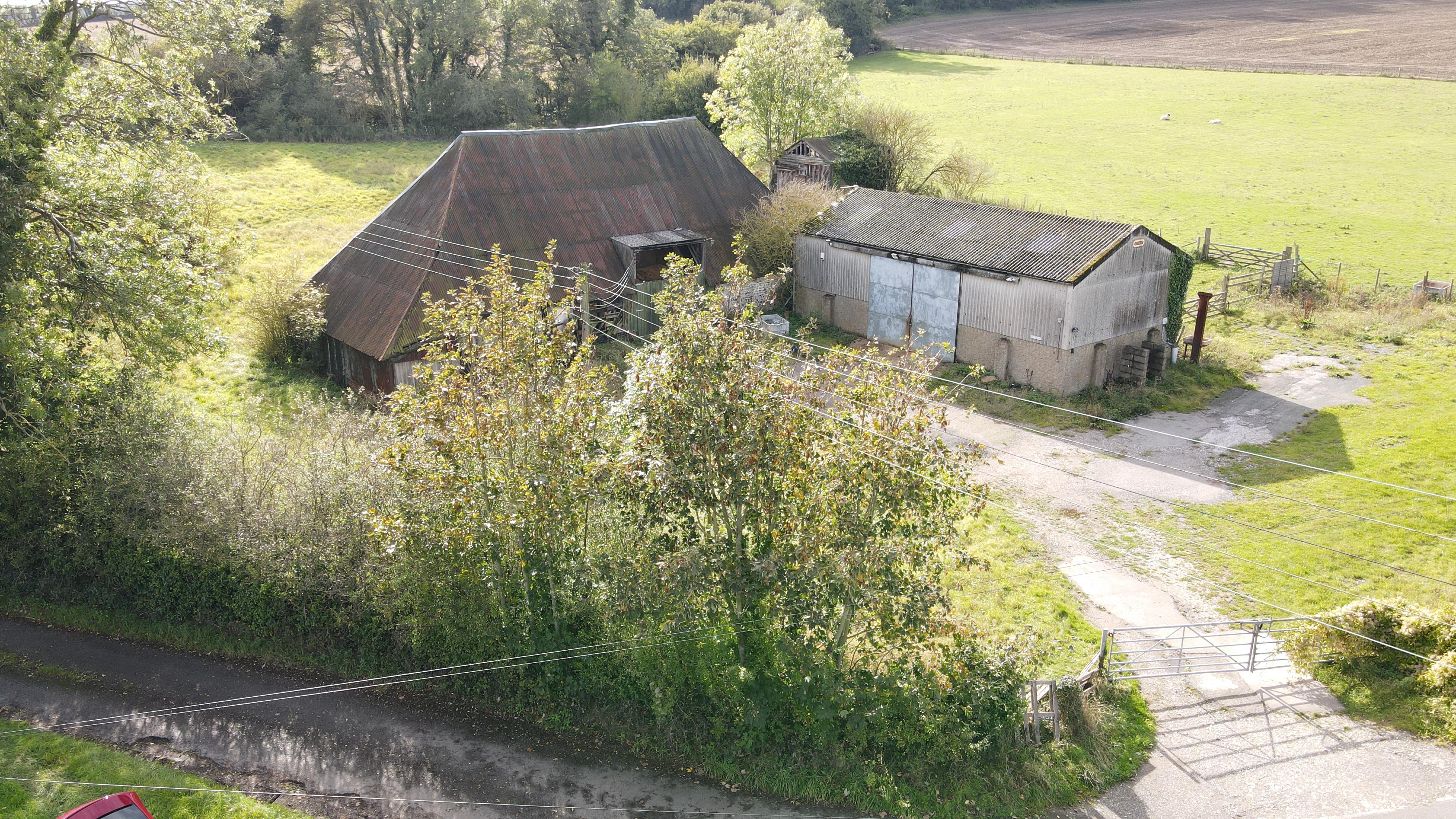
Has anyone got any experience of a situation where conversion in principle has been established for a barn, but where the barn has deteriorated in condition since then and now requires too much work to be considered a conversion? We may be in the position of having bought a plot with planning permission granted, based on a structural survey performed a couple of years before we bought the site. We wanted to change the scheme, and as such made a new planning application with a new structural survey. This new structural survey appears to recommend more of a 'take down and put back up' approach, which we didn't consider a problem. There are noises from the heritage officer that this wouldn't constitute a conversion any more, which was a fundamental requirement of the original principle being established. Are there many examples of such a thing happening, and planning being sympathetic to the fact the building has deteriorated and therefore reconstruction being necessary? Or is it universally the case that they'll consider the window of opportunity not closed, condemning the building to slowly decay with no prospect of conversion?
-
110v versus 240v at start of project
Drellingore replied to Drellingore's topic in Tools & Equipment
One thing I discovered this week is that tool hire companies only seem to lend our 110v kit - so if you're thinking of hiring any gear (which won't be VAT-reclaimable!), having a 110v transformer might be handy. Unless you're going to hire one of those too, which is exactly what I did today. -
Who's having an enforced power cut tonight?
Drellingore replied to jayc89's topic in Housing Politics
No-one. -
On-site storage for clothes, gloves, etc?
Drellingore replied to Drellingore's topic in General Self Build & DIY Discussion
Ta for the ideas, folks! -
Does anyone have recommendations for ways to store clothes etcetera in a dirty, damp, mouldy site? The site of our barn conversions is a 25 minute drive from home, which isn't too far, but is far enough to be quite annoying when you've forgotten stuff. For this reason we want to store stuff down there, like work clothes. We've got a concrete barn but it's not watertight, and anything left there for more than a couple of weeks gets absolutely covered in what I can only describe as "ming" (or to be more grown-up: some kind of mould). We could get your household plastic storage boxes, but I don't know if they'd seal tightly enough to keep the mould and damp out. Ideally it'd be great to get something about the size of a cupboard that has a really good seal but I can expect that being expensive, if it even exists! Any thoughts or suggestions?
-
The HMRC Construction VAT Manual doesn't make it so cut-and-dry with regard to hard-fitted things. You could fit out a cupboard with things that are fixed to the walls, and are bespoke to the space, and still be deemed furniture and therefore not VAT-recoverable: https://www.gov.uk/hmrc-internal-manuals/vat-construction/vconst13640. There is a limit on what can be added to an enclosed cupboard before it strays from being building materials to furniture (a single shelf with a hanging rail). If you fancy a laugh, have a look for the notes in that manual on how judges pondered what furniture is, and the rules on vanity units.
-
This is a fair point. @gravelrash there's some guidance in the HMRC VAT Construction Manual that explicitly states that: In this context cupboards are normally deemed furniture and not building materials, but this page seems pretty clear that you're fine to reclaim. I am not an accountant though
-
@joth I don't think any of us will be able to provide a conclusive answer. The HMRC VAT Construction manual gives some guidance on what is an electrical appliance (and therefore standard-rated), but it doesn't cover your particular case. There is an example of a powered gate not being eligible for zero/reduced rating, despite being part of a security system. This is the closest that I could find, apologies if this is too tenuous to be relevant, and best of luck getting it clarified. FWIW I called the HMRC self-build line the other day and got through in 20 minutes, so it might be worth given them a call.
-
If it's agricultural land (and it sounds like it might not be) then advice from my farm-owning neighbours is that you can erect a shed on it for a relevant agricultural purpose. So wang a vegetable patch next to it, and that'll probably suffice. Home office, not so much.
-
Connecting to public sewer 800m away?
Drellingore replied to Drellingore's topic in Waste & Sewerage
Is that different to a package treatment plant? I'm currently going down the PTP route, which is <£10k. Thanks, already have My favourite is: Why does Noddy wear a bell on his hat..? -
Haha, that sounds like an interesting story! Did you go to appeal? Was your drainage strategy part of the approved documents in the planning application? Or was it just a matter of BCO needing to sign off the drainage implementation during the build? Planning want to approve our drainage strategy before building work starts.
-
Was this all after planning had been approved, and much later when the build was taking place? Apologies for the silly question.
-
Gotcha. I didn't know that was a thing! Approved Document H2:1.71 says alternative implementations need to follow BS6297:1983, which doesn't even use the term drainage field!
-
I deffo can't help there then - best of luck!
-
Connecting to public sewer 800m away?
Drellingore replied to Drellingore's topic in Waste & Sewerage
I should probably add that I initially asked a very specific question with no context as to what problem I was trying to solve. This is because I've noticed in my brief time on BuildHub that the more one explains, the greater the likelihood of "you shouldn't do it like that" replies. However, I think I've now created the opposite problem where people are trying to be helpful but with incomplete information. Suggestions on what balance to strike would be welcome -
Connecting to public sewer 800m away?
Drellingore replied to Drellingore's topic in Waste & Sewerage
Thanks, I have done, and am looking at a Solido Smart combined with four Tricel PuraFlos. This should get BOD, SS and NH4 all <1mg/L. This is what's going to be in the details of the EA permit application that I mentioned earlier. Those aren't the problem though - the issue that I have is that I can't find space for the drainage fields that will be required for infiltration after treatment. Is it in groundwater source protection zone 1, and do you manage to get an EA permit for it? I don't have a semi-dry ditch available. That's encouraging to hear, especially as I'll be adding tertiary treatment beyond that. I don't think the cleanliness will help with the drainage field conundrum though. -
Sorry for my ignorance, I'm not sure what you mean here? Not meaning to be rude, I'm just completely naïve.
-
Connecting to public sewer 800m away?
Drellingore replied to Drellingore's topic in Waste & Sewerage
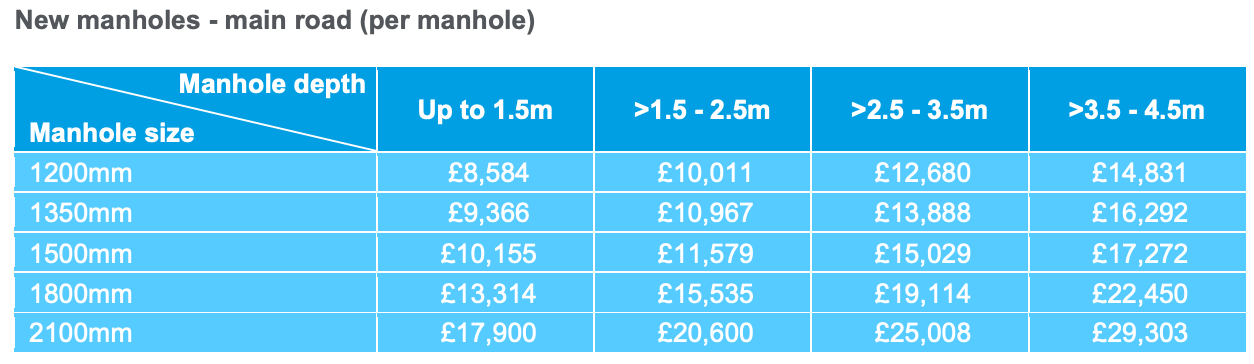
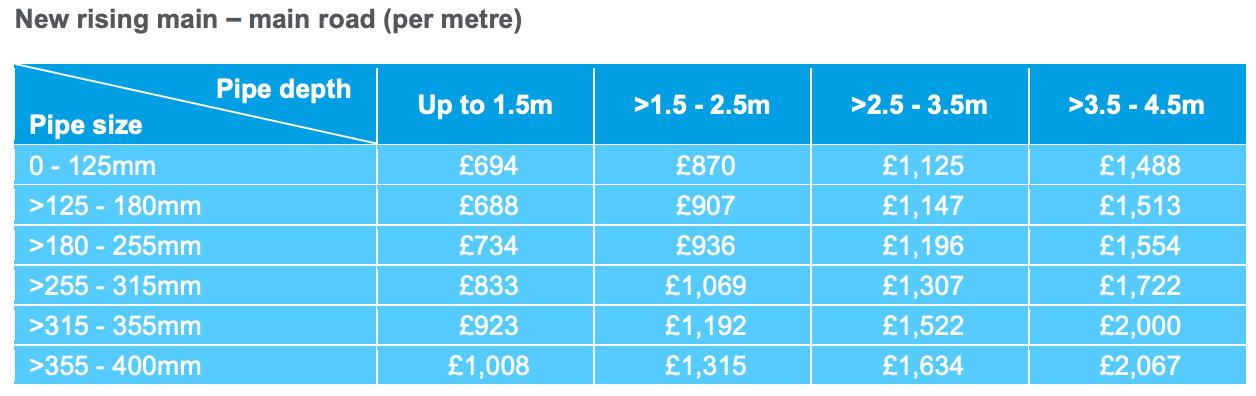
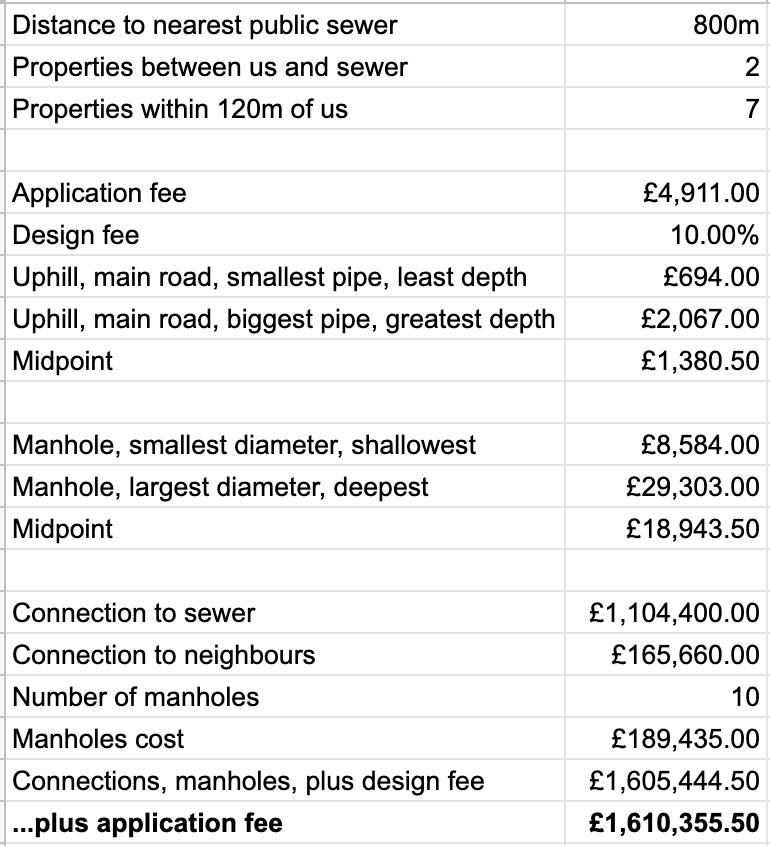
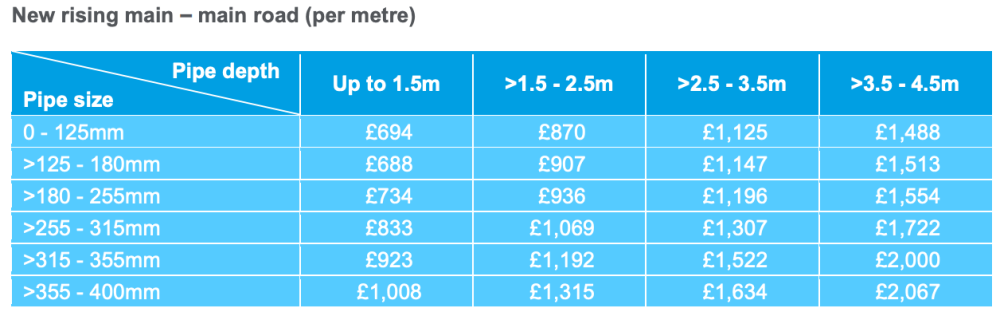
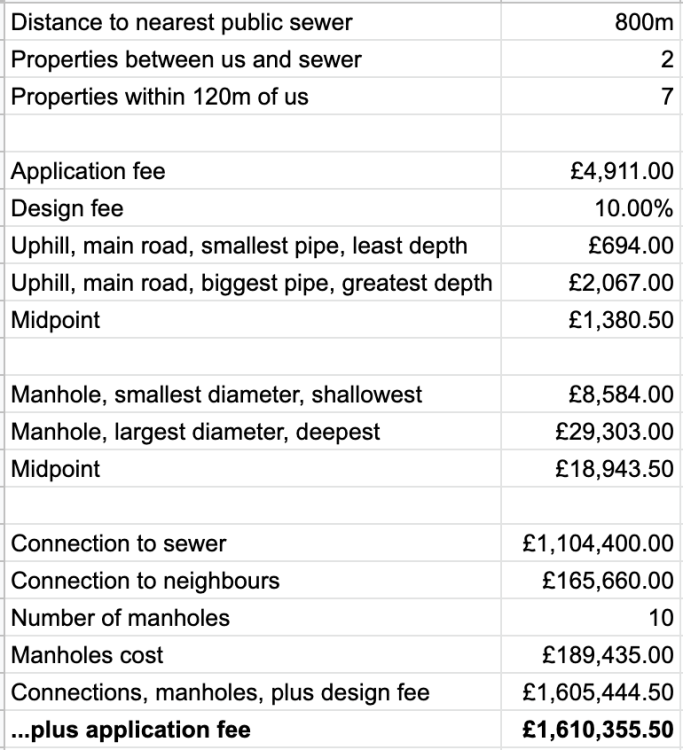
Thanks folks! Using the data from the Southern Water PDF, the midpoints on prices (I've no idea how wide or deep the pipes would need to be), and @Conor's estimate of 10 manholes, it comes out at the rather eye-watering £1.6m. Probably not practical! As for the recommendations about treatment plants - thanks, we've considered that. We're in groundwater source protection zone 1 which precludes any sort of discharge whatsoever without an Environment Agency permit. I'm planning on applying for one of those, but we're struggling to find space for the required drainage fields and so wanted to sense-check other options.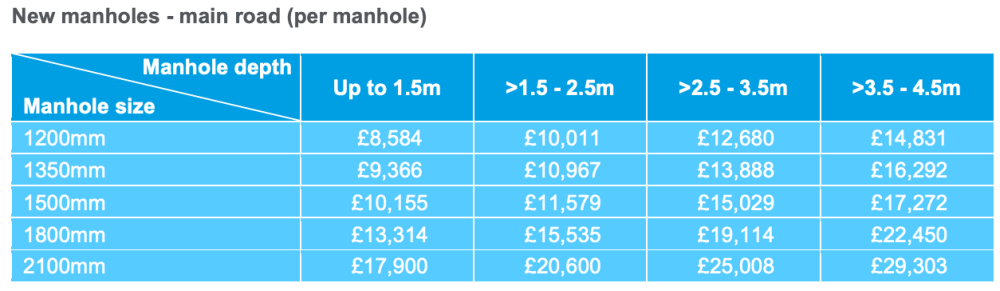
-
Connecting to public sewer 800m away?
Drellingore replied to Drellingore's topic in Waste & Sewerage
Thanks @Conor, I really appreciate even a rough ballpark figure. I'm so new to all this, that I had no idea how many zeroes to be thinking about I've just found a guide to connection charges from the appropriate water company, so I'm going to wang some numbers in a spreadsheet and update the thread when I've got a better idea. Your estimate will give me confidence as to whether I'm reading the right document and understanding it at all -
Has anyone got any data points that they'd be willing to share on how ridiculously expensive it would be to connect to a public foul water sewer 800m away? The shortest distance to said sewer is a straight line along which a road runs, which may or may not make things harder or more expensive! My instinct is that the costs would be exorbitant, but there's a few houses all paying to empty cesspools regularly, so maybe there's some possibility to all chip in or something.
-
I got hold of a copy of BS6297:2007, and in there it says it's "good practice" to ensure drainage fields are 2m away from any boundary. Interestingly it also recommends drainage fields being 7m away from buildings, whereas Approved Document H says 15m. Note that neither of these are defined as hard limits, they seem to be recommendations.
-
I'm not sure if I follow your line of thinking entirely, but rule #19 says that you can't meet the General Binding Rules if the water you're discharging to doesn't have flow: So I take that to mean that your inundation pond wouldn't an acceptable watercourse that you could discharge to. Apologies if I've misunderstood anything. Also - I have no relevant experience!