Drellingore
-
Posts
307 -
Joined
-
Days Won
2
Everything posted by Drellingore
-
Thanks! All good suggestions. We'll probably dig into the overheating concerns in the detailed design phase if planning approval is forthcoming.
-
Aye, it's a fair point. This barn is however a secondary concern to the non-designated heritage asset 18th century threshing barn next to it though, so we've been a little more liberal with this, as it's currently a concrete-and-asbestos monstrosity with no public views of that elevation.
-
Ta for the thoughts folks! I don't think I, or any of you, are going to be able to convince the missus to have fewer windows on that elevation Point taken about solar gain though.
-
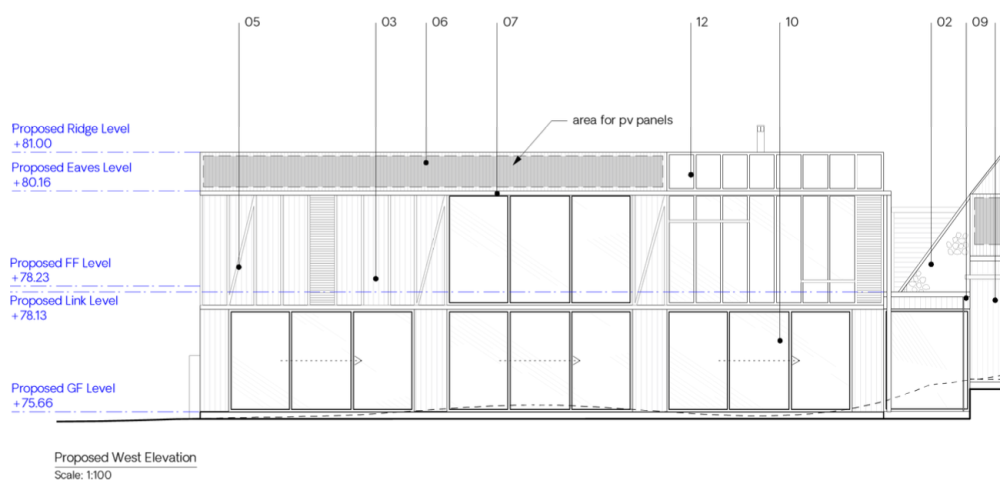
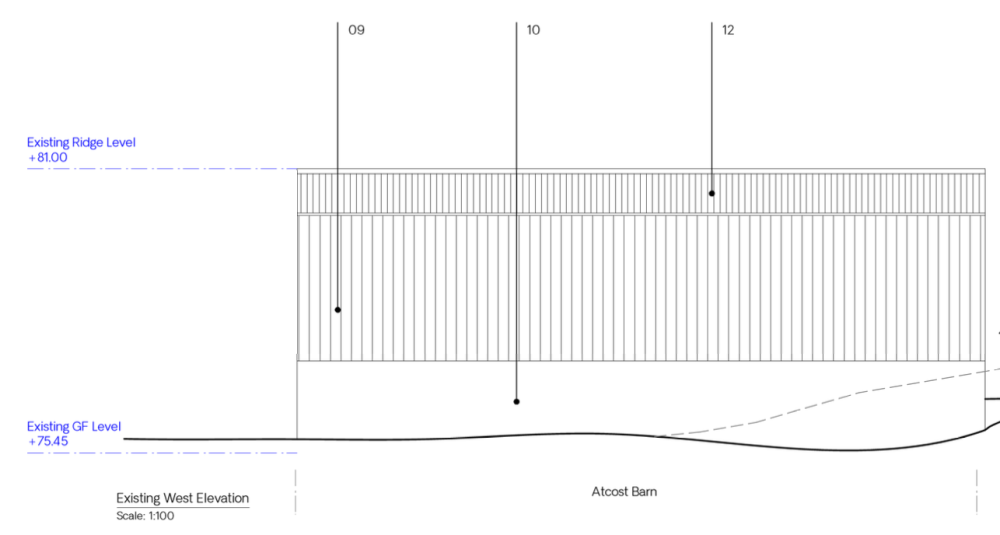
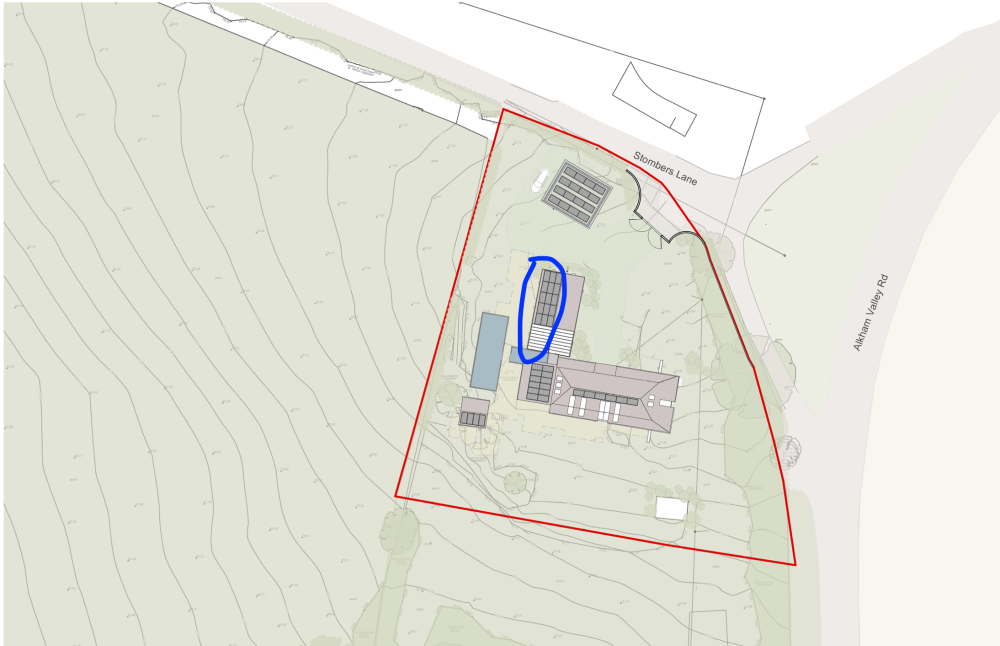
Hi folks - is anyone aware of mitigations to reduce light pollution that planners have found acceptable? The National Landscapes (formerly known as Area of Outstanding Natural Beauty) management unit have raised a concern that glazing on the side of one of our proposed barn conversions may contribute excessive light pollution. The glazing is on that (west) elevation of the building as those are the views up the valley and towards the sunset; to remove the glazing would greatly reduce one of the most positive attributes of the building. Some sort of timber screening is possible, but the missus isn't keen because "it will be like being in a prison". We could think about some sort of mirror film, but I don't know if the planning officer would accept this. Similarly I wonder if there's some sort of planning condition that is common and could be used, like 'turn the lights off at 9pm' or 'less than X lux Y metres from the building'. Any thoughts? Planning application: https://publicaccess.dover.gov.uk/online-applications/applicationDetails.do?activeTab=documents&keyVal=SEV2Q9FZGTO00 KDNLMU's comment: Existing west elevation: Proposed west elevation: Location of west elevation on block plan:
-

Blocking ceramic rainwater sewer pipes?
Drellingore replied to Drellingore's topic in Waste & Sewerage
Googles Discovers that drain test bungs are a thing doffs cap to @dpmiller -
Blocking ceramic rainwater sewer pipes?
Drellingore replied to Drellingore's topic in Waste & Sewerage
Here's a really naff photo of some of the inlets.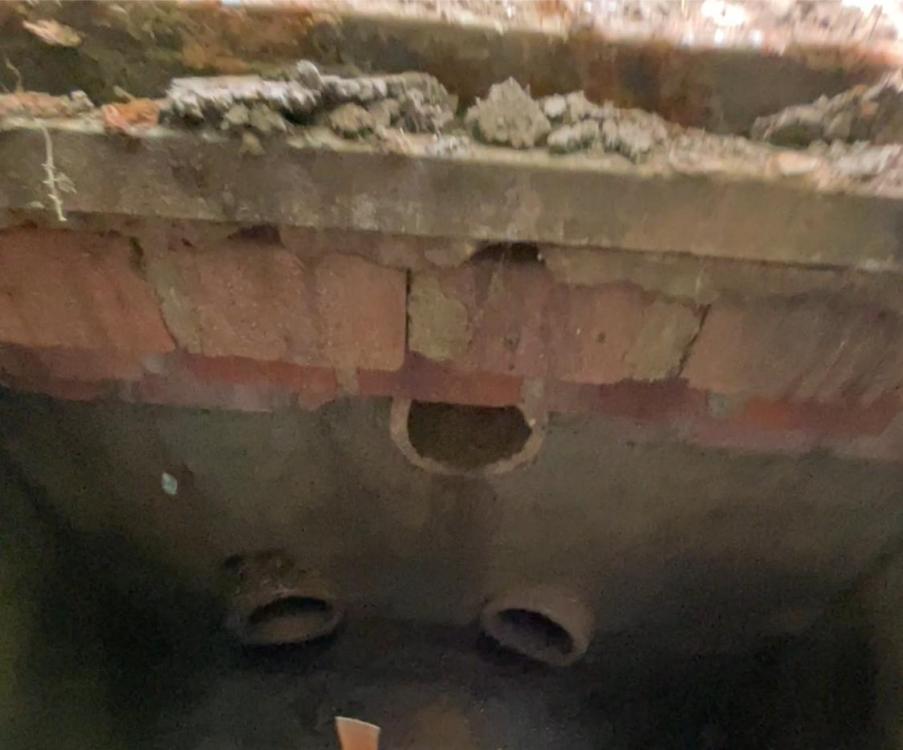
-
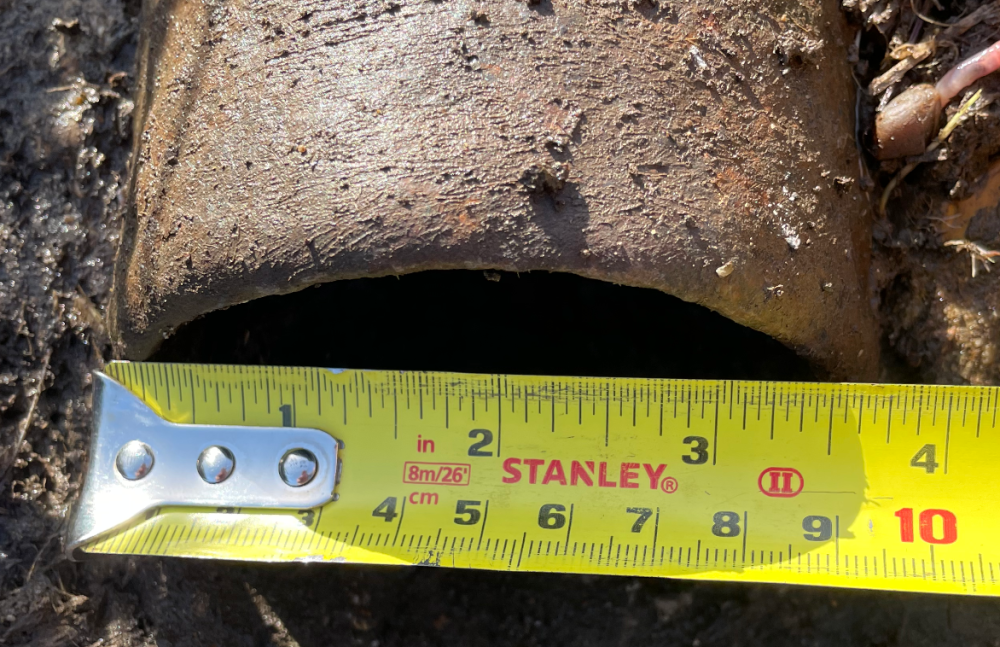
Does anyone have any suggestions for how to temporarily block 3-4" diameter ceramic pipes? On the site of my prospective barn conversion I've found a gravity/silt trap for surface water. It's about L120xW90xD65cm, and has five ceramic inlet pipes of either 3" or 4" internal diameter which protrude into the trap by about 1". There is one outlet of 4" diameter, the ultimate destination of which is unknown. It was put in by the local drinking water company (the local supply is abstracted 300m away) in the 60s, is owned by them, and doesn't show up on any public register. I thought it'd be simple to block the pipes, fill the trap, unblock the outlet, measure how long it takes the water level to drop, and then use that to work out the maximum outflow rate. I wanted to make use of this surface water sewer in my drainage strategy to reduce the volume of soakaways required on site. We've got at least 400sqm of plan-area roofs that we'll need to dispose of rainwater from. I tried covering the pipes with black plastic pond liner that I had knocking about, and wrapping elastic bands around them. It turns out this isn't a good enough seal and water is seeping through making it impossible to fill the trap quicker than it leaks (I'm filling it from an IBC using a garden hose). Any clever ideas on how else I could seal them? Expanding foam would work for the inlets, but for the outlet I need to be able to 'unplug' it to run the outflow test. The only other option I can think of is to get a bigger hose for the IBC, so I can hopefully fill it much more quickly than the seals leak.
-
Newbie doing first self-build on 'hard mode'
Drellingore replied to Drellingore's topic in Introduce Yourself
I had been considering that (both elsewhere and on here), but the idea of commitment to updating it put me off... It'd probably be a good idea for keeping people abreast of things, and also for posterity! Who does one ask? -
Newbie doing first self-build on 'hard mode'
Drellingore replied to Drellingore's topic in Introduce Yourself
I'm not really sure where to post 'random project updates for people that are bored enough to care', but I figured this was as good a place as any. We've just had our second planning application validated (not yet approved!), and it's now online on the district council website. Our previous application was a bonkers attempted to see whether a strawbale super-eco house would outweigh the priority of a non-designated heritage asset in a balanced planning decision. The short answer is: no, it does not. So the latest one is much more sensitive to the NDHA and its timber frame. We've had some help this time from the fine folks at Footprint, who have won a RIBA award amongst other things. I'd be interested to read what people think of the planning, heritage, energy statements, and the proposed works. Those were all authored by myself, and I'd like to think I did a much more thorough job of the planning statement than the consultant I paid for last time.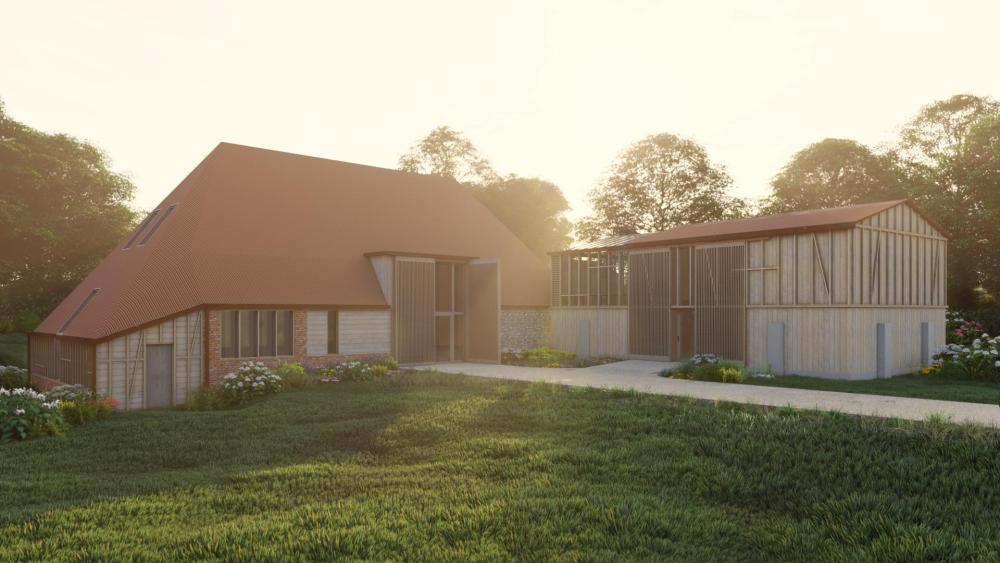
-
Visibility splays for non-right-angles
Drellingore replied to Drellingore's topic in Planning Permission
Same here Although a good point about pole-mounted ones. -
Visibility splays for non-right-angles
Drellingore replied to Drellingore's topic in Planning Permission
Ha, it's kinda both. A neighbouring farmer has a right-of-access along a strip of the site where the adjacent lane is too narrow for him to be able to get his machinery through. So it's almost like a slip road for farming lorries. It isn't actively used, and he only intends to ever use it if his current access via a rented field is rescinded. -
Visibility splays for non-right-angles
Drellingore replied to Drellingore's topic in Planning Permission
Thanks! Any idea where I might find those? I'm intimately acquainted with my district council's local plan, but I'm guessing this is somewhere else. The Kent Design Guide touches on it, but sadly doesn't go into detail about angles or mirrors. -
Does anyone have experience of calculating visibility splays and requesting news accesses for shallow angles? We might want to ask for a new access to join a single-track country lane at a very steep/shallow (depending how you measure it) angle. All the guidance and diagrams I can find relate to cases in which an access joins a larger road at a right angle. In this really high-quality diagram, the red bit is the country lane, and the blue bit is the potential access: Presumably in this case people would be using their wing mirrors. Is this allowed/catered for anywhere in the guidance? Or would the county council highways department likely throw it out because at the angle of approach, you wouldn't be able to see traffic from the left without mirrors?

-
Anecdotes from solar installers I've spoken said that they don't want to work with solar PV tiles, as they're too unreliable/expensive/inefficient, and manufacturers tend to disappear. Having been in planning stages for four years I'd recommend this approach I'd recommend that you read the Local Plan for your area, and the National Planning Policy Framework. There are rarely hard-and-fast rules in planning, and so it's a matter of finding policies that support/contradict your position and highlighting those as appropriate in your planning statement. I can't speak for Class Q so maybe @IanR's advice is sound there, but we're converting a non-designated heritage asset in a National Landscape and the planning authority have previously approved an increase in ridge height of 30cm in order to add more insulation. I would've thought our constraints were more tight than general Class Q, so what you're proposing might be possible. Pre-application advice might be useful if your LPA can turn it around quickly (ours couldn't, it took 10 weeks) and failing that you should expect to get some feedback after application from which you can tweak designs. If they don't like PV, just get the architect to delete a load of squares from the drawing, which is a fairly quick fix.
-
Not a word I have encountered this lifetime 'til now
-
Word of the week!
-
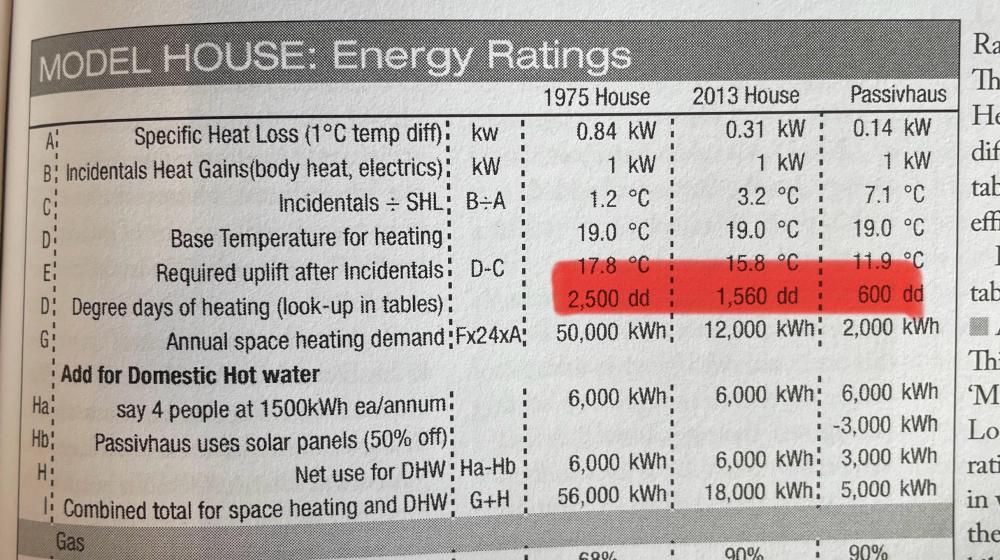
Thanks folks! The lovely website https://www.degreedays.net/ sorted me with specific data. I haven't put any effort into calculating incidentals and have just taken 1kW as a placeholder figure, and that meant my base temperature was nearly 15°C anyway
-
Ah, okay, so in the Passivhaus example the number of degree-days has been calculated using 11.9° as the baseline, because that's the point at which no additional energy is required to hit the target. So presumably the author has found more detailed information than the Met Office degree days that use 15.5° as the baseline, like the actual average temperature on each day?
-
Kind folks - can anyone explain to my feeble brain why in Housebuilder's Bible (13th edition) this example uses different values for degree days across the three houses? My understanding was that degree days are the number of days in which the average temperature is below a given value (15.5°C for the Met Office dataset), multiplied by the number of degrees by which it falls short. What I don't grok is why this value should be different for the three example houses, unless they're in different locations? Is this table using different baseline temperatures for each example, perhaps the 'required uplift' number? I'm trying to knock up a rough energy statement for a planning application. We haven't done technical design yet so I can't give SAP calculations, and this is only to show that our chuffing-great solar PV array is supported by a draft local policy. I was hoping to give some rough calculations based on the thermal envelope of the building, say we're aiming for EnerPHit standards, and then work through the numbers assuming we meet that standard.
-
Thanks for the help @saveasteading. The missus is currently looking into hardstanding/concrete pavers/oil interceptors and the like, so if you had any words of wisdom on that front, I can owe you a virtual pint!
-
If anyone's feeling even more generous with their time and brainpower than y'all have already been, could you help me understand bits of this planning condition that as on the decision notice of the previously-approved scheme? What exactly do they mean by downpipes here, do you think? Just those that gutters run into? Is there any other meaning of the term? I can see the logic in this, in that if there's a pipe that discharges into the ground, if it could be contaminated by some other source of discharge, then those contaminents would be fast-tracked into the ground. Which would be bad. The intention here is clear - if it's unsealed, treat it as foul water to be on the safe side. What counts as an unsealed downpipe though? Is the downpipe that gutters run into 'unsealed'? Does the seal refer only to the bit where the pipe joins the ground?
-
Consider this a request politely being made
-
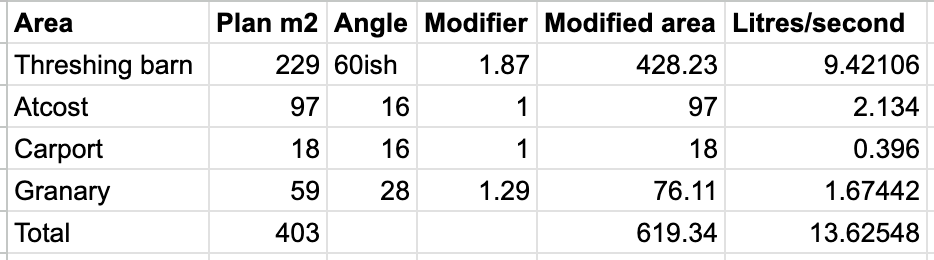
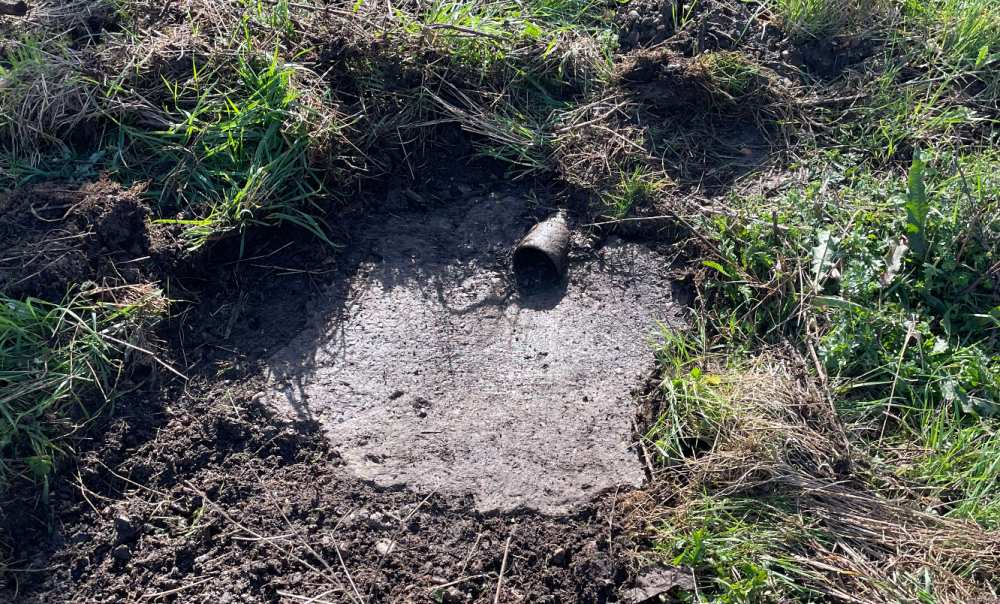
There is a surface water 'sewer' that was installed on the property when it was a farm. It's basically a metal pipe of something like 8-10cm diameter, that pops up on the tarmac drive. I rented a cat-and-genny when looking into the sewage solution a while back, and it appears to run to an unlisted storm drain on the other side of the road, that roadside drains also flow into. The farmer that used to work the site said that the water company (that does the extraction) built those drains/sewers and connected the barns up in the 60s. Given what @saveasteading said about my misunderstanding about the pitch factor, the sum plan area of buildings is 403sqm, so that should yield a flow rate through a pipe of 8.8litres/second and Diagram 3 of Document H3 makes it look like a pipe of 75mm diameter should be able to handle that. I'm tempted to go back to the drainage consultant and ask for a quote on a CCTV survey of the pipes to see if they can be used. If they turn out to be fine, then it'd be daft not to use them.
-
Wow, lots of comments to consider. Thanks for your consideration and input, and for also trying to cheer me up. It was certainly a bit of a surprising knockback (I'm sure there'll be many more to come) and the missus was on holiday visiting the in-laws so I didn't have anyone else to vent to! Aye - I think it's one of those areas in which there are alternative means of satisfying the building regs, so 5m is a rule of thumb to keep things simple on ordinary sites. I'm currently waiting on the missus to add a 5m exclusion zone on the site plan so we can work out how much space we have to play with. Agreed on both points. We've asked them to proceed with a quote for the BRE infiltration tests. I do absolutely value that the consultant is raising this - the information is invaluable, and it's much better to receive it sooner rather than later. I do wish that they were providing a little more in the way of potential solutions and little less teeth-sucking though Correct! So quite rightly we've got to be very careful. The pumping station is 300m away. Thanks for the various suggestions @Gus Potter, those were all things I hadn't thought of. Thanks also to @saveasteading for the point about the calculations - so to recap, you're saying that individual gutters/drains need to be sized taking angle into account (in case the rain is blowing in sideways), but the overall amount being disposed just needs to consider the plan area? If so, that makes a lot of sense and reduces my levels of astonishment at the building regs! Tell me about it! In my IT consultant life we often talk about designing things with "the principle of least astonishment." This scenario has a non-minimal level of astonishment. In the planning application from the previous owners that got approved, the LPA mandated oil interceptors from all areas of hardstanding. This is particularly annoying as 1) the site has had tractors on boats on it for years, without any interceptors; 2) we only drive electric cars. Of course delivery vans and future owners might drive things that use oil, but still... That's a good question. No, we haven't. In prior planning applications the EA have been a statutory consultee, and have delegated approval back to the LPA with a set of conditions. So we might end up with the LPA making that decision on the EA's behalf, which I'm not sure will be better or worse. It took four months for the EA to grant as a permit for sewage... Maybe I should start looking into permits for rainwater now.
-
What do you do when there's not enough space for soakaways and you can't drill a deep bore soakaway for surface water? Four years in, we're still in the planning phase of the conversion of two barns in groundwater source protection zone one. The drainage consultant we're using is very alarmed that there may be no viable drainage strategy for surface water. Because the barns are quite large, there's a large area of rainwater that's collected. This currently just falls off all the eaves, or in some cases goes along gutters, down downpipes, and into underground pipes of unknown quality, diameter, incline and destination. I knocked up a quick (and inaccurate, but better-than-nothing) estimate of the amount of roof area that we'll need to deal with based on Approved Document H3: The lowest point on the site is sandwiched between the barns and a road. Approved Document H3 asks for soakaways to be 5m away from buildings and roads. The drainage consultant has suggested getting BRE365 infiltration tests done, and taking things from there. However, his tone seems to imply that he thinks that it's going to be unpossible to get a viable solution that will pass building control and the approval of the EA (who in turn delegate the decision to the LPA). I'm going to be flabbergasted if after four years and several hundred thousand pounds of plot purchase, the development is snookered because of rain falling on the site. I mean, we're not going to make it rain more. We are going to need to direct that somewhere, but it can't be an intractable problem. So: what options are there? Does anyone have experience of doing things like pumping surface water elsewhere? Would wanging ponds into the wildlife/landscaping scheme help? The drainage consultant seems very thorough and knowledgeable, and already has context on the site. I'm considering getting second professional opinions though just because I can't be doing with the figurative sucking of teeth when what I need is solutions rather than proclamations about how tough the situation is. P.S. Some folks may remember my questions about drainage and sewage treatment. We got the EA permit for discharge-to-ground for that, despite every professional thinking it was impossible. So I was quite surprised to have surmounted that obstacle only to find that chuffing rain water would be a potential showstopper