

Drellingore
-
Posts
307 -
Joined
-
Days Won
2
Everything posted by Drellingore
-

0% vs 5%
Drellingore replied to sameulepapi's topic in Self Build VAT, Community Infrastructure Levy (CIL), S106 & Tax
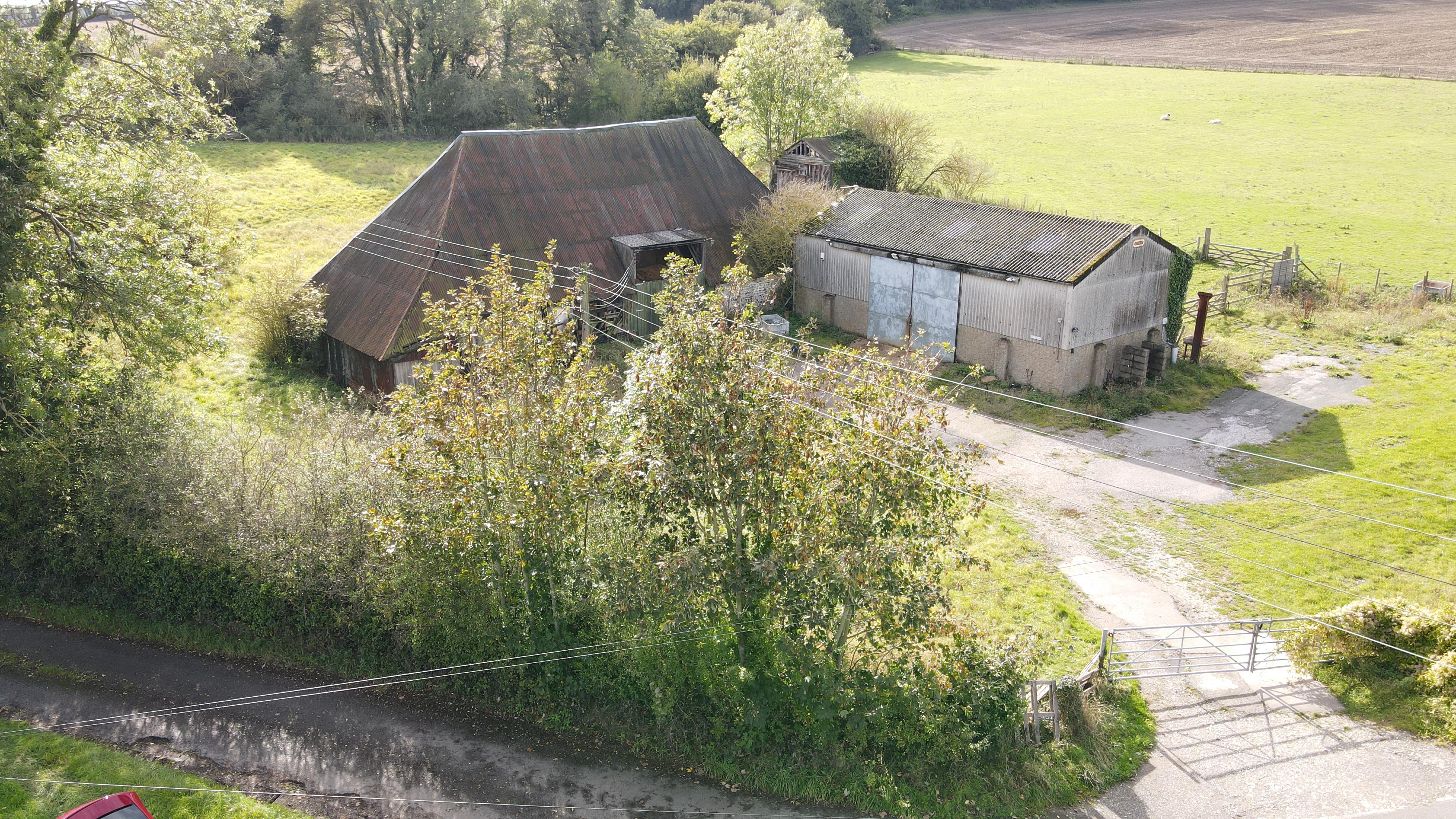
The short answer is: you will need to track invoices well. I'm currently going through all this myself, having been incorrect a number of times on this forum. The thing you want to read (in tedious, tedious detail) is VAT Notice 708. I can save you some time by saying that you can probably disregard sections 4, 5, 6, 8, 9 and 10. I'll chip in with what I think might be useful opinion, aside from directly answering your question. My understanding is that your main contractor should be charging you 5% VAT. You will not be able to reclaim this 5% if your works are covered under section 7 of notice 708, which covers conversions to residential use (and explicitly gives the example of a barn conversion). 5% is what you are supposed to pay. My shakier understanding with regards to materials is that if your main contractor buys materials and incorporates them into the building, then they should be charging you 5% VAT and reclaiming any difference themselves. If you buy the materials and incorporate them into the building, then you should expect to pay 20% VAT and then reclaim the difference at the end of the build. If you can demolish the existing barn to ground level, without breaking planning consent, before constructing the new building then you may be eligible for zero-rating VAT. This is covered in section 3, and section 3.2.1 specifically calls out the case of a previous building existing. Seek professional advice before going down this route. Providing water, power, heat, access, drainage, security or waste disposal to a site that is being converted to a residential use is covered in section 7.6, and those will be reduced-rated (5%). Either people should be charging you 5% VAT or you should be reclaiming the difference - I'm not sure on this point, and so far I've found notice 708 to be slightly contradictory on this point. The fact that the barn has been empty for 10 years isn't relevant as it wasn't a dwelling to start with - this would only be relevant if it was a dwelling or used for a residential purpose previously (which is what section 8 is all about). So that's a red herring that you can disregard. Your eligibility here is covered in a table in section 7.2. As ever fine folks, please call out any lies I've told -
Any idea where this rule is written down? I've been through approved doc H, but couldn't find it. But then, given my poor ability to read VAT documentation, it's entirely possible that I've missed it
-
As ever, thanks for your input y'all.
-
Ha, you beat me to it Note to other readers, my link to the General Binding Rules is older than the one @Temp posted, so prefer that link over the one I posted.
-
Thanks, @Temp! I think the information from that post comes from the General Binding Rules [EDIT: this is older than the link @Temp provides in the next post] for Small Sewage Discharges. That does however put it in conflict with Approved Document H2:1.54, which says PTP discharges should be sited "at least 10m away from watercourses." I'd guess that maybe the authors of H2:1.54 are assuming a discharge to ground, which would make sense, as it's not really a discharge to ground if it's really close to a watercourse The General Binding Rules say cubed, which makes sense as it's a measure of volume, so I think you've spotted a typo on their part.
-
110v versus 240v at start of project
Drellingore replied to Drellingore's topic in Tools & Equipment
Thanks for the thoughts folks. I took a while out of the project, hence the absence of replies. I'll take some time to dig through the above, my notes, and what the accountant has said. -
Hmm. The "systems you must have" section of this Government web page seems fairly clear by including this as number 3 in the list of mandatory systems: Unlike Approved Document H, this guidance seems to emphasise infiltration more than treatment.
-
Approved Document H2 section 1.54 details the restrictions on discharges from packaged treatment plants. This to me suggests that discharging directly from a packaged treatment plant is an expected outcome. Approved Document H2 section 1.26 says that drainage fields/mounds "provide secondary treatment to the discharge from a septic tank or package treatment plant." The thing is, I'm looking at combining a Rewatec Solido Smart PTP (which has a primary tank, and does secondary treatment) and a battery of Tricel PuraFlo modules to provide tertiary treatment and hopefully get BOD, SS, and NH4 all under <1mg/L. So is the drainage field required for spreading out the discharge (improving percolation and avoiding a soggy bog), for secondary treatment via aerobic bacterial processing, or both? If it's only the middle option, then perhaps I don't need to consider one. Any examples of where this has been allowed or links to relevant planning regulations would be much appreciated.
-
Are there any regulations stipulating how far either packaged treatment plant discharge, or a drainage field/mound, must be from a property boundary? Approved Document H2 1.54 says that PTP discharges need to be >=10m from any watercourse or building. Section 1.27 says that drainage fields/mounds need to be >=15m from any building (presumably including neighbours!). I had a vague recollection that there was a requirement somewhere about the proximity of discharges from boundaries, but despite a quick scan and a search of approved document H, I can't find anything. Any ideas, folks?
-
110v versus 240v at start of project
Drellingore replied to Drellingore's topic in Tools & Equipment
Thanks, good spot! It's actually VAT Notice 708 section 5 that covers this situation. Luckily I keep notes for the benefit of future-me, and those are more accurate than my forum posts Apologies for confidently spouting mistruths. He did mention one client got inspected. HMRC wanted to know why, on a reduced-rate project they'd been reclaiming VAT quarter after quarter, but hadn't collected any yet. The accountant had to politely point out that build projects often don't get paid for until the build is finished So that certainly backs up the claim that HMRC may suffer arse/elbow differentiation difficulties. Good shout. I did look at it once a couple of years ago and filed it under "don't worry about it," but as shown with the VAT situation I should be able to point to a particular bit of regulation/legislation before considering it a solved concern. A good question, for which I currently have no answers. I'll ask the main contractor I've been talking to what he does when people engage him directly to build projects. I'm not sure this is true. If presented with a zero-rating certificate, I believe suppliers can opt to zero-rate their supplies. If not, by running the build through a VAT-registered company the VAT can be reclaimed on a quarterly basis, which is better for cash flow than the self-build reclaim scheme. Sorry, I didn't provide enough detail here. The limited company is just doing design-and-build. We as individuals pay for the service once its complete. Any holiday letting activities may either be covered under self-assessment, or we might lease the right for another company of ours to run the holiday lets. We'll figure that one out nearer the time, but the SPV definitely won't have any involvement in future letting. -
Is there any reason to believe that the current SEG system is likely to get changed/discontinued any time soon? I haven't watched news since April 2021, so I'm a bit out of a loop. I've done a bit of online searching, and can't find any clear and imminent threats, but I thought I'd check with you fine folks.
-
110v versus 240v at start of project
Drellingore replied to Drellingore's topic in Tools & Equipment
Thanks for the replies and thoughts, all. I appreciate people taking the time to offer their thoughts, even if it's (necessarily) blunt or not-in-agreement. Messages on forums rarely provide the full detail and nuance, so it's hard to get everything across and easy to misinterpret intent. CDM2015 - thanks for the warnings, I've ordered some books. I've run multi-million pound businesses with staff across Europe, and architected big complicated IT systems for governments, enterprises and regulated financial enterprises. I'd be surprised if CDM2015 is an order-of-magnitude more complex than adhering to Google's third-party supplier security requirements. I do take this stuff seriously, much to the amusement of my neighbour who will happily break every regulation going and thinks it's funny when he sees me jumping through regulatory hoops VAT and limited company - I'm pretty sure about this, and the accountant in question has several clients who have used the same approach. We have a company, which is a special purpose vehicle to design and build the buildings. It does not own the land (so there's no stamp duty involved anywhere). We contract the D&B to the company, which makes a profit on the exercise. One building is zero-rated because it's a conversion from a non-residential property to a residential dwelling; the other building may be either zero- or reduced-rated depending on what planning have to say about whether it must be a holiday let or not. I don't understand what you mean here. Whether I do the work as an individual or a business is irrelevant - zero- or reduced-rating is dependent on the purpose of the building when complete. The building has no business purpose when completed, and therefore satisfies Section 2.1.3 of VAT Notice 708 as previously mentioned. I'm not arguing for the sake of being difficult here, but I do feel a responsibility to any future readers of this thread to make sure that any assertions I make are as correct as they can be, and cited too. 110/240v - thanks for all the input, I was expecting this to be quite one-sided, but it seems there's a diversity of opinion. It sounds like I should buy battery tools and defer this decision until I need some hardcore tool that requires mains power -
Cool stuff, best of luck!
-
110v versus 240v at start of project
Drellingore replied to Drellingore's topic in Tools & Equipment
Section 5 suggests that it's zero-rated, as it's conversion from a non-residential property to a dwelling. It's surprising how complicated the official guidance is, especially when different scenarios are spread out across the document! Eep! Thanks for the heads-up, I should probably start looking into that then. -
110v versus 240v at start of project
Drellingore replied to Drellingore's topic in Tools & Equipment
Yep. No insurance in-place yet (no work has really started), but I expect we'll need to get some sorted. I've run businesses with employees and public premises before, so I'm hoping it won't be much harder than reading the HSE documentation, paying for insurance, and then keeping a risk register. Thanks, but I don't believe that to be true. Section 2.1.3 of VAT Notice 708 says: -
110v versus 240v at start of project
Drellingore replied to Drellingore's topic in Tools & Equipment
Sort-of on the main contractor front. We'll appoint someone that actually knows what they're doing to build stuff, but they'll be appointed by the SPV. Yes to the second question. -
110v versus 240v at start of project
Drellingore replied to Drellingore's topic in Tools & Equipment
My accountant's been pretty good so far, and has stewarded me through four businesses and one large company sale. This SPV will just be for the design-and-build, it won't actually own the land or anything. It also allows us to make an inter-company loan from my holding company to the SPV, so I can use those funds to avoid the need for bridging loans or traditional finance. Was there anything in particular you had in mind that I should check for? Ah, are they harder to sell on? I can imagine that there's a smaller market, and that professionals probably buy new. -
Hi all, questions at the top, context below! Should I buy power tools rather than rent them? Should I be buying 110v power tools at the start of a self-build project? My immediate task is that I need to break through a big stone slab whilst digging a 2m water table test pit. I was going to go and buy a concrete breaker to get through the slab (I managed to get through it in one place with a pickaxe, which was a bit of a mission in a 1x1m pit!). Yes, I should probably have used a digger or something, but at the time I fancied the physical challenge of doing it by hand Our planning application is in, and we've set up a special purpose vehicle limited company to run the build project. It's a barn conversion, so should be VAT zero-rated. I'm thinking it makes sense for the company to buy all the tools as-and-when we need them, so that it can claim the VAT back. On the 110/240v thing, it seems safer to be using 110v, and I'd rather be on the safe side of things - it'll be me who gets electrocuted, and I'll be legally responsible! I'm thinking that getting 110v kit means that it'll be easier to use if we want to get stuck in when it's a proper building site. For example, it'd be a bit weird if all the trades are using nice, safe, 110v kit and then I as the owner/customer wade into things with 240v equipment. Any thoughts or suggestions? Is 110v gear generally better as it's more oriented toward the professional?
-
Landscaping - choosing trees
Drellingore replied to Drellingore's topic in Landscaping, Decking & Patios
No worries, I'm such a newbie that I can't add value to anyone's conversations, so if I inadvertently create a space for a chat that other people benefit from, that's a bonus -
Landscaping - choosing trees
Drellingore replied to Drellingore's topic in Landscaping, Decking & Patios
Ha, I know what it means in that context! Getting back to SFW topics, I'd forgotten that I'd mentioned news. I was thinking there was some forestry organisation called the BBC or something! -
Landscaping - choosing trees
Drellingore replied to Drellingore's topic in Landscaping, Decking & Patios
But the kids like Strictly! Sorry, I'm not sure what BBC stands for in this context - can you shine a light on my ignorance please? -
Landscaping - choosing trees
Drellingore replied to Drellingore's topic in Landscaping, Decking & Patios
Ooh, how comes? I haven't watched the news since April 2021, so I generally have no idea what's going on in the world -
Landscape Design for Planning Conditions
Drellingore replied to IainParnell's topic in Landscaping, Decking & Patios
Our property in an AONB had planning previously approved by the prior owner. The planning office rejected their initial drawings because they didn't like the line of a new hedge! So it had to be changed (on the planning officer's suggestion) to be an S-shape. In this case they weren't interested in species, just layout, and they didn't ask for levels either. We've had a full-on biodiversity net gain strategy and report done, so if that's useful I can share it, but it's probably way more heavyweight than is required here. -
'ello folks, Does anyone have any resources that they can recommend for choosing trees, or good 3D landscape design software that could use a drone scan as a starting point? I've got 3 acres in which to start planting a forager's garden (think of it like a chaotic underplanted orchard) whilst I wait for planning to go through on the adjacent barn conversion. The field in which the planting will take place is where all the good views are from the property, so I need to think about lines of sight, height and spread of different trees, all that jazz. A lot of resources that I find online for choose plants are much more, err... 'Aesthetically-minded' than I need. I'm not an arty sort (that's the missus' job), I just need to make sure that I'm blocking lines of sight when I want to, and not when I don't. Additionally it'd be great to get some recommendations on the bewildering myriad of 3D garden design tools out there. I'm reasonably nerdy (ex-programmer), so don't mind learning technical things. Any suggestions would be most gratefully received.
-
Discharges in Groundwater Source Protection Zone 1
Drellingore replied to Drellingore's topic in Building Regulations
Kinda. There's one really helpful local farmer, bloke in his 70s who is an absolute legend. I feel a bit bad asking for favours though, as we don't have anything to give him in return (he doesn't drink, so it's not like I can just bung him a bottle of wine or something). How hard is it to operate a small digger? Tempted to rent one. In fact, we'd been looking at buying an electric one (eco-hippy who has only ever driven electric cars) and then either trying to monetise it through rental or flogging it on, but I don't know enough about the market to know if that's a silly idea or not.