
Nickfromwales
-
Posts
31382 -
Joined
-
Last visited
-
Days Won
346
Everything posted by Nickfromwales
-
What voltage and wattage are the bulbs please? PS, calling them bulbs really pee’s off the electricians, so I’ll give you £1 every time you do it “You plant bulbs”……. Yea yea, get over it lol. 😜 I expect the wiring is too small, can you get a second cable to loop from the last (lamp) to the 1st one? This will create a ring and even out the power each…….bulb…….receives. Probably an under-volt issue caused by the drop over the length of the cable, imo.
-
 To be honest, you may be better off with a raft foundation depending on what the average depth is. You also REALLY need to be asking a paid professional such as your structural engineer, as neither you, your builder, nor the 21,200 members on here can tell you definitively what to do to resolve this
 -
I’ve been using CVC Systems (Oxford) for MVHR and ASHP / plant room installs, design / supply / install etc. They’ve done a lot of installs for me over the last few years and I would recommend them in a heartbeat. They do ‘travel’, within reason! 👍. Hope it goes well.
-
The loft is within the heated, airtight envelope, ya?
-
Immersion thermostat keeps tripping
Nickfromwales replied to Little Clanger's topic in General Plumbing
Because…….its faulty. If neither were faulty you’d not be posting here Just sounds like a manufacturing defect, so the heats getting to where it shouldn’t be. -
Contesting final invoice - please help!
Nickfromwales replied to Tom's topic in General Self Build & DIY Discussion
Cool. They don’t have a leg to stand on there then, as the extra cost would have had to be raised as a variation order. What a bunch of shit heads. Stick to your guns here and withhold the monies until it’s resolved. Utter tosh! I’d send an email saying you’re applying to the small claims court without further notice, provoked by the zero response. If a CC form is sent out you can contest the validity of their claim and that should halt them in their tracks. Annoyance is you have to pay a fee to reply to it, but that can be added to your claim. -
I had a run of bathrooms to fit from a major showroom down here, with an open riven face to the tile. Had to start adding hundreds of £’s to my quotes as to get the grout managed we had to grout each m2 at a time. Still have nightmares over it, and it NEVER all came off.
-
Heated slab external edge insulation question
Nickfromwales replied to Spinny's topic in Heat Insulation
Lose the external blocks that run under the threshold and replace with Marmox blocks, if worried. You can do this in a day with the bifolds fully retracted as there will be no weight on the threshold then. Adding the XPS to the outside of an already cold block is just some nonsense solution to get you signed off and out of their hair imho. -
You’re outnumbered mate. 💪 Now, back to business! 😘
-
Contesting final invoice - please help!
Nickfromwales replied to Tom's topic in General Self Build & DIY Discussion
What of this have they immortalised? -
Have you not taken your meds yet? Chill Winston or I’ll open a can of Welsh ninja kick-ass, 🥷and whoop you good, boy. If your tiling was bad, I’m sure I’d have already commented historically……but tbf the only thing I could find was us ripping into your piss coloured grout 😂😂. “We good”, lol 😊.
-
Contesting final invoice - please help!
Nickfromwales replied to Tom's topic in General Self Build & DIY Discussion
Mediation via other not via CC claim. Sorry. Did you / they immortalise this discussion? -
Maybe better if you check out ‘the paving expert’ forum too? If you go cheap and mortar these joints, expect them to fail with repeat wet / dry / sun / freeze. The reason it’s expensive is because it’s very good and extremely hardy and durable. Work out costs of the lifetime of ownership, not the cost of the stuff in the tub, as grouting / pointing these every time they become shabby would be a royal PITA.
-
Contesting final invoice - please help!
Nickfromwales replied to Tom's topic in General Self Build & DIY Discussion
Offer to split the scaff costs to break bread? Tbh you should have said it needs to go and asked if it was going ‘on the bill’, because if the contract says you’re responsible for the hire for the duration then you’re fecked. -
Contesting final invoice - please help!
Nickfromwales replied to Tom's topic in General Self Build & DIY Discussion
Maybe ask for mediation first, so you can clear the air via an impartial 3rd party(s)? Arguing takes a lot of effort, talking can smooth this both ways, but they’re on thin ice and would be stuffed if this got in front of a judge. If they did make a claim, you’d just respond via a counter-claim and get it set aside, but tbh you really want to avoid court action either way wherever possible. Can go either way, it’s not a given. Whoever damaged the tiles, how can you evidence that you or a family member / visitor did not do this? For eg. Have they admitted damaging them? CCTV footage? -
That’s BIPV, so please, if you get a quote, can you upload here so we can compare? Doesn’t look at all bad tbh, better than the half length panels for sure.
-
People buy with the eye, lol.
-
Maybe start a new thread in the doors and windows forum to wake the gods, vs hoping someone finds this in the foundations thread 👌. Prob get more responses that way, specific to the windows 👍👍
-
I think for Georgian style the glazed units just come pre fitted with the bars?
-
That’s going to be for you to find out tbh. That’s one for lots of googling and ringing and emailing of specs. Maybe someone on here has bought some like this and can provide a link to the supplier?
-
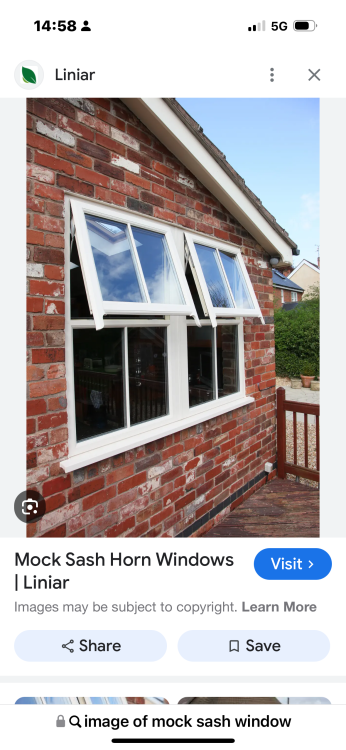
Kind of what is was building up to, just I was going to break it to them gently 🤣🤣🤣. Yea……..sliding sash are horrible. @lizzieuk1, you can get regular openers that look like sash from outside. These just have the horns added to the opening upper 50% of the window.
-
Lol. I’d often lose a full day drawing the grout lines out in pencil, over and over again, until I liked the layout. And that was on clients jobs not my own house! Time well spent imo, when I saw just how poorly other local tilers workmanship was, as only a few have OCD. But more surprising is the lack of eye for quality that a lot of clients have, and they only really notice these things when someone points it out lol.
-
Immersion thermostat keeps tripping
Nickfromwales replied to Little Clanger's topic in General Plumbing
These are all in one hi-limit plus regular stats combined. You just slide the whole thing out with some types, and leave the chassis in situ (dry replacement) or the lots got to be changed with cheaper units (wet replacement). It’s just a duff unit most likely, but direct cylinders do have a tendency to go through lower immersions sooner as that’s the one doing the heavy lifting. Just not this much sooner -
Pointless going with a great fabric AT test and then filling the house with poorly sealed, leaky doors and windows..... Cold air infiltration trumps U values all day, every day. "Far better" will still be "poor" vs a proper AT rated unit, unfortunately. Ask the manufacturers for the statistics of the units you are considering, and compare those to say a Rational entry level AT unit to see how much difference there is.
-
There are few people out there who would integrate an in-roof PV array with a standing seam roof covering. Only true solution is BIPV, which is OK to look at and I guess a reasonable solution. No idea how long these things last though, but I imagine if one snuffs it you'd just stick the replacement one on top of the dead one, if you couldn't get the thing to come off without causing damage / voiding roof warranty. Ground mount is a good option IMHO, but you do need a fairly open plot and a lot of clear landscape around you to make that work. Also, regarding PP, there is a BIG difference between ground mount (the panels laying on the ground) vs putting these on the roof of an outbuilding, so each is a different subject for a different scenario. Outbuildings could be 1.5 storeys and have in/on roof solar on them, without much annoyance to the PP dept for eg, but they may poop the bed over a ground mount?!?