
Nickfromwales
-
Posts
31378 -
Joined
-
Last visited
-
Days Won
346
Everything posted by Nickfromwales
-

How to make a shower-cubicle floor waterproof?
Nickfromwales replied to David001's topic in Bathrooms, Ensuites & Wetrooms
@David001 Something like this should be in the immediate shower area for the falls, and for the tile adhesive to bind to.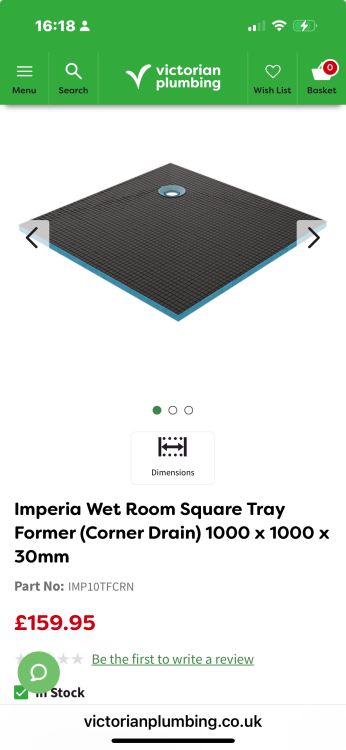
-
How to make a shower-cubicle floor waterproof?
Nickfromwales replied to David001's topic in Bathrooms, Ensuites & Wetrooms
Yup, which is why I asked for some pics from the hatch down below. Seen lots of BS tilers just do a fall with tile adhesive and they always fail. Needs to be a former, and then a ply or Marmox / Wedi backer board to stop the tiles giving up. Just amazes me how trades cut corners like this just to get paid and out the door. Would be less of a surprise if it’s a mass-built sausage factory home tbh. -
MVHR drone
Nickfromwales replied to Mattg4321's topic in Mechanical Ventilation with Heat Recovery (MVHR)
Can you post some pics so I can make some suggestions? Unit > manifold etc plz. -
Heat Geek Zero disruption ASHP
Nickfromwales replied to JohnMo's topic in Air Source Heat Pumps (ASHP)
The Tesla of the 80’s lol. -
Challenge the insurance company and ask for full written reason for the refusal. I’ll PM you some details for an SE near you. Another member is using them and good feedback so far.
-
Pole sanding will be your friend. Apply about 5 generous coats of Leyland high opacity Matt white paint and leave to dry for a week. Then when you sand, the paint acts as a surface filler. You’ll almost instantly see plaster pop through here and there, where the highest of high points are, and you just then avoid those thereafter. The more you repeat this process, the better it’ll get. Don’t sand in one place, you need to do long random strokes. Good news is you only really see this where the sun is an enemy and not a friend.
-
New soil pipe through or under foundation?
Nickfromwales replied to Jord's topic in Waste & Sewerage
Making that size hole through founds isn’t going to hurt it tbh, been done a million times before. My point being you need to know the levels (inverts) before you start so you know where you’re able to go through (at what depth). Me personally, I’d rather go through than under. You can hire a core drill to offer minimal disturbance. -
3-4 turns is not enough. They should be a quick fix. Pipe jointing compound is essential, so where a nut is tightened over a thread, and an olive is involved, you should fill the valleys of the threads (lightly) to reduce friction, which increases torque. Brass can bind early if done dry, hence the joint hasn’t then pulled quite as tight as it needs to.
-
I would like to give words of encouragement here, but you test at min 4bar and at 3 or a bit over, you defo shouldn’t have leaks. Have you been using PTFE (min 13 turns on rad valves, I do 16) and pipe jointing compound on brass / nuts / threads / olives?
-
Can you explain what you mean? The frame gets added to not reduced? So you could make the wall 500mm wide if you wanted. Check the weight and choose the densest board type I guess!
-
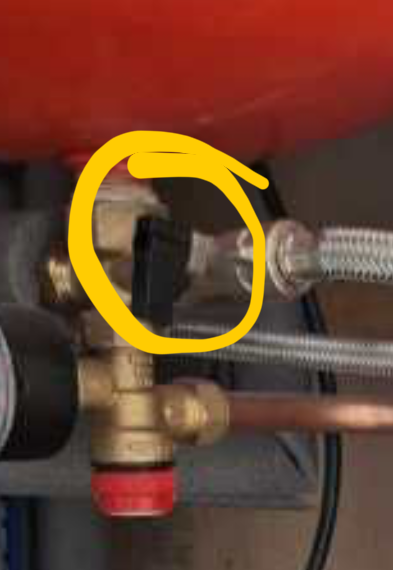
If this is the ‘isolator’ then we’re referring to the “filling loop”. The black tap is a 1/4 turn which introduces cold mains water into your sealed heating system. You open that part way, and watch the gauge rise to 1.5bar, and then shut FIRMLY off. Then you’d usually go around venting any air out, this would see the pressure drop to reflect the air (pressure) being let out. Then you’d top back up to 1.5 bar and then check the tundish 24hrs later.
-
Pasql seemed quite good tbf, once the client had a dialogue and an appointed designer they were very reactive and helpful. I altered the design (more than once) and they adapted to it on the fly without much resistance. Plenty of advice and support so we could keep traction, replacement posis delivered promptly and at reduced cost, so just speaking as I find.
-
How long is the wall, and is there a reason you can’t beef it up more and widen the whole wall accordingly? Alternatively you can use acoustic or FR plasterboard which is tougher / denser.
-
New soil pipe through or under foundation?
Nickfromwales replied to Jord's topic in Waste & Sewerage
Is the invert low enough for you to go under? If not, you’re forced to go through. Some pics or a rough drawing would help. -
MVHR drone
Nickfromwales replied to Mattg4321's topic in Mechanical Ventilation with Heat Recovery (MVHR)
If the sound is from the unit, you attenuate at source, but if its transmission of vibration which then manifests itself downstream then a totally different issue to investigate and resolve. @Mattg4321 if the unit is top hung on a wall bracket, pull the bottom of the unit forward and slide a towel up behind it, and see if that makes any difference. -
Unlimited hot water with 4 bathrooms - is it possible?
Nickfromwales replied to Indy's topic in Boilers & Hot Water Tanks
Electric showers are horrible, and why would you go to all the expense of installing a system with a high flow UVC, then top it up for very little money or free (ASHP or PV) and then get into a shower, using grid electric on demand, that is the same flow rate as an OAP peeing? Just “no”. Flow rate and temp changes which go up and down like a fiddlers elbow, if you’re not the only one in residence, as these are affected massively if anyone else so much as gets close to opening a tap whilst you’re singing and swinging. 2x 3kw immersions, or more if a huge tank, is ample insurance. Yuk 🤢 -
Credit/Debit Reward Cards, Discounts etc
Nickfromwales replied to Ferdinand's topic in General Self Build & DIY Discussion
Hi @Donattan What project are you currently undertaking that’s needing the use of a credit card etc? We like detail here, so let us know all about it, please! -
ASHP shutdown on over current
Nickfromwales replied to JohnMo's topic in Air Source Heat Pumps (ASHP)
Yup. I used to overhaul galley equipment on RFA vessels, and the connectors were quite specific; using a metal that tolerated the heat / cool cycling that these things are subjected to during normal service. A high temp insulation was used on the terminals too. -
What’s wrong with the ‘copper technique’, all looks good to me!
-
Ah. It’s supposed to be 1.5bar max as that’s the heating circuit. At >3bar the valve is doing what it’s supposed to have done, eg open to relieve the excess pressure, so no problem there. Just refill to 1.5bar and check again.
-
Odd. Well, the waters coming from somewhere, so the question is; if the heating system’s not been filed why is the heating expansion vessel letting water out?! The gauge appears to be on zero, and I can’t see another feed teed into the pipe? Is that correct?
-
MVHR drone
Nickfromwales replied to Mattg4321's topic in Mechanical Ventilation with Heat Recovery (MVHR)
I think it would be fairer to say these aren’t good in general; BPC sell these but so do a lot of other companies / suppliers. -
Rads twice the size, basically. Plus bigger pipe sizing for distribution to rads.
-
MVHR drone
Nickfromwales replied to Mattg4321's topic in Mechanical Ventilation with Heat Recovery (MVHR)
Reducing airflow reduces (attenuates) sound. A bit is lost in translation there imo, and attenuation (true) should begin at the point it's (the offending noise) created, eg at source. -
MVHR drone
Nickfromwales replied to Mattg4321's topic in Mechanical Ventilation with Heat Recovery (MVHR)
But these are for controlling flow rates, not for acoustic attenuation? The issue seems to be at source, so needs resolving before getting into the distribution ductwork?