


MJNewton
-
Posts
1354 -
Joined
-
Last visited
-
Days Won
1
Everything posted by MJNewton
-
No problem, and I'm glad you read it - I'm typing on a phone and might've exploded if you'd just dismissed it and kept on going about dictionary definitions of the word 'balance'. For what it's worth, radiator balancing can be mind bending even when you understand it - particularly if you overthink it rather than just go through the right process (which is iterative and can take a while). It is really important though - or at least highly desirable - but often isn't done, properly at least. Many just twiddle a few knobs until everything feels hot and leave it at that. That's fine; they get away with it but this is largely due to the nuclear reactor they've got burning away at the front. You haven't got that luxury (I say luxury; they are unnecessarily overpaying due to the inefficiencies running like this) and so you need to get the most out of that heat pump you've got and be able to quantifiably determine whether you are getting it or not. Even just simply confirming that whilst you've set it to 55C is that what you're getting?
-
Whilst there is indeed no cold water introduced you must remember/realise that the radiator is extracting heat from the water and transferring that heat to the room. If you throttle the lockshield (which is usually on the return) then the flow through the radiator decreases and allows more time for extraction to take place. Too slow and it'll fail to deliver its full output. If you open it up then the amount of heat extractable increases but do it too far and it'll exceed the radiators capacity and that heated water will return to the heat pump. This 'wasted' flow could've been of more use elsewhere ie run through radiators that are getting insufficient flow to them. That's where balancing comes in - tweaking the flows through each radiator so they get the right amount of flow for their size/capacity/location, ensuring there's enough to go round, helping rooms heat up at the same rate and (for boilers at least - don't know anything about ASHPs) increasing efficiency by minimising short circuits and enabling condensing boilers to extract even more heat from their condensating ability. A thermometer on the flow and return will enable you to observe the effect of adjusting the lockshield, and the former will also tell you if you really are getting water at 55C to all your radiators.
-
It is so much easier balancing radiators if you can actually measure the flow and return temperatures, indeed I probably wouldn't bother trying if I couldn't unless it was purely to get a radiator working that wasn't receiving any flow at all. But if you know best then crack on and let us know when it's done. We can then rule out lack of balance and inadequate flow temperature from the list of possible causes.
-
You need one.
-
Quite an impressive achievement Zoot - you've gone from not understanding the term (perhaps not even hearing of it before either?) to saying the entire heating industry is wrong for using it in, what, a few days?
-
Yes, I have had *exactly* that with Blauberg. Their website was saying things like (literally, actually): Low stock: 8,957 remaining Turns out it was exactly like you describe and they had loads (somewhere) but none in the UK.
-
I didn't even know they had prices on the shelves! You must have nice ones round your way. That said, nothing I want is ever out on a shelf anyway as if it was I could work out for myself if it was the right thing and then run the risk of sounding confident at the till - could probably game the system if I remembered to go in my scruffs at the crack of dawn. Ah, yes, the discount. Forgot about that. I think it goes something like: Discount (didn't ask for one: x1, asked for one: x2 then /2)
-
There's still the 18% of the time when it is in stock though and then you've got the amazing Seemingly-Random Price Calculator that comes out. Turns out it's not random through; I caught a glimpse of the algorithm once and it had various multiplication factors such as: Customer's clothing (ripped/painted clothing: x1, clean jeans: x5, suit with shoes and an office pass around the neck: x10) Desperation level (just passing so thought I'd pop in: x1, clearly desperate and it's getting late: x5, clearly desperate, it's getting late and it involves water: x10) Repeat custom (in here every day at 7am: x1, only here because online delivery not quick enough: x10) Product knowledge (asked for it by name: x1, described it with hand movements and comparison with household objects: x10) Gullibility (didn't ask if the price included VAT: x1, asked if the price included VAT: add an amount equivalent to VAT on top) Duress (no queue behind: x1, queue of real tradesmen behind: x10) Mystery adjustment (x random) (This is just to ensure you never pay same amount twice otherwise you could reverse engineer the algorithm) I'm sure there are others - the list was a fair bit longer.
-
It's not even that - it's the difference between the *average* radiator temperature (thus (flow-return)/2) and room temperature which therefore drops the actual output even further. It doesn't change the rest of your point though so don't anyone let my pedantry get in the way!
-
If that was your bare ass on the radiator I don't reckon it is 55C. You really need to measure them Zoot - it could really help pinpoint where the problem lies.
-
Absolutely, and my main concern was that the actual radiator temperature (average across flow and return) might be even less than 55C as it is not clear how/where its being measured.
-
Not quite sure what you mean by that? Seems a long way of saying 55C? To avoid misunderstanding, you are measuring this? (ie it's not just what you've set it to) I don't have any experience of those sorts of temperatures, but it does sound low to me and I'd expect a major contributor to why the rooms aren't heating up?
-
How hot are the radiators actually getting?
-

MVHR is Largely Bogus
MJNewton replied to DavidHughes's topic in Mechanical Ventilation with Heat Recovery (MVHR)
Agree with that. Whilst we never had much of an issue with condensation, I still fancied the idea of MVHR for its general benefits. My wife said recently how quickly our washing is drying (yes, we hang it indoors - that'll never change I suspect) and it was completely unprompted and she hadn't made the connection with the MVHR. -
Happy New Year to you too Zoot! This recent cold weather had me wondering how you were getting on, and I must admit to being quite relieved that you've posted again!
-
Running mvhr in new build
MJNewton replied to Pete's topic in Mechanical Ventilation with Heat Recovery (MVHR)
I've not noticed drafts arising as a result of our MVHR, but then of course there has to be some air movement between rooms as that is required for it to properly function so it may just a case of me not having noticed it (perhaps by virtue of the fact ours might not be running as fast as yours). Regarding the temperature of the outlets do remember it is not a heating system and so any moving air below body temperature has the potential to have a cooling effect when felt immediately after exit (it'd soon mix with the ambient air at ceiling level). Furthermore, with it not operating at 100% (not far off though - ours seems to generally hover at >90%) the air it pumps in will always be slightly cooler than the air it sucks out. The limited volume and heat capacity of air though means it shouldn't be noticeably cooling the house down much (and certainly nowhere near what a trickle vent admitting untempered outside air in would). -
Running mvhr in new build
MJNewton replied to Pete's topic in Mechanical Ventilation with Heat Recovery (MVHR)
Does the apparent draft stop with the MVHR turned off? -
Is Mvhr worth it for me?
MJNewton replied to Craig88's topic in Mechanical Ventilation with Heat Recovery (MVHR)
I'd second this. You might as well make the most of the MVHR - it's a good method of ventilation (distributed, controllable) and does so with less energy loss than the alternatives. -
2020's last laugh: a leaking roof. Advice please.
MJNewton replied to ToughButterCup's topic in Roofing, Tiling & Slating
Rather than torn/damaged felt might it be coming through a hole where the felt is nailed to the rafters? I beleive that is why felt is draped to keep the water away from the rafters, but I don't know if that's as relevant for your particular roof construction type/materials. -
I think the 'splits' are just where the fibre matting isn't smooth and so the coating isn't either. Even though things are a bit rough in places the camera really hasn't done it any favours. Good question about the warranty and DIYing it. I'll ask the supplier when I next speak to him as I suspect I'll be recoating the roof long term (for maintenance) as I know I could do a better job than my roofer did so I'd take my chances even without a warranty. Whilst it might not necessarily avoid failures/problems it does mean I don't have the stress of blaming someone else and trying to get them to fix it (or indeed stress of knowing I paid them to do a 'professional' job but may not have got anything more than what I could've done myself as an amateur). Incidentally, I could be falling for the oldest trick in the book, but the relatively high cost of Desmopol when compared with similar-sounding products sold more for patch repairs by the likes of B&Q, makes me think it really is a quality product and should be viewed as 'reassuringly expensive', if you know what I mean. Looking at their Facebook page it seems to constantly used on very expensive commercial buildings all over the world. I do recall the supplier suggesting to me that we are often quite shy of moving on from 'traditional' building materials and techniques in the UK for some reason and that many other countries have moved on to better modern approaches.
-
Well, funny you should ask actually. It's been on for two years now and recently I noticed that along some of the edge it was beginning to look like I could see the trims underneath. Actually, at first I thought it was dust/dirt, perhaps from birds sitting on the trims, but getting up there and rubbing it showed this not to be the case. (Not the prettiest of finishes there, but the rest of the roof is better when viewed as a whole) I got in touch with the builder who in turn contacted his roofing sub-contractor who said he'd come and take a look. To cut a long story short he never did and so I got in touch with the supplier as they arranged the warranty (product only) when it first went up. They came out to visit (really great bloke from Raven Roofing in Swindon) and despite being very familiar with the product and its use over many years he'd never seen this before. He didn't think it was UV degradation (as I thought might be the case) as this tends to make it go chalky when it happens (usually in far hotter countries where it is used a lot more than here in the UK) and we agreed it didn't actually seem like the white was the trims underneath as there's no definable 'edge' - it really does seem like it has just discoloured. Still not desirable and so he is going to get in touch with the manufacturer and see what they say and, ultimately, seek them providing replacement product to recoat the whole roof (only 15m2, less a 2.5m x 1.5m lantern opening). Amazingly he even said he'd do the recoating himself given I was having so much trouble getting my builder's roofer interested (not to mention all the issues I had with the poor finish when first applied which ended up getting a recoat even then). So, I do seem to have an issue here but I think I'm still a fan of Desmopol. Sure, this arguably shouldn't have happened, but despite it having done so the remedy seems straightforward - just repaint it like you would a painted wall. I think that is really one of the beauties of PU liquid coatings - very easy to repair and renew (indeed the warranty gets extended by 5 years every time you recoat it). The other benefit is that it can be used with zero falls due to there being no directional laps to worry about (it is actually used in full immersion situations eg swimming pools).
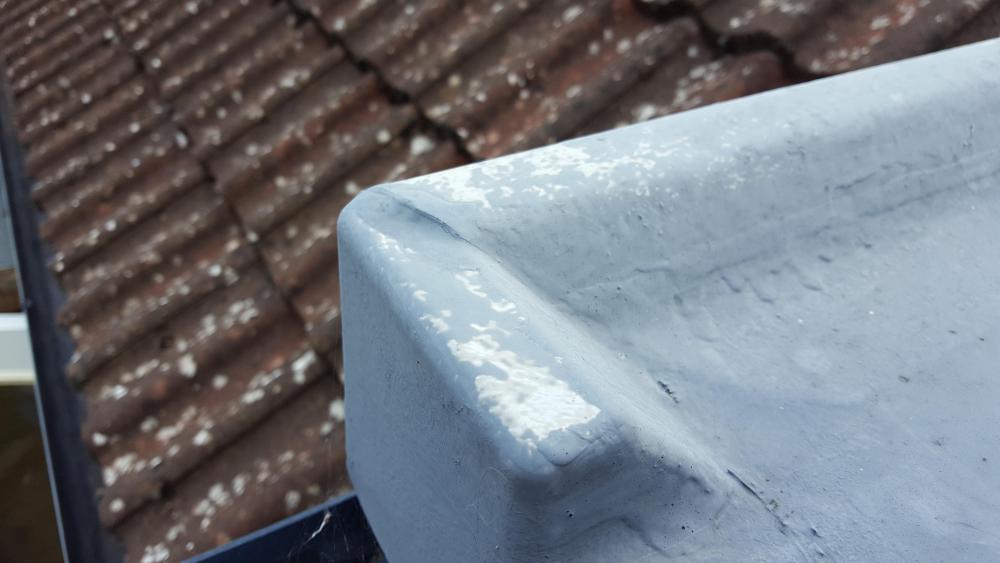
-
I must admit that doesn't look good. Thinking positively though, the worse it is the easier it is to justify redoing (perhaps completely) rather than being in the position where its not right but it's not (yet, at least) causing an issue. I think surveyors can provide valid independent opinions on this sort of thing. Flat roofs and openings are not particularly specialist constructions and so all surveyors ought to have sufficient knowledge to speak authoritatively about them.
-
In my case whilst I didn't have the usual 1:40-1:80 falls in the end I opted to settle for what I did have given I was using a liquid PU coating that doesn't require any fall at all (but can benefit from one, but not for waterproofing reasons). For EPDM, particularly if there any joins, I would likely push for rectification. Do you know who made the EPDM? Even if not, looking up a brand that does and see what their spec sheets say/require. Incidentally, insufficient falls don't themselves cause leaks - if there's a leak there's a hole or detailing issue. Can you elaborate on what you've got, what's happened etc? Photos are always good even just so we're all picturing the same thing.
-
-
Twas the two days before Christmas...
MJNewton posted a topic in General Self Build & DIY Discussion
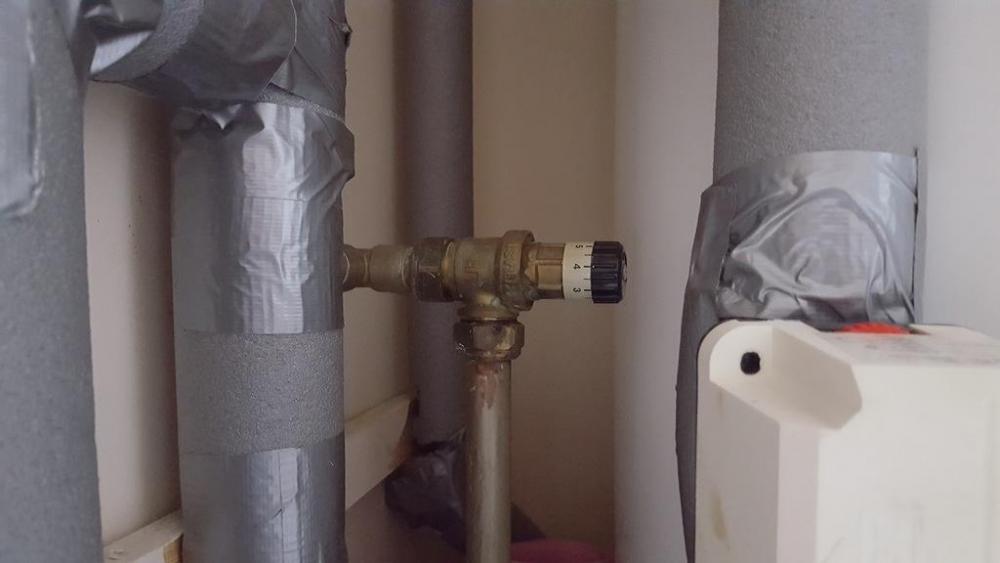
...and for reasons I still haven't fathomed I decided to finally add the inhibitor I bought *in the summer* to the heating system... There's a handy towel radiator upstairs for this so I closed off its valves ready to remove the air vent and pour it in. But of course, the lockshield hasn't been touched in ten years and so that decided to spring a small leak. Not normally a problem - a bit of PTFE to pack the spindle out and all would be good. But oh no, that'd be too easy - to add to the excitement of Christmas this valve is some sort of 'designer' (read: 'designed entirely for form over function') valve with a screw adjuster sealed internally with o-rings of dimensions never before seen before. Taking advantage of the problem opportunity I bought a new more conventionally-designed lockshield with a built-in drain which could be handy for future use. Amazingly for me the obligatory 'hold breath whilst you re-pressurise, crank the heating up and check for leaks/weeps' didn't result in any issues - I didn't even get the weird 'wipe finger around the seals and convince yourself it feels wet but it doesn't look it' feeling! Happy Christmas to all, and to all a good night!-
- 2
-




