


MJNewton
-
Posts
1354 -
Joined
-
Last visited
-
Days Won
1
Everything posted by MJNewton
-
...although not if the TRV is in a room with a thermostat. In that case the TRV should be left open otherwise they'll 'fight' (eg TRV closes down leaving the stat still calling for heat if set higher than what the TRV wants).
-
 On the Domus plenums the interface between the plenum and the 125mm pipe doesn't have a rubber seal - it's just an interference fit between the plastic surfaces. Reasonably airtight but prone to slight movement so I think tape is worthwhile (I've got a feeling the instructions advise the use of sealant).
 -
They were a reasonably good interference fit but, yes, for completeness I did run some aluminium tape around the join (on the inside as access was easier).
-
I should note that I didn't have any height/clearance issues so didn't need to consider slimline fittings, so don't assume my decision to use GU10s was because the alternatives weren't any good (I don't know either way).
-
Fair enough. I'll leave you to it.
-
Come on Zoot, learn to find some information for yourself rather than just asking us about everything. Try Google first and if you get nowhere after reading a few articles post back and I, and others, would be more than happy to help. You really are taking the pi55 now and I am increasingly feeling being taken for granted. Here's the link: https://www.google.co.uk/search?q=setback+temperature
-
For what it's worth mine's a bank of five and is fine (on a Varilight Pro with the default Mode 1 trailing edge). With Ikea Ledare's I have seen some flicker when multiples are used, but that aside they're not too bad a bulb with a CRI of 90 which is better than most, dim-to-warm and only £2.50 each! The flicker can usually be resolved by just tweaking the brightness level ever so slightly but life's too short for that.
-
I've always been so disappointed with the performance of LEDs and whilst they've got a lot better over the years I still don't consider them anywhere near as good as halogen in terms of their dimmability, changing colour temperature when dimmed (which I like) and colour rendition. Of course, they win hands down in running costs so I've somewhat reluctantly gradually moved over to them. Finding halogen-like GU10 replacements has been particularly difficult with disappointment after disappointment from brands I'd expect more from (eg Philips/Signify) but am pleased to say a few months ago my seemingly-eternal search concluded with the Civilight CL 5620 from well-lit. CRI of >95, dim-to-warm, anti-glare light source, built-in heatsink and a 3yr warranty. They're expensive at £13.98 each but, frankly, I got to the point where I couldn't really care less as I wanted high quality light output and nothing else was coming close. Hopefully they'll last longer than 3 years (they're rated at 25,000 hours, which is roughly 3 years of constant usage) otherwise the payback might be slim compared to the halogens they're replacing but we'll have to see. They're not perfect halogen replacements, but they're the best I've found at satisfying my requirements and subjective preferences - and they're good enough for me. One thing that helped me take the risk was their 1yr 'money back guarantee' which basically says if you don't like them you can return them within a year and get your money back. I happened to be discussing lighting on a DIY sub-forum on a car forum (like you do) and mentioned I was going to try these and wondered if anyone else had, and whether they'd had any experience of this guarantee. Much to my surprise the owner of the company happened to be on the same forum so he piped up and came across as really genuine and clearly *really* into quality lighting (that was why he'd set the company up - had basically gone through what I had but rather than just moan on forums decided to do something about it!). He said they offer that guarantee because the bulbs he sells are that good - they hardly get any returns so it's minimal risk for them. Incidentally, he too recommends the Varilight Pro (at least for non-smart control - he's more into pricey smart controllers) and these bulbs are completely stable even down to virtually zero output.
-
I think the calculations are *definitely* still worth it as it'll give you an idea what minimum flow temperature we need to be aiming for. Furthermore, it'll prevent anyone claiming to you that 35C is sufficient.
-
Either you/they haven't put 55C into the system or, if you have, it is failing to deliver that. If the latter that's one for the installers/Vaillant I think.
-
I can say with certainty (and assumed I already had) that, as demonstrated by the calculations I gave you, unless you can get nearer to 55C you will struggle to heat the house with the current sized radiators.
-
Heatmiser Neostat v2 temperature sensor problem
MJNewton replied to Ultima357's topic in Underfloor Heating
Looks alright that! -
Heatmiser Neostat v2 temperature sensor problem
MJNewton replied to Ultima357's topic in Underfloor Heating
You've got me thinking now @ProDave: a view through an IR camera would be interesting, and really help pinpoint the source(s) of the problem (and effectiveness of any attempted solution). -
Heatmiser Neostat v2 temperature sensor problem
MJNewton replied to Ultima357's topic in Underfloor Heating
True, but they all have CPUs and some likely more in number/power than what the Heatmiser has (eg those with fancier displays, occupancy sensing etc) and yet don't suffer these issues. Agreed it's speculation though. -
Heatmiser Neostat v2 temperature sensor problem
MJNewton replied to Ultima357's topic in Underfloor Heating
The best of both worlds is just to have a remote PSU. Thats what the ones with hubs do (the hub is the PSU) whilst others have a PSU local to the stat (but not inside). Some (eg Nest) allow either. -
Heatmiser Neostat v2 temperature sensor problem
MJNewton replied to Ultima357's topic in Underfloor Heating
That said, many stats don't have slots in at all eg Nest and I think the Honeywell CM927 and Dt90 from memory. But then they don't have internal PSUs - I think *that's* the real design flaw. You should never create the very thing you're trying to measure. -
I don't understand what you mean, but it doesn't matter. Just accept the figures. Again we answer; no - the heat loss from the pipe is negligible (resulting in a degree or two over a fairly long length if that) and even that which does occur is still heat into the house.
-
Thanks. So, with a calculated heating requirement of 3603 BTU that's 1056 W. Looking at the fairly common Stelrad Elite radiator tables, the output of a 600mm W x 700H Type 22 is 1207 W. However, that assumes an average ((flow - return / 2)) radiator temperature of 70C. With only 40C you are derating the output by 0.304 thus giving 366W so it will indeed struggle to heat the room. Furthermore, your heat loss calculator may only have factored in heat loss through the materials and not air changes thus the heat requirement will be much more than stated. TL;DR: the radiator is undersized for such a low flow temperature.
-
What type of radiator in reference to the following? And are the dimensions width x height?
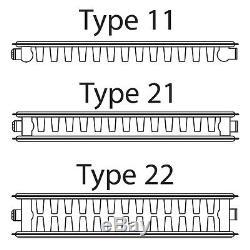
-
Ah, yes. It's okay though I think - @Onoff volunteered to sort that out. ?
-
Truth be told I have actually 'left' a couple of times now but keep coming back. I can't help but feel we've all spent so much time and effort on this - and it really has been very hard work at times - that it'd be good to see it through to completion. Closure perhaps.
-
Didn't spot this line Zoot. Please show a little respect here. People are just offering suggestions - anything that might help you out - so don't complain about the order of advice given. There's no harm checking the basics have been done as with over 50(!) pages it's easy to lose track of what's been said. If you're not happy with our service ask for your money back.
-
Oh absolutely. I am just fearing 10 pages of getting everyone's hopes up.
-
Personally, if the tops of the radiators are as hot as the flow pipe I wouldn't expect there to be an air/bleeding issue.
-
Heatmiser Neostat v2 temperature sensor problem
MJNewton replied to Ultima357's topic in Underfloor Heating
Understood, and agreed, and I'm only thinking out loud (and not considering the inevitable differences the difference between how doable something is in theory vs practice!).

