AliG
-
Posts
3211 -
Joined
-
Last visited
-
Days Won
11
Everything posted by AliG
-
Yes, mine is covered and inside with heat recovery. Thus evaporation losses are very low. Without this, basically your warm water evaporates then is replaced by cold water and you have to heat it again. My understanding is that a cover alone reduces heating costs by around 1/3. Hence my comment though that without an enclosure I would roughly double the heating costs, so you might be talking £10k a year in running costs. I would need to know the size of the enclosure and u-value of this plus the pool body to calculate costs better. My guesstimate is in line with online pool costs calculators I have just checked in the USA. They suggested around 800kWh a day for an uncovered pool from May to September and 500kWh a day with a cover.
-
My numbers are based on the polycarbonate enclosure providing similar protection to that dome. You are probably talking £20-30k fitted depending on the size of the pool. Without some kind of covering/enclosure you could probably double the heating costs again.
-
This is certainly what I used to hear years ago, we have no plans to ever sell and I can show very reasonable running costs if anyone is interested. Out of interest, what kind of value of house are we talking about? Sometimes I see pools in sub £1m houses. It is something really that you might see in a £3m and up house and if put in a much smaller, cheaper house the possible costs would definitely put people off.
-
Outdoor pools are way more expensive to run than indoor pools. I am not sure if the pool is totally enclosed by polycarbonate which would make a big difference. More heating clearly, but also they keep filling up with fresh water from rain so presumably need more chemicals. They also need more cleaning. The basic filtering system cost is included in the pool. For a 30 year old pool you would presumably be looking at replacing the whole system. I am guessing around 15k. Cost of chemicals etc is negligible for my pool. £200ish. If the pool is open to the elements and refills from rain then I would guess you use a lot more of these. For my pool my guess is that the filter pump uses 2000kWh a year and the dehumidifier another 2500kWh. I run these partly at night on Octopus and partly during the day from my PV. Thus they probably cost me around £500 a year. Filtering costs are likely to increase with pool volume. Mine is around 40,000 litres. Yours could be closer to 100,000. So you could be looking at 5000kWh a year for the filter. If it is outside, I assume there is no dehumidifying. It is hard to break down heating costs as effectively I am heating a large percentage of my house and I cannot turn everything else off except when we go on holiday. My guess is that my pool uses 15000kWh a year to heat, maybe it is a bit lower. This is inside a well insulated triple glazed room. If i changed the calculation to show a room made of of 100 sq metres of 2.0 u-value polycarbonate the cost to heat it would triple! This is why many older pool installs are massively costly to run. To save on building them they are put inside the cheapest possible enclosures with virtually no insulation. This is why outdoor pools tend to be heated only from say May to September. The you might be looking at 2000kWh a month for heating. An ASHP would probably use around 500kWh a month as the time of year and low temperature would generate a high COP. Again you could also only runt he filter in summer, but this requires closing up the pool for winter and reopening it in the spring. In summary I would guess that an outdoor pool this size might cost £350 a month to run in the summer. So you would be able to use it around 5 months a year for £2000. This would maybe require £25000 investment in ASHP and new filtration equipment. If you wanted to heat and run it all year you are looking at vastly higher costs, £7000 a year at a very very rough guess, maybe even substantially more as I have to really adjusted for the size if the pool enclosure and the much larger pool than I have. TBH I thing an outdoor pool is a waste of time, you are likely to only use it a few times a year despite large capital and running costs. Certainly cheaper to go to a council/gym pool etc. But no way is it cleaner.
-
UFH 1970s bungalow - insulation beneath concrete
AliG replied to bradR's topic in Underfloor Heating
Your floor finish will have a big impact on this. If you have tiles or wooden floor planned then you need to allow almost 20mm which means you don't have enough depth for screed. You would need to use probably some kind of vinyl flooring. It is important to consider your u-values as @PeterW says. We put UFH in the kitchen of our 1990s timber frame house and had to run it at 60C to keep the room warm in the winter. If you don't have enough insulation you may struggle to keep it warm and need to run the ASHP at a very high temperature ruining the efficiency. -
Looking at the picture would the easiest thing to do, not be to take it out of the frame at the bottom and add extra timber to the back of the frame to strengthen it. Edit - I just realised that if you take a lot off the bottom of the frame then the door is going to open below floor level. This may not matter as I am guessing there is a step up into the building, but maybe needs to be considered. Can you add another layer to the top frame of the building below the rafters, then cut out the existing one at the top of the door? This should have no structural impact, but may be extra work depending on where you are at the moment.
-
The extra production outside of peak months is a good point. However, the returns on investment are poor for this use. Better to calculate the return over a year. If a 10kW array generated 7000kWh a year and you used it all you would be getting £2100 a year of electricity (a good chance this falls once the war is over, or we wean ourselves off Russian gas in the longer run). If a 12kW array generated 8400kWh, but all the summer generation was excess, then it might only actually generate 400kWh that is used, so another 5% more return for an almost 20% larger investment. Basically you are cheaper buying electricity in the winter. My 5kW array is more like 100W on many days in winter. Batteries would make a difference but they haven't been considered so far. Nevertheless I think it is difficult without batteries to manage demand to all happen during peak generation during the day. It is especially difficult to make sure the car charges then, after all it is unlikely you drive in the dark and charge during the day. I have not optimised for this amount of PV, but if I look at our use we hardly ever use more. You could have 1kW of background use and 7kW of charging and 2-3kW going into an ASHP. But the reality is that 7kW of charging would charge up a Tesla at a rate of around 20miles an hour. It is unlikely that you run at this rate for more than 2 hours a day. Better to charge at 2-3kW for 6 hours and buy a smaller array. Unless your are regularly driving over 40 miles a day, which is well above average for a privately owned car. You would need to be charging the car, running the ASHP and have the oven on to use 12kW. How often do these all happen at the same time and for a long period of time.
-
Hi Mark, My installer was RB Grant https://www.rbgrant.co.uk They are an electrician which i felt more comfortable with than a fly by night PV installer who popped up to take advantage of short term demand. If you ask SP Networks for a price for three phase they will come back to you within a few days. If you have a three phase cable passing by, which you may well have it will not be expensive. Intelligent Octopus only requires taht you have a Tesla, MCS is required only if you want paid for export which is separate to this. The Tesla Energy Plan which includes a Tesla Powerwall needs an MCS install.However, the savings aren't that great over Intelligent Octopus that they would pay for the Powerwall cost plus there is a massive waiting list for Powerwalls. You would hardly every use 11-12kw of electricity at one time, so if you installed this on a non MCS system part of your capacity would provide absolutely no return.
-
ASHP vs Gas Boiler - crunching the numbers
AliG replied to Indy's topic in Boilers & Hot Water Tanks
You should achieve a COP of just over 3 between heating and hot water on an ASHP, 2 is a very pessimistic estimate. If you use 30,000kWh of heat in your 1930s house you are probably looking at 20-25k in your new house. You might well use ore energy for hot water than heating. So call it 24000kWh with a COP of 3, That is £2250 of electricity versus around £1850 of gas. I am assuming 95% boiler efficiency and 7.37p/kWh. That is a £400 difference, but you will save the gas standing charge of £100 a year, so £300. Get your COP up over 3 and the difference disappears. If you can use cheaper overnight electricity or PV to run the ASHP sometimes then it could well be the same price or cheaper than gas. I don't know who is quoting for your heating but an ASHP should absolutely not cost £8-10k more than a boiler. Maybe £3-4k more installed. Offsetting this is you won't need to install gas to the property which could save a couple of thousand. Net net I don't think there is much difference if you are starting from scratch with a well insulated house. for an older house that already has gas installed it likely remains the better option. As @SteamyTeamentioned if they start to charge for carbon the gap between gas and electricity will get smaller still. -
First year Heating Energy Use in Passive(I hope) House
AliG replied to Iceverge's topic in Boffin's Corner
I think that it is around 2300KJ per gram, so 0.67kWh per litre. Decimal points got moved somewhere there. -
First year Heating Energy Use in Passive(I hope) House
AliG replied to Iceverge's topic in Boffin's Corner
Part of the error will be the heat capacity of your internal wall leaf and other fabric in the house. Assuming aircrete blocks and plaster, your outer walls will weight around 30 tonnes. This would require over 100kWh to raise the temperature by 15C. The concrete floor will weigh a further roughly 40 tonnes requiring around 170kWh to increase the temp by 15C. Including floor coverings, tiles etc you may need 3-400kWh. On top of this there is the drying out energy. I am less sure about the energy needed to evaporate water, but it looks like it is around 1kWh per litre, so this could be a few hundred kWh to dry out the house. (Note I quickly googled this, it is a lot less than the energy required to boil water) I would also be careful of talking about the percentage error in the calculation when you get to quite small numbers. Your house uses around 800kWh more heating than expected. Using gas this would have cost £25 a year until recently, even now it is only £64 of gas. Cost on an ASHP would be similar. Its a pretty small discrepancy which will probably be even smaller after it has dried out and got up to temperature. I'd guess that you are within a few hundred kWh in the second year after the house is dried out and up to temperature. -
Not sure on the activity space on a quadrant shower. However I don’t think they qualify as accessible if that is also required as the entry is too narrow.
- 9 replies
-
- 1
-

-
- scottish building regs
- bathroom
- (and 2 more)
-
Interesting point, but I think on single phase you wouldn't need the offset as you would simply be able to use all the electricity you generate before you start to import any. The offset I assume is only for instantaneous use. My feeling is that three phase is better if the extra cost is similar as it gives more options in the future for export and more capacity should you ever need it.
-
Good point. Totally forgot about net metering. Actually it must be working as we very rarely use electricity during the day despite having less than 2kW per phase. I don’t know how helpful or not DNOs are re allowing more than 3.68kW. Few people seem to ask. Costs nothing to ask though. As to the costs of three phase it will depend on how close the cable is. We have a three phase cable in the street and had to connect to it anyway so the extra cost was small. If it requires a new supply cable to be connected, however, you are looking at £200+ a metre in the road. Scottish Power we’re very good at quoting though. It only took days from me making an application. May as well request a quote and see the costs of single versus three phase. Without an MCS install though you won’t be paid for exported electricity. The only reason to need to be approved to export more is if the cost of that is less than the cost of the export limiter and any approvals. I also wonder if the DNO may treat non MCD differently.
-
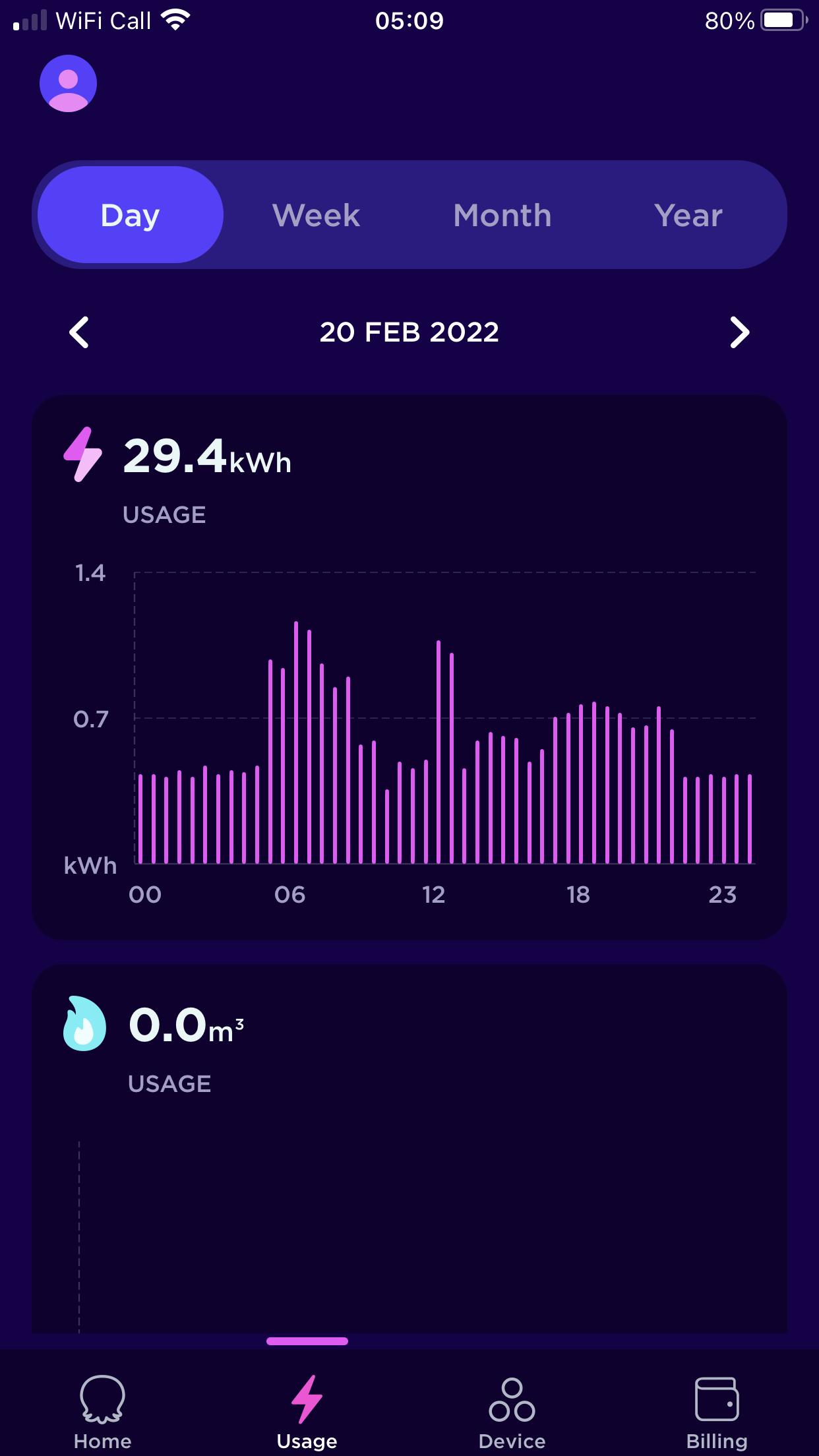
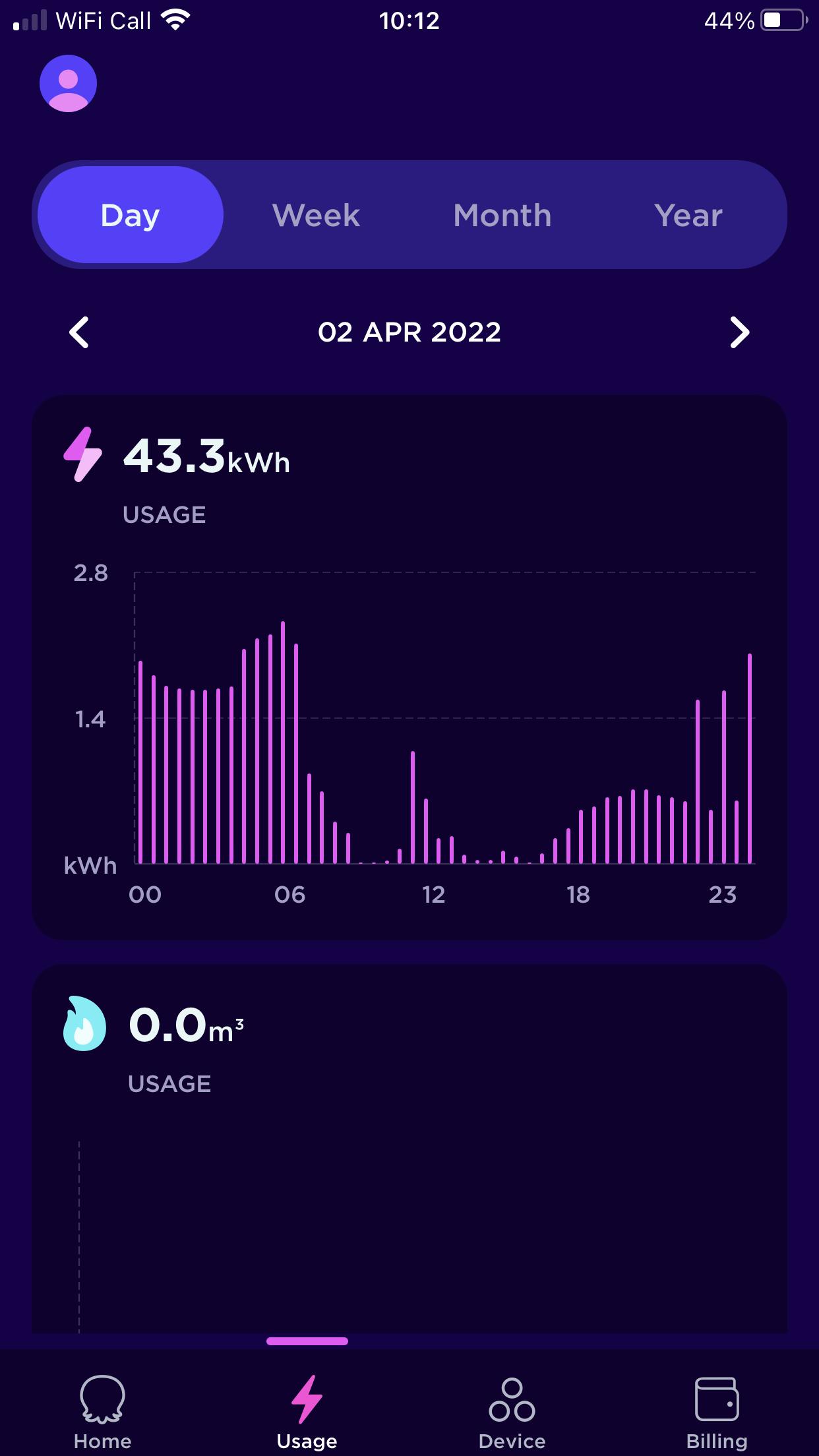
From a bit of Googling, it does appear that you can buy an extra box that limits export from the inverter. So you could install more PV and limit export to 3.68kw when not using all of the power. I couldn't actually find one to buy, but I only had a quick look. I do wonder if batteries are the better solution for what you propose. The problem with PV is that it produces power over a very limited time period. As you can see from my Octopus chart the moment we produce lots of power between 9am and 4 pm. This will get better as we move into summer. If I go back to February (before I had Intelligent Octopus) the charts look like this. For 4 months you get very little output and also only for a very short time during the day. You may also want to consider putting some panels up facing a different direction in a large system to expand the amount of time that you are generating. I have considered adding a west facing array to generate in the late afternoon or east facing for the morning. But it is a hassle now the roof is built, the other panels are integrated into the roof. From using the power perspective, one phase is better than three phases, as the three phase output has to be split and so you have to try and balance your usage across the three phases. This is not easy. The car can use all three phases to charge, but for example, you would maybe want to try and split your appliances across phases which is awkward. I need to actually try and figure out if the oven etc are on the same phase as the washing machine/dishwasher/tumble dryer in our house (Edit: I had a look and things are reasonably well spread) So if you can limit export, what is the most efficient amount of PV to install. Admittedly in a non MCS install, the cost per kw may be quite a bit less, maybe £600-700. On one phase you can charge your car at 7kw. This allows you to charge up 20mph give or take. I have a three phase charger, but the cable has recently become iffy and I have been using a three pin 2.4kw charger for a couple of months. This has so far always sufficed. It depends on your origin habits, but the number of times we drive more than 50 miles in a single day is quite rare. And if you drive a long way, you are probably charging on the road. So the reality is that you could charge your car in two-three hours max on 7kw. Nothing else int the house comes close to using 7kw of power, maybe a power shower, but then if you shower when getting up or going to bed there won't be PV generation most of the time. The next largest instantaneous power draw would be the oven or a kettle both of which draw 3kw. Thus other than car charging you will rarely have instantaneous power draw of more than 5-6kw, even the oven which draws 3kw to heat up, only actually uses around 1kWh an hour so it cycles on and off once up to temperature. You can install a smart car charger that would draw 7kw when available and then reduce this when using power elsewhere. Thus I suspect the amount of use that capacity over 7-8kw would get is fleeting. Meanwhile unless the oven etc are on you would have the full PV capacity available to charge the car much of the time. The only way more than 7-8kw capacity would be useful is if you install batteries so that the excess power generated during the day can be used to run lights, showers etc when it is dark. You might get a little longer coverage during the day and into winter with more generating capacity, but I suspect the benefits are small. Assuming that you use around 3-400 litres of hot water a day, this will need around 15kWh to heat it. If you have free PV electricity you can heat it just using an immersion, but in winter this will mean paying out to heat it. The alternative is heating it using an ASHP, but the COP onto water heating is likely less than 3. Considering that you don't need an ASHP for heating, the immersion probably wins out. Assuming an average of 6 hours a day of generation, you may want to add 2-3kw of capacity to heat hot water when you have PV. This gets you up to around 10kw as a good number. Again this can be set up to use excess generation when available. I would still want to be on an Octopus type deal as this will cover energy use during the night and can be used to heat hot water more cheaply at night in the winter when there is no PV. Nighttime electricity should be cheaper for the foreseeable future due to the drop in demand overnight.
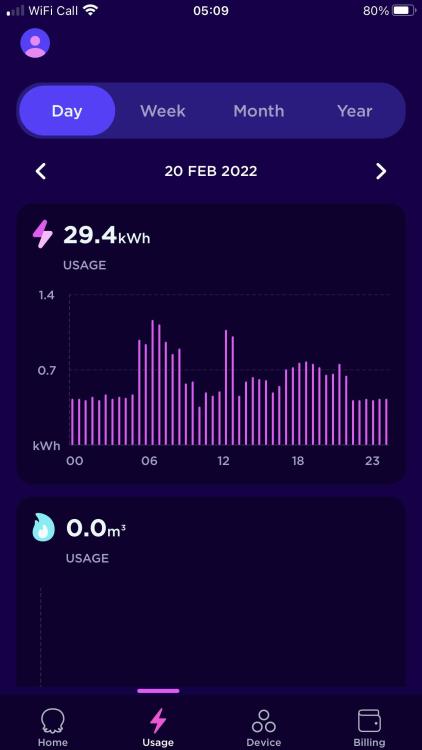
-
Hi Mark, You need to have an MCS instal to get paid for exported electricity. You also need a letter from the DNO confirming they have been informed of the install. There is not a big difference between the price of a three phase 12kw inverter and 3x4kw single phase inverters, depending on the make. You will save on instal time I guess. BTW two of our three inverters blew in the massive lightning storm we had two years ago. Luckily I got them replaced under warranty. One of the new ones then had to be replaced again. In our last house we had to replace the generation meter. this all eats into the returns. The three phase inverter splits the output across all three phases so you can have 11kw either way. Export payments are woeful, except on Agile Octopus. You are only getting around 4.5p per kWh at the moment. Octopus will pay 7.5p but not if you have Go or Intelligent. So the return on export payments is way less than the return on self use of electricity. How often do you need the car charged quickly? you can get car chargers that can be set to use excess solar to charge the car. At 4kw you are going to be charging at about 11miles an hour. I would guess the sweet spot is in the 6-7kw range so that you can charge the car and cover background use of electricity. You could also set up your to heat your water during the day. Above this size the extra output will be exported. If you assume £1000 per kw installed then for 7kw versus 11kw you would get around an extra 3000kWh exported a year. So that is £135 of export on £4000 of investment. The other thing is that you can charge your car for 7.5p/kWh during the night from Octopus and heat your water then, so even then much of the electricity you use will only be offsetting 7.5p usage, not 30p. As to other three phase costs, the consumer unit is a bit more expensive. Probably a few hundred pounds in extra costs. We have 5kw of capacity and my average day looks something like this at the moment. Almost no usage during the day - depends on if the oven or washing machine is on. Way over half our usage at night at 7.5p
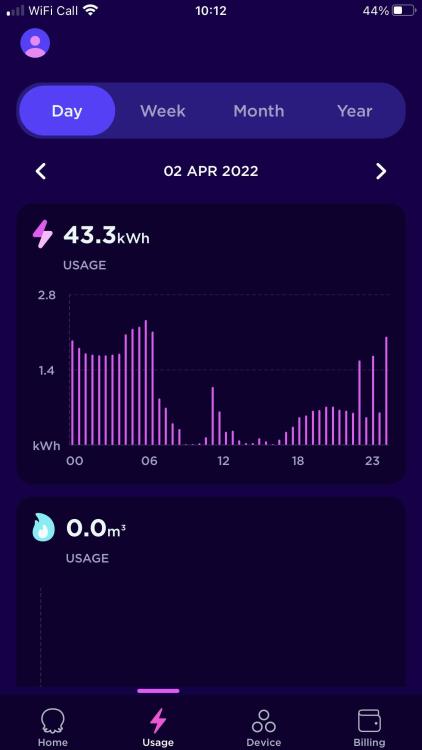
-
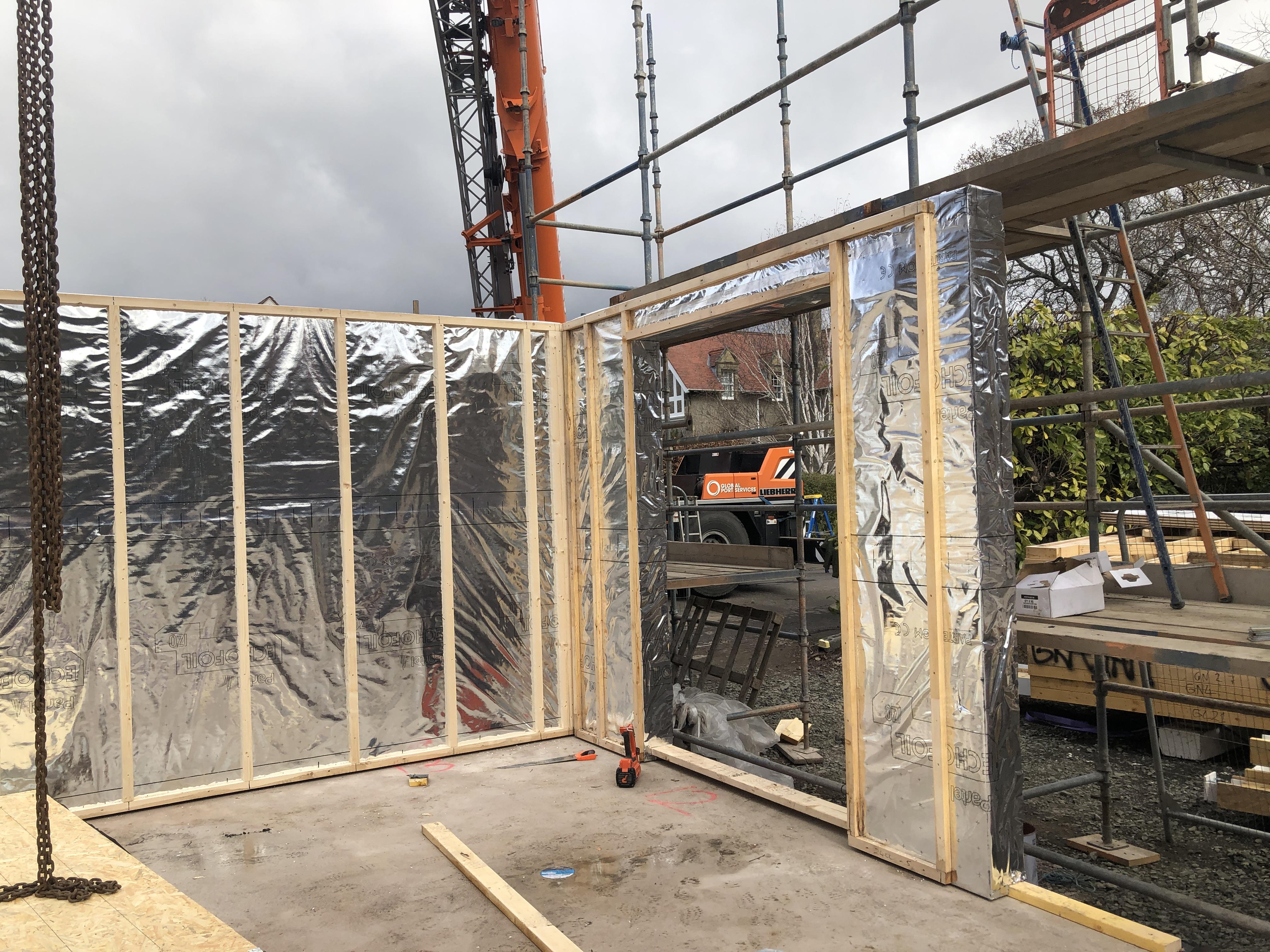
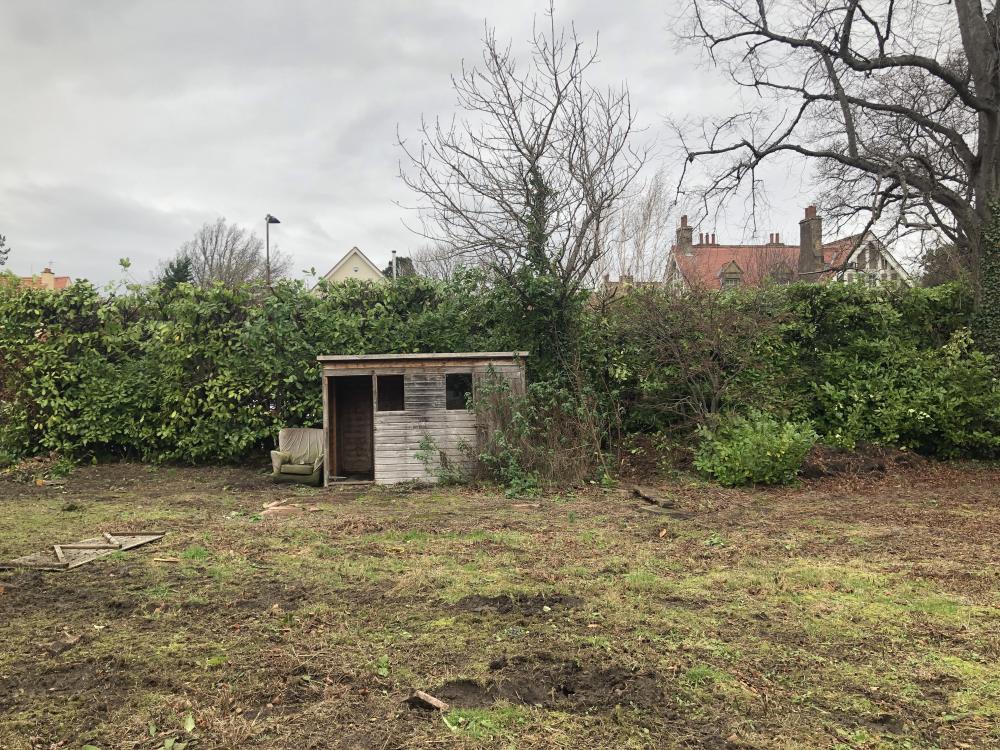
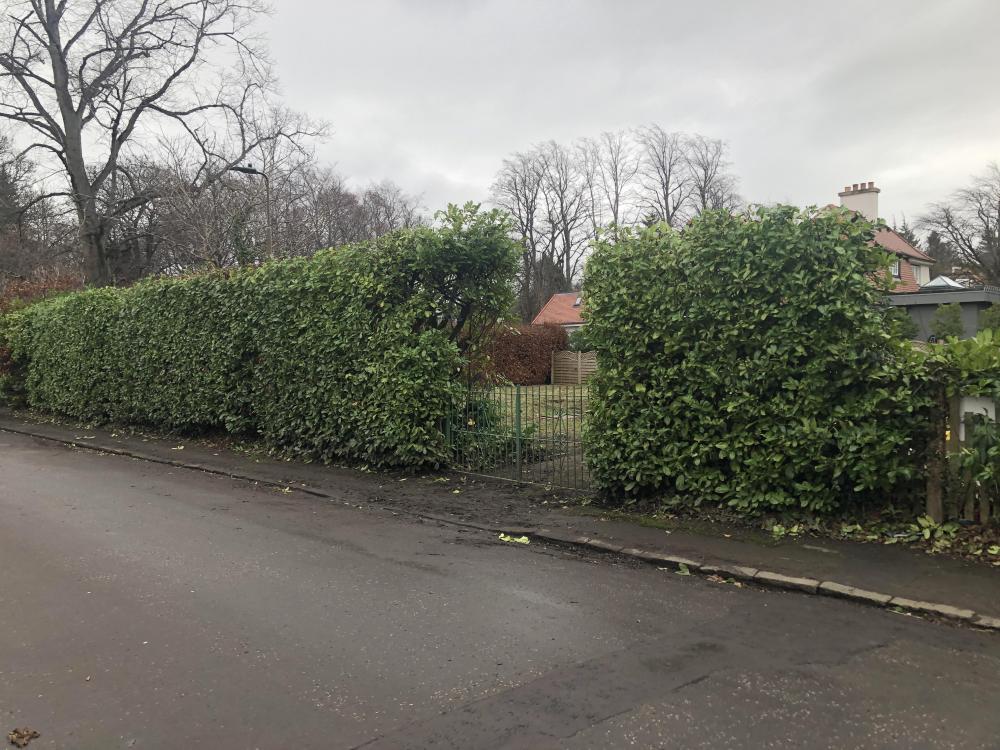
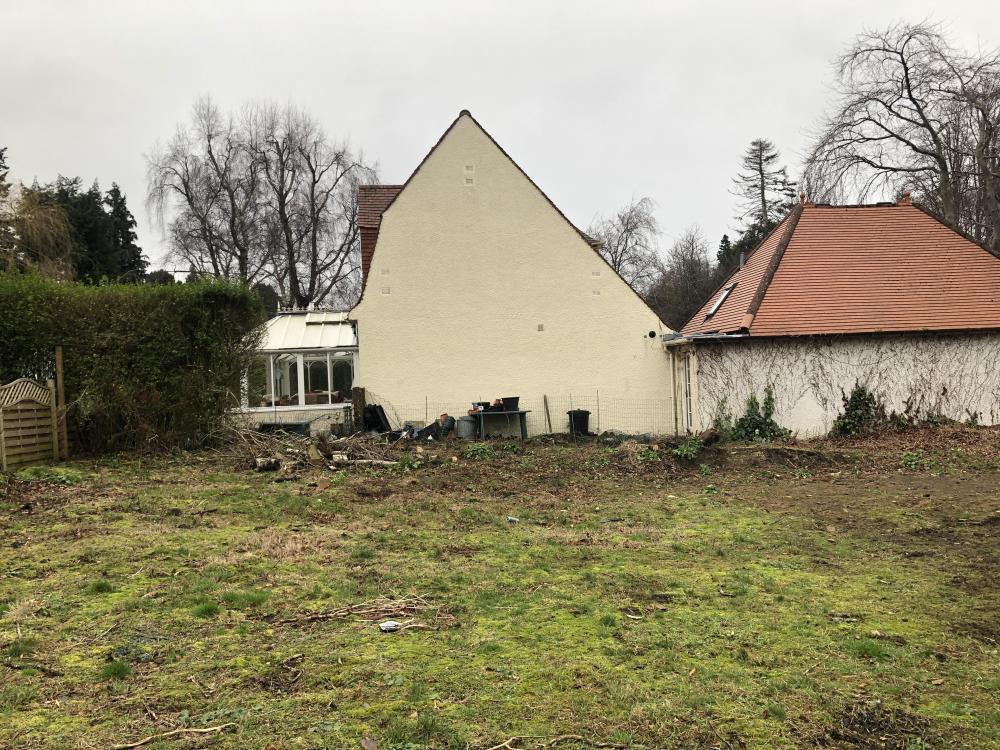
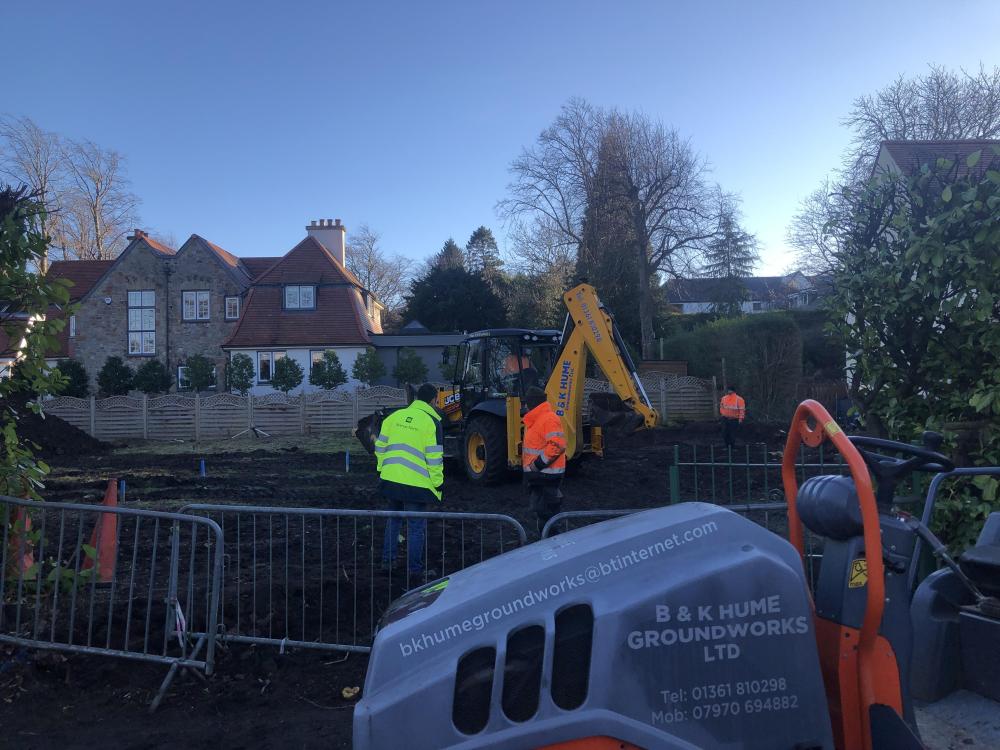
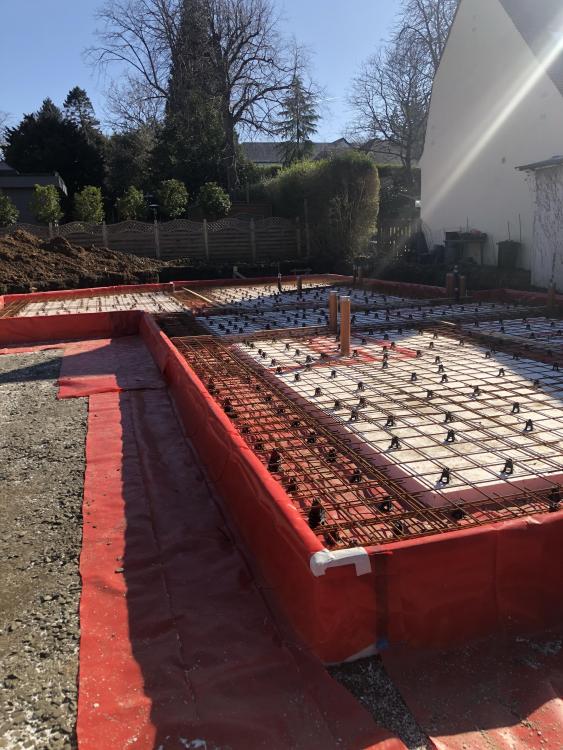
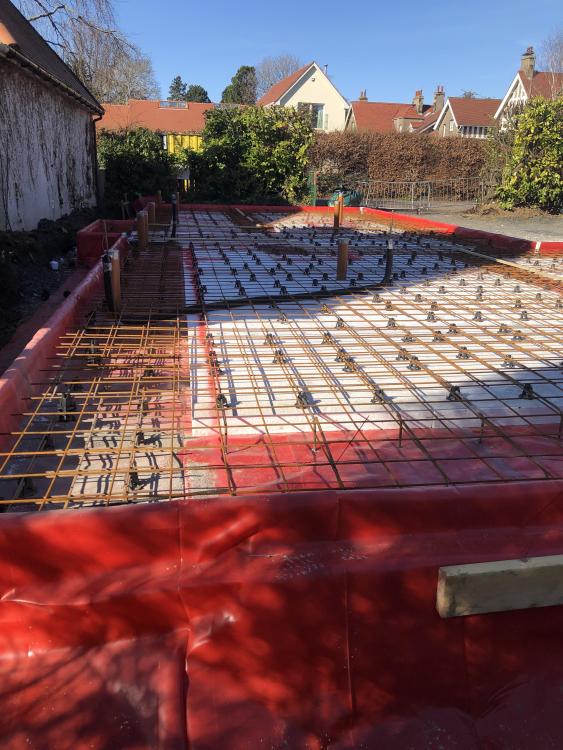
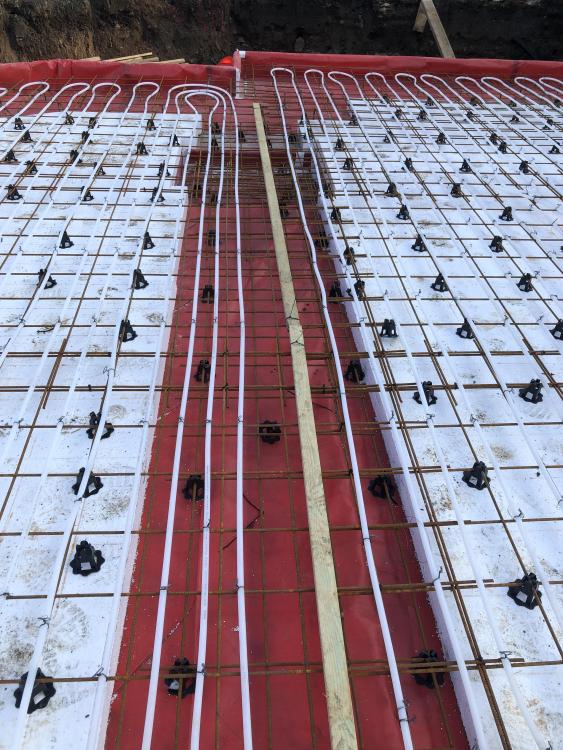
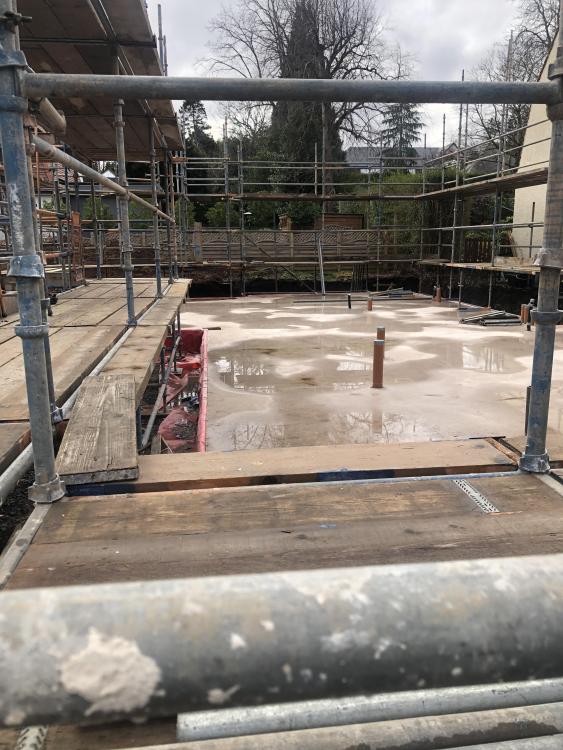
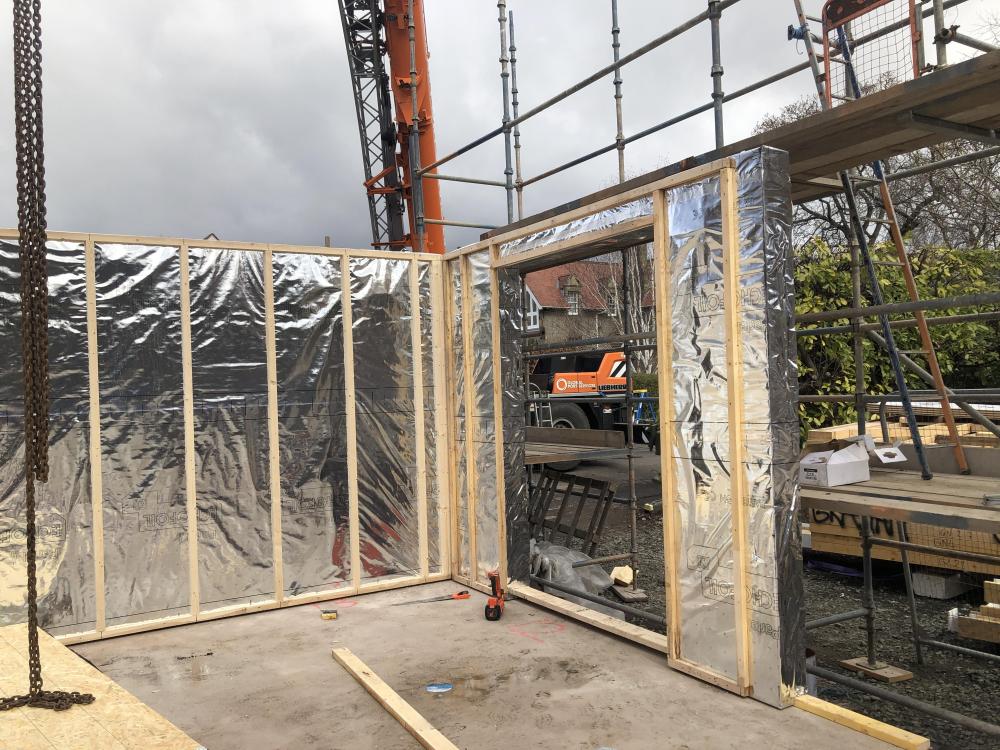
I haven't been updating this. After months and months of extreme frustration dealing with planning, building control etc we started the build a few weeks ago. The frame started to go up today. Very impressed with MBC so far. They have done most of the first floor walls in a day.

-
Took me less than 5 minutes to get an insurance quote for my parents' house where the walls are render on render board. It was something I did before signing off on the construction method. It was a standard option for wall type in an online search.
-
I have one. SMET-2. It was installed by SMS late last year who install meters for many suppliers. I was an Outfox the Market customer at the time and have since moved to Octopus.
-
UFH pipes in concrete slab, on insulation or tied to mesh
AliG replied to Chanmenie's topic in Foundations
Thought it might be. Sounds all good to me. Our UFH company didn’t care what way the pipes were attached. As far as they were concerned it was the same job. -
UFH pipes in concrete slab, on insulation or tied to mesh
AliG replied to Chanmenie's topic in Foundations
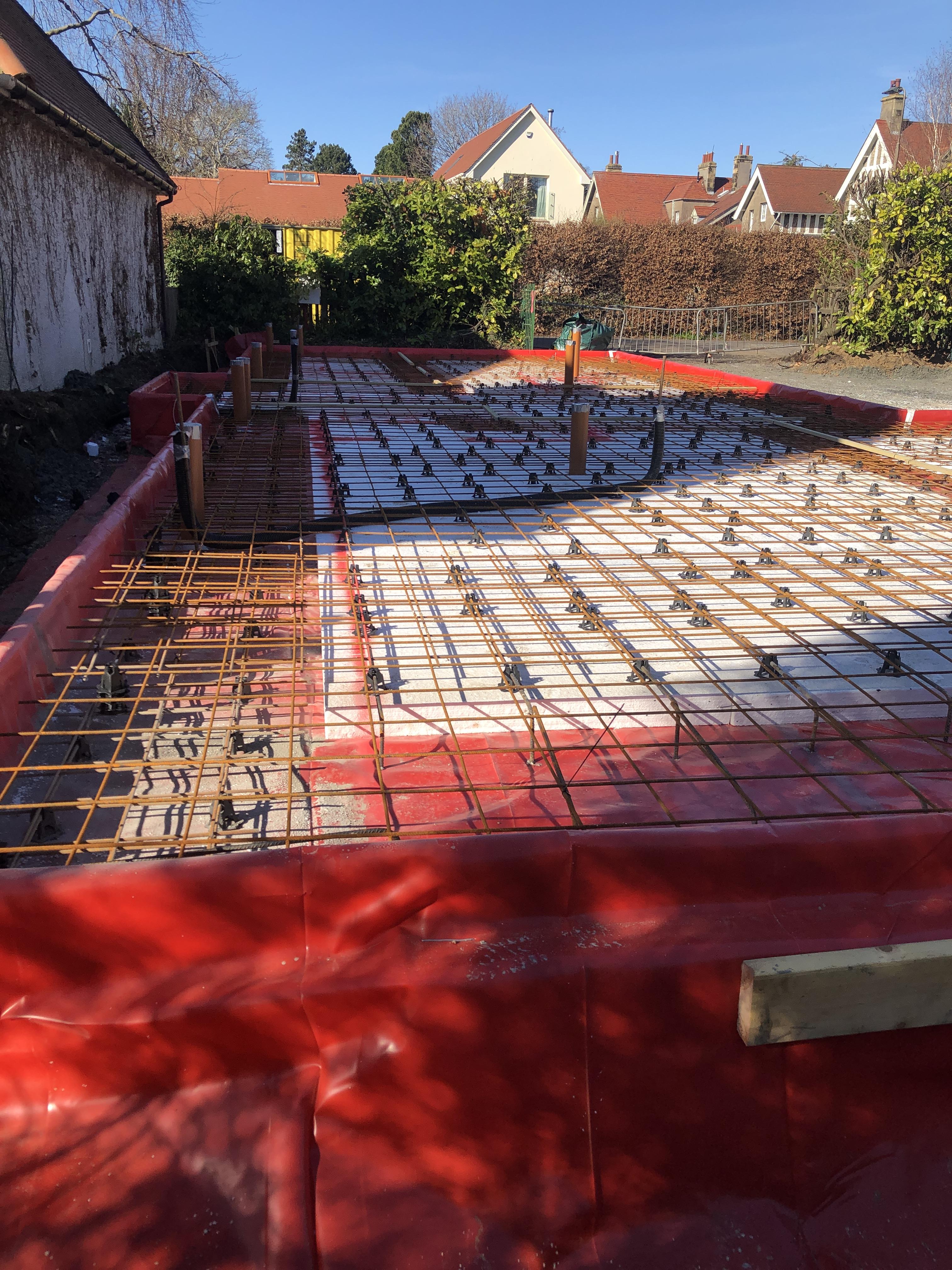
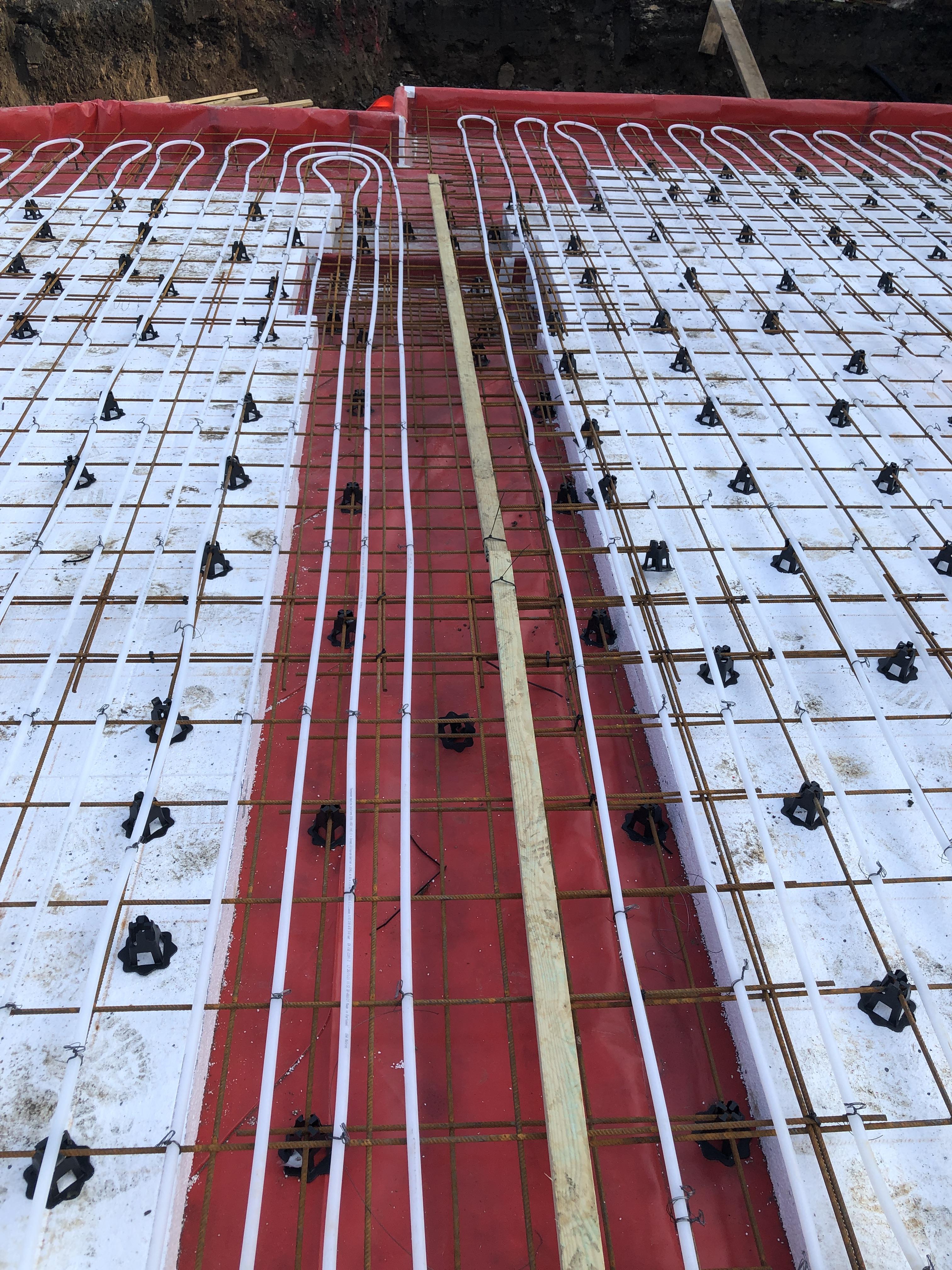
MBC just installed a slab for us and the UFH is in the slab attached to the mesh. There were no issues walking on the mesh to install the pipework. It was 252 which is 8mm. The main issue is keeping your balance. I think if you have mesh the expected way is to attach to the mesh. I haven't seen that kind of makeup before. What's the 25mm of EPS for? It won't provide a lot of insulation. 150mm of Celotex is roughly the same as 220mm of EPS. It only took two guys around 5 hours to install 140 sq metres of UFH pipe tying it to the mesh. They used a gun which applied the ties, MBC said they would have used cable ties by handing taken similar time. Is a PIR strip specified around the edge of the slab? Without it you can get a cold bridge. -
I misread it as a 10% slope, which I think is similar to ours. 10 degrees is pretty darn steep. Our driveway is scary if covered in a little snow. That natural granite finish looks to be quite rough and about as good as you will get for wet grip. I would be worried about ice forming on a non permeable surface, but water should run off the surface due to the slope. Snow will be your biggest issue, but the surface doesn't make any difference once there is a few cm of snow on it. As to the steps, that London Stone website is pretty useful. I would want something that is over 65 for wet grip. TBF I am probably ultra cautious. There are sandstone and granite steps that meet this requirement. The range for different kinds of sandstone is pretty wide. It is amazing how sensitive it is to the shoes you are wearing. We have rough granite paving on three sides of the house and a resin drive in front. We sometimes do laps of the house when we are exercising. None of us want to do them if it is wet, as we have all found we slip on the wet granite in trainers. But this is when jogging.
-
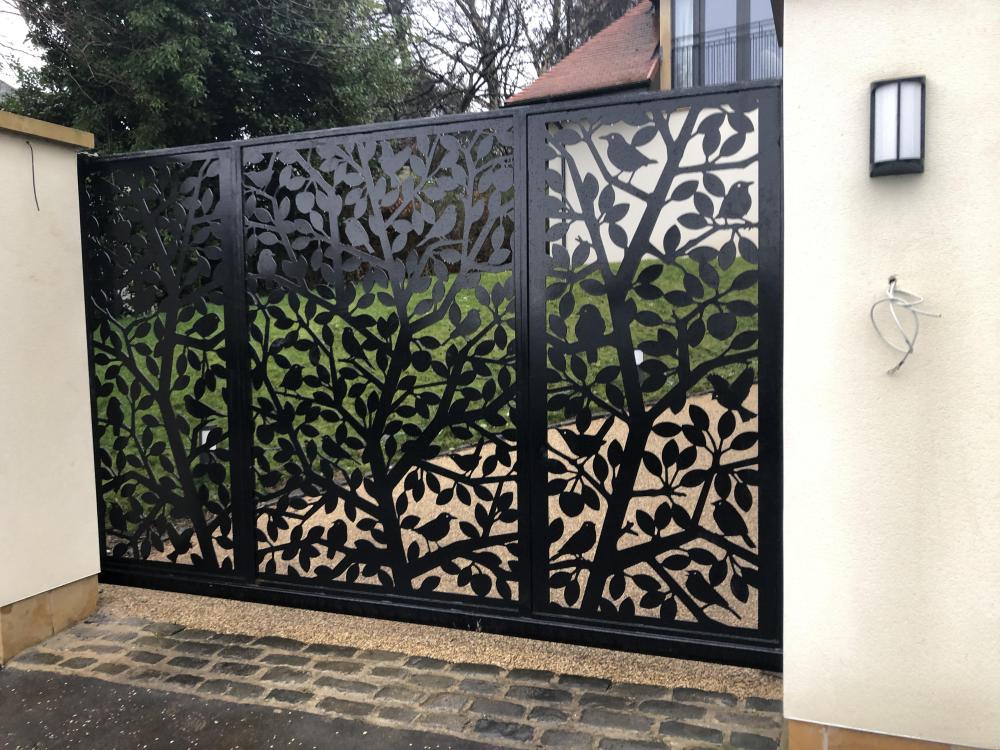
I would be wary of a sandstone staircase. Our sandstone paving is very slippery when wet. OK for occasional use, but not for your main entrance. I think it is the way that dust settles on it and then gets wet. I sometimes wonder if it would help if we scrubbed it clean. I am a little confused, is the driveway gravel, with a granite path? Here, you would not be allowed to lay a granite driveway as it is non permeable. 1/10 is a steepish slope. Looking at them they have quite a rough surface so I think you are OK. The granite setts in Edinburgh are smooth and lethal in frost. The ones you are looking at are much rougher than the ones under my gate. Weeds should be OK. We are now getting some weeds/grass in our resin bound driveway. The issue is not stuff growing through it, it is stuff settling on top and growing into it. I need to go out and pressure wash it. As granite setts sit on a mortar bed, weed coming through are less likely than on most surfaces and there are not may areas for them to take hold. You might get some moss on the joins but it will scrub off.
-
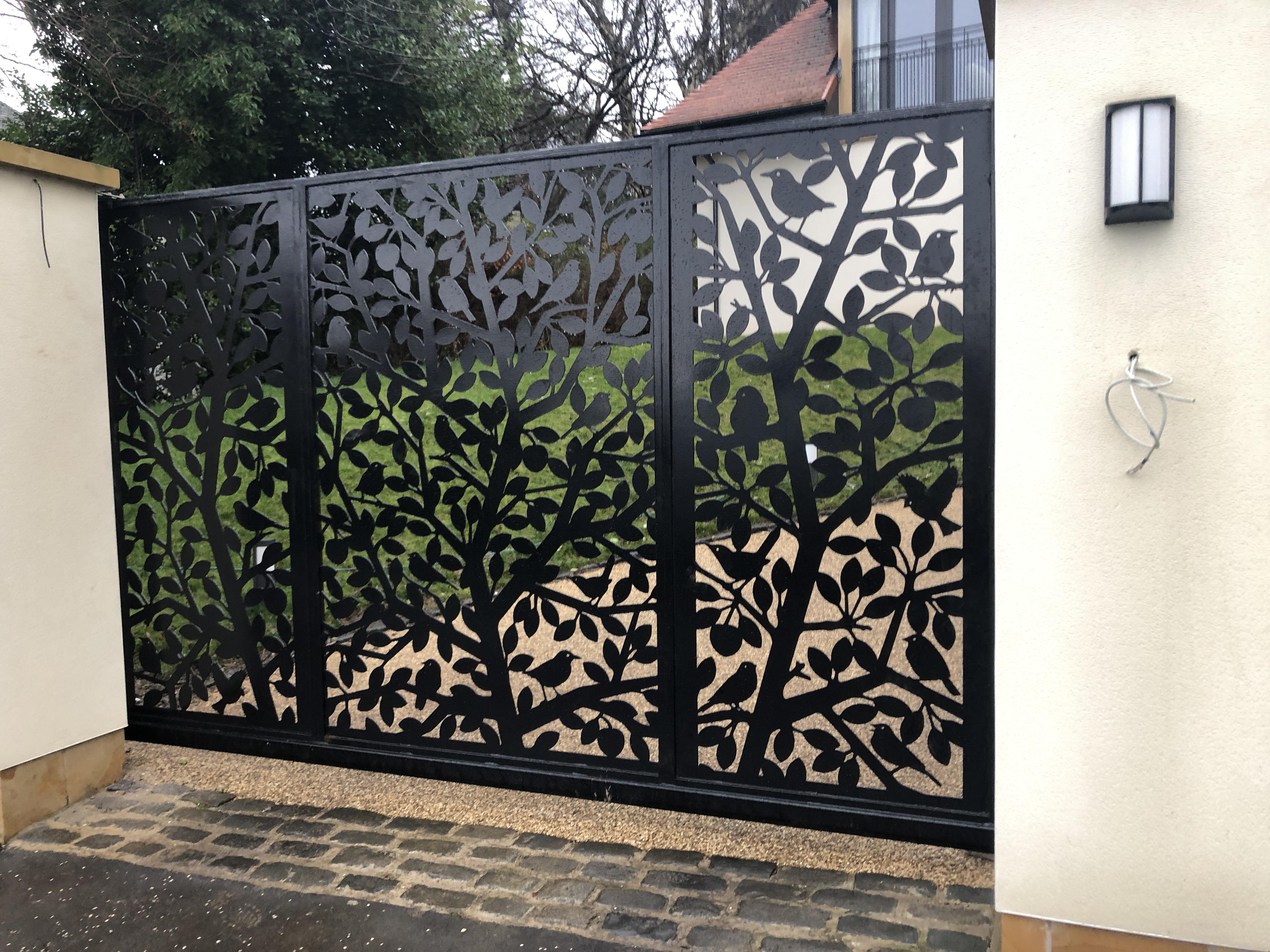
The old roads in Edinburgh are made of granite setts. We have three rows under our gate. They are slippery to cars but I have never had an issue walking on them, even when wet. Looks like a high number is better slip resistance. Our riven sandstone paving slabs are more slippery when wet. I wouldn't think granite needs sealing it is a lot less porous than other stones. I don't believe the ones under the gate are sealed, I have never seen efflorescence on them. On the other hand, we do get it on our sandstone which we should have sealed. That Londonstone place seems absurdly expensive. What's the difference between their granite and everyone else's which is half their price?
-
We're not short of other working toilets thankfully!