AliG
-
Posts
3211 -
Joined
-
Last visited
-
Days Won
11
Everything posted by AliG
-
Missed this thread. We use massive amounts compared to you guys. My base usage of electricity is around 800W. For hot water, you cannot get past the physics. It requires 5.24kWh of energy to heat 100l of water by 50C. So if you use 300l of hot water a day, that is 16kWh, plus efficiency and heat losses, would be probably 20kWh plus of gas. I would assume around 100l/person/day. A lot depends on whether anyones likes to take baths vs showers. I have been running an experiment for around two weeks now to compare how much energy we use by heating the hot water tank with the immersion versus the boiler. It is not easy as i cannot switch everything else off. Basically what I found is that we had hot water on from 5am to 9pm. The boiler came on as and when needed. Doing this we were using around 40kWh of gas a day for hot water. My guess is that we use around 400l a day, which should use closer to 25kWh including the losses in the tank, so efficiency was running at 60-65%. I have tried a couple of things - 1. Just turning on the hot water twice a day. This seems to save around 5-10kWh, efficiency improves to around 80%. My guess is that there are enormous losses over and above the efficiency of the boiler in heating up pipework and letting it cool down multiple times a day. Our hot water has always just been on all day. At 2-3p a kWh, this may well have been wasting 5kWh a day for some time, but as this cost 10p, no one cared. When it costs closer to a pound you start to notice. 2. Running the immersion on Octopus at 7.5p during the night and then running the boiler once during the day for a top up. Doing this seems to use a similar amount of energy to running the boiler twice a day. Sadly it is almost impossible to measure exactly how much energy the immersion uses. Assuming the immersion is 95% efficient it is better to use it than the boiler. Anecdotally, the plant room feels a lot cooler than before. I think the temperature hs dropped by about 2C. I have also turned off our hot water circulation system which maybe used 80l of hot water a day. Heating the tank with the immersion for some reason, hot water comes through much faster than using the boiler. It might be due to where the immersion is or the tank getting hotter as the immersion will keep running until 70C, whereas the boiler themrostat for the boiler is set at 55C. Anyway I am hoping that this is going to save me around 3-4000kWh of gas a year, 20-25% of our use for DHW. As houses have got better insulated DHW has become a larger part of energy use and I suspect this has not been focused on much. I am guessing for many on Buildhub it is actually a larger use of energy than heating.
-
Where is the kWh price heading in 2022?
AliG replied to epsilonGreedy's topic in General Self Build & DIY Discussion
I am hearing both the present rate and £2500 as caps. TBH I think protecting people from much of the rise creates a moral hazard where people don’t do as much to help themselves. I guess I don’t know at what point there is enough pain that people become more efficient but not so much that people cannot afford their heating. If the money gets borrowed we’ll all be paying it in the longer run, however the costs will fall on taxpayers in general rather than people with high energy usage. I do suspect that prices fall back and it doesn’t actually cost as much as estimated. I also think that Putin has overplayed his hand. So far I am guessing Russian revenues are up due to lower volumes and higher prices. Certainly the Ruble is actually stronger than it was before the war. Cutting off supply means revenues collapse and if we muddle through then his bargaining position is severely weakened. -
That's horrible, I'm sure you must be gutted. Sadly I doubt you'll see much back. Their accounts look a bit odd to me, they seemed to invest £1.5m in something unspecified in their 2020 financial year, but not part of their day to day business. They also at various times have loaned a few million to directors which is an enormous amount of money relative to the assets of the company. https://find-and-update.company-information.service.gov.uk/company/02771581/filing-history I would not be surprised if one of these things is the problem.
-
Where is the kWh price heading in 2022?
AliG replied to epsilonGreedy's topic in General Self Build & DIY Discussion
Well when people constantly blame renewables for the problem, even though they are clearly part of the solution, it shows the problem you have in dealing with people. Just like the COVID vaccine issue all over again. Sadly people are too easily swayed by rabble rousing media and don't have enough grasp of the technicalities of the issue. I tend to feel its not quite as bad in the UK as in the US, there seems to be a bot more respect for science here. I don't really think the energy market is structurally dysfunctional, it has worked fine historically in the UK, we had quite low and stable prices. However, like many systems it was not set up with unexpected events in mind and there are clearly improvements that can be made such as not linking the price of renewables to the price of commodities. This change had already been made on a go forward basis. Of course you might agree that Russia restricting exports was a foreseeable event. I do agree that you cannot use capitalism to fix everything. I find the US attitude to healthcare bizarre. There are literally people who believe that if you cannot afford healthcare for your own family that you are a "loser" and it is your own fault. It simply is untenable to have people who earned $15 an hour afford to pay for healthcare out of their own pocket when doctors earn over $400k a year and drugs cost $60k. But capitalism is an easy way to signal what people want money spent on without bureaucracy getting involved. -
Where is the kWh price heading in 2022?
AliG replied to epsilonGreedy's topic in General Self Build & DIY Discussion
I doubt it, I felt it was a bit biased in favour of Hydrogen and a more likely scenario was flattish electricity prices. I actually think ex this war that is still likely. It's just the path to get there. By 2030, electricity prices will probably be back down towards 15p/kWh, maybe a bit higher after the recent bout of inflation. Things go back to normal very quickly. The oil price got to $140 in 2008 with people saying that it was going to $200, calling it the "oil super spike" By 2009, it had fallen to $30. -
Where is the kWh price heading in 2022?
AliG replied to epsilonGreedy's topic in General Self Build & DIY Discussion
Re decoupling the price paid for renewable generation from wholesale markets. It looks like this is finally coming, and it will help, but not that much. The number I have seen is a couple of hundred pounds per household. Where it will really help is on the commercial side where restaurants etc often use electricity for heating and have seen bigger price increases. I saw a figure of £18bn benefit today, of which £11bn would accrue to commercial customers, this seems to be an annual figure. I also very suspicious that this plan will involve some future payments which costs us more in the long run. https://www.current-news.co.uk/news/energy-sector-backs-proposals-to-lower-bills-through-new-fixed-contracts-for-generators A lot of people on Buildhub have ASHPs or low heating costs, so are very focused on electricity. Most people use gas for heating in the UK and the gas price is a much tougher nut to crack. The gas price ended up around 15% today. Re my comment that the news has not really reported the drop in prices, they are still using figures of £6-7000 for the cap next year. At the current price, I think the cap would be nearer £5250. By not giving a lower figure at the end of last week, they increased forecasts every day when prices went up but didn't reduce them when they fell, and telling people that gas prices are up today, the natural assumption would be that the cap will be even larger than £7k. I think this is a moot point though. I suspect that plans will be put in place to mitigate increases above the October cap. The October cap is very unpleasant, but probably manageable for most people (the worst off should be protected by inflation linking of benefits and pensions, indeed it is probably the low paid who will be hit hardest without this protection). a further 50-100% increase, however, would not be manageable for a lot of people. An interesting thing is that Germany has had lower price increases than us, but prices started massively higher. Their gas price in March was around 15p/kWh and their electricity price was 36p/kWh. Roughly half of the price was grid fees and renewable subsidies, hence why it started higher and is less impacted by wholesale prices. I think the gas price is now up to 18p, so still more than our October cap, the current electricity price seems to be around 40p/kWh. -
Where is the kWh price heading in 2022?
AliG replied to epsilonGreedy's topic in General Self Build & DIY Discussion
If you build renewables in the UK you will get a decent return on investment. No need for government investment, after all they are already almost 50% of generation without the government having to invest in them. Nuclear is where risks and costs are higher so governments probably need to be involved. The issue is, something we are all well aware of here, the difficulty in getting permission to build them. I did a project on this at work and it looks like we need something like a five fold increase in wind capacity over the next 20 years in the UK, I think the global figure was about ten fold. Pre Ukraine, however, you wouldn't just build lots of unneeded wind capacity, it would be built over time in line with increasing demand and the need to reduce emissions. This is what is expected if you look at the energy policy document I posted earlier. All the capacity increases come from low carbon sources (wind and solar for the next 10 years with some hydrogen kicking in after that). The work I did suggested that for some time we can reduce emissions with wind and solar but eventually you would need to use hydrogen in cases where electricity cannot be used - think boilers for stately homes and mining trucks. The expectation is that at some point in the future there will be so much cheap renewable energy that we can them use that to make hydrogen to get the last part of the ay to net zero. The most surprising thing that I found is that the price of electricity was expected to fall over time making the inefficient process of making hydrogen more attractive. Personally I felt this was a stretch but that is the industry forecast. In a way Putin has made seen this coming, if you look at the percentage of electricity coming from gas it drops dramatically from 2025 onwards. The high growth in electricity demand is partly driven by an assumption that we move over to heat pumps for most heating over the next 20 years. I expect hat when our boiler gives up the ghost I will replace it with an ASHP.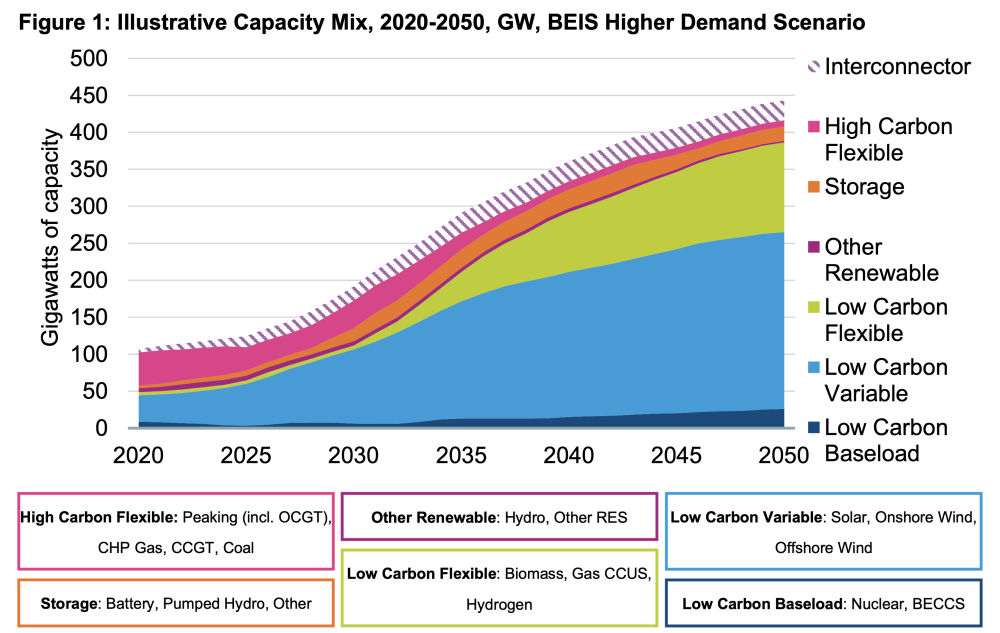
-
Sorry, sent it to @Georgeby mistake
-
Where is the kWh price heading in 2022?
AliG replied to epsilonGreedy's topic in General Self Build & DIY Discussion
Interesting how politicians everywhere play with numbers. In the U.K. we will presumably soon be seeing very large rises in pensions and benefits payments that are linked to inflation. It seems like Germany is including these numbers in the help they are providing. With the pensions and benefits budget at £212bn last year increasing this in line with inflation will cost over £20bn on its own before any other help. A little note on media reporting. They are all eager to talk about how much the price of gas will rise today due to Russia turning off supplies. It looks like the price is up around 25% today. However it is still around 25% less than 10 days ago. No one reported the massive fall last week. -
The cabling is in, but the house isn't finished yet. However, I plugged it into our router and it worked just fine. The £350 list price of the PoE Ring is absurd, I don't see why it is so much more expensive than the other Ring bells. I got an open box one on eBay for £150. Cheapest there seems to be £235 at the moment.
-
Does anyone understand how ADSL broadband actually works?
AliG replied to ProDave's topic in Boffin's Corner
Shouldn't get into politics, just providing some information. NHS spending is through the roof with little to show for it. Admittedly it is early days for the largest increase which is this year. This chart is real terms spending. It seems that people don't actually believe NHS spending has gone up. It has increased by almost 40% in 10 years! Police spending has also increased above inflation for the last 5 years running, having fallen in real terms the 5 years before that. The fibre broadband target, however, has been scaled back. They have gone from 100% coverage for gigabit to 85%. IMO (sorry @ProDave) if you live in the middle of nowhere there is a limit to how much everyone else should subsidise the massive cost of getting broadband to your house. My parents' new house needs to be connected 40metres to the nearest storm drain, costing over £10k. The taxpayer isn't paying for that. Considering solutions like Starlink, I don't think spending thousands of pounds on bringing faster broadband to individual houses is a good use of funds. The promise should never have been made, and it is typical of politicians to say things that are not practical in reality and not to want to admit to harsh realities like the fact some houses are just too rural to economically be provided with fibre connections. I thought that this page was interesting. 97% of the UK can access 30Mbps or faster speeds. The average speed often quoted in worldwide tests is somewhat odd as it is based not on what is available, but on what people buy. It also often uses results from speed tests so includes WiFi issues and so on. Nevertheless it appears that UK average speeds have been motoring recently, almost doubling to 90Mbps per second in the last 2 years.However, the figure that probably better reflects the investment in the network is the average speed actually available to people which is 540Mbps. https://labs.thinkbroadband.com/local/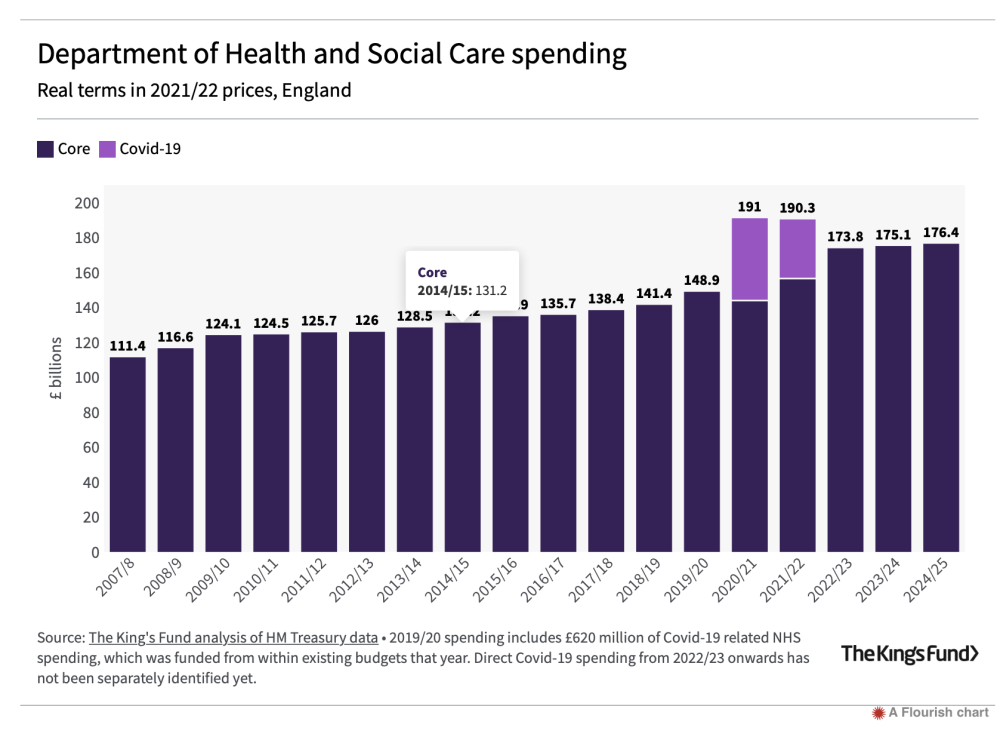
-
Does anyone understand how ADSL broadband actually works?
AliG replied to ProDave's topic in Boffin's Corner
I had missed this @ProDave You could get Starlink £75 a month for 100mpbs if you want to pay for a faster speed. Have you tried getting a pay as you go sim for each mobile network to see who has the best signal and speed locally? You might be ale to simply use that if someone has a good signal. Or just get some mates round and ask them to check the speed on their phones. As to your fault it could be many things, you just need to keep at them. I would keep the line going for a few months to try and get it fixed. -
You have two separate things there, I have edited the title. A SE would do the the drainage design, you need a company that does site investigations for the percolation test and site investigation. The SE might be able to recommend one. I will PM you a company I have used for site investigation and percolation tests. It will cost the best part of £4k.
- 5 replies
-
- 1
-

-
- foundations
- newbuild
- (and 1 more)
-
A bit late to this, but this might be useful if anyone searches Liebherr. We have the Liebherr SIGN 3576 freezer and have ordered the replacement model SIFNe 5188 for my parents. They seem broadly similar to Siemens equipment, but the reason for ordering this specific model is that it is the only full height freezer with an ice maker that is inside the freezer not in the door, except for the £6k column freezers made by various people. I don't really see why the column ones cost £6k versus £1.5k for this, other than advertising how much money you have. I got fed up with visitors playing with the ice maker when we had an in door one previously. The plastic drawers are quite easy to break and expensive for what they are. I have had to replace one and another one is cracked. It runs quietly and has caused no issues. We have the tall Siemens/Bosch fridge etc though as it is somewhat cheaper for similar performance.
-
Solar power payback takes much longer than you think
AliG replied to Radian's topic in Photovoltaics (PV)
Sometimes that would be fair as they would offset heating. The plant room just isn't in a position where the heat is useful (garage on one side, cinema room on the other and next to the utility room) None of these areas are ever heated and the cinema room is too hot a lot of the time due to the large amount of heat put put by all the electrical equipment. Also the heating isn't on for half the year. It does bring up an interesting point though on house design. If possible I would try to have the plant room next to/adjoining a room likely to need more heat than average in your house. My parents' house has a double height hall with lots of glazing. The plant room door opens onto this room and the UFH manifold will be in the understair cupboard. These should keep the heating requirements down and were deliberate choices from what I learned in my house. -
Solar power payback takes much longer than you think
AliG replied to Radian's topic in Photovoltaics (PV)
We only export around 25% of the electricity we generate so for us a battery would never pay for itself, we also use around 50kWh a day and I am managing to get around 60% of that at the cheap Octopus rate. Octopus Go/Intelligent has a considerable effect on the ROI for many energy saving devices. I am paying for the Eddi with the saving of using cheap overnight electricity to replace currently expensive gas. -
Solar power payback takes much longer than you think
AliG replied to Radian's topic in Photovoltaics (PV)
Decided, although it will take a while to pay for itself, to order an Eddi and Harvi. Doing a small bit to reduce carbon intensity/gas demand. I have been experimenting with using the immersion to heat hot water during the night on Octopus and then only running the boiler for hot water once a day. I reckon this saves between 5 and 10kWh a day. The plant room is considerably cooler, backing up my theory that's on top of the efficiency of the boiler a material amount of heat is lost in the pipework between the boiler and tank. Thus when people compare the efficiency of the immersion to using the gas boiler, there are other benefits including not losing heat in the pipework and not using electricity to run the boiler and pumps. -
New build design & cost estimation opinions
AliG replied to morgan_22's topic in Costing & Estimating
I like the efficiency of your design. But you are a bit too low I am afraid. A few things. 1. Site I think muck away is around £50 a cubic metre. I think scaffolding will be at least double if not treble the amount estimated. 2. Windows - Actually you don't have a lot of glass, so the estimate looks OK to me, if not high. 3. Heating - Looks OK to me, we paid the same amount for 140sq metres of UFH pipe and manifold. 4. Electrics - Looks OK to me, PV should be less than 5k 5. Finishes If this is for wooden floorings looks, too low. OK for carpet 6 Fit out Staircase looks too low Kitchen/Utility room looks way too low. Unless you get the very cheapest appliances they could eat up much of that budget on their own. Plasterboard - I think you have around 250sq metres of wall at a rough guesstimate. I would expect plasterboard and skim to cost maybe 3x your estimate. I am assuming that the kit includes the roof insulation otherwise this is quite a large cost not allowed for. Net I reckon you are maybe £25k too low. TBH it is more realistic than most estimates II have seen recently. This assumes that you manage all subcontractors yourself, otherwise a main contractor will probably add 20% to your costs (combination of mark up and them not spending as much time getting lowest costs) -
Where is the kWh price heading in 2022?
AliG replied to epsilonGreedy's topic in General Self Build & DIY Discussion
That fell around 20% as well. The two year out price is around £3 compared to £6 for this winter. When there is a big move generally all points on the curve are impacted in a similar way. Prices down a further 6% today. This may be because European countries have finished filling their storage. The piece will be crazy volatile for the foreseeable future. Very dangerous to lock in current prices. Much better to find policies that reduce prices and scare the markets. If that works maybe then lock in a better price. Much as it it not the done thing I think there is plenty of room to cap the wholesale gas price at a level that is massively more profitable than in the wildest dreams of energy producers but still much less than today. Trouble is that you’d basically need Norway to agree as they are now the EU’s main supplier of gas. Not a word in the press for the fact they are more than happy to sell their gas at 10x the price they used to get for it and just pocket the money at the expense of their neighbours. They’re a NATO member and benefitting massively from the actions of Russia. Perhaps they need reminding of this. Indeed instead I read commentary yesterday praising them. -
Where is the kWh price heading in 2022?
AliG replied to epsilonGreedy's topic in General Self Build & DIY Discussion
Good point. Of course they are not directly considered voters. I am very surprised we are not seeing pubs, shops and restaurants restrict opening hours. Presumably they don’t have the heating on at the moment. Why open your restaurant for half a dozen people on a Monday night in January when the profit won’t cover the heating bill. My local Tesco is open until 11pm. I wouldn’t be surprised if they change to 8 or 9 over winter as the ship is almost empty after 9. -
Where is the kWh price heading in 2022?
AliG replied to epsilonGreedy's topic in General Self Build & DIY Discussion
I had to make an assumption and normally this kind of contract is pretty long. I have looked a bit further into it and the CfD contracts are for 15 years. Of course to model anything like this you need to make myriad assumptions. Indeed if anyone ever tells you they have modelled something, ask what assumptions they made as they often guarantee the outcome making the model of dubious value if the assumptions are wrong. Assuming two years of high prices followed by 13 years of “normal” prices you would save £176bn at a subsequent cost of £466bn. The breakeven point would come at just over four years of prices that have only existed for a few weeks so far. You are 100% correct that it would become less of the generation mix in future but the absolute cost would stay the same. If for example you thought that wholesale prices would return to £50 and retail electricity prices to 13p The extra £466bn would I think increase the price by 2-3p for the next 15 years (that’s a bit of a guesstimate as I don’t have all the data). This suggestion, like many, reduces current pain by spreading the costs over many years. There is certainly value in that, but as you might expect doing this on commercial terms involves a cost that ultimately increases the total cost. A bit like using PFI to build hospitals. Commercial interests will always suggest a solution that benefits them and the U.K. is highly unlikely to break existing contracts so instead would probably need to “incentivise” things to happen. Rather than complaining a lot about this, I have been trying to think of solutions. I have heard suggestions that the government will increase tax thresholds to offset the cost. A bit like they showed during COVID, much as they are often lacking foresight and slow to act they do usually get their finger out when there is a real problem. I think this idea may have merit. The reason is that if you just subsidise the price of energy, people will just keep using it and it will show producers that they can increase prices with impunity. But if you give people extra cash to cover some of the costs they are then incentivised to reduce their usage so that they break even which is a much better plan in the long run. The trouble with this kind of solution is that outcomes will vary considerably from person to person, but it may be better for the country overall. The more the money we spend to fix this today reduces long term energy consumption the better. The trouble is it is hard to implement these things quickly. Supplying Ukraine with more weapons to shorten the war is also probably a good use of cash. Indeed if Russia did not have nuclear weapons I think we would almost certainly see NATO attack them as we would once again be having a war driven by energy. -
Where is the kWh price heading in 2022?
AliG replied to epsilonGreedy's topic in General Self Build & DIY Discussion
If the normal wholesale price of electricity is £50 per megawatt hour (5p/kWh) then what this plan suggests is saving 27p per kWh for say two years by paying an extra 11p for the subsequent 23 years (assuming) a 25 year contract. This is a terrrible idea that would make electricity expensive indefinitely. Two years ago people were forecasting electricity prices falling to £20 per megawatt hour as the amount of renewables increase. This would look in a price of £160 admittedly only for some generating capacity. Assuming current inflated prices last for two years, it would save £176bn over two years but cost £825bn over the next 23 years. I cannot reiterate what an awful awful idea this would be. We’d be locking in the impact of the last two month’s price rises for 25 years. To be clear, changing the contracts is not a crazy idea but the suggested prices are. This was almost certainly drawn up by the asset owners who would make a killing. -
VAT reclaim being queried
AliG replied to Ksev's topic in Self Build VAT, Community Infrastructure Levy (CIL), S106 & Tax
We have been on the valuation roll since we moved in, but we were nowhere near finished when we moved in. Someone took them to court and won that the completion certificate is a valid date. I don't believe that they can argue about that anymore. -
Solar power payback takes much longer than you think
AliG replied to Radian's topic in Photovoltaics (PV)
Everyone has a different thought process, but this seems a bit odd. Why would you base your decision on two trips/four charging stops a year. That is literally four hours a year. I suspect that you would soon get used to it. Everyone is different, I worked in London for 19 years and have never once driven there, too stressful for my liking. -
Solar power payback takes much longer than you think
AliG replied to Radian's topic in Photovoltaics (PV)
My parents ordered an ID3 at the end of last October. We have a build date for this October. The good thing is that we got a massive discount last year as well as the EV grant (if we still get it) and so are paying almost 10k less than the same car would cost today. As the market share of EVs will keep increasing and the market share of ICE cars falling, then there will be a shortage of used EVs and surplus of used ICE for quite a few years. This suggest that EVs should continue to depreciate less than ICE cars for some time. Personally I think paying nearly new price for 2yr old cars is crazy.