


epsilonGreedy
-
Posts
3877 -
Joined
-
Last visited
-
Days Won
6
Everything posted by epsilonGreedy
-
I have been following the Met Office forecasts on YouTube in recent weeks and had not previously appreciated their depth compared to TV forecasts. Very useful for self builders planning work at this time of year. Anyhow the latest 10 day trend forecast issued 3 hours ago is particularly interesting, the jet stream is going a little bonkers over the next week. The west of the UK will be particularly turbulent with a combination of winds, rain and warm temperatures as the jet stream whacks the west from a strange due south direction. Met Office Channel = https://www.youtube.com/c/metoffice/videos Current 10 day trend forecast =
-
- 1
-

-
This is odd, I thought the stamp duty holiday had triggered an upwards rise in property value. I wonder if the banking sector is discounting things ahead of the economic nuclear winter heading our way post Covid.
-
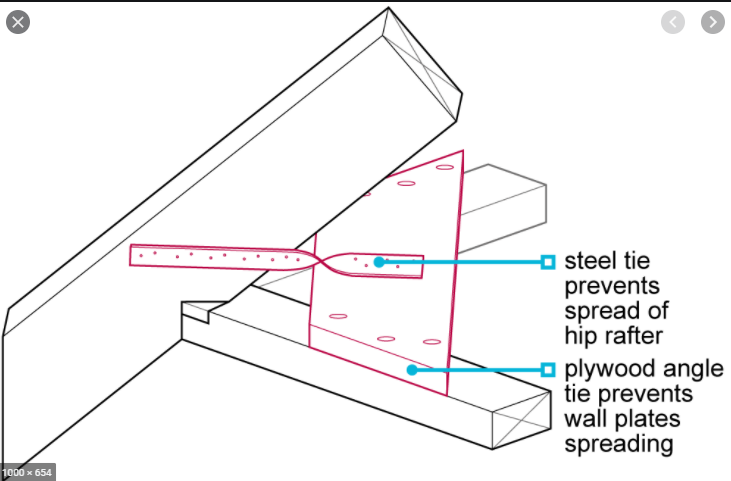
Interesting, not seen one of these before. So far I have managed to get a nice tight fit between the rafters at the ridge/hip junction by tweaking the angles on my compound mitre saw. When I got the truss manufacturer back onsite to review my interim roofing work he said that my proposal to add a few shaped wood infills at the hip rafter junctions would be a nice but OTT reinforcement. Think I will skip this metal bracket because it could interfere with the wooden roll tops if I decide to go for lead flashing ridges.
-
The yachtsman in me views West Systems epoxy as a wonder glue. I have previously concluded that builders do not understand ropes, tarpaulins or epoxy glue ? Previously on this forum expert builders had told me my tarpaulin roof would not last 24 hours. Two months later it is coping well, must be due to all that practice I had tying down winter boat covers.
-
Thanks. The drawing was lifted off an NHBC technical web page. Despite the forum's general downer on the NHBC I do find their technical material useful. It will be tight in that corner, the main 30 degree roof pitch translates into a 22 degree pitch along the hip raters. I am already worried about the practicalities of getting attic insulation in these corners and tucked into the top of the cavity.
-
Nice link. Having overcome my initial shock at the calculator complexity I input the numbers for my plywood wallplate tie and the calculator did not register much flex (0.5mm) until I increased the force to 250kg. Most of the force at the hip end will be a horizontal sheer as the weight of the slates might provoke the hip rafter to slip outwards from its footing at the wall plate. Given a total slate weight of about 3 tons spread across 6 hips and multiple trusses the force is low. The more significant risk would be a 100mph gust across the top of the hip ridge causing lift.
-
Are these mitres the overlaps on the ridge or the intersection junction of the ridge and hip ends? The following video shows a pro leadworker shaping and fitting roll top ridge flashing onto a bay window canopy. I like the way he shapes the sections on a portable moulding at ground level. The fixing straps are odd, the straps appear to be a copper/lead sandwich.
-
Thank you for this feedback, pro roof leadworkers are few and far between so your post is valuable. Code-6 ok noted. I suppose with a 30 degree pitch plus hips there is more opportunity for the wind to get under the ridge/hip flashing so a bit more weight makes sense. I have been watching the few YouTube videos on dressing/bossing roll ridges, it seems like an approachable task though I accept a trained lead worker can do more complicated jobs including boxed gutters and lead parapets. While waiting for the weather to improve I might as well build a practice roof ridge and experiment with code 4 or 6. I understand the resulting lead scraps can be sold for scrap.
-
I have a sheet of 18mm exterior grade plywood which is comprised of about 10 layers. Does it resist bending better in any particular orientation? My guess is the laminate layers are oriented at 90 degrees to each other hence the sheet should be strong both along the length and width of the 8x4 sheet. I am going to liminate two 18mm cut outs 900mm x 250mm with West Systems epoxy and fix these diagonally across the corner of my roof wall plate. Once this ply corner tie is fixed down to the wallplate I will then screw a metal strap with a 90 degree twist onto the ply corner tie and screw the other end of the metal strap to the bottom of the hip rafter. The combined structure will function as a hip rafter dragon tie.
-
A house is just a collection of faults and errors under one roof. The difference between self build and buying off the peg is that you know what the faults are before moving in.
-
I would get someone in for the welding but thought for the hips the lead sections would be nailed at the top then overlapped. Do the ridge roll top sections need welding? Lead dressing was something I though I could learn at ground level if I knocked together a practice roof from spare timber with a three meter ridge. I am also investigating getting some tuition. "Copes"? That is a new word to me. As to rolls the treated softwood version seems dirt cheap. https://www.roofingsuperstore.co.uk/product/lead-roofing-wood-roll-50mm-x-24m-treated.html?gclid=EAIaIQobChMIhZ-bzr_u7gIVC-rtCh35vQCFEAQYASABEgI2jPD_BwE I need to check my sums. On the main roof I have 8m of ridge and about 22m of hip. Code 4 or 5 lead at say 540mm wide is about £26 and £33 per meter ex. vat.
-
Yes to a breather membrane. I thought that a breather membrane, plus over the fascia top ventilated plastic support tray plus corrugated ventilation roll over the rafters but under the membrane and a 30 degree pitch would put me comfortably over the cold roof ventilation requirement? Some online sources suggest breather membrane alone will be sufficient but one experienced roofer persuaded me to add additional eave ventilation to exceed the minimum standard. I do not see much adoption of ventilated mechanical fixed ridges on private self builds near me. A different roofer wanted to use slate ridge riles with a peculiar cap which allow for one nail under the cap, he went on to say this would be backed up with a dab of mortar well up under the ridge tile and he finished off saying "think of it was a semi dry ridge".
-
Valley boards or no valley boards?
epsilonGreedy replied to patp's topic in Roofing, Tiling & Slating
I think wires have been crossed here. Years ago truss manufacturers only provided trusses for the main regular segments of a roof and where there was an L-shaped intersection the roof carpenter filled in the missing section of the roof with traditional cut rafters that diminished in length going up the valley. These days the truss manufacturers provide a set mini trusses that infill the L-intersection. I thought we were talking about missing valley boards that support the valley material (GRP or lead). Valley boards can either be continuous lengths of timber running over the top of main trusses and infill trusses or the valley support can be fabricated from multiple flush infill boards shaped to fit between the trusses. I am guessing your building inspector has looked at the spec for the GRP valley and is now saying why are the valley boards missing. Somehow the conversation about missing valleyboards has become conflated with a side discussion about truss infills. There might be a relationship because the valleyboards will connect with the infill trusses. -
Valley boards or no valley boards?
epsilonGreedy replied to patp's topic in Roofing, Tiling & Slating
I am struggling to understand how reinforcement backing for the valley can be designed into the trusses. Did your roofer simply lay a grp valley across the tops of trusses 600mm apart? My roof has a valley but the design and the carpentry to create the valley is down to me and was outside the scope of the truss design. This remains an unresolved question for me hence my interest in your thread. (I am not an expert) -
I have developed a fatal attraction to the idea of dispensing with regular with normal tiled ridges & hips and using roll top lead capping instead. It looks great and is a classic finishing detail on a heritage low pitch (30 degrees) hipped roof. I can only think of positives at the moment, there must be some negatives? Positives: No messing with mortar on the ridges or hips and I would probably end up with an ugly finish splatting mortar everywhere particularly as getting the optimal consistency for ridge roofing mortar is a fine art. As a general concept using mortar on a roof just seems to have failure designed in i.e. brittle filler used on a flexible wooden structural base and exposed to freezing. Subsequent repairs do not require destruction of the ridge because the lead can just be peeled back and slates removed down to the repair. I do not cost my time on the self build so days of monotonous lead roll shaping is preferable to high drama ridge tile alignment and bedding on time critical setting mortar.
-
Full thread v. partial thread wood screws.
epsilonGreedy replied to epsilonGreedy's topic in Tools & Equipment
Yup that's the one. I don't think Spax UK do retail orders. BTW the video on that page illustrates the special Spax bump on the bit that reduces screw wobble on the bit which is useful when your other arm is dedicated to life preservation while perched on a roof truss and teeth are holding the next screw. My neighbours were probably wondering why I climbed up my roof for some impromptu DIY dental surgery. -
Valley boards or no valley boards?
epsilonGreedy replied to patp's topic in Roofing, Tiling & Slating
While researching this topic I read somewhere that one bonus of using substantial valley backing is that the valley (if wide enough) then becomes a useful roofer footpath up to the ridge for maintenance. -
Full thread v. partial thread wood screws.
epsilonGreedy replied to epsilonGreedy's topic in Tools & Equipment
The roof truss erection team laughed at my hammer which is a wooden shank Stanley purchased back in 1985. I am going to need a top notch hammer for nailing 2500 natural slates. (Not seen slate hooks used in Lincolnshire. -
Full thread v. partial thread wood screws.
epsilonGreedy replied to epsilonGreedy's topic in Tools & Equipment
Thanks however I adopted Spax screws at the start of my self build. They are a derivation of the Torx head with an extra rounded bump at the end of the driver bit that helps keep the screw on the bit as things are aligned. Buying a full 2400 set of Spax screws in a sub divided briefcase holder was one of my better selfbuild decisions, it contains everything from 3.5 x 16 up to 6 x 120 screws so I never waste time running off to Screwfix mid job. It was only missing two sizes, 5 x 50 and 5 x 70. The Makita pulse driver (a gentle impact driver) is also a wondrous invention though it struggles above 5 x 70. -
Full thread v. partial thread wood screws.
epsilonGreedy replied to epsilonGreedy's topic in Tools & Equipment
I think so thanks, that German supplier web site looks like the answer and the ex. shipping prices are far lower than Amazon. Currently I am preparing for putting the proper roof cover on and debating whether to hire/buy a gas nailer for fixing the battens or hammering or screwing them in. Then I have to work up a solution for fixing the trad wooden box eaves in place. Once all of this is decided I can send an order to Germany. -
Full thread v. partial thread wood screws.
epsilonGreedy replied to epsilonGreedy's topic in Tools & Equipment
Looks good and unlike the Amazon site the parts are sensibly described whereas on Amazon the Spax screw product database must have been setup by someone who has never picked up a screwdriver in their life. The German site also offers "Amazon Pay" which I hope will remove some of the financial risk of dealing with an overseas retailer. -
I am struggling to find Spax stock for 4x30 and 4x35 countersunk partial thread screws in stainless. Amazon can supply full thread equivalents which has got me thinking what type of fixing jobs require partial v. full thread wood screws? At the start of my build I purchased a full set of 2400 Spax screws supplied in a mini suitcase draw ranging in size from 3.5x16 to 6x120. The 16, 20 and 25mm long screws were full thread and the rest were partial thread.
-
I ignored his advice and my hands were black for 7 to 10 days.
-
Is it normal for a facing brick to do this?
epsilonGreedy replied to Adsibob's topic in Brick & Block
Facing brick specs usually quote "F2" and I cannot see that in your spec. Also no maximum water absorption percentage is quoted, something near 15% is typical. Are you sure these are fired bricks as opposed to bricks formed from a concrete type mush that chemically sets. -
If I drove over to Lithuania and picked up a van load of sash windows then re-entered the UK at a ferry port with zero paperwork, what would happen?

