SteamyTea
-
Posts
23836 -
Joined
-
Days Won
200
Everything posted by SteamyTea
-
 @Dreadnaught Have you created an energy analysis yet? If you have extremely low energy usage, then that will change the type of technology you use.
 -
Any ground water movement will soon sap all the energy out of the ground.
-
So no technical information what so ever. Best to forget all about it.
-
If you work on 20 W.m-1 of borehole depth and 2500 hours extraction per year, how do the numbers look. (I seem to remember that this has come up before @Onoff asked me something about it a while back)
-
Too late on that one.
-
Not having dabbled with AI at all I may be wrong in my thinking. I have been told it is pretty good at interpreting legal 'stuff', so maybe a first port of call is to get it to translate/interpret rules and regulations. If nothing else, it would be a good way of checking how good it is. Only heard snippets of this, but the bit about Model Collapse was interning. https://www.bbc.co.uk/sounds/brand/m001npph
-
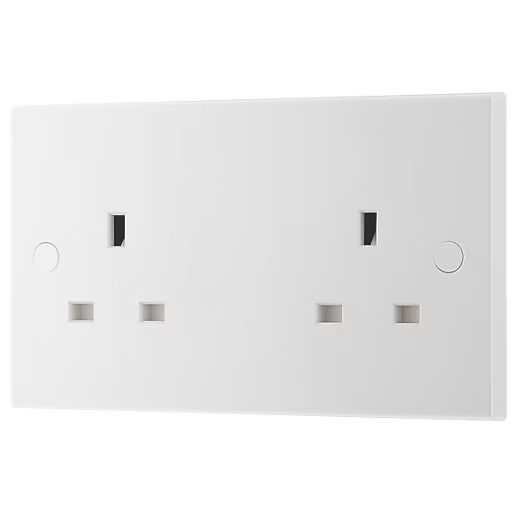
I don't mind getting down on my knees, or the getting up after. What really does me in though, if pretending that I can still bend down and do something, For some reason, my back has decided that it must not bend any more. As an example, today at work, I bent over to put something on a shelf that is about 600mm from the floor. No problem bending down, putting the stuff on the shelf. I then said to my work mate that I had been stupid and would struggle to straighten up again. I did struggle. As for sockets. I have often thought that using unswitched sockets, flush in the wall, then painted the same colour as the wall, would look very unobtrusive.
-
Keeping the birds and critters out
SteamyTea replied to Post and beam's topic in Roofing, Tiling & Slating
All the Rothschild's fault. (Tring museum is brilliant) -
Precautionary reinforcement of holes in joists
SteamyTea replied to DKenn's topic in Floor Structures
When they reimburse me for all the free birthday coffees I have never had. -
The last unit, marginal pricing, is not used in new contracts now, it was set up to encourage investment in renewable generation. It has worked as we now have a lot of wind and solar generation, and a stable grid. Contract for Difference is now used. This is basically a price guarantee, based on installation price and generation capacity. Electrical generation is not like buying fuel for a car, it is dynamic, so would be more like driving with just 1 litre of fuel in the tank and paying difference prices depending on how busy the fuel stations are.
-
Actually got a migraine and had to park the car. Can't say it is caused by the blazing sunshine.
-
And electricity.
-
Precautionary reinforcement of holes in joists
SteamyTea replied to DKenn's topic in Floor Structures
Was measuring from the vertical. Basically an equilateral triangle. -
Precautionary reinforcement of holes in joists
SteamyTea replied to DKenn's topic in Floor Structures
Can you get a drill in to bore the hole? Whenever I have had to drill though joists, the drill and drill bit combo has always been too big to get in, so end up drilling an angles hole. -
Precautionary reinforcement of holes in joists
SteamyTea replied to DKenn's topic in Floor Structures
Just (expletive deleted)ing glue it. -
Where we burn it in the energy from waste incinerator, with the fumes taken away by the prevailing SW winds, so ends up in Bristol as particulates and cyanide. We use the energy to make pasties. Who is (expletive deleted)ing laughing now.
-
Precautionary reinforcement of holes in joists
SteamyTea replied to DKenn's topic in Floor Structures
Have made a model of a lattice with Costa Coffee stiring sticks.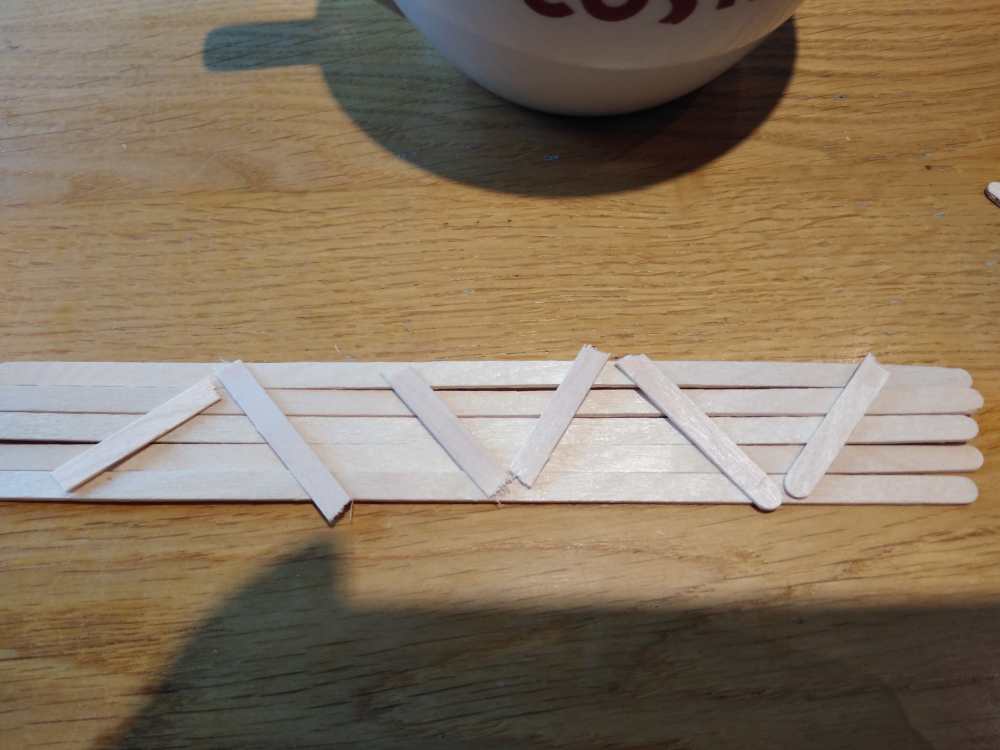
-
Technically you cannot dispose of polyurethane in domestic waste (in the UK, we have similar rules to the EU, as we were part of it once). Most foaming polyurethane uses isocyanate as the curing agent. Generally okay once cured, but quite nasty when in liquid state. Can cause a recurring rash to the skin that is incurable if further contact happens (I was poisoned with it in the 1970s and still have trouble now, 50 years on). Shall say this again, not that anyone takes a blind bit of notice, acetone is not the solvent to use for cleaning, dichloromethane is the best solvent. It works. It is also used to get the caffeine out of tea and coffee, so while not 100% benign, a (expletive deleted) of a lot safer than acetone. Not that anyone ever listens to me about it, even with my experience of using PUs for 50 years (starting to feel old now), have even had people, who have no experience in the polymer industry tell me I am wrong (do you remember that conversation @ToughButterCup). But what do I care, have told people repeatedly what to use, you are all grown ups, so allowed to be as stubborn as you like, and end up with scabby hands like mine.
-
Precautionary reinforcement of holes in joists
SteamyTea replied to DKenn's topic in Floor Structures
And adhesive. A polyurethane adhesive will stick very well as long as the mating faces have been cleaned. You could create some 30° Vs either side of the pipes from timber, 30° is the optimal angle as it spreads 50% of the forces, and can be alternated, like a W. -
Passed a van today Sprayrend They are in Penzance, which is probably 5 hours a day travelling.
-
It is so you can charge and discharge at different times and powers. Just a more controlled storage heater.
-
I have mentioned it before, not my term, but happy to take credit for it.
-
Sintering, or frittage, is compacting small stuff, with heat and pressure, to make a solid mass. Frottage on the other hand, is different.
-
Why I said it is a matter of hiding it. All a bit of everything. Generally, the air inside a building is at at higher temperature, and a higher relative humidity than the air outside. To counteract this, a vapour control layer is fitted inside. This is just a vapour impermeable layer (a bag) that stops the inside air migrating though the building structure where it may condense and cause mould. The inside air is them mechanically pumped in and out, in a balanced manner. It is really a matter of how well you can do that. The only real alternative when it comes to insulation is to use a breathable insulation. The idea being that moist air can easily travel both ways depending on temperature and humidity differentials, as well as air mass movement , but this will need to be thicker for any given U-Value. By keeping the internal temperature high, the structure is also heated in a poorly insulated building. This keeps the structure above the dew point, hopefully, or at least allows for relatively fast drying if damp occurs.
-
It is also easy to stick together with the correct application of adhesives and a basic jig.