SteamyTea
-
Posts
23865 -
Joined
-
Days Won
200
Everything posted by SteamyTea
-
You can work out your domestic hot water (DHW) from your existing usage. Or start from scratch with a jug, a stopwatch and a thermometer. Your heating requirements should be already calculated for your Standard Assessment Procedure (SAP, or possibly ESAP, E being enhanced). If not, you can work it out from the building fabric i.e. what the walls, floors, roofs windows and doors are made from (thermally) and some local weather data. Bit more involved that that, but imaging that you have a section of wall and it looses 'heat' though it (heat is the old term for energy). If you know the temperature differences, then you can work out the losses. The temperature differences change by the hour, so you have to use the weather data to give you the range and frequency (how often they occur) of those temperatures. This is usually called Heating Degree Days (HDD) and is a crude, but effective method of working out temperature dependent heat losses. Then you need to add to that any ventilation losses, but that is another story.
-

Yesterday we sprang a leak - today's coffee time challenge is..
SteamyTea replied to MikeSharp01's topic in General Plumbing
I am just off for a coffee, don't think I will be thinking about your problems though -
Laminate floors were best avoided anyway. Do you dislike traditional radiators? I do, and where they are located, usually under a window. And do you have gas? One thing to remember is that space heating and DHW do different things, at different times and at different temperatures. They are not good bedfellows really. Another thing to remember is that any unvented cylinder needs a certified installation and is meant to have an annual check (often not mentioned by gas fitters/plumbers). There is also a shift in primary energy sources, we are moving from thermal generation to renewables, and at a faster pace that even I imagined just 5 years ago. At the moment, gas is so much cheaper than electricity, even allowing for the efficiency losses and extra meter rental that, financially, it is the best option. I am not sure if this will always be the case though. You just have to do the sums and work out what is the best overall and maybe build in some future contingency i.e. can you easily swap out a gas boiler for a heat pump (the newer CO2 ones can produce a higher temperature). Also, how are you zoning the heating system? could you design it so that unused bedrooms can be at a lower temperature, that can save a bit of energy.
-
@JSHarris Is there any science behind the 56°C temperature, or is it an arbitrary set point that 'just seems to work'. @Nickfromwales ° instead of o, alt plus 248. Just get a PC and stop using a kiddies iPad. @DiabloI have got my photography grey cards out and my IR thermometer. White is at 22°C, Black at 21°C and Grey at 20.6°C. Probably within the accuracy of the thermometer.

-
Most of my life I have had parquet flooring. I have got used to it. Means home to me. But every time I go to a house with a decent carpet, I just love it, I could walk up and down my Aunt's stairs all day and fall asleep on her landing. I don't know if any research has been done about falling onto an uncarpeted floor. It was a fall that set the catastrophic chain of events that led to the death of my Grandmother and to the NHS having to admit they had superbugs (she was one of the 12 that never got compensated, but we had to do the legal work). The previous owner of this house fell and was unable to get up, leading to his death (and a wee weed floor upstairs). I don't know if a decent carpet would offer enough protection in a fall compared to a solid, or thin carpeted floor. Something worth thinking about though.
-
I used to suffer from childhood asthma, was pretty bad when I was a toddler (scared the hell out of my parents as we lived 1500 miles from nearest hospital). Luckily we found out that I had an allergy to most 'pets', so avoiding them cured the problem (my mother always had a cat though, and I hate dogs so avoid them anyway). When I left home and moved to the coast my asthma just cleared up. Unfortunately university ends (almost) and I had to move back in with parents for a while until I bought my first house. I was 21 and my asthma came back with a vengeance. I moved into my own place, an old, damp Victorian terrace, the asthma persisted. I changed jobs too and was working next to the pattern shop, they used a softwood timber there called gelatin, related to the rubber plant. In 18 months I had 10 months off work. Changed jobs and got a lot better (was a lot of detection work to find out it was the timber). I also moved house, to a more modern, damp and mould free place, and that seemed to help to. Made up my mind in 1986 that I wanted to live by the coast again, just took me nearly 20 years to do it. Eventually moved as far west as I could practically go and have not been troubled with asthma since, though I do still get hayfever (which is just an allergy anyway). My mother is now cat free and staying with her is joy, before it was not. Her persistent cough seems to have got better as well, though not fully gone. About 10 years ago I started to get terrible eczema on my hands and arms. Put it down to a change of washing up liquid at work. Found out that it was actually fish that was causing it. I sell a lot of fish, tonnes of the stuff. I was also eating it 3 or 4 times a week, as we all know how good it is for us and I quite like it. Because of that, I got a very croaky voice, could hardly speak at one stage. I was finishing of my second degree at the time and was about to start my teacher training. Over the following year, I got worse and worse. I put it down to stress (working full time, studying full time, bad relationship, financial worries, some social isolation, you all know the story). Eventually I worked out the cause, stopped eating fish and I got a lot better. I even gave up smoking for a while, but that made no difference except to make me feel stupid and slow. I think I did some permanent damage to my throat with my fish eating, leaving me with a voice like Bruce Willis, rather than Kenneth Williams. So it comes as no surprise to me that fitting a good ventilation system can markedly improve asthma and other allergy induced breathing problems. Getting rid of all pets and making sure there is no mould or fungus in the house is good too. Oh and no wood burners. I also find that dry air is better for me, so humidity may need to be controlled.
-
One thing to consider is the physical size of any heating/DHW system. Gas Combi is probably the smallest. As soon as you get into storing energy i.e. DHW, then you need more space. Now if it is just you, and the occasional guest, it need not take up much room (your house has about double the footprint of mine). I live alone, but have had a lodger in the past, and a 200 lt cylinder was fine. If I was starting from scratch, I would fit a Sunamp, with PV and an ASHP (no gas and I know how they work). As odd as this sound, I would also consider what I have at the moment, Economy 7. The capital outlay is very low and I am a low user (sub 4 MWh/year). There are limitations, but being single, they are easy to work around. I find it is always worth doing an estimate on an E7 heating and DHW system as a reality check when looking at quotes for other systems. You may need to fit a water softener as well, they take up a bit of room. I don't have the problem. Partly why my DHW cylinder has lasted 30 years, but I do need to change the lower element now, but scared to as the cylinder may buckle and spring a leak.
-
Or you will frequently both run out of juice as you assume the other has not. ASSUME = ASS out of U and ME
-
Easy Work out the time it takes to charge a battery Take the tool with the largest power draw and work out how long it will last on one charge. Divide that by the above, that will give you the number of batteries and chargers needed. Example Battery takes 1 hour to charge. Drill last 1/2 hour on full chat Therefore. 1 / 0.5 = 2 You can add in a bit of diversity. Say the drill is only used at half power, or only half the time, that will reduce the amount of batteries needed.
-
That was going to be my question. The only reason I can think for wanting oil filled rads is that they run at a lower temperature and can be covered over more safely i.e. wet washing. Though I would never recommend coving radiators of any sort. If you want to heat air, heat the air.
-
The upside is that the beach looks a lot better with a fresh covering of gravel. Usually it is covered in shit, from both dogs and the failing sewage system when it rains. Portreath really is a smelly place and even though it is close to me, I hardly ever go there. Time for a coffee in a proper port I think.
-
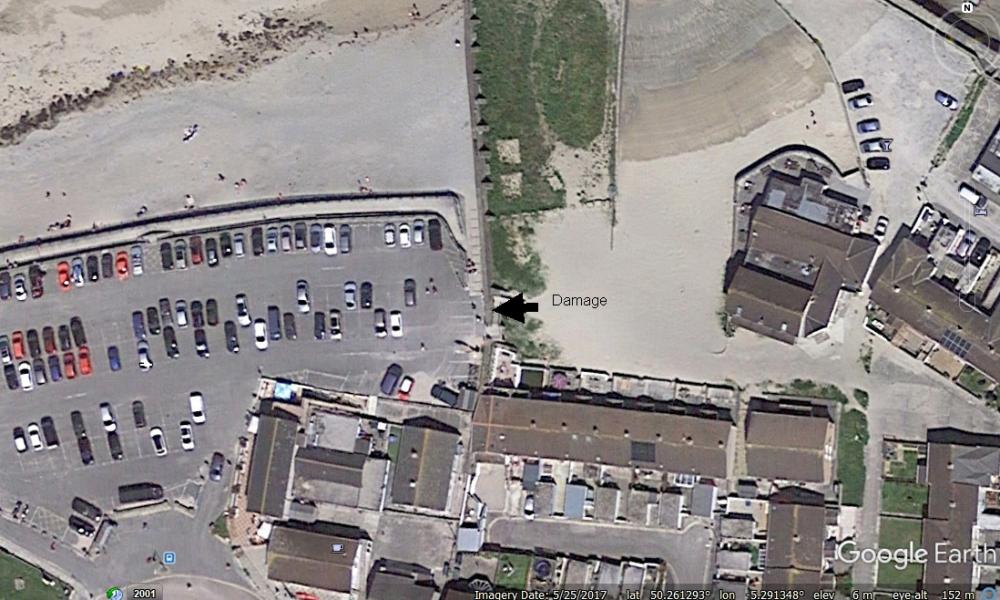
A picture says a thousand words
-
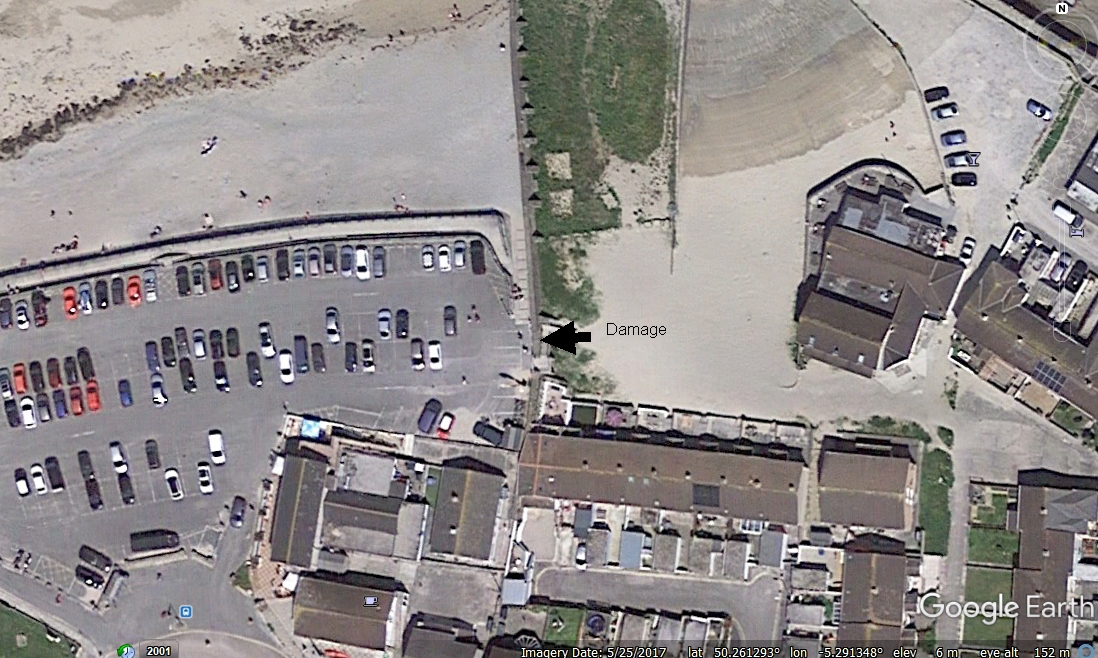
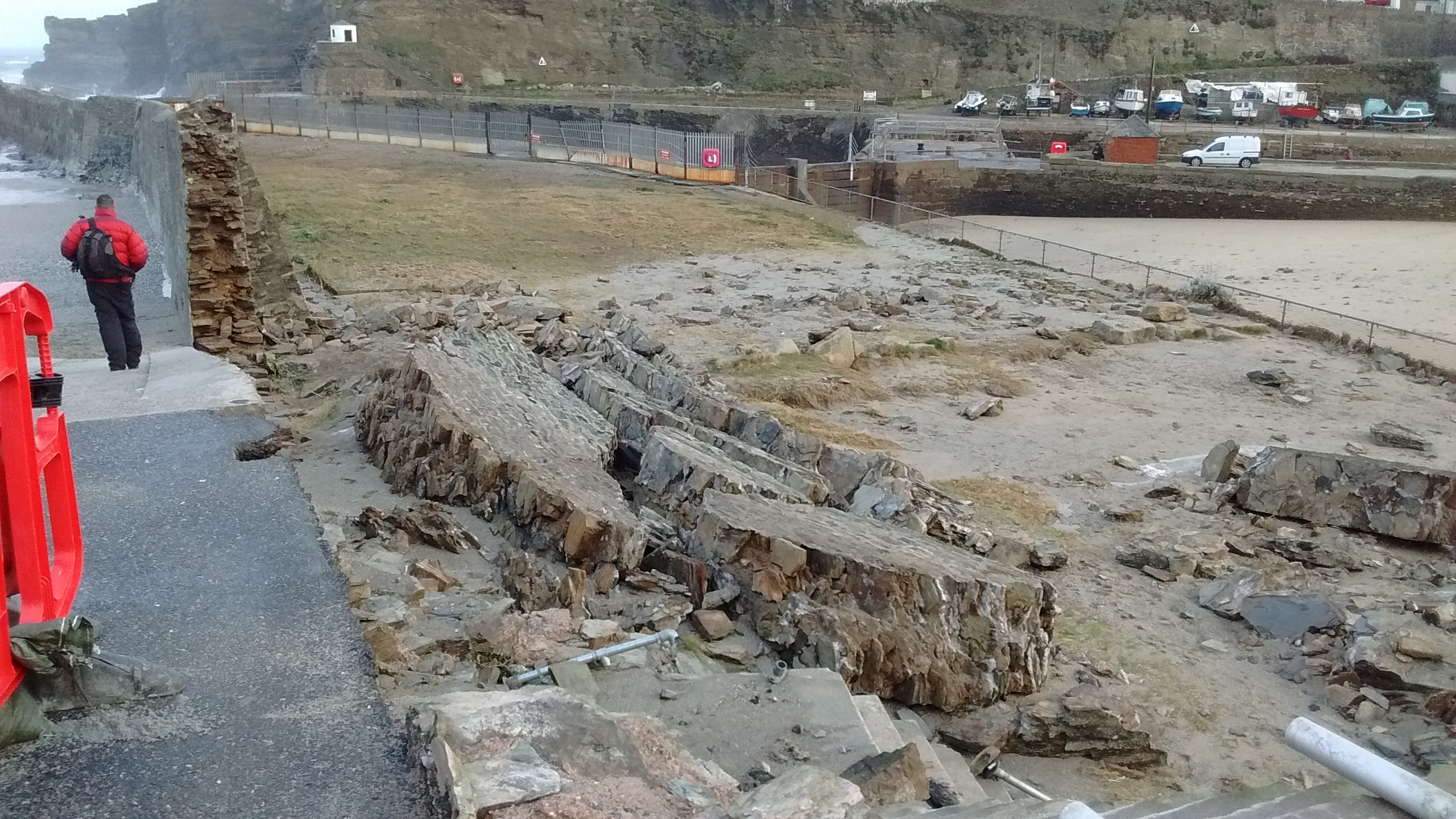
I don't know for certain, but wind was from the west, so was across the carpark. As the small cafe seems totally undamaged (this is lower than the carpark and closer to the beach), I suspect that wind driven waves built up the water height along the main harbour wall. When high tide and low air pressure caused a extra sea level increase, there was enough energy to push waves up the slipway. This extra water mass was enough to damage the old wall where a newer set of concrete steps had be cut in. In Cornish terms it was not a huge storm (unlike Feb 2014, actually a set of storms), but probably the wind angle was just right for this to do the damage. Just had a look at the tide chart and at Perranporth (10 miles up the coast) the tide was at 7.4m, so quite a high one anyway. Add a bit of storm surge and wave/water containment and it could easily topple an old wall.
-
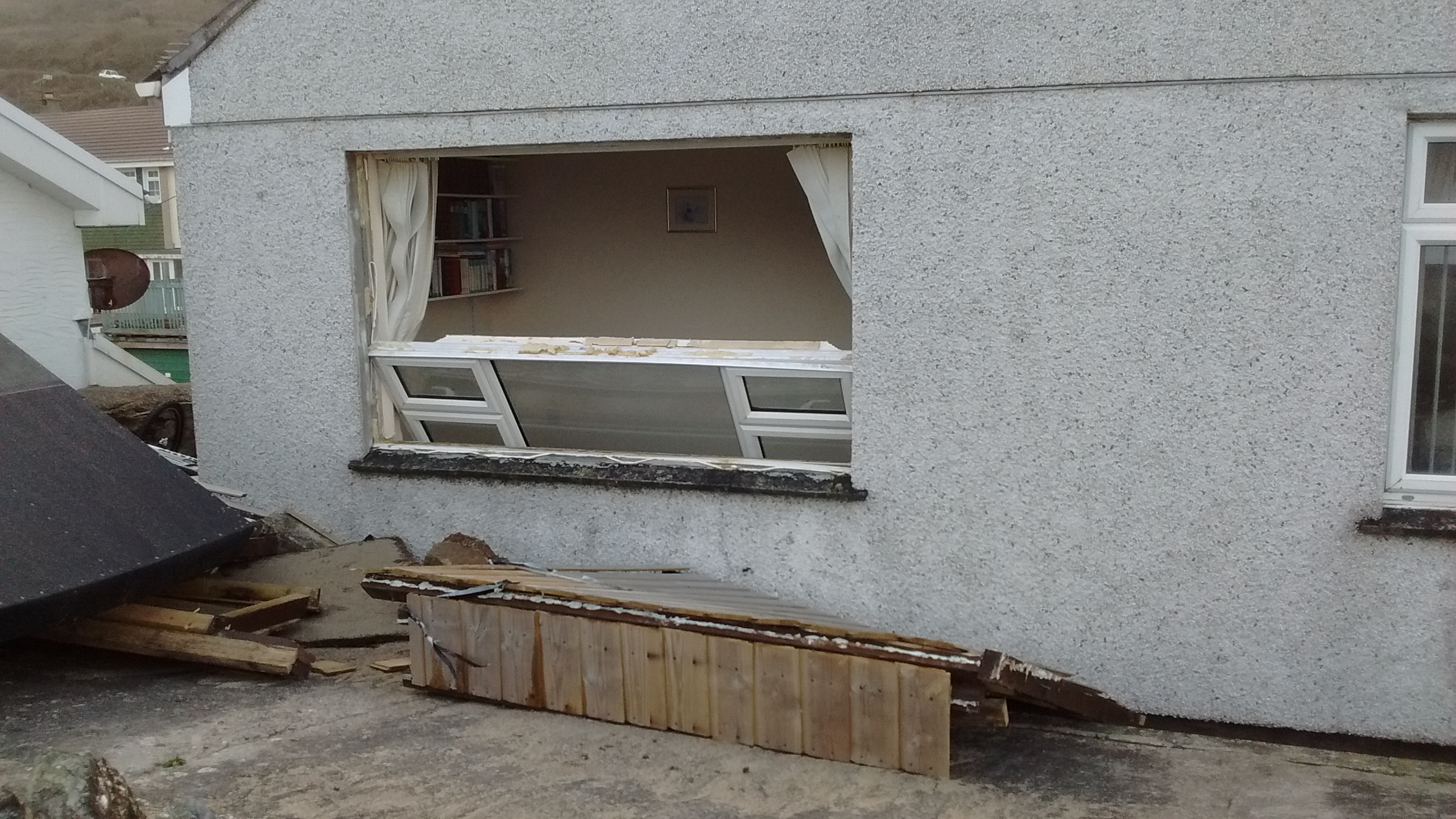
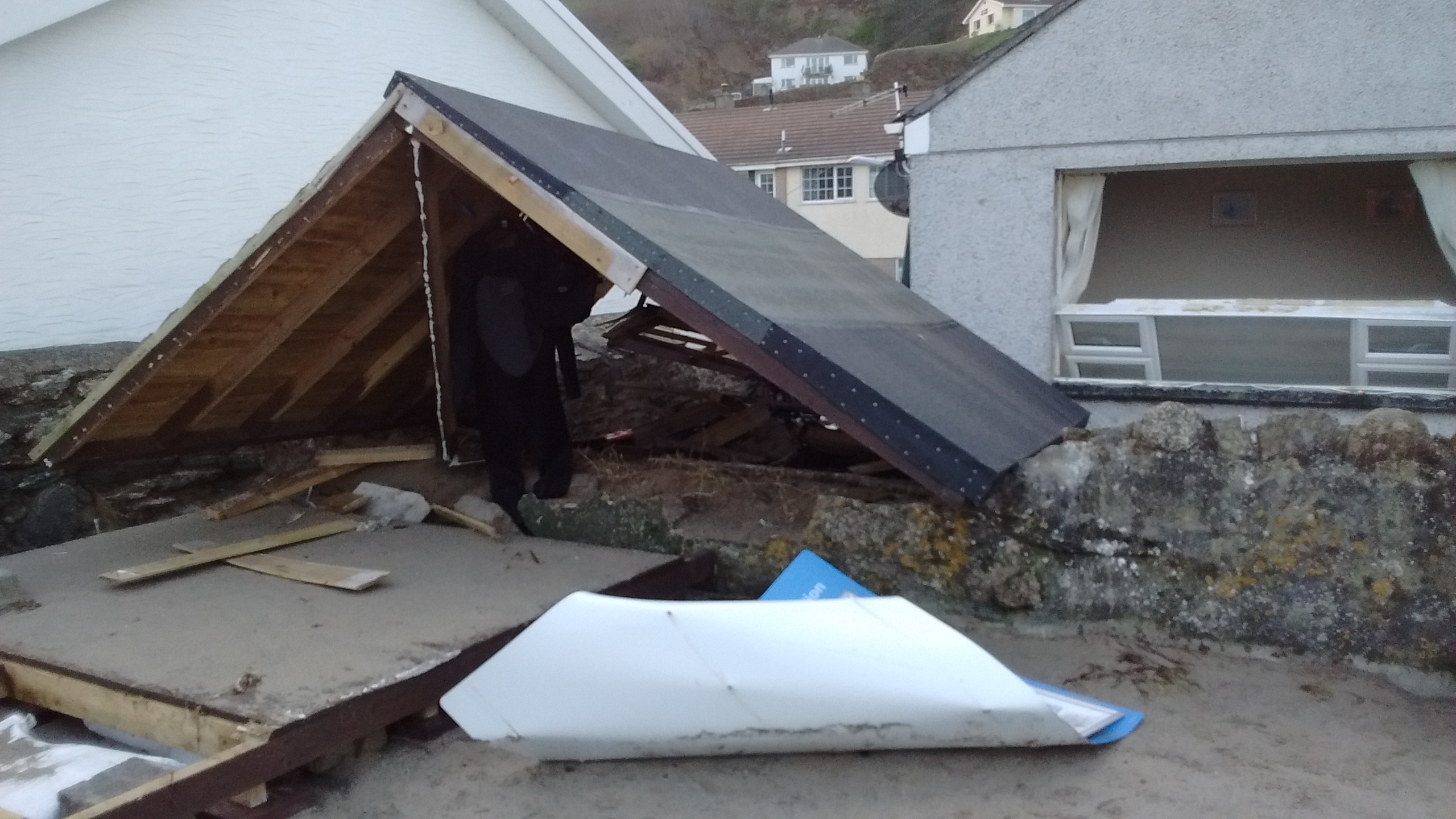
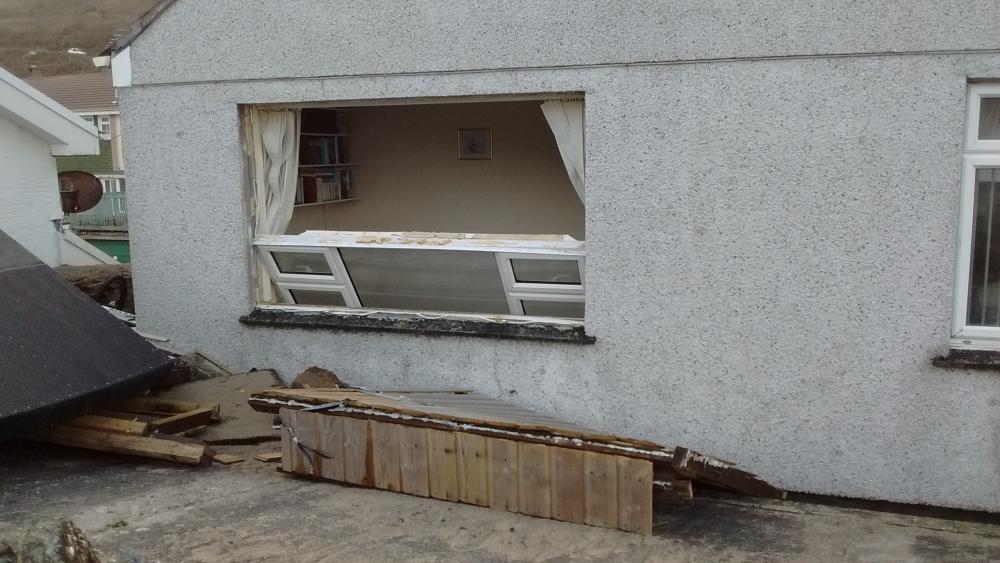
I was going to get the local radio girl back (I declined an 'interview' as she was way to distracting) and tell her that the windows was the real story. Looks like a FENSA claim to me Sun is now, so that wetsuit should be dry. Now as that looks like a bedroom, the old joke about "did the earth move for you too" "No, but the frigging window has fallen in".
-
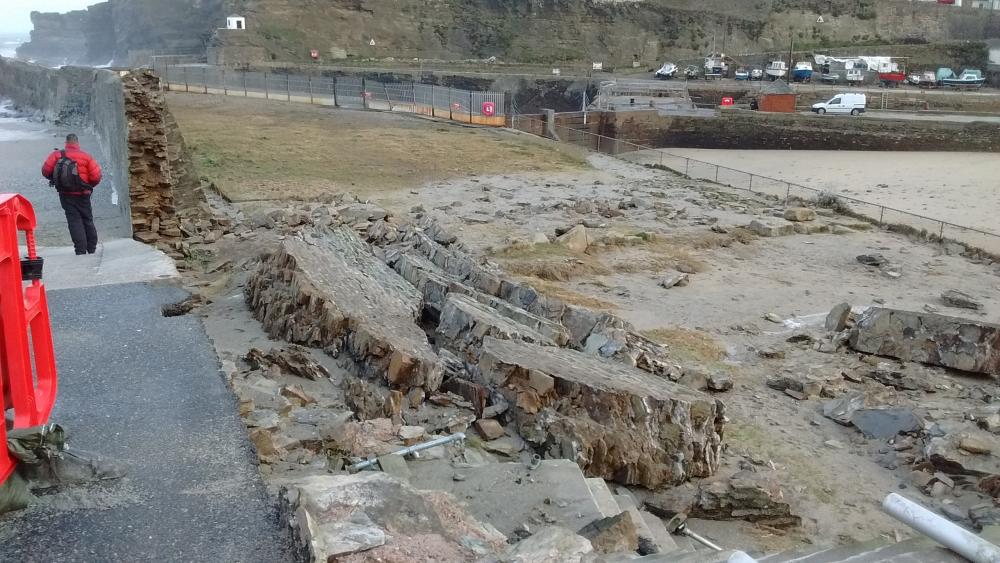
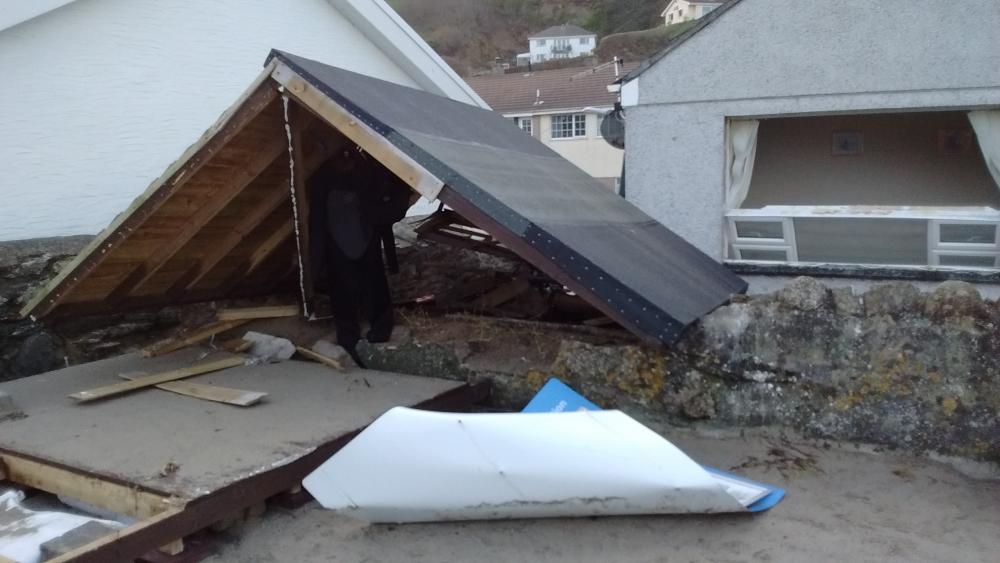
Well not exactly, a small section that separates the carpark from the inner harbour beach tumbled down during the night. It is possibly 200 years old, so they don't build them like they used to. I did not find it that impressive when I got there. But the second picture I took I found more interesting, and the third just shows how important a surf shack is.
-
What do you do on the staircase, and at the bottom step. (just for clarification, I hate skirting, it just looks like a dodge to cover up something that is badly fitted)
- 39 replies
-
- 1
-

-
- shadow
- shadow gap
- (and 1 more)
-
Any chance of claiming this back via your credit card, if you used it to do the purchase.
-
As DamianTrench said, "the recipes might work" Pot Sugar Cookie Recipe Using Dried Weed Sugar Pot Cookie Recipe With Dried Weed Recipe Tested By The Entire Budzu Team! This 100 year old is so yummy but is still super easy that even a novice can make it!. These are great for people with nut allergies as well! It is traditional to make this all with your hands, however at Budzu we are lovers of modern technology and we totally recommend using a mixer or hand held mixer to make it quicker and more fun. But if you like to get your hands dirty go for it! Tools Needed Kitchenaid mixer OR and hand mixer with standard mixing attachments 2 x Medium size bowls Sifter ( preferred but if you don’t have one it still works fine) Measuring cup full standard set of 1/4, 1/3,1/2, 3/4 & 1cup. Measuring spoon set full standard set of 1/8,1/4,1/2,1tsp,1tble Wooden Spoon or Spatula Baking tray Baking paper or parchment paper PREP 15 mins COOK 15 mins READY IN 35 mins Ingredients: Recipe makes 15 crescent shaped or 1 dozen medium cookies 300g of unsalted cultured butter – softened 200g white sugar vanilla essence 2tbs – 3 tbs if want it more vanilla tasting pinch of salt 2 eggs 500g flour 1/4 Ounce to 3/4 ounce of dried flower. The potency of the product is also to be noted and your condition. The number of cookies will vary also when you use more dried flower. Directions: Preheat the oven to 325 degrees F (165 degrees C). Grease cookie baking tray or line with parchment paper. Beat butter and sugar until creamy. Add the vanilla extract and mix again until the golden brown essence colour is mixed though. Add the salt and eggs and mix. Add in the finely chopped weed in small batches and make sure it is all mixed into the wet mixture as best as possible. Slowly add the flour by the spoon full and mixing well and slowly. When its consistency is like dough, kneed to form little cookies that are as thick as you like it and then cut out with cookie cuts to make all shapes. (We made them thicker than usual but we like heavy biscuts.) Place on the baking tray and space apart as they will spread. Place full into oven. When slightly browned on edges remove from oven and cool on wire rack until cool to touch. When cooled, decorate as desired. We used white icing sugar and sprinkles all over and made a large mess but it was fun!. TIP: Depending on the occasion you can make these into any shape you want or you can roll a section of this mixture into a log and wrap that log in Baking paper or parchment paper and store in the freezer for a couple of months.
-
Why not call up a couple of battery supplier in Basingstoke and ask if they know who it may be. I got a job offer that way once.
-
DIY Heat Exchanger
SteamyTea replied to Onoff's topic in Mechanical Ventilation with Heat Recovery (MVHR)
There used to be a funny old hardware store, Truscott or something. I am sure they do long nails, just like the nail bar, Tekka Beauty -
Start a new thread about it.
-
DIY Heat Exchanger
SteamyTea replied to Onoff's topic in Mechanical Ventilation with Heat Recovery (MVHR)
That is your own fault for going to Launceston!! If it is not in Bude, it is not worth having -
Rather going off topic (my fault), so feel free to start a new thread about it.
-
Should we not be thinking about the the long term, regardless of how long the current occupier is in the house. Not that hard to get a rough picture. Just some multiplication really. So the first thing to work out is the mass of the floor i.e. the length, width and depth, then the mass i.e. volume times density. Then you look up the specific heat capacity of the floor material and multiply that by the temperature difference (how much hotter it is than the air) and the mass. There are other things to look at such as the different losses and areas between the ground, edges and the actual room, but they can wait for now.
-
Have you done any figures to see how much difference slab thickness would actually make? There is a lot of talk about thermal storage and buffering in concrete floors, but very little real data or accurate models.