


SteamyTea
-
Posts
23864 -
Joined
-
Days Won
200
Everything posted by SteamyTea
-
And according to the internet can clean your bog, patio, coins, cure and give you cancer, cause or reduce obesity, help you concentrate and get a pretty, singing, girlfriend. Ok, I made some of that up. It does go well with a curry though.
-
Surely, when looking at interseasonal heat stores, and assuming you are not after a truely passive system, then everything shoudl be compared to a heat pump. A heat pump is really just taking advantage of stored energy anyway.
-
There was a press release from SunAmp a year or two back about barging in a huge heat battery to Bristol. I suspect it just just puff.
-
20 MPH is an aspiration speed down here this time of year. Still, high enough to deactivate that 56 dB horn on all new EVs.
-
Not on my perfectly functional phone as it does not have an LED for the camera.
-
Thought about this last night as I remember a warning going out about Flashlight applications being malware, spyware data slurping and just not worth the risk. So why not make a jpeg that is all white, put it as a shortcut on your phone and use that.
-
I just fitted a cheap (£100) shower pump to my vented system. Been working fine since 2008. One day I shall have a look at the little strainers on it.
-

Handle-less Remote Controlled Door Latch
SteamyTea replied to iSelfBuild's topic in Doors & Door Frames
And that is how I took the skin of my knuckles the other day Does anyone do a door latch that can sense the MAC address of my phones Bluetooth. That would be handy. -
Had a chat with the head chef of a large local tourist attraction. His argument about not getting induction hobs was that they would have to buy new pots and pans. I pointed out that you don't need to buy 'heavy' stuff with an induction hob as energy is spread across the base automatically. One advantage in commercial catering is that the kitchen temperature is lower when using induction hobs. This saves a lot of cash on calling out the fridge man. As for eye level ovens, they are a good way to get burnt. Top shelf no higher than your waist is the safest. (I hate health and safety generally, but at work I am a real pain about it, have seen what a hand looks like after it has been in a fryer. I was commended on my first aid skills though)
-
I think with things like phones it is more about security, rather than new features. Though sometimes they do a major update and the application looks and acts totally differently. And they take away the few features I use.
-
I notice that when I update the applications on my Android phone, almost without exception, there is a second update within 2 days.
-
Right, thought you were on about DHW in general. We have a two small water heaters at work. One is rubbish and the other one is even worse. The instantaneous one either delivers cold water, or scolding water. The larger one with a tank has an odd system when it vents. About 3 minutes after use, it decided to expel water down the pipe. This is because of expansion and over pressure. Heatrea say it is normal, we say it is rubbish as it can leak water onto an area (it has a long pipe so we can fill sink and buckets).
-
Isn't there an overflow into a tundish, or was that just on your system?
-
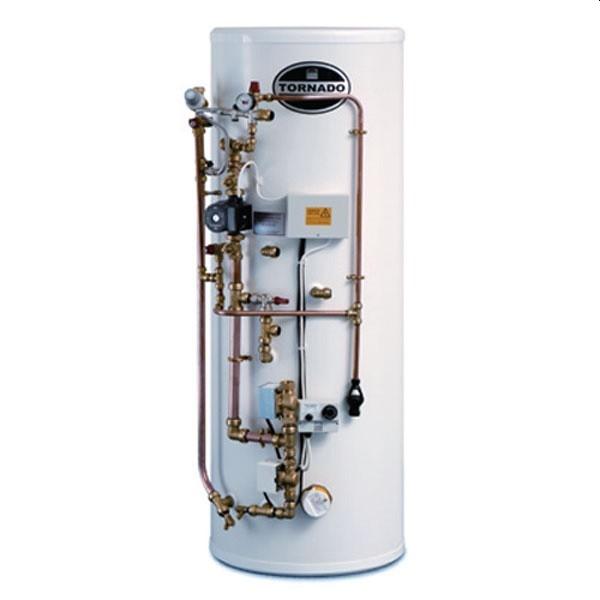
I disagree. Vented is very simple. One tank to feed the cylinder, a pipe to take the hot water away. And one pipe back to the tank for safety. That is it. No need for pressure reducing valves, expansion vessels, sacrificial anodes, multiple coils, maybe flat plate heat exchanges. We seem to think that complicated is better.

-
I think we have come across this fellow before, over at the other place.
-
Eco-friendly(ish) concrete
SteamyTea replied to eandg's topic in Environmental Materials & Construction Methods
It is not the filler, it is the cement that is the problem. How much can you reduce the usage to. That will probably give a greater saving. It go for lime. Mix and pour. Wait a year. Repeat process. -
I knew a bloke whose father converted horseboxes to campervans. He must have been good as he was featured in Watchdog.
-
Eco-friendly(ish) concrete
SteamyTea replied to eandg's topic in Environmental Materials & Construction Methods
There are some cements that are supposed to be carbon neutral. https://phys.org/news/2015-09-technique-cement-carbon-neutral.html Spoke to this guy a few years back, was very helpful. Not sure if he is still at Sheffield. Dr Ewan A Byars Centre for Cement and Concrete University of Sheffield e.byars@sheffield.ac.uk -
Lining a wall with plywood: how thick should the ply be?
SteamyTea replied to ToughButterCup's topic in General Joinery
Filler, wire brush with the grain, used teabag to stain it. Will still look like a pegboard eventually. -
That is my thinking about the melamine faced ply. I am good at cutting wood with a saw, can put mistakes rights with filler, an angle grinder and a palm sander. But I know I am hopeless with a trowel and spreader. Tried plastering 3 times, then got the professionals in. Cost me a lot more as they had to hack of the shit I had put up, and down, and sideways. Plastering is a foul job.
-
I like paved drives, but did you have a case of the Merkel's when taking the pictures.
-
I have often wondered by melamine faced ply is not used. We are happy to use it in bathrooms, and our kitchens tops are covered in the same stuff. It is easy to put together and can be easily filled painted over. I suppose Conti-Board gave it a bad name.
-
Relatively easy to make one with a cheap sensor (DHT22), a cheap board (RaspberryPi Zero or similar) and a solid state switch. With that kit you can also easily expand and add extra sensors i.e air pressure, light sensing, energy monitoring and do some data logging. Quite fun learning how it all works and there are a few people on here that know it inside out.
-
DIY Arduino based solar PV dump controller
SteamyTea replied to ProDave's topic in Photovoltaics (PV)
Don't most modern electric meters have two LEDs on then, one for imports and one for exports. If that is the case, then can't you just sense the pulses and divert accordingly. Easy to count pulses with just about anything. -
Lining a wall with plywood: how thick should the ply be?
SteamyTea replied to ToughButterCup's topic in General Joinery
Then I shall go to Penzance. Was so still there last night that the fireworks got obscured by their own smoke.

