


SteamyTea
-
Posts
23836 -
Joined
-
Days Won
200
Everything posted by SteamyTea
-
 Right, I had a brainstorm. My original spreadsheet to look at the effects of ventilation strategies was too complicated. So I have reduced it to the basic minimums of natural ventilation (the holes your builder leaves you with) and mechanical ventilation (what you choose). The only things you really have to find out is the total treated (heated) volume of your building, the number of air changes (both natural and forced), the mean, local, air temperature (Met Office is useful here), how warm you like your house, some information about the MVHR efficiency, never trust the manufactures numbers, be sensible about it and that is about it. I have only just knocked this up, so there may be errors, but you can see the formula, and edit them if you unlock the sheet. Hope it helps. ACH and OAT Thermal Losses (excel).xlsx
 -
Where is the kWh price heading in 2022?
SteamyTea replied to epsilonGreedy's topic in General Self Build & DIY Discussion
Yes, I saw that as well. How are they going to view all our security cameras when they have cut all our power. -
There is this on the gov.uk site. https://www.google.com/url?sa=t&source=web&rct=j&opi=89978449&url=https://infrastructure.planninginspectorate.gov.uk/wp-content/ipc/uploads/projects/TR050006/TR050006-000310-Doc%205.2%20-%20ES%20Desc%20and%20Alts%20App%202.1%20-%20CEMP.pdf&ved=2ahUKEwie8cPv0KqNAxXBVUEAHUBHAssQFnoECH0QAQ&usg=AOvVaw0kotOFx7na0J8i86kpiEgY
-
In the old days, we just chained bikes to downpipes. Occasionally, it was my own bike.
-
Cocaine and hooker.
-
Had a quick skim though. I notice no mention of what torque setting are used for the bolting, and if any anti-shake devices are used. I am not sure how important this is on buildings, but on automotive/marine/aviation/machinery i.e. dynamic structures, it becomes important for reliability. This really comes down to what 'bolting' is used for. Bolts clamp, screws don't.
-
Assuming that is the company previously known as Western Power, then I think it is standard policy to fit 3 phase by default. 3 phase does give you the advantage of connecting up to 16A of PV on each phase, so 11.5 kWp without special permission.
-
Advantage of an induction hob.
SteamyTea replied to SteamyTea's topic in Kitchen & Household Appliances
Bit bored while waiting for rest of supper to cook. Thought I would post up a short video of my milk based pepper sauce. Amazing how even it heats, especially as it is a very cheap hob, with extremely cheap pan. VID_20250515_190830148.mp4 -
That was because grid CO2 intensity was around 700 gm/kWh, now usually below 100. They possibly assumed that north facing windows were single glazed, not triple and argon filled. I do wish they standard were publicly available, and free. It is almost like they don't want the public to know.
-
Have a look on n here, maybe something useful, they generally run on lower spec machines and you don't actually install them, just expand them to a local directory. https://portableapps.com/apps/graphics_pictures/
-
Always easier to say 'a big boy did it, then ran away'. Works for me when I need to get out of a hole.
-
Been over a decade since I looked inside an SMA. There used to be two, numbered, dials that set up the country codes and other options, can't remember if that is on the smaller inverters. There was a free Bluetooth app that you could download from SMA, maybe worth seeing if that is available still and see if you can connect.
-
The building regs may force you to have less glazing.
-
Was it that long ago. Some on here are still still working on theirs, and they started in the eBuild days.
-
Drivers, drivers everywhere - isn't there a better way?
SteamyTea replied to Benpointer's topic in Lighting
Yes, it is the usual givaway they they be emmet.
-
Not sure about Scotland, but I think in England it is a legal requirement to resister them. Worth checking (the legalities, to the registration).
-
As predicted in this this website. https://www.bgs.ac.uk/information-hub/borehole-records/
-
There is that latex spray machine, not sure how much it costs, but a quick way to make a place airtight, well from the inside anyway.
-
Did they drill other test bores, say 2m from the devine one, and then some random ones. Generally, if you drill deep enough, you hit ground water, that is just geology, not mystical forces.
-
Drivers, drivers everywhere - isn't there a better way?
SteamyTea replied to Benpointer's topic in Lighting
I thought this was going to be about Emmet's in their cars. I have used cheap mains voltage LEDs from Poundland, they have proved to be remarkably good and reliable. My bedside light is the only dimmable one, bought a Phillips build for that, cost 7 quid, so 7 times the price of the others. Not given and problems and I think it is 6 years old now. -
You could try a few insurance companies, though they may say the same 'not until it is built'. You could design the flat roof so that you can attach a pitched roof to it later. May seem like 'double building', but a fake pitched roof may possibly be made to a lower structural standard, maybe @Gus Potter will know about this. Way I see it is that it is easier to build when you have a structural base to work from, and stand on.
-
Back to the original question about airtightness. If you have some plans, I may have a bit of time to play about, be an interesting way of checking the theory against the build. Care to post them up, with some dimensions and U-Values on them.
-
Will that be of your Drain Off Cock?
-
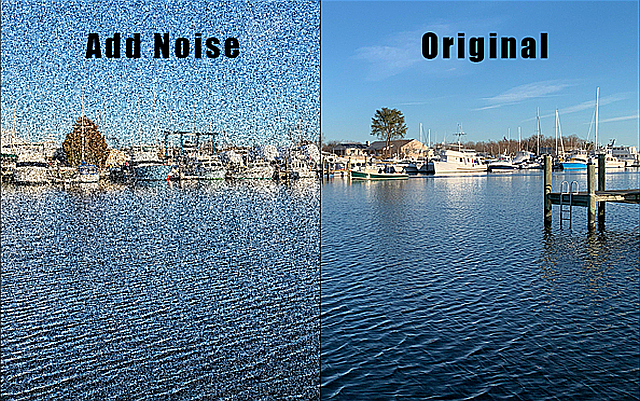
What has, almost certainly, happened is that as the paper has dried out, it has shrunk a bit. Not sure what you can do about it now. While large posters, you may have noticed (you will now) that a lot of 'noise' is added to the image, usually a random pattern of pale grey dots or shapes. This is to fool the eye and not notice that the image quality is not that high.
-
I was bored yesterday and knocked up a simple spreadsheet to work out thermally losses. As your house is a unique shape, rather than a basic cube, you really need to do the same. Then assign capital and running costs. A bit boring to do, but best options should show themselves.

