-
Posts
23548 -
Joined
-
Days Won
194
Everything posted by SteamyTea
-
Why. I don't find flicking a light switch an arduous task, nor does my 93 year old mother. I never asked my 103 grand mother, when she was alive, but whenever I went around the lights where on if needed.
-
What is fuel poverty these days. The definition was changed a while back. But I tend to agree, any government that introduces a policy that directly hits people in the pockets is onto a looser. Suck a policy could be introduced gradually though, and hope it gets lost in general cost of living rises. I don't know what the alternative is though, subsidies skew the market too much, and generally benefit people that are already cash rich or wealthy. Legislation, along with taxation, is too blunt a tool. This week's comic has a bit about it, so may post it up later.
-
Some of us have been saying this for a couple of decades now. A quick look at the levelized wholesale costs of solar and wind shows that in 2019 solar cost £0.08/kWh and wind £0.05/kWh. (https://ourworldindata.org/grapher/levelized-cost-of-energy?time=latest&country=~GBR). I am assuming that retail gas prices are at £0.03/kWh. If you double those wholesale numbers you get an idea of what retail prices are. So to level the playing field, to the same as the solar you would need to add £0.13p/kWh (ish) to gas. An average house gas usage, according to UK Power, is 12,000 kWh/year, so that would add £1560/year to a bill. This is the highest tax, to levelise it to wind would add £840. We could reduce the cost of wind power by 20% if we allowed onshore wind again, but I think this government is still against that (the new farm subsidies are going to be about not building on farm land). If we assume that because of the RE energy mix, we put a tax of £1000/year on average to peoples bills (£20/week or the same price as 8 Costa Coffees) it will change the thinking about fitting a heat pump. The people it will hurt most are the ones that already have a heat pump as they will just see a price increase. Another way to look at is, is how much RE generation would that £1000/year buy. Assuming that RE generation costs on average £500/kW, and there are 35 million households, then that is 2kW installed capacity per household, or 70MW of installed capacity each year. Assuming a capacity factor of 25% (which is very low) then that is 15 GWh extra each year of actual generation (10% extra each year). That seems pretty cheap to me as in less than a decade we would have 100% RE generation to cover domestic usage. This is not so far off from what this government has said anyway, and they are doing that without putting a huge tax burden on consumers. Road fuel prices have risen 30% in the last year, has not stopped people using cars (though last year was a little peculiar). An average UK driver does ~8000 miles a year, this is, at 50 MPG (5.6 litres/100 km) an increase of £215/year.
-
Heat Pumps & Hydrogen Powered Boilers Book
SteamyTea replied to Des Ingham's topic in Introduce Yourself
Quite simply there isn't a gas main within a mile of my entrance. (Feel like I am marking my old RE students homework. It is much easier seeing others typos than one owns) -
Apart from The Islands of Scilly.
-
Code RED - the end maybe nigh!
SteamyTea replied to MikeSharp01's topic in Environmental Building Politics
How the fossil fuel era ends – and four possibilities for what follows Ever cheaper wind and solar power means the decline of coal, oil and gas is unstoppable. The trillion-dollar question is how, and how quickly, their demise comes about ENVIRONMENT 4 August 2021 By Graham Lawton David Paul Morris/Bloomberg via Getty Images When will the fossil fuel era end? While we don’t know exactly how the energy transition will pan out, the fossil fuel age is ending as it began, as we learn to exploit a vast, cheap, easy-to-use energy resource that is self-evidently superior to the existing options. Now, it is wind and solar power. “The peak of the fossil fuel era is here or hereabouts,” says Kingsmill Bond, a strategist at energy think tank Carbon Tracker. “The plateau is going to last a bit, but then go off a cliff.” How high the cliff is and what is at the bottom depends on which of the scenarios available to us we choose. For the various fossil fuels, however, it will be first in, first out. “Coal is finished,” says Andreas Goldthau at the University of Erfurt in Germany. Regulatory pressure, changing economies and the competitiveness of renewables are doing for old king coal. Energy special How we can transform our energy system to achieve net-zero emissions Fatih Birol interview: Using energy isn’t evil – creating emissions is How to understand world energy use – in 10 graphs Even where governments have tried to prop up or revive coal, as in Poland and the US under President Trump, they have failed. “The question is not how coal ends,” says Goldthau. “It’s more about how we manage the transition to give workers and mining communities a smooth landing.” That’s especially relevant in China, India and Indonesia, the biggest remaining coal-burners. According to a road map by the International Energy Agency (IEA), often seen in the past as an apologist for fossil fuels, old-fashioned, dirty coal power should account for 1 per cent of global energy output at most by mid-century if we are to hit net zero. Oil will stick around for longer. “The reality is, the world is going to need oil for decades to come,” said Occidental Petroleum CEO Vicki Hollub at the Climate Science and Investment Conference in New York in May. “There’s still going to be an oil market in 2050,” says Goldthau. “But it’s going to be much smaller.” The IEA forecasts a decline from 90 million barrels a day in 2019 to 24 million barrels a day in 2050, mostly driven by a switch to electric transport. This residual use of oil – to power some trucks, ships, planes and hard-to-decarbonise heavy industries, and to make petrochemicals and plastics – will be compatible with net-zero carbon emissions as long as we use carbon capture technology, says Goldthau. But even these uses will fall into the arms of the sun and air. “Slowly but surely, they are going to find alternatives to fossil fuels, though airplanes are going to be a massive headache and I think the last man standing is the plastics industry,” he says. Natural gas, now used extensively for domestic cooking and heating, electricity generation and in heavy industry, will follow the same declining trajectory as oil, albeit with a timeline that keeps it in the mix for even longer. According to the IEA road map, between now and 2050 gas demand will fall by just 55 per cent to 1750 billion cubic metres a day, replaced either by clean electricity or piped hydrogen gas. Exactly how and when the last drop of oil or whiff of gas is extracted is unknowable. But Carbon Tracker recently totted up the global potential of solar and wind and found that there is 100 times more renewable energy available than the world actually needs. Some 60 per cent of it can already be exploited economically, with that proportion rising to 100 per cent by 2030. Even big oil companies accept that their industry is slowly dying: Shell predicts an expiry date around 2070. Bond sees a day when people visit former oil refineries at the weekend, much as we now sip cappuccinos next to the gentrified canals and warehouses of a bygone industrial age. “Even the IEA, the great defender of the fossil fuel incumbency, is saying no new stuff, peak fossil fuel in 2019, decline from here on down,” he says. “If that isn’t the end of the fossil fuel era, I don’t know what is.” FOUR ENERGY FUTURES In 2019, Goldthau and his colleagues suggested four ways the energy transition could play out geopolitically – though, as ever, no one can say for certain which way things will go. 1. Big green deal A global consensus on the need for the energy transition leads to international agreement and close cooperation between nations. Clear policy signals encourage investors to take their money away from fossil fuels and put it in low-carbon technologies. Green finance deals help lower-income nations and petrostates with the transitions they need to make. This is the only scenario that hits net zero by 2050, the team concludes. 2. Dirty nationalism National energy security wins out over tackling climate change. Nations develop inward-looking policies that favour renewable energy sources where they are cheaply available, but also exploit whatever fossil-fuel resources there are. Global markets fragment, breaking the momentum towards a global green energy transition. Efforts to limit global warming to 1.5°C fail. 3. Technology breakthrough There is significant progress towards net zero as wind and solar keep getting cheaper, aided by further breakthroughs in battery and grid technologies. But the two tech leaders, China and the US, increasingly vie for global supremacy through green tech. They refuse to share technology and key resources such as rare earth metals, dividing the world into blocs. Europe and Russia become increasingly marginalised. 4. Muddling through A lack of cooperation and planning mean the world fails to limit warming to 1.5°C. However, renewables do get cheaper and grow fast enough to bankrupt many big fossil fuel companies, causing financial chaos. Different parts of the world, such as the EU, the US and China, increasingly follow their own agendas, with existing economic, geopolitical and energy imbalances reinforced. Ash from fossil fuel burning seeps into waste water at a thermal power station in Belchatów, Poland Kacper Kowalski/Panos Pictures EFFICIENCY’S THE WORD The more that can be done to limit the amount of energy we use, the more feasible the task of converting the world’s energy systems to meet a target of net-zero emissions by 2050 will be. The International Energy Agency’s recent report on how to reach net zero envisages overall global energy use falling 8 per cent by 2050, despite serving a global economy twice as big and 2 billion more people than today. Achieving this will require a string of measures to improve efficiency and check demand. This means everything from insulating houses better, to reduce energy requirements during cold winters when there is less solar power available, to making appliances more efficient and encouraging people to drive less even if they have electric cars. The danger is that big increases in energy demand from some sectors, such as video streaming, cryptocurrencies, gaming and private jet flights, could cancel out any gains. Many companies justify using more energy because they get it from renewable sources. But if increased energy demand is met using existing renewable energy sources that could otherwise be displacing fossil fuel generation, it doesn’t get us any closer to net zero. To make progress, companies must build additional wind or solar projects. A few, such as Apple, are now doing this. -
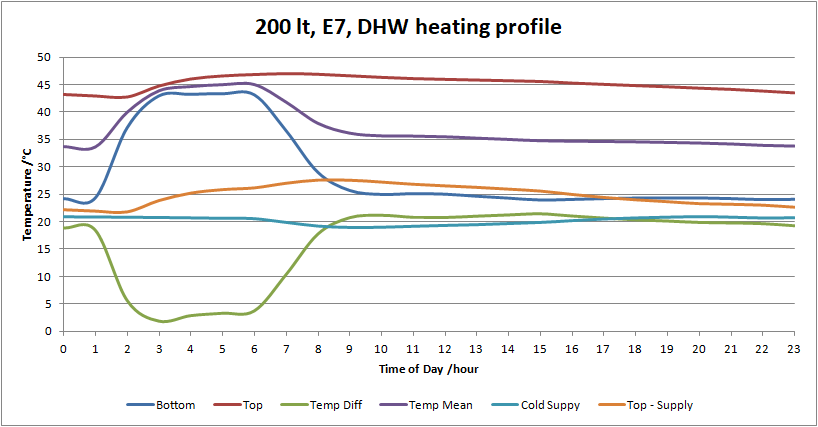
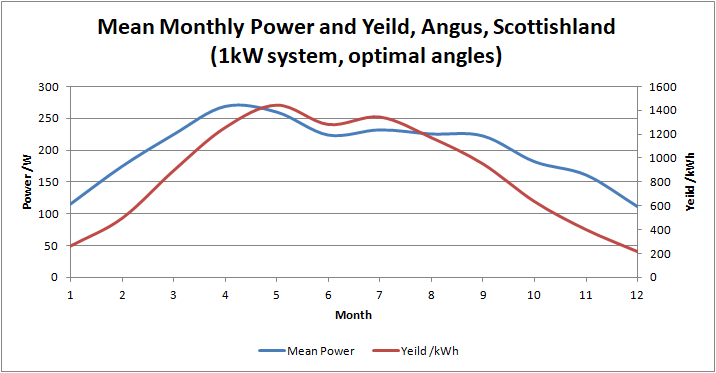
Energy and Power are different things. You may well get enough energy to run most of your home from a 2kWp system, but you will not very often get enough power from it to run much more than a few light loads. Storing as DHW is a cheap and obvious method, but you will still be importing electricity at the same time. Just that the unit cost will, in effect, be lower. Using timers is a bit tricky. Sod's Law says that the times you do draw a higher load i.e. washing machine, are the times it clouds over.
-
Heat Pumps & Hydrogen Powered Boilers Book
SteamyTea replied to Des Ingham's topic in Introduce Yourself
Stick to the Laws of Thermodynamics and you cannot go wrong. It is why they are Scientific Laws. -
Code RED - the end maybe nigh!
SteamyTea replied to MikeSharp01's topic in Environmental Building Politics
I don't think they are shown. But crop burning and deforestation accounts for 7.7%. You can make an estimate if you know the area and type of growth there. -
Code RED - the end maybe nigh!
SteamyTea replied to MikeSharp01's topic in Environmental Building Politics
How to understand world energy use – in 10 graphs How fast is renewable energy rising and fossil fuel use declining? Who’s using how much energy – and for what? Find out in our quick graphical guide to the world energy scene ENVIRONMENT 4 August 2021 By New Scientist FEDERICO GAMBARINI/DPA/AFP via Getty Images Energy special How we can transform our energy system to achieve net-zero emissions Fatih Birol interview: Using energy isn’t evil – creating emissions is How the fossil fuel era ends – and four possibilities for what follows How is energy use changing? To limit global warming to a nominally safe level of 1.5°C as laid out in the 2015 Paris climate agreement, we must replace fossil fuels with practically inexhaustible, clean, renewable alternatives, primarily derived from sun, wind and water. The aim is to hit net-zero carbon emissions – pumping no more carbon dioxide into the Earth system than it can absorb – by mid-century. A lot of changes will be needed before we get there. Our demand for energy is still rising year-on-year. Discounting the burning of traditional biomass such as wood, fossil fuels cover almost 85 per cent of “primary” energy demand, namely energy in its raw form, before conversion into heat, electricity or transport fuels. Of the big three fossil fuels – coal, oil and gas – only demand for coal is falling. More of the increase in primary energy consumption in 2019 was covered by fossil fuels than by renewable resources. What do we use energy for? Broadly, our demand for energy can be split into three main sectors, each accounting for roughly a third of energy demand. First, there is the energy used in the buildings in which we live, work and spend our leisure time. About 77 per cent of this goes on heating (and to a lesser extent cooling). Just 10 per cent of that energy comes from modern renewable sources, which excludes things such as biomass and wood used for heating. The remaining 23 per cent of buildings-related energy use is electricity for lighting and appliances. Modern renewables supply about 26 per cent of that, with this proportion rising rapidly year-on-year. The second broad sector is industry and agriculture. About 75 per cent of energy used here is for heat, for example in making steam to power industrial processes and for drying and refrigeration; the rest is for electricity for purposes such as operating machinery and lighting. Some of the most energy-intensive industries, for instance making steel and cement, have the lowest shares of renewable energy. Paper-making, meanwhile, covers 46 per cent of its energy needs with renewable energy. In the third sector, transport, fossil fuels – chiefly oil – account for almost 97 per cent of all demand, principally to fuel cars and aeroplanes. Encouraging walking and cycling rather than car use can help, as can replacing petrol and diesel cars with electric vehicles, and using biofuels and hydrogen as alternative fuels – if these can be made greener. Who is using what energy? Three major developed economies dominate the league table of energy use per capita: Canada, the US and Australia. High car and aeroplane use, spread-out suburbs with large average home size, and high energy use for cooling and heating are all contributing factors. Countries also acquire their energy in different ways. Australia, for instance, burns far more coal per capita than Canada or the US, with only South Africa and China coming close to this out of the larger economies. Sweden, like Canada an affluent country with long, cold winters, covers most of its energy needs with low-carbon nuclear and hydropower. Along with France, Sweden is unusual in still having a significant amount of nuclear power in its energy mix. Electricity generation Renewable electricity generating capacity, especially of solar panels, has boomed in recent years – but so has demand for electricity, meaning fossil generation is still rising too. Nuclear power has also declined, so although renewables now account for 75 per cent of newly installed global electricity generating capacity, the proportion of low-carbon electricity has only increased from 35.2 per cent in 2000 to 36.7 per cent in 2020. Getting to net-zero requires this number to be much closer to 100 per cent. This will need huge investment, not just in wind turbines and solar panels, but in transmission infrastructure, smart grids and batteries to smooth over the natural variability in electricity supply, over days and seasons, from most renewable sources. -
Heat Pumps & Hydrogen Powered Boilers Book
SteamyTea replied to Des Ingham's topic in Introduce Yourself
Would not facts be better? -
Code RED - the end maybe nigh!
SteamyTea replied to MikeSharp01's topic in Environmental Building Politics
This is about where we are with global emissions. If you think shipping and flying is a problem, don't look at road transport. -
Code RED - the end maybe nigh!
SteamyTea replied to MikeSharp01's topic in Environmental Building Politics
Too right. We are still stuck on The Club Of Rome report from over 50 years ago. it was rubbished then, and should, along with Silent Spring be burned. I will keep Fahrenheit 451 though. -
Heat Pumps & Hydrogen Powered Boilers Book
SteamyTea replied to Des Ingham's topic in Introduce Yourself
There is a problem if you rapidly replace homes, cars and consumer goods. Called 'the carbon burp'. If you put a lot of CO2 into the atmosphere in a short time, then you get more rapid warming. And you are still left with most of the CO2 in the atmosphere for a number of decades. Wen it comes to improved housing, it is up to industry to think up ways to make thermal improvements via renovation (which may be major and involve the occupants moving out). It is another issue if grants and tax reliefs should be available for this, or just charge more for energy in the first place. My personal experience is that it is not hard, and certainly not expensive, to halve energy usage via better management. My biggest energy saving 'device, now costs half what it did 20 years ago, and I use it most days. It is a washing line from Poundland, for a £1. -
Code RED - the end maybe nigh!
SteamyTea replied to MikeSharp01's topic in Environmental Building Politics
Does not have to be low energy, energy is not the enermy. Fatih Birol interview: Using energy isn’t evil – creating emissions is People think using more energy is a bad thing, says International Energy Agency chief Fatih Birol – but as long as we can make it cleanly, it needn’t be ENVIRONMENT 4 August 2021 By Adam Vaughan Adam Vaughan: How do we need to change the world’s energy systems to reach net-zero emissions by 2050? Fatih Birol: Between now and 2030, we have to make the most of the existing clean energy technologies: solar, wind, electric cars, energy efficiency. But this alone is not enough. To use renewables at a maximum level, in an economically efficient way, requires more than having solar photovoltaic panels and windmills. We need strong and distributed grids and storage – in batteries, hydrogen and hydropower. I think there is not enough attention on the second part. It is a major handicap of our push for renewable energies. Energy special How we can transform our energy system to achieve net-zero emissions How to understand world energy use – in 10 graphs How the fossil fuel era ends – and four possibilities for what follows Some 50 per cent of the reductions to reach net zero in 2050 will need to come from technologies not on the market today. We have a very short period to innovate those technologies, such as hydrogen, batteries and carbon capture, utilisation and storage. We will also need clean-energy technologies in the industrial sector, from cement to steel. [Use of] unabated coal, oil and gas will need to be extremely minimal. This is a major point. A total transformation of the energy system is needed, a Herculean task. How far off-track are we? We are not only off-track, the gap is widening and widening. With the rebound of the [global] economy, we expect an increase of about 1.5 billion tonnes of carbon dioxide emissions this year, which would be the second largest increase in history. Most [emissions reduction] pledges are lacking what specific energy policies will be put in place, and how those policies will be financed. It will be much more difficult and much more costly if we do not start to abate emissions as soon as possible. For me, the biggest challenge is coal in Asia. China, India and Indonesia are altogether almost 45 per cent of the global population, and more than 60 per cent of their electricity comes from coal. How to retire those coal plants will be key. What progress has there been on ending coal? It’s going in the wrong direction. Even in the US, coal consumption is growing. Of course, this will change in the months and years to come. Germany, for example, has decided to phase out its coal plants by 2038. But the share of coal there is very small compared to those other countries where coal is a key source of employment. So the challenge is big. For me, coal, and the coal plants in Asia, are the nerve centre of the entire climate change debate. It is simple arithmetic. If we’re still burning coal, our chances to reach our climate goals will be more and more difficult, if at all attainable. What did you think of the promises made at US President Joe Biden’s climate summit earlier in the year? I have mixed feelings. I am very happy that some of the largest economies of the world, such as the US, China, Japan and Canada, came up with ambitious targets, and many governments around the world gave support to the fight against climate change. But I see the rhetoric and data are going in two different directions. I would very much like to see a detailed plan, especially between now and 2030, of how they are going to employ energy policies to reach targets and make those pledges credible. How realistic is the promise by China’s president, Xi Jinping, to see coal use there peak by 2025? It is one of the most important statements from the Biden summit, and I find it very encouraging. When I look at the challenges China has faced and has overcome on energy, I hope it can give the world a good outcome. Seven out of 10 solar panels are financed or manufactured by Chinese companies. China is number one in wind and hydropower. I hope, once again, China can achieve the target President Xi has highlighted. What role do you see oil companies playing as the energy sector decarbonises? No oil company will be unaffected by the energy transition, whether they are part of it, against it or neutral. In 2019, when we looked at international oil companies’ investments, the share of clean energy was about 1 per cent. As of today, this share has increased significantly, to about 5 per cent. This is a strong increase, but still far from enough to help the clean energy transition. The IEA forecasts the world will use about 97 million barrels of oil per day in 2021. What does reducing that number mean for big oil-producing nations? There are huge implications for countries who depend on oil and gas revenues. The amount of oil the world will need may go down to 24 million barrels of oil per day [by 2050]. The price of oil will go down substantially as well. The only way out for those countries is to diversify their economies as soon as possible. There has been a lot of hype about hydrogen as an alternative fuel in the past year. Is this hype cycle different to previous ones? I’ve been following the energy markets for many years. Whatever technologies are on the table, there are always people who like it and don’t like it. For the first time, I see a technology that everybody likes. South, north, producer, consumer – everyone loves hydrogen. What I would like to see is at least two things. One, clear strategies and financing secured for those strategies. And second, regulation. In both cases, there is a discrepancy between the hype on hydrogen and what is happening in real life. What are your hopes and messages for the COP26 climate summit this November? Energy is good, but emissions are bad. Energy is making our life better, more comfortable, more productive. If I had to choose two things [at COP26], one is credible energy policies to halve global emissions between now and 2030. The second is financing mechanisms put in place to accelerate the clean energy transitions in the emerging world. Why the distinction between energy and emissions? Do you worry fossil fuels are tarnishing the industry’s image? People think energy is a troublemaker. The emissions are the troublemaker. You can have a lot of energy, clean energy, which is good for all of us. Learn how to live a greener life Find out what sustainable living looks like with the latest New Scientist course academy.newscientist.com PROFILE Fatih Birol is executive director of the International Energy Agency, an intergovernmental organisation formed to promote energy security after the oil crisis of 1973 to 1974, when an embargo by major oil-producing nations caused fuel shortages. In recent years, the IEA has increasingly focused on how the world’s energy systems can transition to meet international climate goals. -
Code RED - the end maybe nigh!
SteamyTea replied to MikeSharp01's topic in Environmental Building Politics
We can help there. Shall be boycott buying their food and products. The industries that we have exported. You can see who is good and bad here. https://data.worldbank.org/indicator/EN.ATM.CO2E.PP.GD?view=map -
Code RED - the end maybe nigh!
SteamyTea replied to MikeSharp01's topic in Environmental Building Politics
I was referring to coal only. That is why I quoted that part. (Exclamation marks should never be used, unlike question marks) -
Code RED - the end maybe nigh!
SteamyTea replied to MikeSharp01's topic in Environmental Building Politics
Putting a too small heating system in any home is pointless. Don't mix up the technology with the requirements. Not much coal generation left now. The rest will be phased out in the next few years. Replaced with off shore wind most probably, and possibly some nuclear, but that seems to be struggling. -
Code RED - the end maybe nigh!
SteamyTea replied to MikeSharp01's topic in Environmental Building Politics
Been looking, and struggling to find one. https://earthengine.google.com/timelapse/ -
Many homeopaths may disagree with you here.
-
Code RED - the end maybe nigh!
SteamyTea replied to MikeSharp01's topic in Environmental Building Politics
There has been nothing that surprised, or depressed, me in the latest report. I think there is so much going on behind the scenes that we forget that it can be done. Many developing areas are skipping the grid infrastructure phase and going for distributed RE generation. This is the best thing to do. We can cheaply and easily lift million, if not billions, out of fuel scarcity for very little cash, and certainly a lot less planning (remember we, in the UK cannot build the cheapest RE generation on our land). It is us old legacy industrialised countries that seem slow. The big question is what do we want to preserve, is it our existing lifestyles, cottages by the sea, Rangerovers and BMWs. Or do we want to help create a more equitable world. Sadly I think we voted to preserve what we think we deserve (in the UK). I could copy and past this weeks New Scientist, which is all about RE. OR YOU CAN GO OUT AND BUY A COPY. -
Glass splashback or . . .
SteamyTea replied to canalsiderenovation's topic in Bathrooms, Ensuites & Wetrooms
Shopping trollies, cycles and beer bottles. -
Border between Cornwall and everyone else.
-
Have you got evidence that this has happened, in the UK or globally?
-
MVHR Active Carbon Filter
SteamyTea replied to Ultima357's topic in Mechanical Ventilation with Heat Recovery (MVHR)
Or report neighbours to the council.