SteamyTea
-
Posts
23850 -
Joined
-
Days Won
200
Everything posted by SteamyTea
-
Probably not as efficient as running one larger HP. ASHPs have better efficiency at part load. The idea is to not run them too close to maximum. Think this is Jeremy's spreadsheet. Heat loss calculator - Master.xls
-
So in winter, with the windows closed, thick curtains drawn, and an ASHP drawing minimum loads on setback temperatures, do you really think that a properly sized, located and run, will be a real problem, or one you want to imagine may happen.
-

How does your garden grow?
SteamyTea replied to recoveringbuilder's topic in Landscaping, Decking & Patios
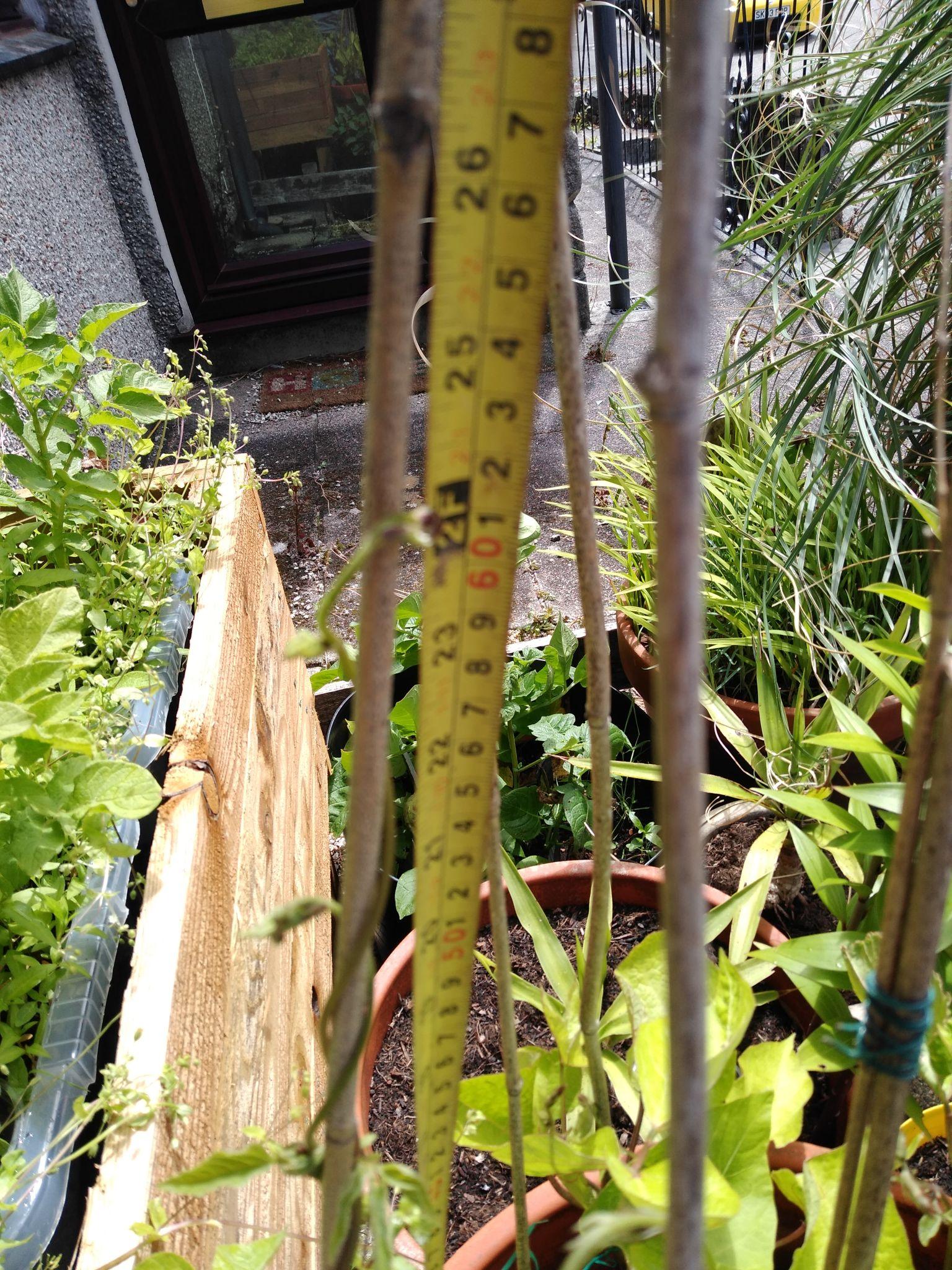
At last I can slip the joke in about making it 12" long. Fold it in half.
-
As I say to farmers, only if you leave food out for them.
-
V2G or L seems a bit of an odd concept to me. I can see that the concept is attractive, but in reality you just drive about carrying extra mass because the batteries are part depleted. No one has thought it a good idea to run their oil central heating of the car's fuel tank. The arguement goes that when a few million people get home from work and shower, cook, watch TV, etc, the vehicle can supply some of the load and reduce the strain on the grid. Cheaper and easier to just fit static batteries where they are needed. If people can still get off peak power at 5p/kWh (my night rate is 14p) and peak power at 30p/kWh, then you are hard pushed to beat that.
-
Going to be a large heat pump. What can you do to reduce the heat load of the property.
-
Wouldn't that be the better way to do it. Why encroach on internal space when it can be outside.
-
How to play - The SunAmp Guessing Game
SteamyTea replied to ToughButterCup's topic in Energy Storage
2 kWh should be enough. I had 2 showers and ran my house on that amount yesterday. -
That is all catered for in the white paper. They have to arrange carparking that has charge points. This is not actually new news.
-
How does your garden grow?
SteamyTea replied to recoveringbuilder's topic in Landscaping, Decking & Patios
If I remember, shall measure mine in the morning. -
So does every self builder on here. 90% finished, 90% to go.
-
How does your garden grow?
SteamyTea replied to recoveringbuilder's topic in Landscaping, Decking & Patios
How do you make your own. Does it involve stripping Studland Bay of seagrass. Or is it the seahorse tears that do the business. -
This explains everything
SteamyTea replied to Pocster's topic in General Self Build & DIY Discussion
I sailed one. Called a gnats cock on the shop floor. Now, interference fits, tights as a nun's (expletive deleted). -
This explains everything
SteamyTea replied to Pocster's topic in General Self Build & DIY Discussion
Where they at the same temperature? -
How to play - The SunAmp Guessing Game
SteamyTea replied to ToughButterCup's topic in Energy Storage
I think they are probably more to do with making sure all the phase change material becomes liquid while heating. Convection currents will tend to even the temperature out, but an off set to cater for distance from element could be easily established with experimentation. I do not know the product well enough, but as it knows it is full (element turns off), it would not be too hard to program something to make it take a charge after use. I think it has to treated like a car with a very small fuel tank on a long, unknown, journey. You take every opportunity along the way to fill it up as you go along. -
How to play - The SunAmp Guessing Game
SteamyTea replied to ToughButterCup's topic in Energy Storage
Have often thought this is a good idea to get an extra kWh or 2 in a cylinder. I am currently running my cylinder with just the top element (on a timer to get the E7 rate). Water temperature is 20°C higher than it used to be, but a lot less volume and much less mixing. So saving between 1 and 2 kWh/day. Usually have enough hot water for the after work shower. -
How to play - The SunAmp Guessing Game
SteamyTea replied to ToughButterCup's topic in Energy Storage
That is because they don't know it accurately enough. The trouble is that the phase change temperature is a constant. The only way to get it fairly accurate would be to measure the electrical input, measure the thermal output, factor in standing losses, then do the sums. Only needs a cheap thermal energy logger, a simple processor unit and some time. If the flow rate is constant i.e. just showers, no need for a flow meter. -
The more the merrier. So am I, makes it easy. I just got a RPi based logger on a CurrentCost energy monitor.
-
The energy transfer is greater when there is a larger temperature difference between OAT and IAT. So when you want the maximum transferred, you get it.
-
Two different ways of measurement there. Comparing delivered energy with primary energy is a bit naughty. To David and Helan Why would you not try and get an airtight building while it is a shell? Beat the architect with a stick until he works out a decent method of detailing that can be constructed.
-
Is that because it is aluminium extrusion? Taking a leaf out if SpaceX book, stainless steel would be stronger and lighter than aluminium, or CRF for that matter, and I think it conducts less heat.
-
Ask a builder, then reduce by 20%, but buy them a tape measure and sharp knife.
-
General advice for refurb project on large property
SteamyTea replied to Jimlad's topic in Other Heating Systems
Good if you want to use a lower flow temperature. 3500 litres of oil is not excessive, about 35,000 kWh. At nearly 400m², you are using about 90 kWh/m².year. Pretty average. I use 42 kWh/m².year in a terraced place, in Cornwall (just the heating that is). You could put in a simple electrical resistance heater in a buffet tank, or a Willis heater plumbed in directly to the pipework. Then dump excess PV into it. Buffer would my option as you can retain the current oil burner. So work in airtightness and insulation, worry about the technology once you get your oil usage down to 18 MWh. -
VR headsets.
-
Ecodan standby power consumption
SteamyTea replied to LA3222's topic in Air Source Heat Pumps (ASHP)
Yes. I like joules as a unit. It is more relatable to mechanical things.