SteamyTea
-
Posts
23847 -
Joined
-
Days Won
200
Everything posted by SteamyTea
-
80% of very little, does not bother me. If my new laptop takes 35W, then 2.8W on top is neither here nor there. My old laptop, when the battery worked, took 8W. Must measure them both and start to use the one with the least power the most.
-
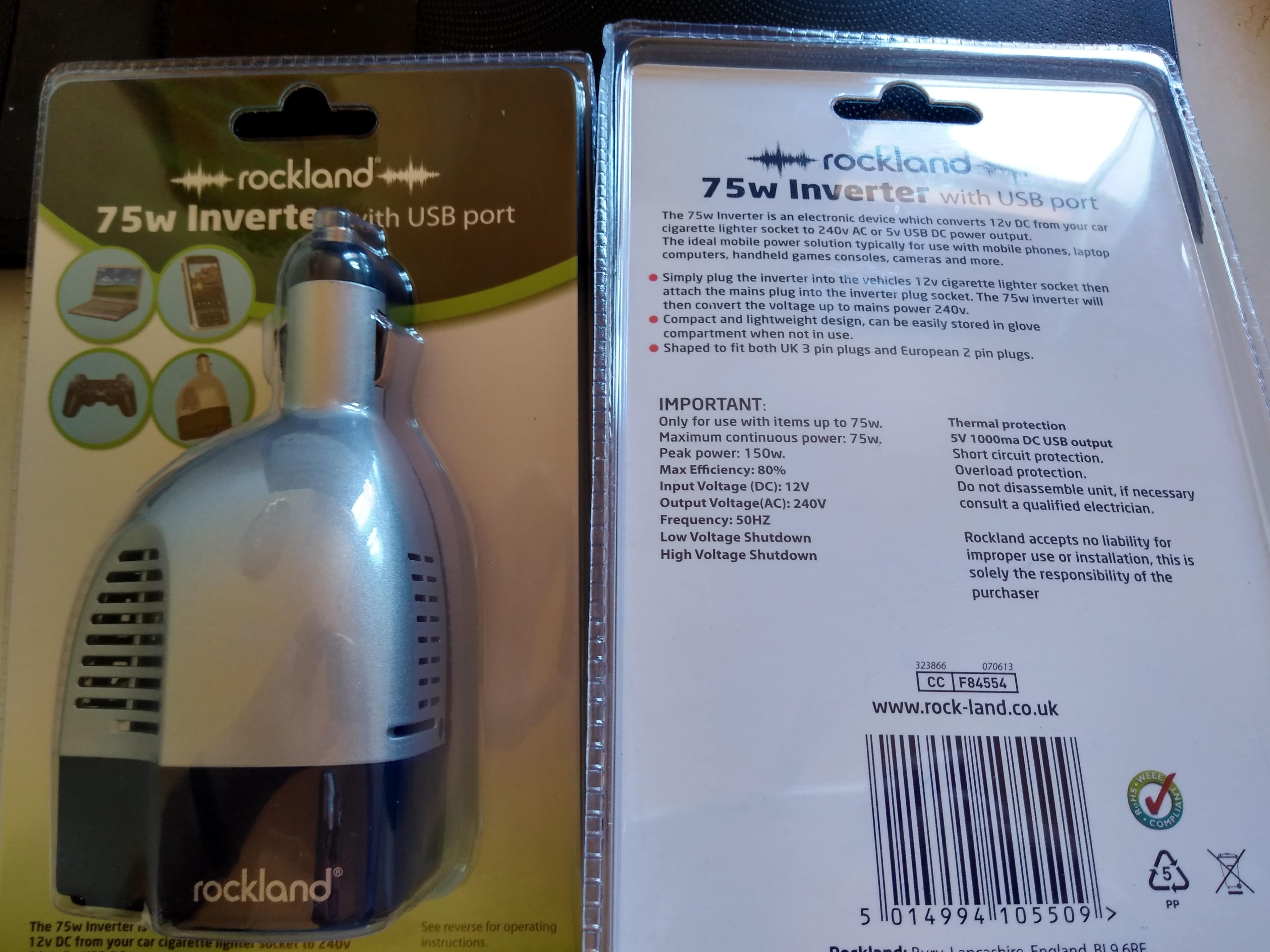
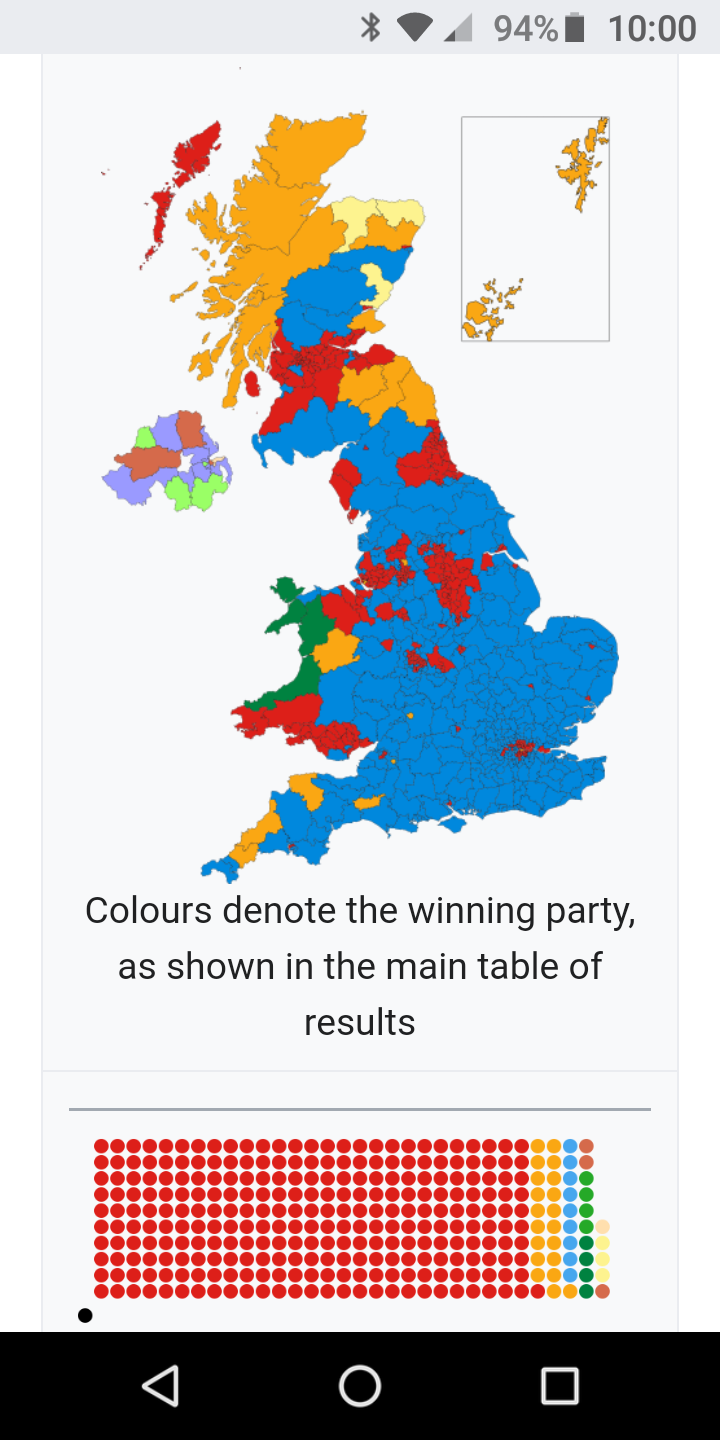
£3 each as Poundstretcher in PZ is closing down. Now I can go off grid. Anyone used these types before?
-

Plumber put together a thing … and I have concerns
SteamyTea replied to mjsx's topic in Boilers & Hot Water Tanks
Would @mjsx be better off getting his builder to report it, because I suppose it really depends who was managing the work. To me it sounds like @mjsx has nothing to loose by not reporting it pronto. -
And ESP8266/32s. But not, annoyingly, in the RPi, but that is for historical reasons, not technical ones.
-
Plumber put together a thing … and I have concerns
SteamyTea replied to mjsx's topic in Boilers & Hot Water Tanks
What actually happens when this sort of thing is reported? Do big wigs come around quickly and do an assessment, or just send a second class letter to the tradesman responsible? It is not knowing the processes that puts many people off doing the right thing, it is why we turn a blind eye to too many misdemeanors in life. -
You don't need to take cable resistance into account and you do not need a ADC.
-
If it is for a recirculating DHW system, but you feel that what you have is fine, save the cash, and maybe look for a better communicating plumber.
-
Fish mines, I am told by the oldies, are going to be bigger than tourism again. No (expletive deleted)ing tourist museum. Say a man that has probably never been there.
-
Having been put into one of these, the restrictions are quite onerous. Not at if Cornwall really needed yet another mining, fishing or art museum. Makes me want to live in Milton Keynes again.
-
Like newborns, under 14s, pensioners, the sick and the lame. Listen to this series. Bad Blood https://www.bbc.co.uk/sounds/play/m001fd36 Shows how easy it is to convince people of just about anything.
-
And increase the supply of well educated and experienced workers, who have been educated at at another countries expense. To bring it down to the corner shop level, which is what is happening, do you want to be only allowed to shop at a truly independent grocery store? It may only sell baked beans and ketchup. Oh hang on, it cannot sell them, they are not British products.
-
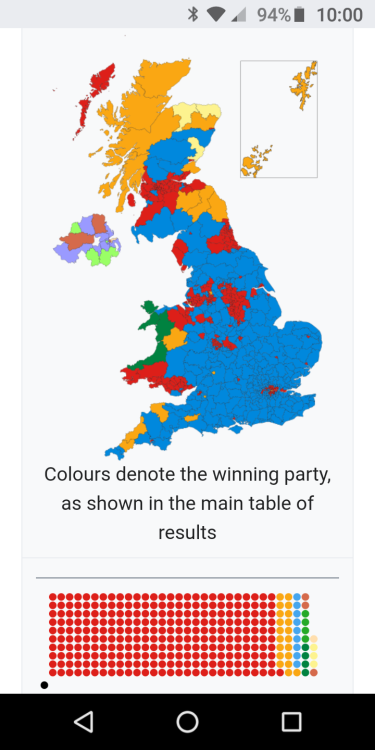
When we had the election in 1992, interest rates were all over the place, , but around 10% at election time. Government ministers had rediscovered sleaze, a war was happening, house prices had crashed, and unemployment was at around 9.9% (currently 3.8%). This happened. But then, this fellow was in opposition. The country was not going to have another Welsh PM, the scars of 1916 to 1922 are too deep.


-
After-market brakes for a dangerous trundle bed
SteamyTea replied to Adsibob's topic in General Construction Issues
Sometimes, we have to learn to live with a products limitations. How likely are you to put your little piggies under the bed edge again? -
Telephone/broadband strategy for new build
SteamyTea replied to kandgmitchell's topic in Networks, AV, Security & Automation
5.2 years worth of internet access at £16/month. Or for the same money, you can have 5 mobile hotspots. -
No, that would be madness. Monetary policy should not be politicised. Far too important. Yes. The government has the ability to raise, or lower, taxes. It can also outlaw, or introduce, different financial rules. I have been saying for years that there should be a mortgage tax. So regardless (except in extreme circumstances) of the BoE base rate, a surcharge can be put onto mortgages to help keep property prices under control, so in effect, reduce the amount borrowed. The banks have raised the barrier to entry with their 'arrangement' fees and conditions, which did not exist when I last got a mortgage in the 1980s, so there may be an case that these should be raised higher. As a few of my friends have children that are at the age of buying houses, they often give their kids £50 or £60k 'to help with the deposit'. This is utter madness, the wrong thing to do. All it does is encourage over borrowing. I tell my friends that they can loose all that money and would be better off bailing their offspring out if they hit problems and we have problems right now) 6 months subsidising their mortgage payments is going to be cheaper and a better use of money.
-
Yes. It is the particles that are the problem, though at the nano metre scale, odd physics occurs between other chemicals. We used an aerogel based filler, which is similar to that used in the blanket type insulation (which I think is what @DamonHD had fitted), physically the properties are different to the solid form of aerogel, which is the one with the fantastic thermal properties. This Is not this

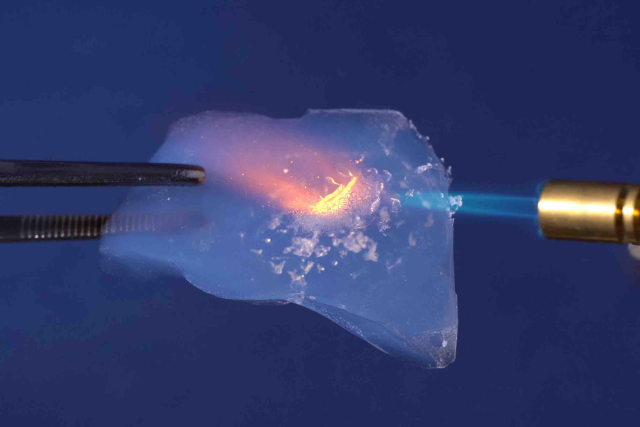
-
Primrose Electric awning repair - anyone done it?
SteamyTea replied to Radian's topic in Electrics - Other
I have larger problems at work at the moment. Much larger. -
Primrose Electric awning repair - anyone done it?
SteamyTea replied to Radian's topic in Electrics - Other
Mine got a taste for those expensive millennium smoothies and fruit drinks. (expletive deleted)ing vimto squash for me I am now so poor. Get a better g bottle of it for 2 quid, can last a month, but it was only 32⁰C tonight in the kitchen. -
30kW PV, All electric heating, is this mad?
SteamyTea replied to DevonBarn's topic in Photovoltaics (PV)
Not all the PV needs to be grid connected. You could set up some of it to heat water/Willis heater, small battery and A2AHP for shoulder season heating and summer cooling. And if (never trust an if) you get an EV with V2G, you will have a huge battery system built in. But as everyone says, get your heat load down as low as you can, that is the best return on your cash, and you are doing the work anyway. The labour to fit 150mm or 300mm of insulation is near enough the same. -
30kW PV, All electric heating, is this mad?
SteamyTea replied to DevonBarn's topic in Photovoltaics (PV)
Highly insulated concrete floor. -
Primrose Electric awning repair - anyone done it?
SteamyTea replied to Radian's topic in Electrics - Other
Was my first thought. May want to take it down and lube everything up anyway. Wish my mum who is a similar age, could get out in the sun. -
5% base rate. Time to review my savings.
-
30kW PV, All electric heating, is this mad?
SteamyTea replied to DevonBarn's topic in Photovoltaics (PV)
That is just space heat average (guessed). Some houses can easily use the same amount for everything else. It is when you lot bust the railway line. I assume that you already have a place, so you could use your current usage as a starting point. To get a rough idea if what the space heating loads are, just model the place on floor, roof and wall/window/door areas, then use the TMY figures from PVGIS to get your local temperatures. -
30kW PV, All electric heating, is this mad?
SteamyTea replied to DevonBarn's topic in Photovoltaics (PV)
If you say you use 40 kWh/m².year for space heating, that is 16000 kWh. 60% of that will be December and January, so call that 10000 kWh (7W/m² , I use around 8 W/m², larger places use disproportionately less, but my house is terraced) when the PV is producing the littlest. How does PVGIS line up with that, especially when you take annual variance into account? An A2AHP may halve that in December and January, but water usage may become your biggest problem. To get what you are after, you need to model it as an off grid house, then see what you need to import, and when. You may find that having a relatively small amount of battery storage is helpful, but you will need a generator as well. Which bit of hell are you in, on the coast or up the moor, temperatures are quite different, as are wind speeds. But not as wet as here, we take that away from you. -
Yes, I was quite surprised how good there are. May go and buy some more.