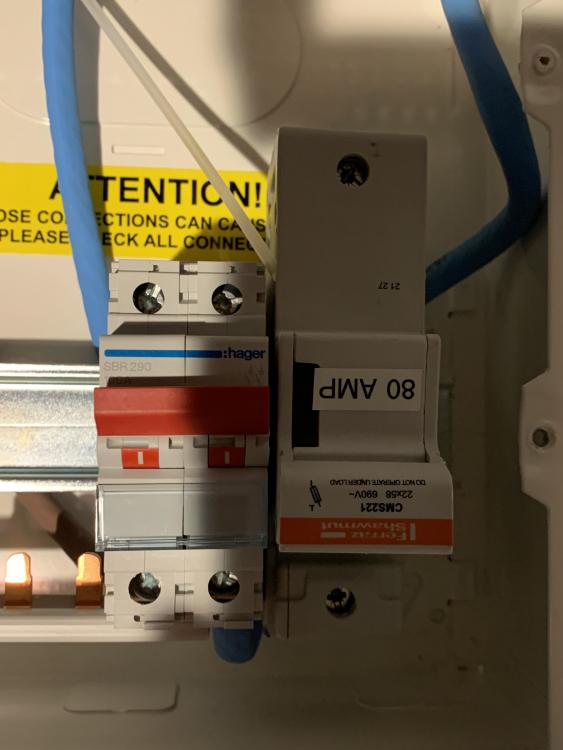
tvrulesme
-
Posts
153 -
Joined
-
Last visited
Everything posted by tvrulesme
-
I was thinking something like this from a kingspan video using the 75mm (63mm finished) studs
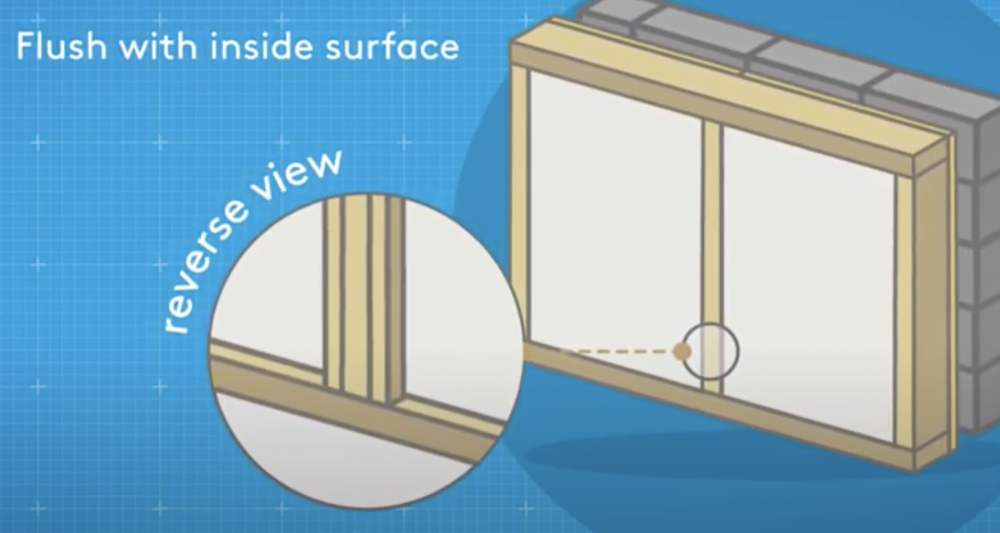
-
Great thank you so this for studwork? It says "Please note: Finished size is 63 x 38mm" which is why I put down the 63mm https://www.selcobw.com/products/timber-mdf-sheet-materials/cls-timber/cls-softwood-studding-75-x-50mm-3-x-2-nom-pefc And you're right, I should not skimp on the PIR for between rafters. I wasn't aware there was such a perf difference. Thanks a lot
-
Thanks a lot. Sorry for being a dimwit but assume you mean the battens/studs? I was going to use this cls https://www.wickes.co.uk/Wickes-Studwork-CLS-Timber---38-x-63-x-2400mm/p/107177 because it's dirt cheap and strong. There will be a boiler attached to the wall (making sure I get the studs in the right place) as well as other things which will need a bit of structural oomf so wanted to use something with some strength Concrete screws to attach to the wall 13mm spacers sounds like a great idea. Will just rip some cheap battens for this
-
Thanks Peter. Yes absolutely. Will be taping all the joints with foil. The rest looks ok?
-
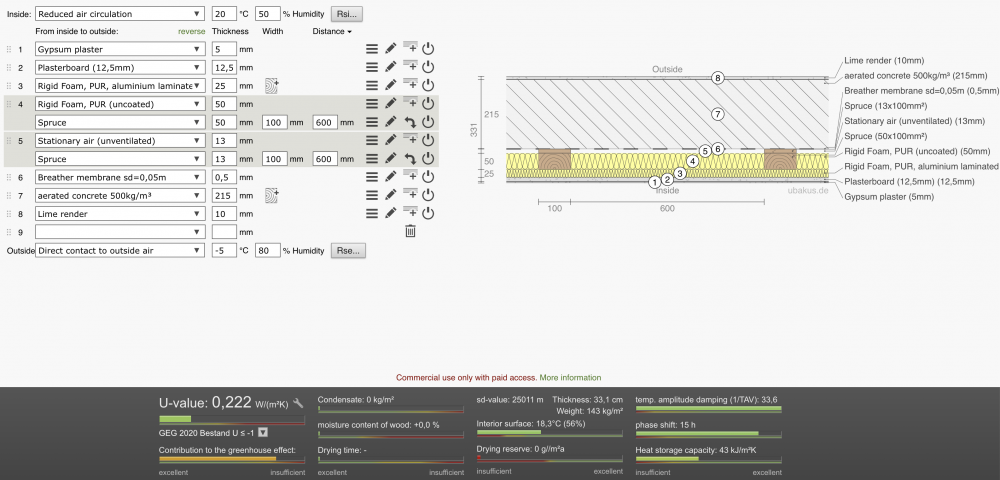
Could someone please sense check this insulation for a solid wall for a garage conversion. I have asked building control but they said they weren't interested. Things I'm not sure about. I have a very small air gap but I think this is countered by the breather membrane, does this make sense? Using uncoated PIR (thinking this General-Purpose-Polystyrene to save quite a few pounds) between the battens because the outer layer of PIR will be coated and act as the vapour barrier. Apologies have asked this question before but slight change here in the makeup so want to make sure I get it right. Thanks in advance
-
Amazing level of detail and actually reads very much like my damp survey. To date we have listed building consent for exterior masonry paint removal with DOFF system, lowering ground levels and installation of French drains and replacing internal gypsum plaster with lime. Have to agree with your approach on the limecrete whole hog. I’d be gutted if I did half a job and got half the benefits. Just to ask, did you do 1 meter of plaster from the floor or rip it all out?
-
Thanks Dave. Won't be poking it that's for sure. Reported to UK power networks. Just wanted to make sure I wasn't just wanting it done to look pretty
-
Not the easiest to see from this picture but the mains power cable coming in to our property is corroded with visible rust and several mm less in diameter at this point than the rest of the cable. Keen on getting it replaced, but very un-keen paying a vast sum of money for it to be replaced. Does anyone know if this would fall under necessary replacement by the supplier or would be considered aesthetic (which they will charge for)? For very selfish reasons this has a 60A fuse so keen to get upgraded to a 100A for a future EV charger but would rather get it replaced for free for obvious reasons.
-
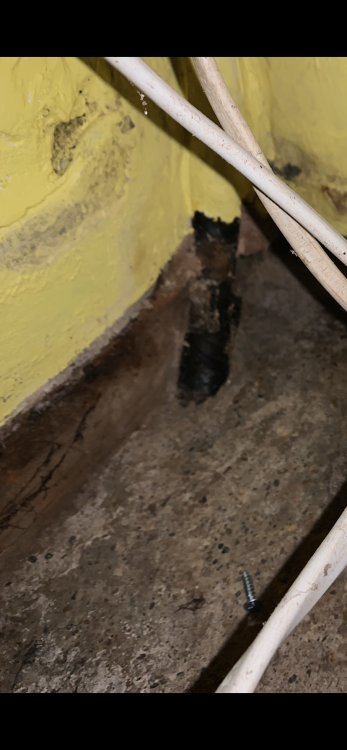
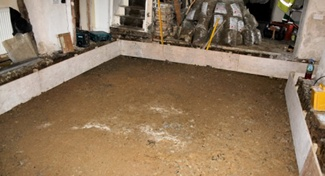
I have an old (1810) listed building which has some damp issues. In the kitchen where there is damp at the base of the internal walls there is a (added in the last 30 years) concrete slab. Buildings of this age have no DPC and as the concrete itself looks to be damp, my feeling is that the concrete slab meeting the solid brick walls are probably contributing to the problem. Reading on buildingconservation website: https://www.buildingconservation.com/articles/solid-ground-floors/solid-ground-floors.htm One of the suggestions is to use a limecrete perimeter around the slab. This provides the capillary break required, allowing the substrate to breathe and preventing the footings from drawing trapped moisture into the walls. "A hybrid floor design with a modern slab isolated from the walls by a vapour permeable limecrete perimeter strip" To me this sounds like a sensible and relatively un-invasive option. Just wondering people's thoughts on this? Has anyone ever heard of this being used with success/failure? Modern DPC injection is out of the question so this sounds like a decent thing to try.
-
I should have mentioned that this is the slab INSIDE the garage. Levels outside do not bridge the DPC. Does this make a difference? I ask because the walls are not at all damp in the middle of winter and breaking out the whole slab seems like a tonne of work and wastage.
-
Thanks Brickie. Yeah does sound like a pain. By the looks of it it's half a lightweight block down so about 150mm which is too deep even for a 16" disc cutter
-
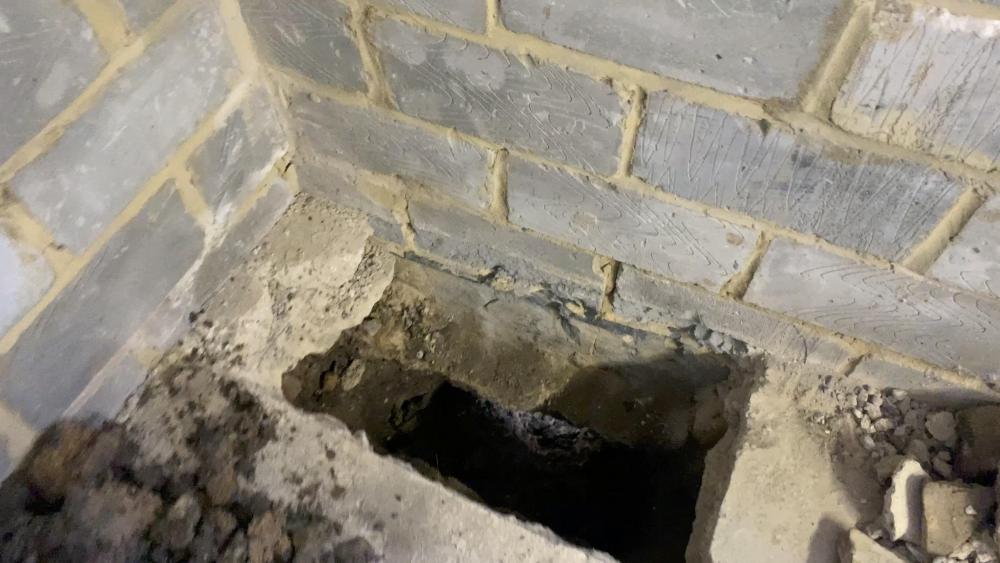
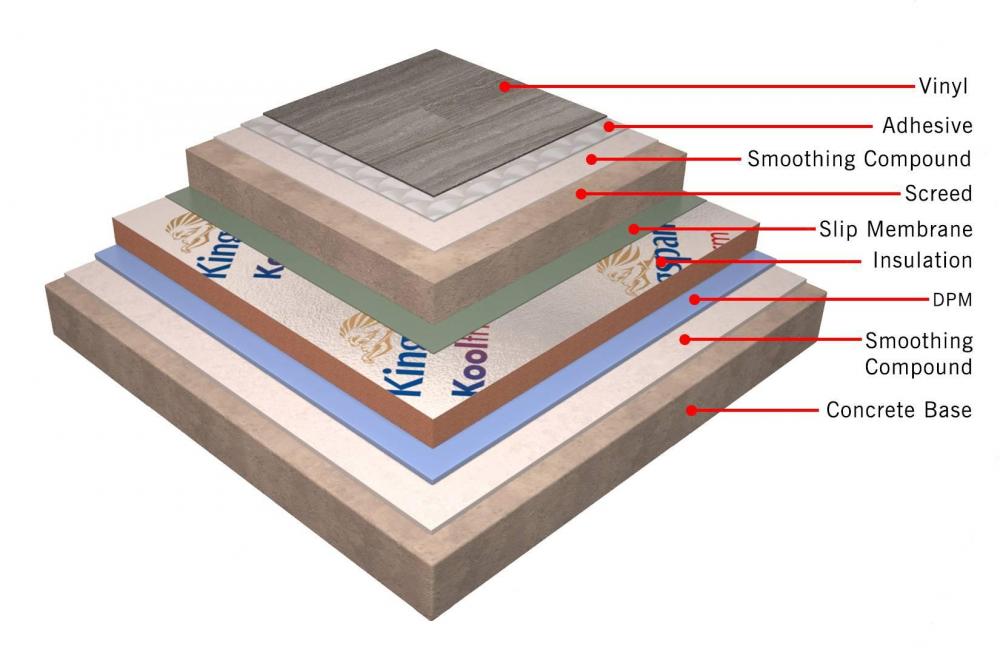
We have a detached garage which we are looking to convert to living accommodation. Whilst trenching for utilities we noticed that the damp proof course has been bridged by the concrete slab. Just wondering, should I be concerned about this? What could I do to remediate? Do I need to dig out the slab, excavate and re-lay or is there a simpler/cheaper option? Original plan was to follow this up to the screed layer. Is this still applicable or do I need to deal with the bridged DPC first?
-
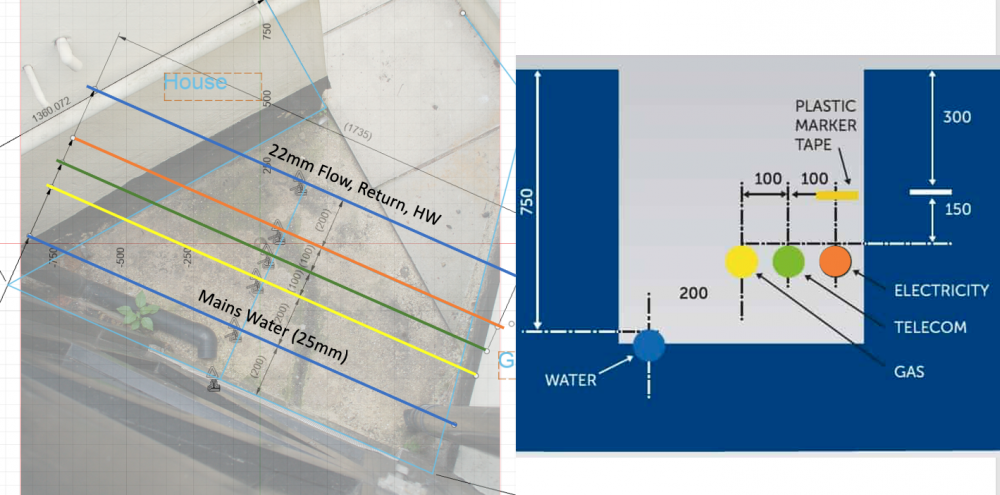
Currently in the process of moving some services from our single storey main house to a single storey detached garage (which will be converted into a living space). I will need to run the services underground between the two buildings, a distance of less than 2 meters. Looking around I can see the depths and distances of the various services. I will clearly be getting the appropriate trades to run the pipes and cables but will most likely be digging the services trench myself. Given the sizes of the services (and protective conduit) I am concerned about weakening the foundations of both buildings. Should I be looking to put a lintel or steel in the footings above where the services will enter, much in the same way you would for building over drainage pipe or are the holes going to be insignificant overall? Structure of the garage is 215mm single skin blockwork, house is cavity wall standard brick Services to be brought through the footings Mains Water - MDPE Pipe insulated inside 110mm plastic drainage pipe Gas - Most likely 32mm TracPipe with 40mm sleeving Telecom - 25mm MDPE conduit Electricity - SWA inside 40mm conduit Hot Water from Boiler in garage to house - 3 x 22mm PB Barrier pipe individually insulated inside 110mm plastic drainage pipe
-
A bit more research on this. Reading the HSE document Safety in the installation and use of gas systems and appliances here: https://www.hse.gov.uk/pubns/priced/l56.pdf I note Regulation 19(2)–(6) paragraphs 5 (5) No person shall install any installation pipework or any service pipework under the foundations of a building or in the ground under the base of a wall or footings unless adequate steps are taken to prevent damage to the installation pipework or service pipework in the event of the movement of those structures or the ground. Which suggests the pipework could be joined to the existing incoming supply pipe using TracPipe, routed under the floorboards, exit the wall on the opposite side of the room and connected to the new meter cupboard on the external wall. Any regulations people are aware of that would prohibit this? I would like to be well armed before speaking with the gas supplier to move the meter as they will inevitably suggest metal pipework clipped to the exterior wall. This is a listed building so something like that visual from the outside is never going to cut it with the conservation officer.
-
Many thanks Tony. So gas supplier rather than gas transporter in this instance if I can do the whole move under the floor and through the external wall? And presumably gas transporter if the move needed to be done externally digging up the pavement to route the pipe externally?
-
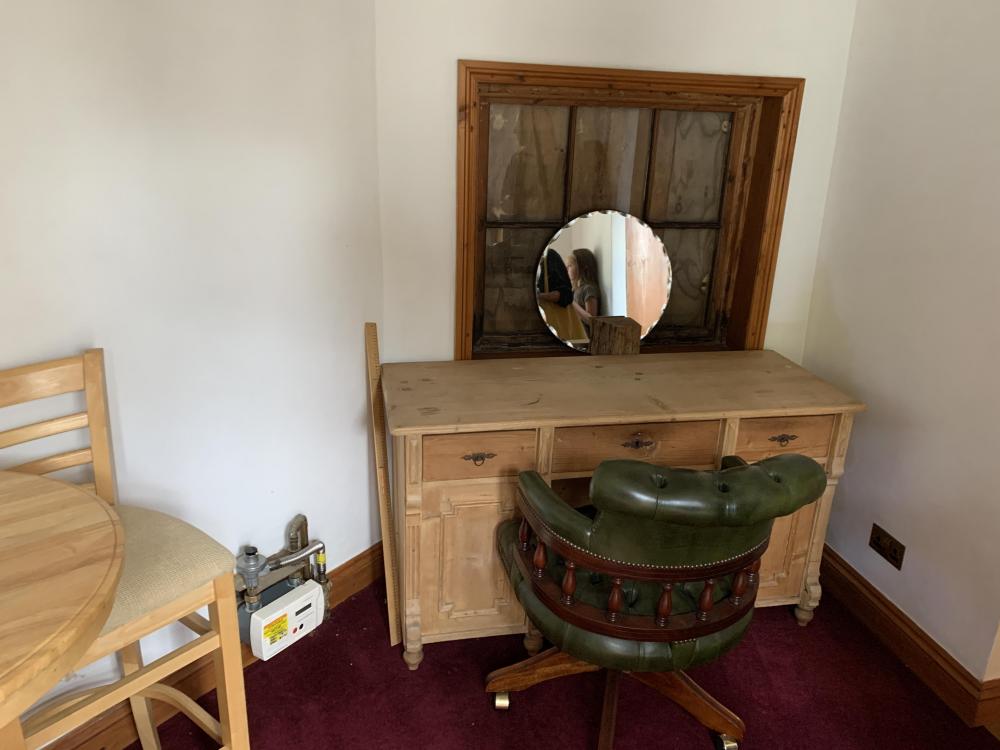
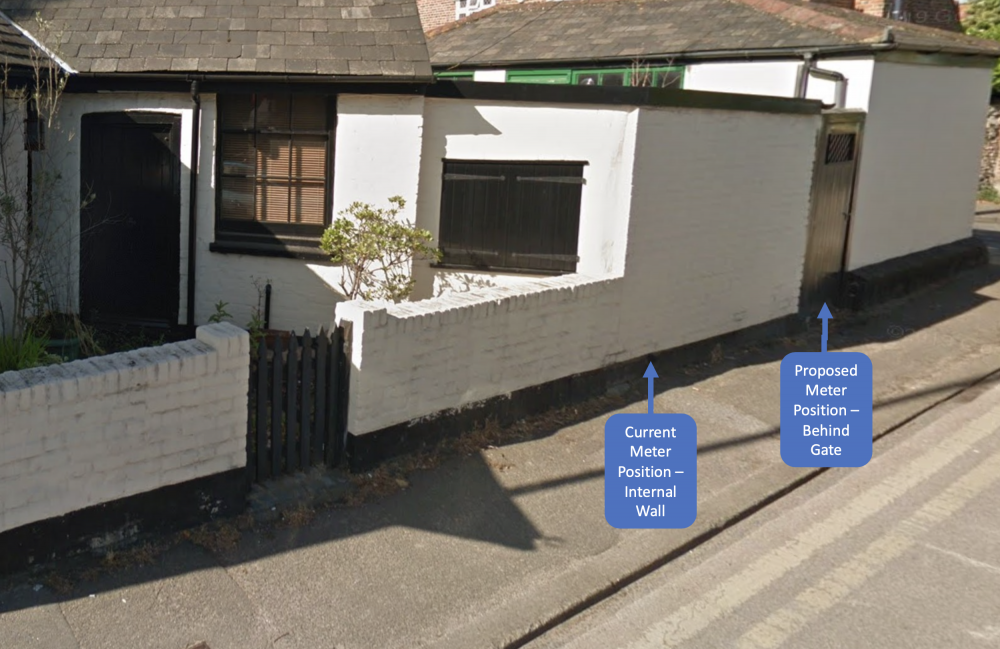
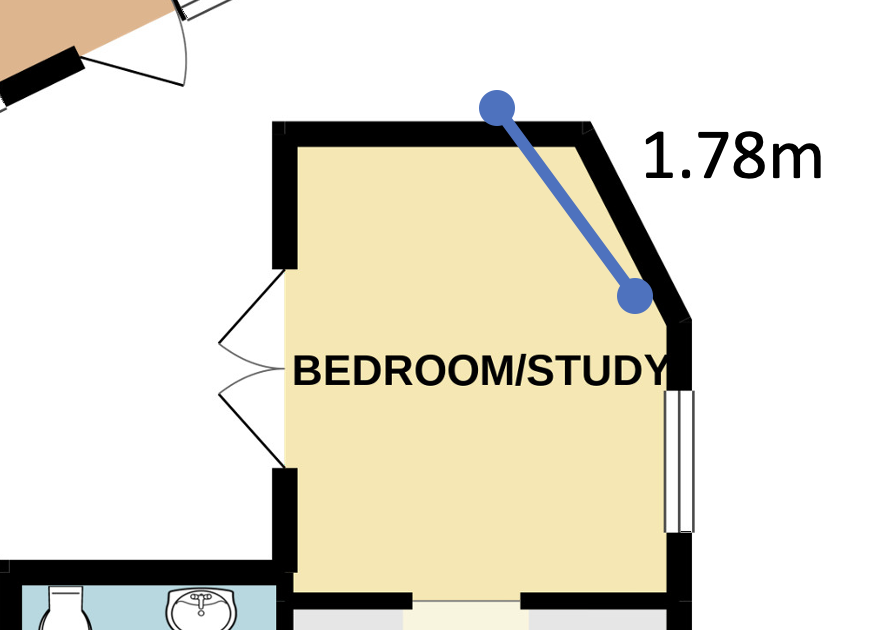
Just to be really clear I will not be doing any of the work mentioned below. This will all be carried out by Gas Safe Engineers. We're in the process of buying a property which is a bit of a doer upper. One room houses the gas meter and boiler and we are keen on moving both of these to turn the room into a bedroom regardless of whether regulations state they are safe in a bedroom. As we don't currently have access to the property to show round plumbers would like some advice on whether my ideas make sense or are completely nuts. The gas meter is currently in the middle of an internal wall behind which is a small garden facing on to the street seen in the picture below. The Gas Safety (Installation and Use) Regulations 1998 state: Protection against damage 7.1 Any person installing a gas fitting shall ensure that it is properly supported and so placed or protected as to avoid any undue risk of damage to the fitting. In my mind the meter in its current location is in breach of this regulation as whilst against the wall is protruding into the room and could be easily knocked. We are looking at having this moved to a external meter cupboard. Looking externally this is a move of approx 2.3m But if looked at internally this would be a move of around 1.78m. So the first question is can a Gas Safe engineer move this meter or would it need to be the current supplier? Taking a punt on saving money is there any chance I am correct that the current install is dangerous and that I could magically get this done free of charge? Next question is how will the gas pipe from the new meter location enter the property? Is under ground level (as you can with mains water acceptable) with the correct sleeving? Would this use TracPipe or similar? Or would it need to enter the building above ground level above the DPC? I ask about entering the building as I already need to dig a trench/pit where the proposed new meter will be for other services so thinking of the neatest solution. Also planning on moving the boiler from this room to a detached garage ~1.3m away from the main building so this will already require buried gas pipework.
-
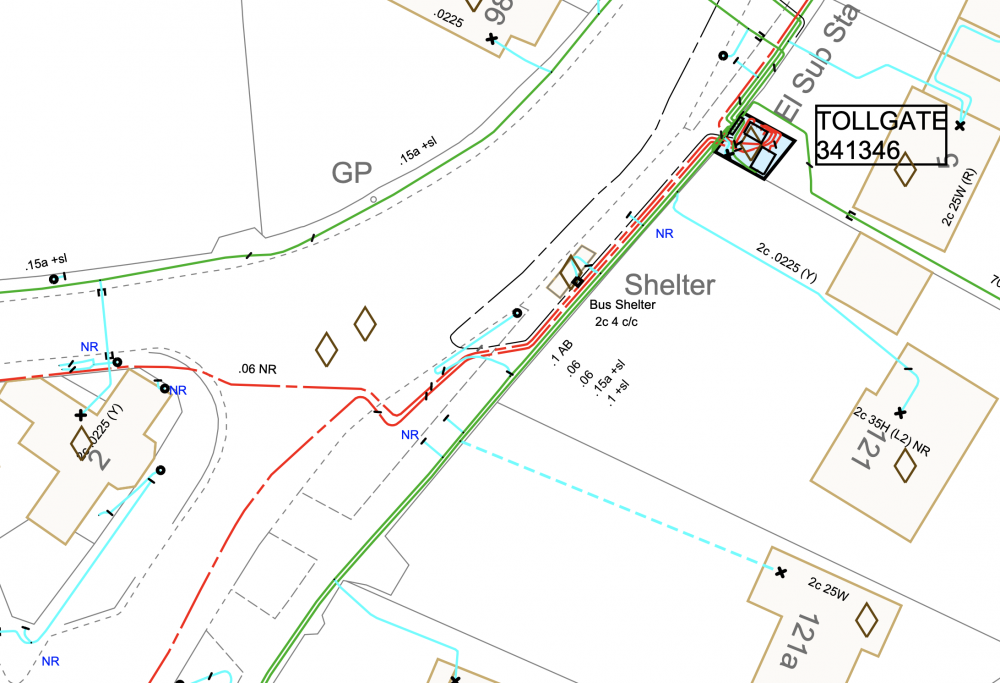
Obtained a safe dig plan from uk power networks. Very annoyingly they don't include a key. Does anyone know where I can get hold of one? Specifically interesting in what the green and red lines are the diamond shapes NR .15a +sl Also, is it possible to find out for a given substation any info on the earthing system etc? Thanks in advance
-
Garage conversion internal wall insulation
tvrulesme replied to tvrulesme's topic in Heat Insulation
Thanks a lot Mike. You missing it off actually prompted me to use www.ubakus.com. What a fantastic site. Will be using this again and again -
Garage conversion internal wall insulation
tvrulesme replied to tvrulesme's topic in Heat Insulation
Awesome thank you. So: Render 200mm block-work 100mm studs filled with 75mm foil backed PIR Foil tape for joints 12.5mm Plasterboard Skim Layer Any idea where to get the U-values this would generate? -
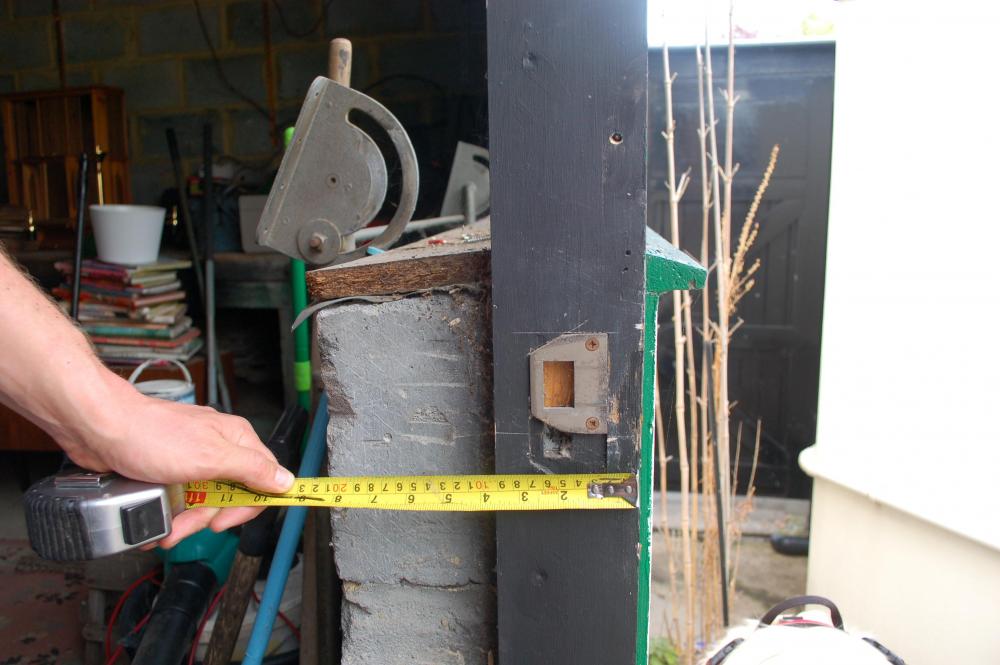
I'm in the process of planning a detached garage conversion. The wall will need to hold some pretty heavy and important things like: Boiler Consumer unit Wall mounted server cabinet So strength of fixings is going to be important as well as insulation and U/R values. Reading up it looks like fixings for insulated plasterboard are a bit of a pain and don't get great reviews so leaning towards Stud walls with PIR between and plasterboard on top making sure I have extra timber where needed. Given the construction (from planning permission history) is rendered 200mm lightweight block-work. How do I go about calculating the construction for insulation? I seem to be reading conflicting info on whether you need a void depending on whether you have a vapour barrier or not so my initial thoughts from outside-in are: Render 200mm block-work Damp Proof Membrane (any reason why not?) 100mm studs filled with 100mm foil backed PIR Vapour Barrier 12.5mm Plasterboard Skim Layer Is this going to achieve the 0.30 W/m²·K to satisfy Approved Document L - England, Existing Buildings - Refurbishment requirements? Block-work looks like this currently
-
hmmm. Sounds like a roost for seagulls given the location of the house. I’d sooner pay openreach to move it than this.
-
Yeah I get what your saying but this would be through the house, chased down a wall, under a floor and through a trench to the current garage to get it where I want it. I just think that's far too much rat fodder
-
This looks great, thanks a lot
-
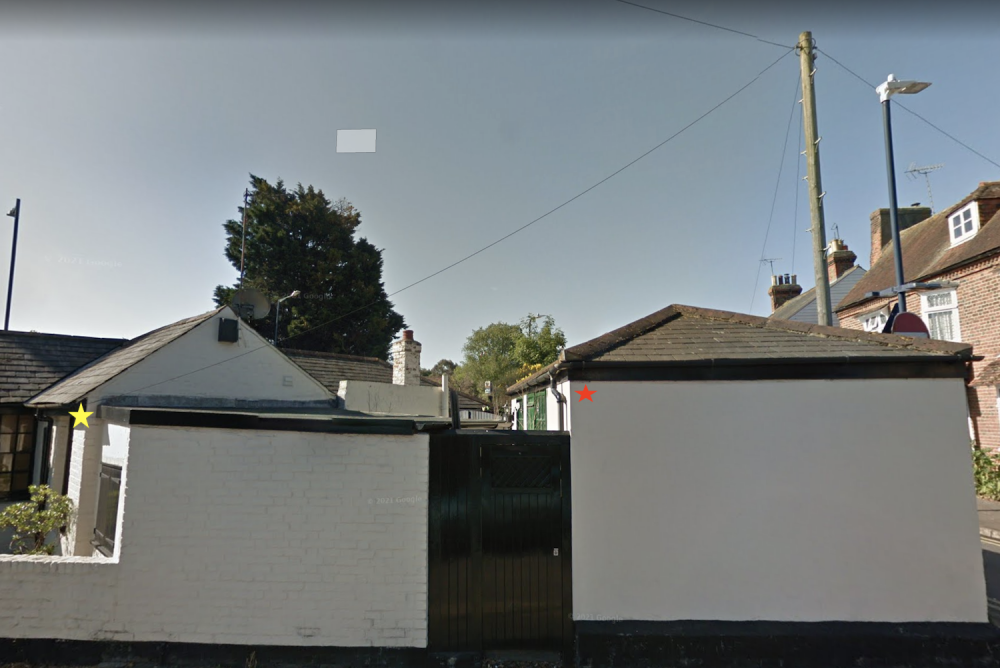
I would like to move my phone cable entry point to the house as it currently wraps around the building and ends up in a pretty useless place meaning loads of horrible internal cables. Are there any regulations on the gradient from the pole to the building that anyone is aware of? Current entry point is the yellow star and proposed is the red star. Also is this something I can do myself or do I have to get a phone engineer to do it? Totally understand there's voltage going down it (50v?) so would obviously take great precautions.
-
Henley blocks inside consumer unit
tvrulesme replied to tvrulesme's topic in Consumer Units, RCDs, MCBOs
Another picture. 1 link to top row of duplex, one to bottom