


tvrulesme
-
Posts
153 -
Joined
-
Last visited
Everything posted by tvrulesme
-
Thanks a lot. Looks interesting but... can I reuse existing ridge tiles and would this increase the height of the main ridge at all? Both of these would be deal breakers for the conservation officer. Seem to be the constant mediator between the Conservation Officer who doesn't give a damn about building control and building control who don't give a damn about listed building requirements...
-
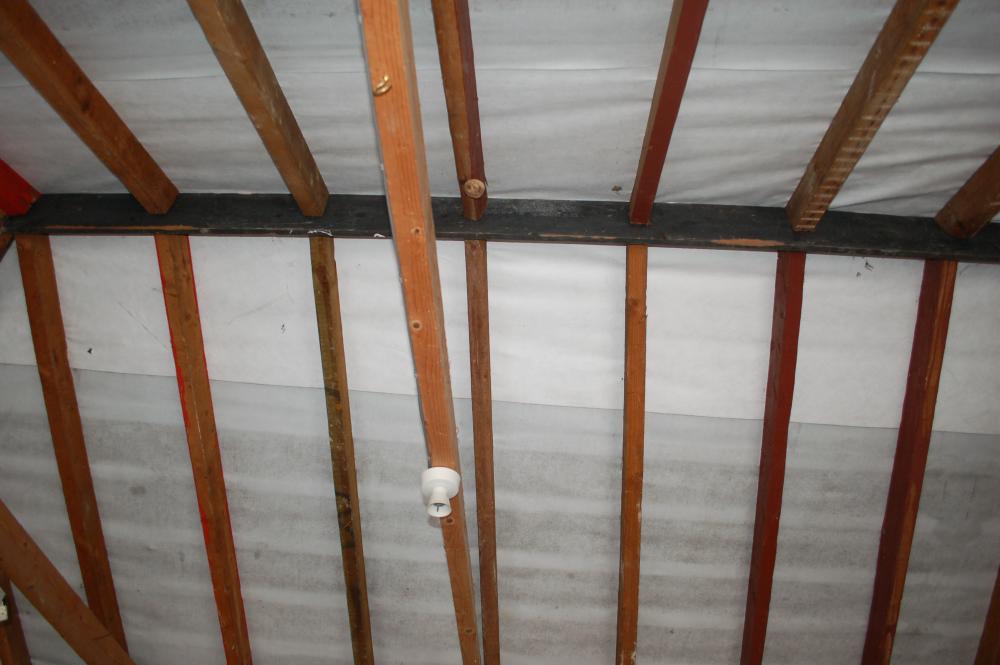
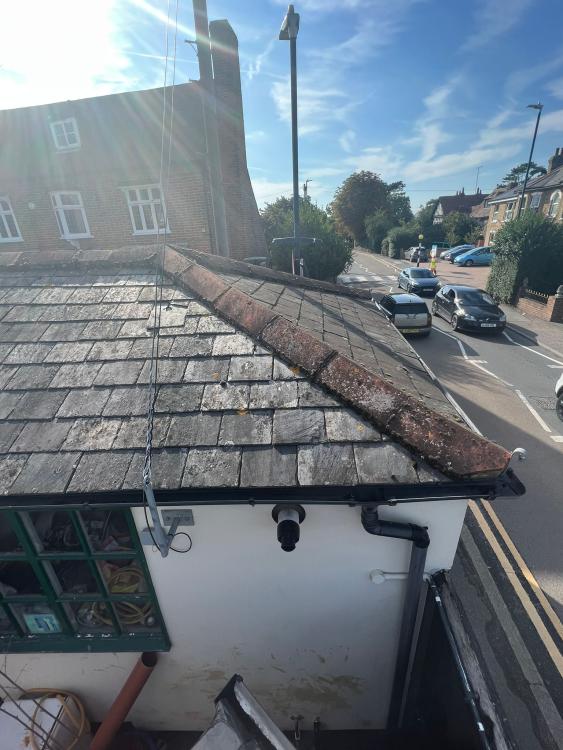
We are looking to convert our detached garage into living accomodation. It's part of a Grade II listed building so maintaining the exterior appearance is very important. The current structure is timber rafters, membrane and natural slate. Plan is to deepen the rafters by attaching 50mm timber battens and insulate between and below the rafters with PIR leaving a 50mm ventilation gap. I have wide soffits which I can use to provide an inlet for ventilation but I am wondering how I can provide an exhuast at the ridge without altering the external appearance (which means that ridge vents are out of the picture). Any ideas greatly appreciated.
-
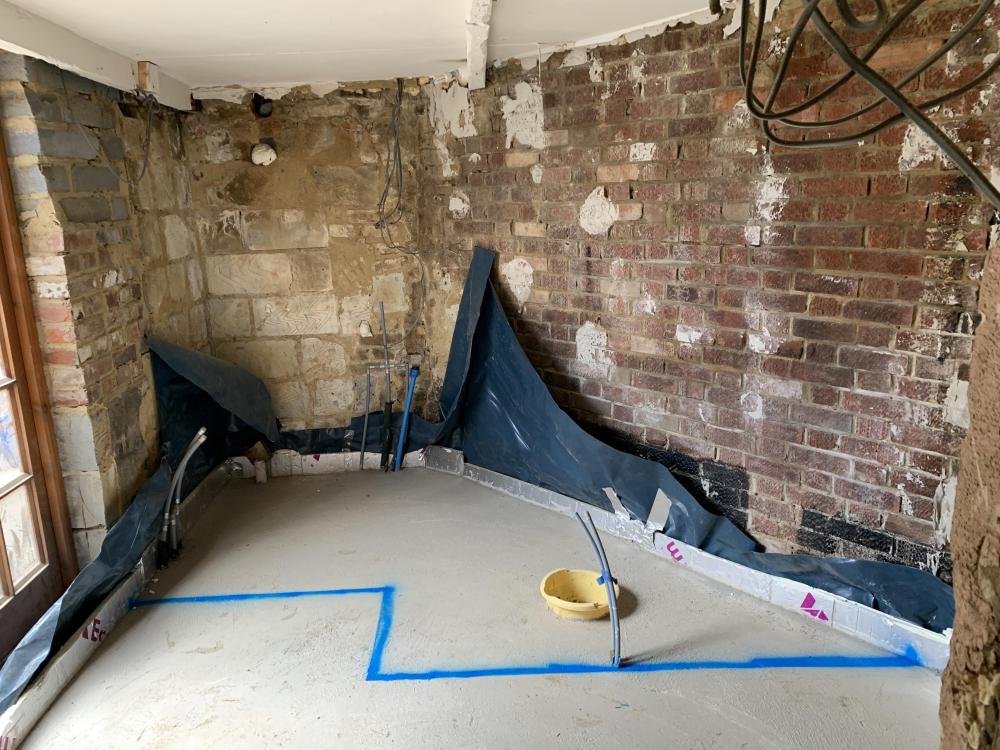
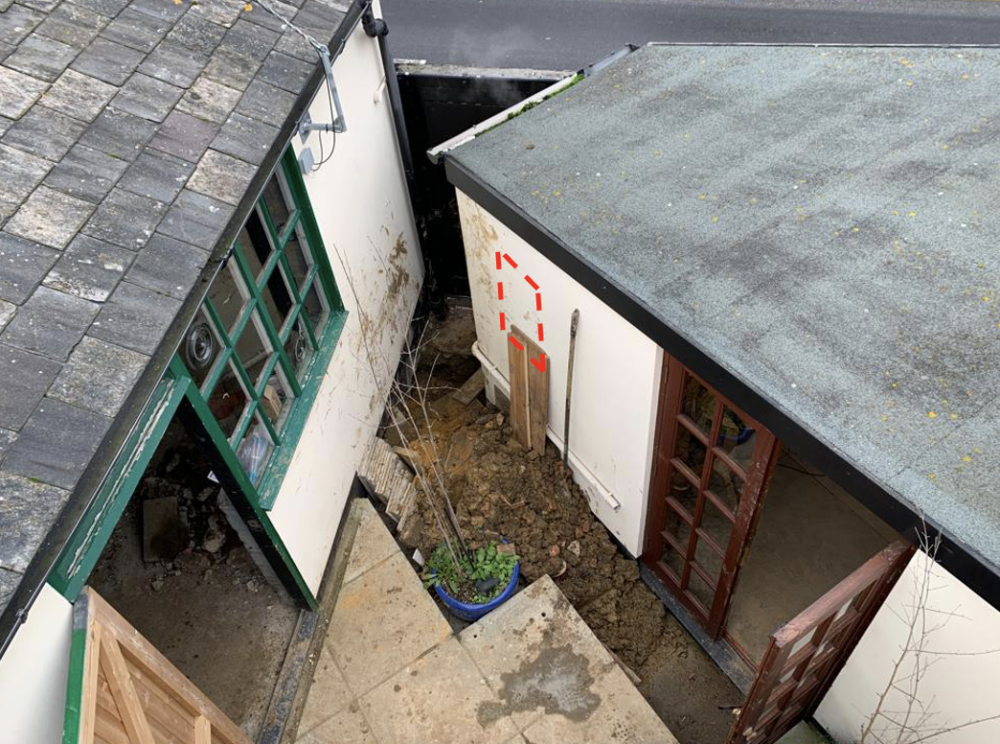
I am looking to install a small (500mm wide x 700mm high) window in an existing garage wall. The wall is a solid wall mix of brick and block (left hand side in this picture) As the wall is appox 215mm thick I was thinking of installing 2 x pre-stressed reinforced concrete lintel 900mm x 100mm side by side before cutting the 500mm wide opening for the window itself. The building is single story and has a lightweight roof covered in felt. Does this sound sufficient or overkill? Should I just put a single lintel facing the outside and fill the inside with brickwork? Same wall from the outside showing the position of the window
-
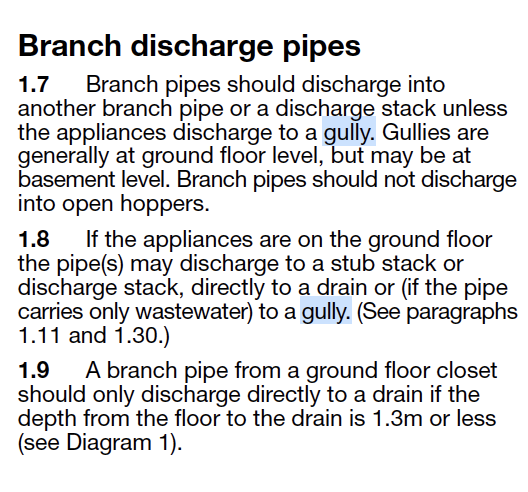
Unfortunately not. I would not be able to get the levels as it's a wetroom so the waste is lower than the soil pipe, particularly as it's a wall hung toilet which will discharge horizontally out of the wall. Confused though, 1.8 states I can discharge to a gully if the pipe only carries wastewater. Would this not count as wastewater?
-
Thanks Conor. One thing I am unsure of is if I can connect the shower waste to the gully underground using something like this: I have the option to bring the shower waste either above or below ground level outside. Preference for tidiness would be underground but I don't want to screw myself over with the slab down if this is not allowed. Building regs approved document H state: "A branch pipe discharging to a gully should terminate between the grating or sealing plate and the top of the water seal" Which is what it looks like the above would do perfectly well

-
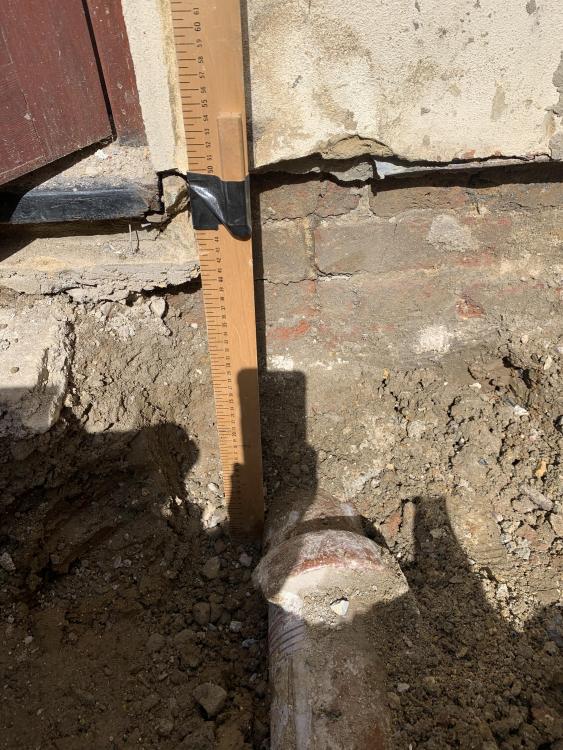
Close up of the existing clay. Top of the black gaffer tape is the same level as the DPC inside the house
-
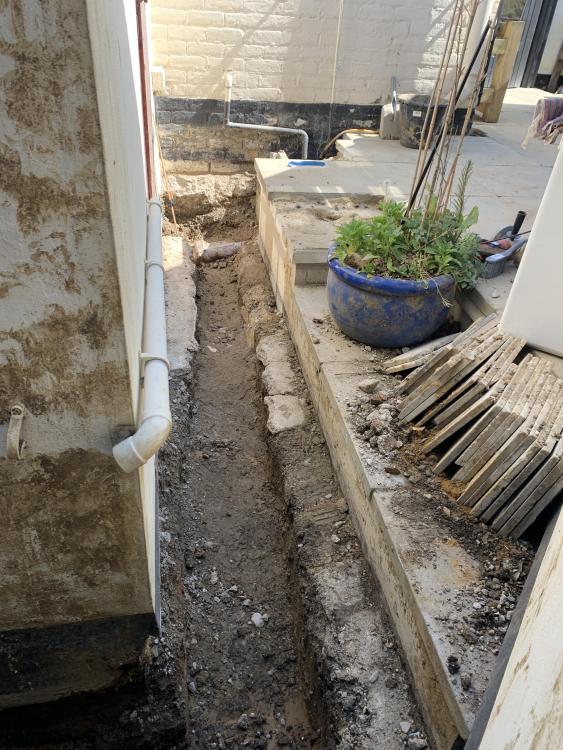
Kind of cheating because I already have the ground opened up. Needed a trench for moving a gas main so I just kept going. My heights are all determined by an existing clay soil pipe which runs under the house which you can see at the end of the trench. Have to lay some waste for a shower this weekend which will be buried in a slab so I'm trying to do as much planning as I can before I do that
-
Thanks Conor. I was trying to use it as an exercise in working out what parts I would need It is combined yes. Yeah I'm going to rethink the gully part. I'll do it detailed for me and then simplify for building control once I've got it clear in my head
-
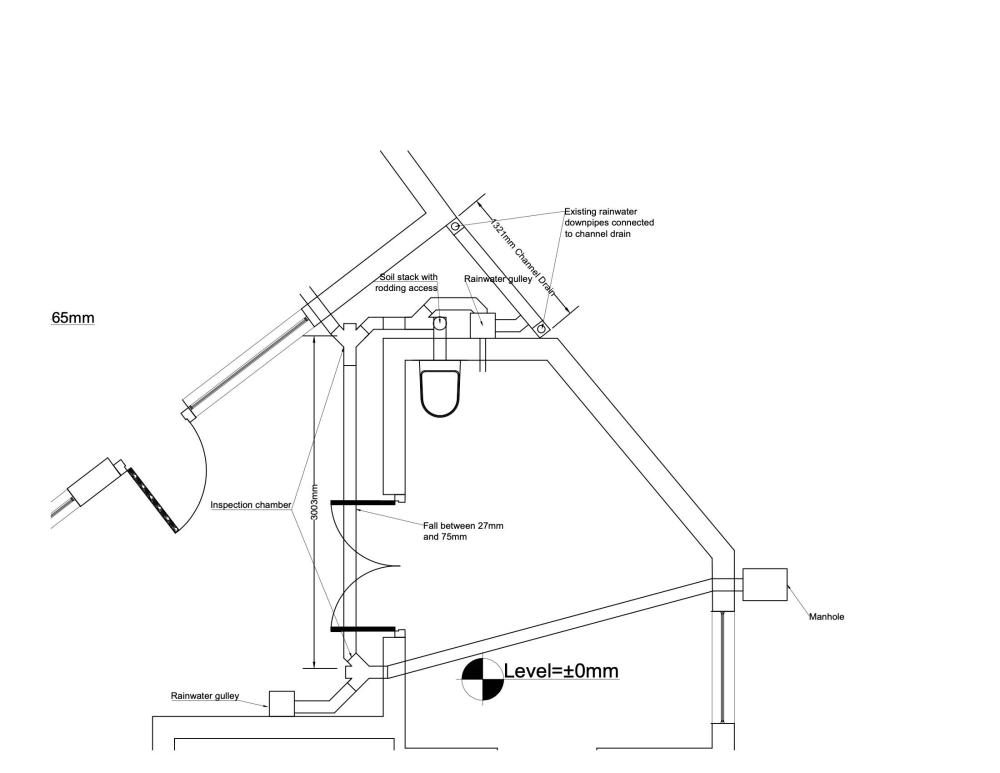
About to submit some drainage plans to building regs so I was hoping that I could get some views on here as to what they would likely object to as it's easier to make changes before submitting than after. Assuming the gradients are within spec does anything look out of place or could be simplified here? The shower/sink waste goes into a gully because I can't get the 450mm above the invert of the soil pipe to connect a boss to 04-foundations-drainage.pdf
-
Planning drainage for a new bathroom. Assuming that all the falls/gradients are correct is there anything wrong with this plan? Soil pipe from toilet goes through wall below the floor level so that I can connect a shower waste (wetroom so flush with floor). On the other side of the exterior wall is the soil pipe vent (with rodding access) and an inspection chamber where it joins the underground drain pipe at a 90 degree angle. Been through all the regulations I can find and seems ok but maybe I am missing something? Does the shower trap adequately stop the stench from the WC waste or is there a key component I'm issing?
-
Badly cracked and loose brick wall
tvrulesme replied to tvrulesme's topic in General Structural Issues
Stainless steel helical bars. I've been warned-off galvanised when using lime for that reason. The only lime that Jewson and TP do is Hydrated Lime which would need to be mixed with cement which is what I am trying to avoid. "It is not suitable for use in mortars and renders without Portland cement as it is a non-hydraulic product". Think I may have found some lime mortar without a crazy delivery price which should be able to get here soon. Fingers crossed- 6 replies
-
- 1
-

-
- helical bar
- cracks on interior walls
- (and 1 more)
-
Badly cracked and loose brick wall
tvrulesme replied to tvrulesme's topic in General Structural Issues
The whole house is going to be rendered in 3 coat lime so ideally I will be using lime mortar but it's such a pain to get hold of and the thought of this loose wall is losing me sleep so I'm going to have to see if my fear overcomes my patience Like the idea of SS expanded metal lathing. I also have some left over slate so packing is a great idea thank you. -
Badly cracked and loose brick wall
tvrulesme replied to tvrulesme's topic in General Structural Issues
Thank you. The pipes have no real reason to go through the wall any more. I had to dig out the existing slab as it was in a terrible state so for a little extra plastic pipe I may as well route them through the doorway to the left of this section. Seeing as I have a load of helical bars I got in bulk you don't think it's worth shoving a few in for the sake of a few minutes work? -
In the process of renovating an 1810 bungalow (cottage). Having ripped some plasterboard off the wall I was greeted with this horror show. This was the original exterior wall of the house. It was all very damp because there used to be a toilet here and a previous builder decided to just lay DPM and a thin concrete slab over the waste pipe without bothering to cap off the unused soil pipe. All the bricks in this section are very loose (I could probably pull them out by hand). Struggling to know where to start with it. I was thinking of putting in some 6mm helical bars along the dotted red lines in the picture and then rerouting the plastic pipes so they don't go through this wall and slowly replacing/adding in missing bricks leaving each part to set as I go. Does this sound sensible or like a stupid plan? The wall will eventually be rendered so I am more interested in structurally sound than pretty. Any advice very gratefully received.
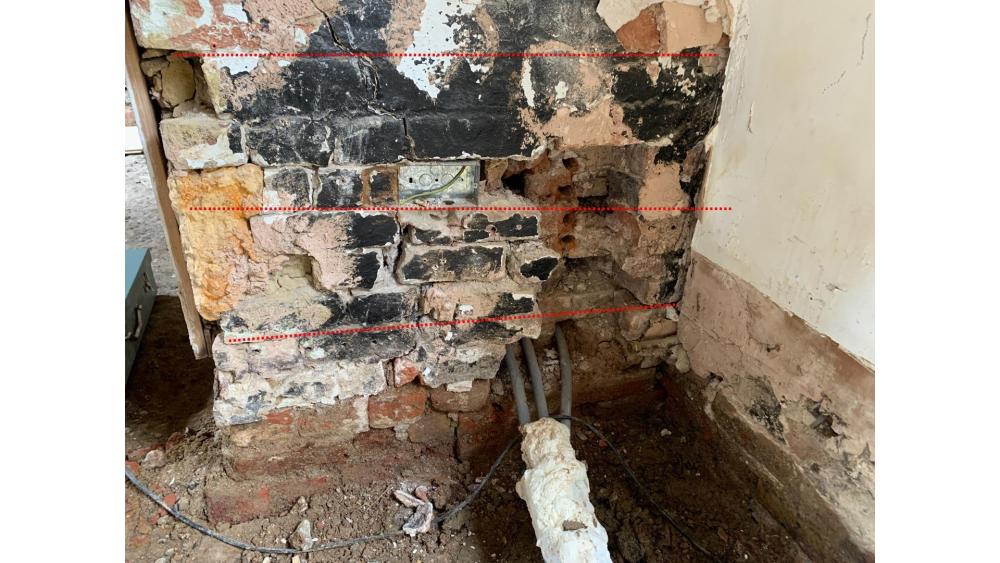
-
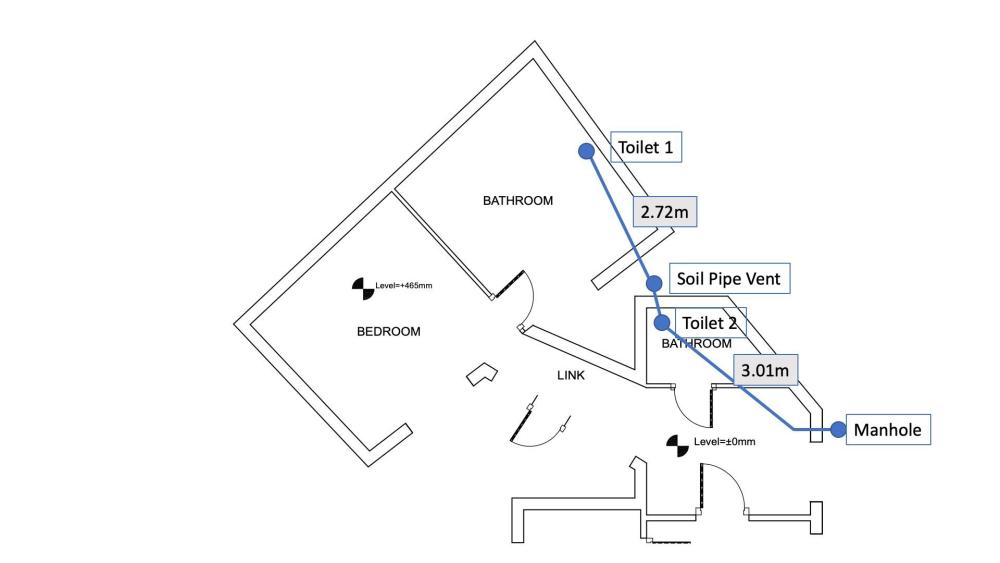
It is outside yes. And yes, a very odd space. It’s a very unusual plot. Neither toilet exists at the moment so this would all be new pipework
-
The manhole/inspection chamber in the picture is on my property. Should have said
-
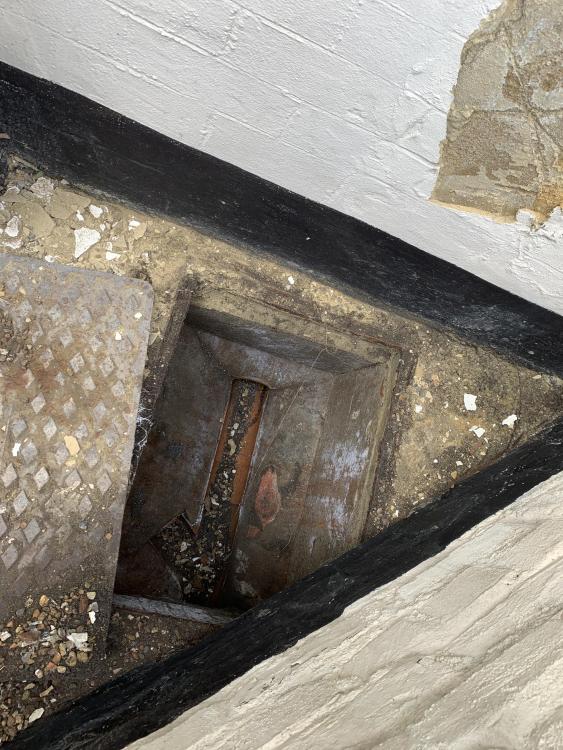
Yes the pavement is directly on the other side of the wall. The existing drain also runs directly under the room where Toilet 2 will be so hoping to make a connection to this underground within the room. I understand this will not require an access chamber inside the room if the branch junction is 45 degrees or less. Here's the inside of the manhole. Am I am confusing my manholes with my inspection chambers?
-
Where the vent pipe is? I didn't know that, but luckily for me there's a bloody great trench where the vent will be which I dug for other services so should be easy. Thanks a lot for pointing it out
-
Renovating a bungalow which has a detached garage which is ~46cm higher than the main dwelling. Planning a drain run for the two bathrooms. Can I put the vent in the middle of the run as in this picture? Assuming the gradients are correct and the bends are nice and smooth, is there anything else I should worry about from this plan?
-
Remove decorative ceiling joists for vaulted ceiling
tvrulesme replied to tvrulesme's topic in General Structural Issues
Thanks a lot. Yes I am not sure they are attached so I was planning on connecting them before I remove anything. I think the camera angle made it look as though the beams were supporting the joists. There was just a layer of plasterboard sandwiched between them and if the plasterboard was acting as structural support I'm in worse trouble than I thought. What would you use to connect the joists to rafters? coach bolts? Nervous of banging too hard with nails -
Remove decorative ceiling joists for vaulted ceiling
tvrulesme replied to tvrulesme's topic in General Structural Issues
Quick update after discussing with a structural engineer As for the decorative beams, if the plasterboard is over the top of the beams it is most likely that they are not load bearing. As for the ceiling joists, these look like they have been replaced at some time and form part of the roof structure." -
Remove decorative ceiling joists for vaulted ceiling
tvrulesme replied to tvrulesme's topic in General Structural Issues
Thanks Dave. Yes I thought this would be needed. I was only going to attempt if consensus was 100% not required -
Remove decorative ceiling joists for vaulted ceiling
tvrulesme replied to tvrulesme's topic in General Structural Issues
Many thanks Mark. They are joined to the walls in the sense that it looks like someone has hacked out a bit of brick for them to sit on if that makes sense? Doesn't look very structural to my eyes though....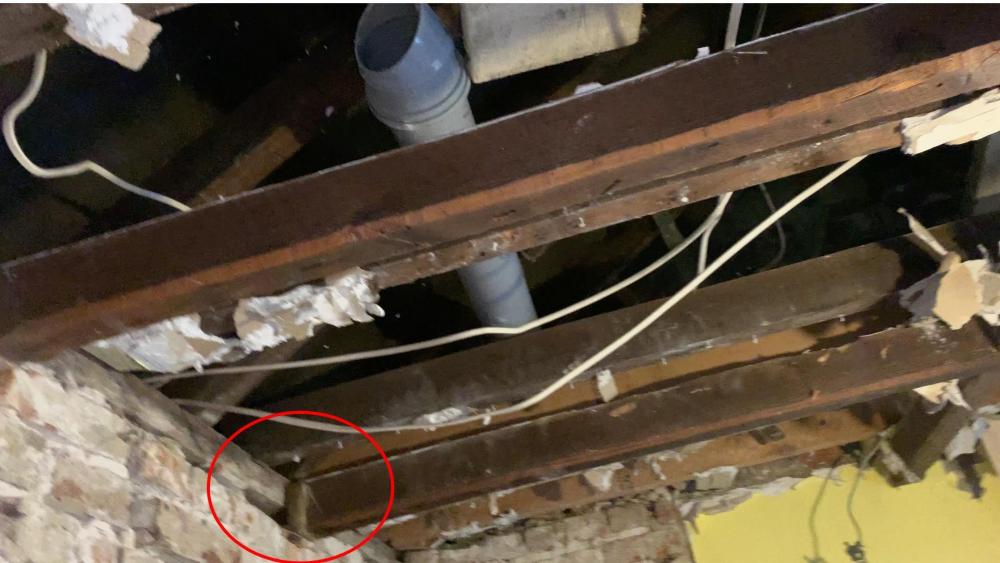
-
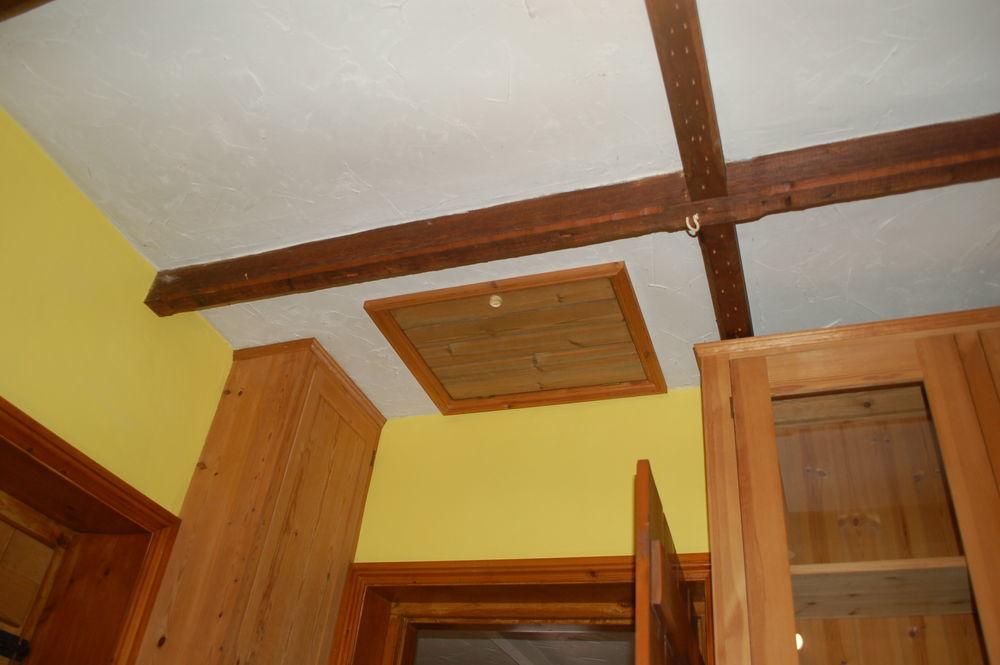
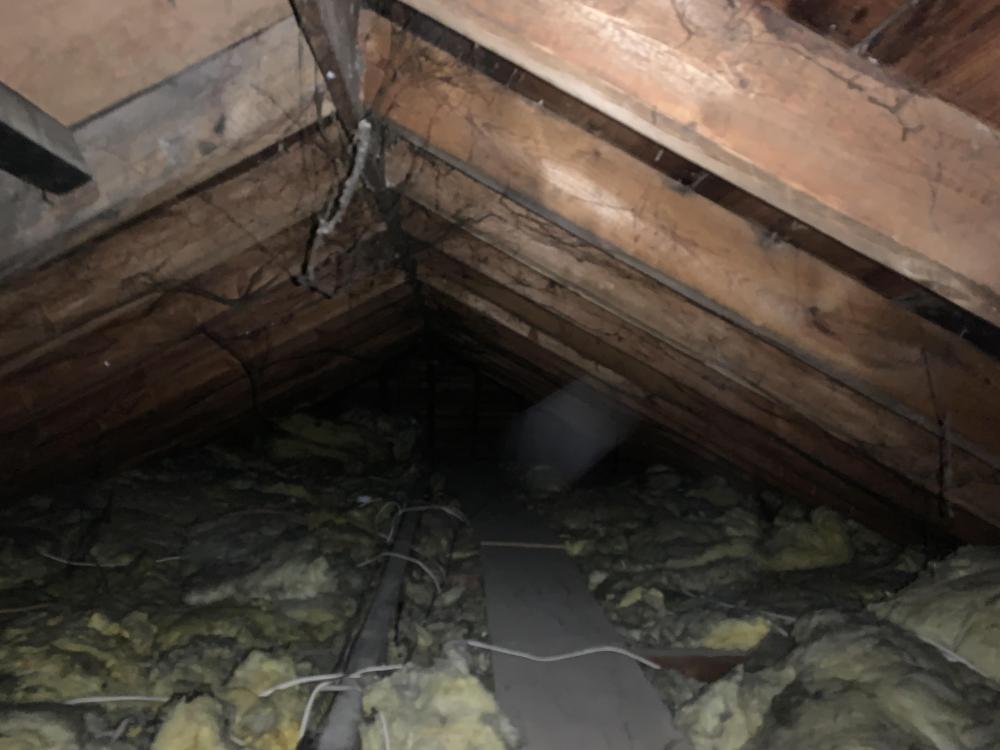
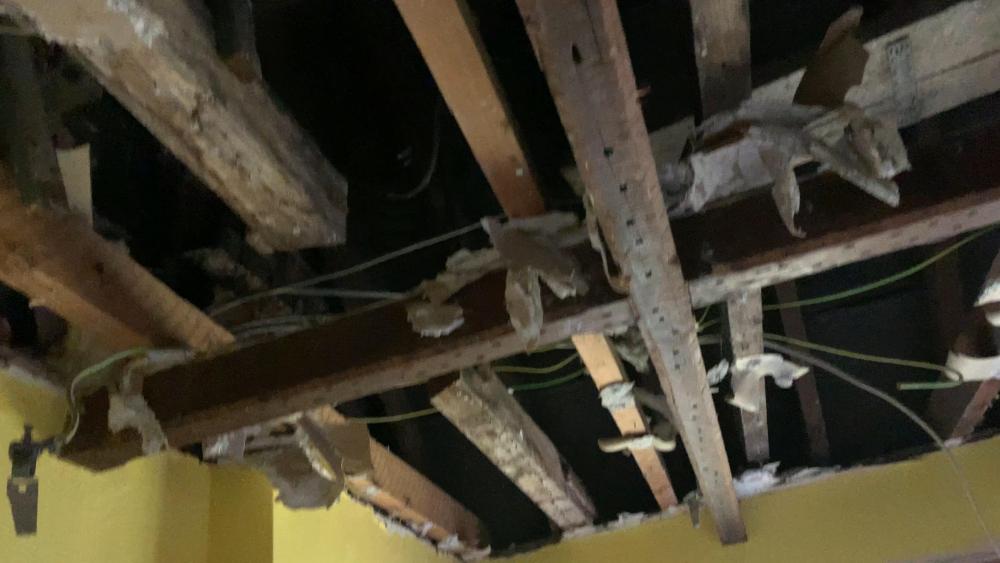
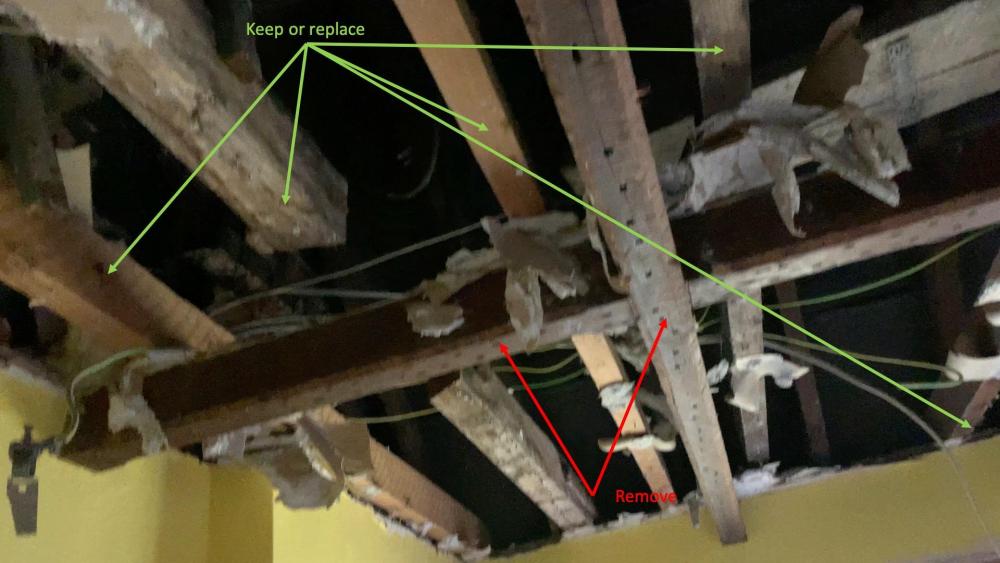
I am in the process of renovating an 18th Century building. Planning to have a vaulted ceiling but to leave the original ceiling joists in place. Below the joists there are what look to be "decorative" joists in place. Would removing these likely cause a structural issue? They were not originally a part of the building fabric. Picture showing joists which I plan to remove or repair/replace Decorative joists before plaster removal Loft space before plaster removal
-
I've read many threads (some true, some not) about cement corroding copper, MDPE, cables sleeving etc. Could anyone tell me if lime plaster reacts with anything or if it's safe to bury things directly? Trying to work out what can be put in the walls unprotected and what will need conduit etc. Any experts, same question with limecrete (NHL 5) please.


