Mr Blobby
-
Posts
536 -
Joined
-
Last visited
Everything posted by Mr Blobby
-
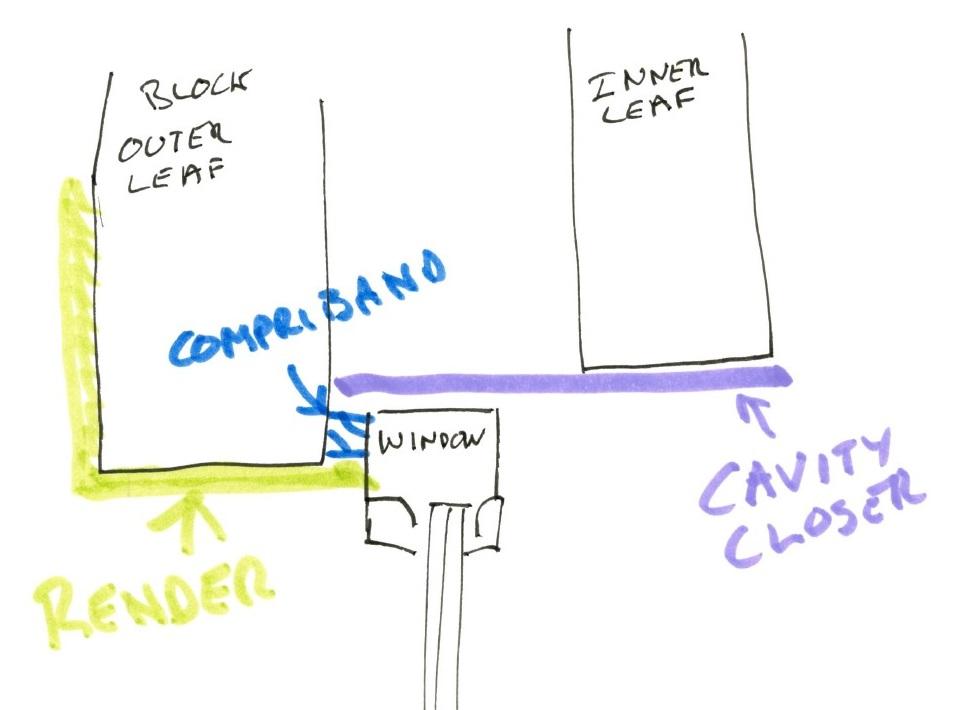
This week I am mostly worrying about reveals and windows. I would ideally like to install our windows pressed against the outer leaf with compriband as the weather seal on the front face of the window frame. Reading through the various threads on here about check reveals it seems that most have done this with a brick facade but we will have rendered blockwork. Can I install the windows like this with a render facade? I took my kid's markers (we called them felt-tip pens when I was a kid) to draw this masterpiece: I have omitted air-tightness detail and foam for clarity. Rendering to the window frame is, I think, standard practice here in NI. So, questions are: 1. Can I install windows as above? If not why not? 2. Assuming the block reveals are square and vertical, then what thickness compriband tape, the 3-7mm? 3. Will the window be pushed back into the cavity about 5mm if a 3-7mm tape is used? 4. Can the compriband be rendered over? 5. If rendering over the compriband/gap to the window then should a plaster stop bead be installed on the window frame? Have I missed anything? Do I need to think about anything else?
-
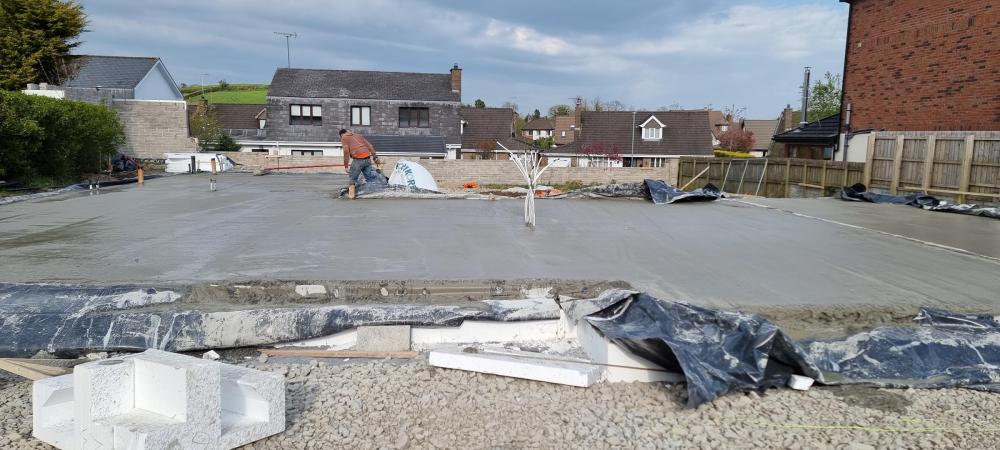
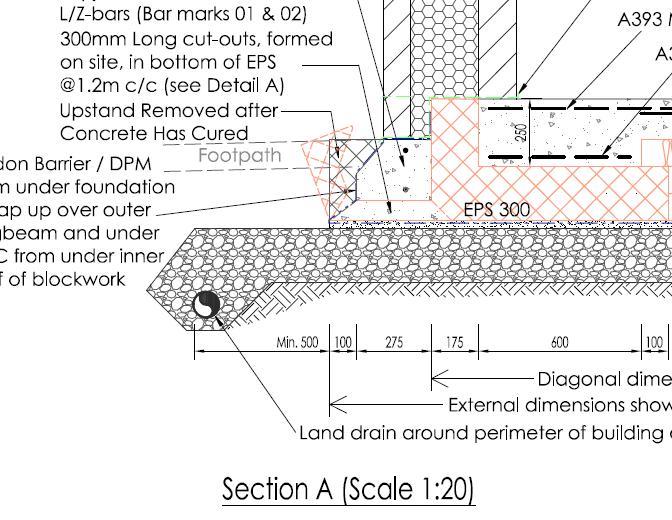
Exactly. I can't see what harm it is doing, but KORE and the SE recommend it is removed. Why? I think to allow water runoff, but I've not heard from SE or KORE any reason why it should be removed. Taking their advice at face value, the top two thirds of EPS upstand is now in the skip. The next question now is, do I water proof it? The minimum is that the DPM will cover it, but is that enough? The site has good drainage and priming and tanking it will not be a small task 😩
-

Timber Cladding, Zinc Guttering, Brise Soleil and External blinds
Mr Blobby commented on Thorfun's blog entry in West Sussex Forever Home
Are they Hallmark Trojan blinds? ... and I quite like the prison window, a nice contrasting feature I think. -
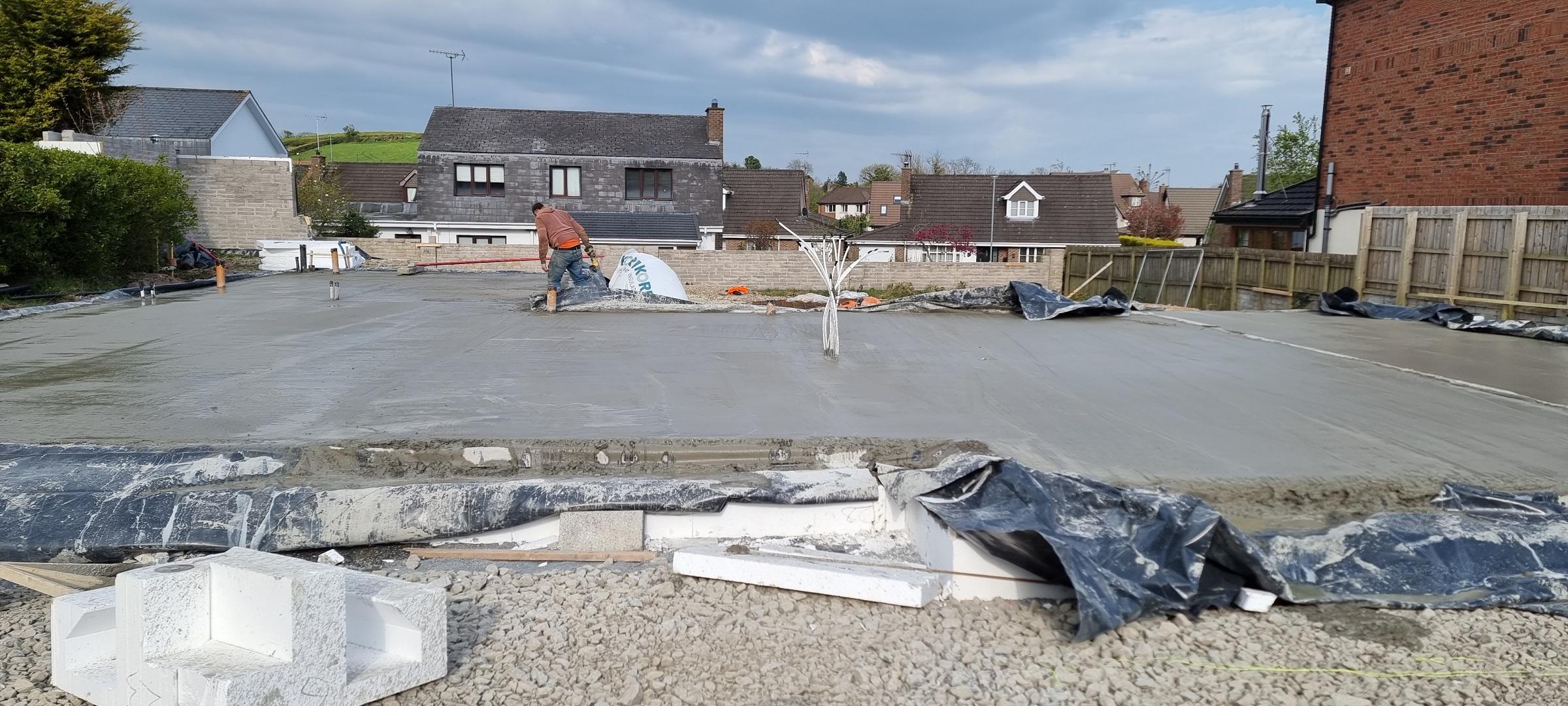
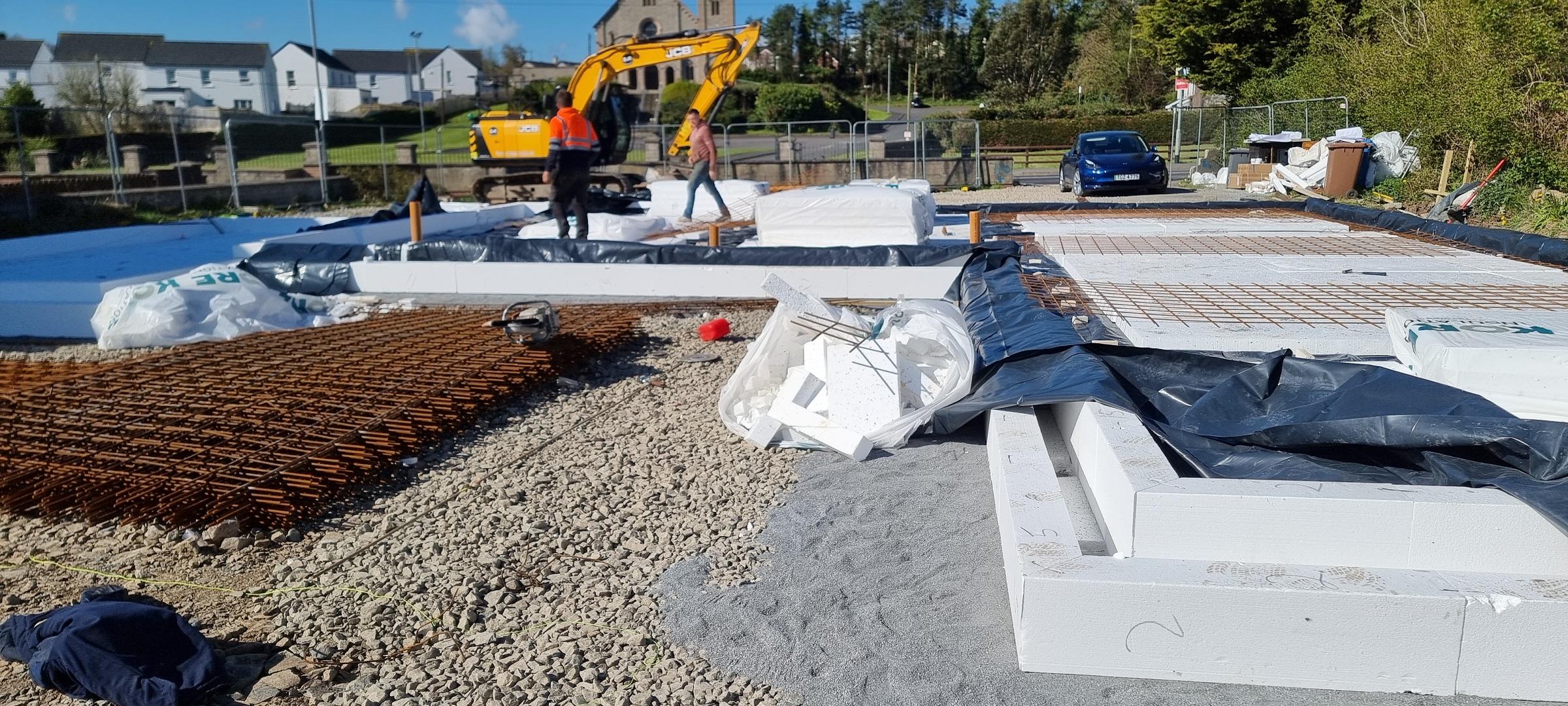
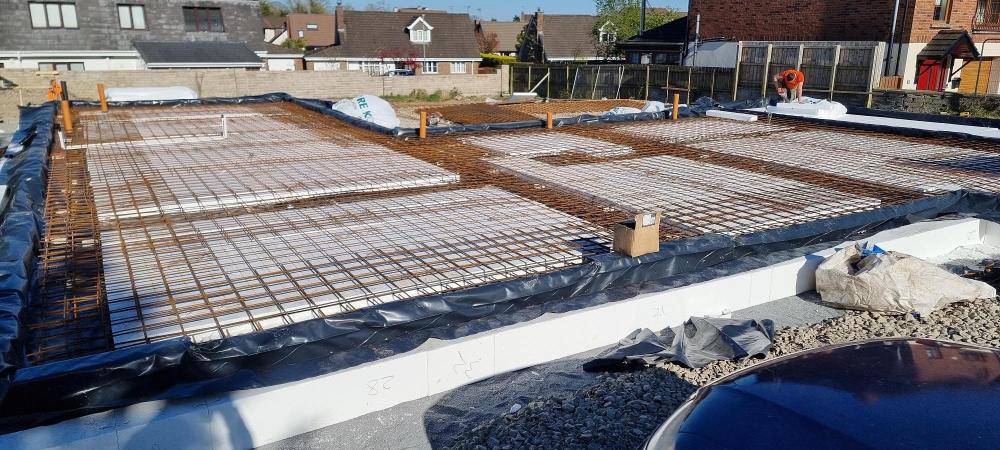
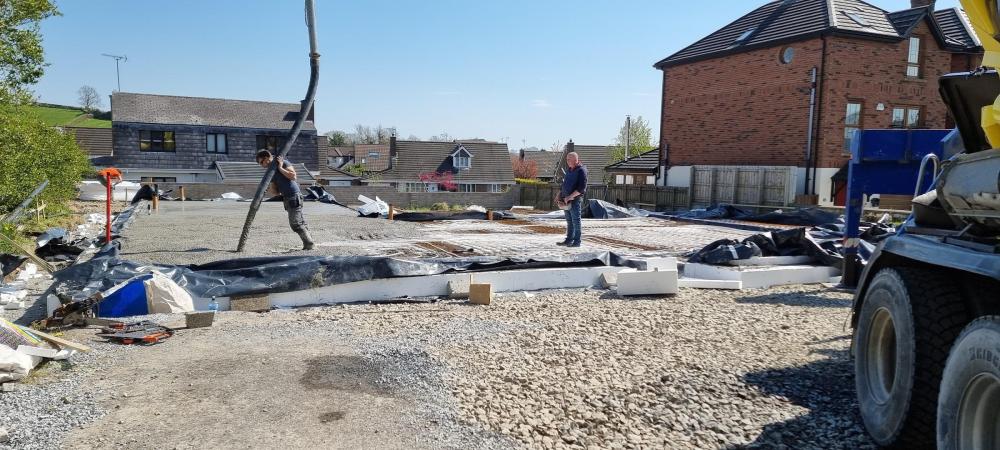
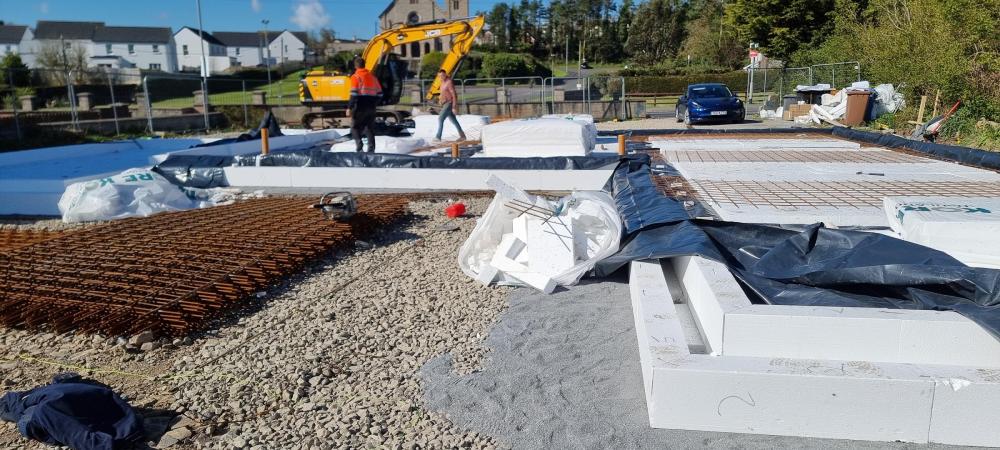
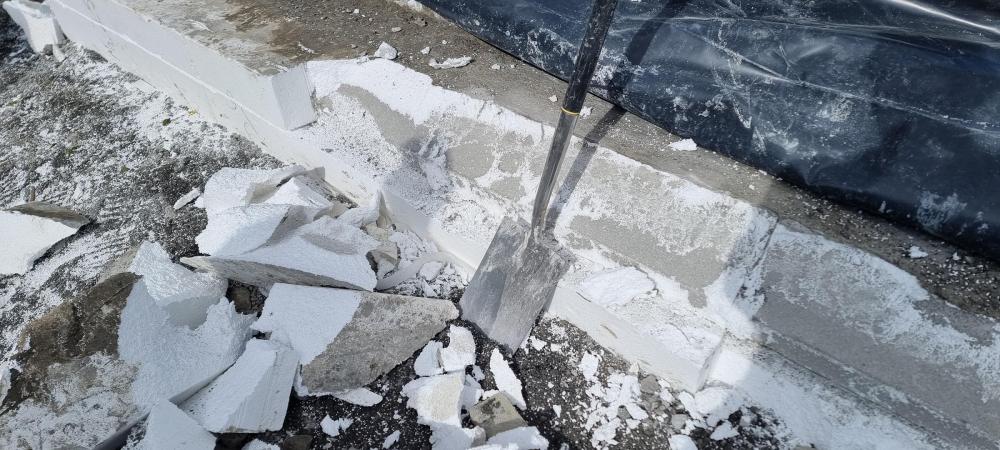
Fair point, and I reckon this is the reason why. I emailed KORE this morning, but not not heard back from them yet. KORE customer service have actually been very good. Some of the foundation was actually cut wrong, and after some head scratching on site KORE accepted the error and recut and couriered up new peices. Which was pretty good if a little stressful. I guess being 2 hours drive from Cavan helped. Two chaps from KORE also visited the site last week to show a prospect round, which I was quite happy about, as it gave us time to ask lots of questions and they were really helpful. We asked them about this perimeter and were advised to cut a horizontal line not too far down and remove the top part. KORE also advised to remove it before the concrete had set too much because then it is a bugger to remove. He was not wrong but darling wife had a birthday last weekend, when Sunday would have been the optimal day for the perimeter upstand to come off. Here's some pics. It was sunny all week, which nnever happens in Northern Ireland. Maybe the big church on the other side of the road did some miracle stuff. ... and here's that upstand...
-
Unlike TF construction, for cavity masonry foundations KORE recommend the perimeter upstand be removed thus: ... which is fine, except it is realy messy and time consuming. Given the EPS is below ground level then why can't it remain in place?
-
Indeed it is! And it's being installed this week. I'm not tense at all. 😕 The KORE installers have seen this detail before so it looks like a common enough approach but obviously a bit more work is needed to make the concrete pads.
-
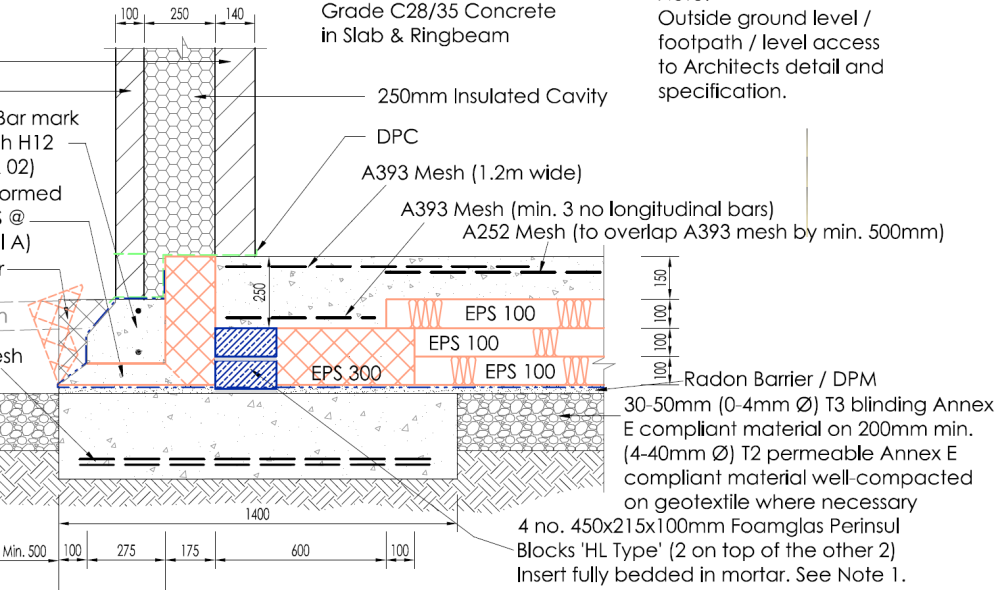
The SE drawings for the slab include two sections where the EPS 300 is replaced by perinsol blocks, and the perinsul blocks are in turn supported by concrete pads. I guess some extra support is needed here. It looks like this: In the end we went for Partel CF200 instead of perinsul. The problem with the CF200 is it is eye-wateringly expensive. I reckon a single thermalite 100 block on top of a single quinlite block would have similar performance for a fractoion of the cost but the SE approves the CF200 and its easy to get hold of.
-
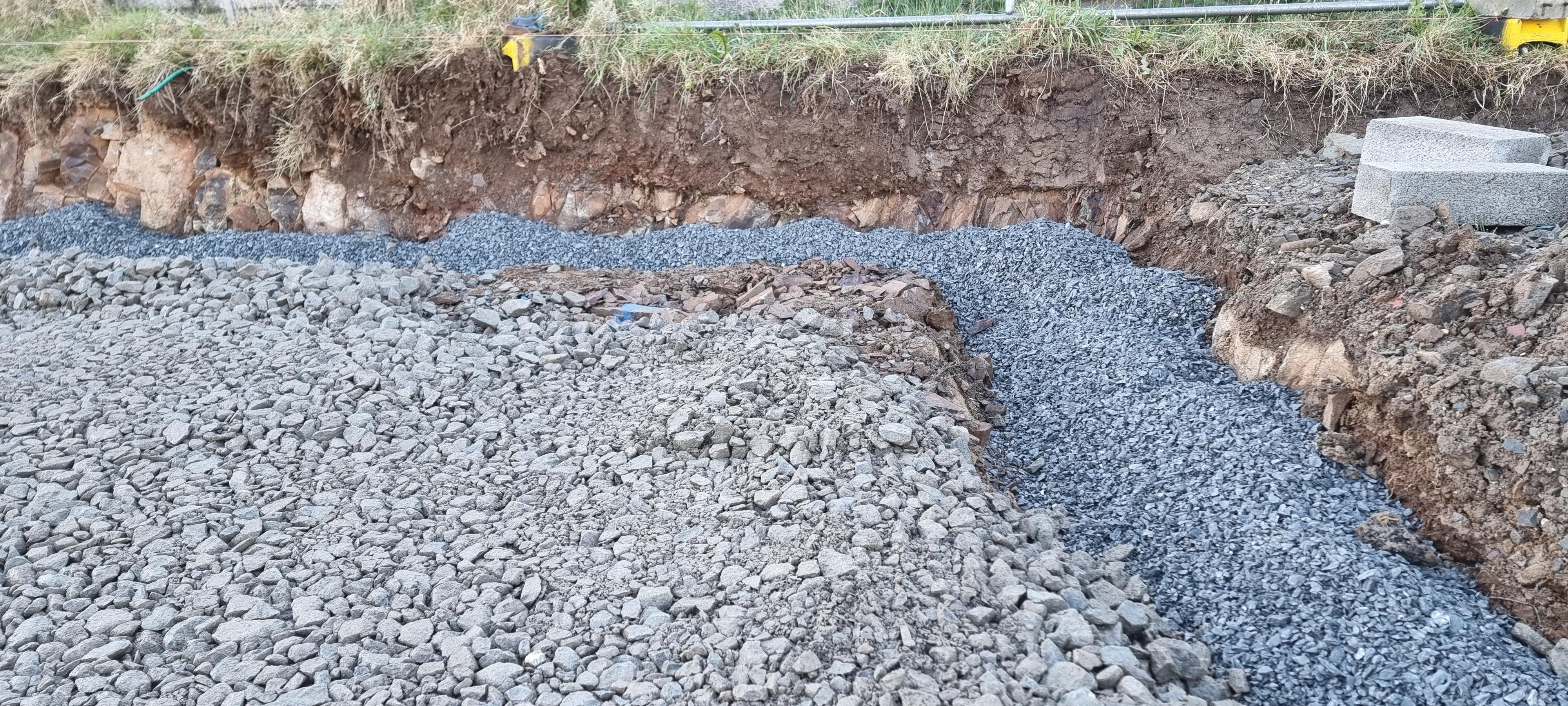
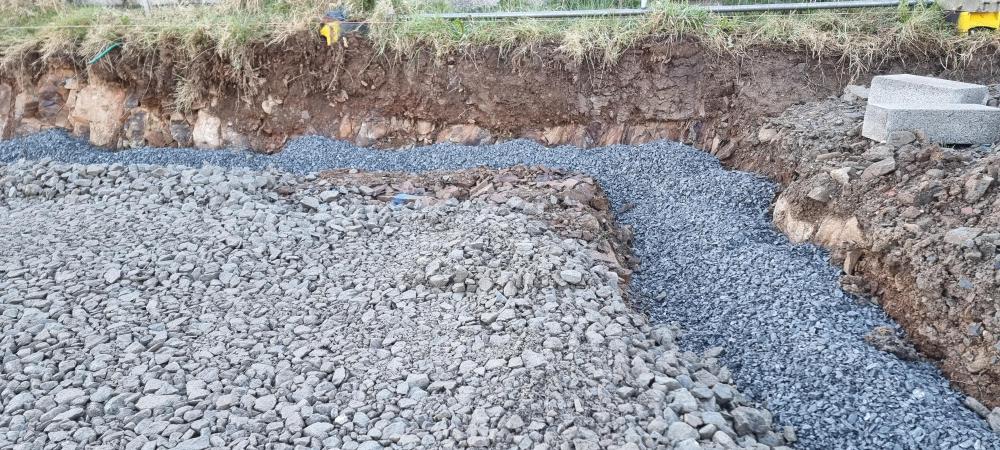
Thank you @Gus Potter for your detailed explanation. I sat down with a fresh cup of coffee and read every word. As I had suspected the builder (not my builder) who visited the site and told us we needed the PLT once the hardcore was installed was talking out his backside. He'd seen it once before so had jumped to the wrong conclusion that it was compulsory for a raft-type foundation. This is good to know. I had thought the SE trial-pit investigation was perhaps a bit of a waste of time, but now I am reassured that it was a very worthwhile exercise. I went back to read the SE report again in light of what you have written above. Our SE report says that we have sandy boulder clay with bearing capacity of 150kN/m2. Which sounds pretty good to me given the desired ranges you list above. It looks like we are blessed with good ground conditions, though I did suspect it would be pretty rocky after trying, and failing, to install an earth rod some time ago 🙄
-
Another ASHP flow and return question
Mr Blobby replied to Mr Blobby's topic in Other Heating Systems
So 110 is big enough? -
Another ASHP flow and return question
Mr Blobby replied to Mr Blobby's topic in Other Heating Systems
The plumber wants the flow and return to go through the slab, which I'm ok with (the ASHP has moved a little further away from the entry point), but plumber has told builder to put in a 160mm pipe and then run 2 * 28 mm plastic pipes through it. 160 mm sounds like overkill. Is it? The 160mm pipe is big, and the long radius bend is long. Think pi r2 The question is then, will the two 28mm pipes, with insualation like armaflex or whatever, fit through a long radius 110 bend ok? Or should I do what the plumber wants and put a 160mm bend in the floor? -
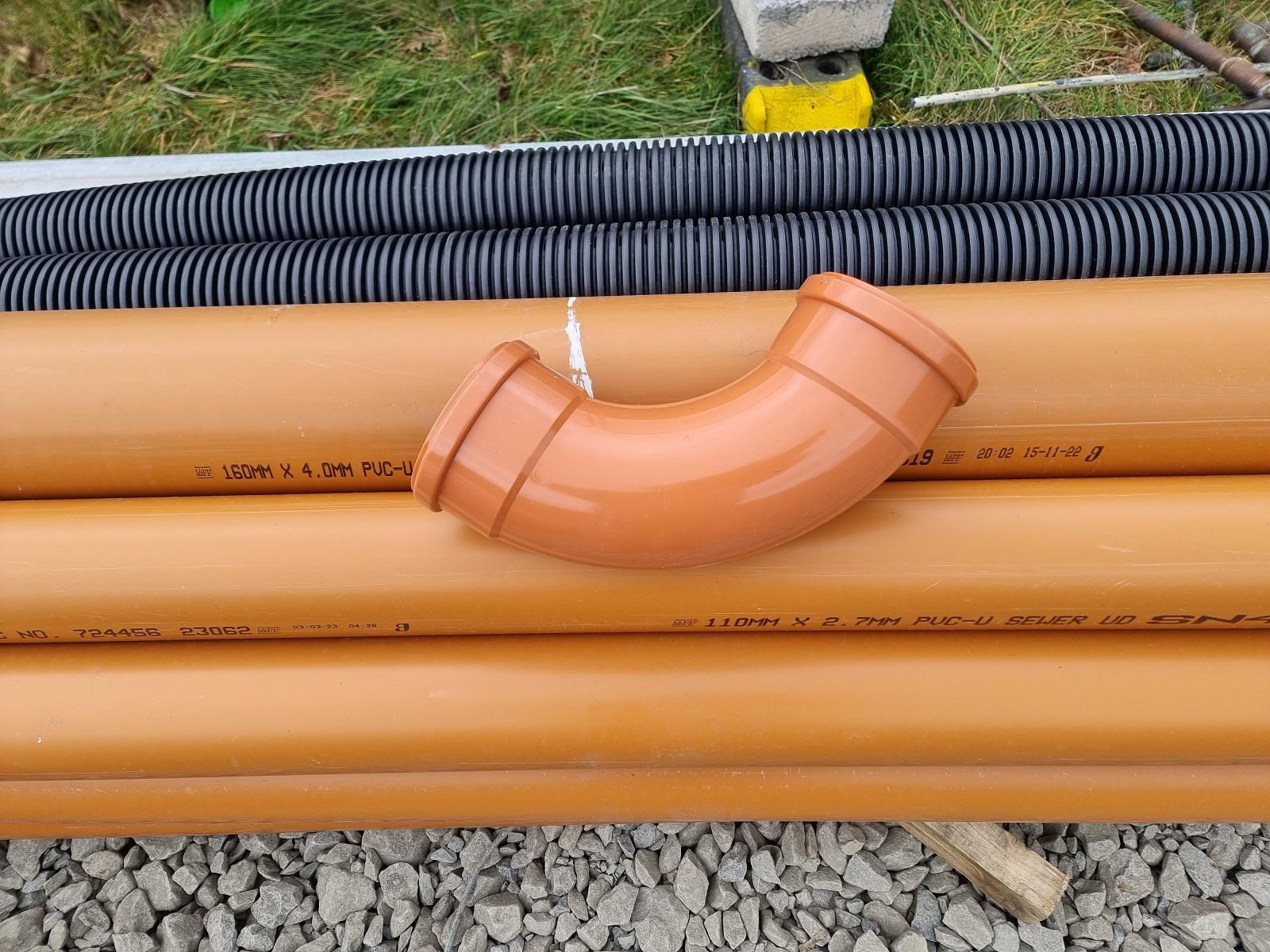
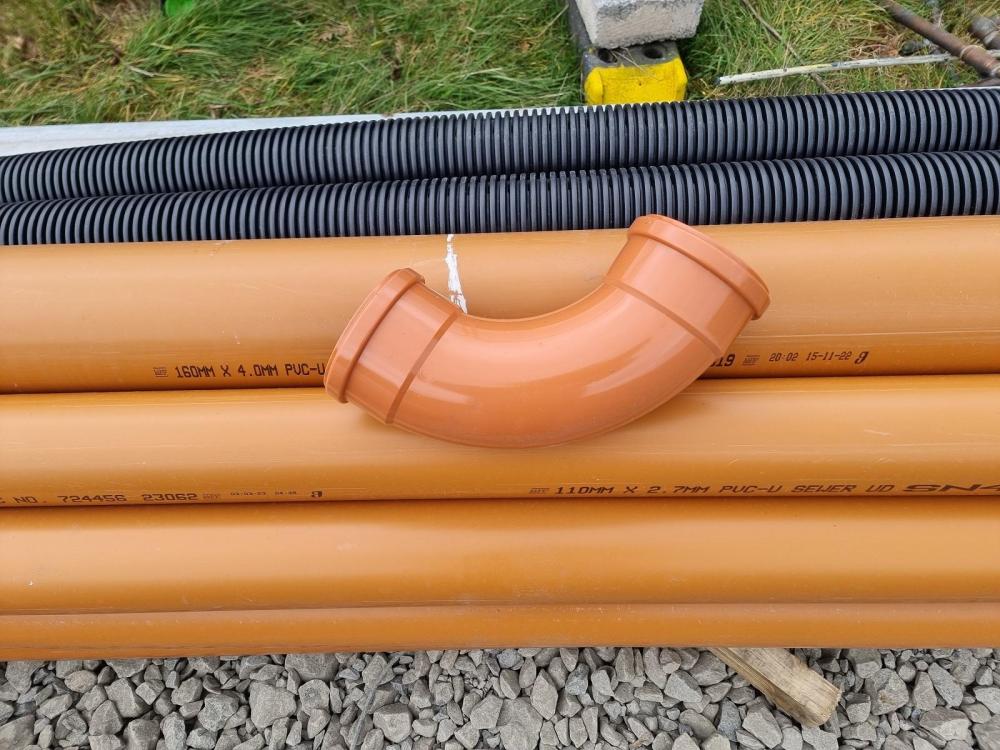
A bunch of these have arrived on site to go into the KORE slab for services (like 32mm water pipe into property) as well as waste out: Should these be long radius bends instead so that it is easier to pull services through? Do they need to be like the above so that the pipe runs vertically through the slab? Am I over-thinking this?
-
In case anyone else is looking to use 215mm perinsol blocks, order them early. Very early. The foamglas factory in Belgium called me yesterday. They don't even have ny stock at the factory and there is a backlog of orders. So we'll not be using perinsol blocks. We'll be using one course of quinlite bock and one course of marmox thermoblock on top. Anyone know a marmox stockist in Northern Ireland?
-
Yes, I'm really peed off that foamglass just fobbed me off with a distributor. I did think of marmox but we need 200mm height, so two high of 100mm block. The problem with marmox is they can't be stacked and don't do a 200mm block. I did phone marmox to double check and they insisted the blocks cant be stacked. Something to do with the rods that go through the middle .
-
I called around the Irish distributors at the start of the week and heard back today that there are none in Ireland. So I'm in Wales for a couple of days and had hoped to find some here in GB but without any sucess. I phoned foamglass earlier and explained I was desperate and couldnt find any stock anywhere. The Welsh rep said foamglas had no stock and he put me in touch with an English distributor who he said would carry some stock. That distibutor had no stock of course and so he he emailed the Belgium factory to get delivery times but of course its a bank holiday so he isnt going to get back to me until Tuesday. The clock is ticking.
-
Can't get hold of the 450x215x100 foamglas blocks anywhere. Does anyone know where I may find some stock?
-
We would like to run 5C SWA through slab to gate and EV chargers. Gate and chargers also need an ethernet connection. Assuming this is two seperate counduit (because AFAIK data and power should live apart) then what conduit to use through KORE slab? Is 63mm corrugated or similar OK? A 110mm pipe seems overkill, esp for an ethernet cable. Please help!
-
So a bloke came on our site today (from another building firm) and asked if we are doing a plate load test after the hardcore is compressed down for our KORE slab. Before work started we did get an engineer on site to dig some holes and peer in to see the ground make up. He was happy enough for the KORE slab to go in. The site is not liable to flooding. There was a house on the site previously although most of the new house is on virgin ground. What is a plate load test and do I need one? I don't want an extra day of a digger on site waiting to see if it sinks (if that's what a plate load test is). Did anyone else do this? Seems a waste of time to me. Comments please.
-
Does anyone know if openreach allow the ONT to be installed away from the cable entry into the house?
-
The DNO is ok with that then? That would make my life simpler in splitting a single phase into the house.
-
Sorry, I meant > 4kw. Final number will be more like 8.5 kW total. For a hybrid invertor with batteries to support this I need a 3-phase invertor right?
-
Thank you everyone for your responses. Through the cavity and up the wall it is then. That's one less thing for me to worry about when the slab is laid. Inner leaf block is 140mm so should be enogh depth, I hope, to bury the cable and make the thing airtight. I know nothing about SWA and regs but hopefully this is fairly standard to chase the tails into the wall. It would need to be SWA all the way to the CU I guess? Is it bad to be wrapping the house twice? Now here's a can of worms just opened. Single phase into the house with the three phases to an adjacent box and then the EV chargers at the front makes a lot of sense but, what about the PV? I will have > 4 kW pv on the roof and I had assumed that I would need a 3-phase inverter to satisfy the DNO that there is <4kW per phase. Is that right? Also I figured I would need CT clamps on all 3 phases so that the EDDI could recognise the net postion and divert into the immersion/batteries properly. (I think a lightbulb has just flickered on in my brain) Yes I have made a rod for my own back here. The meter box and EV chargers are on the left side of the house the inverter is in the garage on right-hand side of the house, and the consumer unit is in the middle of the house (The plan did start with everything in the same place 🙄) The electricians have proposed a 3-phase CU. Is this overengineered as house loads (hob+7kw ashp) would be small enough to run everything off a single phase? The question is, I guess, do I need three phases to the PV invertor? If so then would it be possible/sensible to bring the invertor/ batteries into the plant room on the same side of the house as the EV chargers and (with a DB here?) then take just a siingle phase from there up to the big house CU? The reason I haven't done this already is because of concerns about the invertor/batteries generating heat I don't want inside the house.
-
The DNO here in Northern Ireland insists on a recessed meter box near the front of the house. The consumer unit in our house is not near the front, but about 15 metres away from the meter box and on the first floor. Supply is three phase. How do I run the meter tails from the recessed meter box to the Consumer unit? Should I run the meter tails run through the masonry cavity and then chase up the wall to the ceiling void and run the tails across the house in ceiling void and up into the consumer unit? (I know a fuse will be needed for meter tails > 2M, but AFAIK that fuse can be in the meter cabinet.) Are there any building regs about chasing meter tails into walls to run up into ceeiling void? Will I need to install some armoured ducting to do this? The other option is to run some conduit from the meter box down into the KORE slab (within the insulation?) and run the tails in the slab to emerge under the comms room. Are there any regulations prohibiting running meter tails within the insulation because of heat or anything? What should I do? Run the meter tails through the wall or in conduit under the floor?
-
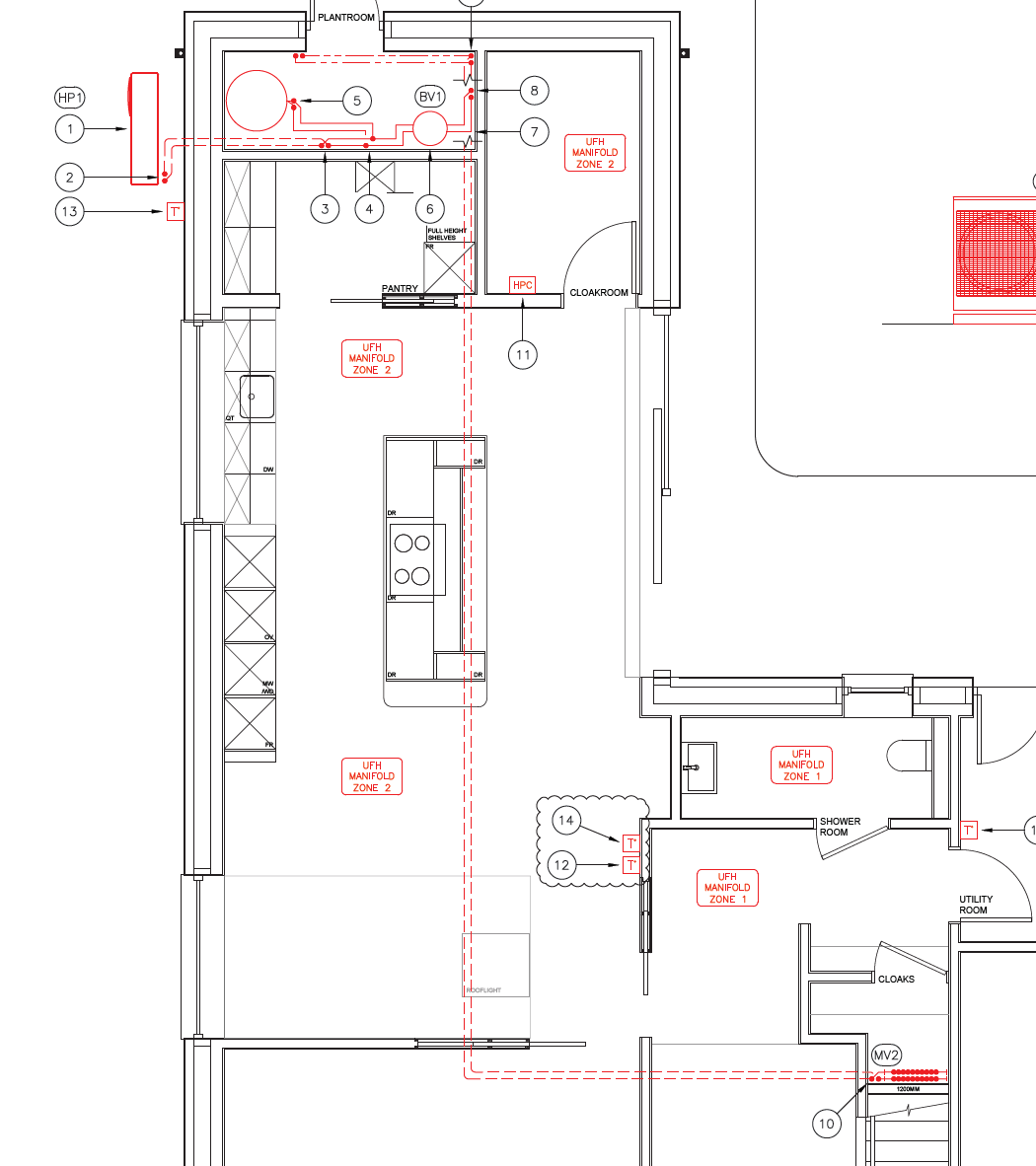
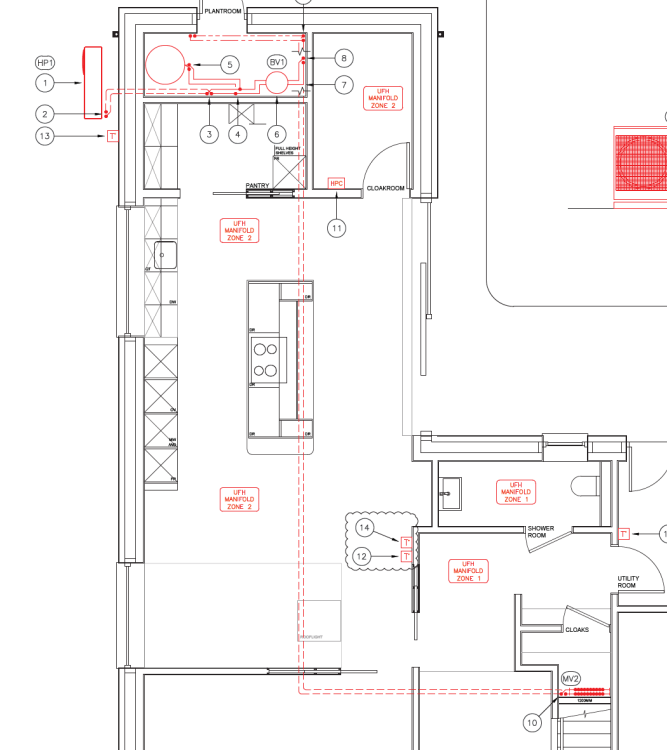
So I'm trying to finalise services through the KORE slab and would like some help on heat pump and manifold connections please. So, for context, the house is masonry (250) cavity on kore slab to passive standard. ASHP will sit outside the plant room at the rear of the property. UVC and buffer tank in plant room. UFH manifold in centre of house under stairs. Two questions: 1. ASHP flow and return, is it: (a) 32mm pre-insulated FR pipe through floor to ASHP. Its rocky at about 400mm and so with the bend radius requiring a deep hole is it worth it? or (b) seperate plastic insulated pipes through a hole in the wall. This seems simpler, but what about airtightness etc? Do I build in a pipe or core drill after? Does that matter? 2. Flow and return to UFH manifold from buffer tank. What pipe specification? Where to run it. Within the floor insulation or under the insulation? Or not in the floor? Please help me decide before I meet the plumber and builder to decide this stuff next week. (who will probably ask me why I'm not installing an oil-fired boiler like everyone else 🙄)
-
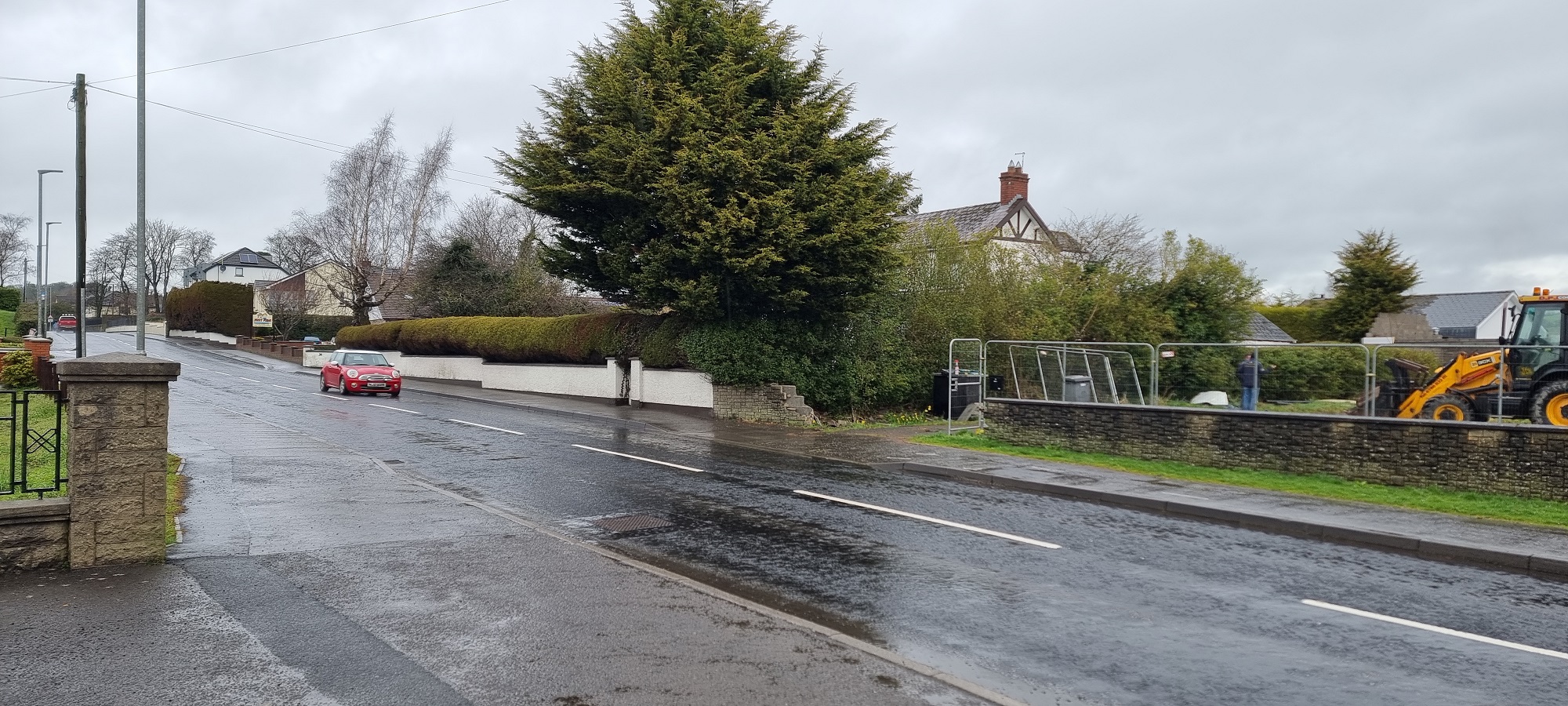
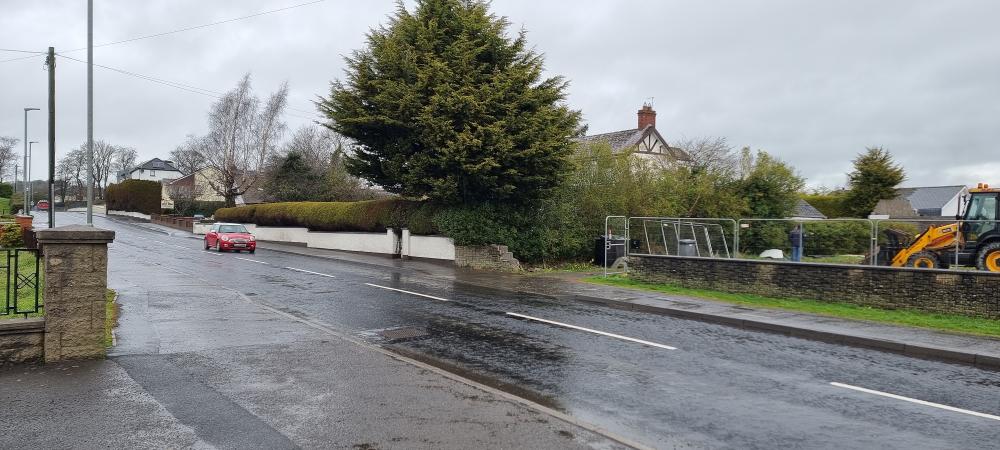
Here's that tree in next doors garden that blocks a connection to the pole on the other side of the road 😬
-
Is that black thing the fibre box? Are you getting your fibre connection from the pole or paying to go underground? My openreach invoice just hit my inbox. With VAT 😕. I was hoping openreach do like NIE (and builders) and exclude VAT from their invoices for new builds. Is that not so? Will openreach re-issue the invoice without VAT or do I just have to suck it up and reclaim it at the end of the build? (or get my builder to pay it and let him claim it back)