


Kelvin
-
Posts
4081 -
Joined
-
Last visited
-
Days Won
48
Everything posted by Kelvin
-
You couldn’t get a 5.6m skylight on the roof. Their argument that the guy has been doing it for 30 years so wouldn’t make the mistake is a non-starter because a mistake has been made. In fact their whole response is non-sensical as nothing has been made bigger or smaller. I would ask them to attend site to demonstrate where they measured it from to arrive at 5.6m given they are arguing it was correct at the time he did the survey. For that to be true you would have had to have made the hole smaller again which you clearly haven’t. I reckon the mistake isn’t the surveyor’s it’s more likely a typo from his report to the fabrication process. As for the legal position of you signing it off. You’ll need to seek advice from a solicitor but it’s not as cut and dried as the company is suggesting just because you signed it off if their surveyor made a mistake. What I don’t quite understand is why you didn’t query the size difference when they re-quoted for the bigger canopy given it’s clearly marked on the drawing at 5000mm. I get that stuff is easy to miss when there’s a lot going on.
-
That is very cheap for a full turnkey house.
-
It’s a Kingspan product who are really big in the building industry so have a bigger marketing budget etc. As said earlier Klargester is a bit like saying Hoover as a generic term for a vacuum cleaner.
-
I paid £2047 ex VAT for a 7 PE Graf including the remote blower and delivery. But it was supplied as part of my groundworks so had a slight discount. Filpumps also quoted a good price discounted as part of my potable water supply and treatment. I never went with them for the treatment plant though. I’d be happy to recommend them as they did a neat install of my water treatment. I can pass on my contact if you want.
-
The reason I ultimately went with the Graf is because the guy that did our groundswork has installed every type available up here in Perthshire. When he built his own house he went with the Graf. He liked the ease of install and he hadn’t heard of any of the number he’s installed ever have a problem. I also like the simple design and the easy access remote blower. All the blower type are relatively simple things though.
-
The only two things that came with a HIAB were the scaffolding and blocks from TP. Everything else needed me to unload it with the Telehandler. A few of the trucks had forklifts.
-
Yep.
-
Architects seem to default to 75mm sand and cement. I put 55mm liquid screed in and upped the depth of insulation. Cost me £4300 for 1452. Took me a couple of days to prep the floor (lay insulation, upstand, perimeter expansion foam, membrane) Took the UFH guys a day to put all the pipes and manifold in, test and fill. Took the liquid screed guys two hours from start to finish to flow the screed.
-
How to size your tank is generally based on a three bed house with a minimum population of 5 people. You then add one person for each additional bedroom so yours would be 5+2. The manufacturers of the plants typically size them like this. Here’s the Graf options for example. However when I was looking I noticed some size them such that you’d need to go to the next one up https://www.graf.info/en-gb/products/sewage-treatment/sewage-treatment-plants/one2clean.html
-
Are you sure that the planning condition specifically specifies a Klargester or it’s just what the architect mentioned in the drawings because they always seem to because it’s the default option. I’m in Perthshire and I installed a Graf One2Clean. You have to apply to SEPA to register your private treatment plant proposal. There’s a form to fill in and you need to include your drainage plans and the specification of the treatment plant.
-
Exposed steel columns: mitigating thermal bridge
Kelvin replied to ectoplasmosis's topic in Heat Insulation
I fretted over this a bit too but soon realised the impact was negligible. Mine are behind the insulation or within the building albeit I made life hard for myself by not fitting the insulation until the house started going up around them rather than immediately after they were erected. I watch all these Grand Design houses that use masses of steel beams and I’ve not seen a single beam be insulated. As for exposing them. They can look pretty good if done well and in the right environment. For most homes I expect they are better covered up. Easier for fire regs too. -
All my windows are framed with plywood. I added that after the fact, which wasn’t easy, once I realised the difficulty I was going to have sealing and taping the windows without a flat surface to fix to. There was one window I didn’t frame (dormer window) and it was a challenge to get the airtight membrane fitted around the frame and then taped for airtightness. I also added the airtightness membrane along the roof/wall junctions before the roof went on.
-
I stacked mine flat on pallets in the open plan room. That was a long day moving it before the torrential rain started. I do have a few bathroom sheets leaned up against a wall though. I’ll risk it. 😂
-
Keeping tabs on a Mitsubishi Ecodan heat pump
Kelvin replied to Garald's topic in Air Source Heat Pumps (ASHP)
I’ve switched the legionella cycle off. Do your own research on this though before deciding one way or another. But as above you need to put it into edit mode which gives you access to the weather compensation curves. -
This was one of these irrational decisions we made (well I did) I just couldn’t convince myself that leaving gaps directly exposing the membrane was something I could live with for 20-30 years. Therefore we did board on board which was an expensive decision.
-
I had a quick look at their website and couldn’t find much information about their windows. Have they provided a complete specification for them?
-
Balls. It’s such a letdown when highly recommended companies let you down. While my standing seam roof is well done the flat roof isn’t relative to the rest of the outside. No one else notices it but me but it does annoy me when it could have been better. Hopefully they will resolve without issue. Given you still have the scaffolding up it shouldn’t present them a big problem to fix the issues.
-
Keeping tabs on a Mitsubishi Ecodan heat pump
Kelvin replied to Garald's topic in Air Source Heat Pumps (ASHP)
Did your system come with a WiFi adapter to allow you to connect it to MELcloud which can provide detailed energy consumption. I’ve not connected mine yet so no idea how comprehensive it is. -
It also looks badly scratched in places which shows a general lack of care when installing it. Have you paid for all of it?
-
What’s going on here?
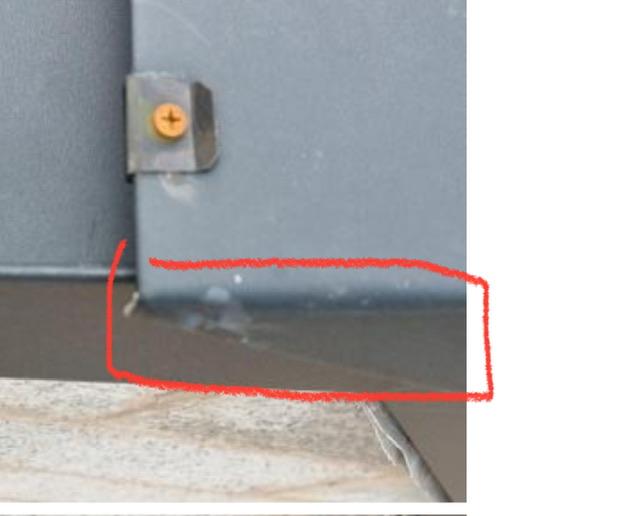
-
You can generally use steel fixings to fix large bits of aluminium as you see it in the car industry. However there will often be something between the fixing and the aluminium plus a substance like Duralac.
-
You can’t see a single fixing on mine as it’s all hidden. You already have several rusty screws that will stain the roof below them so they must be the wrong type of fixings. That gap in the ridge would also annoy me.
-
2 x 100m or 1 x 200m borehole
Kelvin replied to ronaldgibbons's topic in Ground Source Heat Pumps (GSHP)
Sure but the ASHP installers tend to err on the side of caution and don’t take MVHR into account. For example, our installer wanted to fit a much bigger heat pump than our heat loss calculations said. Get the insulation and airtightness detailed really well and your heating input needs will surprise you. Keeping your house cool on really hot days is likely more of a challenge than keeping it warm on really cold days. -
2 x 100m or 1 x 200m borehole
Kelvin replied to ronaldgibbons's topic in Ground Source Heat Pumps (GSHP)
Slow down. You ideally need heat loss calculations done. You can either have a go yourself (there’s a spreadsheet on here if you want to try that) or speak with Fleming Homes about doing the calcs. There’s a Glasgow company called Lùths Services who specialise in this area. -
2 x 100m or 1 x 200m borehole
Kelvin replied to ronaldgibbons's topic in Ground Source Heat Pumps (GSHP)
Airtightness is at least as important if not more important to building performance. Start reading up on that and decide where you want to get to.

