Kelvin
-
Posts
4085 -
Joined
-
Last visited
-
Days Won
48
Everything posted by Kelvin
-
😂 Because I don’t have a clue what I’m doing half the time I left myself some wiggle room! Yes the shower spray will hit the cold end so I should just bed it across its full length from the cold bit to the warmer bit.
-
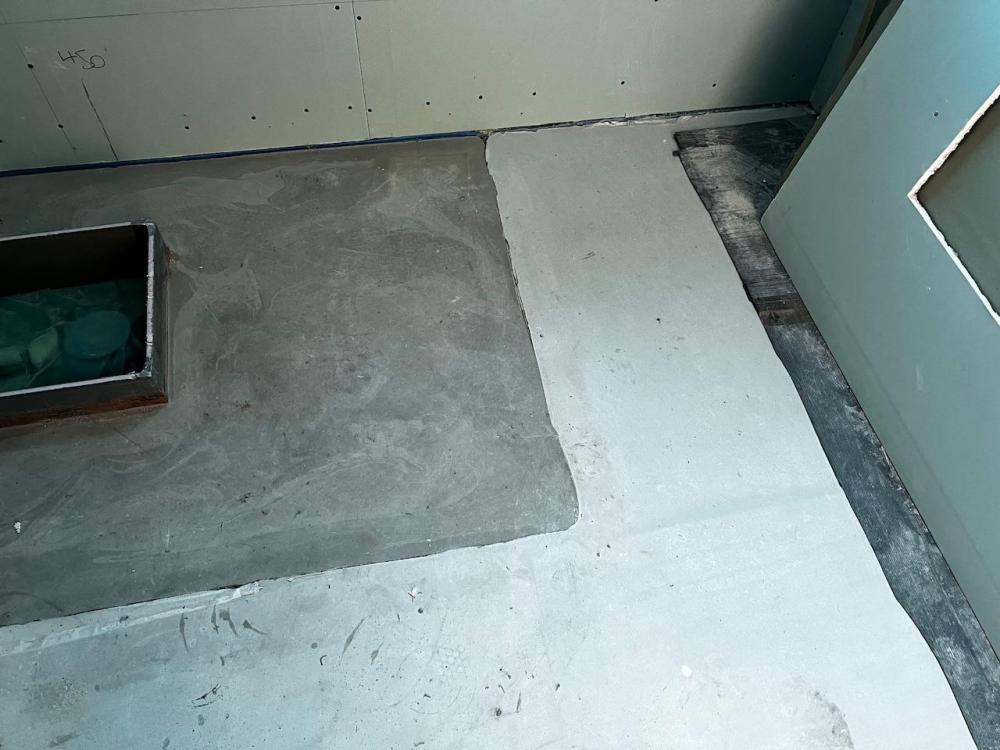
I have a large 2000mm x 900mm stone shower tray ready to be fitted. However it’s going to span across a section of screed that doesn’t have UFH pipes beneath it and a section that does. Therefore there will be a difference in floor temperature from one end to the other. Is this a concern and should I mitigate by decoupling it or can we just bed it in a sand/cement layer as normal?
-
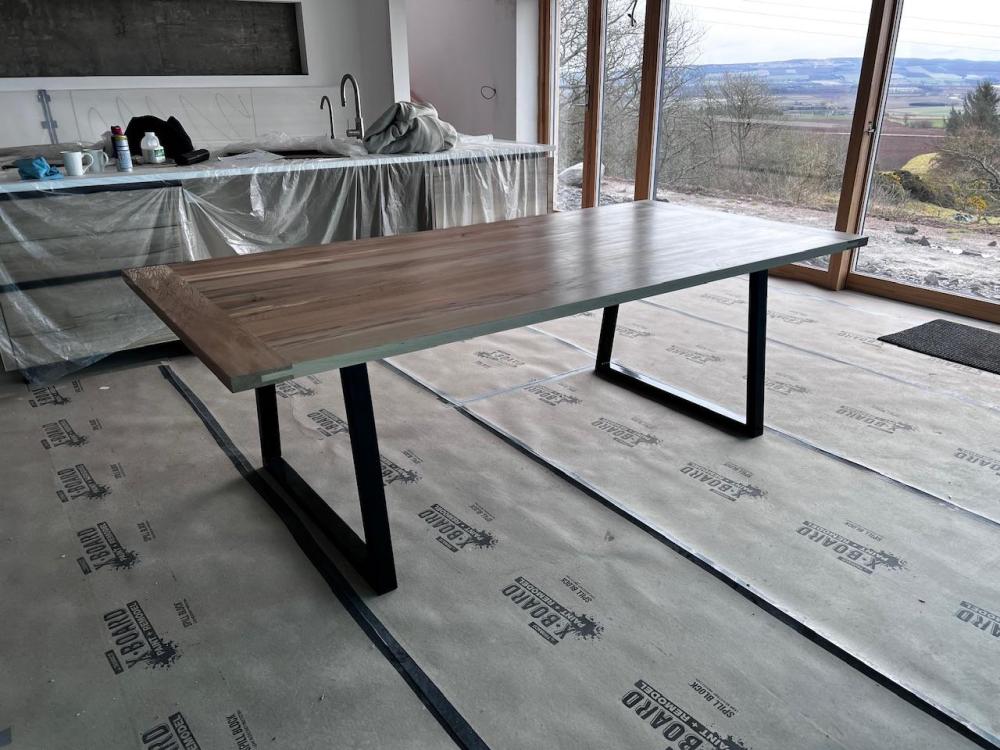
Ash is lovely. We had a table made from ash.
-
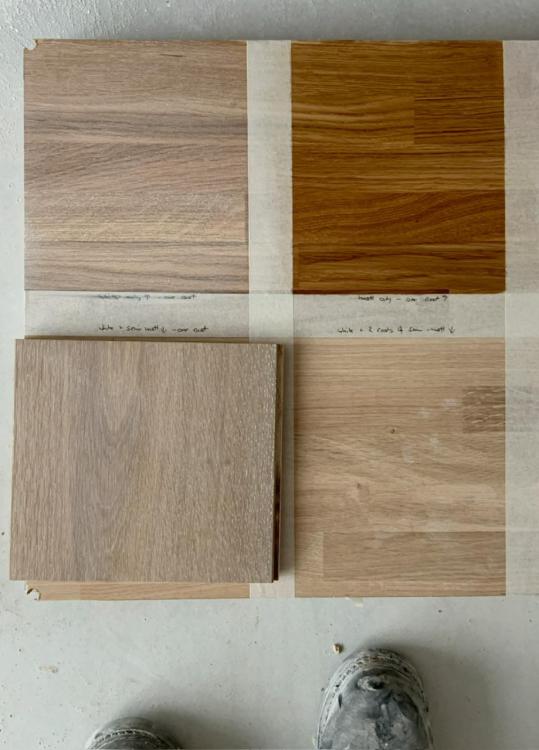
That’s a lovely house. i’m not keen on the orange either. I’ve done a trial to match the floor. It’s close. Top left is painted using the Osmo white. Bottom left is the floor. Top right is Osmo clear and bottom right is untreated.
-
Can you share a picture ig your whiteish osmo coating. I have both that and clear and can’t make my mind up what to use. The floor upstairs is oak and whiteish so either had to match or be very different.
-
Ours is solid oak. We also had a debate about when to put it in. To some extent it depends a bit on the layout of your staircase and ease of access. Ours is tight and hidden behind the kitchen wall so felt it was better to put it in a bit earlier rather than leaving it until the end. I ‘clad’ it in hardboard to protect it.
-
Why do you regret putting in an oak staircase?
-
Mitsubishi ecodan better control system
Kelvin replied to eniacs's topic in Air Source Heat Pumps (ASHP)
We still aren’t living in ours yet but it’s maintaining a very even 19°C temperature with very little heat input. It’s a pleasant place to be compared to the rental. -
Next time! Or the joiners could have taken a bit more care about it. I’ve come to realise that everyone seems to work to the principle that it’s the very last finishing trade that trues everything up or sorts it all out with the magic caulk gun.
-
The architect drawings door schedule specify 1981mm x 838mm doors. I went round all the door openings the other day and they are a bit all over the place. I’m ok for width to fit an 838mm door as the rough openings vary from 906mm to 937mm. However the door height varies from 2040mm to 2070mm above finished floor. Is it simply a matter of having to pack the 2070 opening depending on the lining material I decide to go for? The width also varies a fair bit due to the different way the walls are built up from 137mm to 122mm.
-
Gate intercom systems
Kelvin replied to Russell griffiths's topic in General Self Build & DIY Discussion
I’d avoid Ring or anything else subscription based and relies on the cloud. -
The benefit of a heat exchanger is you have more usable hot water in the tank as it heats the whole tank up. But you need to size it on the number of people in the house. In our previous house, with a 250l tank and four of us, we’d occasionally run out of hot water if everyone had a shower especially as the bin lids were in the shower for ages.
-
Selling second hand kitchen appliances
Kelvin replied to Adsibob's topic in Kitchen & Household Appliances
😂 we rarely use the freezer so we fitted a full size fridge in the main kitchen and moved the freezer into the utility room. Not sure we’ll ever fill the fridge though as there’s just the two of us. That we are having a ‘debate’ about how to organise the drawers and cupboards between the island and cabinets which are beside each other 😂 -
Ventilation behind timber-cladding over thermal insulation.
Kelvin replied to David001's topic in Ventilation
We have a continuous air gap at the bottom and top with insect/rodent mesh also at the bottom and top. Ours is board on board which naturally creates a big gap behind the cladding anyway. One issue we do have is at the window head where we don’t have any mesh. My plan is to use thicker stainless steel mesh bent to fit and pushed up into the gaps. -
It’s what we have. We’ve barely used any hot water so I can’t comment much about it. I noticed that it reheats the water fairly regularly after use (which might just be how it’s been set but not looked) and there’s no drop off in water temperature when you draw off hot water. What size of cylinder are you looking at as the benefits of plate heat exchangers vs large coils reduce as the tank gets bigger.
-
Selling second hand kitchen appliances
Kelvin replied to Adsibob's topic in Kitchen & Household Appliances
Thanks. Shall keep an eye on it. It’s in the utility room so the noise isn’t an issue. It’s one of the downsides of open plan living. -
Selling second hand kitchen appliances
Kelvin replied to Adsibob's topic in Kitchen & Household Appliances
White goods are worth very little second hand. FB marketplace is likely your best bet. What’s the issue with the AEG freezer. I just fitted the non-integrated version of it. -
Gate intercom systems
Kelvin replied to Russell griffiths's topic in General Self Build & DIY Discussion
In my case I don’t plan on having a gate opener. I might eventually of course. I was just going to use an Reolink doorbell. Like you I have a duct that runs out to that side of the house to power this. -
Exactly. There’s a fair bit of that in our house 😂
-
Yes our freezer is a tight fit and the door opens with mm of clearance.
-
Overheating is often a bigger problem than heating such a house. What’s the rest of the design like? (Lots of glass etc)
-
Check the manual if you know which one you are going for. Our integrated fridge cabinet has a large void above and beneath it built into the cabinet and the cabinets have a full height void running the length of the cabinets. The cabinets are framed into the alcove. This is a pretty standard feature in kitchen design nowadays. I contemplated putting a grill in the plinth under the fridge when I fitted it but didn’t but did leave a gap at the top of the plinth that runs the full length of the cabinets. Our separate under the counter freezer has a requirement for a ridiculous amount of space around it and behind it so much so you couldn’t really practically fit it under a counter. The manual states that not having this amount of space won’t affect the operation of the freezer it just might use more energy.
-
Well it’s harder to do after. I boarded mine with 12mm plywood that I painted white. The mistake I made was not putting in a self-levelling floor screed to bring it up to the same eventual height as the floor tiles from the hallway so we now have a step. I will still put in a self-levelling screed but I’ve made things harder for myself now everything is in the plant room as always.
-
The plumbers round here spend all winter repairing leaks from uninsulated pipes.
-
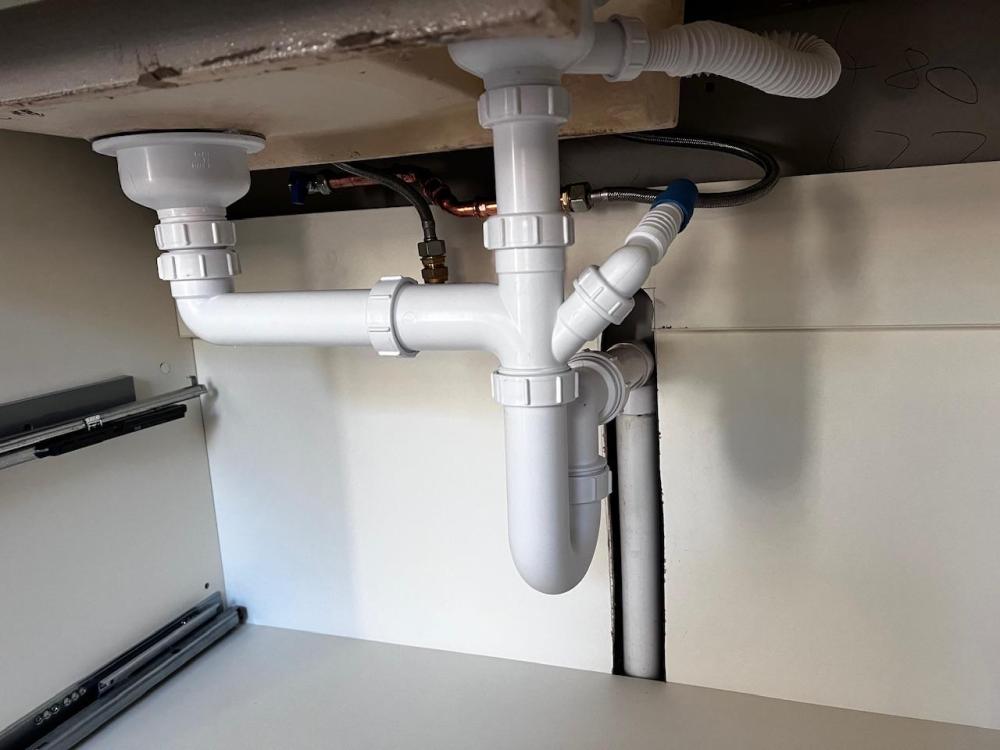
It is a bit of a mess. The question is how much better can they make it and will they make it worse. I did this myself and I’m no plumber. I’ve yet to connect the washing machine. I have a bit of backboard to go across where the waste pipe is to hide it although when the drawers are in you can’t really see it.