Kelvin
-
Posts
4085 -
Joined
-
Last visited
-
Days Won
48
Everything posted by Kelvin
-
I wonder if he ever bought it. I love our standing seam roof. It looks perfect with the cladding. I do worry about the longevity of it and the fact that it’s not easy to repair certainly compared to tiles. It’s not particularly noisy in the rain. I decided not to fit the PV panels to it for a variety of reasons. Not convinced I’d use it again though.
-
Can't connect the SWA cable. Practical help please.
Kelvin replied to saveasteading's topic in Power Circuits
I dug a 23m trench for our electrical cable by hand. I ought to have hired a digger but I only decided that at the half way point so decided to keep digging. It’s why I have a concrete breaker. I powered it from our electric car parked on the verge of the field with a long extension lead. -
Can't connect the SWA cable. Practical help please.
Kelvin replied to saveasteading's topic in Power Circuits
Undo what you’ve done and pull it through. Once it’s done it’ll be done for good. The hockey sticks are quite thick plastic (well the black 38mm one is) so would be hard to cut its length and then get the cable in. It would likely take as long as just doing it properly. If it’s any consolation I spent a day digging a trench and laying some duct to pull an Ethernet cable through. Very pleased with myself but it was hard work as I needed to use my concrete breaker to get through some large stones. All for nothing as the PV and battery storage didn’t need any CT clamps at the meter. -
That’s exactly how I did ours. A bit more cabling and a slightly bigger CU.
-
Posi joist - This install feels rubbish, thoughts?
Kelvin replied to boxrick's topic in Roofing, Tiling & Slating
I’ve been where you are. Completely lost faith in the builder and faced with this decision. Stop the build. Cancel all follow on trades which will cause delays and likely money. However it’s the right decision to make. It certainly was in my case. Get someone (your SE) in to review and report on the build against the structural engineering drawings (I got Gus from here in my case) Even if you don’t get anywhere with your current builder it all still needs fixed and you need the detail on how it ought to be fixed so that whoever you get to fix it knows what they need to do. Builders aren’t engineers it’s just that a lot of them think they are. -
Posi joist - This install feels rubbish, thoughts?
Kelvin replied to boxrick's topic in Roofing, Tiling & Slating
That’s awful welding. You need to get an independent assessment of the whole build to this point while it’s still fixable. And I really doubt your builder is actually capable of fixing this without someone standing over him checking everything he does. -
We had this in our previous house although mostly in the winter. In our case it was the large lean to living room ceiling that was attached to the main house. It was a single story room 11m x 6m and 3.4m ceiling with a large roof void above it (was an old cow shed) It had a complex set of beams in the roof void the bottoms of which were exposed into the room. In the winter and in the evening when the room was cooling down it would make loud cracking and banging noises. Was a bit disconcerting but we were there for 8 years and nothing happened, no signs of movement or cracks in the plaster.
-
I’ve avoid timber cladding over it as it needs an air gap behind it. How would you then finish it around your windows a cills? Stick with the stone work and finish the rest of better and correct what’s there. If you think you might end up removing it and starting again then that’s a decision to be made now not later. To help with that I’d try and fix the worst area now and let that make the decision for you.
-
Can't connect the SWA cable. Practical help please.
Kelvin replied to saveasteading's topic in Power Circuits
The push in Wagos can be re-used. Twist the cable from side to side while pulling.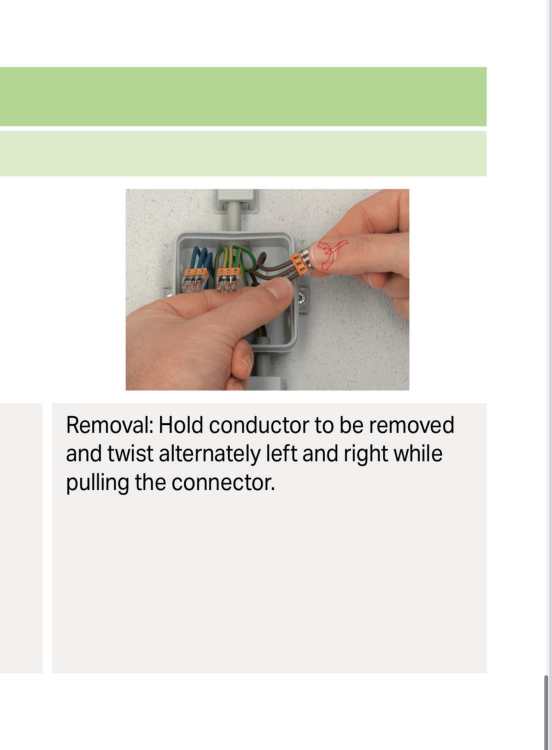
-
Can't connect the SWA cable. Practical help please.
Kelvin replied to saveasteading's topic in Power Circuits
If I’ve learnt anything building a house it’s that it’s usually best to fit something slightly bigger than you actually need if you have flexibility with sizing things. Anything I’ve done where the size is just right has ended up making the job harder. -
Good stuff. We’ve had ours running for almost two weeks now. 8.45kWp array (East/West roof), 24kWh battery storage, and gateway for whole home backup. Also on self-consumption. Working really well and easy to configure. A few outstanding issues with the install but happy enough with it.
-
Economics of DIY and Self Building
Kelvin replied to Gus Potter's topic in General Self Build & DIY Discussion
2 guys for one day to punch down some cables. Holy moly. @Nickfromwales will need to lie down. And 60 cables! -
We don’t have a back door as such but the French Doors open out. Like the discussion on the other thread about this you need to think about supporting door in some way as the wind can rip outward opening doors out of your hand.
-
Economics of DIY and Self Building
Kelvin replied to Gus Potter's topic in General Self Build & DIY Discussion
😂 well it’s done now so I don’t care. -
Economics of DIY and Self Building
Kelvin replied to Gus Potter's topic in General Self Build & DIY Discussion
It does indeed. -
Economics of DIY and Self Building
Kelvin replied to Gus Potter's topic in General Self Build & DIY Discussion
Because the conversation was also about self-building being about more than just the economics of it which is marginal at best for a lot of folk that do it. -
Economics of DIY and Self Building
Kelvin replied to Gus Potter's topic in General Self Build & DIY Discussion
We have one TV in the house and one in the workshop although I use that as a monitor as my laptop screen is gubbed. -
Economics of DIY and Self Building
Kelvin replied to Gus Potter's topic in General Self Build & DIY Discussion
Reliability mostly. Everything that has an Ethernet port is connected via a wire rather than Wi-Fi. We have two printers for example (A3 and A4) that the other half uses for work. They are both more reliable with a wired connection. The Zappi charger is more reliable with a wired connection than WiFi which despite having a strong connection to the access point regularly lost connectivity with the MyEnergi server. Our network is slightly complicated by having Starlink in the garage in bypass mode and the router is in the house in the plant room. We also have several CCTV cameras around the place (hence POE) which. I’ve separated that out into their own VLAN. Plus there’s all manner of hubs for this and that. I wanted to keep an eye on the water tank level as we’ve had the odd problem with the borehole control panel so have a probe in the tank connected to a hub etc. -
Economics of DIY and Self Building
Kelvin replied to Gus Potter's topic in General Self Build & DIY Discussion
Some would argue that using cable in the first place instead of Wi-Fi is OTT. CAT6a cable is unwieldy plus I like to keep some length in the cable just in case. It’s much neater with a patch panel as all the cable is in some trunking and into the IDCs at the back of the patch panel then some short patch cables connecting to the switches. Cheaper too as I use toolless RJ45 plugs for the cable ends I do make up (that still technically need tools to make up 😂) -
Economics of DIY and Self Building
Kelvin replied to Gus Potter's topic in General Self Build & DIY Discussion
I have a 24 port patch panel (punching that down was fun!) and two 16 port switches (one is POE) in one cabinet and an 8 port hub in the other. I’m a habitual labeller so everything is at least labelled and I’ve stuck a network diagram to the inside of each cabinet. -
Economics of DIY and Self Building
Kelvin replied to Gus Potter's topic in General Self Build & DIY Discussion
I have two network cabinets, one in the garage and one in the plant room. My other half looks at all this stuff in there occasionally and I can see the despair on her face. 😂 I’ve started writing a how to guide, just in case! -
Trade account - electrics and plumbing
Kelvin replied to Lincolnshire Ian's topic in General Self Build & DIY Discussion
I have a trade account with Travis and there is a big difference with some prices. Despite being 2 miles away I didn’t use them much as some stuff was horrendously expensive compared to online. It’s handy for the odd bit of sheet material as it’s so local to me. -
Trade account - electrics and plumbing
Kelvin replied to Lincolnshire Ian's topic in General Self Build & DIY Discussion
For drainage I used dedicated civils place in Dundee. They knew their stuff so were great for advice. -
Trade account - electrics and plumbing
Kelvin replied to Lincolnshire Ian's topic in General Self Build & DIY Discussion
Combination of Screwfix, CEF, and online. Screwfix prices are pretty keen I found but I used them because it’s 2 miles away so was convenient and they could get most stuff not off the shelf next day. They were also great at taking stuff back. -
Similar size to the one near me (50KVA) It’s years old from 1960 something. It serves 4 houses from what I could determine from the drawing SSEN sent me. Fortunately we are on a different line that had been upgraded.