


Mattg4321
-
Posts
623 -
Joined
-
Last visited
Everything posted by Mattg4321
-
So many people don’t take diversity into account when calculating cable sizes for cooking appliances. Add the first 10 amps to 30% of the remainder. It’s never failed me in 25 years of using this. 6mm2 is almost certainly enough unless there’s huge amounts of insulation and/or a very long run. My induction 110cm range at home is on 6mm2 and 32A RCBO when total load is over 16kW (around 70A). Don’t think I’ve ever known it to go above about 25A. Running 25mm2 is just madness. On the flip side, the amount of arguments I get into when talking about cable sizes for electric showers. People run 6mm2 when it’s very often not big enough as there is no diversity allowed. Sometimes the same guys who run in 10mm2 for a 5 ring hob, will run 6mm2 to an electric shower. Absolute muppets.
-
Kitchen Grid/Isolation switches
Mattg4321 replied to Spinny's topic in Electrics - Kitchen & Bathroom
You’ll never draw that 18kW Every ‘fixed’ appliance over 2 kW should be on its own dedicated circuit really. Everything else on the ring. In practice this doesn’t usually include kettles/toasters/tumble dryers/washing machines, but does include cooking appliances. Freezer on its own dedicated circuit is a nice to have as it minimises risks of losing everything in it when a fault trips out your power. -
Lowest profile flat roof ballasted system
Mattg4321 replied to Mattg4321's topic in Photovoltaics (PV)
Guessing that might be just the mounting system, without the panels? -
Lowest profile flat roof ballasted system
Mattg4321 replied to Mattg4321's topic in Photovoltaics (PV)
Forgot the link https://voltaconsolar.com/products/gaia-10-degrees-rubber-self-ballasted-mounting-system-for-solar-panels-east-west?variant=52708205461838 -
Lowest profile flat roof ballasted system
Mattg4321 replied to Mattg4321's topic in Photovoltaics (PV)
This system claims to be only 10-11kg per sqm. No idea if it’s any good though! -
Lowest profile flat roof ballasted system
Mattg4321 replied to Mattg4321's topic in Photovoltaics (PV)
Headroom not a problem if I had to lose a couple of inches. If I have to spend £600+ on structural engineer and timber etc, which is looking likely. I’ll probably bin off the idea. It just seems a shame not to use the spare MPPT, especially as I can get all the pv kit vat free still I think. And no labour costs. -
Lowest profile flat roof ballasted system
Mattg4321 replied to Mattg4321's topic in Photovoltaics (PV)
No worries about intruding on a room below. The flat roof is above a utility room 80's extension with 6x2 joists (same 2.4m span) and also a garage as previously mentioned with the 4x2. There's nothing below the joists in the garage so easy access. No idea of the cost of a structural engineer for something simple like this, anyone like to guess? If it's as potentially simple as sistering the joists, I may look into it as without strengthening the joists and the costs involved in that, payback time is going to be around 2 years according to AI, so pretty attractive. Current joists go into pockets in the brickwork of the house and then overhang the wall plate on the other side by a few hundred mm to create an overhang outside. Presumably any sistered joints would just need to sit on the wall plate (not all the way to the fascia outside), but if the joists are deeper than the current ones, the bottom would need notching out at the wall plate? Assuming these would generally then be bolted to the existing joists. I'm also not sure what the approved practice would be at the junction with the house. I assume create a pocket in the brickwork for the joist to sit in. -
Lowest profile flat roof ballasted system
Mattg4321 replied to Mattg4321's topic in Photovoltaics (PV)
The problem with that is that it starts to push out the payback time. I suppose it depends what strengthening work might be required. Anyone have any idea what might be typical? -
Lowest profile flat roof ballasted system
Mattg4321 replied to Mattg4321's topic in Photovoltaics (PV)
I think you're right. Will be giving this a miss then. -
I've got a spare MPPT on my Sunsynk inverter. I've got a garage (flat) roof on the side of my house I could fit 5 (or possibly 6, I've not bothered measuring yet!) panels on, landscape to reduce height. It's south facing, with only moderate shading early/late in the year. Half the year it will be in full sun all day. I'm sure it would payback within a couple of years or so as I can fit myself. I don't want any penetrations through my flat roof and I don't want it to look awful. Are the ballasted systems any good? Roof structure is early 70's and in good condition. 4x2 timber. 2.4m span. Not sure if I will require structural engineer? What's the lowest profile flat roof system? Do I require planning? All input appreciated!
-
LED strip for cupboard - can it be used with push-to-break switches?
Mattg4321 replied to Paene Finitur's topic in Lighting
Don’t worry about the inrush current, it’s hardly likely to make any difference whatsoever to a mechanical part like a switch. Use the Jeani switches. They’ve proven their quality for decades -
There's absolutely nothing wrong with a decision to spend extra for Cat 6a, but it's simply overkill for nearly all foreseeable uses in a domestic setting, with a few exceptions, generally for people who are really into 'tech'. I've installed 10's of 000's of m of the stuff for clients, and although I don't get too involved in anything past that normally, I've never once heard an AV/security/smart etc installer say that cat 6 wasn't up to the task of what they needed it to do. In fact they often get Cat 5e to do what they need where existing cabling is in place. I personally can just think of better ways to spend my finite amount of money! If jim is on a tight budget it's highly likely Cat 6 will be more than good enough. I pay roughly 50% more for Cat 6a over Cat 6 at trade prices, for good quality cable. Cat 6 can easily be found at around £105+vat from a quick google, which is only slightly more than I am getting it for.
-
Thats extremely likely to be Copper Clad Aluminium (CCA). Keep away from that junk. You want solid copper or don't bother! Decent quality Cat 6 is fine for 99.9% of domestic usage now and foreseeable future. Anything above that is like spending 500% the going rate when buying a SCART lead back in the day, because it had some fancy marketing.
-
I hope it can be done here too. But Spain is a smidge sunnier and warmer than here! Much much easier for them to do.
-
It’s not just the cost, it’s the security of supply. There’s also a benefit for the treasury in the amount of tax that can be taken from producing it at home. And what’s to stop new licenses for exploration being granted to a state run company (other than them no doubt f’ing it up). Or the state could take a stake and leave operations to someone who knows what they are doing. Perhaps we need to start thinking about burning coal in the short term again until we can finish a transition away from FF. I’m seriously worried about the economy. Tax/costs are already at unsustainable levels for business, making the product unaffordable for the average consumer, yet the treasury is still going to need more of our money as it’s still bleeding cash. This is before the impact of this new war. We need to do something fairly drastic imo.
-
£280 wouldn't even get you 2x labourers or apprentices in the south east imo. It seems roughly correct for a groundworker, although I'm not familiar with the rates they can charge.
-
110mm into access chamber when no spare inlets
Mattg4321 replied to Mattg4321's topic in Waste & Sewerage
That's what I had to do. Had to break out a load of concrete to get access though, which is why I was looking for a short cut. Decided to do it properly though -
110mm into access chamber when no spare inlets
Mattg4321 replied to Mattg4321's topic in Waste & Sewerage
It's an option, but more hard work than connecting directly into the access chamber! -
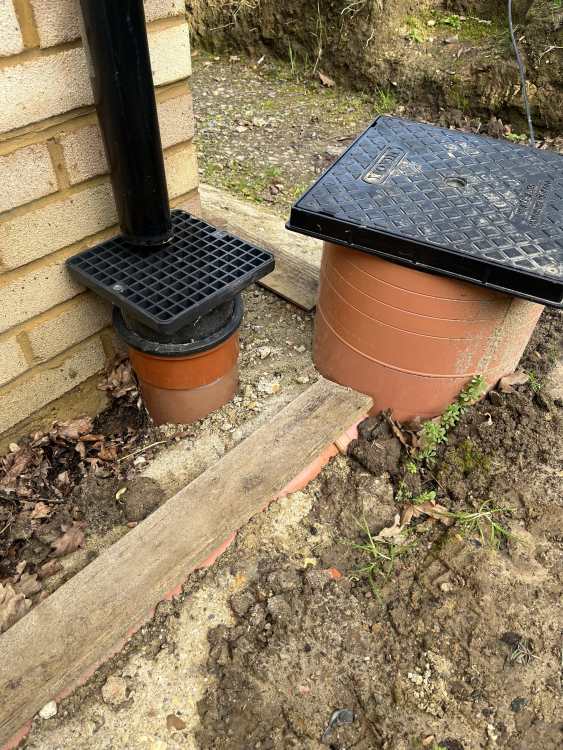
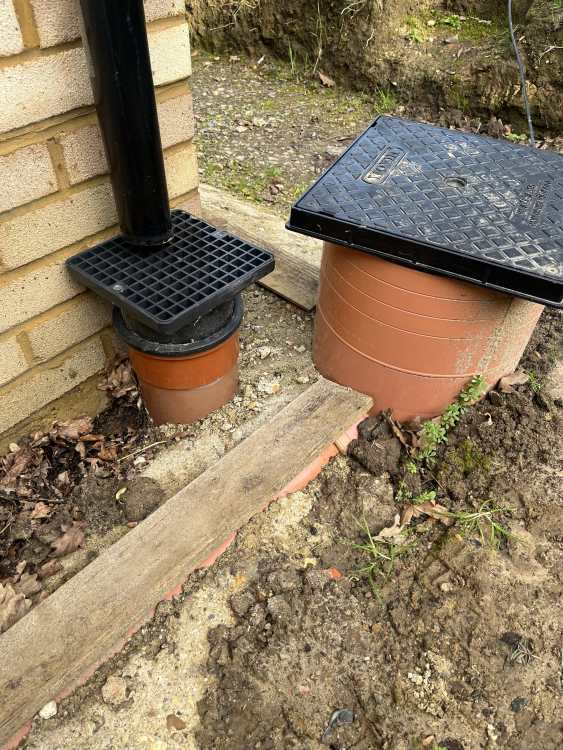
Following on from the other topic I just posted, it would really help if I could connect to an access chamber (300mm) the same as in the picture (note it's not this one!) There are no spare inlets, can I create one in the riser somehow? Note that this is surface water, not foul. It would be a connection from an aco drain.
-
As per the title, is this possible? I've found 110mm hoppers with solvent sockets, but the riser appears to be around 150-160mm diameter. Surely there is a solution short of getting the hole saw out? https://www.toolstation.com/square-hopper-110mm/p71607?store=null&utm_source=googleshopping&utm_medium=feed&utm_campaign=googleshoppingfeed&gad_source=1&gad_campaignid=21019175163&gbraid=0AAAAAD-vLcXXXI5YTIGEGSG3qJOU7d06k&gclid=CjwKCAiAqprNBhB6EiwAMe3yhghXuo0-GWuBtdc3XxZJyOIMk0tlIYiI_Xj62GxKj9Jw_SYKfFeANhoC7NEQAvD_BwE
-
Rising carbon dioxide levels now detected in human blood
Mattg4321 replied to SteamyTea's topic in Boffin's Corner
Or mask wearing causing rebreathing of CO2 -
I've also used PassivHaus Systems own branded tape and found it very good.
-
Earth Neutral bond for hybrid inverter (again)
Mattg4321 replied to jimseng's topic in Photovoltaics (PV)
It’s horses for courses really as DC coupled is lower up front cost and slightly more efficient as no need to convert DC to AC and back to DC -
Earth Neutral bond for hybrid inverter (again)
Mattg4321 replied to jimseng's topic in Photovoltaics (PV)
I fitted a manual changeover switch to bypass the inverter in the case of the inverter failing, so I can still get power to the circuits fed from the load terminals of the inverter. Also, you’re only considering the maximum load going through the inverter to the load terminals when the grid is down. What about under normal usage with grid connected? There is likely to be a limit that might be the same as when grid is down. -
Earth Neutral bond for hybrid inverter (again)
Mattg4321 replied to jimseng's topic in Photovoltaics (PV)
A lot of this foreign made/focused equipment comes with instructions not suitable for the uk imo. EV chargers are another one, although slightly better since the uk regs have stabilised somewhat in the last 4 years or so. Bottom line is you need someone who knows what they are doing to install it.



