saveasteading
-
Posts
10067 -
Joined
-
Last visited
-
Days Won
82
Everything posted by saveasteading
-
Who absorbs material cost increases?
saveasteading replied to gc86's topic in General Self Build & DIY Discussion
Clients often want the contractor to take all the negative risks, then renegotiate when things turn out ok. -
Who absorbs material cost increases?
saveasteading replied to gc86's topic in General Self Build & DIY Discussion
I don't agree at all. 1. Inflation. When tendering you have to guess what will happen in between 6 months and 2+ years, or agree a formula. Who's risk? 2. We, the industry have no control of covid or brexit, while those that do talk positively but fail to prepare. 3. An expert in competition with a non expert can be half the price or twice the price, due to this expertise. How the client can tell is only by reference or trust. Choosing mid price, because it is mid price, is often weak and wrong. -
Was pleased on one project to show that there was no prospect of finding anything, plus the design avoided any damage even if there was....and archaeologist agreed. A lot of work though.
-
Thanks. Currently thinking to retain lintels, even where cracked, by forming steel subframes which will suuport and also square up for windows. Re height, planning to have lobbies at current levels with minimal insulation and screed, then step up to new floors. V keen to find a solution to avoid a new roof. I agree with ProDave that it can be kept, but the family not convinced. I am the Engineer, but they have to live there, and builders need to be persuaded.
-
Air source heating, how far does it run in a loop?
saveasteading replied to saveasteading's topic in Underfloor Heating
No, we haven't finished adjusting the room layout yet, as this affects forming openings in the stone wall, levels under existing lintels, strength of the structure, and immediately, whether we need an extra plantroom: we are nowhere near that far. It will be at least a year til we are looking at UFH supply. I had a quick think about the routes of loops, and if we were not to add another manifold at the opposite end, we would have some rooms with pipes for every other room running through, and none for themselves. I think we can run the feeder through the void in the upper rooms, where boxed off to form a sensible wall. Then we will find a way down to the ground again, with a box out. that adds 5m and 4 bends though.. Would you cheekily ask one of the internet suppliers to do a free design, or are you thinking of a consultant or contractor? -
No doubts at all about that. I was just worried that some of the tubes of stuff, and pipe sealing rings, readily available seems to be described as fireproof. Have known builders think that can be used round flues when it is only intended as a fire emergency barrier.....2 hours life maximum.
-
Before committing to grommets, expanding foam etc, please check that it is suitable for a permanent closure for a very hot flue pipe. This will not be the same as a fire blocking material that only has to last for one or two hours. For example the intumescent filler tapes in doors, when a flame is on it it expands and looks like a cigarette end. It fills the small space and stops flames going through but has no strength then falls apart like ash. Similarly the red sealing grommets, as put around vents on industrial roofs, are for very hot fumes, but best check how hot.... a wood burner gets hotter than a gas or oil burner, and also can have chimney fires.
-
Not so, fortunately. The Scottish requirements are to insulate towards reduced insulation targets 'as far as reasonably practicable'. That includes cost, but in our case would also cause headroom problems. AS ProDave says, breaking out the floor could compromise the building. A local builder* has also confirmed this as being a known problem, so I expect building control to be aware. Otherwise I will be asking urgently on here for details and locations. * he also mentioned (as I had surmised already) that sometimes foundation stones project into the building space, so can be disturbed during the breaking out. Another builder said that ''obviously' you can't keep the old slab', which only tells me how little the designers he has worked under know about structure and cost. I must find this! any more clues about location so I can search for it? Re the cost, among my hats is that of Estimator, so I did a costing before we committed. It is a lot of money. So far there have been savings but there are issues appearing all the time. Commercially I would have added 10% for unforeseens, (and that would not be enough if not watched very closely) but the family vetoed it. I am used to designing my way out of problems, where many others throw money at it. Hence, if we can spend 10k on resolving the big issue here, instead of £50k or more) we are close to target still, and 3 months faster. May need proof though for the family first , then for builders who will do as told. Building control seldom have the final say with me , unless it is approval. Have had many a stand-off ( really only 10 times in 300 projects probably, but I remember them well) and usually find that they don't know the rules anything like as well as they like to think. The good ones agree professionally, the weak ones reluctantly. Sometimes I agree with them, or am happy to modify to tick a box. In this project a lot is new to me, and so sensible discussion with BCO will be welcomed.
-
I think so, but would have to persuade a builder the same. Unfortunately I cannot be on site to supervise, and my family there are torn between my views and the various builders met so far. We have even bought some hydraulic acros for the purpose, so we can nudge it back up to height. I have seen a roof exactly as you described in a local hptel, recently rebuilt.
-
Excellent information, thanks. I will read this another twice at least, and save to file! Immediate thoughts. PIR is horrible stuff. The manufacturers claim that they will have a way to recycle it fully, at some time in the future...if you get it to them. I agree that it bends, but I have some in my current timber house walls (retrofit, using second hand panels, and they are staying in place nicely enough. the main issue is gaps, (which obviously are a heat loss issue) as you say, and that wasps and mice excavate into it and live in it very cosily. However, for avoidance of loss of headroom, I think 100mm of it is the efficient way. Re the steading, various builders have said variously 1. the concrete floor obviously has to come out, 2. it is sensible to retain the concrete, 3. never break out the concrete floor. you and I appear to agree with 2 and 3. Vents in the stone, I have never heard of ad hope it isn't standard. I can't see the point. In full contrast to the theory of needing ventilation , I only yesterday read a blog where someone mentioned that they had cool spots in the house from old cross-walls, as there was so much air movement through the wall from outside. Perhaps at the base where theoretical condensation might gather? Perhaps more thoughts later.
-
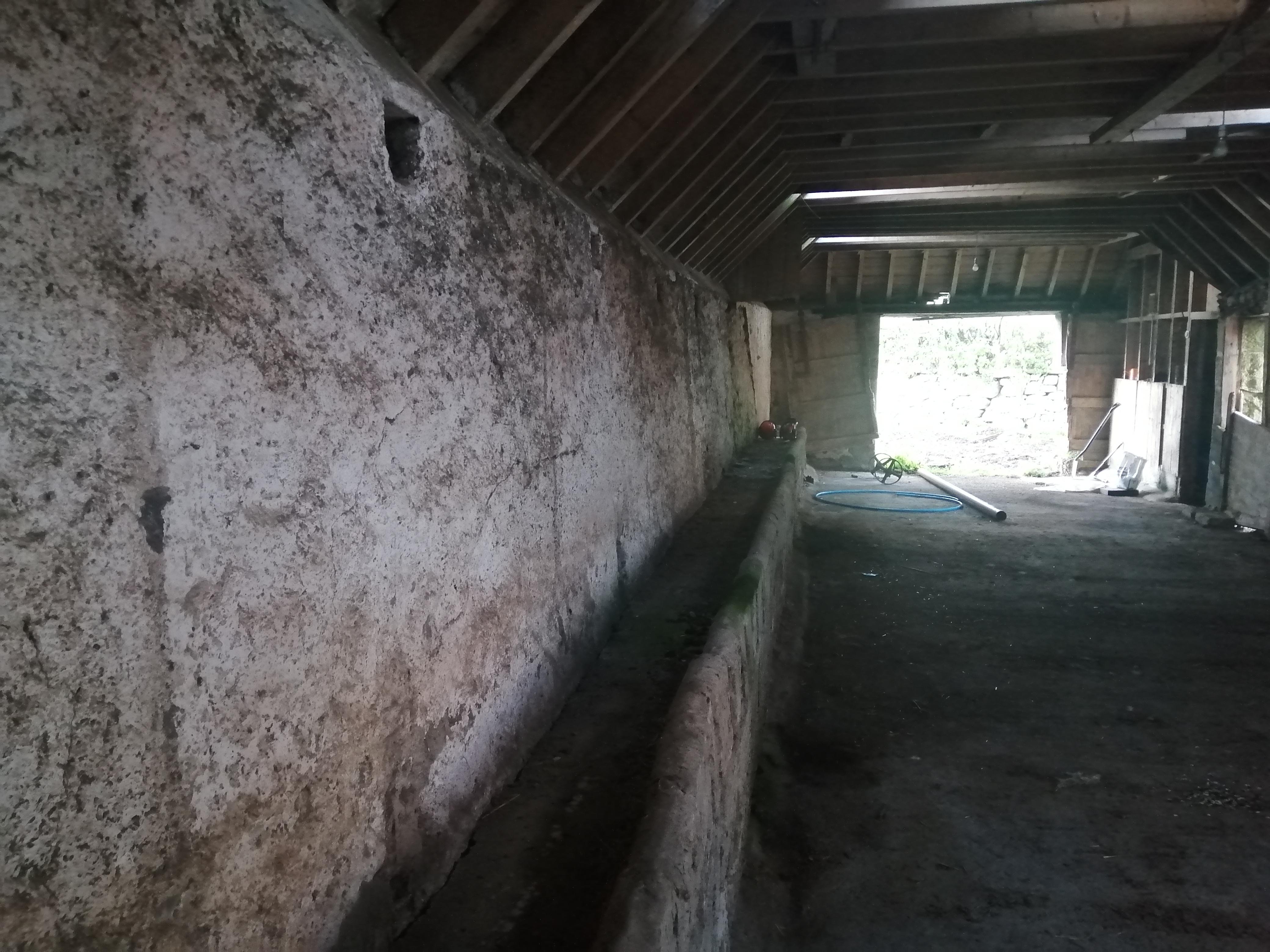
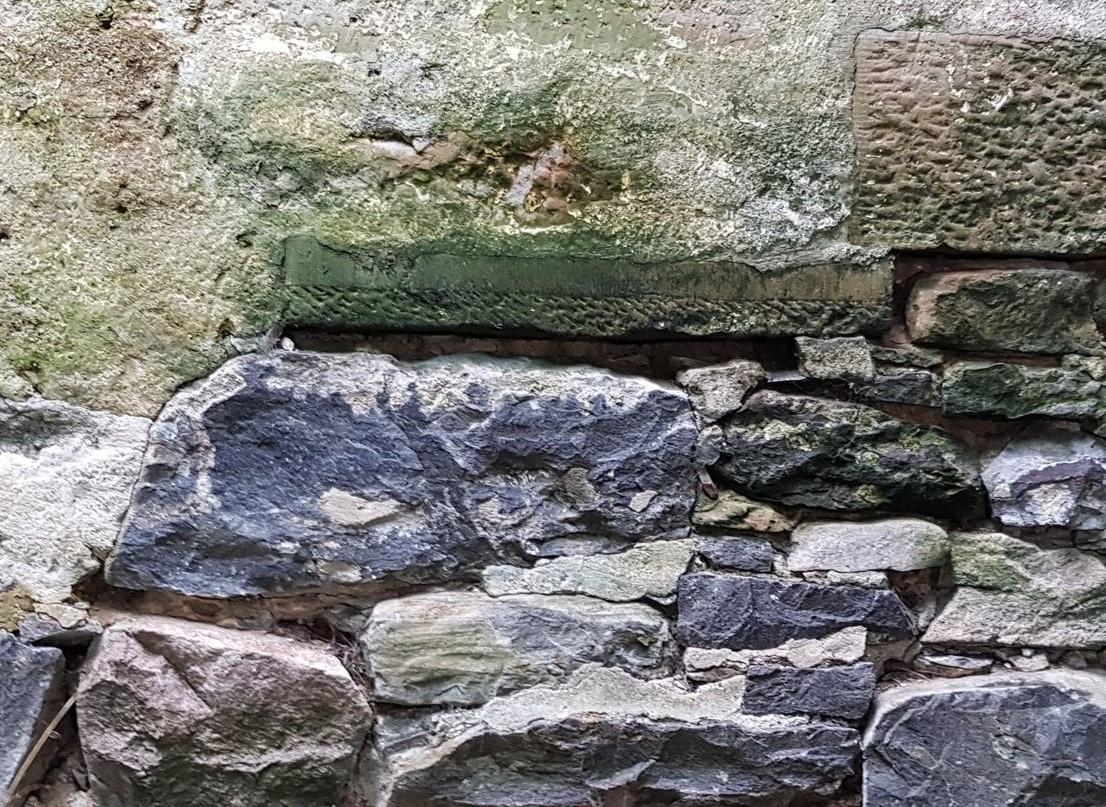
A big dilemma. Repair or rebuild? The steading has four sides, with a central courtyard that used to be a cattle area. Three of the wings are unusually solid and require only local repair. The fourth, rear wing is another matter and it is for that I seek your learned thoughts. There used to be a roof over the central area. This was presumably a later addition as was the custom in the area, when cattle became a bigger earner. This canopy was in an awful state, so we have removed it. Already the building is in better order re damp and the leaning of broken timbers. The canopy has been pouring water from its valleys onto the poor rear wing for decades, washing out mortar and causing some failure of the walls. If there was no roof, it would be obvious that the walls be completely removed and rebuilt. However there is a watertight roof, with 95% of the timber in good condition, as are the sarking boards and as is the slate. However to one length of about 10m at the courtyard, the wet has rotted the bottoms of the rafters, the roof has dropped (and rotated?) and rain runs on the walls. If the walls were solid, I think we would jack up the roof trusses, splice on new ends where the bottom has rotted, and lay it down again. Then, concurrently or later, we would remove the dodgy areas of wall and form new openings, retaining the footings and lower layers, and rebuild. BUT with some damaged timber and some broken/leaning walls the local builders all want to take the whole roof and walls down, and rebuild with new materials (They have not the slightest intention of re-using the timber. I think this is because it needs de-nailing and more thought.) The new timber will be about £5,000. I can’t see them being careful with the sarking either so add another £1,000. Strip slates and sarking, cut off roof and dismantle stone walls, rebuild both with new materials wood/ concrete block (to later be timber clad) In my estimation we are comparing a £5 to £10,000 rebuild, with £50,000 new. Against which is the risk that my idea might not work…quite, or be a shorter term solution. Perhaps I am being overoptimistic, or perhaps the builders don’t acknowledge anything out of the ordinary. From inspection of all junctions/ movement etc and some old photos, I don’t think things have got much worse or moved for many years. I am a Chartered Engineer by the way, and would not do this lightly. But this is a new sort of building to me and there may be problems I haven't thought of. If removed, will the Building Inspector require modern calculations, or will he accept my view that it has done rather well for 140 years and can perform again, by inspection? The roof as it is would be impossible to prove to current standards, which would require a lower tie I think, to prevent outward thrust. However, for either way forward, I plan to make every new cross wall as a bulkhead, using plywood fixed to the rafters for strength, and some diagonals to link to the other trusses. Perhaps the ungraded 6 x 2" rafters can be increased to graded, deeper sections. My other aim is to not remove the whole wall as we then might have to build as new, with deep foundations, and I don't like new, deep concrete foundations next to old, shallower lime ones. Photos of the internal area attached . Floor is concrete. Walls are 2.2m high, 600 thick. Roof is A frame with ties at 3.1m and ridge 5m.
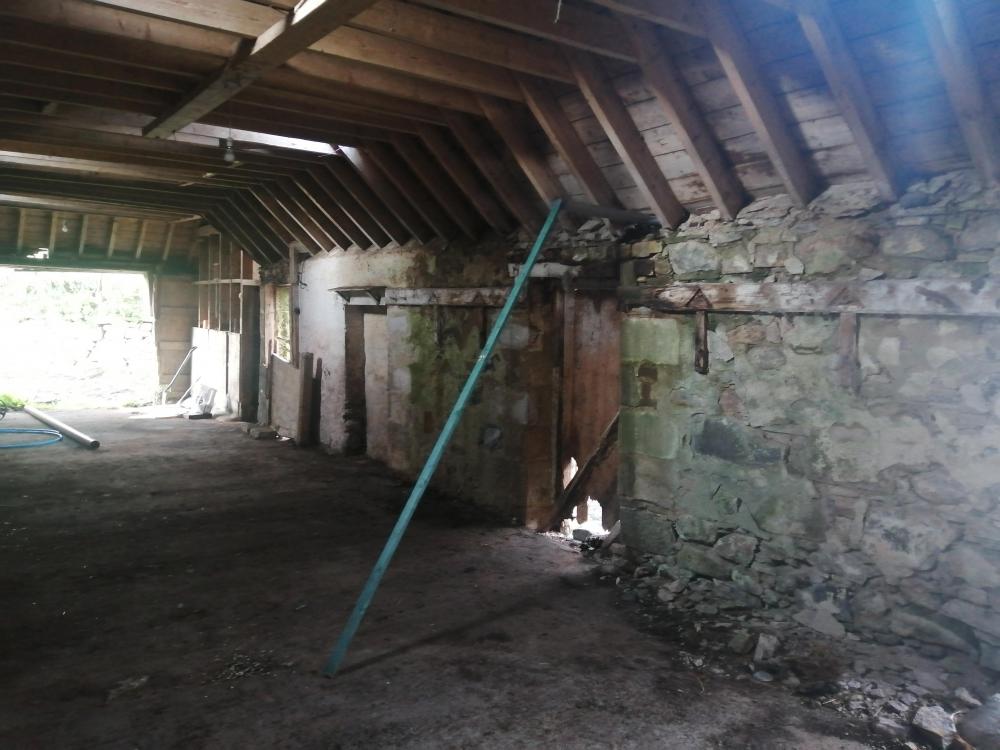
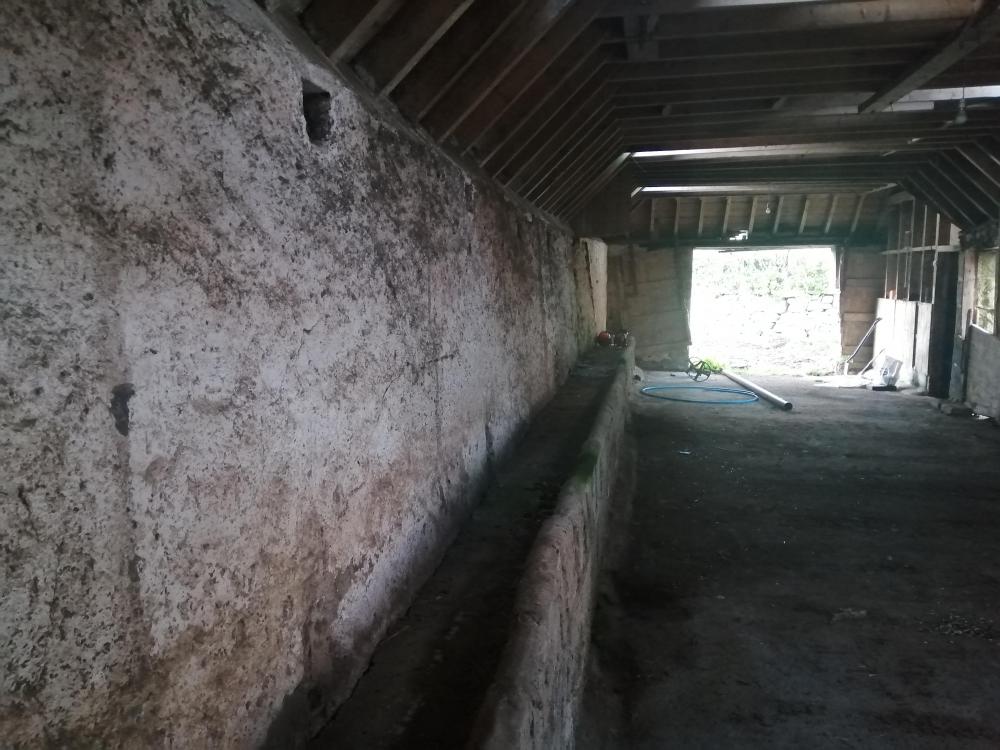
-
Fake chimneys. I am with you in getting rid. It is difficult to budge the planners on this but it can be done. I argued against them on a large development by a Typical Well known company. The chimneys were fibreglass, positioned a random spots on ridges that did not correspond to the fake fireplaces inside. The planners, I think, were a bit surprised at first, not realising that these were fake, and plastic. The initial response was that they reflected the rural style and they like them. (Partial success, as the developer was quite happy to make the saving, and just kept a few) The argument that can persuade is sustainability. Anything fake cannot be vernacular, the word they like. Vernacular makes use of local material to suit local need. No fire, no fireplace. The fake chimney cost £2,000 or more, which of course uses materials which are utterly wasted, and include GRP, with plastic in the title. The fake chimney normally imposes a load (vertical and wind) on the roof and has to be flashed in, creating a need for additional support, and areas of vulnerability. I know from people that have them that there are leaks. So if I wanted rid of it I would make it sustainability. As a champion, which I assume you are, you could not justify the waste of resources for a plastic thing stuck on the roof. Would they like a plastic bird on top while you are at it? You could add that in 30 years the bricks will look like 30 year old weathered bricks and the grp will be either faded to white plastic or bright and shiny...who knows? One little thing. you can probably avoid saying Spanish slates. For example one name, for no logical reason, is Hastings, even though from Spain, so say 'Hastings or similar' or some other good name.
-
Gus, as always has great advice and background info. As I was building streel buildings for 35 years I can add a bit to this. On occasions we were asked to adapt existing structures for modern use, or even to relocate a dismantled building. We either declined or quoted for all new, and then won the work as new. I did estimate both ways once and new-build was far cheaper, and a much better product. It only works for being another agricultural building. The factors of safety for populated use add about 30% to the loads that the building is ready to support, so it can take thick snow on the roof, and hurricanes. I had never heard of a commercial steel building falling down. But I asked a farmer, and he said there were often reports in the farming press of collapses, especially in the winter. As there were no humans involved, it goes unreported elsewhere. So these buildings you are looking at are no use except as precedents for planning permission. It would be cheaper to take it all away and start anew, but you cant because of planning rules. Therefore you have to retain the steel, add extra frames to make it strong enough and underpin the existing frames. Being a cynical sort, I assumed most people were getting away with using the existing structure, so asked a building inspector. 'Absolutely not, it has to done properly'. Perhaps the reason we don't hear is that the owners just have to keep spending, and don't tell us about it. This is entirely a commercial statement, reminding you to allow plenty of build cost, while others may not.
-
Breathe the country air!
-
Air source heating, how far does it run in a loop?
saveasteading replied to saveasteading's topic in Underfloor Heating
Thanks. But still probably not the best way to do it, with lots of long runs to get to the area it is wanted. There could be rooms with 4 or 5 sets of pipes running straight through. I am guessing it gets horrible to handle in long runs. -
Air source heating, how far does it run in a loop?
saveasteading replied to saveasteading's topic in Underfloor Heating
Like this? This appears to be up to 35dia, which I guess would be needed, so something like 80mm incl wrapping. This would then need to be in the wall (warm side) rather than the screed. not so easy! Probably worth contriving more insulation than this. -
You need a general builder who can do the whole thing. You need building regulations. First though you need a Structural Engineer (SE in short on this site) Planning permission may apply in certain circumstances, eg a listed building, or a protected area. Engineer first. Someone who has done this recently can advise, but I would say allow minimum £3,000 +VAT. Depends on size, nature of the work and where you are, so could be more. Of course if it not a structural wall then it is all easier. What do you hear when you tap it? Hollow or solid? What do you hit if you try to put a hole in it? SE would tell you if it was not structural, and if it still needs Building Control.
-
And where do they send it? They used to have an area at the council tips for it, then buried it in clay. Now it gets lorried up and taken away at about £3,000 per load. The council will not take a large quantity, only sundry domestic amounts, as this avoids it going in with the rubbish and endangering the refuse staff. Even doing it yourself, which is legal, requires a sealed skip and disposable clothing, then gets taken away and a very large fee for disposal. Even farmers are supposed to do it properly these days.....never trust a pile of earth on a farm......
-
Do we need 2 systems to heat this building? Imagine if you will, a building that is approx 22m by 22m with a courtyard in the middle. the wings are about 6m wide including the very thick walls. From what I have read, UFH loops are 50m at most. therefore to get to the opposite side of the building and back is 44m, and there is only 6m left to heat any area. Should we therefore look at a single plant room, but a long feeder to a second manifold (or more) at the opposite end? Or might we as well use a second, smaller ASHP with its own kit adjacent? There is scope all round for the external appliance. Better in the daylight than the shade too, I expect. The gross internal floor area, including some upper level, is about 400m2, and I am thinking this will need 15kVA, but am no expert. Assume thermal insulation to about the Scottish target for conversions, and there will be two woodburners. This is early days, but may affect room layout. More info upon request.
-
Every farm that is a real working one has several old cars. what's the point of having land then paying to dispose of stuff? Just remember to allow for the cost of a complete new building, as what is there has no (or tiny) value, and there is asbestos cladding to remove and dispose of to Peterborough.
-
Aah. proper archaeology. Better investigate further I feel. If it was possible to do the project without any holes in the ground it would help. but drains!
-
Archaeological features can be astounding or mundane. If it was a Roman villa then your project stands still for years, at your expense. However, most investigations that I have had to allow on site have simply been looking for old trenches/field boundaries and tracks. This delays the work, especially excavation, and they make you pay for their investigations (£2k or so) But then they go away and you are usually allowed to do what you like. What are your features? I am sympathetic to understanding our history. What annoys me is that planners ask archaeologists if they have any comments, and they then require an investigation for which you pay them.
-
Builder cut 4.5cm off joists due to floor level screw up
saveasteading replied to Loz's topic in General Structural Issues
Agreed. Mistakes happen and it is sometimes reasonable to find a solution that does not inconvenience the builder. However, this is either a deliberate bodge, hoping to get away with it and never mind the consequences to you, or ignorant of building practices to the extent of worrying about other matters too. For the sake of amicable conclusion to the project, it needs SE and/or BCO to instruct that it is done again. I suggest make a list of the worries expressed above and summarise it to the SE, who works for you. It is not unreasonable to include future squeaking and maintenance, and even worry, in the list. And would the SE warrant for 10 years please against these minor issues as well as failure? -
Builder cut 4.5cm off joists due to floor level screw up
saveasteading replied to Loz's topic in General Structural Issues
What a god point. I once took a surplus huge joist to the mill and had it ripped into 2 useful sizes, and it bent and twisted dramatically. The same principle will apply to yours. -
Quite right. A higher number would have been even more satisfactory.