
saveasteading
-
Posts
10897 -
Joined
-
Last visited
-
Days Won
94
Everything posted by saveasteading
-

ASHP for small stone cottage?
saveasteading replied to Caddy's topic in Air Source Heat Pumps (ASHP)
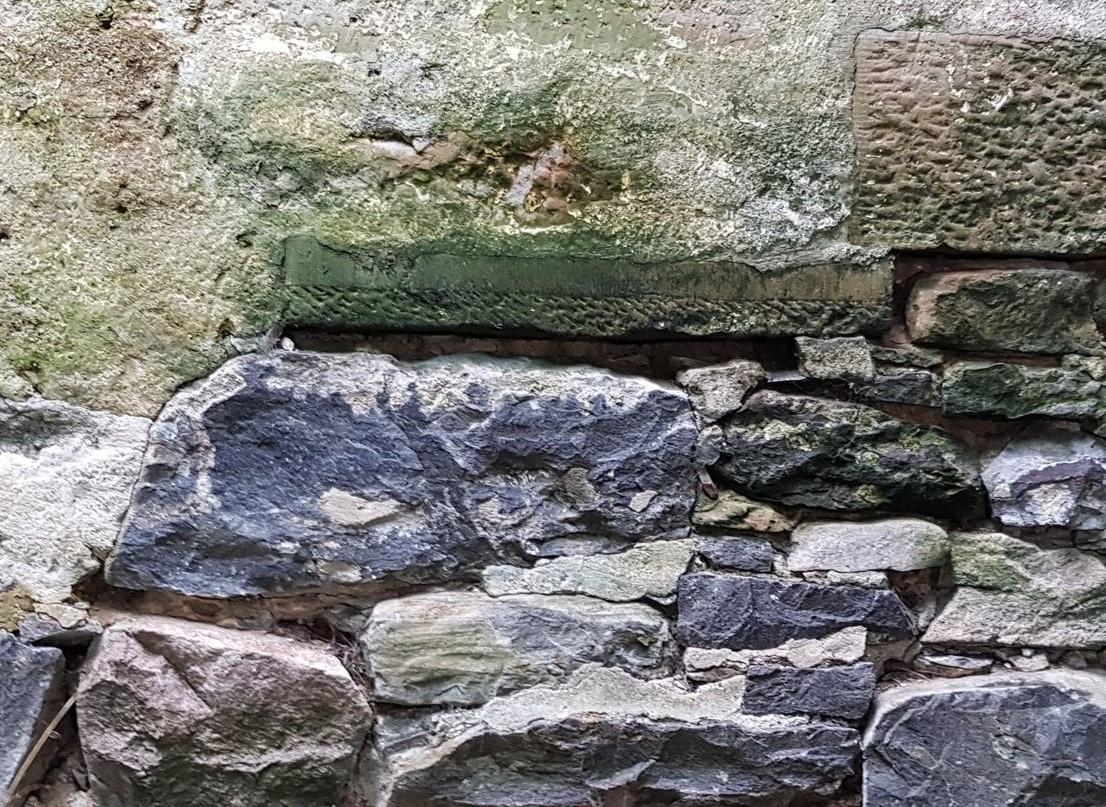
I have been looking into exactly this so can help a bit. Thick stone walls turn out to be better insulated than was believed. This is for a few reasons but mostly when the wall is made of 3 skins, as the central core is rubble pus 40% mortar. If the outer rock is of dense rock, well built with large stones and minimal mortar it sheds water quickly and there isn't too much heat-sucking evaporation. However it still isn't great on its own. Do you have/intend to have an inner lining? The floor will be a big heat sink, but do you have enough height to insulate above it, remembering that a higher floor may take you above door lintels. Whatever the heat source, you will lose a lot if the insulation is poor. Damp-course : There is unlikely to be one, but damp doesn't rise much in these walls. More on this later perhaps. -
Well done for confirming whose product it isn't. I looked up Longfloor and they state that shrinkage is Drying Shrinkage - <500µm/m pH - ≥10 If I have my figures right that is 1/2mm per m or 1:2000 If your room is 4m long then a crack would be 2mm. Cemfloor are the same, so their statement of No Cracking is incorrect. We are back to: it should have had a crack inducer/former across the doorway.
-
10 Year Rule and immunity under the 4 year rule.
saveasteading replied to ToughButterCup's topic in Planning Permission
Is that an intended change of term? cc councillor that is mentioned and your local one if different . -
Ducts for wires through external insulated walls?
saveasteading replied to Dreadnaught's topic in Timber Frame
You can get grommets to make a tidy seal, but you should also fill the void. ProDave will know if they are easy to get at merchants. -
Tiles for sale, measurements are x by y, as photograph, as seen. Roofers will know.
-
As I have the attention of like-mindeds I will repeat a question from some weeks ago that went unanswered...any ideas how to rehouse swallows and house martins when they return, as we cannot share?
-
Why do you need to know? is it for patching or for matching on a bigger area?
-
Firstly, where is the noise coming from? Air borne, such as voices and radios? The fluffy stuff is best for reducing that. Impact? Footsteps on the floor, doors shutting, This is mostly resounding through hard surfaces and resonating when it reaches you. Does next door's tv hang on the party wall? Draw some sketches, cross sections through your walls, floors & ceilings, and try to work out the likeliest routes for the sounds. The likeliest solution will be to build new stud walls that don't touch the existing wall. This then receives density (plasterboard, perhaps even 2 thicknesses) and an absorbent filling of mineral wool. Any mineral wool will do but the 'acoustic' is obviously better. That will reduce noise directly through the wall because the new wall will not resonate from noise next-door. You might want to strip the plaster first to limit the loss of floor space. You might even find then that there are gaps in the block wall and could fill them. Once you have done the sketches you may establish whether noise is likely to be coming from their floor to yours. Can't suggest much at this stage. It would be good if your first floor joist was close to but not touching the party wall, so have a look at the nail line on the boards. If there is a gap you can fill that with mineral wool .too. Carpets and underlay are a very simple sound deadener. There is a limit though, as your cross-walls are joined to the party wall, and will provide some transfer.
-
It is doable. I have had to get sound tests for specific buildings such as schools* and nursing homes (pass but worrying: how do you resolve it on a finished building). And once to find a solution to some noise transfer that just wasn't acceptable (flanking noise through a common concrete floor....cut a joint). The fundamental lesson was to not trust the lab reports because they are in ideal conditions, but to examine where noise might leak through, and to use the next level up of construction. ie don't use a 40dB wall for 40dB reduction, but use 60dB and that should work as 40 (rough figures) *woodwork class next to maths needs a very good wall and is best avoided, but is possible.
-
Agreed, you get quite good at it, and the good BM will respect this, and you can still use them as appropriate.
-
Agreed. I was trying to make the point though that a small area that cannot be dealt with properly can allow nearly all the noise through. eg a 5% area unimproved can allow 90% of the previous noise through. Flanking sound through walls or floors usually being the problem.
-
When Estimating was my job, I used 3 year old Spons as about right and only for elements I didn't know enough about. ie if there was an element worth 2% of the project I couldn't get a quote for, then a 20% overprice on 2% was not critical, and better than a guess. On one project, because it wasn't fully designed, we were asked to quote using Spons +/- a percentage. I think we went in on -15% and made a good margin still. Yes, I think many QSs use this, and it normally creates a falsely high price, but perhaps not in times of shortage. Use it as a starting point perhaps. I don't quite agree. I think it is great for research of optional materials and cost levels. However a good relationship with a local merchant is preferable. They will usually match what can be found elsewhere, as long as you know the target price. Even if a little high they will probably include prompt delivery and offloading. They will also respect you as a valued customer, so you can get deliveries when there are shortages, and quick deliveries when you are caught short. Also use Wickes as a price tool. If the merchant won't beat Wickes with their first quote then they are not playing fair and you ditch them. I detest "tell us your best price and we will match it". That is cheating and is their policy, so best use someone else. Where this does not apply is with large quantities of special products. eg timber direct from a mill/importer or insulation by the lorry load.
-
None of us does. The trick with acoustics is to think of sound moving through the structure. If I bang here is there a physical link from this room to that room? You can experiment in your own house, between rooms, floors and walls. Fancy kit only works if all the other 'leaks' of noise are closed off too. Resilient bars, spring suspended ceilings, rubber mountings etc are only efficient in making clean breaks in the structure if all sound paths are closed.
-
10 Year Rule and immunity under the 4 year rule.
saveasteading replied to ToughButterCup's topic in Planning Permission
There was an article in The Guardian last week about the lack of enforcement on fly-tipping and waste sites. The bottom line was that EA are vastly under-resourced and officers have written orders to try to ignore the biggest problems, and that the local officers (planning and EA) are sometimes very scared to act due to the circumstances. I wonder if the planners are ducking this for similar reasons. -
That is fine, and the biggest issue may be 'not in my package mate'. ie the areas of work that could be in one package or another. It is easier (at negotiation) to add some more work than to get discounts, so always ask for 'included' rather than 'excluded' where it make sense.
-
Timber frame quotation - bit of a shock!
saveasteading replied to LnP's topic in Costing & Estimating
Well done. A few years ago was before the current shortages and price rises, perhaps 20%? you have declared £28,000, so say £31,000 now. If this was your job, it would be interesting to know what do you think you would have charged a customer? -
Or in other words, complicated Engineering stuff. Much more encouraging to see this than the standard computer outputs where you put in some numbers and an answer comes out. What is behind your concern?
-
A bit extreme and better implied than said. It is perfectly possible to make a fireproof door this other way, but it is much easier to convince the BCO of the standard ways. Whether this is careless or a way round an issue I can't say, without seeing it.
-
Neighbour noise from adjoining property. Semi Detached house
saveasteading replied to JP1994's topic in Sound Insulation
yes, so that is good, I think. You have effectively a solid wall between you so if you tap on your plasterboard it echoes out of theirs, and vice versa, so that gives an easy opportunity, with stud, insulation and the resilient bars mentioned above. That also tends to allow an impact on one side to reflect to the other, and even through the wall. It is easier to reduce this by cutting the noisy side, so that doesn't help. But we are getting somewhere. -
Picking up some threads in the hope of helping: It sounds here as if you intend to use a single contactor, acting as main contractor. If they are a hands-on, owner 'on the tools' contractor, then they can't possibly know everything about everything, and their time is best spent making rather than buying. We all have different skills, so the great builder is unlikely to be a great researcher and buyer...that is a specialist skill and takes time. As above, they will tend to go to one supplier for everything as the service is good, the prices always reasonable, and they have an account there. You can shop around and get better prices for some major purchases. Insulation, timber, masonry. But then the builder has to handle it, and there can be arguments about wastage and damage. Whose responsibility if it is delayed/ delivered incorrectly? Who prepares the schedule of sizes, details and quantities? If he drops your toilet pan, who pays for a replacement? And who decides the specification? When you see the contractor's rates they are building in wastage and risk as well as a handling charge. (for example a very good and trusting client once asked why our internal doors were £300 when they cost £30 at Wickes. After explanation (as above) and ironmongery , frames etc all was well but it caused short term mistrust.) Therefore your consultants should specify everything. If it is a standard building they may have their lists already, hence mentioning the required glue isn't an over-requirement) (example again: only recently on this site did I learn of floor glue that expands to fill every gap and stop creaking: perhaps your builder knows and would use it, perhaps not). Also, if there is a standard list, all competing contractors are on the same terms. You can also welcome suggestions from them, but do respect their ideas and don't share them out....that really annoys them and they may walk away. Trust and respect are needed 3 ways here: client, consultant, contractor.
-
Neighbour noise from adjoining property. Semi Detached house
saveasteading replied to JP1994's topic in Sound Insulation
To give us more background, what age is the house? Can you see if the floorboards run towards or parallel to the party wall? -
10 Year Rule and immunity under the 4 year rule.
saveasteading replied to ToughButterCup's topic in Planning Permission
On the balance of 2 tiny wheels and some bricks under the corners, it is a caravan avoiding needing permission to be a house. Or to ProDave's info, slingable , but nearly always where a house would not be permitted. -
10 Year Rule and immunity under the 4 year rule.
saveasteading replied to ToughButterCup's topic in Planning Permission
If it is still on its tiny wheels then it is still a caravan, I would think. If it has been taken off its wheels then it ceased to be a 'mobile home' and was in breach of planning. I cant see any justification for allowing this other than a planning officer's whim, or oversight. -
It has to be ducted with their approved spec. of pipe. Also nice straight lines with proper draw points and draw cord in place. This sounds pedantic but I have seen cables getting stuck so it matters to them. I would think you will have to agree the route beforehand too. If there is some tension in this scenario then you must do your bit exactly right.
-
I would first try a blanket over and around the noisy box. If that works at all, make it prettier and use some soft absorbent material and some dense. Of course check that this won't set it on fire/close off vents etc. Perhaps a solid box around it, lined with foam and stuffed with rockwool. Plus check whether the noise is coming from vibration (which can be fixed) or inbuilt in the mechanism.

